



Modern living is no longer defined only by physical spaces; it is shaped by the invisible systems that connect devices, data, services, and routines across home and work. A digital ecosystem is the architecture behind that experience: an interconnected structure of broadband connectivity, local networking such as Wi-Fi, Ethernet, and Thread, devices and sensors, orchestration software, identity and access controls, and cloud or edge computing services, all linked by data flows that let one system trigger another. A well-designed ecosystem is measurable, controllable, optimized, secure, reliable, and resilient, so it functions coherently under real-world conditions rather than simply being online. When it works well, it reduces friction in daily life, quietly coordinating climate, lighting, security, and work tools around human needs. When it is poorly planned, it creates complexity, security risks, and constant maintenance headaches.
Table Of Content
- What Is a Digital Ecosystem?
- Why digital ecosystems are becoming essential
- The core components of a seamless ecosystem
- Connectivity as the foundation
- Devices and sensors
- Orchestration software and automation logic
- Identity and access management
- Cloud and edge services
- Interoperability is the real differentiator
- How digital ecosystems improve life at home
- How digital ecosystems improve work and productivity
- The risks and misconceptions that derail ecosystems
- A practical framework for building a seamless ecosystem
- Step 1: Define the moments that matter
- Step 2: Audit what already exists
- Step 3: Choose interoperable standards first
- Step 4: Strengthen the network architecture
- Step 5: Implement strong authentication and access control
- Step 6: Review privacy and data sharing settings
- Step 7: Build automations slowly and test them
- Step 8: Maintain the ecosystem as an ongoing system
- Emerging directions to watch
- Design for calm, not just connectivity
- Conclusion
The idea matters now because connected technology has moved from novelty to infrastructure. In Canada, the conditions for adoption are already strong. Statistics Canada reported that in 2024, 96.4% of households had access to unlimited broadband Internet coverage at speeds of at least 50 Mbps download and 10 Mbps upload. That level of connectivity is not just a telecommunications statistic. It is the foundation that makes reliable smart homes, hybrid work setups, connected security systems, streaming platforms, and cloud supported productivity tools possible at scale.
At the same time, consumer behavior shows that digital ecosystems are already taking shape in ordinary households. CIRA’s 2024 Canadian Internet Factbook notes meaningful adoption of smart home technologies such as home security systems, connected cameras, smart thermostats, smart plugs, connected lights, and smart locks. The important insight is that people are not simply buying gadgets. They are gradually building networks of tools that influence energy use, communication, comfort, safety, and time management. The strategic question is no longer whether connected systems belong in everyday life. It is how to design them so they stay useful, secure, and flexible over time.
This article offers a practical guide to that process. It explains what a digital ecosystem actually includes, why interoperability matters more than device count, where the biggest benefits appear in homes and workplaces, and how to implement a connected environment without becoming trapped by a single vendor or weak security practices. The goal is not to chase every trend. It is to build systems that serve daily life with clarity, resilience, and measurable value.
What Is a Digital Ecosystem?
A digital ecosystem is often mistaken for a collection of smart devices. That definition is too shallow to be useful. As the layers above suggest, a true ecosystem works because its pieces, connectivity, devices, orchestration software, identity controls, and cloud or edge services, operate as one coordinated structure rather than as separate parts.
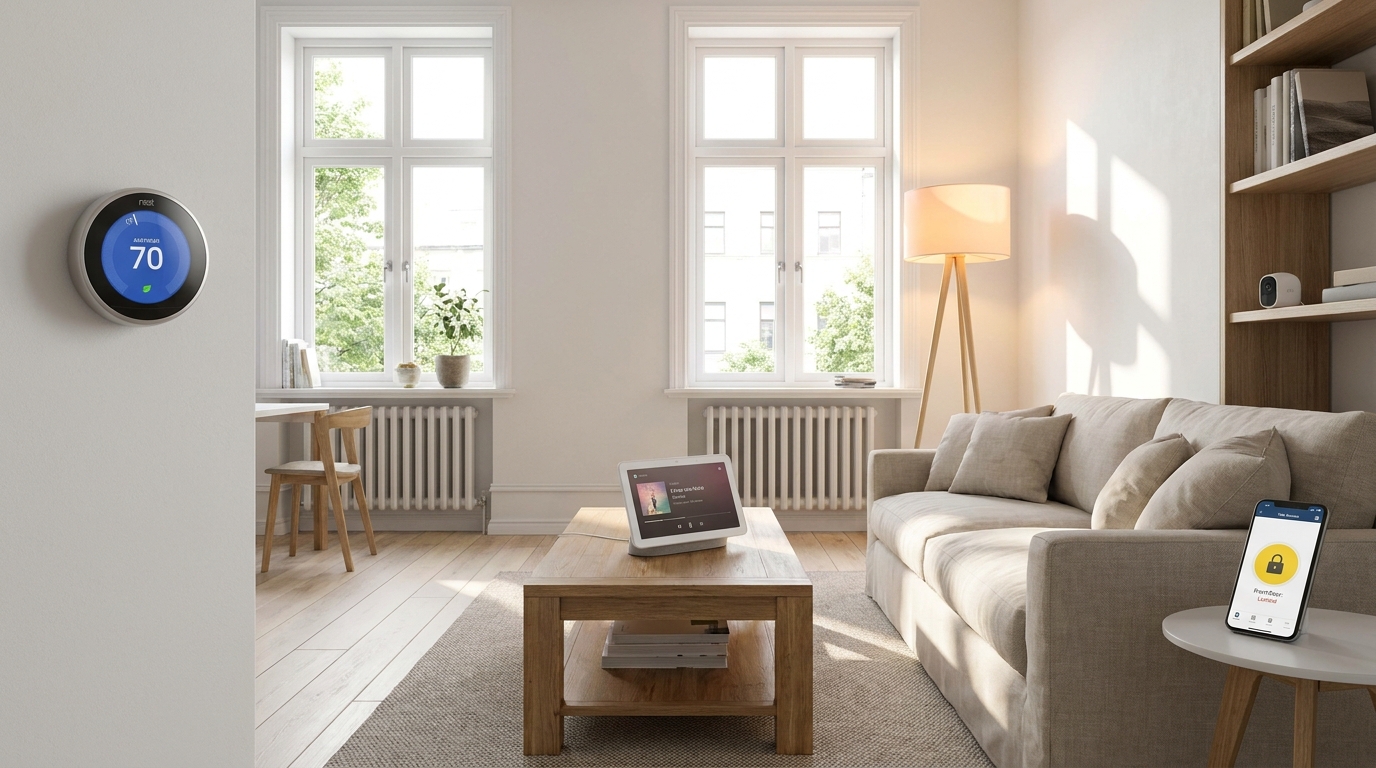
Think about a simple morning routine. A smart thermostat adjusts the temperature before you wake up. Motorized blinds open at sunrise. Lights shift gradually from warm to bright. A smart speaker reads your calendar. The front door lock changes status when you leave. Your workplace meeting room syncs with your booking app before you arrive. None of these actions is impressive in isolation. The value emerges because separate tools are coordinated through shared rules, compatible protocols, and reliable connectivity.
This is why architecture matters more than novelty. A digital ecosystem should be measurable, controllable, optimized, secure, reliable, and resilient. Those qualities align with how standards bodies and public agencies frame smart infrastructure. NIST’s work across smart grid, IoT, and building automation consistently treats connected systems as operational environments that require interoperability, testing, security, and resilience. In other words, an ecosystem is not smart because it is online. It is smart because it is designed to function coherently under real world conditions.
Why digital ecosystems are becoming essential
The practical case for digital ecosystems is built on integration. People now live in blended modes where domestic, professional, and digital activities overlap throughout the day. A home may also be an office, a classroom, a telehealth touchpoint, and an entertainment space. A workplace may need to support in person collaboration, remote participants, environmental controls, device access, and secure visitor management all in the same afternoon. Without integration, each activity demands separate logins, separate interfaces, separate settings, and separate troubleshooting.
That friction is expensive. It costs time, concentration, and in many cases energy. A fragmented environment forces users to adapt constantly to disconnected tools. A seamless ecosystem reverses that relationship. It adapts to the user. Lights, climate, calendars, conferencing tools, occupancy settings, alarms, access credentials, and shared devices begin to coordinate around human needs instead of adding to cognitive load.
The shift is also economic. Rising attention to energy costs, hybrid work productivity, and aging in place has increased demand for systems that can manage resources more intelligently. Smart thermostats and occupancy based lighting can reduce unnecessary usage. Integrated security systems can simplify monitoring and access control. Assistive technologies and telehealth connected devices can support independent living. In both homes and workplaces, the strongest return on investment often comes not from a single premium device, but from the cumulative effect of well integrated functions.
A seamless digital ecosystem is not built by adding more devices. It is built by deliberately designing for interoperability, security, usability, and long term maintainability.
The core components of a seamless ecosystem
Connectivity as the foundation
No digital ecosystem performs better than its network. Broadband access remains the base layer because every cloud service, remote dashboard, software update, and connected workflow depends on stable throughput and coverage. In practice, that means evaluating internet service quality, router capacity, dead zones, upload speed, and backup options before investing heavily in devices. A home with weak Wi Fi or an office with overloaded access points will struggle no matter how advanced the devices appear on the box.
Connectivity also includes local transport technologies. Wi Fi handles many consumer devices and productivity tools, while Ethernet remains the standard for stable, high bandwidth connections in offices and serious home workstations. Thread has become increasingly important in smart home contexts because it enables low power mesh networking for compatible devices. Bluetooth, Zigbee, and cellular links still appear in specific use cases. The right mix depends on range, reliability, power consumption, and security requirements.
Devices and sensors
Devices are the visible edge of the ecosystem. They include smart lights, thermostats, plugs, locks, cameras, voice assistants, environmental sensors, appliances, meeting room displays, occupancy detectors, and shared office equipment. Their job is to collect signals, execute actions, or both. Yet device quality should be judged less by flashy features and more by support for open standards, update policies, local functionality, and integration options.
This is one of the most important buying filters. Many products are technically smart, but operationally isolated. If a device cannot communicate with other systems in meaningful ways, it adds management overhead instead of reducing it. Before purchase, it is worth asking whether the device supports standards such as Matter where relevant, whether it can be managed through a common platform, and whether key features still function during internet outages.
Orchestration software and automation logic
Orchestration is the intelligence layer that turns disconnected devices into a coherent system. It can take the form of a smart home hub, a building management platform, a workplace dashboard, or a broader automation engine that links devices with calendars, sensors, and user routines. This layer is where rules are created. If motion is detected after midnight, turn on low level hallway lighting. If the meeting room is booked, preheat or cool the room fifteen minutes before start time. If no one is present, lower lighting and reduce HVAC output.
Good orchestration software does more than trigger actions. It also centralizes visibility. Users should be able to see device status, energy patterns, access logs, and alerts through an interface that is readable and manageable. For workplaces, dashboards can integrate occupancy, room booking, environmental conditions, and collaboration tools. For homes, they can simplify parental controls, access permissions, routines, and device health monitoring.
Identity and access management
One of the least glamorous but most important parts of any digital ecosystem is identity. Who can unlock the door, change the thermostat, view the camera feed, modify an automation rule, or access a workplace dashboard? The answer should not be improvised. Identity and access management defines permissions across users, devices, apps, and services. In homes, this may involve assigning different access levels to adults, children, guests, caregivers, or contractors. In workplaces, it expands into employee roles, temporary credentials, endpoint policies, and centralized authentication.
Strong identity management becomes especially important as ecosystems span multiple locations and devices. A connected environment should make it easy to remove access when circumstances change. If an employee leaves, a contractor finishes work, or a shared family device is replaced, permissions should be revocable from a central point. This is where zero trust thinking becomes useful. Instead of assuming everything on the network is trustworthy, access is verified deliberately and adjusted continuously.
Cloud and edge services
Cloud platforms deliver convenience, remote access, analytics, and synchronization across devices. They are central to many modern ecosystems, but they are not the whole story. A resilient system often needs edge processing or local control as well. Local execution allows core automations to continue when the internet fails. It can also improve latency and reduce unnecessary data transfer, which matters for privacy sensitive tasks such as camera analysis, voice processing, or medical monitoring.
This is one of the biggest misconceptions in the market. Cloud connected does not automatically mean better. In some cases, it simply means more dependence on a remote service. The strongest ecosystems balance cloud convenience with local resilience. They keep critical functions available even during service disruptions, provider changes, or policy shifts.
Interoperability is the real differentiator
Interoperability sounds technical, but it is the feature that most directly shapes everyday usability. It determines whether devices from different brands can communicate, whether data can move safely across services, and whether the ecosystem remains flexible as needs change. ITU guidance on smart home gateways emphasizes secure interoperability across operating systems, service providers, transport technologies, and ecosystems. That is a practical design principle, not an abstract engineering goal.
For years, fragmentation has been the biggest weakness in smart home and connected workplace markets. Consumers bought devices that worked only with one app or one platform. Businesses deployed isolated room systems, environmental controls, and access tools that could not exchange data efficiently. This increased cost and reduced usefulness. It also encouraged vendor lock in, where replacing one component became difficult because it disrupted the rest of the stack.
The rise of Matter is significant because it directly addresses this problem in the smart home context. Matter is widely positioned as a cross vendor interoperability standard intended to reduce fragmentation. It does not solve every issue, but it moves the market toward a more consistent experience where devices can be discovered, commissioned, and managed across compatible platforms. For buyers, that means the choice of a thermostat, smart bulb, or lock can be guided more by function and quality, and less by fear of ecosystem incompatibility.
Interoperability also matters beyond homes. In offices and mixed use buildings, building automation systems, security controls, conferencing tools, occupancy sensors, and energy management platforms produce the best results when they can share trusted data. If room booking software knows whether a room is occupied, cleaning and HVAC schedules can be adjusted automatically. If access logs and environmental sensors connect to central analytics, managers gain a clearer view of how space is actually used.

How digital ecosystems improve life at home
At home, the most immediate benefit is reduced friction. Everyday actions that once required multiple decisions can become ambient and automatic. Climate settings adjust by schedule or occupancy. Entry systems coordinate with lighting and security states. Appliances can run during lower cost energy windows. Voice assistants or dashboards can centralize routines that would otherwise be spread across several apps. The result is not just convenience. It is mental bandwidth preserved for more valuable tasks.
Safety is another major gain. Connected locks, cameras, leak sensors, smoke alerts, and door sensors can extend awareness beyond the physical property. For families, that may mean remote confirmation that children arrived home safely. For older adults, it can support aging in place through medication reminders, emergency triggers, and telehealth linked monitoring. NIST has highlighted that smart home and telehealth integration also introduces privacy risks, especially with voice assistants and sensitive health data, which means safety benefits must always be paired with careful data governance.
Energy management deserves special attention because it combines cost control with sustainability. Smart thermostats, automated blinds, occupancy aware lighting, and appliance scheduling can significantly reduce waste when implemented intelligently. The deeper value comes from coordination. For example, a thermostat alone may save energy, but when linked with weather data, occupancy patterns, and room level sensors, it becomes more precise and less intrusive. That kind of optimization is what separates a useful ecosystem from a collection of disconnected upgrades.
Importantly, these benefits are not limited to luxury homes. Apartments, condos, and rental properties can still benefit from portable devices such as smart plugs, lighting, voice control, air quality sensors, and secure networking setups. The idea that digital ecosystems are only for large detached homes is outdated. Many of the strongest gains come from routine improvements that apply to smaller spaces just as well.
How digital ecosystems improve work and productivity
In workplaces, digital ecosystems are increasingly tied to productivity through integration. Hybrid work has exposed how much time is lost when room booking systems, video conferencing tools, identity management, occupancy data, and endpoint access live in separate silos. A seamless workplace reduces this fragmentation. Employees can enter with secure credentials, reserve rooms that are actually available, launch meetings from synced calendars, and adjust environmental settings without manual coordination.
These systems also generate operational intelligence. Occupancy sensors and booking data can reveal whether rooms are overbooked, underused, or configured poorly. Environmental sensors can show where temperature complaints cluster. Device management platforms can identify failing hardware before it disrupts meetings. The workplace becomes not only connected but measurable, which allows management decisions to be based on usage patterns rather than assumptions.
Small businesses can benefit as much as large enterprises. A simple ecosystem that links security cameras, smart locks, inventory sensors, lighting schedules, and collaboration tools can reduce operational friction dramatically. In shared workplaces, connected access control and room management can improve both security and user experience. The common thread is not scale. It is orchestration.
There is also a human dimension. Productivity does not come only from speed. It comes from predictability and lower interruption. A room that always launches the meeting correctly, a desk setup that reconnects instantly, or a secure system that does not require constant password resets all contribute to better focus. Technology succeeds when it becomes part of the environment rather than a daily obstacle.
The risks and misconceptions that derail ecosystems
The biggest misconception is that buying many smart devices automatically creates a smart ecosystem. In practice, quantity often increases friction if compatibility is weak. Multiple apps, inconsistent interfaces, duplicated functions, and unstable automations create the opposite of seamless living. A smaller set of well integrated devices typically performs better than a large set of isolated ones.
Another misconception is that interoperability is just a convenience feature. It is actually central to cost, usability, and long term maintainability. If one broken or discontinued product forces replacement of the rest of the system, the ecosystem has poor structural resilience. Open standards and platform flexibility are forms of risk management, not only convenience.
Cybersecurity is often treated as a specialist issue, but connected environments make it a daily operational concern. Smart devices are part of larger chains of hardware, firmware, apps, cloud services, and user credentials. One weak link can expose personal data, disrupt workflows, or create access vulnerabilities. This concern is serious enough that public policy is evolving around it. NIST guidance has emphasized consumer IoT labeling criteria and core requirements such as security, interoperability, and testing, while the FCC adopted a voluntary cybersecurity labeling program for consumer IoT devices in 2024 to help buyers identify safer connected products.
Privacy is equally important. Devices that collect audio, video, behavioral data, occupancy information, or health related signals can create a detailed map of daily life. That does not mean these devices should be avoided completely. It means data sharing settings, retention periods, third party permissions, and local processing options should be reviewed deliberately. A convenient ecosystem that leaks too much personal information is not truly optimized.
Finally, maintenance complexity is frequently underestimated. Every connected device has a lifecycle. Batteries need replacement. Firmware needs updates. Apps change policies. Service providers may discontinue support. A well designed ecosystem plans for this reality by minimizing unnecessary device count, documenting configurations, and choosing vendors with credible support practices.
A practical framework for building a seamless ecosystem
The most effective approach is to build in layers, starting with use cases rather than products. If the purpose is unclear, buying decisions become reactive and fragmented. Start by defining what problems need solving. Is the goal better home security, lower energy use, smoother hybrid work, support for aging in place, easier room booking, or more reliable device control? A clear use case acts as the filter for every technical decision that follows.
Step 1: Define the moments that matter
List the routines or pain points that consume time or create frustration. In homes, that might include temperature inconsistency, package delivery concerns, managing children’s access, reducing standby energy waste, or simplifying entertainment controls. In workplaces, it may involve meeting setup failures, poor room visibility, after hours security, or inconsistent device access. This step keeps the ecosystem grounded in user outcomes instead of marketing claims.
Step 2: Audit what already exists
Before adding anything new, review current devices, software subscriptions, routers, access controls, and mobile platforms. Many households and businesses already own pieces of an ecosystem without realizing it. The audit should identify which devices are supported, which standards they use, whether they receive updates, and whether they can integrate with a central hub or dashboard. This often reveals that the problem is not lack of technology, but lack of coordination.
Step 3: Choose interoperable standards first
When selecting new devices, prioritize interoperability over novelty. Matter support is increasingly valuable in the smart home category because it can reduce fragmentation across brands. In broader environments, look for products that support documented integrations, secure APIs, and established building or device management protocols where relevant. Avoid products that lock essential functionality behind a single proprietary app if no migration path exists.
Step 4: Strengthen the network architecture
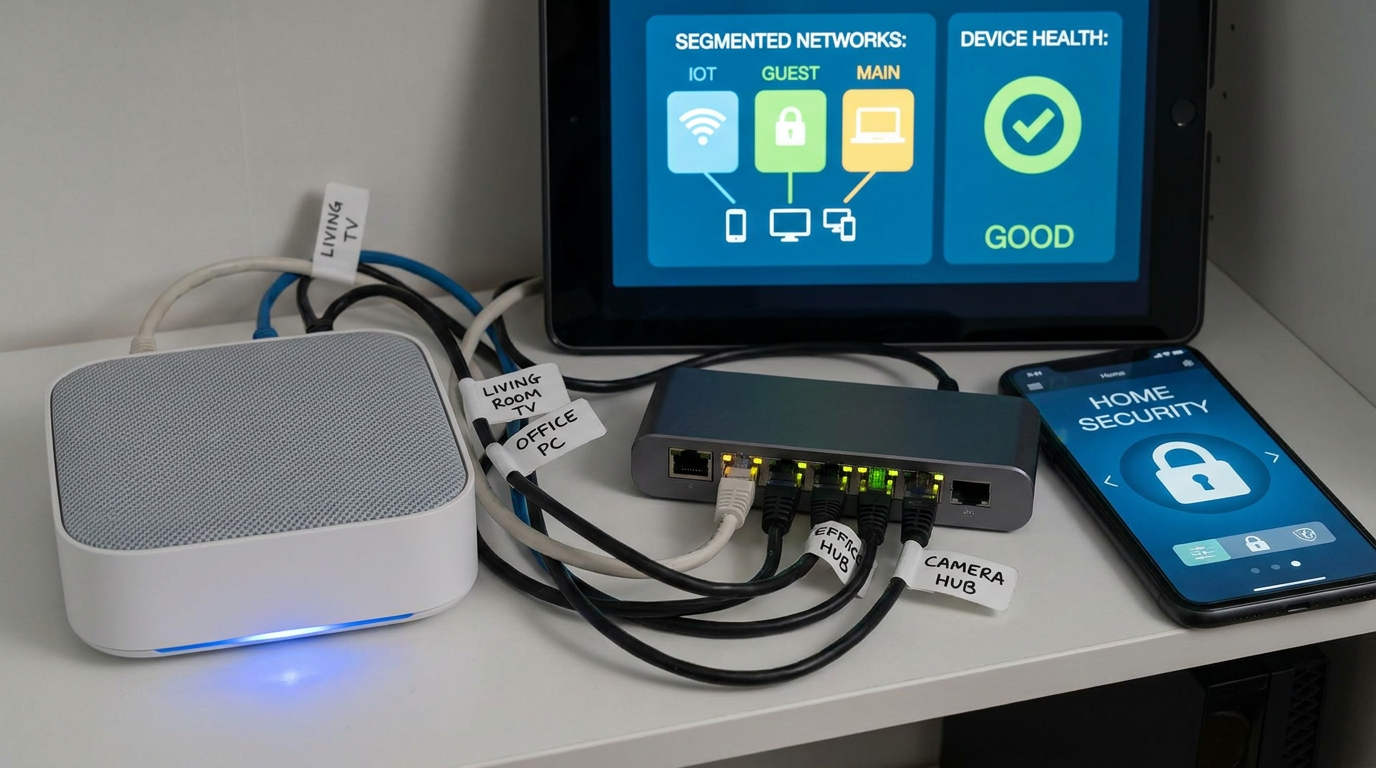
A connected environment should be segmented thoughtfully. Place IoT devices on a separate network or VLAN where possible, especially in offices or advanced home setups. This limits lateral movement if one device is compromised. Use strong Wi Fi encryption, update router firmware, and consider wired connections for critical equipment such as workstations, hubs, or conferencing gear. Reliable infrastructure often delivers more improvement than adding another device.
Step 5: Implement strong authentication and access control
Use unique passwords, a password manager, and multifactor authentication wherever available. Remove dormant accounts and review guest access regularly. Assign permissions by role instead of giving every user full control. In family settings, that may mean restricted control for children or guests. In business settings, it means aligning access with job function and device sensitivity. Identity is one of the few controls that scales effectively as ecosystems grow.
Step 6: Review privacy and data sharing settings
Every major platform and many devices include settings for voice recordings, analytics sharing, third party integrations, and retention periods. These should be reviewed manually rather than left at defaults. If local processing is available for sensitive tasks, it is often worth enabling. If remote access is rarely needed for a particular device, consider limiting it. Privacy by design is usually a series of small configuration choices, not one dramatic purchase.
Step 7: Build automations slowly and test them
Start with a few high value routines that are easy to verify. Examples include occupancy based lighting, away mode security, pre meeting room activation, or temperature schedules aligned with actual presence. Test each automation under normal and edge conditions. Ask what happens if the internet fails, the sensor misses an event, or a guest is present. Reliable automation feels invisible. Unreliable automation creates distrust quickly.
Step 8: Maintain the ecosystem as an ongoing system
Create a simple maintenance cadence. Check for firmware updates, expired subscriptions, battery levels, device logs, and orphaned automations every month or quarter. Document network names, hub locations, recovery steps, and administrator credentials securely. The more an ecosystem supports important routines, the more it should be treated like operational infrastructure rather than a casual collection of gadgets.
Emerging directions to watch
Several trends are shaping the next stage of digital ecosystems. Matter will likely continue to improve the baseline experience for cross vendor smart home setups, even if implementation remains uneven across categories. Government backed IoT labeling initiatives, including the FCC Cyber Trust Mark in the United States, may help shift consumer behavior toward safer purchasing decisions. Security labeling will not replace due diligence, but it can create a more visible standard for minimum expectations.
Energy aware automation is also likely to expand as cost sensitivity and sustainability targets converge. More households and workplaces want systems that respond dynamically to occupancy, weather, pricing signals, and equipment performance. This pushes digital ecosystems closer to the logic of energy management systems and smart buildings, even in smaller properties. Over time, the distinction between consumer convenience technology and operational infrastructure will continue to narrow.
Another important direction is the intersection of home ecosystems with care and telehealth. Connected living environments can support medication reminders, fall detection, environmental alerts, and communication workflows for caregivers. But because these use cases involve more sensitive data and potentially vulnerable users, they increase the need for privacy safeguards, clear consent models, and transparent device behavior.
In commercial settings, digital twins and advanced dashboards may become more common as organizations seek a clearer intelligence layer over physical spaces. A digital twin for a building or office does not just show devices. It represents how rooms, energy systems, occupancy, and equipment interact over time. That model can support forecasting, maintenance planning, and operational optimization in ways that static control panels cannot.
Design for calm, not just connectivity
The best digital ecosystems do not constantly announce themselves. They create calm. They reduce repetitive decisions, surface only the information that matters, and keep critical systems reliable without demanding constant attention. This is an important design standard because more connectivity does not automatically improve quality of life. In many environments, bad automation is more stressful than no automation at all.
Calm design means keeping interfaces simple, naming devices clearly, using consistent routines, and avoiding unnecessary duplication. It also means planning for failure. If a cloud service goes down, if a power interruption occurs, or if one platform changes pricing, the system should degrade gracefully rather than collapse. Resilience is a human experience as much as a technical one.
There is also value in restraint. Not every object needs to be connected, and not every task needs automation. The right question is whether connectivity improves usefulness, efficiency, or safety in a meaningful way. If it does not, the smartest choice may be to leave that function offline. A mature digital ecosystem is selective. It uses technology where technology creates clear value.
Conclusion
Digital ecosystems are becoming the operating layer of modern living. They shape how we manage energy, security, communication, work, comfort, and access across increasingly connected homes and workplaces. The opportunity is real, especially in markets such as Canada where broadband access is widespread and smart device adoption is already meaningful. But the benefits do not come from device accumulation alone. They come from intentional design.
The most successful ecosystems are built on strong connectivity, interoperable standards, thoughtful orchestration, secure identity management, and a balance between cloud convenience and local resilience. They treat cybersecurity and privacy as core design requirements, not optional extras. They evolve with user needs instead of locking those users into rigid platforms that become harder to maintain over time.
For families, remote workers, landlords, small businesses, and facility managers, the path forward is surprisingly practical. Start with the routines that matter most. Audit what already exists. Choose interoperable tools. Segment networks. Strengthen authentication. Review privacy settings. Build automations slowly. Maintain the system with the same discipline you would apply to any other critical infrastructure. A seamless digital ecosystem is not about making life feel more technical. It is about making life and work feel more coherent, secure, and intelligently supported.



No Comment! Be the first one.