Finch West’s Second Dig: What Ongoing LRT Construction Reveals About Infrastructure Delivery Risk
Eight and a half months after Line 6 Finch West opened to riders, crews are back on the corridor, tearing up sidewalks that were only recently rebuilt for the LRT. For anyone tracking large scale infrastructure as a driver of urban growth, this is not a small footnote. It is a signal worth reading carefully.
Transit corridors like Finch West are supposed to be the backbone of intensification strategy. They justify density, they anchor transit oriented development, and they shape where housing supply gets built over the next generation. That only works if the infrastructure underneath the promise is delivered cleanly, on time, and on budget. What CityNews documented between Finch West and Humber College stations, rubble piles, blocked bike lanes, malfunctioning crosswalk signals, and repeated excavation of finished work, tells a different story about execution risk on a project originally priced at 2.5 billion dollars.
The numbers matter here more than the pylons. A late 2025 Metrolinx board report showed 2.45 billion dollars already incurred, with a current baseline cost sitting at 3.75 billion dollars once exclusions are factored in. That is a meaningful gap between original projection and current reality, and it lands on a corridor where the visible construction has not actually stopped. For anyone underwriting land value or development timelines along Finch West, that gap is the real story. Infrastructure cost overruns do not stay contained to the transit file. They ripple into how quickly surrounding parcels get built out, how confident developers feel about phasing near the line, and how governments prioritize the next corridor on the list.
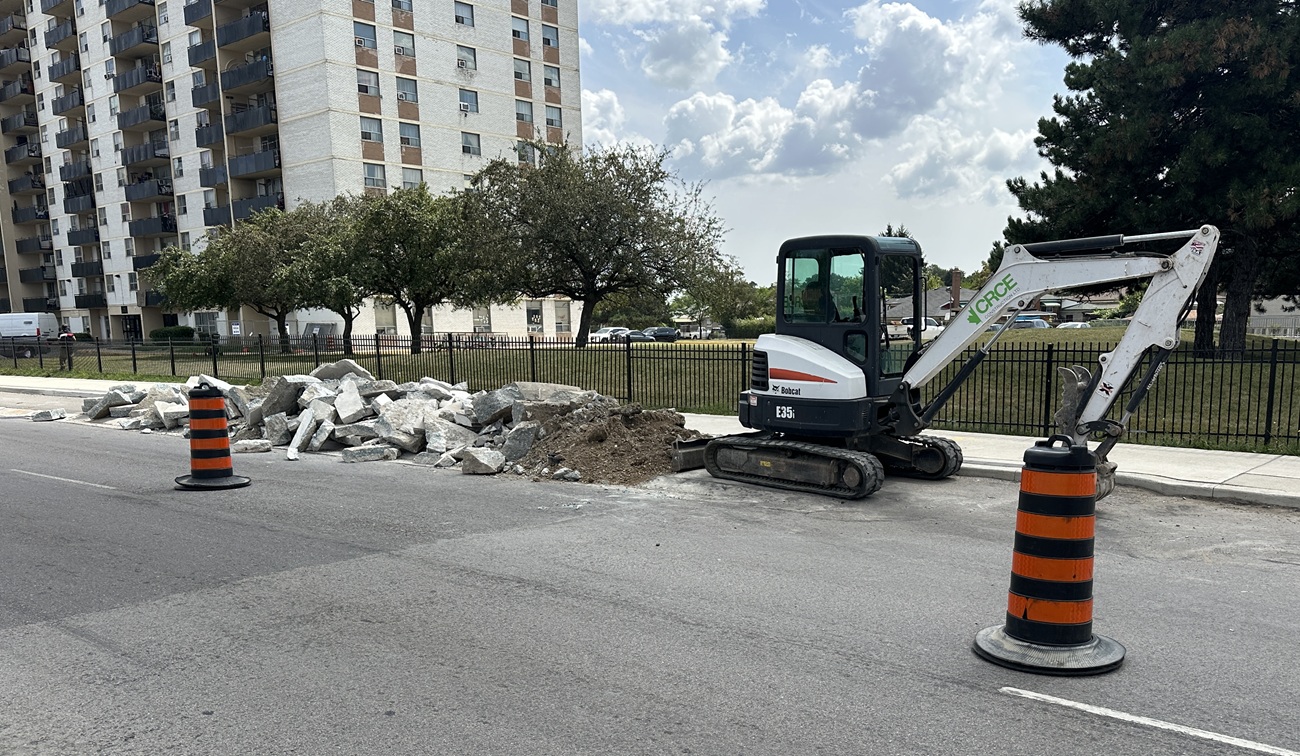
There is also a governance layer that developers and planners should not ignore. Tom Rakocevic, the MPP for Humber River-Black Creek, called for a public inquiry, arguing the community has waited years only to keep watching lane closures appear without warning. Noah Jarvis of the Canadian Taxpayers Federation raised a sharper point for anyone modelling future project risk: infrastructure being rebuilt shortly after completion suggests sequencing and planning failures inside the delivery structure itself, not just a rough patch of construction. Metrolinx’s own response, that “final completion activities to surrounding infrastructure is currently underway in several areas,” reads more like a placeholder than a resolution.
Development is never just about land. It is about timing, access, infrastructure, policy, demand, and the future identity of a community.
To be fair, there is progress worth acknowledging on the operations side. Round trip travel times have reportedly improved by roughly 15 minutes since opening, aided by lagging left turns and rotational signal phasing rolled out across the corridor’s intersections. That is a legitimate win for daily ridership. But operational tuning and physical construction risk are two separate ledgers, and the second one is the one that matters for anyone evaluating whether the next phase of growth along this corridor arrives on schedule.
Toronto has more transit backed housing intensification riding on projects like this than most residents realize. When a flagship line needs a second round of civil work less than a year after launch, the lesson for land strategy is straightforward: build in schedule buffer, price in oversight risk, and treat provincial cost reports as leading indicators, not year end formalities. The Ford government’s recent order to review Metrolinx alongside more than a dozen other entities suggests the province may be arriving at the same conclusion.
Source: CityNews Toronto