Sen̓áḵw’s Fast Lease-Up Signals What Large-Scale Land Development Can Deliver
A hundred leases in under a month is not just a leasing update. It is early proof of concept for one of the most ambitious land development stories in the country. Sen̓áḵw, the Squamish Nation and Nch’ḵay̓ Development Corp. project rising around the Burrard Street Bridge in Kitsilano, opened its first tower for occupancy on June 1 and is already being described by its own chief development officer, Jen Podmore Russell, as having the fastest leasing velocity in Vancouver over the last several years.
That pace matters more than any single unit price. Yes, there was a stir when a four-bedroom penthouse briefly appeared listed at $12,500 a month before being pulled from a staging environment, and two premium three-bedroom units were floated near $9,500. But those units are outliers by design, just one four-bedroom and two three-bedrooms out of 333 units in the first tower. The real story sits in the 107 studios starting near $1,735, the 153 one-bedrooms from $2,365, and the 70 two-bedrooms from $3,815, all priced, in Russell’s words, to real-time market comparables for new Vancouver construction.
What makes Sen̓áḵw a development case study rather than just another rental launch is the structure underneath it. This is Squamish Nation land, returned by a 2002 B.C. Court of Appeal decision after a right-of-way and forced eviction dating to around 1913. It is financed by a $1.4 billion federal loan through CMHC, built to deliver 3,000 units across the first two of four planned phases. One in five units is reserved as below-market housing for Squamish Nation members and other Indigenous residents. That combination, sovereign land ownership, federal capital, and a phased build-out toward eleven towers ringing the bridge, is a template that large-scale housing strategy elsewhere should be studying closely.
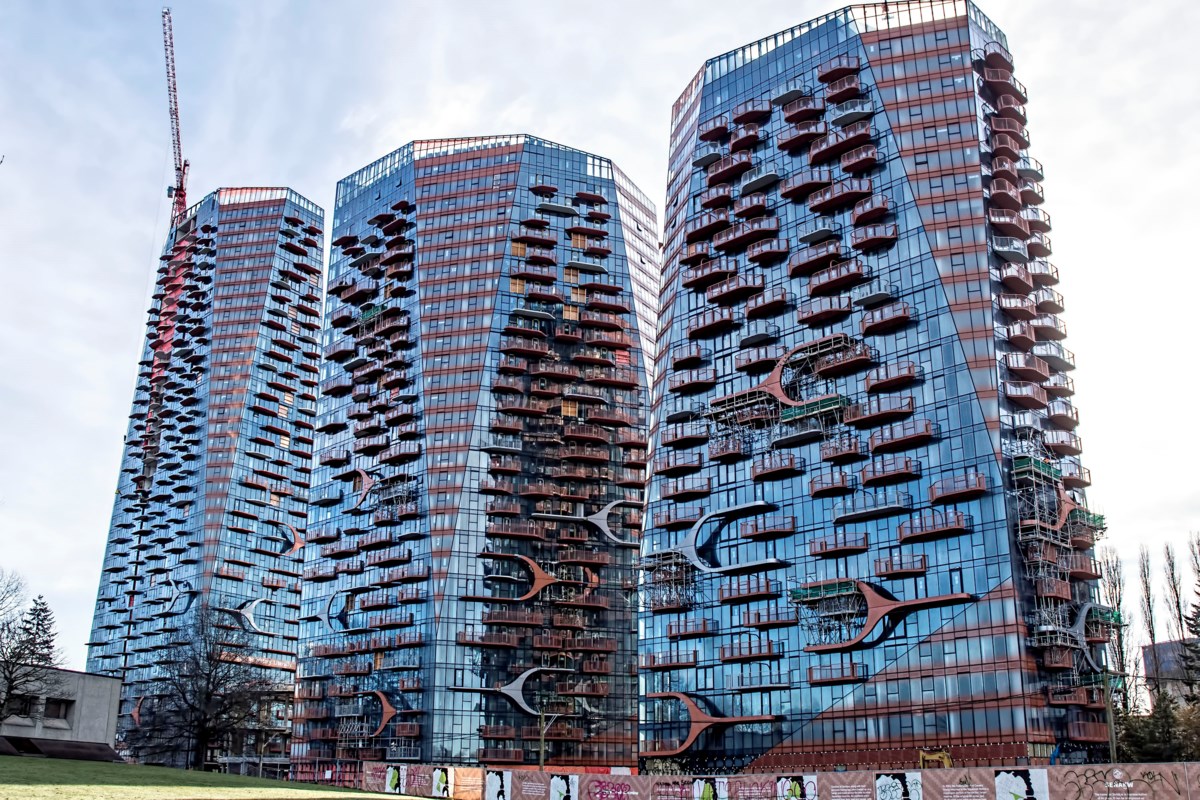
Development is never just about land. It is about timing, access, infrastructure, policy, demand, and the future identity of a community.
Two more towers are slated to open this fall, adding a combined 1,409 units to phase one, with residents leaning on car share, transit, and even False Creek ferries rather than car ownership, since parking is deliberately limited. A shared 25,000 square foot wellness pavilion and 9,000 square foot fitness centre across the three towers point to a project designed for density done well, not density as compromise. With 15,000 people already registered to view the leasing rollout and demand clearing units this quickly at these scales, Sen̓áḵw is becoming a live test of whether Indigenous-led, federally financed development can absorb urban housing demand faster and more equitably than conventional private build models. For anyone tracking where large-scale housing supply strategy is headed in this country, this site deserves ongoing attention.
Source: Business in Vancouver