

Waterfront Land, Provincial Power, and the Real Cost of Uncertainty at Billy Bishop
Every major development story eventually becomes a story about who controls the land, and Toronto’s waterfront just proved it again. City council voted 25 to 1 this week to demand the province repeal legislation that would let Queen’s Park seize city owned waterfront property, including Little Norway Park and portions of the Toronto Islands, to advance a proposed expansion of Billy Bishop Toronto City Airport. This is not simply an airport dispute. It is a jurisdictional fight over land control, and land control is the foundation of every development decision that follows it.
I have spent my career watching how these fights shape a city’s growth trajectory long after the headlines fade. When a province gains the legal power to override a municipality’s ownership of core waterfront land, it changes the calculus for every developer, planner, and investor watching that corridor. Mayor Olivia Chow’s position, that the waterfront belongs to everyone and cannot simply be reassigned by provincial fiat, is not just political messaging. It is a defense of the planning authority that cities need to negotiate density, infrastructure, and public benefit on their own terms.
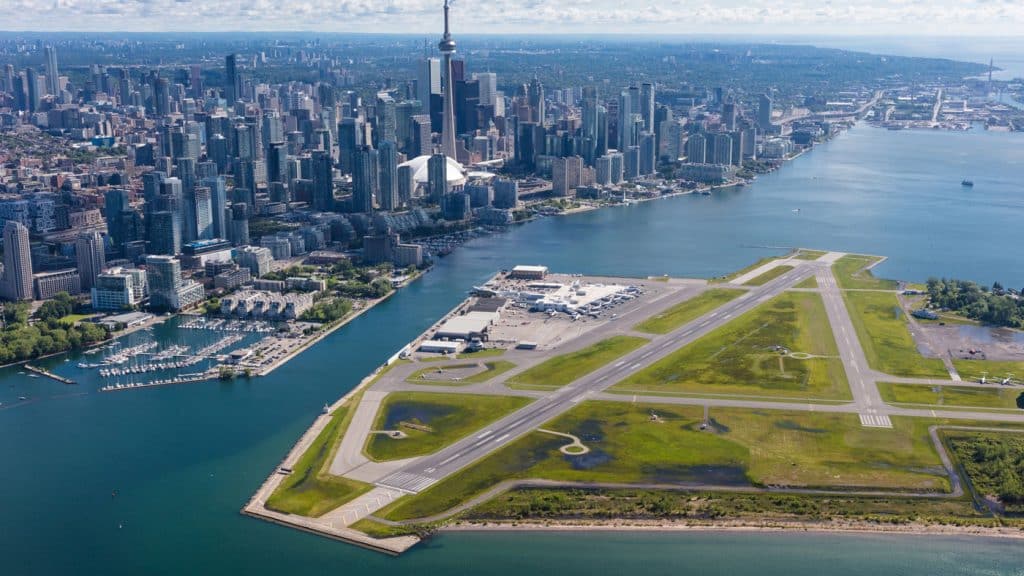
What makes this moment particularly consequential is the federal government’s intervention. Ottawa confirmed it will not support the expansion “at this stage,” a decision shaped by public consultations in which 87 per cent of respondents opposed changing the airport. Federal officials specifically flagged the risk to Toronto’s ability to build much needed housing as a factor in holding back support. That is the line that matters most to my readers. Waterfront land near downtown Toronto is among the most valuable and scarce development ground in the country, and every hectare tied up in an aviation expansion fight is a hectare removed from housing supply conversations at a time when the city cannot afford that trade off.
The waterfront belongs to everyone. The province can imagine whatever they want to and spend money doing whatever they want to, but for us, I say no, because people have spoken.
Ontario’s transportation minister, Prabmeet Sarkaria, has been clear that the province has no intention of repealing the law and considers the expansion plan very much alive. That leaves developers, city planners, and long term investors in a familiar but uncomfortable position: strategic ambiguity. Projects near this stretch of waterfront cannot be confidently priced, timed, or planned while ownership authority itself remains contested between two levels of government. Feasibility studies depend on knowing who ultimately holds land use power, and right now that answer is genuinely unresolved.
For anyone tracking Toronto’s growth strategy, this dispute is a reminder that housing supply targets are never purely about zoning approvals or construction capacity. They are also about political will and legal clarity over who gets to decide what valuable urban land becomes. Until that jurisdictional question is settled, one of the city’s most strategically important waterfront corridors will remain frozen in a holding pattern that serves no one’s long term interest.
Source: Ontario Construction News