



There are some homes that feel good the moment you walk in. The light is gentle, the air feels fresh, the materials are comforting to touch, and the rooms invite you to exhale. Often, that feeling is not accidental. It comes from a quiet but powerful design approach known as biophilic wellness, which is the practice of shaping our homes in ways that reconnect us with nature and support how we actually want to live.
Table Of Content
- What Biophilic Wellness Really Means
- Why Nature-Inspired Homes Feel So Good
- The Emotional Benefits of Biophilic Wellness at Home
- A Greater Sense of Calm
- A Deeper Connection to Home
- Better Mood and Mental Refresh
- The Physical Benefits: Light, Air, Sleep, and Comfort
- Biophilic Design Is More Than Houseplants
- Simple Ways to Bring Biophilic Wellness Into Your Home
- Start With Light
- Make Fresh Air Part of the Routine
- Choose Natural Materials You Actually Want to Live With
- Add Plants With Intention
- Use Layout to Support Views and Flow
- Reduce Visual Clutter
- How to Create a Biophilic Bedroom for Better Rest
- How to Bring Biophilic Wellness Into the Kitchen and Dining Area
- Creating a Restorative Living Room
- Biophilic Wellness for Renters and Small Spaces
- Healthy-Home Nuances That Matter
- A Gentle Room-by-Room Reset Plan
- The Real Beauty of Biophilic Wellness
Biophilic wellness is not about chasing a trend or turning your home into a greenhouse. It is about recognizing that people tend to feel better when they are surrounded by natural light, organic textures, greenery, fresh air, calming views, and spaces that echo the rhythm and ease of the natural world. Research reviews consistently associate nature-rich environments with lower stress, better mood, and stronger cognitive performance, even though experts also note that the evidence can vary by setting and study design. In everyday life, that translates into something most of us understand instinctively: home feels more restorative when it is connected to nature in meaningful ways.
What makes this idea so appealing is that it is both beautiful and practical. Biophilic wellness overlaps with healthy-home essentials like indoor air quality, ventilation, moisture control, daylight access, and comfort. It asks us to look beyond surface-level decor and think about how a room supports our sleep, our focus, our routines, and our emotional state. In that sense, it is less about perfection and more about creating a home that quietly helps you feel like yourself.
For homeowners and renters alike, the good news is that you do not need a major renovation to begin. Small, thoughtful changes can shift the feeling of a room in a powerful way. A chair moved toward a window, a mirror placed to bounce daylight, a linen curtain that lets the morning in, better airflow in the kitchen, a few natural textures in the bedroom, less visual clutter in a busy corner. These are simple moves, but together they can make daily life feel calmer, brighter, and more grounded.
In this guide, we will explore what biophilic wellness really means, why it matters for emotional and physical well-being, and how to bring it home in a realistic, credible way. The goal is not to create a picture-perfect interior. The goal is to create a space that supports comfort, restoration, and connection in the place where life actually happens.
What Biophilic Wellness Really Means
At its heart, biophilic wellness is based on the idea that human beings have a deep affinity for nature. We respond to sunlight, views of trees, fresh breezes, natural materials, water, organic forms, and environments that feel alive and balanced. Modern frameworks such as WELL describe biophilia as much more than adding plants to a room. It includes natural elements, nature-inspired patterns, life-like processes, lighting, layout, materials, colors, and sensory experiences that help a space feel restorative and connected to the living world.
This distinction matters because biophilic design is sometimes reduced to a style. Earthy colors, a few faux leaves, and a beige palette may look calm on social media, but they do not necessarily create a healthier or more nourishing home. A truly supportive space pays attention to fundamentals. Is there enough daylight for your body clock to feel oriented? Does the home get fresh air when outdoor conditions are suitable? Are there natural materials that add warmth and tactile comfort? Do your rooms help you feel settled, or do they overstimulate and exhaust you?
There is growing criticism of what some call wellness washing, where a space appears wellness-focused but lacks the basics that actually affect daily comfort and health. This is especially important in biophilic design because nature is not just a visual theme. It is an experience. If a room has stylish plant prints but poor ventilation, minimal daylight, heavy clutter, and stale air, it may not deliver the emotional or physical support people are hoping for.
That is why the most useful way to think about biophilic wellness is as a blend of design psychology and healthy-home fundamentals. It is an approach that asks how your home can help regulate stress, support better rest, improve comfort, and make ordinary routines feel softer and more pleasant. It is about living well, not just decorating beautifully.
Why Nature-Inspired Homes Feel So Good
Many of us spend most of our lives indoors, especially during colder seasons, busy work periods, or demanding family stages. That can create a quiet disconnect from the natural rhythms that help us feel balanced. When your home lacks daylight, airflow, sensory variety, and gentle visual relief, the result can be subtle but real. Rooms may feel draining, flat, stale, or mentally noisy, even when they are clean and attractive.
Biophilic wellness offers an antidote to that indoor fatigue. Studies and reviews have linked biophilic design with reduced stress, improved emotional regulation, stronger mental resilience, and better cognitive functioning. While researchers continue to call for stronger causal evidence, the pattern is compelling enough that nature-integrated spaces are gaining attention not just in offices and healthcare settings, but increasingly in homes. This makes sense because home is where our nervous systems spend the most time trying to reset.
There is also something deeply emotional about being surrounded by natural cues. Wood grain, morning light, breezy curtains, leaves moving near a window, soft textured fabrics, the smell of clean air after rain. These sensory details help a home feel more alive. They can make routines less mechanical and more grounding, whether you are making breakfast, helping children with homework, or winding down before bed.
Biophilic wellness works best when it supports the way a home feels to live in, not just the way it looks in a photograph.
That emotional payoff is one reason the approach resonates so strongly right now. In a time when many people are craving less stress and more steadiness, the home has become a place where wellness needs to feel tangible. Biophilic design answers that desire with small sensory comforts that bring the outside world closer and make indoor life feel less disconnected.
The Emotional Benefits of Biophilic Wellness at Home
A Greater Sense of Calm
One of the most immediate effects of biophilic design is a feeling of calm. Spaces that include daylight, natural textures, soft organic forms, and a sense of openness often feel easier on the nervous system. They reduce the visual harshness that can come from overly synthetic, dark, or cluttered environments. Even a modest apartment can begin to feel more spacious and soothing when you let in light, simplify sightlines, and add a few elements that echo nature.
This calm is not only aesthetic. It affects how you move through your day. A gentler living room may encourage you to sit down and actually rest. A bright breakfast corner may help mornings feel less rushed. A bedroom with fewer harsh stimuli may help signal to your body that it is time to slow down. These shifts matter because comfort is often built from small repeated experiences, not one dramatic design decision.
A Deeper Connection to Home
Biophilic wellness can also strengthen your emotional connection to your space. Many people want a home that feels grounding rather than performative. Natural materials, living plants, and thoughtful light tend to create an atmosphere that feels more human and less artificial. The result is often a stronger sense of belonging, especially in homes that have previously felt temporary, impersonal, or overly functional.
This is particularly meaningful for renters, who may not be able to renovate but still want to feel rooted where they live. Simple biophilic choices such as using woven textures, displaying branches or seasonal greenery, creating a window-focused reading nook, or choosing earth-toned fabrics can bring warmth and identity to a space without permanent changes. Home begins to feel less like a stopover and more like a place that supports you.
Better Mood and Mental Refresh
Nature-rich spaces often feel emotionally restorative because they provide visual softness and sensory variation. Instead of a room asking for constant attention, it offers quiet interest. A leafy plant, a shadow cast by sunlight, the texture of a ceramic vase, the changing sky outside a window. These details give the mind something gentle to land on, which can be especially helpful after screen-heavy days or periods of stress.
There is also a subtle dignity in designing for emotional well-being. It sends the message that your daily life deserves care. That your kitchen should feel pleasant at 7 a.m. That your hallway should not feel forgotten. That your bedroom should help you rest. Biophilic wellness invites a more tender relationship with the spaces that hold your routines.
The Physical Benefits: Light, Air, Sleep, and Comfort
Although biophilic wellness has an emotional warmth to it, its physical benefits are just as important. Much of what makes a home feel restorative also overlaps with healthy building basics. This includes access to daylight, opportunities for ventilation, moisture management, and choices that support indoor environmental quality. In other words, a beautiful nature-inspired home should also help your body feel more comfortable in it.
Natural light plays a particularly important role. Guidance from the World Health Organization highlights sufficient natural light exposure as relevant to mental health, biophysical performance, and safety. Daylight helps orient our circadian rhythms, which influence sleep, energy, and mood. When rooms are chronically dim or disconnected from daylight patterns, daily life can feel sluggish and unbalanced. By contrast, a home that welcomes morning light and respects evening wind-down can feel deeply regulating.
Air quality matters too. The EPA advises that indoor air quality is improved through source control, adequate ventilation, and filtration. Health Canada also notes that opening windows and doors can support natural ventilation in the right conditions, while cautioning that outdoor air quality should be considered. This is an important nuance because fresh air is part of biophilic wellness, but only when it is truly beneficial. On smoky days, during periods of outdoor pollution, or in homes facing environmental irritants, filtration and controlled ventilation may be the wiser choice.
Better airflow can make a home feel instantly more comfortable. Kitchens feel less stuffy, bathrooms dry more effectively, bedrooms feel fresher, and living spaces lose that heavy indoor feeling that can build up over time. Good ventilation also supports moisture control, which is critical in preventing mold and preserving healthy indoor conditions. This is where wellness becomes practical. A home that looks earthy but struggles with dampness or stale air is not serving its occupants well.
There is also a growing awareness that energy efficiency and wellness need to work together. Sealing a home tightly without proper ventilation may reduce drafts, but it can also trap pollutants and moisture. A truly healthy approach is balanced. You want comfort, efficiency, and fresh indoor conditions to support one another, not compete. Biophilic wellness fits beautifully into that philosophy because it values the lived experience of the home as much as its style.
Biophilic Design Is More Than Houseplants
Plants are wonderful, but they are only one part of the picture. In fact, one of the biggest misconceptions about biophilic design is that it begins and ends with greenery. Plants can absolutely add life, softness, and joy, but a room with ten plants and no daylight, poor air movement, and visual overcrowding may feel less restorative than a simple room with one well-placed tree, open curtains, breathable fabrics, and clear sightlines.
Biophilic wellness can show up through shape, rhythm, and material as much as through literal nature. Curved lines tend to feel softer than sharp, rigid ones. Natural woods, stone, cotton, linen, wool, and rattan add warmth and tactile richness. Patterns inspired by leaves, water, landscapes, or organic repetition can create subtle familiarity. Even color can support the effect, especially shades drawn from earth, sand, moss, sky, or clay rather than artificially saturated tones that dominate a room.
There is also the idea of sensory layering. Nature is multisensory, so the most nurturing homes often are too. They balance what you see with what you touch, hear, and feel in the air. Sunlight warming a floor, the texture of a woven throw, the sound of a breeze through a screen, the coolness of stone in a bathroom, the freshness of an aired-out room. These details deepen the experience and make biophilic design feel believable rather than themed.
This broader view is empowering because it means you do not need a large budget or a dramatic makeover. You simply need to become more intentional about what your home offers your senses and your routines. Nature can enter through arrangement, habit, and atmosphere just as much as through objects.
Simple Ways to Bring Biophilic Wellness Into Your Home
Start With Light
Light is often the most transformative place to begin because it changes the entire emotional tone of a room. Clear the path to your windows as much as possible. If a heavy bookcase, dark curtain, or oversized furniture piece is blocking natural light, consider moving it. Use mirrors thoughtfully to reflect daylight deeper into the space, especially in smaller rooms, entryways, and apartments with limited exposure.
Window treatments matter too. Sheer curtains or light-filtering fabrics can preserve privacy while still allowing a soft glow to fill the room. In bedrooms, consider how morning light enters and how artificial lighting supports your evening routine. Biophilic wellness is closely connected to circadian rhythm, so a home that is bright in the daytime and calmer at night can support better sleep and a more natural sense of energy.
Make Fresh Air Part of the Routine
When outdoor conditions allow, opening windows can make a room feel instantly more alive. Cross-ventilation is especially helpful, which means encouraging airflow from one side of the home to another. This can refresh stale spaces, improve comfort, and support indoor air quality. Still, it is important to pay attention to seasonal realities, pollen, wildfire smoke, traffic pollution, and local outdoor air quality before relying on open windows.
If natural ventilation is not always practical, focus on the healthy-home basics recommended by public health guidance. Control pollution sources where possible, use exhaust fans in kitchens and bathrooms, change filters on schedule, and make sure your home has appropriate ventilation strategies for its layout and climate. Freshness is one of the clearest emotional signatures of biophilic wellness, and it starts with real air quality, not just appearance.
Choose Natural Materials You Actually Want to Live With
Biophilic homes tend to feel more grounding when they include materials that age gracefully and invite touch. Wood, stone, linen, cotton, wool, clay, jute, and woven fibers all bring depth and a sense of authenticity. You do not need every surface to be natural, and you do not need expensive statement pieces. Sometimes a linen duvet cover, a wooden tray, a wool throw, or a natural-fiber rug can soften the mood of a room more effectively than a major furniture purchase.
The beauty of these materials is that they often feel comforting without trying too hard. They absorb light well, they add quiet texture, and they create a lived-in elegance that supports everyday routines. In family homes, this can be especially appealing because natural materials often feel less formal and more forgiving. They help a room feel beautiful but still usable.
Add Plants With Intention
Plants do matter, and they can bring enormous life to a home when chosen thoughtfully. The key is not quantity. It is placement, maintenance, and fit. A few healthy, well-positioned plants can create a stronger sense of ease than a crowded assortment that blocks light, collects dust, or becomes another source of stress. Low-maintenance options are often best for busy households, renters, and anyone new to plant care.
Think about where greenery will have the most emotional impact. A small plant in the bathroom can make the room feel fresher. A medium plant near a window can soften a hard corner. Herbs in the kitchen can connect daily cooking to living growth. If caring for plants feels daunting, branches in a vase, seasonal cut greens, or a single sculptural plant can still create the desired connection without overwhelming you.
Use Layout to Support Views and Flow
One of the simplest biophilic strategies is to arrange your home so that your eye naturally lands on light, windows, or calming objects rather than clutter. Position a chair to face outside. Keep a key sightline clear. Let the first thing you see in a room be something quiet and restorative. These changes can have a remarkable effect because they influence how your body reads a space before you consciously think about it.
Flow matters too. Nature rarely feels cramped or overfilled, and rooms tend to feel better when movement is easy. If furniture creates bottlenecks, if surfaces are overloaded, or if decor competes for attention, the room may feel more stressful than nurturing. Biophilic wellness often means editing as much as adding. Space itself can be a luxury, especially when it allows light and air to move freely.
Reduce Visual Clutter
Clutter is not just a storage problem. It can interrupt the calm, restorative feeling that biophilic design tries to create. This does not mean your home must be minimal or sparse. It simply means that every room benefits from moments of visual rest. Open surfaces, cleaner corners, and a little breathing room around objects can make natural textures and light feel more present.
If you are overwhelmed, start small. Clear the windowsill in one room. Simplify the entry table. Remove items that block a beautiful sightline. Use baskets, closed storage, or trays to gather necessities without leaving them visually scattered. When a room feels less noisy, its natural features can finally be felt.
How to Create a Biophilic Bedroom for Better Rest
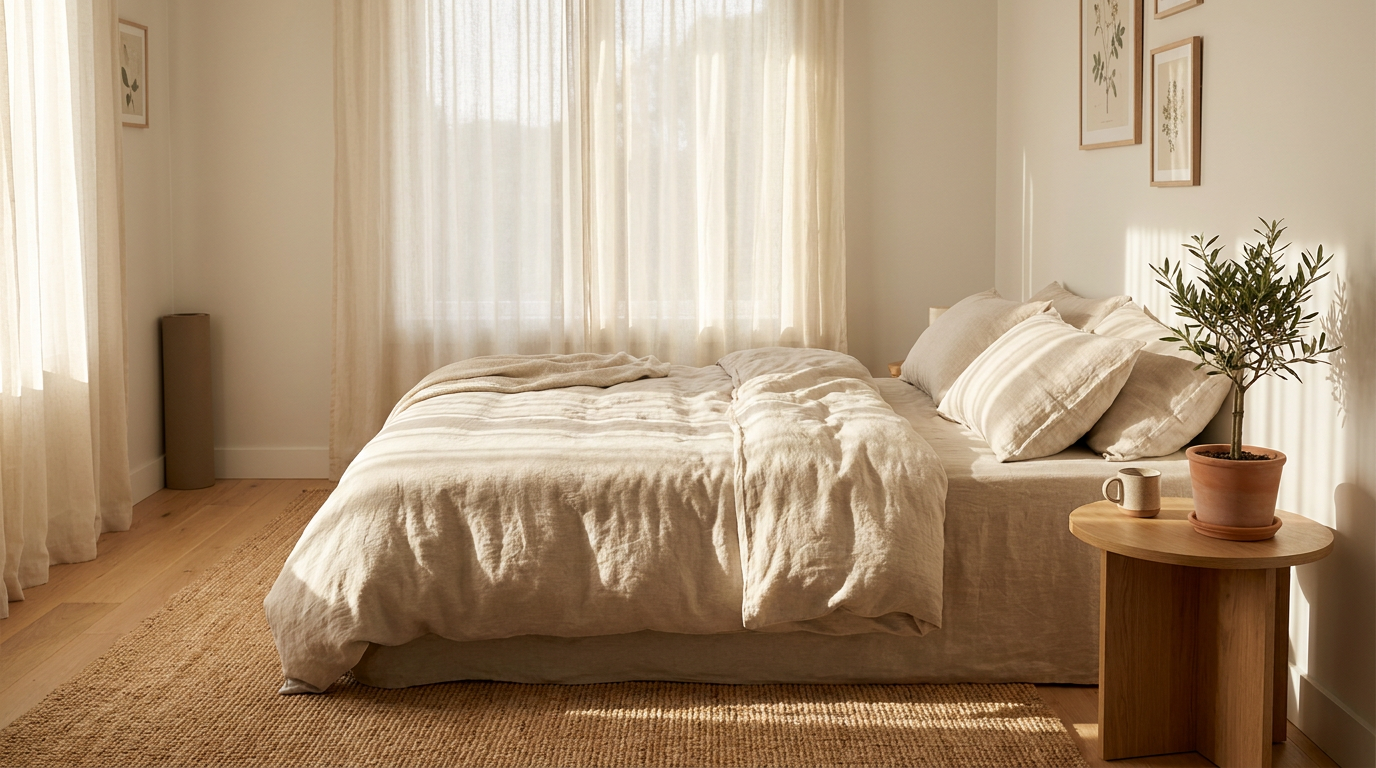
The bedroom may be the most important room for biophilic wellness because it is where the body resets. A supportive bedroom does not need to be elaborate. It needs to feel calm, breathable, and rhythmically aligned with sleep. Start with your relationship to light. Morning daylight is helpful for the body clock, while a softer, lower-stimulation environment in the evening can support wind-down. If possible, let the room brighten naturally in the morning and avoid overly harsh lighting before bed.
Textiles play a major role here. Natural fibers such as linen, cotton, and wool can make the room feel more breathable and tactile. Soft, layered bedding in relaxed tones often creates a deeper sense of ease than highly glossy or synthetic finishes. Consider what your hands and feet encounter first thing in the morning and last thing at night. Those little sensory moments shape the feeling of the room more than people often realize.
Keep the space visually quiet. Too much furniture, busy decor, or visible work materials can make it harder for the mind to settle. A simple plant, a wooden lamp, a ceramic bowl, a basket for blankets, and one or two meaningful pieces of art may be all you need. The aim is not to remove personality, but to reduce friction so the room feels like a true refuge.
How to Bring Biophilic Wellness Into the Kitchen and Dining Area
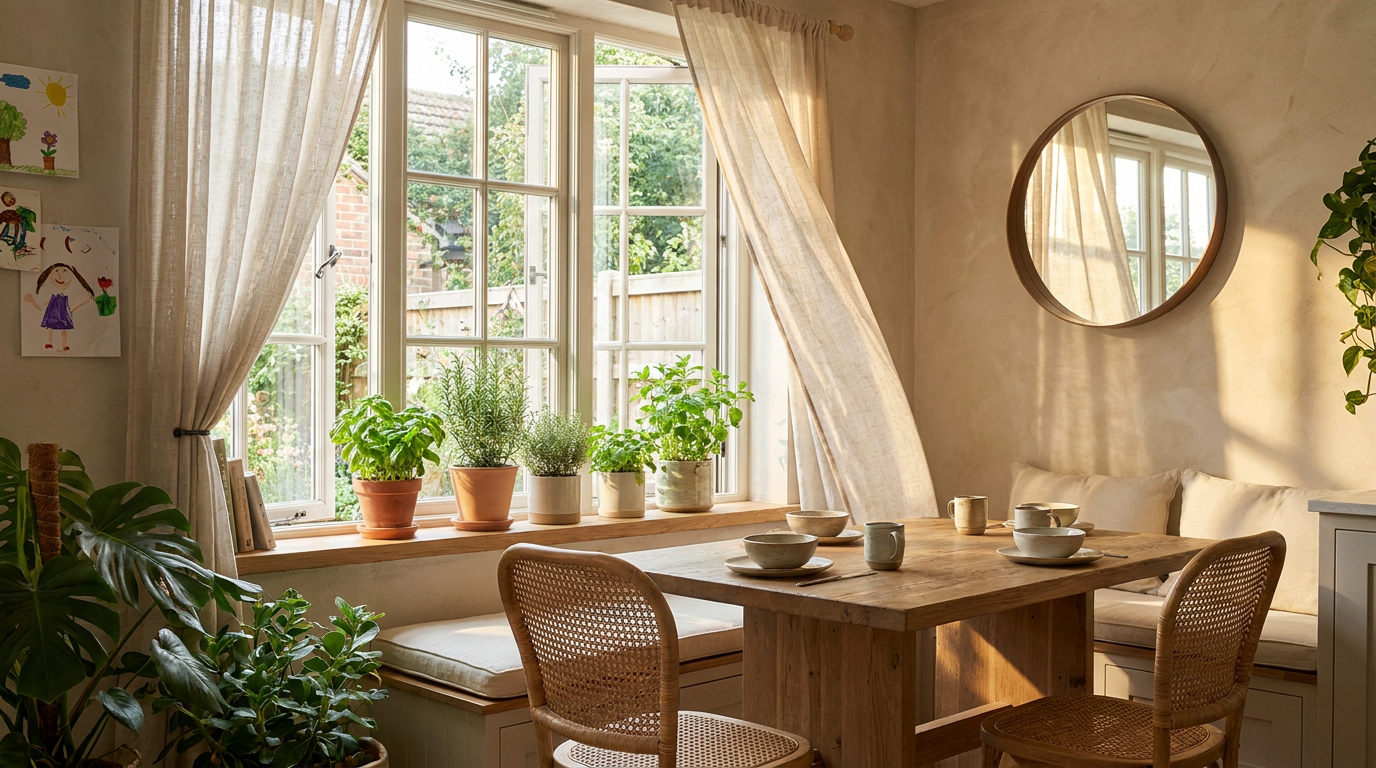
The kitchen and dining area are often the emotional center of a home. They are where nourishment, conversation, and routine come together, so they are ideal places to lean into biophilic design. Fresh air is especially important here because kitchens can collect heat, moisture, and odors quickly. Use exhaust fans consistently, open windows when appropriate, and make sure the room has a way to feel refreshed after cooking.
Small natural details can make a big difference in this space. A bowl of citrus, a pot of herbs, wooden cutting boards left out beautifully, linen towels, ceramic tableware, and natural light on the breakfast table all contribute to a feeling of grounded abundance. These are not dramatic styling tricks. They simply make everyday rituals feel more sensorial and cared for.
If your dining area lacks daylight, try bouncing light with a mirror or choosing lighter finishes that help reflect brightness. Family-friendly biophilic design should feel resilient and welcoming, not precious. The point is to make the room feel good to gather in, whether you are serving dinner to guests or assembling lunch boxes on a weekday morning.
Creating a Restorative Living Room
The living room carries a lot of pressure in modern homes. It may need to host conversation, movie nights, reading, playtime, and occasional work. Biophilic wellness can help the room hold all of that more gracefully by making it feel emotionally balanced. Begin with the seat that gets the best natural light and build around it. A reading chair near a window can become a restorative anchor for the whole room.
Choose textures that invite softness rather than visual tension. A natural-fiber rug, wood tones with visible grain, woven baskets, and layered fabrics can make the room feel grounded. Organic shapes, curved furniture, and subtle nature-inspired patterns can further relax the atmosphere. If you love color, use it in a way that still feels settled. Deep greens, warm clay, sky blue, sandy neutrals, and muted florals often work beautifully.
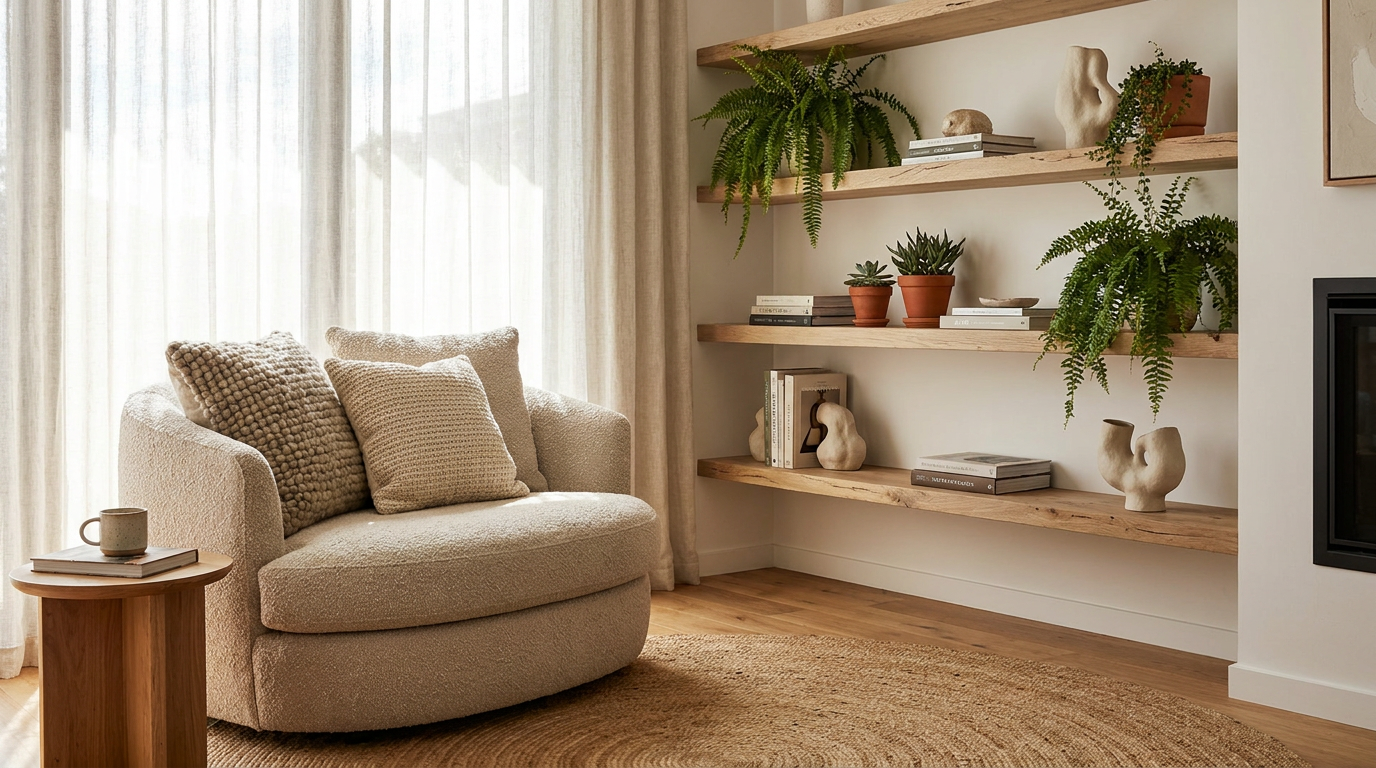
Try to let one focal point lead the room. This might be a window, a fireplace, a large plant, or a calm shelf composition made from natural materials. Too many competing focal points can create subtle agitation. A restorative room lets the eye settle, then gently wander. That rhythm is part of what makes nature feel calming, and it can be recreated indoors with restraint and warmth.
Biophilic Wellness for Renters and Small Spaces
One of the most encouraging things about biophilic wellness is that it is highly adaptable. You do not need to own a large home or begin a costly renovation to benefit from it. In fact, renters and small-space dwellers often become especially creative with these ideas because they focus on atmosphere rather than structural change. A window bench made from a small chair and side table, a peel-and-stick grasscloth-style surface, portable lamps with warm bulbs, and natural textiles can shift the feeling of a room dramatically.
Start by noticing what is already working. Maybe your apartment gets beautiful afternoon light, or your bedroom has one peaceful corner, or your kitchen windowsill is perfect for herbs. Biophilic wellness grows from those strengths. Instead of trying to force a magazine-perfect vision, build around your home’s natural gifts. Enhance the best light, support the freshest airflow, and simplify the areas that feel heavy.
For small spaces, restraint is especially important. More greenery is not always better if it makes the room feel crowded. More texture is not always better if it adds visual noise. Aim for a few meaningful choices that improve comfort and clarity. In a compact home, even one well-made, nature-connected corner can change the emotional tone of the entire space.
Healthy-Home Nuances That Matter
Because biophilic wellness sits at the intersection of design and health, it is worth paying attention to a few practical realities. Moisture control matters. A room cannot feel truly restorative if it has hidden dampness, mold risk, or poor bathroom ventilation. Likewise, radon awareness, source control for pollutants, and proper filtration are part of the broader healthy-home picture, especially in North American climates where homes may be sealed tightly for energy performance.
This is where the concept becomes more credible and useful. Rather than chasing a superficial nature look, you are building a home that feels good because it functions well. Daylight is meaningful. Fresh air is meaningful. Dry, clean, comfortable rooms are meaningful. Natural materials, sensory warmth, and visual calm then become layers that deepen the effect.
If you are making larger updates, think holistically. Energy-efficient retrofits should consider ventilation. New finishes should be selected with indoor comfort in mind. Window treatments should balance privacy and daylight. In the best biophilic homes, beauty and well-being are not separate conversations. They support one another seamlessly.
A Gentle Room-by-Room Reset Plan
If this all feels inspiring but slightly abstract, it can help to move through your home with a simple lens: where can I bring in more light, more air, more natural texture, and more visual calm? You do not need to do everything at once. In fact, biophilic wellness often works best when it evolves slowly and intentionally.
-
Begin with one room that feels emotionally important, such as the bedroom or living room. Focus on improving daylight access, clearing clutter, and adding one natural material that changes the mood.
-
Next, evaluate airflow and freshness. Use windows when outdoor air quality allows, run exhaust fans properly, and make a plan for filtration or maintenance if your home needs it.
-
Add greenery or natural life in a way that feels realistic. Choose low-maintenance plants, kitchen herbs, or seasonal branches rather than setting yourself up for care fatigue.
-
Layer in tactile comfort through fabrics, rugs, ceramics, baskets, or wood accents. Look for pieces that feel soothing to touch and easy to live with every day.
-
Finally, edit anything that interrupts the room’s sense of calm. This may be visual clutter, harsh lighting, blocked windows, or furniture that disrupts flow.
What emerges from this process is not just a prettier room. It is a room that participates in your well-being. Over time, those rooms begin to shape a home that feels more restorative as a whole.
The Real Beauty of Biophilic Wellness
The deepest appeal of biophilic wellness is that it reminds us home is not simply a backdrop. It influences how we wake up, how we recover, how we gather, how we focus, and how we rest. A nature-connected home does not need to be large, expensive, or flawless. It simply needs to support life with a little more grace.
That might mean opening the curtains sooner. Choosing a wooden stool instead of a synthetic one. Clearing the path to a window. Letting the bedroom feel less busy. Bringing herbs into the kitchen. Paying attention to the freshness of the air. These are modest decisions, but they add up to something meaningful. They make home feel softer on the senses and kinder to the body.
There is a quiet optimism in that. You do not need to escape to a cabin, move to the countryside, or redesign everything from scratch to feel closer to nature. You can begin where you are, with the rooms you already have, and make them more responsive to what human beings have always needed: light, air, comfort, texture, rhythm, and a sense of connection to the living world.
Biophilic wellness is not about bringing nature inside as a trend. It is about remembering that our homes feel better when they support our natural needs. When they do, everyday life changes. Mornings feel brighter. Evenings feel calmer. Rooms feel more generous. And home becomes not just a place you return to, but a place that truly restores you.



No Comment! Be the first one.