Toronto’s Market Correction Is Ending: What a Balanced GTA Means for Investors
For five years, Toronto real estate has swung between two extremes: a pandemic-fuelled frenzy that pushed the average price past 1.3 million dollars, then a prolonged buyer’s market that stripped sellers of leverage and dragged 2025 sales to their lowest level since 2000. New data from the Toronto Regional Real Estate Board suggests that pendulum is finally slowing down, and for investors, that stabilization matters more than any single price movement.
The numbers tell a quieter story than the headlines of the last few years. July sales dipped just 0.9 per cent year over year to 5,995 transactions, while new listings fell nearly 18 per cent to 14,484. On a seasonally adjusted basis, sales actually rose from June as listings declined, a classic signature of a market tightening from the bottom up rather than overheating from the top down. The average selling price sat at 1,003,956 dollars, down 4.5 per cent annually but showing signs of leveling off month over month.
TRREB’s chief information officer, Jason Mercer, described this as potentially the bottom of the current cycle. That framing should catch the attention of any investor who has been waiting on the sidelines for a clearer entry point. Bottoms are notoriously difficult to call in real time, but a market where declining supply meets steady demand is exactly the kind of environment that precedes price stabilization, not further erosion.
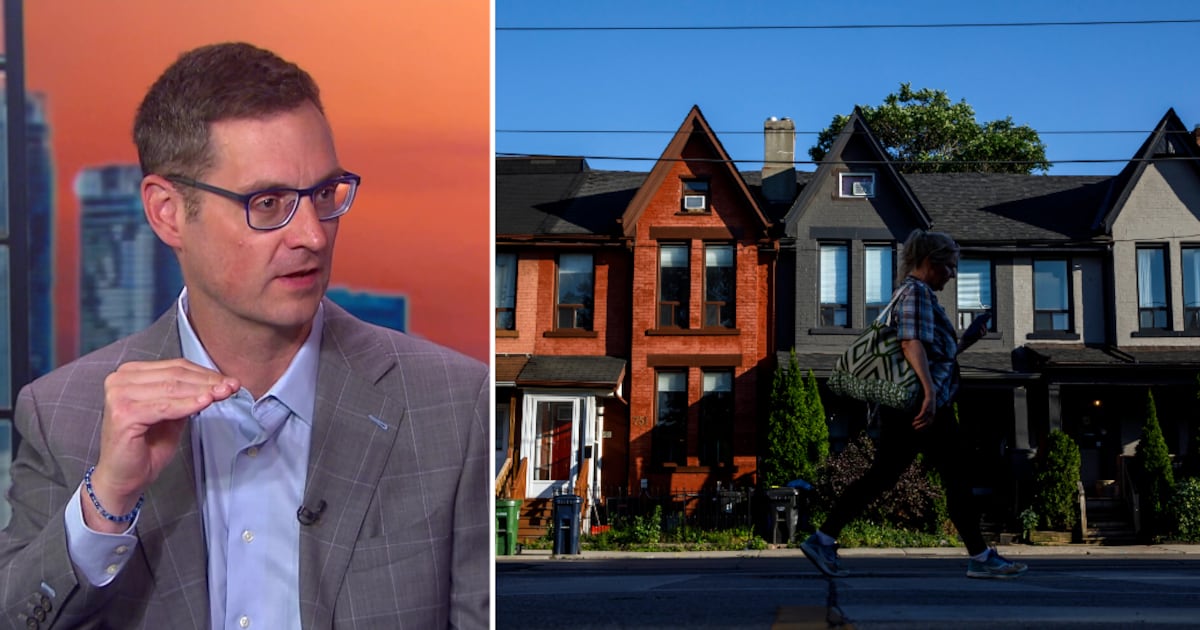
What is particularly instructive is the segmentation. James Milonas of The Agency Toronto West notes the freehold market has already tilted toward balance, while condos remain firmly buyer-driven. That divergence is a signal, not noise. Investors weighing freehold versus condo exposure should recognize that pricing power is returning unevenly, and the segment lagging behind today may represent the more attractive relative value tomorrow, provided rental fundamentals hold up.
You don’t need to time the market in this kind of a balanced market. You truly can take your time and shop around.
That comment from Phil Soper, president and CEO of Royal LePage and Bridgemarq Real Estate Services, is worth sitting with. Soper points to Canada’s second quarter GDP forecast of 3.4 per cent annualized growth, more than double the projected 1.5 per cent for the United States, as a macro tailwind that has not yet translated into buyer confidence. He frames the current hesitation as psychological rather than a genuine affordability constraint. For disciplined investors, a gap between fundamentals and sentiment is often where opportunity lives.
None of this suggests a return to 2021-style appreciation, and no one should position for one. What it does suggest is that the extreme negotiating leverage buyers have enjoyed is fading, and that a market pricing closer to list value rewards patience over aggressive bargain hunting. Mercer’s own read is that renewed price support could draw sidelined buyers back in, which would only reinforce the trend already underway. For investors building a position in the GTA, the case is not to chase a bottom precisely, but to recognize that the conditions for one are assembling in front of us.
Source: BNN Bloomberg