Toronto’s Transit Boom Needs a Community Dividend, Not Just Density
Toronto’s skyline did not rise by accident. Two decades of investor demand and cheap capital pushed residential towers toward transit nodes like Yonge and Eglinton, Kipling, and North York Centre, and the city now stands shoulder to shoulder with New York and Chicago in sheer vertical ambition. But density without a plan for the ground floor is only half a strategy. The infrastructure and community amenities meant to accompany that growth have lagged badly, and that gap is now the single biggest variable in whether these neighbourhoods actually work for the people living in them.
The Ontario Line is the clearest evidence of a city building reactively instead of proactively. First sketched decades ago, it is only breaking ground now that Line 1 and Line 2 capacity issues have become impossible to ignore. That is not a planning failure limited to transit engineers. It is a land use and development sequencing failure, and it should concern anyone underwriting a project near a future station. When infrastructure trails housing by years or decades, the value proposition of that housing shifts, and so does the risk profile for the developers and investors who bet on it early.
Here is where the opportunity sits. The province’s Major Transit Station Area policy, combined with active build-out of the Ontario Line, the Yonge North extension, and GO Expansion, has opened a real window to correct course. These are not just corridors for moving people. They are some of the most valuable, underleveraged parcels in the Greater Golden Horseshoe, and how they get programmed will determine whether the surrounding developments mature into genuine neighbourhoods or remain commuter throughputs with condos attached.
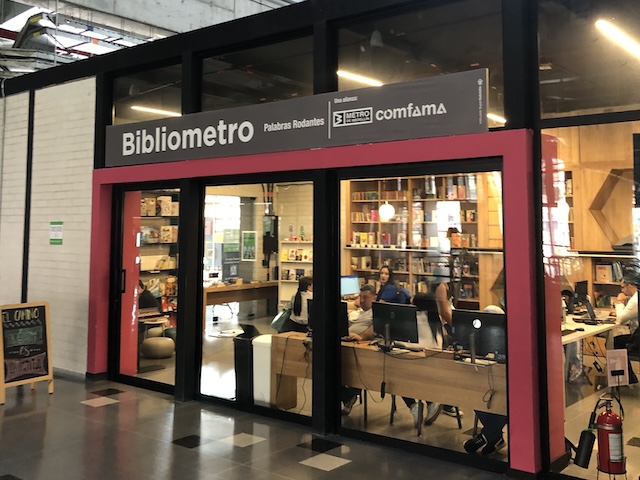
Medellin’s approach is worth studying closely from a feasibility standpoint, not just a design one. Its metro system embeds small public libraries, the Bibliometros, directly into stations, turning transit infrastructure into a civic anchor rather than a pass-through. Toronto has an institution built for exactly this kind of integration in the Toronto Public Library system, one of the city’s most trusted assets. Pairing a TPL outpost, retail, and other community space with stations like the future Steeles subway stop or the St Clair-Old Weston UPX station is not a soft amenity play. It is a way to de-risk large adjacent residential projects by giving them the civic infrastructure that makes a neighbourhood sticky, and that stickiness shows up in absorption rates, retention, and long term asset value.
Strong projects are built from a wider understanding of timing, access, infrastructure, policy, and the future identity of a community.
For developers and planners tracking the next wave of Toronto growth, the lesson is straightforward. The transit expansion underway right now will not repeat itself for decades. Building in community infrastructure alongside these stations, rather than retrofitting it in after residents complain about the absence of amenities, is the difference between a development that ages well and one that becomes a case study in what was missed. As Toronto’s real estate market eventually regains momentum, the projects positioned around genuinely complete transit hubs will be the ones that hold their value and their appeal.
Source: UrbanToronto