What Wartime Housing Ltd. Teaches Today’s Developers About Building at Scale
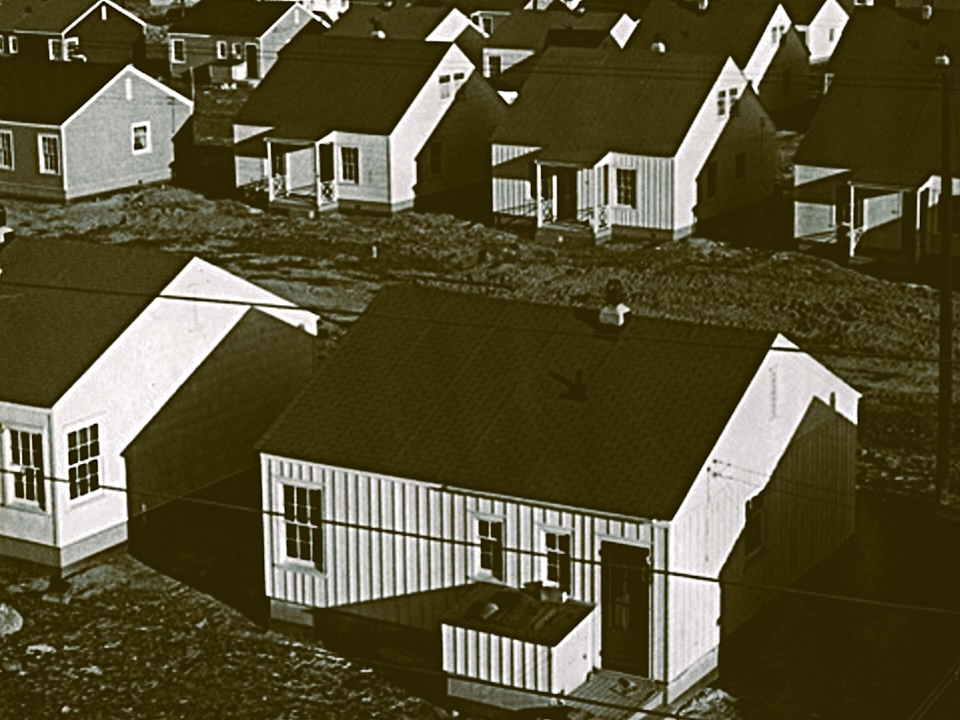
Every development cycle I have studied comes down to the same three ingredients: land, capital, and the political will to move both quickly. Eighty-five years ago, a Crown corporation called Wartime Housing Ltd. had all three, and it used them to put up roughly 46,000 homes in six years. Today, with Canada short hundreds of thousands of units a year, that history is not nostalgia. It is a blueprint sitting unused on a shelf, and it deserves a hard look from anyone who thinks seriously about housing supply.
The comparison matters because it exposes something developers already know in their bones: speed in this business is never really about labour or materials alone. It is about who controls the land, who carries the risk when markets soften, and who can commit to volume large enough to make a factory line worth financing. Wartime Housing held land, capital, and standardized designs under one roof, run by a contractor rather than a committee. That is precisely the kind of integrated authority most large-scale projects in Vancouver or Toronto spend years trying to assemble piecemeal through rezonings, financing rounds, and entitlement delays.
Federal productivity data makes the stakes concrete. Residential construction productivity fell between 2019 and 2024 even as hours worked climbed, and researchers have pegged the resulting cost drag at up to a fifth of recent new-home price increases. That is not a story about expensive land or slow labour markets. It is a story about an industry that never industrialized, in part because no one has given it a demand signal certain enough to justify investing in modern production. A committed, multi-year order book, the kind a public developer at scale can offer, is what turns a modular housing pitch into an actual factory.
Ottawa’s Build Canada Homes has inherited part of this model, including access to federal land through Canada Lands Co. and roughly 13 billion dollars to finance construction. But the execution so far is fractional, with only about 2,000 units broken ground after a year, against a need measured in the hundreds of thousands annually. The deeper structural gap is jurisdictional. Most developable land sits under municipal control, which means provincial statute, and a federal agency cannot zone or compel a city to move. Wartime Housing’s wartime powers cut through that friction because the war justified it. Peacetime developers do not get that shortcut, which is exactly why matching provincial development agencies, holding land and zoning authority while drawing on federal capital, is the missing structural piece.
A public developer does not need to pour concrete itself. It needs to hold the entitlement risk, commit to volume, and keep building when private capital pulls back.
That last point is the one worth sitting with. Private developers, myself included in spirit if not in structure, operate against commercial return thresholds that make sense project by project but leave the system without a counter-cyclical actor. Singapore’s Housing and Development Board and Vienna’s municipal housing stock show that a public developer can plan, acquire, and tender at enormous scale while private firms still do the building. For anyone working in land strategy and large-scale housing vision, the lesson from 1941 is not about reviving wartime authority. It is about recognizing that the structural pieces, land control, patient capital, and standardized product, still need to live under one coordinated roof if Canada is going to close a supply gap this large.
Source: The Tyee, “War Showed How to Respond to Canada’s Housing Crisis”