



There is something almost universal about the pull of a fire. It encourages people to gather closer, stay longer, and soften into the moment in a way that few outdoor features can. In a backyard or patio setting, a fire pit becomes more than a source of warmth. It becomes a place for late evening conversation, quiet reflection after a long day, impromptu dessert with children, and the kind of relaxed hosting that people remember long after the night is over.
Table Of Content
- Why a Fire Pit Area Feels So Special
- Start With Safety and Local Rules
- Choose the Right Location for Comfort and Atmosphere
- Think of the Fire Pit Area as an Outdoor Living Room
- Choosing the Right Fire Pit Type
- Selecting Materials That Feel Beautiful and Last Well
- Designing the Seating for Conversation and Ease
- Layering Lighting for Warmth and Mood
- Use Textiles and Small Details to Soften the Space
- Plan for Family Life, Guests, and Real Movement
- Creating a Four-Season Feeling
- Common Mistakes to Avoid
- A Simple Planning Framework
- The Emotional Return of a Well-Designed Fire Pit Area
A great outdoor fire pit area combines safe, code-compliant placement with comfortable seating, weather-right materials, and layered lighting to create a natural, welcoming gathering space. The best setups start with confirming local bylaws and choosing a stable, non-combustible surface with proper clearances from structures and foliage. From there, circular or semi-circular seating keeps the flame as a shared focal point, while natural stone, brick, or concrete materials ground the space visually and hold up to weather. Soft ambient lighting, weatherproof textiles like cushions and throws, and small comforts such as blankets and side tables complete the experience. Whether the fire pit runs on wood, propane, or gas, the goal is the same: a space scaled to the yard, sheltered from wind, and designed around real conversation rather than just visual appeal. When these elements work together, an ordinary backyard corner becomes an outdoor living room that people actually use, season after season.
The most successful outdoor fire pit areas are not simply built around a product. They are designed around a feeling. They create a sense of invitation from the moment someone steps outside, and they support the rituals that make a home feel rich with comfort and connection. A thoughtfully designed fire pit area can turn even a modest yard into an outdoor living room, one that feels just as emotionally satisfying as a beautifully arranged interior.
That emotional quality matters more than ever because outdoor living has become such an important part of home life across North America. Patios, decks, and backyards are increasingly treated as true extensions of the home rather than occasional-use spaces. Fire pits remain central to that shift because they add visual warmth, a natural focal point, and a reason to gather in every season. Whether your style leans rustic, modern, lodge-like, or softly Scandinavian, the right fire pit area can anchor your outdoor life in a way that feels effortless and deeply personal.
At the same time, a beautiful setup needs to be grounded in practical thinking. Fire pit design is as much about safety, comfort, and local regulations as it is about aesthetics. Consumer reporting based on U.S. CPSC data noted about 6,200 emergency-room injuries related to fire pits or outdoor heaters in 2021, which is an important reminder that the coziest spaces are also the most carefully considered. Good design makes a space feel easy to use, but behind that ease is attention to clearances, stable surfaces, seating distance, wind, and fuel type.
This guide is about blending both sides of the experience. We will look at how to choose the right location, decide on materials, plan seating, manage comfort, and create a mood that encourages real connection. The goal is not just to build a fire pit area that looks beautiful in photos. The goal is to create a place where people naturally exhale, settle in, and make memories together.
Why a Fire Pit Area Feels So Special
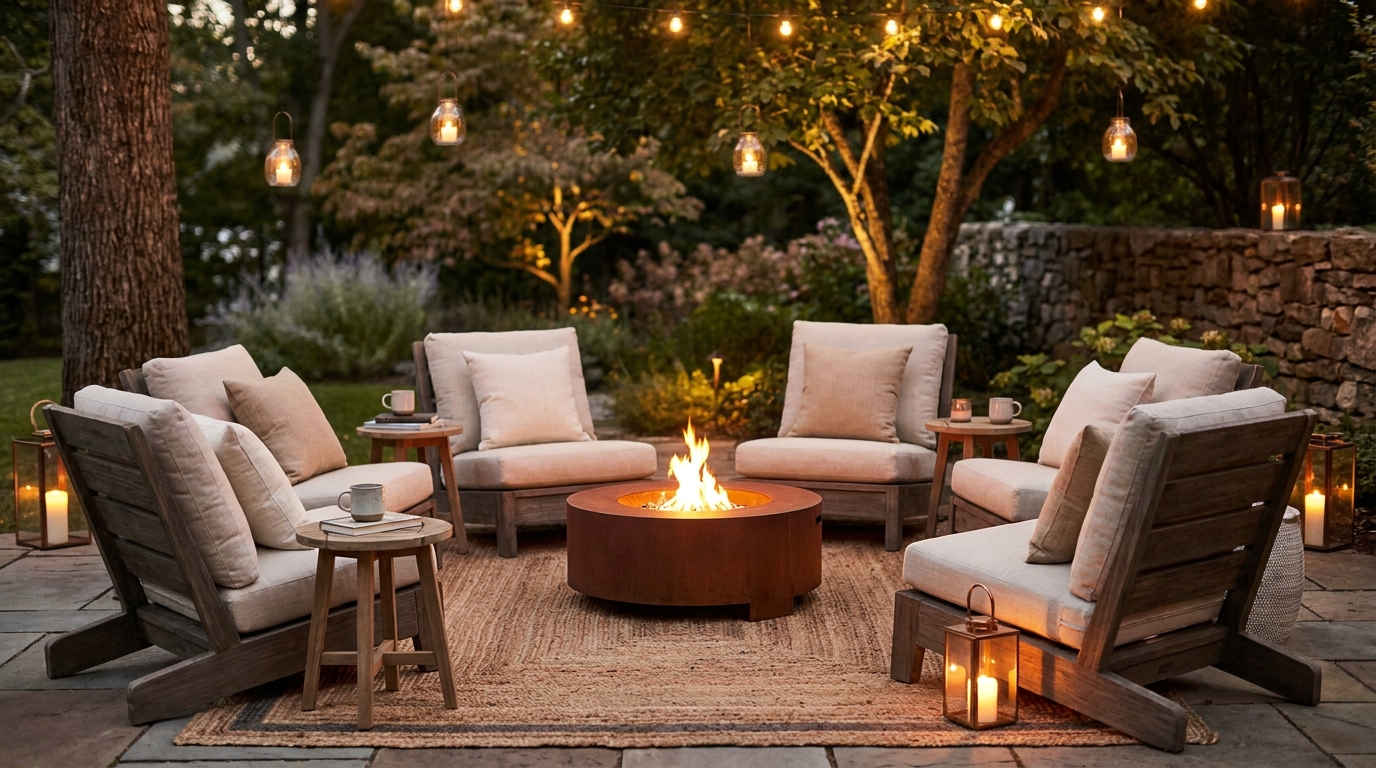
A fire pit area works so well because it activates several senses at once. There is the visual movement of flame, the gentle warmth on cool skin, the smell of outdoor air, the texture of layered blankets, and the quiet social rhythm that comes from sitting face to face. These details may seem simple, but together they create an atmosphere that helps people slow down and become more present.
Unlike a television or even a dining table, a fire pit encourages a softer kind of gathering. The light is lower, the pace is slower, and people tend to linger in conversation without feeling rushed. This is one reason circular and semi-circular seating arrangements are so effective. They make eye contact easier, reduce the sense of hierarchy in the layout, and naturally turn the flame into a shared focal point rather than a distraction.
There is also a ritual quality to a fire pit that makes it emotionally powerful. Lighting the flame marks a transition from daytime busyness to evening calm. It can signal that dinner is over and the relaxed part of the night has begun, or that a crisp weekend afternoon is turning into a cozy family gathering. Those repeated rituals often become part of what people love most about their home.
A great fire pit area is not just a backyard feature. It is a scene for conversation, warmth, and togetherness that can make ordinary evenings feel more meaningful.
When you design with that emotional purpose in mind, your choices become clearer. Instead of asking only what looks stylish, you begin to ask what feels comfortable, what invites people to stay, and what supports the way you actually want to live outdoors. That shift in thinking is often what turns a nice backyard feature into a truly beloved space.
Start With Safety and Local Rules
Before thinking about furniture, finishes, or mood lighting, begin with the foundation of any successful fire pit area: safe placement and legal use. Municipal rules vary widely across Canada and the United States, and they may regulate everything from what kind of fire pit you can use to where it can be located on your property. In some Canadian municipalities, outdoor fires and fire pits may require ULC or CSA approved equipment, and there can be restrictions related to fuel type, setbacks, and weather conditions.
One of the most common misconceptions is that a fire pit is automatically allowed if it was purchased from a retailer. In reality, local bylaws still apply. A beautiful store-bought model may still be restricted in your area, or only allowed under certain conditions. Taking a little time to check municipal guidance before you buy or build can save money, prevent frustration, and protect your household.
As a general planning baseline, fire pits should be placed on stable, non-combustible surfaces whenever possible and kept well away from structures, fences, overhangs, and low branches. Property lines and neighboring homes also matter. What feels comfortable in your yard may still be too close according to local code, especially in more compact neighborhoods where smoke and sparks could affect others nearby.
Safe design is especially important in homes with children, pets, or frequent guests. People move differently when they are socializing, carrying drinks, or shifting chairs, and a well-designed fire pit area should anticipate that movement. Clear walking paths, sensible seating distances, and spark-safe surrounding surfaces reduce the chance of accidents without making the space feel clinical or overplanned.
Good safety also supports the mood you are trying to create. When a fire pit area feels stable and intuitive, guests can relax instead of second-guessing where to stand or how close to sit. That sense of ease is one of the hidden ingredients behind every truly welcoming outdoor gathering space.
Choose the Right Location for Comfort and Atmosphere
The best location is usually one that balances beauty, practicality, and emotional flow. You want a spot that feels connected to the home but not cramped, visible enough to feel inviting but tucked in enough to feel intimate. In many yards, the ideal place is not the exact center of the space. It may be a corner of the patio, a separate zone just beyond the main deck, or a quiet area framed by planting that creates a little enclosure without fully closing things off.
Think about how the space will be approached. A fire pit area should feel easy to reach with a tray of drinks, dessert, or extra blankets. If it is too far from the kitchen or disconnected from the rest of your outdoor circulation, it may be used less often than you expect. At the same time, you want enough separation that it feels like a distinct destination rather than an afterthought wedged into leftover square footage.
Wind is one of the most overlooked parts of site selection. Even a beautifully styled fire pit area can become uncomfortable if smoke consistently blows into seating or if breezes make the flame feel fussy and unreliable. Observe your yard at different times of day before committing to a location. Existing fences, planting, walls, and structures may already be shaping a microclimate that can help protect the fire and improve guest comfort.
Privacy matters too. Fire has a way of drawing people into longer, more personal conversation, and that intimacy is harder to enjoy when the space feels exposed. Strategic landscaping, decorative screens, or the thoughtful use of grade changes can make the area feel softer and more sheltered. The goal is not to isolate the fire pit completely, but to give it enough visual definition that it feels like a room outdoors.
If your backyard is small, do not assume the idea is out of reach. A compact fire pit area can be incredibly charming if it is scaled properly. In fact, one of the biggest mistakes is choosing a pit that is too large for the available space. Oversized fire features often diminish intimacy and consume room that should be dedicated to seating, circulation, and comfort.
Think of the Fire Pit Area as an Outdoor Living Room
One of the most useful design shifts is to stop thinking of the fire pit as a standalone object and start thinking of it as the heart of an outdoor room. This approach aligns with broader outdoor living trends across North America, where homeowners increasingly create multi-zone layouts for lounging, dining, grilling, and relaxing rather than one oversized hardscape that tries to do everything at once.
When your fire pit area is treated like an outdoor living room, the layout becomes more intentional. Seating has a reason for being where it is. Side tables appear where hands naturally need a place to rest a drink. Lighting supports mood and movement. The surrounding materials feel chosen rather than generic. All of this adds up to a space that feels grounded and cohesive.
That room-like feeling also helps the fire pit area connect visually to the house. Repeating colors, textures, or design details from indoors to outdoors can make the transition feel seamless. If your interior style is warm and layered, your outdoor space might echo that with earthy stone, soft cushions, woven accents, and muted lighting. If your interior feels clean and modern, the outdoor room may take shape through concrete, black metal, pale wood, and a restrained neutral palette.
This is where emotional design becomes especially powerful. A successful outdoor room does not need to copy the indoors exactly. It only needs to carry forward the same values of comfort, beauty, and livability. When the fire pit area feels like a natural continuation of your home, people use it more often, and it becomes part of everyday life rather than a feature reserved for special occasions.
Choosing the Right Fire Pit Type
Not all fire pits offer the same experience, and choosing the right type has a major impact on comfort, maintenance, and mood. Wood-burning fire pits offer the most traditional sensory experience. They create crackle, scent, and the ritual of tending a flame, which many people find deeply nostalgic and grounding. They can be wonderful for slower evenings and homes where the act of building a fire is part of the enjoyment.
However, wood-burning models also come with more smoke, more cleanup, and sometimes stricter regulations. Depending on your local bylaws and your neighbors’ proximity, they may not be the best fit. If you love the idea of a fire but want a cleaner and simpler hosting experience, propane or gas may feel more practical. These models ignite quickly, allow easy flame control, and can be more comfortable for guests who are sensitive to smoke.
Smokeless fire pits and cleaner-burning designs are also gaining popularity, and for good reason. One common misconception is that smoke is simply unavoidable. While no system eliminates every variable, better combustion design can reduce smoke significantly and make the entire area more pleasant. This is especially valuable in compact backyards or in social settings where guests are dressed for dinner, not a campfire.
As you choose, consider how you want the space to function. Are you imagining spontaneous weeknight use, where ease matters most? Are you dreaming of traditional autumn fires with blankets and roasted marshmallows? Is the area near neighbors or integrated into a more polished entertaining zone where a refined look and low smoke are priorities? The right fire pit is the one that supports the life you want to live outdoors, not just the one that looks appealing online.
Selecting Materials That Feel Beautiful and Last Well
Materials do much of the emotional work in a fire pit area. They tell the eye whether the space is rustic, modern, relaxed, polished, organic, or dramatic. At the same time, they also determine how the area performs through weather, heat exposure, and everyday use. The most appealing spaces usually balance both concerns, choosing finishes that are tactile and visually grounding while still being practical for the climate.
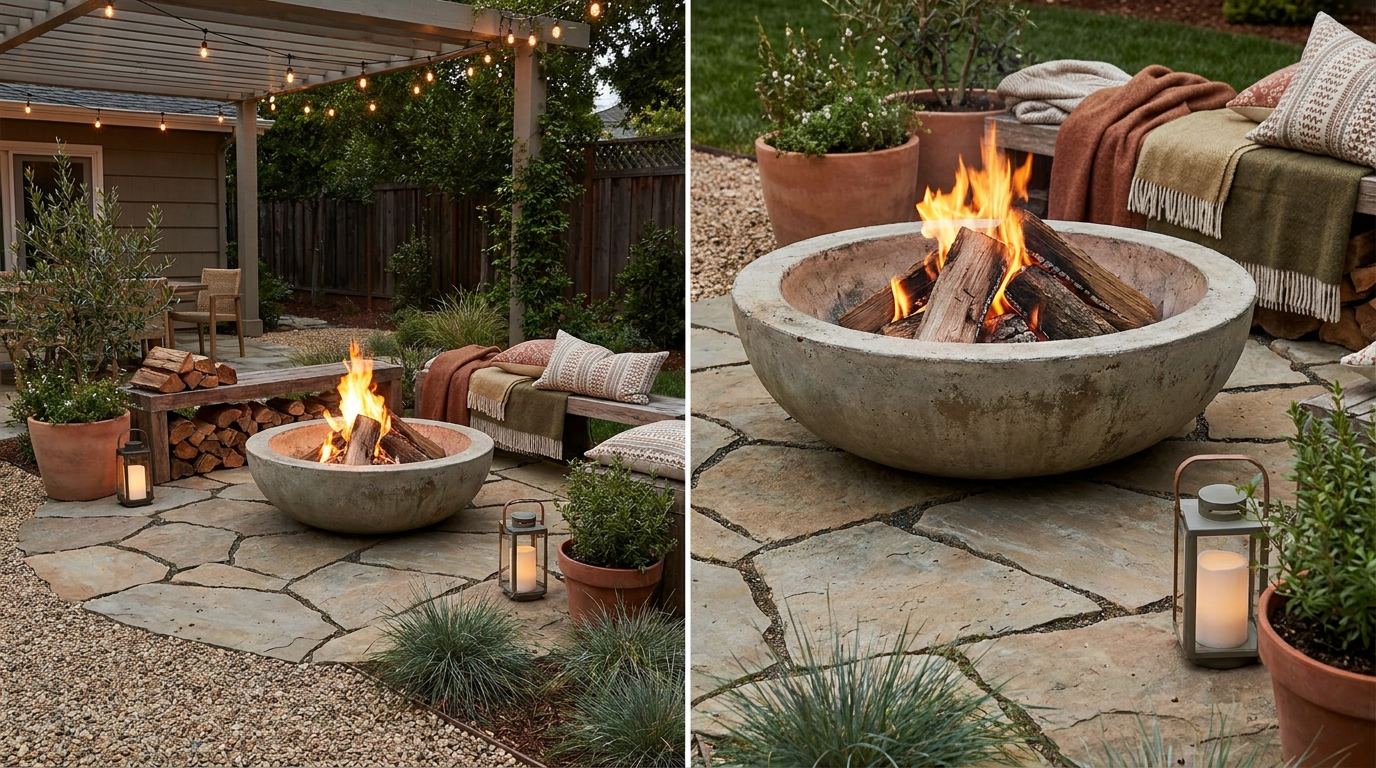
Natural stone remains one of the most enduring choices because it feels timeless and substantial. It can make a fire pit area feel rooted in the landscape, especially when paired with planting and textured hardscape. Stone also supports several current outdoor design trends, including organic materials, tactile finishes, and stronger indoor-outdoor continuity. Brick can offer a softer, more traditional warmth, while concrete often lends a cleaner, more contemporary mood.
Metal details can add crispness and contrast, particularly in modern or industrial-inspired settings. Blackened steel, weathered metal, or powder-coated finishes can look beautiful when used with restraint. The key is to think about how each material feels in the larger composition. A fire pit area is experienced up close, often by touch, so surfaces should feel intentional rather than purely decorative.
Maintenance is worth considering early. A gorgeous material that stains easily, becomes slippery, or ages poorly in your climate may create frustration over time. The best choices are often the ones that look better as they settle into the space. They develop a lived-in richness without becoming fussy. That sense of ease is especially important in outdoor living, where beauty should support daily enjoyment rather than constant upkeep.
Designing the Seating for Conversation and Ease
Seating may be the single most important part of a cozy fire pit area because it determines whether people truly settle in. A socially effective layout usually uses circular or semi-circular seating, allowing everyone to see one another comfortably while keeping the fire at the center. This arrangement feels inclusive, relaxed, and naturally conversational.
Comfort matters just as much as geometry. Deep lounge chairs with supportive backs, cushioned benches, and weather-friendly accent stools all work well when they are scaled thoughtfully to the space. Seats that are too upright can feel formal and short-lived, while furniture that is too low may make guests feel awkward around the fire. The goal is to strike a balance between relaxed and functional.
Think beyond the main seats. A fire pit area works better when there are places for drinks, small plates, books, and blankets. Side tables, drink rails, or broad ledges can make the entire experience feel more effortless. These supporting pieces are often what transform the space from pretty to truly usable.
Built-in seating can be especially effective in smaller yards because it defines the zone while preserving circulation. Freestanding furniture, on the other hand, offers flexibility and can make the space feel softer and more layered. Many of the most inviting fire pit areas combine the two. A low retaining wall or bench might anchor the room, while chairs provide texture, comfort, and the ability to adapt the layout for different kinds of gatherings.
As you arrange seating, preserve enough distance for warmth without crowding the fire. Guests should feel comfortably close, not cautious. This spacing depends on the fire pit type and size, but the guiding principle is simple: everyone should be able to enjoy the flame while still moving in and out of the area with ease.
Layering Lighting for Warmth and Mood
The fire itself provides beautiful light, but it should not be the only source of illumination. The coziest outdoor spaces use lighting in layers so the area remains warm, flattering, and easy to navigate. This is one of the easiest ways to make a fire pit area feel more polished and emotionally inviting.
Ambient lighting creates the general glow of the space. This might come from overhead string lights, nearby sconces, low garden lighting, or carefully placed lanterns. Task lighting helps with practical moments, such as carrying food, finding a seat, or navigating steps. Accent lighting draws attention to textures like stone walls, ornamental grasses, or a beautiful tree canopy, helping the entire area feel more immersive after dark.
What matters most is restraint. Fire pit spaces are at their best when the lighting feels soft and intentional rather than bright and flattening. Harsh overhead light can undermine the intimacy that makes the area special. Aim instead for a layered warmth that lets faces glow gently and keeps the surrounding landscape visible without overpowering the flame.
Lighting can also strengthen the connection between the fire pit area and the rest of the home. Repeating warm color temperatures and subtle fixtures from inside to outside helps the transition feel elegant and cohesive. This continuity is part of what makes outdoor living spaces feel finished rather than temporary.
Use Textiles and Small Details to Soften the Space
Some of the most memorable fire pit areas feel inviting because they acknowledge the body, not just the eye. They anticipate cool air, late evenings, and the natural desire to get comfortable. Outdoor-safe cushions, throw blankets, and rugs add that layer of softness that makes the space feel lived in and cared for.
Textiles also help define mood. A neutral palette of oatmeal, charcoal, and warm stone can create a calm, quietly luxurious atmosphere. Richer tones like rust, olive, navy, or clay can make the space feel more seasonal and enveloping. The right fabric choices can subtly reinforce whether the mood is beachy, lodge-inspired, modern, or garden romantic.
Small details matter just as much. A basket of blankets near the door, a tray for mugs, weather-safe candles, and even the scent of cedar or rosemary nearby can add to the sensory richness of the experience. These are the touches that make people feel hosted, even in a casual setting.
Because the article of outdoor comfort is so often visualized through furniture alone, these softer layers are sometimes overlooked. Yet they are often what turns a fire pit area from a design feature into a place that genuinely supports relaxation. The emotional difference is immediate. A space with warmth and texture tells people, without saying a word, that they are welcome to stay awhile.
Plan for Family Life, Guests, and Real Movement
A successful fire pit area should feel beautiful during a styled gathering, but it should also work on an ordinary evening when children are moving, guests are arriving in coats, or someone is carrying dessert outside. Designing for real life means leaving enough circulation space, reducing tripping hazards, and choosing surfaces that stay stable underfoot.
This practical lens matters because fire pit injuries remain a genuine concern. The safest spaces make the boundaries of the fire clear, keep combustible items at a sensible distance, and support easy supervision. If children and pets will regularly use the yard, think carefully about how the fire pit relates to play zones, pathways, and active areas.
It can be helpful to imagine a few typical scenarios. Picture four adults chatting with drinks, or a larger family gathering where extra stools are pulled in, or a quiet night with one person reading outside. The best layouts are flexible enough to support all of these moments without feeling strained. Multi-zone outdoor design is especially helpful here because it allows the fire pit to function as one destination among several, rather than competing with grilling, dining, and open play space.
Hosting comfort also includes consideration for neighbors. Smoke, noise, and visibility all affect how harmonious the space feels beyond your own property line. A fire pit area that is carefully placed and thoughtfully used tends to be more enjoyable for everyone. Good etiquette is part of good design because it protects the peaceful atmosphere you are trying to create.
Creating a Four-Season Feeling
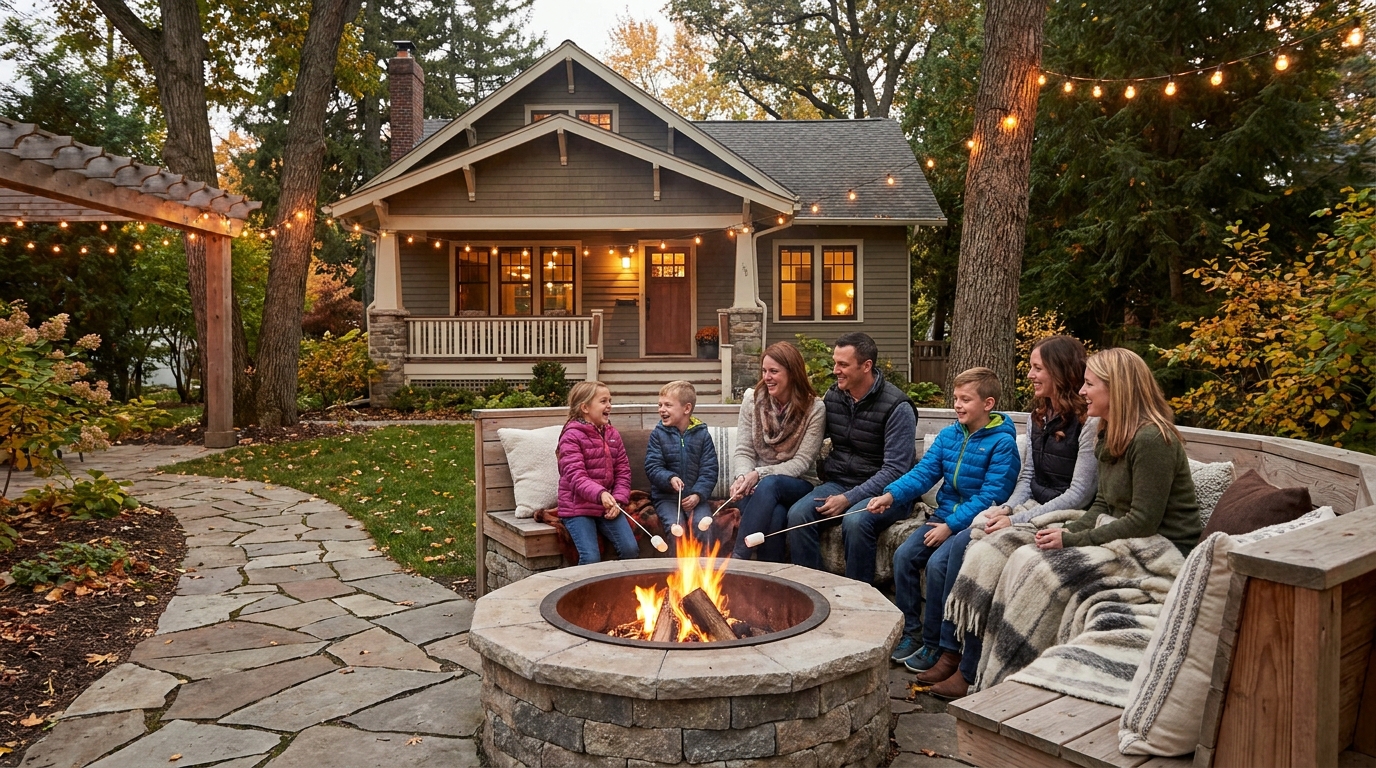
Interest in year-round outdoor use continues to grow, especially in colder North American climates, and a fire pit area is one of the best ways to extend the season. With the right design choices, the space can feel inviting well beyond summer. This does not necessarily require a major investment. Often it is the layering of practical comforts that makes the difference.
Wind management is one of the most effective upgrades for cooler months. A strategically placed screen, hedge, fence, or built element can dramatically improve comfort without making the area feel closed in. Even a small reduction in wind can make the fire feel more usable and the seating more pleasant on brisk evenings.
Storage matters too. If blankets, outdoor pillows, or roasting tools are difficult to access, the area may be used less often. A discreet storage bench or nearby weather-resistant cabinet can support spontaneity, which is often the secret to actually enjoying the space. People are much more likely to step outside for twenty minutes if the comforts they need are already close at hand.
For colder climates, think in terms of a gentle hospitality mindset. Have a place for warm drinks, keep a few throws within reach, and consider how the fire pit area looks from inside the house as well. When the view outdoors remains beautiful in winter, it keeps the space emotionally connected to the home even on days when no one lingers outside for long.
Common Mistakes to Avoid
Many fire pit areas fall short not because the idea was wrong, but because a few key design decisions were rushed. One common mistake is focusing entirely on appearance without thinking through smoke, clearances, and wind exposure. A stunning setup loses its charm quickly if guests spend the evening shifting away from smoke or feeling uncertain about where to walk.
Another frequent issue is poor scale. A fire pit that is too large can overwhelm a compact patio and diminish the intimate quality that makes these spaces feel special. On the other hand, seating that is too sparse or too spread out can make gatherings feel disconnected. The ideal setup feels proportionate, centered, and gently enclosing.
It is also easy to underinvest in comfort. Homeowners sometimes spend heavily on the fire feature itself while treating the seating and surrounding details as secondary. In reality, people remember how the space felt far more than they remember the exact shape of the pit. Comfort, softness, and ease of use should always carry as much weight as the focal feature.
Finally, do not overlook the importance of legality. Buying first and checking local rules later can lead to disappointment and unnecessary expense. The most satisfying projects begin with clarity about what is allowed, then build beauty from there.
A Simple Planning Framework
If you want to create a fire pit area that feels both emotionally rich and practically sound, it helps to move through the design process in a calm, deliberate way. Rather than choosing pieces one by one, think about the space as a layered experience.
- Confirm regulations first. Check municipal bylaws, permits, fuel restrictions, and any approval requirements in your area before selecting a model or final location.
- Choose the site with safety and comfort in mind. Look for a stable, non-combustible surface with generous clearances and manageable wind conditions.
- Decide how you want to gather. Think about whether the space is mainly for quiet evenings, family rituals, entertaining friends, or a mix of all three.
- Select the right fire pit type. Consider smoke tolerance, maintenance, ambiance, fuel availability, and how often you expect to use it.
- Build the seating plan around conversation. Circular or semi-circular layouts tend to feel best and make the area naturally more social.
- Layer in atmosphere. Add lighting, textiles, planting, and small comforts that make the area feel welcoming after sunset.
- Refine for real life. Test circulation, storage, child and pet safety, and the flow between this area and the rest of the yard.
This kind of planning may sound simple, but it is often what separates a backyard feature from a beloved outdoor destination. A little forethought creates a space that feels easy, and ease is what allows real enjoyment to happen.
The Emotional Return of a Well-Designed Fire Pit Area
The true value of an outdoor fire pit area is not only in its design, its resale appeal, or its visual charm. Its value shows up in quieter ways. It is in the extra half hour a family spends together after dinner. It is in a friend confiding something important under soft evening light. It is in the simple pleasure of sitting outside with a blanket and hearing the gentle sound of flame when the day finally slows down.
Outdoor living is at its best when it supports the life happening around it, and few features do that more naturally than a fire pit. It invites people to gather without performance. It asks very little beyond presence. In a time when home is expected to work harder for comfort, restoration, and connection, that kind of space feels more meaningful than ever.
If you approach the project with both beauty and practicality in mind, the result can be deeply rewarding. Respect local rules, prioritize safe placement, choose materials that feel right for your climate and style, and design the area around comfort and conversation. Then add the softer layers that make it feel personal. The blankets, lighting, textures, and little rituals are what turn the setting into something memorable.
The perfect outdoor fire pit area is not necessarily the largest, the most expensive, or the most elaborate. It is the one that makes people want to sit down, lean back, and stay. When your space does that, it becomes more than a backyard improvement. It becomes part of the emotional landscape of home.



No Comment! Be the first one.