



Digital Transactions in Real Estate: A Buyer and Seller Guide
Digital transactions have reshaped how homes are bought and sold, but the shift is often misunderstood. Many people still think a digital transaction begins and ends with signing a PDF on a phone. In reality, modern real estate workflows now include online offer drafting, shared document review, electronic signatures, identity verification, remote or hybrid notarization, secure coordination between professionals, and long term digital storage with searchable audit trails. For buyers and sellers, the result can be a transaction that feels faster, more transparent, and easier to manage, provided the right tools and local rules are respected.
Table Of Content
- What digital transactions in real estate actually mean
- Why buyers and sellers are adopting digital workflows
- The core tools behind digital real estate transactions
- Transaction management platforms
- E-signature tools
- Remote notarization and eClosing platforms
- How a digital transaction usually works from offer to closing
- Best practices for buyers using digital transaction tools
- Best practices for sellers using digital transaction tools
- Why compliance and local law matter so much
- Common misconceptions that cause confusion
- How to choose user friendly digital transaction tools
- The growing role of AI and workflow intelligence
- A practical checklist before you start a digital transaction
- The future of digital transactions in real estate
- Final thoughts
This matters because residential real estate is full of timing pressure. Offers move quickly, conditions have deadlines, lenders need documents in a specific order, and title or escrow teams rely on complete files to keep a closing on schedule. Paper based processes can still work, but they introduce friction at exactly the moments when speed and accuracy matter most. A missed signature, an outdated form, or a courier delay can ripple through the entire file. Digital transaction systems are designed to reduce that friction by putting structure around the workflow, not just around the signature itself.
Across North America, that infrastructure is becoming more mature. In Canada, tools such as CREA WEBForms are positioned as end to end document and transaction management solutions for REALTORS, with current forms, clauses, document storage, and workflow support built into one environment. In the United States, the conversation has advanced around eClosings, remote online notarization, and integrated closing platforms, with organizations such as the National Association of REALTORS discussing how remote systems allow parties to review, revise, and approve documents from a computer or mobile device. What used to be a convenience feature is increasingly becoming standard operational infrastructure.
This guide breaks the subject down in practical terms. If you are a buyer, seller, agent, or simply curious about how property deals are moving online, the goal is to explain what digital transactions actually include, where the process creates real value, which tools are easiest to use, and what best practices protect everyone involved. The key idea is simple: a good digital transaction is not just paperless. It is organized, secure, jurisdiction aware, and designed around the real sequence of a real estate deal.
What digital transactions in real estate actually mean
When people hear the phrase digital transaction, they usually picture e-signatures. E-signatures are important, but they are only one layer. In a complete real estate workflow, digital transactions can begin before an offer is even submitted. An agent may prepare an agreement using a forms library, pull approved clauses into the file, share drafts for review, route the final version to multiple signers, send the document to the cooperating brokerage, and archive every revision for compliance. That is a broader and more useful definition than simply clicking a signature button.
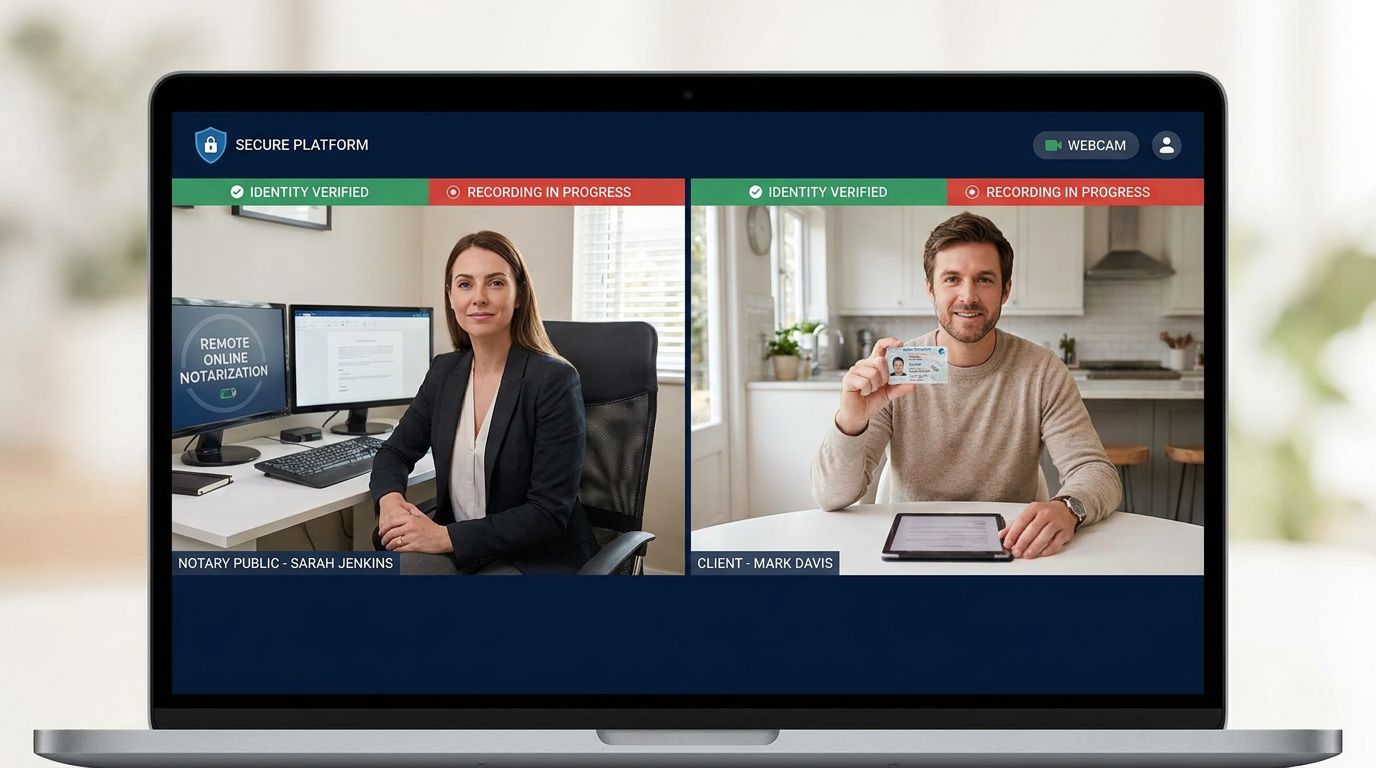
It also helps to separate the core components. E-signatures are one component, allowing parties to sign electronically. Transaction management software is another, giving agents and coordinators a central place to track tasks, documents, timelines, and communications. Remote online notarization, often abbreviated as RON, is separate again. NAR defines remote online notarization as notarization in electronic form where the signer uses an electronic signature and appears before the notary through online audio video technology. These are related tools, but they solve different parts of the process.
There is also the distinction between a full eClosing and a hybrid closing. A full eClosing means nearly every closing document is executed digitally, assuming local law and lender requirements allow it. A hybrid closing means some documents are signed electronically while others are still signed in person or on paper. In practice, hybrid closings remain common because not every jurisdiction, lender, title company, or document category supports the same level of digitization. Buyers and sellers should expect variation rather than assume one universal model.
The practical takeaway is that digital transactions are best understood as a workflow architecture. They connect forms, parties, permissions, identity checks, signatures, storage, and closing steps in a way that lowers error rates and improves coordination. That is why the strongest platforms are valued less for being flashy and more for being structured. They help people move through a sequence with fewer missed details.

Why buyers and sellers are adopting digital workflows
The main benefit is not novelty. It is speed with better coordination. Real estate deals involve multiple parties who do not always share a schedule, a city, or even a time zone. A buyer may be traveling, a seller may have already relocated, and a lender may need last minute confirmations before funding. Digital systems allow documents to be reviewed, revised, and approved from a laptop or phone, which reduces the back and forth that slows down traditional processes. That is especially valuable in competitive markets where timing can influence whether a deal holds together.
For buyers, this often means less stress around access and deadlines. Instead of printing, scanning, or rushing to an office between work commitments, they can review documents in a secure portal, receive alerts when action is needed, and sign from anywhere. First time buyers in particular benefit from having a central record of what they have received, what they have signed, and what remains outstanding. Good platforms make the process feel less fragmented because the file is visible as a sequence rather than a stream of disconnected emails.
Sellers gain a similar advantage, especially when their lives are already in transition. A seller managing a move, coordinating repairs, or dealing with a property in another city benefits from being able to approve disclosures, amendments, and closing documents without constant in person appointments. That convenience has become more important as relocation, downsizing, and investor sales increasingly involve parties who are not all physically present. The digital model supports mobility without sacrificing process discipline.
Agents and transaction coordinators also gain productivity improvements that directly benefit clients. Centralized systems can flag missing signatures, store current forms, organize property specific documents, and preserve a transaction history for compliance review. Statistics Canada continues to track real estate agents and brokers as a major business services segment, which reinforces how relevant workflow efficiency has become at the industry level. In a market where every transaction carries substantial economic activity, small process gains compound quickly.
Another benefit is visibility. In a paper heavy process, it is easy for participants to wonder where a document currently sits or who still needs to act. Digital transaction platforms create a clearer chain of custody. People can see when a file was opened, updated, signed, or shared. That visibility reduces unnecessary follow up and can prevent misunderstandings that delay closing.
The core tools behind digital real estate transactions
Transaction management platforms
Transaction management software is the operational core of a digital deal. These platforms centralize forms, deadlines, documents, task lists, and often communication history. In Canada, CREA WEBForms is a strong example because it is positioned as a complete end to end document and transaction management solution for Canadian REALTORS, including current forms, clauses, storage, and workflow support. For professionals, that means less jumping between disconnected tools. For clients, it often means smoother document routing and more consistent file quality.
The most user friendly systems do not overwhelm people with features. They simplify what matters. A buyer should be able to review a clean document package, see where signatures are needed, and understand which items are informational versus urgent. A seller should be able to access the latest version of a disclosure without sorting through a long email chain. When software is designed around the user journey instead of just document storage, adoption rises naturally.
E-signature tools
E-signature platforms are now a familiar part of real estate, but their importance should not be understated. They create the bridge between fast decision making and legally recognized execution, subject to local law and document type. A strong e-signature tool supports sequential routing, date stamps, signer authentication, version control, and a clear audit trail. These features matter because the signature itself is only one event. The surrounding evidence of who signed, when they signed, and what version they signed is what gives the process operational clarity.
For consumers, usability matters as much as legality. A well designed e-signature experience should work on mobile, highlight required fields, prevent skipped sections, and send confirmations once execution is complete. If the platform creates confusion, people are more likely to sign slowly or make avoidable errors. Simplicity is not cosmetic here. It is part of transaction reliability.
Remote notarization and eClosing platforms
Digital closings move beyond signature capture into final execution workflows that can include notarial acts, title coordination, and lender requirements. The rules vary widely by jurisdiction, but the technology has advanced rapidly. NASS reports that Virginia was the first U.S. state to authorize remote electronic notarization in 2011, with many others following later. Major providers are now emphasizing scale and accessibility. Docusign stated that its 2025 Notary On Demand offering provides round the clock access to a network of notaries with recognition in all 50 U.S. states, while Proof describes support for multiple closing types including full eClosings, hybrid closings, cash buyer closings, refinances, seller side closings, and loan modifications.
This matters because digital closing infrastructure is no longer confined to one narrow use case. It is being applied across different transaction types, which suggests the market now sees these systems as mainstream workflow tools rather than niche conveniences. For a buyer or seller, the practical implication is not that every closing will be fully remote. The practical implication is that there are now more pathways to complete steps efficiently when local law and participants allow it.
How a digital transaction usually works from offer to closing
The easiest way to understand digital real estate is to follow the transaction lifecycle. While each market has its own forms and procedures, the sequence tends to be recognizable across regions. The value of digital tools becomes clearer when viewed stage by stage.
- Offer preparation: An agent or brokerage uses an approved forms system to prepare the agreement, insert relevant clauses, and review terms with the client.
- Document sharing and revision: Drafts are shared securely for review, comments, and changes. Version control is critical here.
- E-signatures: The agreement is routed to the required parties in the correct order, with time stamps and completion tracking.
- Conditional period coordination: Financing documents, inspections, disclosures, and amendments are uploaded and tracked in a shared system.
- Lender, title, or escrow collaboration: Supporting documents are exchanged among professionals who need them for underwriting and closing preparation.
- Notarization and closing execution: Depending on jurisdiction and document type, this may happen in person, remotely, or through a hybrid structure.
- Storage and audit trail: Final documents are archived with an accessible history for compliance and future reference.
At each stage, the digital model reduces one classic source of delay. Forms libraries lower the risk of using outdated paperwork. Shared document spaces reduce confusion around attachments. Routing tools reduce the chance that one signer is forgotten. Task dashboards help coordinators catch missing conditions before deadlines pass. Audit trails make it easier to reconstruct what happened if a dispute arises later. None of these benefits are abstract. They solve familiar transaction pain points.
This sequence also reveals why integrated ecosystems are becoming more important. Canadian providers are increasingly linking transaction tools with listing and MLS related systems. Openn, for example, highlights integrations with REALTOR.ca and WEBForms style workflows in Canada. That kind of connection matters because it reduces double entry, shortens setup time, and keeps listing, offer, and documentation processes closer together.
Best practices for buyers using digital transaction tools
Buyers usually experience digital real estate at moments of high decision pressure, so the best practices are as much about discipline as they are about technology. First, use only the document links and portals sent through verified channels by your agent, lender, lawyer, title company, or brokerage. Fraud attempts often mimic real transaction emails. Before clicking, confirm the sender address and ask your representative if anything looks inconsistent. A secure workflow begins with cautious access habits.
Second, read documents in full even when the system makes signing fast. Speed is one of the major advantages of digital tools, but it can create a false sense that review is less important. It is still essential to understand deadlines, financing conditions, inclusions, exclusions, adjustment terms, and occupancy details. The platform may be digital, but the legal and financial consequences are still very real. Convenience should never compress judgment.
Third, keep your identity and access process organized. Use strong passwords, enable multi factor authentication if offered, and avoid signing important documents on public Wi Fi. If a platform requests identity verification, complete it carefully and promptly. These steps may feel procedural, but they protect both enforceability and fraud prevention. As more platforms emphasize identity verification and audit trails, buyers should treat those features as safeguards rather than inconveniences.
Fourth, ask early whether your transaction is expected to be fully digital or hybrid. This is especially important near closing. Some buyers assume that a digital offer means a digital closing, but that is not always the case. Local law, lender policies, and document type will influence what can be signed electronically and what may still require in person or supervised execution. Clarifying that early reduces last minute surprises.
Finally, maintain your own folder of downloaded copies, confirmations, and key contact details. Even when the platform stores everything centrally, personal organization adds resilience. If a question arises about what was signed or when a condition was removed, having your own clean record makes communication easier and more precise.
Best practices for sellers using digital transaction tools
Sellers benefit most from digital transactions when they approach the process as a workflow, not just a series of signature requests. Before listing, ask your agent how documents will be shared, where disclosures will be stored, and how updates will be tracked if an offer progresses quickly. A smooth sale depends on having key materials ready and accessible. Property disclosures, renovation records, condo documents where relevant, and identity documents are easier to manage when gathered early in a secure digital folder.
It is also wise to clarify communication expectations. If you will be traveling, moving, or managing a sale from another city, tell your representative how quickly you can review documents and which device you use most often. Mobile first tools are improving, but not every document is easy to review on a small screen. Knowing whether you prefer phone review, tablet review, or laptop review can help your agent structure the process around your habits. Efficiency grows when the system fits the person using it.
Sellers should also pay attention to revision control. Counteroffers, amendments, and condition changes can move fast, especially in active markets. Confirm that you are always reviewing the latest version and that any earlier draft is clearly marked as superseded. Good platforms handle this well, but human awareness still matters. A digital process reduces confusion, yet it does not eliminate the need for attentive review.
Near closing, sellers need the same jurisdiction awareness as buyers. A remote or hybrid signing process may be available, but its legality and practical availability depend on local rules and the professionals involved. Asking these questions a week before completion is far better than asking the night before. When expectations are managed early, digital tools feel empowering rather than uncertain.
Why compliance and local law matter so much
The biggest mistake people make is assuming that if a platform offers a feature, that feature must automatically be valid everywhere. That is not how real estate law works. E-signature laws, notarization rules, recording requirements, and lender policies vary by state, province, and document type. A document may be easy to sign digitally and still require a separate legal check before it is fully acceptable for the intended purpose. Technology can enable a process, but law determines whether that process is enforceable.
This is particularly important for remote notarization. In the United States, adoption has expanded significantly over time, but it is still shaped by state law and operational practice. In Canada, adoption is also uneven and influenced by provincial legislation, professional rules, and platform availability. Buyers and sellers do not need to memorize every rule, but they do need to understand that local compliance is not optional. It is the foundation that makes a digital workflow safe to rely on.
That is why the best transaction teams ask practical compliance questions early. Is this document eligible for e-signature in this jurisdiction. Does the lender allow remote execution for the required closing package. Is remote notarization permitted here, and under what conditions. Does a lawyer, notary, or commissioner need to supervise part of the process. These are not technical details on the margin of the transaction. They determine the path the transaction can actually take.
Best practice: Treat every digital feature as a tool that must align with local law, not as a shortcut around local law.
Common misconceptions that cause confusion
One common misconception is that digital transactions are less secure than paper. In reality, secure platforms often improve auditability through time stamps, controlled access, identity verification, and detailed document trails. Paper can be lost, misfiled, or altered without an obvious record. Digital systems are not risk free, but they can create a much stronger evidence chain when implemented properly. Security depends on platform quality and user behavior, not on paper nostalgia.
A second misconception is that an e-signature automatically makes any document legally valid everywhere. That is simply incorrect. Legal enforceability depends on the jurisdiction, the specific document, and the rules of the professionals involved. A digital signature may be perfectly acceptable for one step and insufficient for another. This is why local guidance remains essential even when the software experience feels seamless.
A third misconception is that a digital closing means no human review. The opposite is often true. Strong digital workflows make review more structured because they route files through defined checkpoints, create visible task lists, and make missing items easier to detect. Lawyers, notaries, title professionals, lenders, and agents still play central roles. Technology changes how they collaborate. It does not erase the need for judgment.
A fourth misconception is that these tools are only useful for large brokerages or highly technical users. In practice, small teams and individual agents often see outsized benefits because standardized workflows help them deliver consistency without expanding administrative burden. User friendly systems are designed for first time buyers, busy sellers, and transaction coordinators who need clarity more than complexity.

How to choose user friendly digital transaction tools
If you are evaluating tools as an agent, brokerage, or informed consumer, usability should be assessed as carefully as features. The ideal platform should guide a transaction from drafting to archive without forcing users into confusing workarounds. Ask whether the system includes current forms, template clauses, secure storage, task management, and a clear signing flow. A long feature list means little if clients struggle to complete basic actions on the first try.
Mobile design is also essential. Many clients will review documents on a phone at least once during the transaction. The interface should render clearly, show required actions intuitively, and allow users to complete tasks without pinching through unreadable pages. A mobile friendly experience is not just a convenience feature anymore. It is part of baseline service quality.
Integration is another major factor. Tools become far more valuable when they connect with listing systems, forms libraries, CRM tools, and closing partners rather than operating as isolated silos. Recent market trends point toward deeper integration between transaction platforms and MLS or listing ecosystems, along with stronger connections to brokerage oversight tools. Each integration point reduces duplicate entry and strengthens data continuity through the transaction lifecycle.
Finally, look closely at security and oversight. The platform should support access controls, audit trails, identity verification options, and compliance review where needed. Brokers and coordinators should be able to see file status without breaching client privacy. Good software creates visibility with boundaries. That combination is what makes it useful at scale.
The growing role of AI and workflow intelligence
One of the more important emerging trends is the shift from digitization to intelligence. In earlier phases, the main goal was converting paper into electronic files. Now the more useful innovation is workflow intelligence that can flag missing items, surface deadlines, organize supporting documents, and assist with agreement management. AI assisted document handling is appearing inside broader proptech transaction platforms, not as a replacement for professionals but as a layer that reduces administrative drag.
This trend fits the larger direction of real estate technology. The market is moving from tools that merely store information to tools that help users act on it. A smart transaction system might detect that a required attachment is missing, identify where a document needs review, or help a coordinator prioritize files that are closest to a deadline. These are practical, high value uses because they support accuracy and timing, two of the most fragile parts of a deal.
For consumers, the benefits may show up quietly rather than dramatically. Faster turnaround, fewer duplicate requests, clearer task prompts, and more predictable updates are all signs that workflow intelligence is improving the experience behind the scenes. The intelligence layer becomes most valuable when it is almost invisible, guiding the process without making it feel mechanical.
A practical checklist before you start a digital transaction
If you want the process to run well, begin with a few clear questions. These questions help buyers, sellers, and agents align on expectations before deadlines become urgent.
- Which platform will be used for forms, signatures, and document storage?
- Is the transaction expected to be fully digital, hybrid, or mostly in person at closing?
- What local rules apply to e-signatures, notarization, and document execution?
- How will identity verification be handled?
- Who is responsible for monitoring missing items and deadline compliance?
- How will final records be stored and shared after closing?
These questions are simple, but they surface the core realities of the transaction. They reveal whether the workflow is truly organized or only partially digital. They also help prevent the common mismatch where clients expect a seamless online experience but the professional team has not aligned its tools and legal steps. A digital transaction works best when everyone understands the path in advance.
The future of digital transactions in real estate
The broader direction is clear. Remote online notarization is expanding, eClosing platforms are becoming more capable, and integration between offer tools, listing systems, and transaction management environments is deepening. Providers are also putting more emphasis on identity verification, fraud prevention, mobile accessibility, and AI assisted workflow support. These developments suggest that digital transactions are moving from optional efficiency tools toward the standard operating layer behind housing decisions.
That does not mean every transaction will soon be fully remote. Real estate is still shaped by local law, lender policy, and the practical preferences of buyers and sellers. The future is more likely to be adaptive than uniformly digital. Some deals will close entirely online, others will remain hybrid, and many will combine digital preparation with selective in person execution. The winners will be the systems and professionals that make those transitions smooth rather than rigid.
For everyday consumers, the most important shift is that digital competence is becoming part of transaction literacy. Understanding how documents are routed, where records are stored, and which steps require extra verification is now as relevant as understanding inspections or financing timelines. The digital layer is no longer separate from the real estate transaction. It is part of the transaction itself.
Final thoughts
Digital transactions in real estate are no longer just about convenience. They are about creating a more coordinated, transparent, and resilient process for one of the most important financial events in most people’s lives. When implemented well, they reduce delays, improve visibility, and help buyers and sellers navigate complex steps with less friction. The strongest systems combine user friendly design with structure, compliance, and security.
If there is one principle worth keeping in mind, it is this: the best digital transaction is not the one with the most technology, but the one with the clearest workflow. Buyers and sellers do not need every possible feature. They need tools that make the next step obvious, keep records organized, and align with local legal requirements. That is where digital real estate becomes genuinely practical.
As proptech continues to evolve, expect the intelligence layer around housing decisions to grow stronger. Platforms will become better at connecting people, documents, deadlines, and oversight in a single environment. But even as the tools improve, the core best practices will remain stable. Verify identity, use trusted platforms, review carefully, understand local rules, and choose systems built for real human workflows. That is how digital transactions deliver on their promise.



No Comment! Be the first one.