



Real estate transactions are famous for their complexity. Even relatively straightforward purchases involve multiple parties, layered documents, conditional milestones, payment timing, compliance checks, signatures, and coordination across systems that were not always designed to work together. For years, PropTech has tried to reduce this friction through digital listings, e-signatures, online mortgage workflows, identity verification, and transaction management tools. Smart contracts are now entering that conversation as a new layer of automation that can make real estate deals move with more precision and less manual intervention.
Table Of Content
- What smart contracts actually are
- Why real estate is such a strong use case for automation
- How smart contracts work inside a real estate transaction
- Examples of workflow steps that can be automated
- The legal reality in Canada and the United States
- The biggest benefits for buyers, sellers, and investors
- Faster execution
- Better transparency and auditability
- Lower administrative friction
- More precise control over conditional logic
- Where smart contracts are most practical today
- What smart contracts do not solve
- Smart contracts, tokenization, and the next phase of PropTech
- What buyers and sellers should ask before using a smart contract based platform
- How real estate professionals should think about adoption
- Common misconceptions worth clearing up
- The future of real estate transactions will be more programmable, not less human
- Final thoughts
The phrase smart contract often sounds more disruptive than it really is. In popular discussion, it can suggest a future where buying a property becomes entirely automatic, with code replacing brokers, lawyers, lenders, and land registries. In practice, that is not how the market works today, especially in Canada and the United States. The more useful and realistic view is that smart contracts can help automate defined parts of a real estate workflow, particularly where milestones, approvals, and payments follow clear rules.
That distinction matters because it keeps the conversation grounded. A smart contract is not magic, and it is not a shortcut around legal compliance. It is a technology tool that can execute agreed actions when preset conditions are met. When used well, it can speed up coordination, reduce reconciliation work, improve auditability, and create more transparent transaction flows. For an industry that still loses time and money to paperwork bottlenecks, those gains are significant.
This article explores what smart contracts are, how they function in the real estate industry, where they provide practical value today, and what buyers, sellers, investors, and operators should understand before treating them as the future of property transactions. The short answer is that smart contracts are not replacing the foundations of real estate. They are becoming part of the intelligence layer that helps those foundations operate more efficiently.
Core idea: Smart contracts are best understood as programmable transaction logic that can automate specific real estate milestones, not as a universal replacement for the legal and institutional systems behind property ownership.
What smart contracts actually are
At their simplest, smart contracts are self-executing digital agreements expressed in code. When predefined conditions are satisfied, the software automatically performs a specified action. Industry definitions from organizations such as IBM and Ethereum describe them as programs that run on blockchain or blockchain inspired infrastructure and execute based on rules written into the system. In other words, instead of waiting for a person to manually confirm the next step, the contract logic can trigger it automatically.
That sounds technical, but the underlying concept is familiar. Real estate already works through conditions and triggers. Earnest money is released when certain terms are met. Documents move to the next reviewer after approval. A closing can proceed once financing is confirmed, inspections are complete, and signatures are collected. Smart contracts bring these dependencies into programmable form so that the sequence is managed by a system rather than tracked across email threads, spreadsheets, calls, and disconnected software tools.
In blockchain settings, smart contracts often live on decentralized networks where actions are recorded in a tamper resistant ledger. That creates a transparent audit trail that can be useful in multi-party transactions. But in real estate, the phrase is also used more loosely to describe digital workflow automation with rule-based execution, whether or not the entire process is on chain. That broader usage is important because some of the most valuable applications do not require a fully decentralized property system. They require better automation around existing legal processes.
For a general audience, the best way to think about smart contracts is this: they are not merely digital documents. They are digital instructions that can observe conditions, verify inputs, and trigger outcomes. The legal purchase agreement may still exist in traditional form, with standard signatures and enforceable clauses, while smart contract logic handles operational steps around it.

Why real estate is such a strong use case for automation
Real estate is a high friction industry because transactions involve trust, regulation, money movement, and property rights. A single sale may include brokers, buyers, sellers, mortgage lenders, title companies, lawyers, inspectors, appraisers, escrow providers, and public registries. Each participant may use different systems and different standards for documentation. Every handoff introduces potential delay.
That complexity is exactly why smart contracts attract attention in PropTech. In sectors with many moving parts, software that can coordinate milestones has disproportionate value. If one system can automate status tracking, release funds after verified events, route documents to the correct party, and preserve a transparent record of who approved what and when, the overall transaction becomes cleaner and faster. This is especially relevant in commercial real estate, where a single deal may include more extensive due diligence, negotiated lease terms, layered ownership structures, and multiple payment conditions.
There is also an economic incentive. Manual reconciliation is expensive. Teams spend time checking whether documents match, whether funds have cleared, whether approvals are current, and whether all conditions have been fulfilled before a closing or lease activation can proceed. Smart contracts do not eliminate all of this oversight, but they can reduce repetitive coordination. The more rules-based a process is, the more suitable it becomes for automation.
Importantly, real estate is not adopting smart contracts because blockchain is fashionable. The adoption case is operational. The market responds when technology solves timing problems, transparency problems, and cost problems. Smart contracts become useful when they narrow uncertainty between transaction milestones and create a more dependable system for execution.
How smart contracts work inside a real estate transaction
To understand their practical value, it helps to map smart contracts to a familiar transaction flow. Imagine a buyer makes an offer on a property. The parties agree on terms, including deposit timing, inspection contingency, financing approval, closing date, and payment conditions. Normally, each milestone is tracked by a collection of professionals and platforms. Some steps are automatic, but many still depend on reminders, confirmations, and manual updates.
In a smart contract enabled workflow, those milestones can be codified. Once the buyer transfers earnest money to an approved escrow environment, the system records the funding status. If inspection must be completed by a certain date, the smart contract can monitor whether that confirmation arrives from a trusted source. If financing approval is required before the deal proceeds, the system can wait for that data input. Once all required conditions are met, the next step can be released automatically, such as notifying parties, routing documents, or authorizing payment movements.
None of this means the software is making legal judgments on its own. The contract does not decide whether a title issue is acceptable or whether a disclosure dispute has been resolved fairly. Those are still human and legal questions. What the system can do is manage procedural logic efficiently. It can say, in effect, if verified condition A and verified condition B are complete, then trigger action C.
This is where trusted external data becomes essential. Smart contracts need inputs, often called oracles in blockchain contexts. If the contract is meant to release funds after inspection completion, it must receive reliable confirmation that inspection was completed according to the agreed standard. If it is meant to proceed after identity verification, it must connect to a compliant identity service. The automation is only as good as the data and integrations supporting it.
Examples of workflow steps that can be automated
The most realistic applications in today’s market are not radical. They are practical. They sit in the middle of the transaction stack and improve how participants coordinate with one another. Common examples include the following:
- Earnest money and escrow logic: Funds can be held and released based on predefined conditions.
- Contingency tracking: Inspection, financing, and document deadlines can be monitored automatically.
- Document routing: Contracts, disclosures, and approvals can move to the correct parties in sequence.
- Compliance checks: KYC, AML, identity verification, and internal policy checks can be integrated into gated workflows.
- Settlement triggers: Once required milestones are verified, payments and next-step notices can be triggered without manual follow-up.
- Leasing operations: Security deposits, rent escalations, and lease event notifications can be programmed into rule-based systems.
Notice what these examples have in common. They involve repetitive transaction logic, clear conditions, and multiple parties who benefit from a synchronized record. That is where smart contracts are strongest today.
The legal reality in Canada and the United States
One of the biggest misconceptions around smart contracts is that putting something on blockchain automatically makes it legally binding. That is not how contract law works. Legal enforceability depends on the relevant jurisdiction, the substance of the agreement, whether required formalities are met, and whether the parties have properly consented. In real estate, that legal context is especially important because property transfers often involve statutory requirements, registry systems, and documented records that go beyond a simple exchange of digital promises.
In Canada, electronic signatures are broadly recognized under existing law, including federal guidance under PIPEDA Part 2, and secure electronic signatures may be based on asymmetric cryptography. Ontario’s Electronic Commerce Act also supports electronic contracting. In the United States, the ESIGN Act states that contracts cannot be denied legal effect solely because they are electronic. Together, these frameworks matter more than the idea that smart contracts are a novel category of contract. They show that digital execution in property workflows can build on established e-signature law.
That said, there is an important limitation. Recognition of e-signatures and electronic records does not mean every real estate step can be replaced by code. Jurisdiction-specific registration procedures, title requirements, lender policies, disclosure obligations, and document retention rules still apply. A smart contract can support the workflow around a transaction, but it does not automatically override local property law or remove the need for legally compliant signatures where they are required.
This is why the most credible adoption models are hybrid. Traditional legal agreements remain central. Licensed professionals still review terms, resolve disputes, and navigate exceptions. Registries still matter. Title insurers still matter. Lenders still matter. The role of the smart contract is to automate the process around the agreement, not to pretend that law and infrastructure no longer exist.

The biggest benefits for buyers, sellers, and investors
The appeal of smart contracts in real estate becomes much clearer when viewed through stakeholder outcomes rather than technical architecture. Most people involved in a property transaction care about speed, clarity, cost, and risk. They want fewer surprises, better visibility, and less wasted time between agreement and closing. Smart contracts can help on all four fronts when deployed thoughtfully.
Faster execution
One of the most immediate benefits is reduced lag between steps. Traditional transactions often stall because one party is waiting on confirmation from another. A payment has arrived, but the status has not been updated. A document has been signed, but the right stakeholder has not been notified. A condition has been met, but release instructions are still sitting in someone’s inbox. Smart contracts can compress these delays by responding automatically to verified events.
For buyers, that can mean a smoother path from accepted offer to closing. For sellers, it can reduce uncertainty about whether conditions are progressing on schedule. For investors and operators, especially in commercial settings, it can improve throughput across multiple deals or lease events. Speed in real estate is not only a convenience issue. It affects financing windows, occupancy timing, legal costs, and deal confidence.
Better transparency and auditability
Real estate transactions generate a large number of records, approvals, and data points. When those records live across fragmented systems, misunderstandings become more likely. Smart contracts, especially when paired with blockchain-based audit trails, can create a shared and time-stamped record of what happened and when. This does not remove disputes entirely, but it can reduce ambiguity.
That transparency matters for all participants. Buyers and sellers can see milestone progression more clearly. Lenders and title providers can access a more structured transaction history. Investors can monitor deal status without relying on fragmented updates from multiple intermediaries. In multi-party transactions, shared visibility often improves trust because fewer participants are operating from partial information.
Lower administrative friction
Administrative work is one of the least visible costs in property transactions. Teams manually compare documents, chase signatures, confirm transfers, reconcile statuses, and update systems that do not talk to one another. Smart contracts can reduce this burden by linking procedural actions together. If a verified payment automatically updates status, notifies the relevant parties, and unlocks the next required step, several manual tasks disappear at once.
This does not always translate into dramatic cost savings at first. In many organizations, the early value appears as time savings, fewer missed steps, and improved operational consistency. Over time, as systems become more integrated, those efficiency gains can become financially meaningful. This is one reason large institutions and commercial operators are watching the space closely.
More precise control over conditional logic
Property transactions are full of contingencies and conditional obligations. Smart contracts are naturally suited to this environment because they function through precise logic. If a lease requires a rent escalation on a specific date after a certain operating condition is met, that event can be automated. If escrow should only release after title coordination and financing confirmation, the workflow can be gated accordingly. Precision does not eliminate exceptions, but it reduces the risk that routine conditions are mishandled.
Where smart contracts are most practical today
The current sweet spot for smart contracts in real estate is not autonomous title transfer. It is operational coordination. Industry discussions from consulting and financial institutions repeatedly point toward leasing, purchase-and-sale workflows, escrow logic, milestone based payments, and document automation as the most realistic use cases. These are areas where process friction is high but the rules can often be defined clearly enough for software execution.
Commercial real estate may see disproportionate value because transactions are often larger, more complex, and more document-heavy. A system that reduces manual reconciliation across leasing events, asset management workflows, and closings can create measurable operational leverage. But residential real estate also has clear use cases, particularly around escrow management, deadline coordination, and digital closing preparation.
Another practical use case is post-transaction administration. Smart contracts can support recurring payment logic, lease renewals, service triggers, and investor distributions in structures where the operating rules are clear. This is where the technology starts to extend beyond the one-time sale and into the broader lifecycle of a property asset.
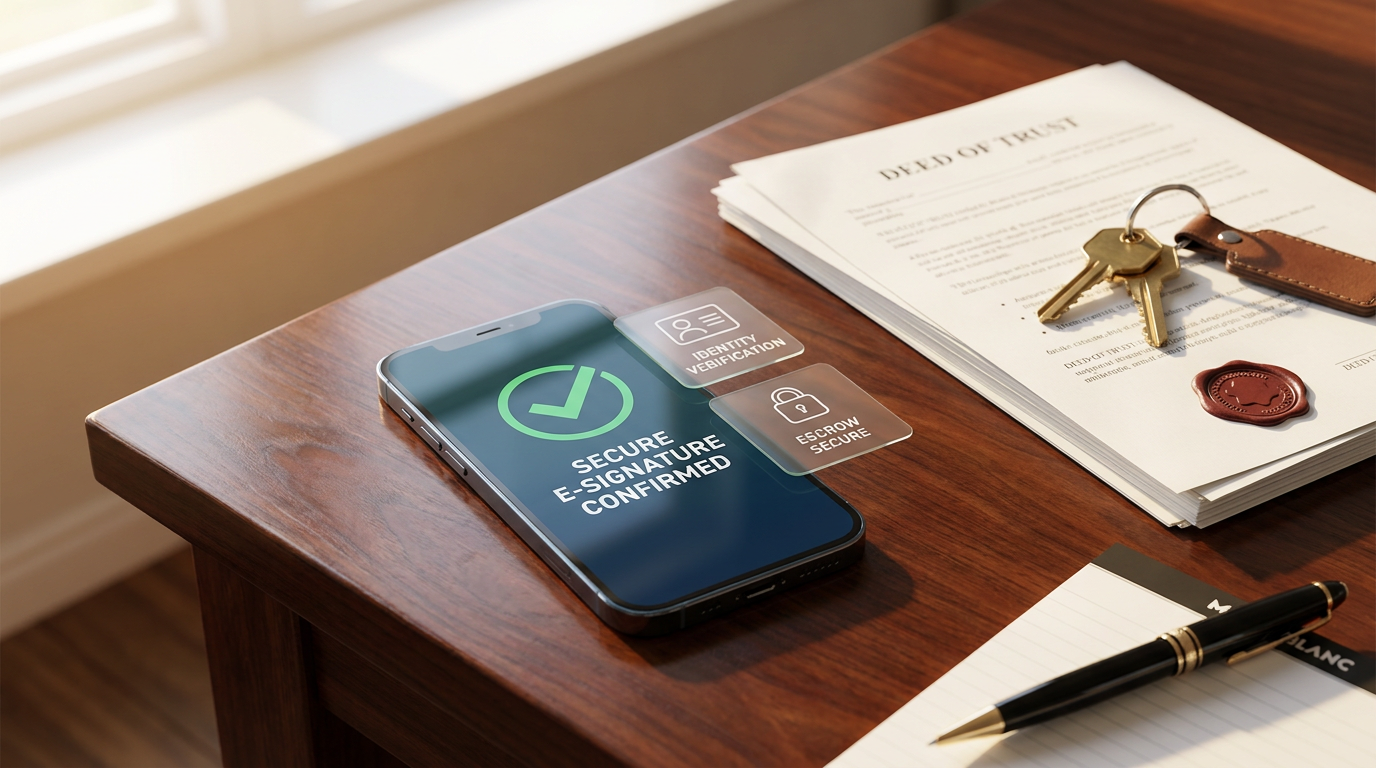
The realistic near-term model is hybrid: e-signatures, identity verification, workflow automation, and programmable escrow working together with traditional legal contracts and title systems.
What smart contracts do not solve
For all their promise, smart contracts should not be oversold. The biggest risk in PropTech is often not technical failure but category confusion. When people hear that blockchain records are immutable, they may assume the result is automatically accurate. It is not. An immutable record of bad data is still bad data. If the input confirming a condition is incorrect, manipulated, delayed, or disputed, the smart contract can execute the wrong action with perfect technical consistency.
This is why trusted data feeds, secure identity systems, and reliable governance matter so much. Smart contracts can automate logic, but they cannot independently verify truth in the physical world. They cannot inspect a building, determine whether a disclosure was misleading, or resolve a legal disagreement over title. Those tasks still require human judgment, evidence review, and institutional authority.
They also do not eliminate the need for professional intermediaries. Lawyers remain essential for drafting, review, risk allocation, and dispute management. Brokers remain valuable in negotiation, marketing, and transaction guidance. Lenders, title insurers, and registries still perform structural roles that code does not replace. The better question is not whether smart contracts remove professionals. It is whether they allow professionals to spend less time on repetitive coordination and more time on high-value judgment.
Finally, interoperability remains a practical barrier. Real estate does not operate inside one platform. It spans banking systems, registry systems, identity tools, document platforms, internal enterprise software, and jurisdiction-specific processes. A smart contract layer is only powerful when it can integrate reliably with that broader stack. Without integration, the promise of seamless automation quickly narrows.
Smart contracts, tokenization, and the next phase of PropTech
Smart contracts are often discussed alongside tokenization, and the connection is worth understanding. Tokenization refers to representing ownership interests or asset-linked rights digitally, often on blockchain infrastructure. In real estate, this could involve fractional interests, investment vehicles, or settlement structures linked to property assets. Smart contracts become relevant because they can govern how those tokenized interests are issued, transferred, and administered.
This does not mean every building is about to become a fully on-chain financial product. But institutional interest in programmable settlement and real-world asset tokenization is growing. Financial firms, technology providers, and consulting organizations increasingly discuss how blockchain-based infrastructure could support faster transfer mechanics, clearer audit trails, and more automated servicing models for illiquid assets such as real estate.
For the Canadian market, this trend intersects with a broader and active PropTech ecosystem. Startup activity, workflow innovation, and digital infrastructure investment all create conditions where transaction automation can mature. The likely direction is not a sudden leap to fully decentralized property ownership. It is a gradual buildout of connected systems that combine e-signatures, KYC and AML checks, registry-facing workflows, programmable escrow, and better dashboards for transaction visibility.
That is a more practical and more credible future. Real estate changes slowly because ownership rights are too important to move recklessly. But it does change when better systems prove that they can reduce friction without weakening legal certainty. Smart contracts fit that path when they are deployed as infrastructure, not ideology.
What buyers and sellers should ask before using a smart contract based platform
As more PropTech platforms introduce automation features, users should know what questions to ask. Not every product that uses the term smart contract is doing the same thing. Some tools are genuinely blockchain-based. Others are sophisticated workflow platforms with conditional automation and digital signatures. Both may be useful, but they should not be confused.
For buyers and sellers, the first question is practical: which parts of the transaction are actually automated? If the answer is escrow release logic, document routing, and milestone alerts, that is concrete. If the answer is vaguely about decentralizing real estate, the operational value may be less immediate. The second question is legal: how does the system handle signatures, recordkeeping, jurisdiction-specific requirements, and disputes? Strong platforms will explain this clearly rather than implying the technology bypasses legal process.
The third question concerns data integrity. Ask where the contract gets its inputs, who verifies milestone completion, and what happens if information is wrong. A robust system will define governance around data feeds and exception handling. The fourth question is integration. Does the platform work with lenders, title partners, registries, identity tools, and closing professionals, or does it simply create another isolated dashboard?
Finally, ask about fallback procedures. Real estate rarely follows a perfect script. Deals are amended. Contingencies are extended. Payments are delayed. New issues emerge late in the process. Good smart contract design includes mechanisms for approved overrides, human review, and controlled changes when the real world does not match the original assumptions.
How real estate professionals should think about adoption
For brokers, lawyers, lenders, operators, and investors, smart contracts should be evaluated as workflow infrastructure. The right starting point is not to ask whether a business should become blockchain-first. It is to identify where transaction friction is expensive, repetitive, and rules-based. Those are the areas most likely to produce measurable returns from automation.
A practical adoption strategy often begins with one narrow process. That could be deposit handling, lease milestone management, compliance gating, or settlement coordination for a recurring transaction type. Once one process is digitized cleanly, organizations can assess cycle-time improvements, error reduction, user experience, and integration challenges before expanding further. This measured approach is more realistic than trying to redesign the entire transaction stack at once.
It is also important to involve legal and compliance teams early. Smart contracts sit at the intersection of code, finance, documentation, and regulation. If the automation logic does not reflect actual contractual rights and obligations, efficiency gains can quickly turn into operational risk. The goal is not to automate for its own sake. The goal is to automate with legal clarity and data discipline.
In many cases, the strongest result will come from pairing human expertise with programmable workflows. Professionals remain responsible for negotiation, exceptions, advice, and accountability. The software handles sequencing, notifications, records, and conditional execution. That combination is where the market is likely to find durable value.
Common misconceptions worth clearing up
Because smart contracts carry so much hype, a few clarifications are useful. First, a smart contract is not simply a PDF with an electronic signature. A digital contract can exist without any automated execution logic. Smart contracts involve code-based actions tied to defined conditions. They may sit alongside traditional legal documents rather than replacing them.
Second, blockchain does not guarantee legal enforceability. The law recognizes agreements through legal standards, not through technical branding. Electronic records and signatures are important foundations in North America, but property transactions still need to satisfy relevant legal and registration requirements. Technology cannot wish those away.
Third, immutability is not the same as correctness. If the system receives flawed external data, the resulting execution may still be wrong. Fourth, smart contracts do not make human intermediaries obsolete. They change where those intermediaries spend time. The most likely result is leaner administration, not a profession-free real estate market.
Fifth, fully autonomous title transfer is not the main practical use case today. The strongest current applications are escrow automation, milestone-based payment release, digital compliance workflows, and more structured settlement coordination. These may sound less dramatic than the futuristic versions, but they are also far more useful in the near term.
The future of real estate transactions will be more programmable, not less human
The future of real estate is not a simple battle between traditional transactions and fully autonomous code. It is a gradual shift toward more programmable, transparent, and integrated workflows. Smart contracts belong in that shift because real estate contains so many repetitive dependencies that software can manage well. Every time a platform accurately automates a status update, funds release, approval sequence, or compliance check, the industry moves a little closer to a more efficient operating model.
What is changing is not the fundamental importance of trust. It is the infrastructure through which trust is executed. Instead of relying so heavily on manual coordination, the market is building systems that can encode process logic, preserve an audit trail, and connect previously fragmented participants. That is a meaningful evolution, even when the legal agreement and the final registry record remain traditional.
For buyers and sellers, this could mean fewer delays and better visibility into closing progress. For investors and operators, it could mean faster processing, lower administrative drag, and more scalable transaction management. For the broader PropTech ecosystem, smart contracts represent an enabling layer that helps digital identity, e-signatures, payment rails, and property data systems work together more effectively.
The most important takeaway is simple. Smart contracts are not the future because they are flashy. They are the future because real estate still has too many slow, manual, condition-based workflows that can be improved with better execution logic. The winners in this space will be the platforms and professionals who use that logic carefully, legally, and in ways that make property transactions more reliable for everyone involved.
Final thoughts
Smart contracts are steadily moving from theory into practical PropTech infrastructure. Their strongest value in real estate lies in automating milestones, reducing coordination friction, improving transparency, and supporting faster settlement across multi-party transactions. They are especially useful where the workflow is structured, the conditions are clear, and the data inputs can be trusted.
At the same time, their limits are just as important as their advantages. They do not replace contract law, title systems, legal review, or the need for reliable external information. In North America, the legal foundation for digital real estate transactions comes largely from existing electronic signature and electronic commerce frameworks, not from a brand new legal category called smart contracts.
That is why the most credible future is hybrid. Real estate will continue to rely on established institutions, but it will increasingly use programmable tools to make those institutions work faster and with less friction. In that sense, smart contracts are not a side story in PropTech. They are becoming part of the transaction engine itself.


No Comment! Be the first one.