



For beginners, real estate often appears to be about the property itself. Investors look at the unit size, the finish quality, the age of the building, and the asking price. Those details matter, but they rarely explain why one asset outperforms another over time. The deeper driver is the city around the property, and that is where urban economics becomes essential. Urban economics studies how people, firms, transportation, land use, public policy, and infrastructure interact inside cities, and those interactions directly influence rents, occupancy, pricing power, and long term appreciation.
Table Of Content
- Why Urban Economics Matters in Real Estate
- The City as an Economic System
- Agglomeration Economies and the Premium of Being Close
- Why Metropolitan Concentration Matters in Canada and North America
- Infrastructure: The Fastest Visible Way Cities Create Value
- Housing Supply: Why Shortage Supports Prices and Rents
- Demographics: Not All Population Growth Creates the Same Opportunity
- Zoning, Density, and Urban Form
- Interest Rates, Capital Costs, and Real Estate Pricing
- How Beginners Should Think About Neighborhood Value
- Common Misconceptions About Urban Real Estate Value
- A Simple Framework for Evaluating Urban Real Estate Opportunities
- The Growing Importance of Climate and Resilience
- Final Thoughts: What Urban Economics Teaches New Investors
At its core, urban economics explains why location carries so much weight in real estate. Cities are not just collections of buildings. They are economic systems where employers cluster, residents compete for convenience, transit networks shape access, and zoning rules control supply. When investors understand those forces, they stop viewing property as an isolated asset and start evaluating it as part of a broader urban machine. That shift in perspective is often what separates speculative buying from disciplined investment analysis.
For anyone entering the market, this matters because urban real estate value is rarely random. Strong neighborhoods usually benefit from a mix of job access, infrastructure, limited supply, demographic demand, and lifestyle amenities. Weak locations often suffer from the opposite combination, even when headline city growth looks positive. A beginner who understands these patterns can make more informed decisions, avoid simplistic assumptions, and identify markets where fundamentals are working in their favor.
This article explains the key urban economic principles that drive real estate value, with a practical lens for new investors. It focuses on the relationship between city growth, transportation, supply constraints, demographics, zoning, and macroeconomic conditions. It also places these ideas in a Canadian context, where metropolitan concentration remains high and housing affordability continues to dominate the real estate conversation. By the end, you should have a clearer framework for evaluating urban markets beyond surface level trends.
Key idea: In urban real estate, value is created not only by the property you buy, but by the economic ecosystem that surrounds it.
Why Urban Economics Matters in Real Estate
Urban economics matters because property values depend on more than physical scarcity. They depend on how cities organize people, jobs, mobility, and land. A condominium in a major city can command a premium not simply because it is new or well designed, but because it offers faster access to employment, education, transit, entertainment, and daily services. In other words, the location reduces friction in everyday life, and the market prices that convenience into rent and resale value.
One of the most important ideas in urban economics is that proximity creates value. Businesses benefit when they are close to suppliers, talent, customers, and competing firms. Workers benefit when they can access more jobs without relocating. Households benefit when they live near amenities and spend less time commuting. Research from the OECD highlights these agglomeration economies, showing that productivity can rise as city size increases, with estimates suggesting gains of roughly 2% to 5% when population size doubles. For investors, that helps explain why economically connected neighborhoods often outperform more isolated areas.
Urban economics also gives beginners a more realistic understanding of what drives demand. Demand is not just about population growth in the broadest sense. It is about who is moving in, where they work, what housing they need, how much they can afford, and which neighborhoods best match their lifestyle and budget. Two neighborhoods in the same city can face very different rental conditions if one is close to a university, major hospital, or rapid transit line and the other is not.
This is why experienced investors rarely ask only whether a city is growing. They ask whether growth is concentrated, whether supply is constrained, whether infrastructure is improving, and whether income growth supports housing costs. Urban economics provides the framework for answering those questions with greater precision.
The City as an Economic System
To understand urban real estate, it helps to think of a city as a living economic network. Land, labor, transportation, regulation, and capital all interact continuously. Jobs attract workers. Workers need housing. Housing demand increases pressure on land prices. Transport systems determine which areas remain accessible and desirable. Public policy then shapes how much new housing can be built and where development can occur. Real estate sits at the center of that system because it converts economic demand into physical space.
For beginners, this systems view is powerful because it explains why neighborhoods change over time. A once overlooked district can appreciate meaningfully if a transit extension improves job access, if zoning allows more mixed use development, or if employers begin expanding nearby. By contrast, a neighborhood that looked attractive during a low interest rate cycle can stagnate if affordability weakens, supply surges, or local employment softens. The market is dynamic because the city is dynamic.
It also explains why investors should look beyond headlines. A strong metropolitan area may still contain pockets of weak performance. Likewise, a secondary submarket in a slower growth city can outperform if it benefits from a unique combination of access, supply discipline, and demographic fit. The goal is not to chase size alone. The goal is to identify where urban economic forces align in a way that supports durable demand.
Agglomeration Economies and the Premium of Being Close
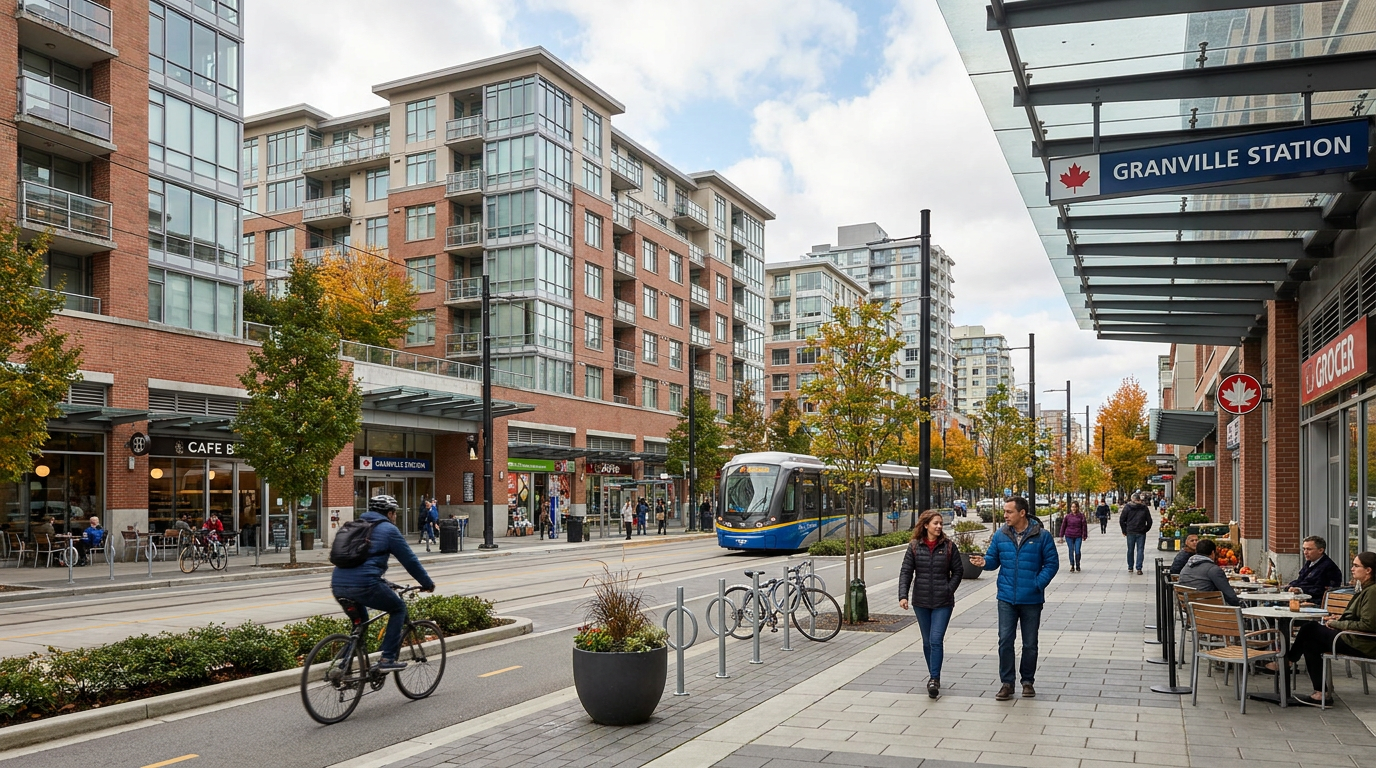
Agglomeration economies are one of the central concepts in urban economics. The term refers to the benefits that arise when firms and people cluster together in dense urban areas. Companies gain from access to larger labor pools, better information flow, stronger supplier networks, and more frequent collaboration. Workers gain from more employment options and potentially higher wages. Consumers gain from variety, convenience, and service depth. These benefits help explain why economically active city districts can support stronger real estate values.
For property investors, agglomeration matters because it often translates into pricing power. Office, multifamily, retail, and mixed use properties in areas with high employment concentration often attract more stable demand than assets in disconnected locations. Even residential tenants who work remotely may still prefer neighborhoods with dense amenity access, entertainment, and social infrastructure. The appeal of centrality does not disappear just because work patterns evolve. It changes form, but it remains economically meaningful.
This does not mean every downtown property is automatically a strong investment. A common misconception is that larger cities guarantee better returns. In practice, neighborhood level factors matter more. Some urban districts suffer from oversupply, declining affordability, aging infrastructure, or weak public realm quality. Others maintain a premium because they balance accessibility, livability, and constrained supply. The investor’s job is to distinguish between city scale and local economic advantage.
Agglomeration also helps explain why mixed use areas tend to be resilient. When housing, retail, services, and employment exist near one another, the neighborhood supports multiple forms of demand. That diversity can protect occupancy and value through economic shifts. In beginner terms, a well connected mixed use district has more ways to remain relevant than a location that depends on a single employer or a single use pattern.
Why Metropolitan Concentration Matters in Canada and North America
In Canada, urban concentration remains a defining real estate reality. Statistics Canada estimated that as of July 1, 2025, 74.8% of the country’s population lived in census metropolitan areas, and those 41 CMAs held 31,169,100 residents. For investors, that concentration matters because a large share of household formation, employment growth, immigration, and rental demand is focused in a relatively limited number of urban markets. Capital tends to follow population and employment clusters, which is one reason major metropolitan regions continue to dominate real estate investment attention.
At the same time, growth rates can change quickly. Statistics Canada reported that CMA population growth slowed to 1.0% from July 1, 2024 to July 1, 2025, down from 3.5% in the previous year. That slowdown does not erase the structural importance of urban markets, but it can influence short term rental demand, leasing velocity, and pricing momentum. A beginner investor should understand the difference between a long term urban thesis and a short term market cycle. Cities can remain fundamentally attractive while still experiencing temporary moderation.
The same broad pattern applies in the United States. U.S. Census Bureau data show that metro areas house the vast majority of the population and gained nearly 3.2 million people from 2023 to 2024. This reinforces a simple North American investment truth: metropolitan markets remain the primary arenas where jobs, migration, and housing demand intersect. For anyone building a real estate strategy, ignoring urban concentration means ignoring where much of the actual demand is being formed.
Still, concentration alone is not enough. Investors need to ask which metropolitan areas are adding jobs, which ones are building enough housing, and which submarkets are best positioned to absorb new demand. Big numbers create context. They do not replace analysis.
Infrastructure: The Fastest Visible Way Cities Create Value
If there is one factor beginners can easily see and advanced investors consistently track, it is infrastructure. Transportation, utilities, roads, public realm upgrades, schools, and civic services all shape the usefulness of land. In urban economics, infrastructure reduces friction. It shortens travel times, improves connectivity, supports higher density, and increases the practical reach of labor and consumer markets. In real estate, that often means stronger demand and higher willingness to pay.
Transit is especially important because it changes how a location functions within the city. A neighborhood that once felt peripheral can become highly desirable if a new rail line or rapid bus corridor improves access to major employment nodes. NBER research on value capture from public infrastructure found price increases associated with major transit investment and the creation of new property value. The exact uplift varies by location and project quality, but the principle is clear: when infrastructure materially improves access, nearby land can become more valuable.
However, infrastructure benefits are not automatic or uniform. Not every station creates the same premium. Not every road improvement lifts surrounding residential value. Service frequency, travel time savings, walkability, safety, and the quality of surrounding land use all matter. A station surrounded by low intensity zoning and poor pedestrian access may underperform relative to one embedded in a dense mixed use district. This is why investors should assess infrastructure in terms of actual utility, not just public announcements.
For beginners, the most practical lesson is to track projects that change how people move through the city. Transit expansions, major road redesigns, utility upgrades, hospital investments, university expansions, and waterfront redevelopment can all reshape local real estate economics. When infrastructure improves job access and neighborhood quality at the same time, the impact on property value is often strongest.
Housing Supply: Why Shortage Supports Prices and Rents
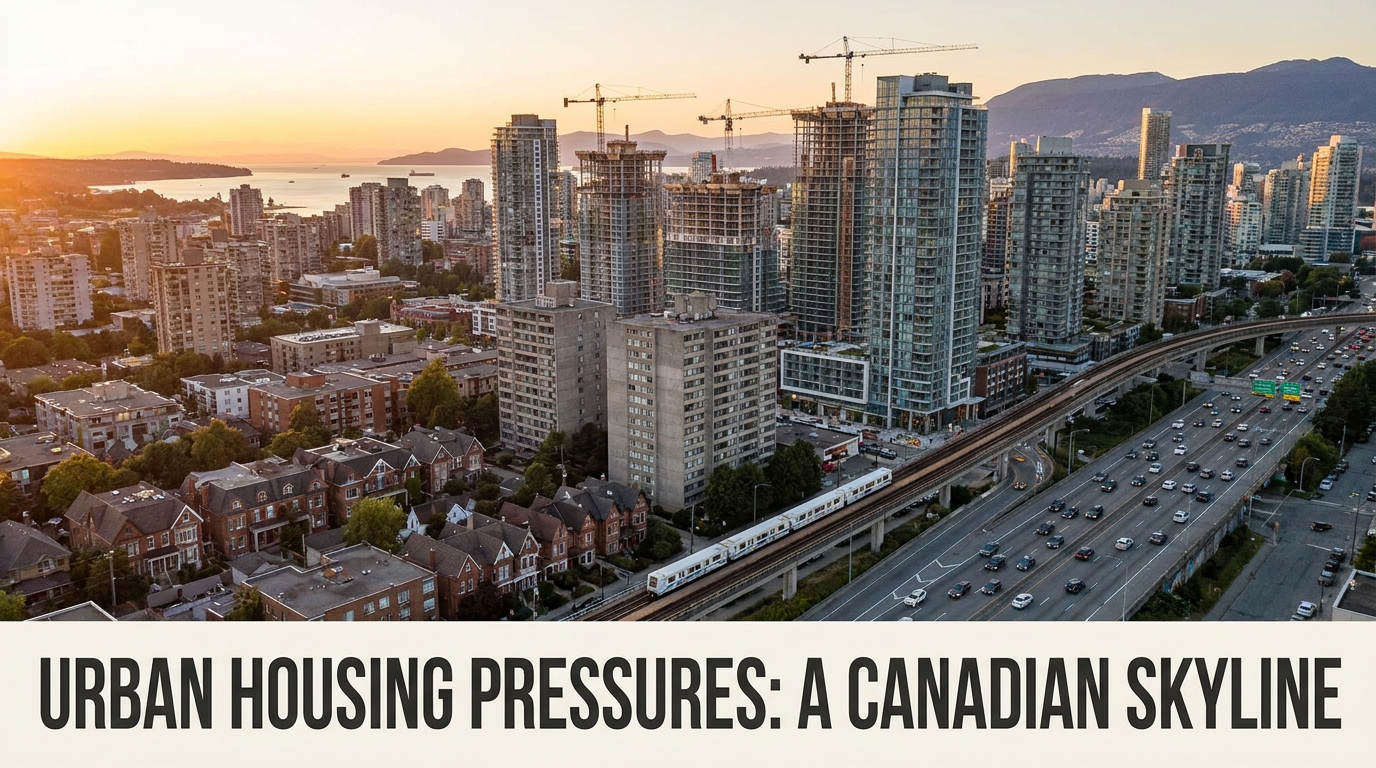
Demand gets most of the attention, but supply is just as important. In urban economics, real estate prices rise when land is valuable and new supply cannot respond quickly enough. That constraint can come from geography, regulation, construction costs, financing conditions, labor shortages, or community opposition to density. When supply remains limited in the face of rising population and employment, rents and prices tend to hold up better over time.
Canada offers a clear example. CMHC has estimated that returning to 2019 affordability levels would require roughly 430,000 to 480,000 new housing units annually over the next decade. That is a substantial figure, and it highlights the depth of the supply challenge. For investors, this matters because persistent undersupply can support occupancy and rent growth, particularly in markets where household formation outpaces completions. A structurally undersupplied market may experience cyclical pauses, but the long run pressure on housing remains significant.
CMHC’s 2025 and 2026 outlooks also emphasize affordability pressures, elevated construction costs, interest rates, and economic uncertainty. Apartment construction remains especially important across many Canadian urban markets. This means investors should not simply assume that high demand guarantees strong performance. If a submarket experiences a wave of new deliveries, rent growth may slow even inside a large and otherwise healthy city. Supply side timing matters as much as the headline demand story.
Beginners should also understand the concept of housing supply elasticity. In simple terms, this refers to how easily a market can add new housing in response to demand. A highly elastic market can build quickly, which may moderate price growth. A constrained market may struggle to add supply, which can support stronger rent and price appreciation, though often at the cost of affordability. Investors are usually best positioned when they buy in markets with sustainable demand and limited ability to overbuild.
Demographics: Not All Population Growth Creates the Same Opportunity
Population growth is one of the most widely cited real estate indicators, but it is often misunderstood. Urban economics treats demographics as a more nuanced force. What matters is not only how many people are arriving, but also their age, income, household size, immigration status, life stage, and housing preferences. These factors shape the type of housing demanded and where that demand is likely to concentrate.
For example, a city with rising student enrollment may support smaller rental units near campuses and transit. A market attracting young professionals may favor amenity rich apartments and condos close to employment and nightlife. Areas with growing family formation may perform better in larger rental formats, townhomes, and suburban infill. Neighborhoods with aging populations may see stronger demand for accessible housing near healthcare and daily services. The demand story changes depending on who is moving in and how they live.
Immigration is another important urban driver, particularly in Canada, where newcomers often settle first in major metropolitan regions. That can intensify rental demand in gateway markets, especially in transit connected districts close to employment opportunities and community networks. But even here, the investor should avoid broad assumptions. Immigration does not lift all asset classes equally, and demand can concentrate in specific price bands and housing types.
The same logic applies to labor market composition. A city adding high wage knowledge jobs may support stronger homeownership and premium rental demand than a city growing through lower wage service employment alone. For beginners, the key takeaway is straightforward: demographic growth is only useful when matched with the right product, the right price point, and the right location.
Zoning, Density, and Urban Form
Zoning is one of the least understood yet most powerful influences on urban real estate value. It determines what can be built, where it can be built, how dense development can be, and how long approvals may take. In practical terms, zoning controls supply and shapes neighborhood form. It can preserve scarcity in established districts or unlock growth through redevelopment and intensification.
For investors, zoning matters in two major ways. First, restrictive land use regulation can limit new housing supply, which may support pricing for existing assets. Second, zoning reform can create new upside by allowing higher density, mixed use projects, or infill redevelopment near transit and job centers. A property’s current income matters, but so does the future value of its land under potential policy change.
Urban form also affects the efficiency and desirability of a city. OECD research notes that sprawl can harm affordability, increase segregation, and weaken the efficiency gains that make cities productive. When growth spreads too far outward, commute times rise, infrastructure costs increase, and household budgets face more transportation pressure. From an investment perspective, this can create trade offs. Peripheral growth may offer lower entry prices, but if accessibility is weak and infrastructure lags, long term value creation can be less reliable than in well connected infill locations.
Dense urban areas are sometimes viewed negatively by beginners who associate density with congestion or oversupply. That is too simplistic. In many cases, dense mixed use areas support stronger rental demand because they offer walkability, convenience, and broader amenity access. Density is not automatically good or bad. It becomes valuable when it is paired with quality infrastructure, good design, and sustained economic activity.

Interest Rates, Capital Costs, and Real Estate Pricing
Urban economics operates within a macroeconomic environment, and one of the most important variables is the cost of capital. Real estate is highly sensitive to interest rates because most purchases depend on debt. When rates rise, borrowing becomes more expensive, monthly payments increase, investor returns compress, and buyer affordability weakens. When rates fall, financing becomes more accessible, which can support demand and asset pricing.
In Canada, the Bank of Canada’s policy rate stood at 2.25% on June 10, 2026, following a series of reductions in 2025. Even with lower rates than peak tightening levels, affordability remains a live issue because borrowing costs are only one part of the equation. Household income growth, mortgage renewal pressure, inflation, and broader economic uncertainty all influence how much demand can convert into actual transactions. Beginners should resist the assumption that lower rates automatically create strong gains. Financing conditions help, but they do not override local supply or employment weakness.
Interest rates also influence cap rates and valuation expectations. When safer fixed income yields rise, investors often demand higher returns from real estate, which can place downward pressure on asset prices. This is especially relevant for income producing properties, where valuation depends heavily on discounted future cash flow. A great location can still see valuation softness if capital markets reprice risk more broadly.
The practical lesson is that urban real estate analysis should always combine local fundamentals with macro context. A strong neighborhood is an advantage, but it is not immunity. Good underwriting requires both place based analysis and capital market discipline.
How Beginners Should Think About Neighborhood Value
When evaluating a neighborhood, beginners often focus on visible cues such as new cafes, rising sale prices, or nearby development activity. Those signals can be useful, but they should be interpreted through an urban economics lens. A neighborhood becomes valuable when it combines access, demand, limited competing supply, and a form of urban utility that is hard to replicate elsewhere. That utility may be transit access, school quality, walkability, proximity to employment, waterfront access, or a mix of those factors.
A disciplined investor should ask a series of practical questions. Is the area gaining or losing job access relative to the rest of the city. Are infrastructure investments improving mobility. Is zoning likely to unleash a large amount of competing supply. What type of households are moving into the area. Are rents supported by incomes, or is affordability already stretched. These questions lead to better decisions than relying on general city reputation alone.
There is also value in distinguishing between momentum and durability. Some neighborhoods rise quickly because they are relatively affordable and begin attracting attention from both residents and developers. Others maintain a long term premium because they sit at the center of transport, employment, and amenity networks. Neither pattern is inherently better, but the risk profile differs. Early stage areas may offer more upside with greater uncertainty, while established urban districts may provide more stable demand but lower yield.
For beginners, the important point is that neighborhood analysis should move beyond intuition. If you can explain why people want to live there, why they can afford to stay there, and why supply will not overwhelm demand, you are approaching the area like an investor rather than a speculator.
Common Misconceptions About Urban Real Estate Value
One of the most persistent misconceptions is that bigger cities always produce better returns. Large metropolitan areas matter because they concentrate jobs and people, but that does not mean every submarket inside them is attractive. Neighborhood level supply, affordability, transit access, and local economic mix often matter more than city size alone. Investors who buy only on city reputation can easily overpay for mediocre fundamentals.
Another misconception is that infrastructure always raises surrounding property values. The reality is more selective. Benefits depend on whether the project improves real access to jobs and services, how convenient the service is, and how the surrounding area is planned. A transit project can create substantial value in one district and modest impact in another. Infrastructure is a catalyst, not a guarantee.
Many beginners also assume that population growth automatically means strong housing demand across all asset types. In practice, different groups demand different products. Students, new immigrants, seniors, and families do not search for the same locations or floor plans. Investors who understand these distinctions are more likely to choose the right asset for the market they are entering.
Finally, some people treat density as a negative. But in real estate economics, density often supports walkability premiums, stronger rental demand, and more resilient mixed use environments. The question is not whether an area is dense. The question is whether that density is supported by infrastructure, jobs, public realm quality, and thoughtful planning.
A Simple Framework for Evaluating Urban Real Estate Opportunities
For new investors, urban economics becomes most useful when translated into a repeatable framework. Rather than trying to memorize every theory, focus on how a location performs across several connected dimensions. This approach can improve clarity and reduce emotion in decision making.
- Economic base: Start with jobs. Identify whether the area is connected to growing employment nodes, universities, healthcare systems, government centers, or logistics corridors. Jobs create housing demand, and diversified employment is usually more durable than dependence on one industry.
- Access and infrastructure: Measure how easily residents can reach work, schools, services, and recreation. Transit, roads, bike networks, and public realm quality all affect the real utility of a location.
- Supply conditions: Review what is being built and what zoning allows. Strong demand can be diluted by a flood of new inventory, while limited supply can support pricing and occupancy.
- Demographic fit: Match the property type to the households most likely to rent or buy in that location. Age profile, income, immigration patterns, and household size all matter.
- Affordability and financing: Consider whether rents or prices are sustainable relative to incomes and borrowing costs. A neighborhood can be desirable but still vulnerable if affordability becomes too stretched.
- Policy and long term resilience: Watch zoning changes, development policy, infrastructure plans, and climate resilience factors. These can alter both risk and upside over time.
This framework helps investors avoid one dimensional thinking. A property near a new station may still be weak if supply is excessive. A low supply neighborhood may still underperform if job access is poor. Strong investment decisions typically emerge when multiple variables support the same conclusion.
The Growing Importance of Climate and Resilience
Urban economics is increasingly shaped by climate resilience and low carbon development. While beginners often focus on rent and mortgage numbers first, long term investors are paying closer attention to flood risk, heat exposure, insurance costs, building efficiency, and municipal resilience planning. These factors influence both operating costs and neighborhood desirability.
In practical terms, infrastructure that improves stormwater management, transit access, energy efficiency, and walkability can support long term value. Conversely, locations exposed to repeated climate stress may face higher insurance premiums, rising maintenance costs, or weaker buyer confidence over time. As cities adapt, resilient neighborhoods may capture a growing premium, especially where public investment supports that transition.
This does not mean every investor needs to become a climate specialist. It does mean that property value is becoming more connected to a city’s ability to manage environmental risk. The best urban markets of the future are unlikely to be defined by growth alone. They will also be defined by how effectively they protect and modernize the places where people live and work.
Final Thoughts: What Urban Economics Teaches New Investors
Urban economics gives beginners a more sophisticated way to understand real estate value. It shows that prices and rents are shaped by systems, not isolated buildings. Jobs, infrastructure, demographic change, land use regulation, supply constraints, and capital costs all interact to influence what a property can earn today and what it may be worth tomorrow. Once you see real estate through that lens, location becomes more than a slogan. It becomes a measurable economic advantage.
In Canada, the concentration of population in metropolitan areas continues to make urban markets central to investment strategy, even as growth has moderated from recent highs. At the same time, the housing supply gap remains significant, affordability is under pressure, and interest rates continue to affect buyer behavior and underwriting. These are not abstract statistics. They are active forces shaping real estate performance across cities and neighborhoods.
For new investors, the most important takeaway is simple. Do not ask only whether a city is popular or whether prices have been rising. Ask why demand exists, how easy it is to add new supply, whether infrastructure is improving access, and which households are most likely to support the asset you want to buy. Good real estate investing starts with good questions, and urban economics helps you ask better ones.
When proximity, access, constrained supply, and demographic demand intersect, real estate value tends to be strongest. That is the pattern to watch. It is also the foundation for a more disciplined, more resilient investment strategy.


No Comment! Be the first one.