



Building codes are often described as a technical requirement, but for land developers they are much more than that. They are one of the central frameworks that shape what can be built, how it can be built, how much it will cost, how long approvals may take, and how a project will perform over time. In practical terms, building codes translate public policy into built form. They turn broad goals such as safety, accessibility, energy efficiency, resilience, and sustainability into enforceable standards that directly influence development strategy.
Table Of Content
- Why Building Codes Matter So Much in Land Development
- What Building Codes Actually Cover
- Model Codes Versus Adopted Codes
- Why Jurisdictional Differences Matter Early
- Building Codes and the Economics of Feasibility
- Building Codes as a Sustainability Tool
- Energy Performance Is Becoming Central
- Innovation Within the Code Framework
- Performance Based Design and Alternative Solutions
- How Building Codes Interact With Zoning and Planning
- Common Misconceptions Developers Should Avoid
- Existing Buildings, Retrofits, and Adaptive Reuse
- Accessibility, Health, and Inclusive Development
- Climate Resilience and Long Term Urban Risk
- A Practical Code Strategy for Developers
- The Strategic Outlook for Building Codes
- Final Thoughts
For anyone involved in land acquisition, project feasibility, site planning, entitlement strategy, design coordination, or long term asset planning, understanding building codes is essential. A developer who treats code review as a late stage technical check often discovers expensive redesigns, permit delays, or missed opportunities. A developer who treats code strategy as an early planning input is far better positioned to manage risk, preserve design flexibility, and align a project with the direction of the market and the expectations of public authorities.
That matters even more today because codes are evolving quickly. In Canada, the National Building Code of Canada 2020 applies to new construction, alterations, change of use, and demolition, and it introduced extensive updates across fire protection, structural safety, accessibility, and energy performance. Across North America, code systems continue to move toward stronger climate objectives, better building performance, and more responsive pathways for innovative construction. For land developers, this creates both a challenge and a strategic opening.
This guide explains what building codes are, how they differ from other development controls, why they matter to feasibility and urban growth, and how developers can approach them in a way that supports compliance and innovation together. The core idea is simple. Building codes are not just a regulatory floor. They are a foundational part of sustainable urban development.
Building codes do not replace ambition in design or development. They define the minimum performance standard within which safe, durable, efficient, and resilient urban growth must occur.
Why Building Codes Matter So Much in Land Development
Land development is a process of turning a site into a viable asset within a larger civic system. Every project depends on a mix of market demand, land economics, infrastructure capacity, approvals, financing, design quality, and construction execution. Building codes sit at the intersection of all of those factors because they influence the technical viability of the project from the earliest stages onward.
Consider what a code requirement can affect in real terms. It may determine minimum fire separations, exit widths, floor assembly ratings, elevator expectations, structural loading, envelope performance, stair pressurization, accessibility features, ventilation standards, or site servicing details. Each one of these can alter building massing, floorplate efficiency, usable area, construction systems, capital costs, and operational performance. For a developer, that means code is not a narrow consultant issue. It is a business issue.
Building codes also help protect value. Projects that comply with current standards are more likely to achieve smoother approvals, lower liability exposure, and better long term marketability. Occupants, lenders, insurers, and municipalities all care about safety and performance. As codes increasingly incorporate energy efficiency, indoor environmental quality, and resilience, compliance can also support lower operating costs and stronger asset quality over time.
At a city scale, building codes are one of the mechanisms that help align private development with public outcomes. They help ensure that new growth supports basic safety, accommodates broader accessibility needs, manages environmental performance, and responds to climate risks. In an era of housing pressure and infrastructure strain, this balancing role is increasingly important.

What Building Codes Actually Cover
A common misconception is that building codes deal only with structural safety. That is no longer an accurate view, and in many jurisdictions it has not been for years. Modern building codes address a far wider range of issues that reflect the growing complexity of buildings and the public policy goals attached to them.
In Canada, the National Building Code of Canada 2020 sets technical requirements related to the design and construction of new buildings, as well as alterations, change of use, and demolition. The 2020 code cycle incorporated hundreds of changes focused on health, fire and structural protection, safety, accessibility, and energy efficiency. These updates reflect a broader reality. Codes are dynamic instruments that evolve with science, technology, public expectations, and climate priorities.
At a high level, building codes commonly address structural integrity, fire safety, life safety, exits and egress, occupant loads, accessibility, building envelope standards, mechanical systems, energy performance, plumbing, indoor air quality, seismic and wind considerations, and in some cases aspects of resilience and environmental performance. Specific provisions vary by jurisdiction, building type, occupancy, and whether the project is new construction, an addition, a renovation, or a change of use.
For developers, the important point is not memorizing every section. It is understanding that codes shape building performance across multiple dimensions, and those dimensions can influence everything from concept design to financing assumptions. A site may appear straightforward until code requirements reveal constraints or opportunities that materially change the development strategy.
Model Codes Versus Adopted Codes
One of the most important distinctions in North American development is the difference between a model code and an adopted code. This distinction is often overlooked by new developers, and even experienced teams can run into trouble when they assume that a widely known code edition automatically applies in every jurisdiction.
In Canada, national model codes are developed at the federal level, but provinces and territories decide how and when to adopt them. Some jurisdictions adopt the national code largely as written. Others introduce amendments, use parallel frameworks, or update on different schedules. In the United States, the International Code Council publishes model codes that are updated on a three year cycle, but states and local jurisdictions determine adoption and modification. The result is a patchwork of local application within a broader model code ecosystem.
For land developers, this means due diligence must always be jurisdiction specific. A project team cannot assume that compliance pathways in one province, territory, state, or municipality will carry over directly to another. Local adoption dates, amendments, interpretation practices, permit submission standards, and inspection protocols can all affect timelines and design decisions.
This is especially relevant for developers operating across multiple markets. A prototype or repeatable building concept may seem efficient, but it still needs to be tested against local code adoption and local planning conditions. Standardization has value, but only when paired with local verification.
Why Jurisdictional Differences Matter Early
Jurisdictional variation matters most during the earliest phases of project planning. A developer evaluating land should be asking not only what zoning allows, but also what code conditions may affect the practical yield of the site. Local energy code provisions may require thicker wall assemblies or more advanced systems. Accessibility requirements may affect unit planning and common area design. Fire code interpretations may influence core layout, travel distances, or podium strategies.
When these issues are addressed only after acquisition or after a schematic design is substantially complete, the consequences can be expensive. Redesign, consultant revisions, permitting delays, and shifting construction budgets can quickly erode project returns. Early code analysis, by contrast, improves forecast accuracy and helps the team avoid false assumptions about density, cost, or schedule.
Building Codes and the Economics of Feasibility
Every land development project rests on feasibility. The developer must determine whether a concept can generate an acceptable return after accounting for land cost, soft costs, hard costs, financing, approvals, timing, contingencies, and operating assumptions. Building codes are deeply embedded in that equation because they affect both costs and value.
On the cost side, code requirements influence structural systems, fire protection systems, mechanical and electrical complexity, envelope standards, accessibility components, testing, inspections, consultant coordination, and permit duration. More demanding performance expectations can raise capital costs in the short term. Yet the full picture is more nuanced. Better performing buildings can reduce energy use, improve durability, lower maintenance exposure, support stronger rents or valuations, and reduce regulatory risk over time.
On the value side, code compliance contributes to investor confidence, insurance acceptability, tenant appeal, and long term relevance. This is especially true as markets become more focused on environmental performance and resilience. A building that merely meets an outdated minimum may carry greater future upgrade costs than one that is planned to align with emerging standards from the outset.
That is why sophisticated developers increasingly integrate code review into financial modeling. They do not see it solely as a cost center. They see it as a set of constraints and performance thresholds that help reveal the true economics of a project.
Building Codes as a Sustainability Tool
One of the biggest shifts in modern development is the growing role of building codes in climate and sustainability policy. For many years, environmental performance was treated as an optional layer, often pursued through green building certifications or corporate responsibility goals. Today, many sustainability expectations are moving into core code frameworks.
That shift reflects the scale of the challenge. Canada’s buildings sector includes more than 16 million residential dwellings and nearly half a million commercial and institutional buildings. In Canada’s 2024 national greenhouse gas inventory, buildings accounted for 13 percent of total emissions. Federal policy has made clear that emissions reductions in the sector are not yet on track to meet long term climate goals. As a result, stronger code adoption and implementation have become a central policy tool.
Programs such as the Codes Acceleration Fund and the broader Canada Green Buildings Strategy signal the direction of travel. Governments are pushing toward higher energy performance tiers, more effective code implementation, and longer term net zero oriented pathways. For developers, this means the code environment is moving beyond minimum life safety and into a more comprehensive performance model that includes energy efficiency, emissions reduction, and better building operation.
This should not be read as a burden alone. Stronger performance standards can improve the long term competitiveness of an asset. In many cases, they support lower operating costs, reduce obsolescence risk, and position projects more effectively in a market where users and institutions increasingly value efficiency and resilience.
Energy Performance Is Becoming Central
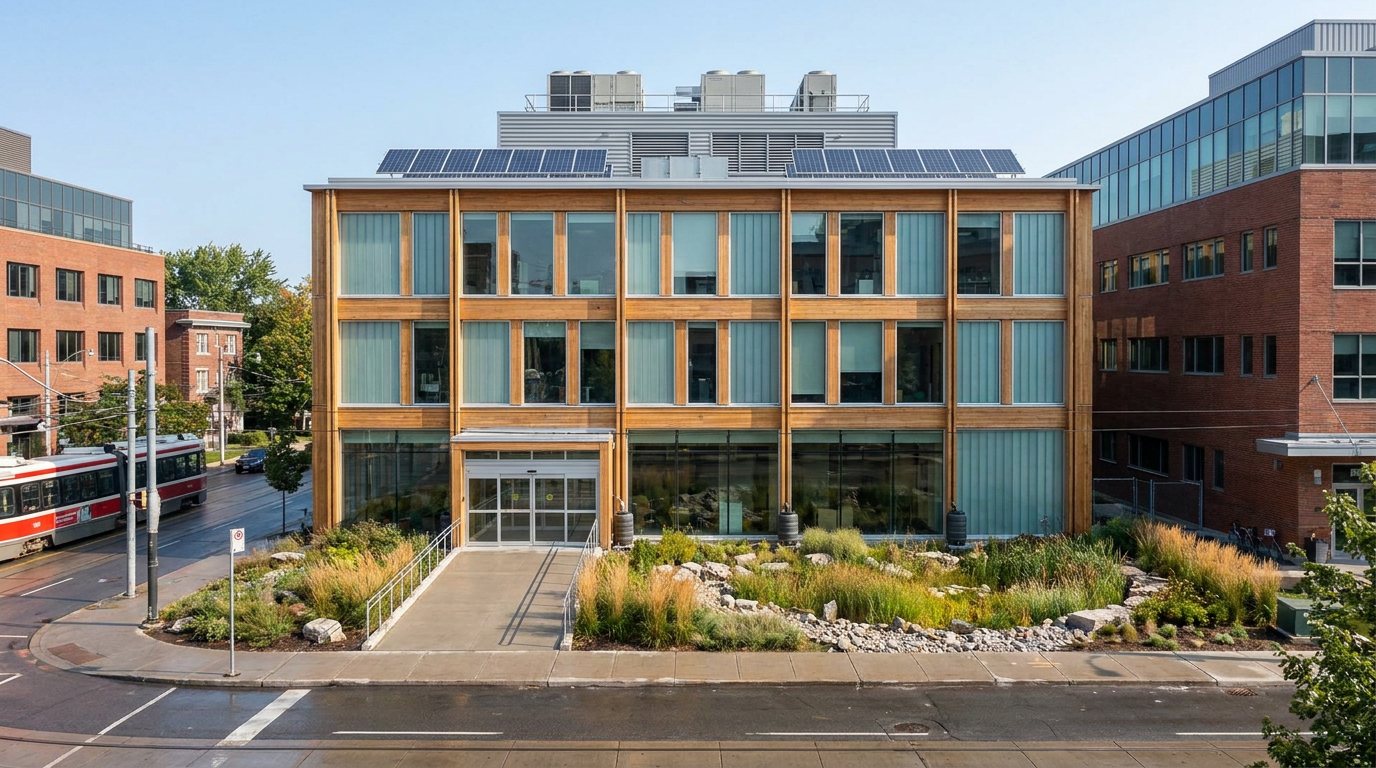
Energy performance is no longer a specialized topic reserved for sustainability consultants. It is becoming a mainstream development issue. As code frameworks adopt more ambitious energy targets, developers must consider insulation values, air tightness, glazing performance, HVAC efficiency, ventilation strategies, and commissioning requirements earlier in the design process.
These factors can influence building form and economics in subtle but important ways. A high performance envelope may change wall thickness and unit efficiency. Mechanical system choices may affect rooftop design, servicing space, and capital budgets. Energy targets may also intersect with utility planning, district energy opportunities, and lifecycle operating assumptions.
The strategic implication is clear. Developers who understand where energy codes are heading can plan projects that are more resilient to future regulation. Developers who ignore those trends may find themselves delivering buildings that are compliant today but less competitive tomorrow.
Innovation Within the Code Framework
Another persistent myth is that building codes exist mainly to restrict innovation. In reality, well designed code systems can provide a platform for innovation by establishing safety objectives and allowing new methods to prove compliance. The best example is that code evolution often follows advances in materials, engineering, and construction methods.
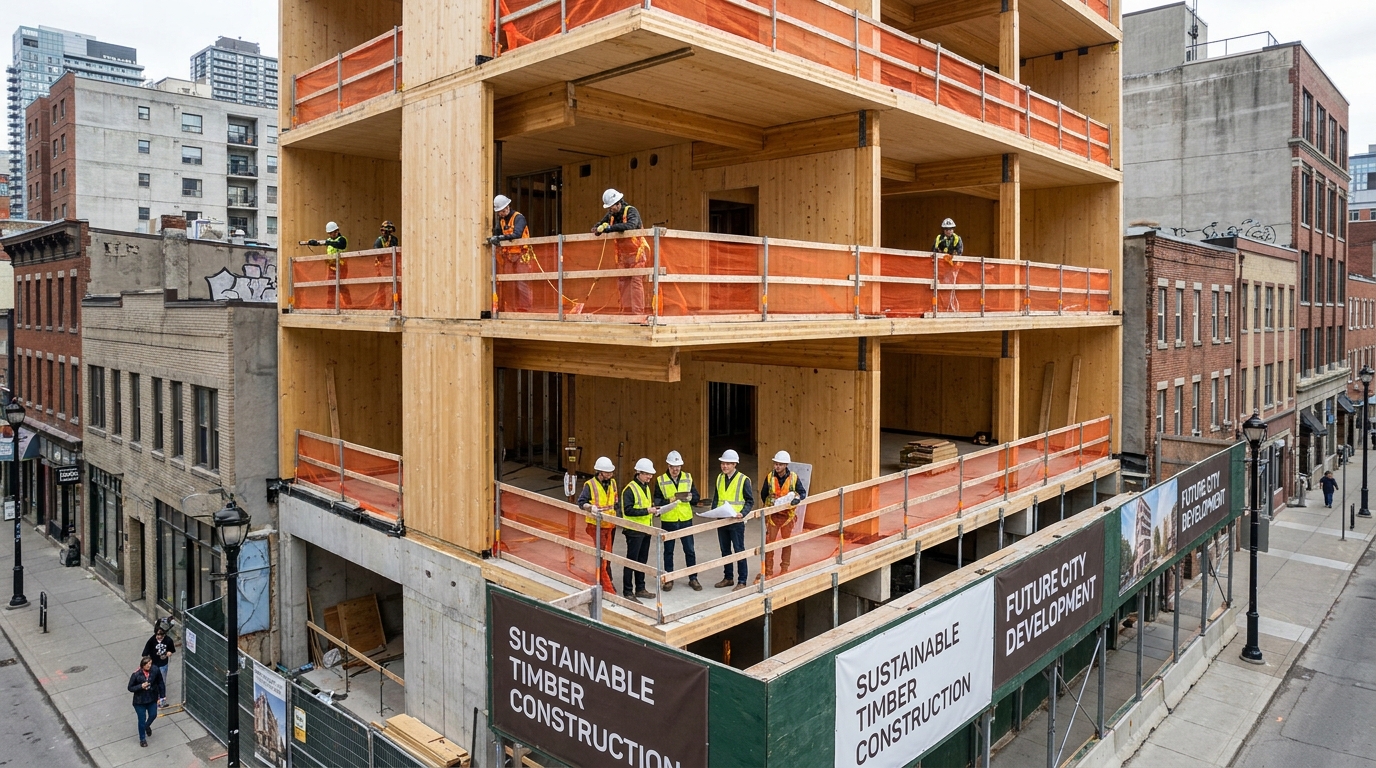
Canada’s National Building Code 2020 introduced encapsulated mass timber construction, enabling wood buildings up to 12 storeys under defined conditions. That is a significant milestone because it shows how code modernization can create room for new building systems that support speed, prefabrication, lower embodied carbon, and architectural innovation while preserving safety requirements. Similar developments across North America continue to expand possibilities for timber, modular systems, panelized construction, and other modern methods.
For land developers, innovation should not be treated as separate from code strategy. If a project aims to use a modern construction method, the code pathway must be assessed early. That may involve alternative solutions, performance based analysis, enhanced coordination with fire and structural engineers, or proactive engagement with authorities having jurisdiction. None of that is a sign that the idea is unworkable. It simply reflects the need to align innovation with credible technical evidence and regulatory process.
When developers, designers, and regulators engage early, codes can become an enabling framework rather than a rigid barrier. The strategic advantage lies in preparation. Innovation succeeds when teams understand both the design opportunity and the approval pathway needed to support it.
Performance Based Design and Alternative Solutions
Some code systems include pathways for performance based design or alternative solutions. These approaches allow a project to meet the intent of the code without following every prescriptive requirement in a conventional way. They are especially relevant for complex buildings, innovative materials, unusual site conditions, adaptive reuse projects, or projects seeking higher design efficiency.
Performance based design does not mean avoiding compliance. It means demonstrating compliance through engineering analysis, modeling, testing, or other technical justification. In the right circumstances, this can unlock better design outcomes, preserve project viability, or support new construction methods that would otherwise be difficult under purely prescriptive rules.
Developers should approach these pathways with realism. They can offer flexibility, but they also require time, expertise, and engagement with regulators. Success depends on strong consultant teams, clear technical documentation, and a disciplined approvals strategy. Used thoughtfully, however, performance based approaches can be one of the most valuable tools in a developer’s strategic toolkit.
How Building Codes Interact With Zoning and Planning
Developers sometimes discuss zoning and building codes as if they operate in separate worlds. In practice, they are deeply connected. Zoning tells you what land use, density, height, setbacks, parking, and urban design conditions may be permitted on a site. Building codes tell you how the building must be designed and constructed to be safe, accessible, and functional. A project is only truly feasible when both systems align.
A site may be zoned for a certain height or density, but code requirements can still affect whether that yield is practical. Fire separations, exit configurations, elevator needs, structural spans, mechanical space, and accessibility layouts all shape the net efficiency of a scheme. This is why savvy developers do not rely on zoning analysis alone when underwriting land. They test code implications at concept stage to understand how much of the theoretical entitlement can realistically be converted into a buildable product.
This interaction also matters in urban intensification and infill settings. Compact sites often face more complex circulation, servicing, and life safety constraints. Adaptive reuse projects may involve existing structure limitations or change of use triggers that create additional code obligations. A strategic development team recognizes that planning approval and code compliance are part of one integrated feasibility exercise.
Common Misconceptions Developers Should Avoid
Misunderstanding building codes can create avoidable risk. Several misconceptions appear regularly in the market, and each one can distort project planning in ways that are costly.
- Building codes are the same everywhere. They are not. Model codes may be national or widely used, but adoption and amendment vary significantly by province, territory, state, and municipality.
- Codes only deal with structural safety. Modern codes also address fire protection, accessibility, health, energy efficiency, and in many cases resilience and sustainability related performance.
- Compliance is just a cost. In reality, code strategy can reduce risk, improve predictability, support innovation, and strengthen long term building quality and value.
- Code review can wait until late design. By then, many of the most important cost and massing decisions are already embedded. Early analysis is far more effective.
- If a building works in one market, it will work in another. Repeatable concepts still need local due diligence, especially where energy, accessibility, or fire requirements differ.
These misconceptions tend to come from viewing code as a narrow technical issue rather than a development driver. The more complex the market environment becomes, the less room there is for that assumption.
Existing Buildings, Retrofits, and Adaptive Reuse
Much of the discussion around building codes focuses on new construction, but the future of urban development also depends on how jurisdictions handle existing buildings. Across North America, there is growing attention on retrofit strategy, modernization, and adaptive reuse. This is especially important in established urban areas where land is scarce and redevelopment often involves some relationship to existing built form.
Building codes matter here because alterations, change of use, and renovation work can trigger different compliance pathways than new construction. In some cases, codes provide tailored approaches for existing buildings that recognize practical constraints while still pursuing safety and performance goals. In other cases, a change of use can activate substantial upgrades that alter feasibility in major ways.
For developers, adaptive reuse can offer compelling opportunities. It can support faster delivery, preserve embodied value, align with heritage or urban character goals, and reduce demolition waste. But it requires a sophisticated code analysis from the outset. Fire resistance, exiting, accessibility upgrades, structural capacity, and mechanical retrofits can all determine whether a reuse concept is viable.
As policy attention increasingly turns toward decarbonizing the existing building stock, code frameworks are likely to keep evolving in this area. Developers who understand these pathways will be better positioned to unlock value in underused properties and support more sustainable urban regeneration.
Accessibility, Health, and Inclusive Development
Modern building codes are also part of a broader commitment to inclusive and healthy cities. Accessibility is not a side issue. It is a core design and governance matter that affects who can use a building, how easily they can move through it, and whether the built environment serves the full population.
For developers, accessibility standards influence entrance design, circulation routes, washroom layouts, parking, elevators, dwelling configurations, amenity spaces, and many other elements. They affect not only compliance but also product quality and usability. Buildings that accommodate a wider range of users are more durable socially and economically because they serve changing demographics better over time.
Health related provisions also matter. Ventilation, moisture control, indoor air quality, and life safety systems have direct implications for occupant wellbeing. In the post pandemic era, awareness of healthy building conditions has increased, and buyers, tenants, and institutions are paying closer attention. This reinforces a simple strategic lesson. Code compliance is not only about passing inspection. It is about delivering buildings that remain credible and functional in the real world.
Climate Resilience and Long Term Urban Risk
Resilience is becoming a larger part of the building code conversation. As cities face more extreme heat, intense rainfall, wildfire smoke, flood exposure, and other climate related stresses, both public policy and private development strategy are shifting. Codes are one of the ways governments can gradually raise the baseline of preparedness across the built environment.
For developers, resilience is an issue of both responsibility and asset protection. A project that fails to account for future climate pressures may face higher insurance costs, greater operational disruption, reduced occupier confidence, or accelerated capital needs. Depending on the jurisdiction and site conditions, resilience related requirements may intersect with envelope design, drainage, backup systems, material selection, fire resistance, or site planning.
Even where specific resilience mandates are still emerging, the strategic direction is clear. Projects that align with long term hazard mitigation and durability goals are likely to be better positioned than those designed only to clear the narrowest present day threshold. Building codes increasingly reflect that reality, and developers should treat resilience as part of mainstream feasibility, not an optional enhancement.
A Practical Code Strategy for Developers
Because codes influence so many aspects of development, the best approach is to build code strategy into the project from the start. This does not mean turning developers into code specialists. It means structuring the process so that technical requirements are identified early, tested against economics, and coordinated with planning and design decisions.
An effective strategy usually includes early review of the applicable local code edition and amendments, clear identification of occupancy and construction type assumptions, initial testing of fire and life safety implications, energy and envelope feasibility analysis, accessibility review, and a permitting roadmap. On more complex projects, it may also include alternative solution planning, pre application discussions with authorities, or specialist review related to mass timber, modular systems, or existing building conditions.
- Start code due diligence during site evaluation and concept planning, not after design is largely complete.
- Confirm the exact adopted code and all local amendments rather than relying on a model code reference alone.
- Integrate zoning, code, servicing, and construction assumptions into one feasibility model.
- Use experienced consultants early, especially for projects involving innovation, adaptive reuse, or unusual site constraints.
- Track emerging policy directions so the project is not only compliant at permit stage but also durable in the market over time.
This kind of discipline improves certainty. It also creates room for better decisions. When developers understand where the hard constraints are, they can focus creative effort where it has the highest return.
The Strategic Outlook for Building Codes
Looking ahead, building codes will continue to expand in importance as cities grow, infrastructure pressures intensify, and climate policy hardens. In Canada and across North America, the development landscape is moving toward stronger energy performance expectations, greater attention to existing building upgrades, more awareness of embodied carbon and lifecycle thinking, and wider acceptance of performance based approaches. At the same time, housing urgency is pushing governments to think more seriously about how approvals and code systems can support speed without compromising safety or quality.
That means developers should expect code discussions to become more central, not less. The projects that succeed will be those that understand code as part of a broader governance ecosystem that includes planning policy, infrastructure capacity, environmental performance, and long term urban value creation. In that environment, technical literacy becomes a competitive advantage.
There is also a broader civic dimension. Good code policy helps ensure that growth does not sacrifice safety, accessibility, or long term performance in the pursuit of volume alone. Cities need more housing and more efficient approval systems, but they also need buildings that are durable, inclusive, and resilient. Building codes are part of how that balance is maintained.
Final Thoughts
For land developers, building codes should never be viewed as a box to check at the end of the process. They are a foundational element of project strategy. They affect site planning, building form, design coordination, approvals, costs, innovation potential, operating performance, and future asset value. In a development environment shaped by affordability pressures, climate targets, and urban intensification, that influence is only growing.
The most effective development teams understand that compliance and innovation are not opposites. Strong projects do both. They respect the regulatory framework while using it intelligently to deliver better buildings and stronger outcomes. That requires early analysis, local due diligence, consultant coordination, and a willingness to see code as part of the value creation process rather than simply a regulatory obstacle.
Ultimately, building codes define the minimum standard, but they also signal the direction of the market and the priorities of society. Developers who read that signal clearly will make better land decisions, design more resilient projects, and contribute more effectively to sustainable urban growth.


No Comment! Be the first one.