



For serious real estate investors, insurance should never be treated as a routine checkbox completed at closing and forgotten until renewal. It is a core part of portfolio construction, debt management, and downside protection. A well chosen insurance structure protects not only the physical asset, but also the income stream, financing flexibility, and long term equity value that make property ownership worthwhile in the first place.
Table Of Content
- Why Insurance Strategy Has Become a Portfolio Issue
- Start With Risk Assessment, Not With the Policy Quote
- The Core Insurance Stack Every Investor Should Understand
- Landlord or Commercial Property Insurance
- General Liability Insurance
- Loss of Rents or Business Interruption Coverage
- Flood and Sewer Backup Endorsements
- Umbrella or Excess Liability Coverage
- Builder’s Risk Insurance
- Vacant Property Coverage
- Replacement Cost Is Not the Same as Market Value
- Deductibles, Cash Flow, and Risk Retention
- Align Insurance With Debt and Lender Requirements
- Common Misconceptions That Create Expensive Gaps
- Misconception One: Landlord Insurance Covers Every Tenant Related Loss
- Misconception Two: Flood Is Included in Standard Property Insurance
- Misconception Three: Replacement Cost Reviews Are Optional
- Misconception Four: Umbrella Coverage Is Only for Large Portfolios
- Misconception Five: Insurance Is a One Time Purchase
- Insurance Costs Are Rising, So Operational Discipline Matters More
- How Climate Risk Is Changing the Investment Conversation
- Practical Tips for Selecting the Right Policies
- An Annual Insurance Review Framework for Investors
- The Strategic Payoff of Better Insurance Planning
Essential insurance strategies for real estate investors in Canada include landlord or commercial property coverage, general liability insurance, loss of rents and business interruption coverage, flood and sewer backup endorsements, umbrella or excess liability, builder’s risk insurance for renovation projects, and vacant property coverage. Together, these layers protect a property’s income, equity, and financing eligibility against Canada’s rising severe weather losses and increasingly selective underwriting standards. A sound strategy also starts with a structured risk assessment of the property’s age, location, and tenancy profile rather than a policy quote alone. Investors should review replacement cost annually, choose deductibles that match their cash reserves and debt service obligations, and coordinate coverage with lender and mortgage insurer requirements. Gaps in any one of these layers can turn a single insured loss into a lasting setback for cash flow, leverage, and long term portfolio value.
That point is becoming more important across Canada and North America as severe weather events become more frequent, repair costs remain elevated, and insurers become more selective about the risks they are willing to underwrite. Insurance Bureau of Canada reported that 2024 was the costliest year on record for severe weather related insured losses in Canada at $8.5 billion. It also reported that summer 2024 alone produced more than $7 billion in insured losses from floods, fires, and hailstorms, a sharp reminder that insurance markets are reacting to real and growing loss pressure.
For investors, the implication is straightforward. Insurance affects return on investment just as much as financing terms, vacancy rates, and operating costs do. Premium increases, higher deductibles, exclusions, and limited availability can materially change a property’s risk adjusted performance. Strategic insurance planning helps investors protect yield, preserve leverage, and avoid the kind of uninsured or underinsured loss that can damage an entire portfolio.
This guide explains the essential insurance strategies every real estate investor should understand. It covers how to assess risk, what policies matter most, how to think about deductibles and exclusions, where common misconceptions create exposure, and how to align insurance decisions with ambitious long term financial goals.
Why Insurance Strategy Has Become a Portfolio Issue
Insurance used to be viewed by many smaller investors as an administrative cost attached to ownership. That view no longer fits current market conditions. Rising catastrophe losses, increasing rebuild costs, aging infrastructure, tenant liability risks, and more climate aware underwriting have turned insurance into a portfolio level issue that deserves executive attention.
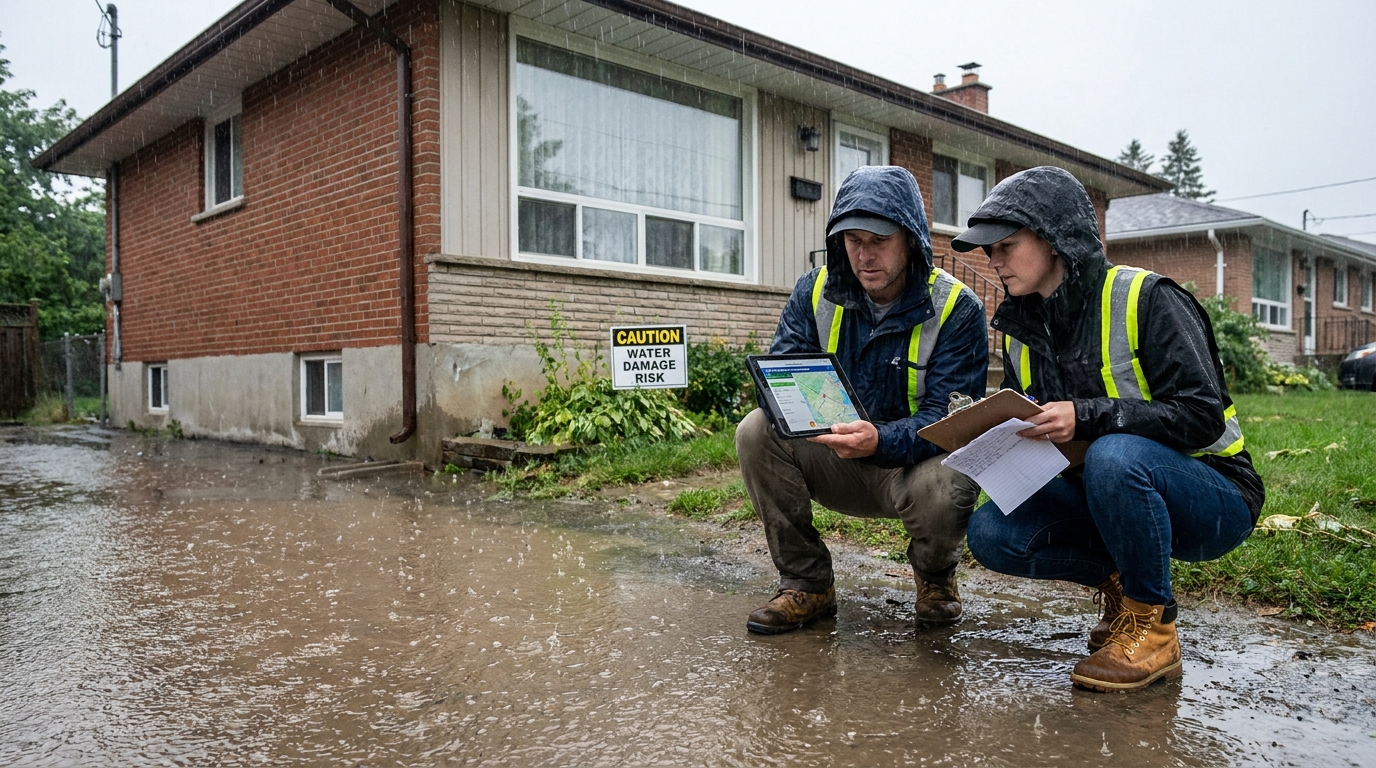
In Canada, floods are described by the Government of Canada as the most common and costly natural hazard, accounting for about half of all home insurance claims. For investors, that matters because water losses often create layered damage. There may be direct structural loss, temporary vacancy, rent interruption, mold remediation costs, tenant disputes, lender concerns, and delayed repairs caused by contractor shortages after major events. A property can remain standing and still suffer a serious economic shock.
At the same time, insurers are paying closer attention to where assets are located, how they are maintained, and what concentration risk exists across a portfolio. An investor with several properties in the same flood prone area or wildfire exposed region may discover that the real risk is not one isolated claim, but multiple simultaneous losses. That is where insurance planning shifts from a property by property exercise to a strategic balance sheet discipline.
There is also a financing dimension. Lenders and mortgage insurers want evidence that collateral is adequately protected. If a borrower allows coverage to lapse or carries insufficient insurance, the consequences can be expensive. The NAIC notes that lender placed insurance can be imposed when a borrower’s own property insurance lapses or is deemed insufficient, and that coverage is often more expensive and less tailored than a policy selected by the owner. Active monitoring is therefore essential.
Start With Risk Assessment, Not With the Policy Quote
The best insurance decisions begin before an investor compares premiums. They start with a structured risk assessment of the asset, the location, the tenancy profile, and the financing structure. Investors who skip this step often buy coverage based on assumptions rather than exposure, which is exactly how damaging gaps emerge.
A disciplined risk review should examine the property’s age, construction type, roof condition, plumbing and electrical systems, drainage profile, heating system, and history of claims or water intrusion. It should also consider external factors such as flood mapping, sewer capacity, wildfire exposure, wind and hail patterns, and local emergency response quality. If the property is a mixed use building, short term rental, or older multifamily asset, the underwriting questions become even more specific.
Beyond physical risks, investors need to assess business model risks. A long term residential lease creates one pattern of exposure. Student housing, short term accommodation, retail tenants, and value add renovation projects each create different liability, vacancy, and interruption risks. The insurance structure should reflect how the property actually produces income rather than how it is casually described in a listing or spreadsheet.
More sophisticated investors are also beginning to think in terms of scenario analysis. OSFI’s climate risk guidance highlights the importance of climate scenario analysis to assess impacts on risk profile, strategy, and business model. While that guidance is directed at financial institutions, the principle is highly relevant for property owners. Investors should ask practical questions such as what a 30 day vacancy after a water event would do to debt service coverage, whether a high deductible can be funded from reserves, and how repeated local catastrophes could affect insurability at renewal.
The Core Insurance Stack Every Investor Should Understand
A robust insurance strategy usually involves several layers rather than one standard policy. The exact combination depends on the asset class and ownership structure, but most investors should understand the function of each major coverage type and how they interact.
Landlord or Commercial Property Insurance
This is the foundation. It typically covers physical damage to the building from insured perils such as fire, certain water events, vandalism, and wind, subject to the policy wording, limits, exclusions, and deductibles. For small residential rentals, this may be written as landlord insurance. For larger multifamily, mixed use, or commercial assets, it is often structured as commercial property coverage.
The mistake many investors make is assuming the base policy covers every likely loss. It does not. Coverage for flood, sewer backup, overland water, vacancy, or certain tenant related damage may require endorsements, higher premiums, separate deductibles, or may be subject to restrictions in higher risk areas. Investors need to read the wording carefully and make sure the policy reflects the property’s actual use.
General Liability Insurance
Liability risk is often underestimated because it feels less tangible than physical damage. Yet a slip and fall, fire spread, contractor injury allegation, or tenant claim involving unsafe conditions can quickly become expensive. General liability coverage helps protect against third party bodily injury and property damage claims arising from the ownership and operation of the property.
For investors, liability coverage is not just a legal defense tool. It is a capital preservation tool. One serious claim can threaten years of accumulated equity if coverage limits are too low or if the ownership structure creates unnecessary exposure.
Loss of Rents or Business Interruption Coverage
Rental property is an income producing business, not merely a structure. If an insured loss makes units uninhabitable, the investor may lose rent while mortgage payments, taxes, payroll, and other carrying costs continue. Loss of rents or business interruption coverage is designed to replace that income or support continuing expenses during the recovery period, subject to policy terms.
This coverage deserves close attention because not all disruptions are treated equally, and waiting periods, caps, and causation rules matter. A policy that repairs the building but leaves the owner exposed to months of lost income is not a complete risk solution.
Flood and Sewer Backup Endorsements
Given Canada’s loss experience, water related coverage should be reviewed with unusual care. Standard property insurance does not automatically cover every flood or water event. Overland flooding and sewer backup often require separate endorsements, and availability can vary by location and risk profile.
Because floods are the most common and costly natural hazard in Canada, this is not a technical detail. It is central underwriting. Investors should understand exactly what forms of water entry are insured, what sublimits apply, what deductibles apply, and whether mitigation steps such as backwater valves, sump systems, grading improvements, or drainage work could improve coverage terms.
Umbrella or Excess Liability Coverage
Some investors assume umbrella coverage is only necessary for very large portfolios. That is a costly misconception. Liability losses are not proportional to portfolio size. A single severe injury claim, fatality allegation, or major lawsuit can exceed the limits of a standard liability policy even on a smaller asset.
Umbrella or excess liability provides an additional layer of protection above underlying policies. For ambitious investors focused on long term wealth preservation, this is often one of the highest value protections available relative to cost.

Builder’s Risk Insurance
Whenever an investor undertakes substantial renovations, repositioning work, or development activity, standard property policies may no longer be sufficient. Builder’s risk insurance is designed to cover property under construction or renovation, including materials, partially completed work, and certain project related risks.
Value add investors should be particularly careful here. Renovation activity changes the exposure profile of the property. Vacant units, open walls, contractor traffic, temporary heating, and unoccupied periods can create conditions that a basic landlord policy was never intended to insure.
Vacant Property Coverage
Vacancy is another area where assumptions create problems. Many policies contain restrictions or exclusions once a property has been vacant beyond a specified number of days. That matters during renovations, lease up periods, probate situations, or failed tenancy transitions.
If a property will be empty, investors should disclose that fact and secure the correct coverage. Vacancy can increase risks of undetected water leaks, vandalism, theft, fire, and delayed emergency response. Insurers know this, and policy terms reflect it.
Replacement Cost Is Not the Same as Market Value
One of the most persistent misconceptions in real estate insurance is that market value and replacement cost are interchangeable. They are not. Market value reflects what buyers are willing to pay for a property in a given market, including land value, location premium, and future income expectations. Replacement cost reflects what it would cost to rebuild or repair the structure using current materials and labour.
For investors, replacement cost is what matters for property insurance. In an expensive urban market, the land may represent a large share of market value, which can mislead owners into thinking they are overinsured when they are not. In other cases, an older building bought at an attractive basis may now cost far more to rebuild than the original underwriting assumed.
Recent inflation in materials, labour shortages, and code upgrade requirements have made this issue more important. If limits are based on outdated estimates, a claim can reveal a painful shortfall at exactly the wrong time. Investors should review replacement cost regularly, especially after major renovations, local cost inflation, or changes in building code requirements.
Key principle: insure the building for what it would cost to rebuild today, not for what it traded for in the past and not simply for what the entire property might sell for in the current market.
Deductibles, Cash Flow, and Risk Retention
Choosing an insurance policy is not only about buying the highest possible coverage. It is also about deciding how much risk to retain. Deductibles are one of the clearest expressions of that decision. A higher deductible can reduce premium cost, but it also increases the amount the investor must absorb before insurance responds.
That trade off should be evaluated against the property’s cash flow, reserve position, and debt obligations. A deductible that looks efficient on paper may become disruptive in practice if the owner has several properties exposed to the same peril and multiple deductibles could be triggered in one weather event. Investors should model not only a single loss, but a cluster of losses.
Catastrophe deductibles deserve special attention in weather exposed regions. They can be materially higher than standard deductibles and may apply to specific perils such as wind, hail, or flood. In practical terms, that means an investor may be insured, but still face a sizable out of pocket burden before the policy pays.
There is nothing wrong with retaining manageable risk when it is intentional, funded, and aligned with the investor’s balance sheet. The problem arises when risk retention happens by accident because the owner never tested how deductibles and exclusions would affect liquidity after a real event.
Align Insurance With Debt and Lender Requirements
Insurance strategy should be coordinated with financing from the start. Lenders are not passive observers. They often require minimum coverage levels, named insured structures, loss payee clauses, and proof that certain perils are insured. For larger assets, financing documents may contain detailed insurance covenants that need to be reviewed alongside policy terms.
CMHC remains a critical institution in Canada’s financing ecosystem and is the only provider of mortgage loan insurance for residential multi unit properties, including affordable and market rental housing products. That means many multifamily investors need to think about insurance not only as an owner level decision, but as part of a broader lender and mortgage insurer compliance framework.
If coverage lapses or is considered insufficient, the consequences can extend beyond premium increases. It can trigger lender concern, covenant breaches, or lender placed insurance. From an investor’s perspective, this is entirely avoidable with disciplined renewal tracking, broker communication, and documentation management.
It is also wise to review coverage after refinancing. A higher loan amount, revised debt service profile, or new lender expectations can change what constitutes adequate protection. Insurance should support the financing plan rather than remain frozen in a structure designed for a prior stage of ownership.
Common Misconceptions That Create Expensive Gaps
Many insurance failures do not come from rare technicalities. They come from familiar assumptions repeated so often that investors stop questioning them. Correcting these misconceptions is one of the fastest ways to improve portfolio resilience.
Misconception One: Landlord Insurance Covers Every Tenant Related Loss
Landlord insurance is not a blanket promise to absorb every problem caused by tenants. Intentional damage, certain forms of neglect, undisclosed occupancy patterns, illegal activity, or prolonged vacancy can all create complications. Some losses may also involve the tenant’s own insurance rather than the landlord’s policy.
Investors should coordinate building coverage with lease language, tenant insurance requirements, and screening practices. Insurance works best when it is reinforced by sound operations, not expected to replace them.
Misconception Two: Flood Is Included in Standard Property Insurance
This remains one of the most dangerous assumptions in the market. Standard property coverage does not automatically include every flood or water related event. Overland flood and sewer backup frequently require specific coverage and may be restricted in certain high risk locations.
Given current Canadian loss trends, this issue deserves direct written clarification from the broker or insurer. Investors should know exactly what is insured and exactly what is not.
Misconception Three: Replacement Cost Reviews Are Optional
Replacement cost estimates age quickly in volatile construction environments. Labour rates, materials, code compliance, and professional fees can all move faster than expected. If the property has been improved, reconfigured, or repositioned, old figures become even less reliable.
Annual review is prudent. After major renovations, it is essential.
Misconception Four: Umbrella Coverage Is Only for Large Portfolios
Liability severity can be high even on a single property. Investors who own one or two assets still face personal wealth exposure if limits are inadequate. Umbrella coverage is often less expensive than people expect relative to the protection it provides.
Misconception Five: Insurance Is a One Time Purchase
Insurance should be reviewed annually and also after acquisitions, renovations, refinancing, tenant turnover, usage changes, and local catastrophe events. The risk profile of a property changes over time, and the policy structure should evolve with it. A set it and forget it approach is the opposite of risk management.
Insurance Costs Are Rising, So Operational Discipline Matters More
As insurers absorb larger catastrophe losses, underwriting becomes more selective. Insurance Bureau of Canada stated that 2024 severe weather losses were nearly triple the 2023 total and about 12 times the annual average of $701 million from 2001 to 2010. Statistics Canada also reported substantial growth in extreme weather catastrophe claims in 2024, reinforcing how quickly the claims environment has changed.
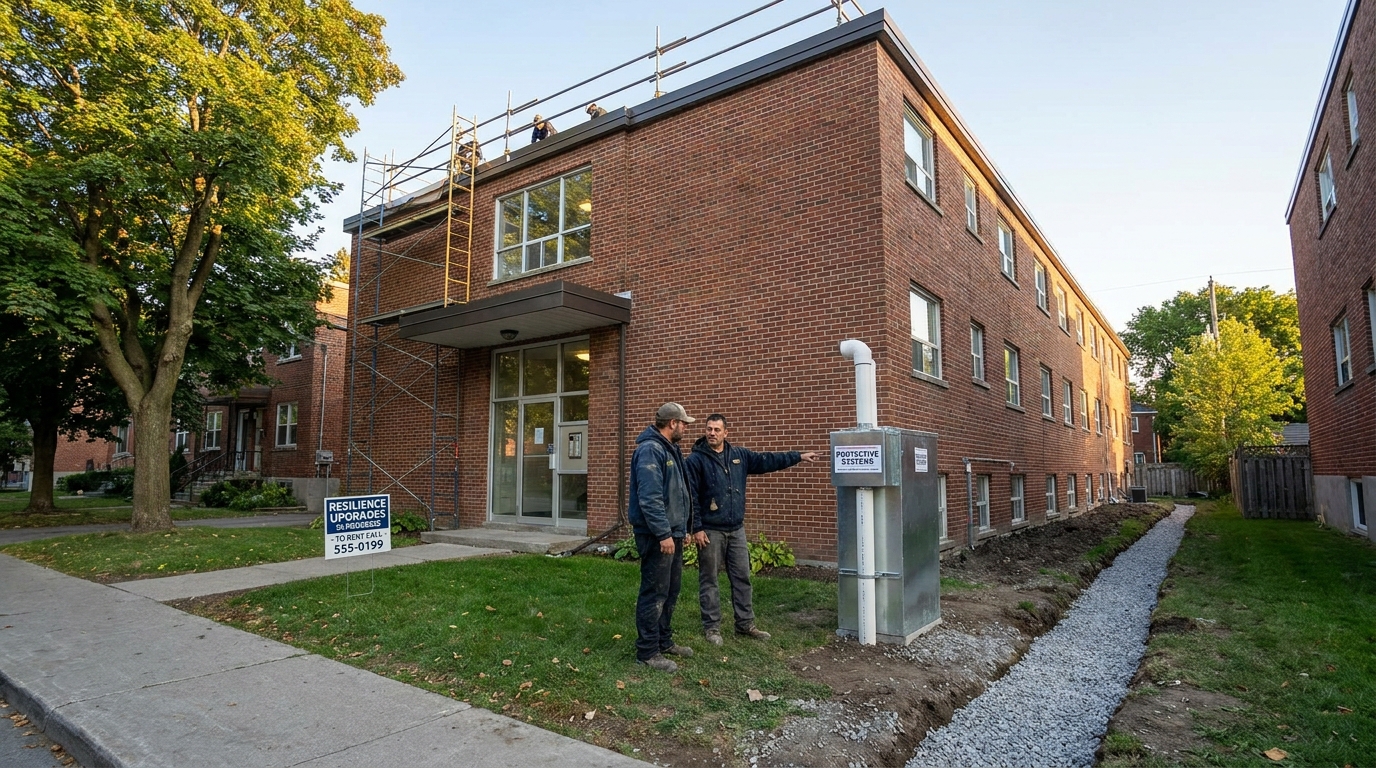
For investors, this means premium shopping alone is not enough. The quality of the risk itself increasingly affects insurability and pricing. Properties with documented maintenance, updated mechanical systems, leak detection, sump and backwater protection, roof improvements, and strong management controls are generally better positioned than comparable assets that are poorly documented or visibly deferred.
Insurers want to see evidence that owners are reducing preventable losses. Investors should maintain organized records of repairs, inspections, contractor work, and mitigation upgrades. In a harder market, documentation can support underwriting conversations, justify renewal requests, and help explain why a specific property deserves better terms than a generic rating model might suggest.
This is where insurance strategy connects directly to asset management. Risk reduction and risk transfer should work together. The policy transfers part of the downside, while maintenance and resilience investments reduce the chance and severity of the loss in the first place.
How Climate Risk Is Changing the Investment Conversation
Climate risk is no longer a distant sustainability topic discussed only by large institutions. It is now influencing underwriting, pricing, financing, and asset desirability. Properties in flood exposed zones, wildfire interface areas, or regions with repeated hail and wind events may face different coverage availability, higher deductibles, or more intensive insurer scrutiny.
OSFI’s emphasis on climate scenario analysis reflects a wider shift in financial markets. Capital providers, insurers, and regulators increasingly expect decision makers to understand how environmental risk can affect long term performance. For real estate investors, that means evaluating not just this year’s premium, but the future insurability of the asset and the durability of its cash flow.
There is also a public policy dimension. Canada has been moving toward a national flood insurance framework for high risk properties, an indication that flood affordability and access are becoming national policy issues rather than narrow underwriting questions. Investors should pay attention because changes in public private insurance structures can influence availability, cost sharing, and acquisition underwriting in exposed areas.
Strategically, the strongest position is to buy with risk awareness rather than react after purchase. If two assets offer similar returns, but one sits in a materially more exposed hazard zone with uncertain future insurability, that difference should be reflected in pricing, reserves, and expected return thresholds.
Practical Tips for Selecting the Right Policies
Choosing the right insurance program is less about finding the cheapest quote and more about matching coverage to the asset’s real operating profile. Investors should work with brokers or advisors who understand rental property, multifamily, mixed use, and renovation risk rather than general consumer home insurance alone. Expertise matters when claims scenarios become complex.
When reviewing options, compare more than annual premium. Review deductibles, sublimits, endorsements, vacancy clauses, water exclusions, liability limits, claims service reputation, and the insurer’s appetite for the property type. The cheapest policy can become the most expensive if it fails at the moment of loss.
It is also useful to request clarity on replacement cost methodology, claims handling expectations, and recommended mitigation steps that could improve terms. Strong advisors do more than place coverage. They help investors understand how to become better risks over time.
For portfolio owners, it may be worth consolidating with insurers that can handle multiple properties while still keeping concentration risk in mind. There can be efficiencies in coordination and administration, but not if one event could materially impair a single carrier relationship across too many clustered assets. Balance matters.
An Annual Insurance Review Framework for Investors
One of the most effective habits an investor can build is a structured annual insurance review. This should happen before renewal, not after documents are issued. The review should assess whether the property, the income stream, and the financing profile have changed over the past year.
-
Confirm the current use of the property, tenant mix, occupancy pattern, and any short term rental or commercial activity that may affect underwriting.
-
Update replacement cost estimates, especially if there were renovations, additions, code related upgrades, or local construction cost increases.
-
Review claims from the past year and identify what maintenance or mitigation actions could reduce recurrence.
-
Evaluate flood, sewer backup, and water related protections in light of local events, municipal infrastructure issues, and insurer guidance.
-
Test whether current deductibles remain appropriate given reserves, debt service obligations, and portfolio wide concentration risk.
-
Confirm lender requirements, named insured entities, and any mortgage insurer conditions that need to be reflected in the policy.
-
Assess whether umbrella liability limits still fit the investor’s growing net worth and exposure profile.
-
Document resilience measures such as roof upgrades, drainage improvements, alarm systems, leak detection, or electrical and plumbing replacements.
This kind of review turns insurance into a living component of asset management. It also improves the quality of conversations with brokers, lenders, and insurers because the investor is presenting a disciplined, data aware profile rather than reacting to a renewal invoice.
The Strategic Payoff of Better Insurance Planning
Ambitious real estate investors focus on acquisition strategy, financing structure, and rental growth because those are visible drivers of return. Insurance belongs in the same conversation because major uninsured losses can erase years of gains in a single event. More importantly, thoughtful insurance planning supports the consistency of returns by keeping cash flow, leverage, and asset quality intact during disruption.
The goal is not to insure away every risk. That is neither possible nor efficient. The goal is to identify which risks should be transferred, which should be reduced operationally, and which can be retained because the balance sheet is prepared for them. That is what separates strategic investors from passive owners.
In a market shaped by rising severe weather losses, tighter underwriting, and growing attention to climate exposure, insurance quality is becoming part of investment quality. Investors who review coverage annually, challenge assumptions, document maintenance, and align policies with real operating risk are better positioned to protect yield and preserve optionality. They also send a strong signal to lenders, partners, and insurers that they understand risk as well as return.
Real estate remains one of the most effective wealth building tools available, but only when downside protection is taken seriously. Strategic insurance planning is not defensive in the narrow sense. It is offensive in the broader investment sense because it protects the stability, credibility, and compounding power of the portfolio over time.


No Comment! Be the first one.