



How to Identify and Repair Structural Cracks in Your Home: A Practical Homeowner Guide
Cracks in a home get attention fast, and for good reason. Some are harmless surface blemishes that come with normal shrinkage and seasonal movement, while others are warning signs that the house is no longer transferring weight the way it should. The challenge for homeowners is that both kinds can look similar at first glance. A small line in drywall might be nothing more than a cosmetic issue, or it might be the first visible clue that the foundation is moving, the soil is shifting, or water is pushing where it should not.
Table Of Content
- What makes a crack structural
- The most common causes of structural cracks in homes
- How to tell whether a crack is cosmetic or structural
- Warning signs that mean you should take cracks seriously
- Your first inspection: a practical homeowner checklist
- When to monitor, when to repair, and when to call a professional
- Step one in many repairs: fix moisture and drainage first
- How to repair minor non structural cracks
- Concrete crack repair: epoxy and polyurethane injections
- Repairs for settlement, wall movement, and serious structural cracking
- Common mistakes homeowners make with structural cracks
- What a structural engineer or foundation specialist will look for
- How building codes and safety affect crack repair
- A practical action plan for homeowners
- Final thoughts
The practical way to deal with structural cracks is not to panic and not to ignore them. Start with a simple triage process. Identify where the crack is, what pattern it follows, how wide it is, whether it is changing, and what else is happening nearby. Sticking doors, sloping floors, bowed walls, water seepage, gaps at trim, and separation around windows all help tell the real story. When you combine those clues, you can sort a crack into one of three categories: monitor it, repair it, or stop and call a structural professional.
This guide is built for homeowners who want straight answers about structural cracks. You will learn what kinds of cracks matter most, how to inspect them safely, what repair methods fit common situations, and when a do it yourself approach stops being the responsible choice. The goal is simple. Protect the load path of the house, address moisture and soil issues early, and avoid the common mistake of putting a cosmetic patch over a structural problem.
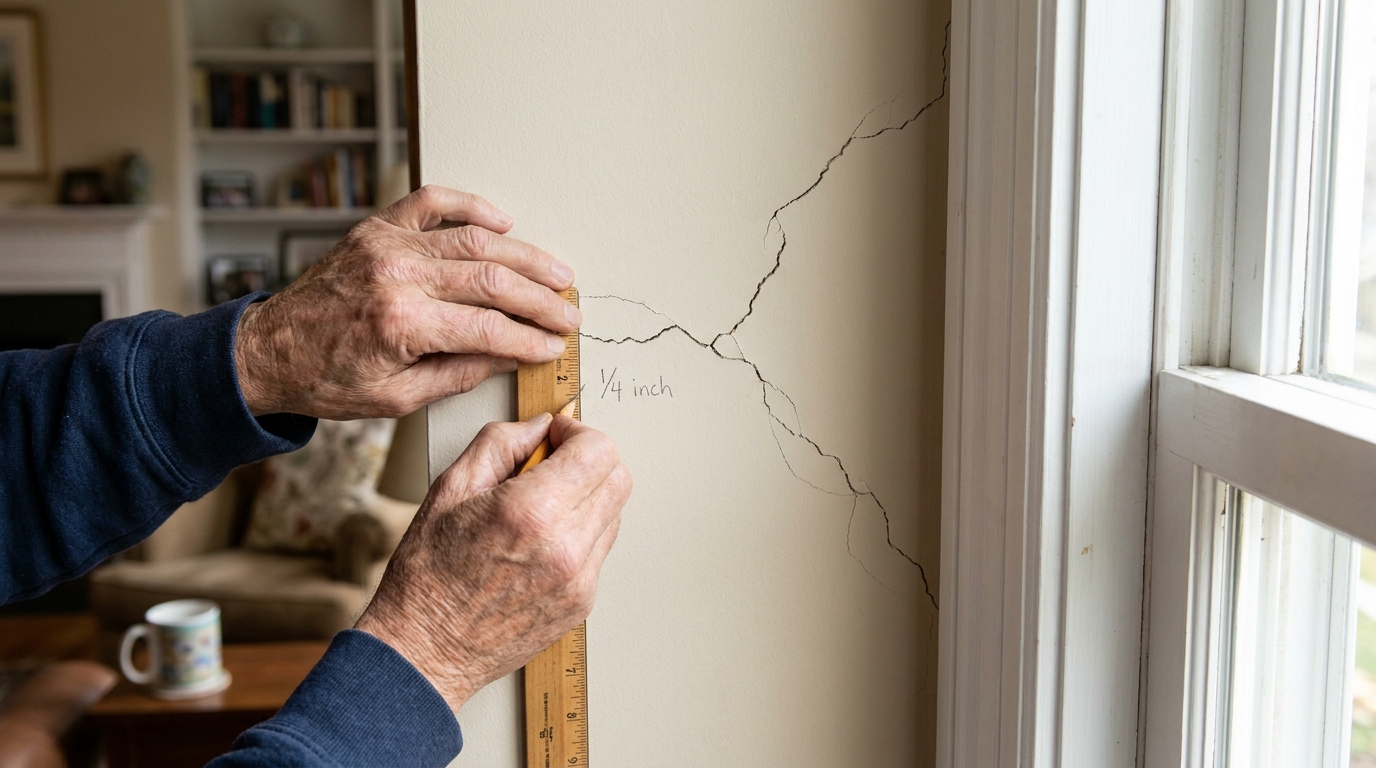
What makes a crack structural
A structural crack is one that suggests movement, distress, or failure in a load bearing part of the house or in the support system below it. That can include the foundation, basement walls, slabs, masonry walls, beams, columns, and framing around openings. In practical terms, a structural crack matters because it may mean the building is no longer distributing weight evenly into the soil. If that happens, stresses concentrate where they should not, and the crack is just the symptom you can see.
Foundations are designed to support and distribute the weight of the structure into the supporting ground. If the soil below changes because of excess moisture, drought, frost action, poor drainage, root activity, nearby excavation, or natural settlement, the foundation can move. When one section drops or rises more than another, the house experiences differential settlement. That uneven movement often shows up as diagonal cracks, stair step cracks in masonry, or separation around windows and doors where loads concentrate.
Not every crack in concrete or drywall is structural. Fresh concrete and plaster can shrink as they cure. Seasonal humidity swings can open and close minor joints. Homes also move a little over time. The real issue is whether the crack reflects normal material behavior or whether it indicates ongoing movement that affects the integrity of the building. That is why crack pattern, size, location, and change over time matter more than fear alone.
The first job is not repair. The first job is diagnosis. If you repair before you understand the cause, there is a good chance the crack will come back.
The most common causes of structural cracks in homes
In North American homes, water and soil movement are at the center of most structural crack problems. Site drainage is a major factor. If roof runoff dumps next to the foundation, if gutters overflow, or if the ground slopes toward the house, water can saturate the soil. Some soils lose bearing strength when wet. Others expand and create pressure against basement walls. Either way, the foundation is forced to deal with loads and movement it was not meant to handle.
Drought can be just as damaging as heavy rain. In expansive clay soils, long dry periods can cause shrinkage and settlement. When heavy rain follows, the soil swells again. Those repeated moisture swings can rack a house slowly over time. This pattern has become more important in recent years because many regions are seeing wider weather swings, with dry spells followed by intense rainfall. Homeowners often notice new cracks after a wet season, but the real problem may have started months earlier during dry conditions.
Frost heave is another common cause in colder climates. When moisture in the ground freezes, it expands and lifts soil upward. If that lift is uneven, footings, slabs, and foundation walls can crack. Lateral soil pressure is another issue, especially in basements. Saturated backfill can press hard against a wall, and if drainage is poor, horizontal cracks or bowing may follow. Those cracks are more concerning than simple vertical shrinkage cracks because they can reflect a wall being pushed inward.
Settlement after new construction, nearby excavation, plumbing leaks under slabs, tree roots pulling moisture from soil, and overloaded framing can all contribute as well. The key point is that cracks usually have a cause beyond the surface. Structural repair works best when it addresses both the visible crack and the reason the structure moved in the first place.
How to tell whether a crack is cosmetic or structural
A homeowner can learn a lot from a careful visual inspection. Start with the crack type and location. Hairline cracks in drywall, especially straight cracks at taped joints, are often cosmetic. Small vertical cracks in poured concrete may also be shrinkage related if they are narrow and stable. By contrast, cracks that run diagonally from the corners of doors and windows, stair step cracks in brick or block, horizontal cracks in basement walls, and any crack with one side displaced from the other deserve closer attention.
Width matters, but it is not the only factor. A narrow crack that is actively growing can be more important than a wider crack that formed years ago and has stayed stable. As a practical rule, cracks that are widening, recurring after repair, or paired with other signs of movement should be treated more seriously. If you can insert a coin edge, see daylight through a wall crack, or notice that one surface has shifted relative to the other, that points toward more than cosmetic movement.
Pattern also helps. Diagonal cracks often indicate settlement or shifting loads. Stair step cracks in masonry follow mortar joints and commonly suggest differential settlement. Horizontal cracks in masonry or concrete basement walls often reflect lateral pressure from soil and water outside. Vertical cracks can be less serious in some poured concrete walls, but they still need evaluation if they leak, widen, or show displacement. Cracks around windows and doors matter because openings interrupt the wall and create stress concentrations where movement tends to show up first.
Behavior over time is one of the most useful clues. A stable crack that has not changed in years may need a proper repair but not emergency action. An active crack that opens and closes with the seasons, leaks during rain, or grows in length or width needs attention sooner. That is why good inspection always includes monitoring, not just looking once.
Warning signs that mean you should take cracks seriously
Cracks rarely appear alone when there is real structural movement. Look around the house for related symptoms. Doors that suddenly stick, latch poorly, or swing open by themselves can reflect framing distortion. Windows that bind, trim that separates at miter joints, and floors that feel sloped or bouncy can all point to settlement or movement in the support structure. These signs do not prove a structural emergency by themselves, but they strengthen the case that the crack is part of a bigger issue.
In basements and crawl spaces, check for wall bowing, water stains, dampness, efflorescence, and separation where walls meet the floor slab. A crack that leaks after rain is important because it tells you water is still finding a path through the assembly. In brick veneer, stair step cracks, bulging, or gaps between the brick and trim should not be brushed off as normal aging. On the exterior, pay attention to porches, stoops, retaining walls, and foundation corners. If these are settling away from the house, they may be signaling drainage or soil support problems nearby.
Some warning signs call for fast action. If a wall is visibly bowing inward, if you see sudden large cracks after a storm or excavation, if floors feel unsafe, or if there is any sign of compromised support in a beam, column, or load bearing wall, stop and get professional help. Structural issues do not always fail dramatically, but when load path components are involved, guessing is not a responsible strategy.
Your first inspection: a practical homeowner checklist
Before you think about repair products, take the time to document what you have. Walk through the interior and exterior of the house with a flashlight, tape measure, notepad, and phone camera. Record the location of each crack, the length, the approximate width, and the direction it runs. Mark whether it is in drywall, plaster, concrete, masonry, tile, or framing. Include nearby conditions such as water stains, musty smell, sticking windows, sloped floors, or gaps at trim.
Take clear photos with a fixed reference, such as a ruler or coin, next to the crack. Date every photo. Then place a small pencil mark at the ends of the crack and write the date nearby if the surface allows it. This gives you a simple way to check if the crack gets longer. For foundation and masonry cracks, measuring width at the top, middle, and bottom can also reveal whether the crack is opening unevenly.
If you want better tracking, install a simple crack monitor or use a marked strip over the crack to record movement. Check it monthly, and also after major weather changes or heavy rain. Monitoring matters because crack behavior over time often tells you more than one inspection can. Many homeowners make the mistake of patching a crack too quickly, then lose the chance to understand whether it was active.
It is also smart to inspect outside conditions at the same time. Check whether gutters overflow, downspouts discharge too close to the foundation, splash blocks are missing, soil slopes toward the house, or mulch and landscaping trap water at the wall. These conditions often explain why a crack formed, especially in basements and slab on grade homes.
When to monitor, when to repair, and when to call a professional
The safest approach is to use a triage model. If a crack is very small, appears stable, and is not paired with movement, leakage, or distortion elsewhere, monitoring may be enough at first. This is often the case with minor shrinkage cracks or settled finishes. You still want to document and recheck them, but you may not need immediate structural intervention.
If the crack is stable and clearly non structural, a surface repair may be reasonable. Examples include drywall tape cracks, plaster hairlines, or minor slab surface cracking with no displacement. In those cases, the repair is mostly about appearance and durability. That said, even cosmetic repairs should wait until you are confident the movement has stopped, otherwise the finish will crack again.
If the crack is in concrete, masonry, a foundation wall, or a load bearing area, and especially if it is diagonal, stair step, horizontal, leaking, widening, or offset, the right move is usually to get a qualified foundation contractor or structural engineer involved. A professional inspection is also warranted when multiple symptoms appear together, such as cracks plus sticking doors plus sloping floors. The same applies if there has been recent excavation near the house, plumbing leaks under a slab, or recurring water problems.
Call immediately if repair would involve digging below a footing, removing foundation support, altering a load bearing wall, or trying to straighten a bowed basement wall. Excavation near existing foundations can destabilize the structure, and safe repair may require shoring, bracing, or underpinning designed for the specific loads and soil conditions. That is not homeowner trial and error work.
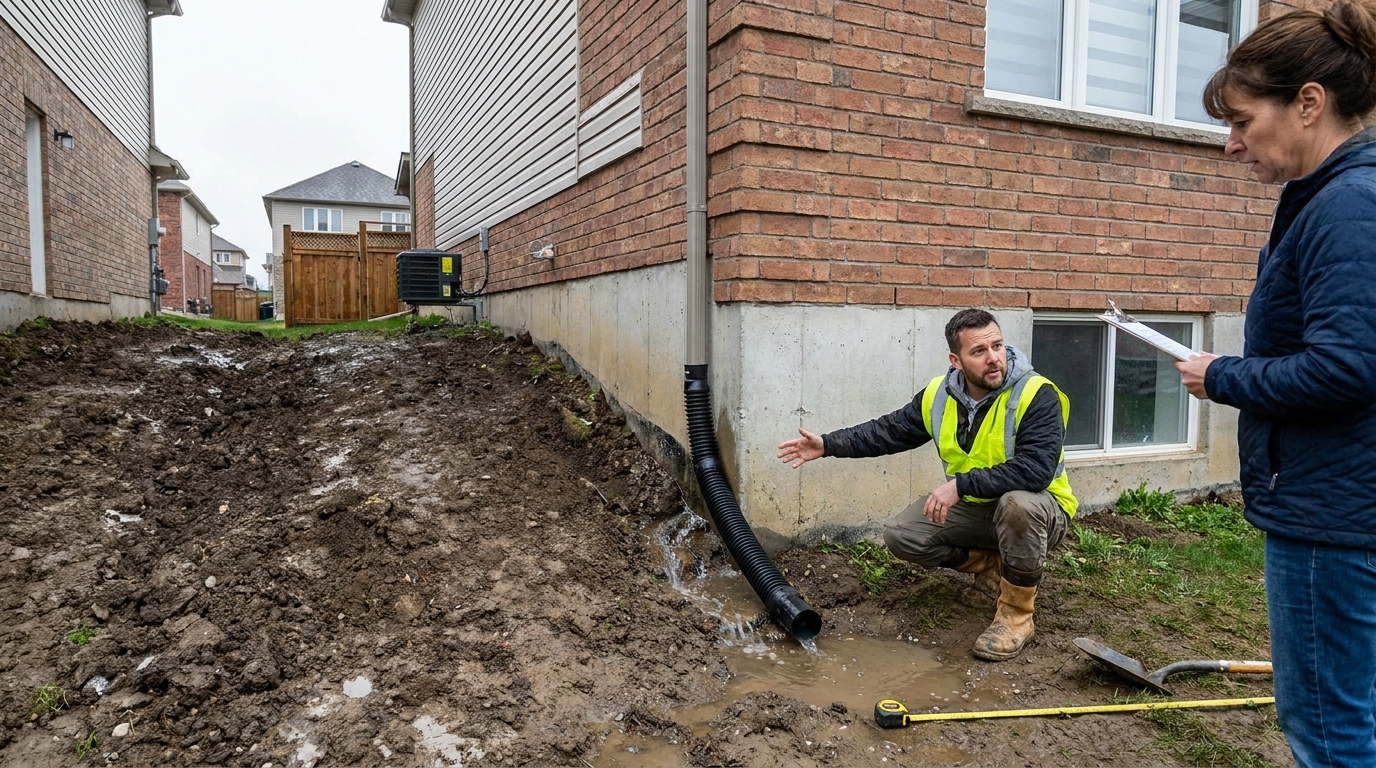
Step one in many repairs: fix moisture and drainage first
One of the biggest misconceptions in crack repair is that sealing the visible line solves the problem. Often it does not. If water is collecting at the foundation, if the grade pitches toward the house, or if a downspout dumps beside a basement wall, the same forces that caused the crack are still in place. Surface repair without drainage correction is often a temporary cosmetic step, not a real fix.
Start by cleaning gutters, extending downspouts well away from the house, and making sure water flows away from the foundation. Regrade shallow areas where runoff pools against the wall. Avoid overwatering foundation beds, and make sure irrigation is not constantly soaking one side of the home. In crawl spaces and basements, deal with humidity and standing water promptly. Outside corrections are often the most cost effective part of a structural maintenance plan because they reduce both settlement risk and water intrusion.
If you have a basement wall with signs of seepage or pressure, drainage improvement can also include exterior waterproofing, footing drain repair, or interior drainage systems, depending on the construction and cause. These are not interchangeable solutions. Waterproofing a wall without relieving hydrostatic pressure may not be enough. Likewise, interior drainage can manage water but does not necessarily address wall movement. The repair method needs to match the actual problem.
How to repair minor non structural cracks
Minor non structural cracks can often be repaired successfully by a careful homeowner. For drywall or plaster cracks that are no longer moving, remove any loose material, widen the crack slightly if needed for better fill, apply a quality patching compound, reinforce with tape where appropriate, then sand, prime, and repaint. The key is to wait until the crack has stabilized. If seasonal movement is still active, the crack may reopen no matter how neat the finish work is.
For small, stable cracks in concrete slabs that are not affecting level or load carrying performance, clean the crack thoroughly and use an appropriate concrete crack filler or sealant. Follow the product requirements for width, depth, and cure conditions. This type of repair helps keep out water and debris and can reduce further edge breakdown. It does not correct settlement or poor support below the slab, so keep that distinction clear.
Masonry repointing may be suitable for minor mortar deterioration, but repointing is not a cure for active structural movement. If a brick wall has stair step cracking because the foundation is settling, fresh mortar alone will not stop the pattern from returning. In practical terms, minor repairs are best reserved for stable cracks with an understood cause and no signs of displacement or continuing movement.
Concrete crack repair: epoxy and polyurethane injections
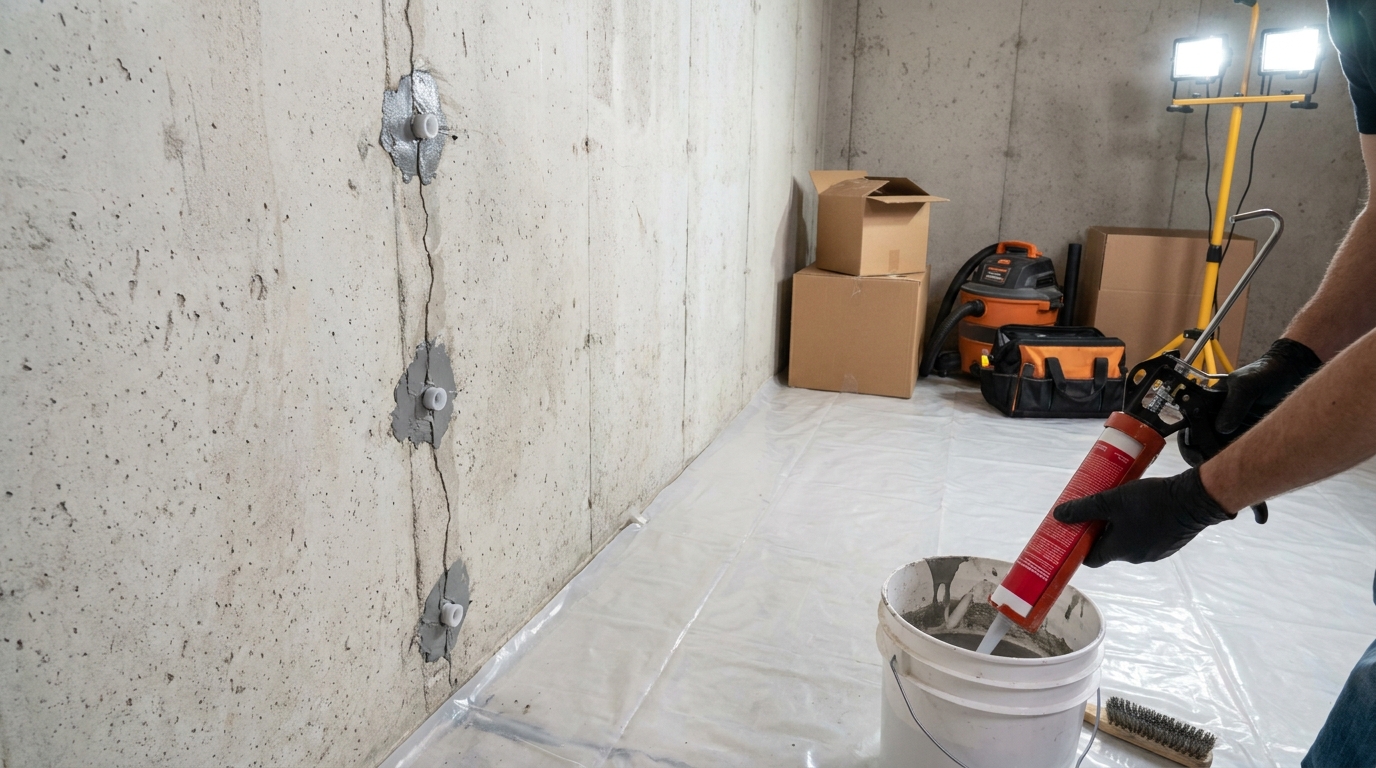
When concrete foundation walls crack, injection repair is a common method, but the product choice matters. Epoxy injection is generally used when the goal is to bond the concrete and restore continuity across a stable crack. It works best when the crack is dry enough and the wall is not actively moving. Epoxy can create a strong bond, but if the wall continues to shift, the crack may simply form again nearby.
Polyurethane injection is often used when water seepage is part of the problem because the material can expand and seal the path of water. It is commonly chosen for leaking cracks in below grade walls. Polyurethane is not the same as a structural stabilization system, though. It can stop leakage effectively in the right situation, but it does not fix settlement, soil pressure, or an inadequate load path.
Before any injection repair, the crack should be evaluated for cause, movement, and suitability. Loose material is removed, the face is sealed, ports are installed, and the material is injected under controlled conditions. This is one area where many homeowners underestimate the value of an experienced contractor. A poor injection job can leave unfilled voids or address the symptom without understanding whether the wall itself is still under stress.
Repairs for settlement, wall movement, and serious structural cracking
When cracks are caused by foundation settlement or shifting support conditions, the repair often has to go deeper than the crack itself. One common solution is underpinning, which transfers loads to more stable soil or deeper bearing strata. This may involve helical piers or push piers, depending on site conditions, loads, and access. These systems are engineered to stabilize or sometimes lift settled sections of the structure. They are not interchangeable with surface patching because they address the support problem under the building.
For basement walls that are bowing or cracking from lateral soil pressure, repairs may include wall anchors, carbon fiber reinforcement in limited cases, interior bracing, or partial wall rebuilding. The correct method depends on how much the wall has moved, what type of wall it is, and whether water pressure outside has been relieved. A wall that is still being pushed by saturated soil will keep struggling unless that exterior condition is corrected.
Sunken slabs can sometimes be addressed with slabjacking or foam lifting if the slab itself is in decent shape and the issue is loss of support below. This can restore level and reduce trip hazards, but it is different from repairing a footing or load bearing foundation wall. Again, there is no one size fits all repair. The right method depends on foundation type, depth, loads, soil conditions, and the exact damage mechanism at work.
Common mistakes homeowners make with structural cracks
The first mistake is assuming every crack means catastrophic failure. That leads to panic, rushed decisions, and expensive work that may not be necessary. The second mistake is the opposite: assuming a crack is harmless because it is small or because the house is old. Small cracks can still be active, and age does not make movement acceptable if it is ongoing.
Another common mistake is doing a cosmetic patch too soon. If the crack is caused by settlement, moisture, frost heave, or lateral pressure, the patch may hide the symptom for a short time while the problem gets worse behind it. Homeowners also often focus only on the inside of the house. In reality, many crack problems begin outside with drainage, grading, roof runoff, and soil moisture swings. If you repair only the interior surface, you have skipped the source.
One more serious mistake is attempting excavation or support work without proper design. Digging below a footing, trenching too close to a wall, or removing support from under a foundation can destabilize the structure quickly. Work of that kind may require shoring, bracing, or engineered underpinning. If your repair plan involves changing support conditions below the foundation, that is the point to step back and bring in a professional.
What a structural engineer or foundation specialist will look for
When a professional evaluates cracks, they are not just looking at the line in the wall. They are reading the entire building as a system. They will consider foundation type, framing layout, load paths, soil behavior, moisture conditions, drainage patterns, and the distribution of damage throughout the house. That broader view is what helps separate a surface symptom from a structural cause.
You can expect them to measure crack widths, check for displacement, inspect floors and wall plumb, and look for evidence of active moisture or soil pressure. They may ask about recent weather, plumbing leaks, tree removal, excavation, or renovations that altered loads. In some cases, they may recommend longer monitoring before repair. In others, they may move straight to stabilization because the signs clearly indicate ongoing structural movement.
A good inspection should also produce a repair path that makes sense in sequence. First stabilize if needed. Then correct drainage and moisture issues. Then repair the structural element. Finally restore finishes after the building has stopped moving. That order matters. It prevents the common problem of finishing work being damaged again because the root cause was never addressed.
How building codes and safety affect crack repair
Many homeowners do not realize that significant foundation and structural repairs can involve permits, inspections, or engineered documents under local building rules. That is especially true for underpinning, pier systems, beam replacements, retaining wall work, and major basement wall repairs. Code involvement is not just paperwork. It is there because these repairs affect life safety and long term structural performance.
Safety matters just as much during the work itself. Excavation near existing structures can be hazardous because soil can collapse or support conditions can change suddenly. If a repair requires trenching outside a foundation or working below footings, that work should be planned carefully with the right protection measures. Homeowners should be particularly cautious about any contractor who proposes a fast dig and patch solution without discussing support, water control, and engineering where needed.
Good structural repair is usually methodical rather than flashy. It starts with the cause, respects the way buildings carry loads, and uses the right repair method for the actual failure mechanism. That is why the cheapest quote is not always the best value. A lower price that ignores drainage, soil, or support conditions can leave you paying twice.
A practical action plan for homeowners
If you have found cracks and are not sure what to do next, keep the process simple and disciplined. Start by documenting every crack with photos, measurements, and notes. Then inspect related conditions like doors, windows, floors, wall alignment, and signs of water. Next, walk the exterior and look hard at grading, gutters, downspouts, and any place water collects near the foundation.
- Identify the crack type, location, pattern, and approximate width.
- Document it with dated photos and repeated measurements.
- Look for companion symptoms such as sticking doors, sloping floors, leakage, or bowing walls.
- Correct obvious drainage and moisture problems around the house.
- Monitor small stable cracks, but do not cover up active ones too soon.
- Use repair methods that match the cause, not just the appearance.
- Call a structural engineer or qualified foundation specialist for widening, horizontal, stair step, displaced, or recurring cracks.
This framework keeps you from making the two big errors: overreacting to minor cracks and underreacting to serious ones. It also helps you spend money where it matters most. Many successful repairs start with basic water management and careful observation, while the bigger structural fixes are reserved for cases where the building truly needs stabilization.
Final thoughts
Structural cracks are not a topic where homeowners need fear, but they do need discipline. The visible crack is only one part of the story. What matters is whether the house is moving, why it is moving, and whether that movement is affecting the way loads travel from roof to soil. Once you understand that, crack repair becomes less about guesswork and more about good building practice.
The most practical approach is to inspect carefully, document honestly, correct drainage first where needed, and match the repair to the cause. Some cracks can be monitored. Some can be sealed or patched. Others require engineered stabilization, wall reinforcement, or foundation support repairs. There is no shame in calling for help when the crack is telling you something important. In fact, that is usually the smartest maintenance decision a homeowner can make.
If you take one lesson from this guide, let it be this: do not judge a crack by appearance alone. Judge it by location, pattern, movement, and context. That is how you protect the structure, avoid wasted repairs, and keep small problems from becoming major ones.



No Comment! Be the first one.