


Urban life runs on invisible systems. Every commute, water connection, traffic light cycle, transit arrival, emergency response, and road repair depends on decisions that happen behind the scenes. For decades, many of those decisions were reactive. Cities often responded after congestion built up, after a pipe failed, after complaints accumulated, or after maintenance delays became impossible to ignore. Smart city analytics is changing that pattern by giving municipalities a real-time, data-informed view of how urban systems are performing and where intervention can improve daily life.
Table Of Content
- What Smart City Analytics Really Means
- How Residents Experience Smart City Analytics in Daily Life
- Case Study: Calgary’s Connected Corridor and the Future of Mobility
- Case Study: Cambridge and Smarter Infrastructure Management
- Why Measurable Outcomes Matter More Than Smart City Hype
- Urban Governance, Privacy, and Cybersecurity Cannot Be Optional
- Resident-Centered Design Is What Makes Smart Cities Work
- The Technology Stack Behind Smarter Urban Infrastructure
- Digital Twins and Predictive Planning
- Public Safety, Resilience, and Faster Response
- Edmonton and the Broader Momentum Behind Smart City Investment
- What the Future of Smart City Analytics Looks Like
- What Cities Must Get Right to Deliver Real Value
- Conclusion: Smarter Cities Are Really Better-Managed Cities
The phrase can sound abstract, but the impact is highly practical. When analytics helps a city reduce traffic delays, residents arrive on time with less stress. When sensors and dashboards help utilities detect leaks faster, service disruptions become shorter and costs become easier to control. When connected infrastructure helps transportation departments understand dangerous corridors, streets become safer for drivers, cyclists, and pedestrians. The promise of smart city analytics is not technology for its own sake. The real value comes when cities use data to produce measurable public outcomes.
In Canada, that idea has already shaped policy and investment. The federal Smart Cities Challenge promoted a resident-centered model that focused on mobility, health, safety, housing, and well-being. It awarded prizes totaling $75 million and drew applications from more than 225 municipalities across every province and territory, including large urban centres, small towns, and Indigenous communities. That level of participation revealed something important: cities are not pursuing analytics because it sounds innovative. They are pursuing it because everyday urban systems are under pressure, and better intelligence can make those systems more responsive.
At its core, smart city analytics refers to the use of connected sensors, data platforms, software systems, and analytical models to monitor public infrastructure and municipal services in real time. Canada’s national security service has described a smart city as one that collects and analyzes data interactions with public infrastructure to improve service delivery and user experience. That definition matters because it moves the conversation away from gadgets and toward outcomes. A smart city is not simply a place full of sensors. It is a place where data is turned into better decisions.
This article explores how smart city analytics transforms daily urban living, how it improves infrastructure operations, where North American cities are already seeing results, and why privacy, cybersecurity, and governance must be treated as core design requirements. The strongest smart city stories are not the loudest ones. They are the ones where analytics is embedded into everyday operations and produces results that residents can actually feel.
What Smart City Analytics Really Means
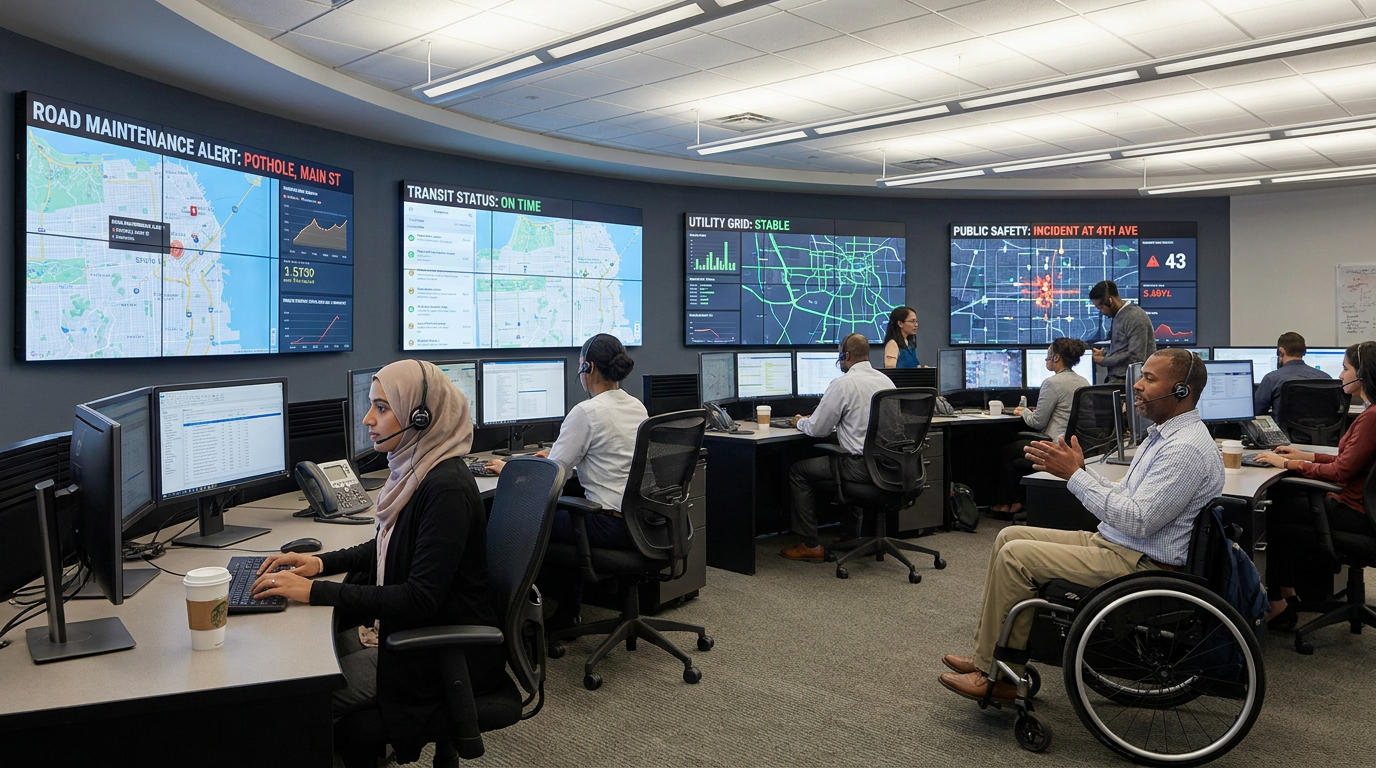
Smart city analytics combines several layers of technology. The first layer is data collection, often through Internet of Things devices such as traffic sensors, environmental monitors, cameras, water meters, parking systems, transit trackers, and road condition sensors. The second layer is integration, where information from different departments and systems is brought together instead of sitting in separate silos. The third layer is analysis, where software identifies patterns, flags anomalies, forecasts likely problems, or recommends responses. The fourth layer is action, which is where value is either created or lost.
That final layer is easy to underestimate. A city can install thousands of sensors and still fail to become meaningfully smarter if departments cannot use the information in time or if there is no clear process for acting on it. Analytics only matters when it changes operations. A dashboard that sits unopened does not improve mobility. A prediction of road deterioration does not help if maintenance budgets and work orders remain disconnected. This is why smart city maturity depends as much on governance and operating models as it does on software.
There is also a common misconception that a city must transform every department at once. In reality, cities can be highly effective by focusing on specific functions first. Transit, water, roads, emergency services, or waste collection can each become smarter through targeted analytics. A city does not need to be fully digitized in every direction before residents see benefits. In fact, many of the most successful programs begin as incremental pilots that scale after proving value.
Another misconception is that more data automatically means better urban outcomes. The truth is more demanding. Cities need clear use cases, reliable data quality, interoperable systems, trained staff, and accountability frameworks. Without those pieces, data can become expensive noise. The most mature municipal programs start with questions like these: Where are service delays costing residents time and trust? Which assets are most expensive to maintain reactively? Which safety risks can be reduced through earlier detection? These questions create a practical path for analytics to follow.
How Residents Experience Smart City Analytics in Daily Life
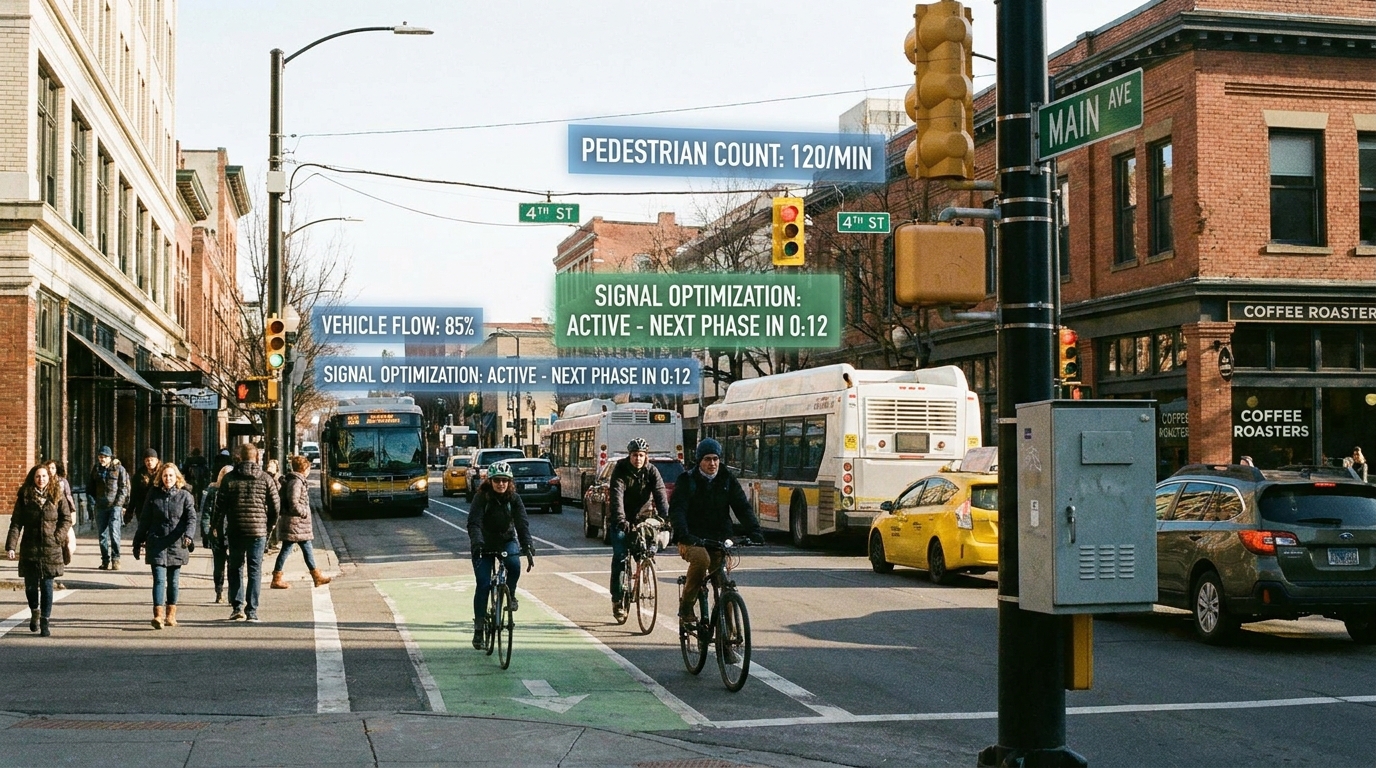
Most residents will never log into a city operations platform, but they encounter the results of smart city analytics constantly. The easiest example is transportation. Congestion is not just inconvenient. It affects fuel use, air quality, delivery schedules, business productivity, and emergency response times. Analytics allows cities to study traffic flow across corridors, understand recurring bottlenecks, test alternative timing strategies, and manage intersections more intelligently. That can lead to shorter delays, more reliable travel times, and smoother multimodal movement.
Public transit also benefits directly. Real-time vehicle data can improve dispatch decisions, identify weak points in schedules, and help agencies communicate disruptions more accurately. For riders, the practical effect is simple: fewer surprises. A system that understands where buses or trains lose time can adjust service more intelligently. That improves not only convenience, but also equity, because transit reliability matters most to people who depend on it as their primary mode of transportation.
Road maintenance is another area where analytics has an immediate everyday effect. Traditional maintenance often follows fixed inspection cycles or responds to public complaints. Predictive maintenance changes the model by using condition data, usage patterns, weather information, and historical performance to identify when assets are likely to fail. That means repairs can be prioritized before conditions deteriorate into service disruptions or safety risks. Residents may not think about analytics when they see a pothole repaired earlier or a water main replaced before breaking, but those are exactly the kinds of outcomes that define urban quality of life.
Utilities show perhaps the clearest link between data and resilience. Water systems, electricity networks, district energy systems, and waste operations generate valuable operational signals. Smart monitoring can detect pressure changes, consumption anomalies, outages, or equipment strain before those issues escalate. In a time of climate volatility and infrastructure aging, this matters deeply. Cities need to be able to identify weak points faster, allocate crews more effectively, and preserve service continuity under stress.
Public safety is equally important, though it requires especially careful governance. Analytics can help municipalities understand collision hotspots, improve lighting deployment, support emergency routing, and monitor assets that affect safety. Used responsibly, it can make public spaces more responsive and better maintained. Used carelessly, it can cross into surveillance concerns that erode trust. The difference lies in data stewardship, necessity, proportionality, retention rules, and public accountability.
Case Study: Calgary’s Connected Corridor and the Future of Mobility
One of the clearest Canadian examples of practical smart mobility comes from Calgary. The city’s 16 Avenue North vehicle-to-infrastructure test bed established a connected corridor of 14 intersections to test how V2I technology could improve transportation operations. The project matters because it illustrates how analytics and connectivity can be embedded into real infrastructure rather than isolated as a lab exercise. Streets become smarter when signals, vehicles, and control systems can communicate in ways that improve timing, awareness, and response.
Vehicle-to-infrastructure systems are part of a broader intelligent transportation movement. They can allow municipal systems to communicate timing information, hazard warnings, or priority signals to connected vehicles and transit fleets. Over time, the data generated by those interactions can help transportation departments understand corridor performance at a much finer level. Instead of simply measuring traffic volume, they can examine patterns of delay, intersection conflicts, speed variability, and responsiveness to control strategies.
For residents, the benefits are both immediate and long term. In the short term, connected corridors can support smoother traffic operations and better safety management. In the long term, they create a foundation for more adaptive urban mobility systems, including transit priority, incident response, freight coordination, and eventually more advanced connected and automated transportation ecosystems. The lesson from Calgary is not that every city needs the exact same deployment. The lesson is that mobility analytics works best when it is tied to a specific operational corridor, tested carefully, and assessed with real performance data.
That last point is especially important. Smart transportation projects often attract attention because the technology appears cutting-edge. But the real question is whether residents experience fewer delays, safer travel, and more dependable service. A connected corridor is valuable not because it sounds futuristic, but because it can produce measurable improvements in how a city moves.
Case Study: Cambridge and Smarter Infrastructure Management
Transportation is often the most visible smart city topic, but infrastructure asset management may be even more important over the long term. The City of Cambridge, Ontario, used smarter-city systems to help manage more than 250,000 infrastructure assets valued at $1.2 billion. That number tells a broader story about municipal complexity. Cities do not simply manage roads and traffic lights. They manage pipes, stormwater systems, parks, facilities, fleets, signage, sidewalks, lighting, and countless other components that residents rely on every day.
When those assets are tracked poorly, maintenance becomes reactive and budgets become harder to control. Cities may repair the wrong assets first, miss early warning signs, or lack a unified picture of lifecycle costs. Smarter infrastructure management creates a more disciplined approach. By combining asset inventories with condition data, maintenance histories, risk assessments, and forecasting models, municipalities can make better decisions about what to repair, replace, or monitor more closely.
The value for residents can be subtle but significant. Stronger asset intelligence can reduce disruptions, improve capital planning, and extend the useful life of infrastructure. It can also help cities justify spending decisions more clearly. Instead of asking taxpayers to support large capital programs without context, municipalities can explain which assets are deteriorating, what risks they create, and why intervention now may cost less than emergency replacement later. That is a much stronger civic conversation than vague promises of modernization.
Cambridge’s example also highlights another critical smart city truth: some of the most transformative analytics applications are not flashy. They are operational. They sit inside procurement decisions, maintenance schedules, budget allocations, and work-order systems. They matter because urban reliability depends on thousands of small decisions being made better, earlier, and with more evidence behind them.
Why Measurable Outcomes Matter More Than Smart City Hype
One reason smart city conversations sometimes lose public confidence is that they can become too focused on technical features and not focused enough on outcomes. Screens, sensors, and apps look impressive in presentations. Residents, however, care about whether those tools reduce delays, improve response times, lower operating costs, and make services easier to use. This is where performance measurement becomes essential.
The National Institute of Standards and Technology developed a smart cities and communities KPI framework because cities need better methods to assess both direct and indirect benefits of smart technologies. Without clear metrics, it is difficult to know whether a project is genuinely improving performance or simply creating the appearance of modernization. That framework reflects a practical reality that many municipalities are now facing: public innovation must be measurable.
Useful smart city metrics can include changes in travel time reliability, reduction in infrastructure downtime, faster repair cycles, lower water loss, reduced energy use, improved transit adherence, faster incident detection, lower operating costs, and higher resident satisfaction. Not every initiative will improve all of these metrics, but every initiative should be able to state what success looks like. A city that cannot define success will struggle to sustain investment, public trust, and interdepartmental alignment.
Measurement also helps cities avoid a technology-first mindset. If a pilot is evaluated against meaningful outcomes, officials can identify what is worth scaling and what is not. This protects public resources and improves strategic focus. It also encourages a culture where experimentation is disciplined rather than performative. Cities need room to test new ideas, but they also need a way to stop projects that do not produce value.
The strongest smart city projects do not begin with a dashboard. They begin with a service problem, define a measurable goal, and use analytics as a tool for reaching it.
Urban Governance, Privacy, and Cybersecurity Cannot Be Optional
As smart city systems expand, they often collect increasingly granular data. Canadian security guidance has noted that these systems may gather information from sensors, audio and video devices, license plate readers, and mobile devices. That raises serious concerns about privacy, cybersecurity, data ownership, and misuse. If governance is weak, the same infrastructure that promises convenience and efficiency can damage public trust.
This is not a peripheral issue. It is central to whether smart city analytics can scale responsibly. Residents are more likely to support data-driven services when they understand what is being collected, why it is necessary, how long it is retained, who can access it, and what safeguards are in place. Cities that treat privacy as an afterthought often invite resistance, especially if technologies appear to increase surveillance without clear public benefit or oversight.
Cybersecurity is equally urgent because smart city infrastructure increasingly touches critical systems. Traffic management, utilities, public safety networks, and building controls can all become attack surfaces if procurement and operations are not designed carefully. A compromised sensor may sound minor, but compromised systems at scale can create real service disruptions and safety risks. Municipal digital infrastructure needs strong access controls, network segmentation, vendor vetting, update protocols, incident response planning, and continuous monitoring.
Good governance also includes interoperability and procurement discipline. Cities should avoid locking themselves into opaque systems that cannot share data or evolve over time. The more urban intelligence depends on proprietary black boxes, the harder it becomes to audit, improve, or replace those tools. Open standards, documented data policies, and cross-department coordination all strengthen resilience. In practice, governance is not a bureaucratic drag on innovation. It is what makes innovation durable.
Resident-Centered Design Is What Makes Smart Cities Work
The most persuasive smart city strategies are resident-centered rather than technology-centered. That distinction is more important than it first appears. A technology-centered approach starts with tools and looks for applications. A resident-centered approach starts with lived urban problems and identifies where data can improve outcomes. This shift changes priorities. Instead of asking how many devices a city can deploy, it asks whether commutes are becoming more reliable, whether seniors can navigate services more easily, or whether neighborhoods with chronic infrastructure issues are getting faster attention.
Canada’s Smart Cities Challenge reflected this framing by emphasizing mobility, health, safety, housing, and well-being. Those categories remind municipalities that urban analytics must be tied to human outcomes. Better signal timing matters because people lose time in traffic. Better water monitoring matters because households and businesses depend on service continuity. Better infrastructure planning matters because underinvestment often hits vulnerable communities first. Data is most powerful when it improves fairness as well as efficiency.
Resident-centered design also means involving the public early. Cities should explain goals, invite feedback, and communicate tradeoffs clearly. Some smart city projects fail not because the technology is weak, but because residents do not understand why it is being introduced or how risks will be handled. Transparent communication can reduce skepticism and improve project design. Residents often identify practical issues that internal teams miss, especially around accessibility, neighborhood context, and trust.
There is a broader civic lesson here. Smart city analytics should not create a distant, automated model of urban management where public life feels more opaque. Done well, it should make cities more understandable and more accountable. When residents can see how data supports service improvements, public trust has a stronger chance to grow.
The Technology Stack Behind Smarter Urban Infrastructure
To understand where smart city analytics is headed, it helps to look at the underlying technology stack. At the foundation are sensors and connected devices that generate live data. These can include traffic counters, weather stations, water pressure monitors, transit telematics, parking sensors, energy meters, and building management systems. On top of that is connectivity, which allows data to travel securely through municipal or commercial networks. Then come the platforms that store, integrate, and organize the information.
Once data is structured, analytics tools can begin to deliver value. Some tools are descriptive, showing what is happening now and where. Others are diagnostic, helping teams understand why a pattern is occurring. More advanced systems are predictive, estimating what is likely to happen next based on historical and real-time inputs. The most advanced can even be prescriptive, suggesting the best action under certain conditions. Cities do not need every level at once, but progression along that curve can meaningfully strengthen operations.
Artificial intelligence is becoming more important in this stack, particularly for pattern recognition, anomaly detection, forecasting, and workload prioritization. AI can help cities process the scale and complexity of urban data more efficiently, especially when operations involve many interdependent systems. Still, AI should be treated as an enhancement to decision-making, not a substitute for governance or human judgment. Poor-quality data, unclear objectives, or weak accountability can produce poor decisions faster, not better ones.
Geospatial analytics is another crucial layer because almost every city service has a location component. Mapping traffic incidents, utility failures, environmental conditions, housing pressures, and asset deterioration allows officials to see clusters, inequities, and systemic risks that are difficult to understand in spreadsheets alone. Geography is not a side feature of urban intelligence. It is one of its core operating logics.
Digital Twins and Predictive Planning
Among the most promising developments in smart city analytics is the rise of digital twins. A digital twin is a virtual representation of a physical system that can be updated with real-world data and used to simulate scenarios. In urban contexts, this could mean modeling a transportation corridor, a downtown district, a stormwater network, or a broader city system. The appeal is straightforward: planners and operators can test changes virtually before making expensive real-world interventions.
For example, a city might use a digital twin to understand how road closures would affect traffic flow, how new development would alter energy demand, or how heavy rainfall could stress drainage infrastructure. That makes planning more proactive and evidence-based. Instead of relying only on static assumptions, cities can explore dynamic interactions and anticipate secondary effects. This is particularly valuable as climate risks and infrastructure complexity increase.
Digital twins also create opportunities for stronger cross-department collaboration. Transportation, utilities, emergency planning, and land use teams often work with different models and timelines. A shared simulation environment can reveal dependencies that might otherwise be missed. A new transit corridor may affect traffic volumes, curb use, stormwater patterns, and utility access all at once. Urban systems do not operate in isolation, and analytics should not either.
Still, digital twins should not be framed as a magic solution. They depend on reliable data, clear assumptions, and sustained institutional capacity. A beautifully rendered model is not useful if the underlying information is outdated or if decision-makers cannot translate simulations into action. As with every other smart city tool, success depends on integration with actual municipal operations.

Public Safety, Resilience, and Faster Response
Urban resilience is one of the most compelling reasons cities are investing in analytics. Weather events, aging infrastructure, traffic incidents, and service disruptions are becoming harder to manage through manual systems alone. Analytics can help municipalities detect issues earlier, understand cascading risks, and coordinate responses more effectively. In resilience terms, speed matters. The faster a city can identify a problem, the more options it has for containing damage.
Consider water infrastructure. Small anomalies in pressure or flow can indicate leaks or equipment stress before a major failure occurs. In transportation, real-time traffic analytics can support emergency routing or help agencies manage congestion around incidents. Environmental sensing can help track heat, air quality, or localized flood risks. Each of these applications helps cities move from reactive recovery toward anticipatory management.
Public safety analytics can also support better infrastructure design. If collision data consistently points to specific intersections or corridors, cities can redesign those areas using evidence rather than assumptions. If service requests cluster in under-maintained neighborhoods, departments can allocate attention more equitably. The point is not to automate public safety into a purely technical exercise. It is to create a clearer operational picture so officials can respond earlier and more intelligently.
As always, trust remains essential. Safety systems should be designed around necessity, proportionality, and public benefit, not open-ended collection. Residents are more likely to support operational analytics than technologies that feel intrusive or poorly governed. That distinction must stay visible as cities modernize.
Edmonton and the Broader Momentum Behind Smart City Investment
The smart city movement in Canada is not limited to one transportation corridor or one asset management system. Edmonton’s smart city framework, supported by a $60 million investment package that included federal, municipal, and in-kind or private contributions, points to a wider pattern. Municipalities are building long-term frameworks rather than one-off experiments. That does not mean every project succeeds or scales at the same pace, but it does show continued institutional interest in data-driven urban operations.
This momentum matters because urban analytics is most valuable when it becomes part of routine city management. Pilot projects can demonstrate feasibility, but lasting transformation requires governance structures, procurement capacity, staff training, performance review, and budget integration. A city cannot remain in perpetual pilot mode if it wants residents to feel consistent benefits. The operational layer must catch up with the innovation layer.
There is also growing recognition that not every city will follow the same path. Large metropolitan areas may focus on complex mobility networks and integrated operations centers. Smaller municipalities may prioritize asset management, water monitoring, or service request analytics. Communities with distinct geographic, economic, or cultural contexts may choose very different use cases. Smart city maturity should not be measured by how closely one city copies another. It should be measured by how effectively it uses data to solve the problems it actually has.
What the Future of Smart City Analytics Looks Like
Looking ahead, several trends are likely to shape the next phase of urban intelligence across North America. AI-enabled operational analytics will become more common in traffic management, utility monitoring, and maintenance planning. Predictive maintenance will continue to expand as cities seek to extend the life of aging infrastructure while reducing emergency repair costs. Digital twins will become more practical as data integration improves. Intelligent transportation systems and connected corridors will spread as municipalities look for safer, more adaptive mobility networks.
Another important trend is the move toward more integrated city platforms. Historically, municipal data has often been fragmented across departments and vendors. The future will depend on better interoperability so that transportation, utilities, planning, emergency management, and asset management teams can work from more connected information. Integration does not mean centralizing everything into one giant system. It means creating reliable pathways for data to be shared, interpreted, and acted on across organizational boundaries.
At the same time, privacy, cybersecurity, and governance will only become more important. As systems grow more connected, the risks of weak oversight become greater, not smaller. Cities that treat trust as infrastructure will be better positioned to scale. Procurement standards, clear data policies, transparent resident communication, and measurable outcomes will increasingly separate durable programs from superficial ones.
The future is also likely to be less about spectacle and more about intelligence embedded into ordinary services. Residents may not notice a digital twin directly, but they will notice fewer disruptions during roadworks, more reliable utility restoration, and better adaptation to weather extremes. They may not think about AI-assisted anomaly detection, but they will benefit when a failing asset is repaired before it becomes a crisis. The most mature smart cities will probably feel less futuristic than people expect. They will simply feel better managed.
What Cities Must Get Right to Deliver Real Value
For smart city analytics to transform urban living in a lasting way, municipalities need to get a few fundamentals right. First, they need to start with clear public problems and measurable goals. Second, they need governance frameworks that address privacy, cybersecurity, interoperability, procurement, and accountability from the beginning. Third, they need operational integration so insights are converted into actual decisions, work orders, service adjustments, and long-term planning.
Fourth, cities need organizational capacity. This includes staff who can interpret data, leaders who can align departments, and processes that support iteration without losing accountability. Fifth, they need public trust, which must be earned through transparency and responsible design. Finally, cities need realism. Successful smart city programs are often incremental. They test, learn, measure, and scale. They do not assume that technology alone will solve structural challenges.
These principles help cut through hype. Smart city analytics is neither a miracle cure nor a branding exercise. It is an intelligence layer for urban operations. When designed well, it helps cities see patterns earlier, act more efficiently, and explain decisions more clearly. When designed poorly, it adds complexity, expense, and mistrust. The difference lies not in whether a city buys modern tools, but in whether it connects those tools to service outcomes that residents can feel and verify.
Conclusion: Smarter Cities Are Really Better-Managed Cities
The transformation of urban living through smart city analytics is already underway, but its most important effects are often quiet. They appear in smoother commutes, better-timed repairs, more reliable transit, stronger infrastructure planning, and faster response to disruptions. They show up when a city stops relying solely on hindsight and starts making decisions with real-time visibility and evidence. In that sense, the smartest city is not the one with the most sensors. It is the one that uses intelligence to improve everyday life.
Canada’s experience offers a useful lesson for North America more broadly. The strongest programs are resident-driven, grounded in measurable outcomes, and aware of governance risks from the start. Calgary’s connected corridor, Cambridge’s infrastructure asset management, and broader frameworks such as Edmonton’s demonstrate that smart city progress does not have to be abstract. It can be concrete, operational, and deeply tied to public value.
As cities face pressure from growth, climate stress, infrastructure aging, and rising service expectations, smart city analytics will become less optional and more foundational. The key is to keep the focus where it belongs. The purpose of urban intelligence is not to make cities look advanced. It is to help them function better for the people who live in them every day.



No Comment! Be the first one.