


Cities do not simply grow. They are shaped by decisions about land, infrastructure, housing, transportation, public space, and timing. In high-growth regions, the question is not whether more development will happen, but whether that development will produce stronger communities or more fragmented urban form. Master-planned communities sit at the center of that conversation because they offer a way to organize growth at a scale that can influence how people live for decades.
Table Of Content
- What Is a Master-Planned Community?
- Why Master-Planned Communities Matter in a Time of Growth
- The Urban-Shaping Power of Integrated Planning
- The Best Master-Planned Communities Follow Complete-Community Principles
- How Master-Planned Communities Can Improve Quality of Life
- Sustainability Depends on Design, Not Branding
- The Role of Transit and Mobility
- Governance, Policy, and Public Accountability
- The Common Challenges of Master-Planned Communities
- What Makes a Strong Master-Planned Community Today?
- Master-Planned Communities and the Future of Canadian Cities
- Final Thoughts
A master-planned community, often called an MPC, is more than a subdivision and more than a single real estate project. It is a large-scale development guided by a long-term framework that coordinates homes, roads, parks, schools, retail, mobility networks, and public amenities as part of one integrated vision. In North American planning practice, this model is often used to shape entire neighbourhoods or suburban districts rather than allowing land to develop one parcel at a time without broader coordination.
That integrated approach matters more than ever. Canadian cities are under pressure to deliver more housing, manage infrastructure costs, reduce environmental impacts, and maintain quality of life as populations grow. Statistics Canada has shown that urban expansion has often been tied to low-density housing at the edge of urban areas, a pattern associated with both environmental and socioeconomic consequences. In that context, master-planned communities can either become a smarter alternative or a larger version of the same problem. The difference comes down to design choices, governance, and execution.
This article explores how master-planned communities work, why they matter, where they succeed, and where they fall short. The central point is simple. Master-planned communities are not automatically good or bad. They are a planning tool. When they are structured around complete-community principles, mixed housing, connected mobility, and long-term public benefit, they can improve urban life. When they are built as isolated, car-dependent enclaves, they can reinforce the very growth problems cities are trying to solve.
What Is a Master-Planned Community?
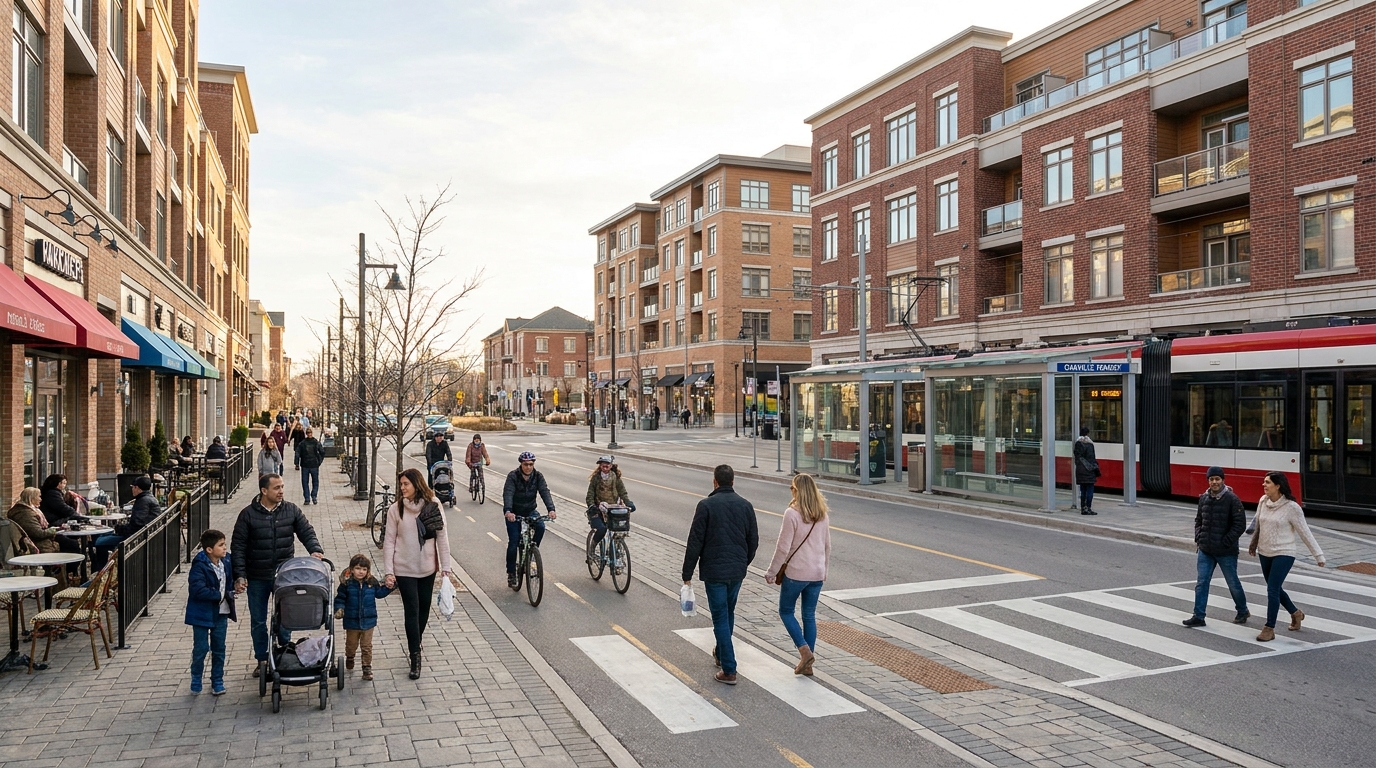
A master-planned community is a development conceived as a whole rather than as a series of unrelated projects. It usually covers a large area of land and includes a mix of uses that may involve detached homes, townhomes, apartments, commercial services, schools, community facilities, parks, and transportation connections. The defining feature is not just size. It is the presence of a coordinated master plan that establishes how growth will occur over time and how multiple systems will function together.
This distinction is important because many people confuse master-planned communities with standard subdivisions. A subdivision often focuses primarily on lots, roads, and housing types within a limited area. A master-planned community addresses a much broader set of questions. Where will people shop for daily needs? How will children reach school safely? Will residents have access to parks within walking distance? How will transit service be supported? How will stormwater, servicing, and road capacity evolve as the community grows through multiple phases?
In Canada, the MPC model fits within provincial and municipal land-use planning systems that place emphasis on efficient land use, infrastructure capacity, housing supply, environmental protection, and public accountability. In Ontario, for example, planning policy links land-use decisions to efficient use of land and infrastructure, safe communities, transportation options, servicing capacity, and environmental stewardship. That framework makes the master-planned approach especially relevant because it can align private development with public policy goals when done properly.
In practical terms, a master plan acts as a roadmap. It lays out street networks, block structure, density patterns, public space, servicing strategy, mobility systems, and the sequence in which development is expected to occur. Because these communities are built over many years, sometimes over decades, the strength of the original planning framework often determines whether the final result feels coherent or fragmented.
Why Master-Planned Communities Matter in a Time of Growth
Housing growth is one of the defining urban issues of this era. Major regions such as Toronto and Vancouver continue to face pressure to add supply, diversify housing forms, and improve affordability. Recent Canadian data shows that housing stock growth in these metros outpaced population growth between 2019 and 2021, with a significant share of additions coming from condominiums and other multi-unit housing types. That tells us something important. The conversation is no longer just about expansion. It is about how to deliver housing volume while creating livable neighbourhoods.
Master-planned communities are relevant because they can deliver housing at scale. A large, coordinated site can introduce thousands of units over time rather than relying solely on small, disconnected projects. That scale can be an advantage in regions trying to address persistent supply shortfalls. It also creates an opportunity to build a better neighbourhood structure from the beginning instead of trying to retrofit complete-community features after the fact.
At the same time, scale creates risk. If a large development is planned around narrow housing choices, weak transit, and separated land uses, it can lock in poor outcomes for generations. Statistics Canada has linked urban sprawl to low-density housing growth at the urban edge, highlighting implications for the environment and for broader social and economic conditions. A master-planned community that merely repeats low-density, auto-oriented expansion is not solving the growth problem. It is formalizing it.
That is why the modern discussion around MPCs has shifted away from size alone. The next generation of successful communities will be judged by how well they accommodate growth while supporting everyday life, infrastructure efficiency, resilience, and inclusion. In other words, the real question is not how much land is planned, but what kind of city that land is helping create.
The Urban-Shaping Power of Integrated Planning
One of the greatest strengths of a master-planned community is its ability to shape urban form in a deliberate way. Instead of allowing growth to occur as a patchwork of unrelated projects, the master plan can direct density, organize streets, preserve open space, and position civic uses in ways that support a coherent community. This matters because city-building is cumulative. One road alignment, one block pattern, one stormwater strategy, and one transit corridor can influence development outcomes for decades.
Integrated planning allows planners, municipalities, and developers to think beyond individual buildings. They can design an entire network of relationships between homes, public spaces, transportation, and services. A community built this way has a better chance of functioning as a complete place rather than as a dormitory district that sends residents elsewhere for work, recreation, education, and daily shopping.
When the street network is connected, the blocks are walkable, and parks are distributed strategically, the result is not only more attractive urban form. It is also more practical. Residents gain better access to amenities, municipalities can deliver services more efficiently, and future phases of development can be added without undermining the original structure. In growth areas, that kind of coordination is a major urban advantage.
There is also a fiscal and infrastructure dimension. Fragmented development can produce inefficient servicing patterns and long-term public costs that are difficult to recover. A master-planned community offers the chance to coordinate roads, utilities, stormwater systems, schools, and transit-supportive land uses from the start. While the capital planning can be complex, the long-term city-building logic is stronger when growth is organized instead of improvised.
The Best Master-Planned Communities Follow Complete-Community Principles
The term complete community is central to understanding the best version of the master-planned model. A complete community is one where people can live, move, work, shop, learn, and access services without depending on long car trips for every daily need. It does not mean every amenity is available on day one, but it does mean the community is designed to support a balanced, functional way of life as it matures.
Well-executed master-planned communities use land more efficiently by combining housing types and integrating civic, commercial, and recreational uses. Instead of isolating homes from everything else, they place daily services, schools, and public spaces within reachable distances. That creates better conditions for walking, cycling, transit use, and social interaction. It also helps residents save time, lowers transportation burdens, and improves the day-to-day experience of living in the neighbourhood.
Complete-community planning is especially important in an era of sustainability goals and climate constraints. CMHC has emphasized that sustainable communities should be assessed across environmental, economic, and social dimensions, warning that fragmented planning can produce short-term choices that undermine long-term outcomes. This is one of the clearest arguments in favour of the master-planned approach. When the framework is broad enough, decision-makers can evaluate the full impact of development patterns rather than treating each parcel in isolation.
There are several characteristics that often distinguish stronger master-planned communities from weaker ones.
- A mix of housing types that includes detached homes, townhomes, apartments, rental units, and opportunities for different household sizes and incomes.
- Walkable street design with connected blocks, sidewalks, safe crossings, and destinations within reasonable reach.
- Access to parks and green space that is built into the community fabric rather than left as an afterthought.
- Transit-supportive densities and land-use patterns that make public transportation viable over time.
- Integrated civic and commercial uses such as schools, community facilities, and local retail that support daily life.
- Infrastructure coordination so roads, servicing, stormwater, and public amenities align with growth phases.
When these elements come together, the community becomes more resilient and more adaptable. It can absorb population growth, accommodate changing household needs, and deliver a richer urban experience than conventional single-use expansion.
Master-planned communities work best when they are designed as pieces of a city, not as products isolated from the city around them.
How Master-Planned Communities Can Improve Quality of Life
Quality of life is often discussed in abstract terms, but in planning it is expressed through daily experience. It is about whether the trip to school is safe, whether a park is within walking distance, whether seniors can age in place, whether a family can find a home that fits its needs, and whether routine errands require a long drive. Master-planned communities have the capacity to improve those daily conditions because they address multiple dimensions of community life at once.
One important benefit is predictability. Residents are more likely to understand what kind of neighbourhood is emerging when the long-term framework is visible from the outset. Streets, open spaces, school sites, trail systems, and mixed-use nodes can be identified early, giving people a sense that the place is evolving toward a coherent outcome. This is different from uncoordinated growth where amenities lag significantly and the final shape of the area remains uncertain for years.
Another quality-of-life advantage is access. In well-designed MPCs, parks, retail, recreation, and public spaces are distributed in ways that reduce the need for long trips. This creates more options for children, families, older adults, and people who do not drive. It also tends to support stronger social interaction because residents encounter one another in shared spaces rather than remaining separated by wide roads and single-use blocks.
Housing diversity also matters. A complete community is stronger when it can accommodate first-time buyers, renters, families with children, downsizers, and workers across income ranges. Master-planned communities have the scale to deliver this mix if the planning framework supports it. They are not inherently luxury enclaves, despite the common misconception. Like any development model, they reflect the policy, market, and design choices built into them.
Sustainability Depends on Design, Not Branding
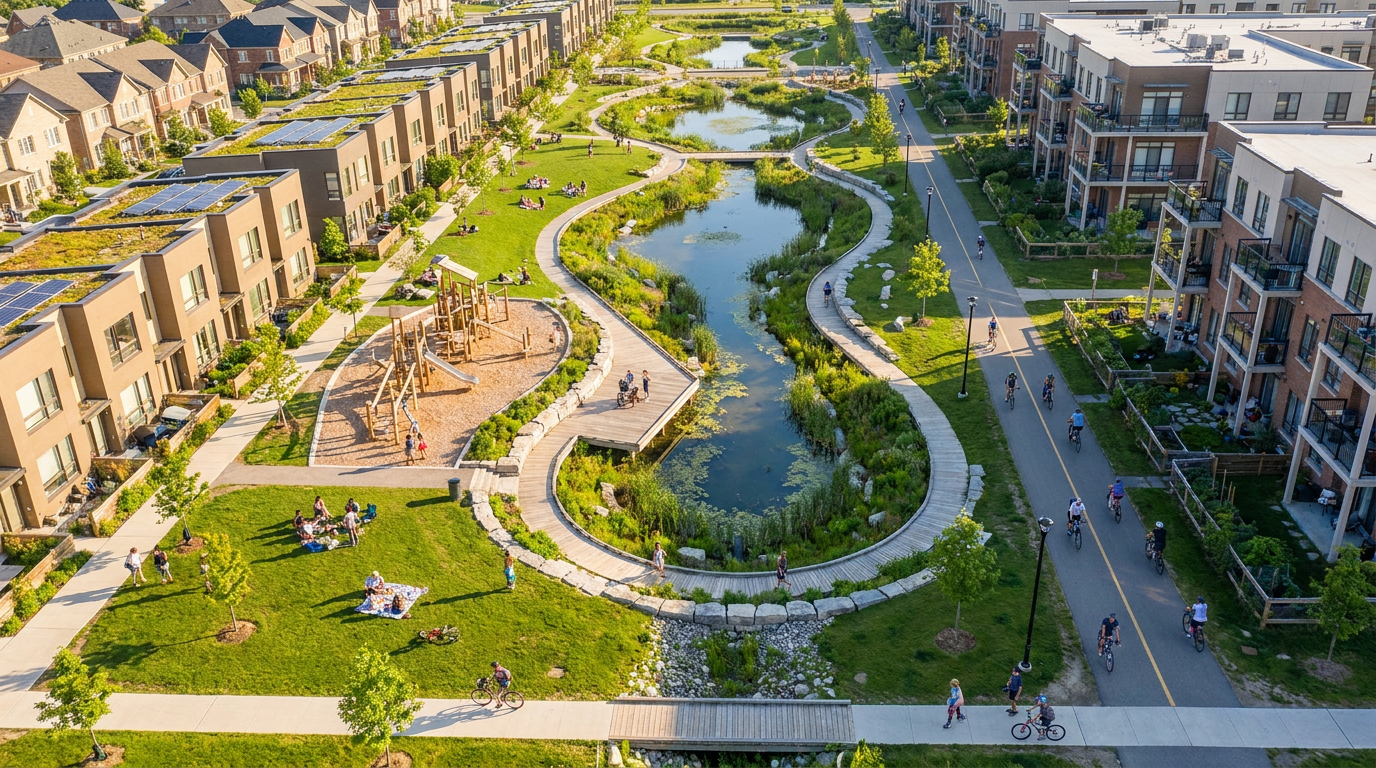
There is a persistent misunderstanding in the market that a large planned community is automatically sustainable because it includes branding around trails, parks, or environmental features. That is not enough. Sustainability in urban development depends on the underlying land-use pattern, transportation options, infrastructure strategy, energy performance, and ecological integration. A community can have attractive landscaping and still produce high emissions, long commutes, and inefficient public service costs.
The most sustainable master-planned communities tend to focus on several interconnected priorities. They support densities that make transit service more realistic. They provide a mix of housing forms so more people can live closer to amenities. They incorporate green infrastructure and stormwater management as functional systems, not merely decorative features. They preserve and connect open space. Most importantly, they reduce dependence on driving by organizing daily life around proximity and mobility choice.
CMHC’s sustainable communities research is especially useful here because it emphasizes comparing development patterns across environmental, social, and economic impacts. That approach is critical. A community should not be evaluated only by the number of units it delivers or the visual appeal of its marketing plan. It should be assessed by how efficiently it uses land and infrastructure, how inclusive it is, how it performs environmentally, and how it supports long-term livability.
In Canadian regions facing both housing pressure and climate obligations, this framework is becoming more important. The challenge is no longer simply to build more. It is to build more in ways that reduce fragmentation and support resilient urban systems. Master-planned communities can contribute to that goal if sustainability is treated as a measurable outcome rather than a promotional label.
The Role of Transit and Mobility
Transportation is one of the most important tests of any master-planned community. A project may have beautiful renderings, generous open space, and a range of housing types, but if residents must drive for nearly every activity, the development will struggle to deliver on sustainability or quality of life. Transportation shapes a community’s emissions profile, household costs, access to jobs, and relationship to the broader city.
This is why current planning trends place so much emphasis on transit-oriented development and reduced auto dependence. In the strongest MPCs, density is not spread uniformly. It is concentrated around transit corridors, mixed-use centres, or key public spaces where walking and transit can become realistic options. Lower-density areas may still exist, but they are connected to a wider mobility system that includes local transit, cycling routes, sidewalks, and a coherent street network.
Transit-supportive planning also requires timing. One of the recurring weaknesses of large master-planned communities is that housing arrives years before transit service, employment opportunities, or commercial amenities reach sufficient scale. This creates an early pattern of auto dependence that can be difficult to reverse. Once household habits, road expansions, and market expectations are built around car use, the original vision of a complete community becomes harder to deliver.
For that reason, phasing strategy matters as much as design. Municipalities and developers need to think carefully about which components arrive first, which are secured through approvals, and how transportation choices will function during early occupancy. A master plan that depends on future transit with no practical interim strategy may look strong on paper while underperforming in real life.
Governance, Policy, and Public Accountability
Because master-planned communities are large and long-term, they exist at the intersection of private initiative and public governance. Developers often lead the planning and financing of these projects, but municipalities set the rules through official plans, secondary plans, zoning, infrastructure coordination, and public approvals. The quality of the outcome depends heavily on how these responsibilities are aligned.
Ontario’s planning framework illustrates this balance clearly. Provincial policy emphasizes efficient land use, infrastructure capacity, housing supply, environmental protection, safety, and transportation considerations. At the same time, the Planning Act and related public process requirements emphasize transparency, approvals, and accountability. These safeguards are essential because large planned communities can reshape entire districts, influence municipal budgets, and affect social outcomes for decades.
Planning tools such as Ontario’s community planning permit system are also gaining attention because they can streamline approvals while preserving policy objectives. In principle, this type of tool can provide greater certainty for communities, landowners, and developers, while supporting goals around transit, greenspace, and design coordination. In a housing supply context, that matters. Cities need processes that are both rigorous and practical if they want to encourage well-planned growth at scale.
Still, streamlined approval is not the same as weak oversight. Public trust in master-planned communities depends on confidence that promises around schools, parks, affordability, mobility, and environmental performance are not merely conceptual. Strong governance means connecting approvals to measurable commitments and making sure the long-term public interest remains visible as market conditions evolve.
The Common Challenges of Master-Planned Communities
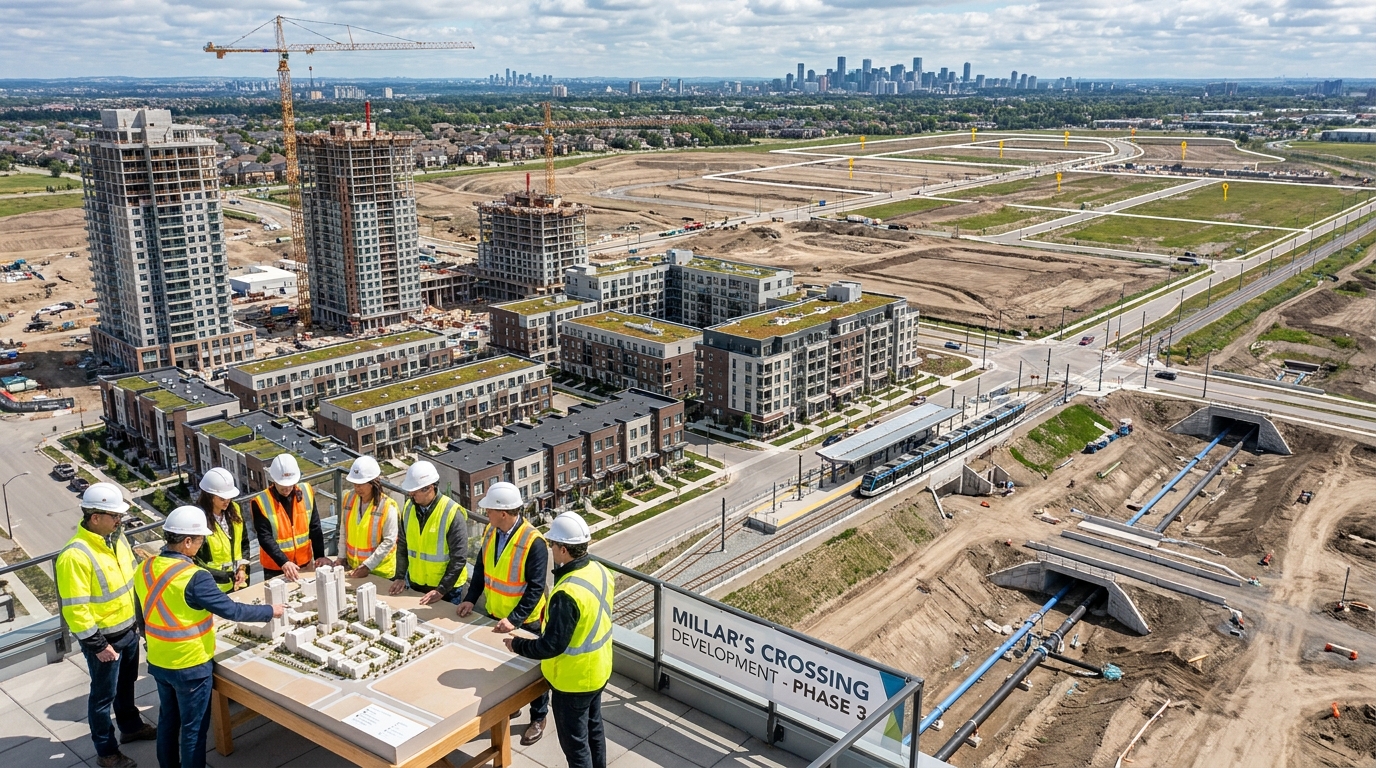
For all their potential, master-planned communities face real and recurring challenges. The first is time. These projects often take many years to build out, which means the original plan must survive shifts in market demand, policy, financing conditions, construction costs, and political priorities. A community that begins with a strong vision can still drift if later phases are approved without discipline or if economic pressures lead to compromises in design and public amenity delivery.
The second challenge is financing complexity. Large-scale development requires major upfront investment in land, roads, servicing, parks, and other infrastructure. Coordinating these investments with the timing of housing delivery is difficult, especially when key amenities depend on both public and private participation. If the financial structure is weak, the community may deliver homes faster than it delivers the elements that make those homes part of a complete place.
A third challenge is inclusivity. Without clear policy direction, some master-planned communities can default toward market segments that maximize short-term returns rather than broad housing need. This can lead to limited tenure diversity, weak affordability outcomes, or a built form that excludes certain households. Scale alone does not guarantee inclusiveness. It has to be planned, negotiated, and measured.
There is also the challenge of perception. Many people hear the term master-planned community and imagine an isolated suburban enclave with decorative landscaping and long commutes. That perception exists for a reason. Some projects have earned it. The task for today’s planners and developers is to prove that the model can do more by creating mixed, connected, transit-aware communities that function as real urban places.
What Makes a Strong Master-Planned Community Today?
The strongest contemporary master-planned communities tend to share a set of strategic characteristics. They plan for growth in a way that aligns housing volume with infrastructure reality. They recognize that mixed-use and mixed-density patterns are not aesthetic choices alone, but operational tools that support mobility, affordability, and service efficiency. They treat parks and public spaces as essential civic infrastructure. They also understand that a community must work not only at full build-out, but in each phase along the way.
In practical terms, a strong master-planned community usually includes the following ingredients.
- A clear urban structure with connected streets, identifiable centres, and a logical relationship between density and mobility.
- Housing diversity that reflects different life stages, incomes, and tenures instead of relying on a single product type.
- Early amenity planning so parks, schools, community facilities, and local services are integrated into the first phases wherever possible.
- Transit support through density, design, and phasing rather than waiting for future ridership to appear on its own.
- Green infrastructure that improves environmental performance while enhancing the public realm.
- Policy alignment between the master plan and municipal goals for growth, sustainability, and public accountability.
- Measurable outcomes that allow the project to be judged by delivery, not just concept.
These are not luxury features. They are the foundations of responsible city-building. In an era where every large development is expected to carry more of the burden for housing delivery and public value, communities that fail on these measures will face increasing scrutiny.
Master-Planned Communities and the Future of Canadian Cities
The future of urban growth in Canada will be shaped by difficult pressures that exist at the same time. Cities need more housing. They need to reduce sprawl and infrastructure inefficiency. They need to protect environmental systems, support affordability, and improve mobility. No single planning model can solve all of that, but master-planned communities remain one of the few tools capable of addressing multiple dimensions of growth at once.
That potential is especially relevant in suburban and edge areas where major land assemblies can still influence metropolitan form. If these places are built as disconnected low-density districts, they will extend the old pattern of sprawl into a new generation. If they are built as complete communities with higher densities, mixed housing, transit integration, and strong public amenities, they can become part of a more sustainable metropolitan structure.
Research and policy trends suggest the direction is already shifting. There is greater emphasis on transit-oriented development, stronger interest in tools that streamline approvals while preserving public goals, and growing attention to data frameworks that measure sustainability outcomes rather than assuming them. In that environment, the next generation of master-planned communities will be expected to do more than provide land for housing. They will need to demonstrate how they contribute to broader city-building objectives.
That is the real opportunity. A well-conceived master-planned community can help a city grow in a way that is more efficient, more livable, and more resilient. It can connect housing supply to schools, parks, retail, transit, and infrastructure in a coherent pattern. It can create places that feel intentional rather than accidental. And at a time when many urban regions are struggling to keep pace with growth, intentionality is one of the most valuable assets we have.
Final Thoughts
Master-planned communities deserve serious attention because they reveal a fundamental truth about development. The quality of urban life is shaped long before residents move in. It is shaped when land is organized, when infrastructure is sequenced, when densities are set, when parks are protected, and when transportation choices are embedded into the plan. By the time a neighbourhood feels successful or disappointing, many of the decisive choices were made years earlier.
That is why the master-planned model matters. At its best, it offers a framework for long-term thinking in a development environment that is often driven by short-term pressures. It can bring housing, mobility, public space, and sustainability into the same conversation. It can help growing cities channel expansion more intelligently. But it only works when ambition is matched by discipline, accountability, and a genuine commitment to complete-community outcomes.
For planners, municipalities, developers, and residents, the takeaway is clear. Master-planned communities are not valuable because they are large. They are valuable when they use scale to solve problems that smaller, fragmented development cannot solve alone. In a time defined by housing demand, infrastructure constraints, and climate pressure, that is exactly the kind of strategic city-building mindset the future requires.


No Comment! Be the first one.