



Construction waste is easy to overlook when you are focused on the excitement of a renovation. Most homeowners think first about finishes, budgets, and timelines, which is entirely understandable. Yet every cabinet removed, every extra tile ordered, and every quick demolition decision can add to a much larger waste problem that reaches far beyond one home. The good news is that reducing construction waste does not require perfection, expensive systems, or a dramatic lifestyle shift. It usually starts with a sequence of grounded decisions that preserve what still works, buy only what is needed, and handle materials with more care.
Table Of Content
- Why home renovation waste deserves more attention
- Start with a pre renovation audit before you remove anything
- Questions to ask during the audit
- Preserve existing structures whenever possible
- Measure carefully and buy only what you need
- Practical estimating habits that help
- Choose deconstruction over fast demolition when feasible
- Materials that are often good candidates for salvage
- Separate waste streams instead of mixing everything together
- Use reclaimed, recycled, and locally sourced materials thoughtfully
- How to choose better replacement materials
- Handle hazardous renovation waste with care
- Work with contractors who understand waste reduction
- Think beyond recycling and follow the waste hierarchy
- Small room by room examples that feel achievable
- Kitchen renovation
- Bathroom renovation
- Basement or interior finishing
- A simple homeowner action plan for the next project
- The bigger picture behind small renovation decisions
This matters because construction, renovation, and demolition waste is a major part of the waste stream in both Canada and the United States. In Canada, Environment and Climate Change Canada cites about 4 million tonnes of construction, renovation, and demolition waste, roughly 12% of the solid waste stream. In the United States, the EPA estimated 600 million tons of construction and demolition debris in 2018, which was more than twice the amount of municipal solid waste generated that year. Those are large numbers, but they can also be reassuring in a practical way. They suggest that ordinary renovation choices, repeated across many homes, can create meaningful change.
For homeowners, the most effective approach is usually not a complicated recycling plan at the end of a job. It is source reduction at the beginning. That means creating less waste in the first place by keeping serviceable materials, planning dimensions carefully, ordering accurately, and choosing products with reuse, repair, or recycling in mind. This approach follows Canada’s waste hierarchy, which places prevention and reduction first, then reuse and repair, then recycling, with landfill as the last option. Put simply, the best waste is the waste never created.
This article is designed to make the process feel manageable. If you are planning a bathroom refresh, a basement update, a kitchen renovation, or even a new build, you do not need to do everything at once. You can adopt the strategies that fit your project, your budget, and your local disposal or salvage options. When approached calmly, waste reduction becomes less about pressure and more about building a home with more intention.
Reducing construction waste at home is not about doing a perfect zero waste renovation. It is about making better decisions in the moments that matter most: before you tear out, before you order, and before materials head to the bin.
Why home renovation waste deserves more attention
Home renovation waste can seem small when seen project by project. A few sheets of drywall, an old vanity, some flooring offcuts, damaged packaging, and a pile of trim do not feel significant on their own. But construction waste accumulates quickly because homes contain so many layered materials and because renovation schedules often reward speed over care. A quick tear out may save labor in the moment, but it can send reusable materials straight to landfill and create new disposal costs along the way.
There is also a broader environmental impact that is easy to miss. Waste does not just reflect what ends up in a dumpster. It also reflects the energy, raw materials, transportation, and manufacturing embedded in every product removed from your home. When a solid wood door, a quality cabinet box, or a durable light fixture is discarded before the end of its useful life, the loss is not only physical. It is also a loss of all the resources that went into making it in the first place.
That is one reason conversations about sustainable housing increasingly include ideas like embodied carbon, circular economy, and design for disassembly. These ideas can sound technical, but the household version is simple. Keep useful things in service for as long as reasonably possible, choose replacement materials carefully, and make future repairs easier instead of harder. That mindset often reduces waste, lowers costs, and leads to more thoughtful design.
Another practical reason to care is that waste usually has a direct financial cost. Over ordering materials ties up money. Disposal bins, haul away fees, and extra labor add to project budgets. Damaging components during demolition can force homeowners to buy replacements they did not originally need. In many cases, a waste reduction strategy is not a separate environmental gesture. It is a better project management strategy.
Start with a pre renovation audit before you remove anything
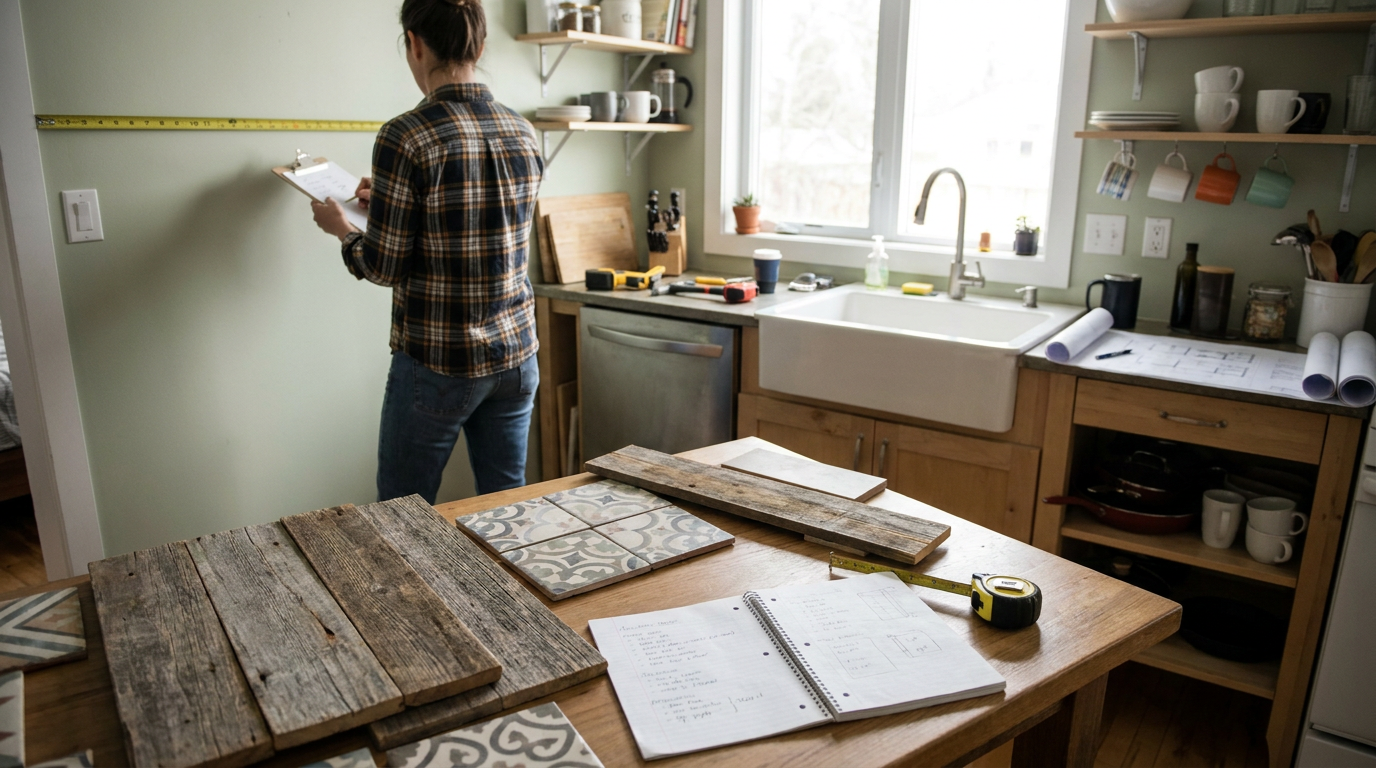
One of the most useful habits a homeowner can adopt is a pre renovation audit. Before demolition begins, walk through the space and identify what is genuinely failing, what is outdated but functional, and what could stay with refinishing or minor repair. This sounds basic, yet it changes the entire project. Many materials are removed because the room is being updated, not because those materials are unusable.
Cabinets are a good example. In many kitchens and bathrooms, cabinet boxes are structurally sound even if the doors, paint color, or hardware feel tired. Refacing, repainting, or replacing fronts may be enough. The same is often true for hardwood flooring, interior doors, trim, shelving, sinks, and light fixtures. If the core component is still serviceable, preserving it can reduce waste significantly while also shortening lead times and avoiding the risk of ordering errors.
Audit work is especially valuable in older homes, where materials may have surprising durability or character. Old growth lumber, solid wood doors, plaster details, vintage hardware, and brick often hold more reuse value than their modern replacements. At the same time, older homes require more caution because some materials may contain lead based paint or other hazards. Waste reduction should always work alongside safety, not against it.
As you inspect the space, take photos, measurements, and notes. Create three categories: keep, salvage, and dispose. The keep category includes items remaining in place. The salvage category includes items that can be removed intact for reuse in your home, sold, donated, or given to a reuse center. The dispose category should be as small and as well sorted as possible. This simple exercise often reveals opportunities that are easy to miss once demolition starts moving quickly.
Questions to ask during the audit
A calm planning process is often more effective than a long wish list. Consider asking yourself whether the layout truly needs to change, whether an existing element can be repaired, and whether a finish update would achieve the same result with less waste. If a wall is coming down, ask whether it is for function or only for fashion. If you are replacing a fixture, ask whether its problem is performance, appearance, or compatibility.
It also helps to think one stage ahead. If you remove something, where will it go next. Can it be stored temporarily without damage. Does a local salvage yard accept that type of material. Can a contractor remove it intact rather than break it apart. By asking these questions before work begins, you turn waste reduction from an abstract goal into a practical plan.
Preserve existing structures whenever possible
EPA guidance consistently identifies preserving existing structures as one of the top ways to reduce construction waste. For homeowners, this principle can be applied at many scales. Sometimes it means keeping the house footprint and working within it rather than building an addition. Sometimes it means maintaining wall locations and plumbing runs to avoid unnecessary tear out. In smaller projects, it may simply mean leaving a subfloor, cabinet carcass, or interior door in place because it still does the job.
Preservation is not about resisting change. It is about understanding that every retained component avoids the waste created by removal, hauling, processing, packaging, transporting, and installing something new. A renovation can still feel fresh, beautiful, and personalized without replacing everything. In fact, homes often feel more grounded when new elements are layered thoughtfully onto what is already there.
This is where homeowners can take a long view. Durable materials that have already proven themselves in your house may deserve more credit than a showroom sample suggests. A floor that can be refinished may outperform a cheaper replacement that will need to be discarded in a few years. A quality window that needs weatherstripping or repair may be worth keeping if replacement is not urgently necessary. Waste reduction is often closely linked to durability and maintenance, not just recycling.
There is also a design benefit to preserving where possible. Working with existing dimensions encourages more measured decisions, which often lead to cleaner detailing and less material waste overall. Instead of redesigning every inch, homeowners can focus investment where it improves comfort, storage, water use, or energy performance the most.
Measure carefully and buy only what you need
Over ordering is one of the most common sources of avoidable construction waste. It often comes from a reasonable instinct to build in a buffer, avoid delays, or respond to uncertain site conditions. Yet too much extra material can leave homeowners with stacks of unusable leftovers, especially when products are custom, dye lot sensitive, or difficult to store. Better estimating is one of the simplest and most effective ways to reduce waste.
Begin with precise measurements and an itemized material list. If you are hiring a contractor, ask how quantities are being calculated and whether the order includes a realistic waste factor rather than a generous guess. Tile, flooring, drywall, trim, and lumber all need some margin for cuts and errors, but that margin should reflect the layout complexity of the space. A straightforward rectangular room should not be treated the same way as a room with multiple angles, obstacles, or pattern matching requirements.
It also helps to understand how product dimensions affect waste. Standard sheet goods, tile sizes, and lumber lengths can influence how much cutting is required. Sometimes a small design adjustment, such as changing tile orientation, modifying cabinet width, or selecting a different panel size, can substantially reduce offcuts. This kind of quiet efficiency rarely appears in inspiration photos, but it can shape the environmental footprint of a project more than many visible finish choices.
When possible, choose suppliers that allow returns of unopened materials. Keep products protected and organized so they remain returnable if they are not used. For custom items, be especially careful in the planning phase because measurement mistakes create waste that cannot be resold easily. The general principle is steady and forgiving: buy enough, but not far more than enough.
Practical estimating habits that help
-
Confirm site measurements more than once before placing orders, especially for flooring, tile, millwork, and countertops.
-
Ask whether your layout can be optimized around standard material dimensions to reduce cutting waste.
-
Store leftover usable material neatly and label it, because a small reserve can be valuable for future repairs.
-
Return unopened products promptly rather than letting them become long term clutter that eventually gets discarded.
Choose deconstruction over fast demolition when feasible
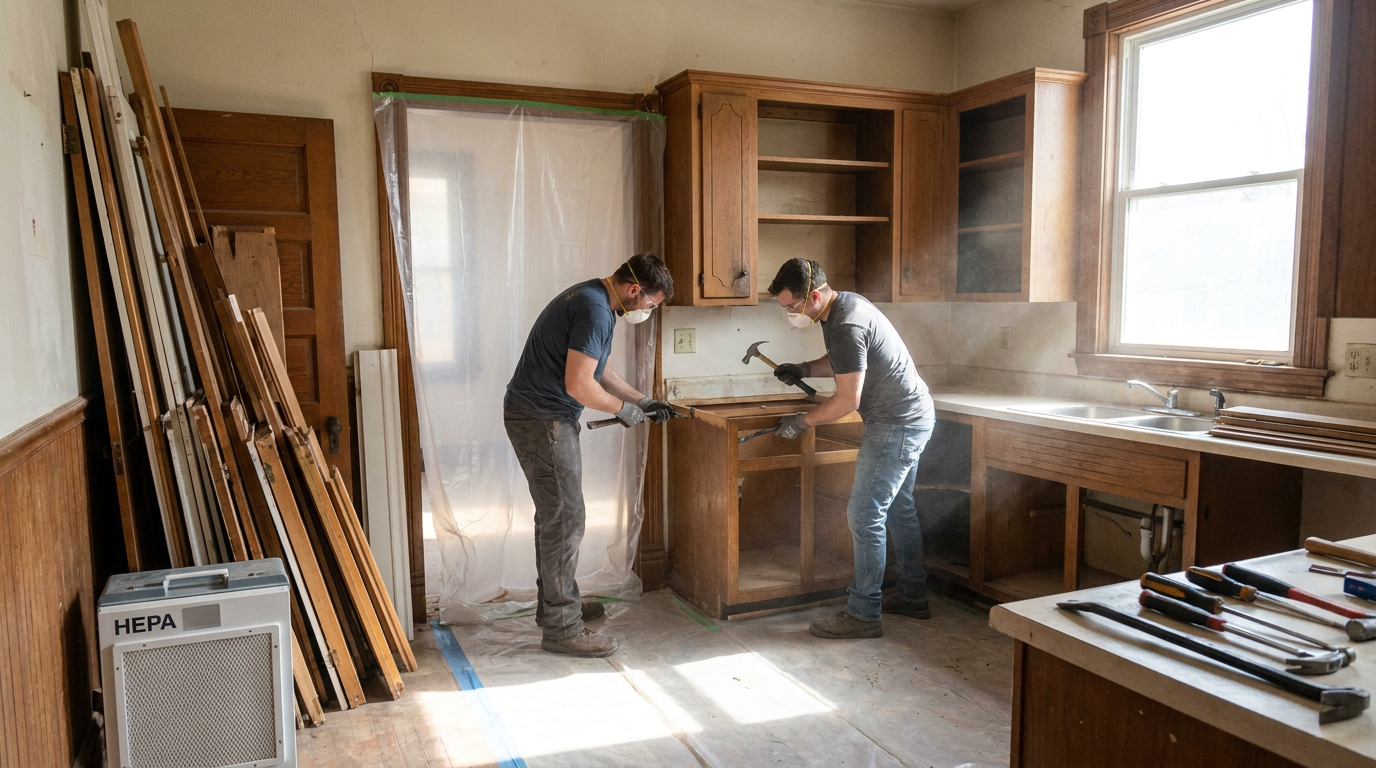
Deconstruction is the careful dismantling of a building or part of a building so that materials can be reused, repaired, or recycled rather than discarded. For homeowners, this does not always mean taking apart an entire house board by board. More often, it means selective deconstruction. Cabinets are unscrewed rather than smashed. Trim is pried off carefully. Flooring is removed in sections. Doors, hardware, shelving, lighting, and fixtures are taken down intact so they have a second life.
This approach tends to work especially well in older homes and partial renovations where individual components still carry reuse value. If you have solid wood doors, vintage lighting, quality lumber, bricks, fencing, or hardwood flooring, careful removal may preserve materials that would otherwise be lost. Even when items are not reused within your own home, they may be useful to someone else through architectural salvage outlets, reuse centers, donation networks, or direct resale.
Deconstruction can require more labor and more patience than aggressive demolition, so it is not the best fit for every project. Tight timelines, severe damage, water issues, structural concerns, or local market limitations can make full salvage less practical. But even on fast moving jobs, a hybrid approach is often possible. Taking one day to remove reusable components before major demolition begins can divert a surprising amount from landfill.
Homeowners can support this by discussing expectations early with contractors. Ask whether materials can be removed intact, whether salvage labor can be priced as an option, and whether there are local outlets for reusable items. A contractor may be more open to careful removal if the plan is clear from the start. The key is to make salvage part of the scope, not an afterthought once dust is already in the air.
Materials that are often good candidates for salvage
Not everything can or should be saved, but many common residential materials are worth considering. These include doors, windows, cabinets, plumbing fixtures, lumber, flooring, bricks, fencing, metal components, and lighting. The condition, age, style, and local resale demand all matter, but homeowners are often surprised by how much value remains in everyday building components when they are removed carefully.
Reuse centers and architectural salvage businesses can be especially helpful because they already understand what is marketable. Before a project begins, check what nearby organizations accept and what preparation they require. Some want items cleaned and sorted. Some will accept only specific categories. Others may offer pickup for larger quantities. A quick conversation ahead of time can prevent materials from being damaged or rejected later.
Separate waste streams instead of mixing everything together
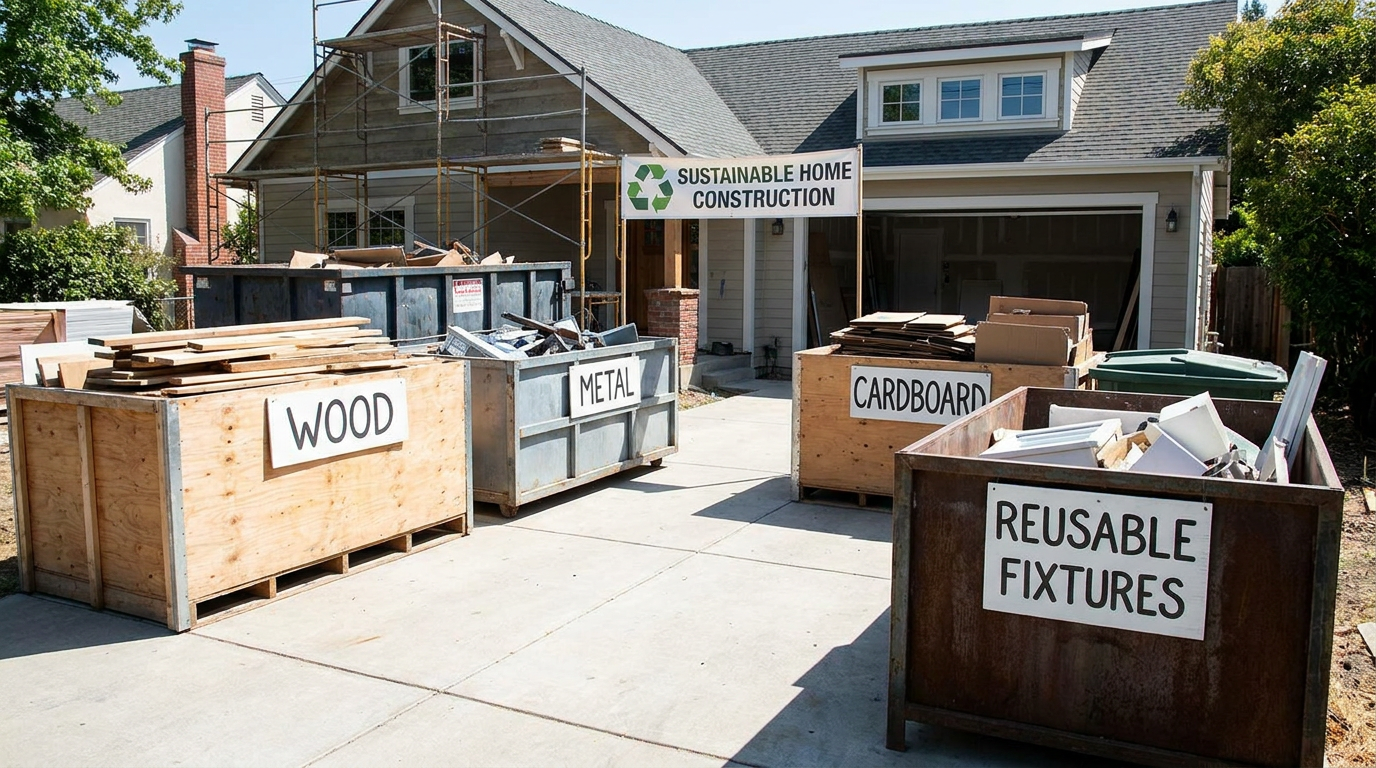
When materials are all tossed into one bin, reuse and recycling become much harder. Source separation, which means sorting materials by type, is one of the clearest ways to improve diversion rates on a home project. Wood, metal, cardboard, clean concrete, fixtures for reuse, and hazardous items should not all travel the same path. Once they are mixed, broken, or contaminated, their recovery value drops.
For a homeowner scale job, source separation does not need to feel industrial. It can be as simple as creating designated areas for salvage, metal, cardboard packaging, clean wood, and true trash. If a dumpster is involved, ask the hauler or contractor whether separate containers are possible for certain materials. If space is limited, staged pickups may still work better than one mixed load. The goal is not complexity for its own sake. It is to preserve the usefulness of materials while they are still manageable.
Packaging waste deserves attention too. Renovations generate a lot of cardboard, plastic wrap, pallets, and protective foam. Some of this is unavoidable, but it can still be sorted properly. Keeping packaging dry and separate makes it easier to recycle where facilities exist. It also keeps the site tidier and reduces the chance that usable items are damaged by clutter and debris.
This kind of organization can have ripple effects beyond waste diversion. A cleaner site is often safer, easier to navigate, and easier to inventory. Contractors can locate materials more quickly, homeowners are less likely to lose track of reusable parts, and the project generally feels more deliberate rather than chaotic.
Use reclaimed, recycled, and locally sourced materials thoughtfully
Reducing construction waste is not only about what leaves the house. It also involves what comes back in. Choosing reclaimed, recycled, or locally sourced materials can support a more circular renovation while also reducing embodied impacts. CMHC guidance on greener renovations highlights options such as certified wood products, recycled countertops and tiles, and locally sourced materials that can deliver practical benefits without making a project feel experimental.
Reclaimed materials can add character as well as environmental value. Salvaged wood shelving, reclaimed brick, vintage doors, and repurposed hardware often bring warmth that new products try to imitate. Recycled content products can also be a sensible fit, especially in surfaces and finishes where performance is well established. The key is to choose materials that are durable, repairable, and appropriate for the room, not simply to select them because they sound green.
This is where one common misconception deserves correcting. Waste reduction does not mean buying the cheapest available materials. Low cost products that fail early or cannot be repaired often create more waste over time. A better lens is life cycle thinking. Ask how long the material is likely to last, how it can be maintained, whether parts can be replaced, and whether it can eventually be reused or recycled.
Locally sourced materials can also support waste reduction indirectly by shortening transport distances and connecting you to suppliers who may offer better guidance, take back options, or more flexible ordering. Smaller regional suppliers sometimes make it easier to buy accurately and return unused stock, which can be just as important as the product’s recycled content.
How to choose better replacement materials
-
Look for materials that are durable enough for the room and likely to stay in service for many years.
-
Prioritize products that can be repaired, refinished, or partially replaced instead of fully discarded.
-
Consider certified wood, recycled content tile or countertops, and reclaimed finish materials where they fit the design and budget.
-
Ask suppliers about lead times, return policies, packaging, and end of life options before you buy.
Handle hazardous renovation waste with care
Not all renovation waste can be treated the same way, and this is one of the most important parts of any responsible project. Health Canada advises homeowners to follow municipal guidance for household hazardous waste during renovation and DIY work, and that advice deserves close attention. Paints, solvents, adhesives, caulks, sealants, treated wood, certain cleaners, and other chemical products may require special handling. Waste reduction should never come at the expense of indoor air quality, worker safety, or safe disposal practices.
Older homes require particular care. In the United States, EPA lead safe renovation guidance is especially relevant for pre 1978 homes because lead based paint may be present. EPA notes that deconstruction and reuse of materials containing lead based paint is not prohibited, but containment and lead safe practices may still be required in certain situations. In practical terms, that means you should not assume that every older door, trim board, or window can be casually salvaged, sanded, or resold without precautions.
Asbestos is another concern in some older materials, depending on the age and type of construction. While this article does not replace local regulatory guidance or professional assessment, it is worth emphasizing that hazardous materials should be identified early. If there is any uncertainty, pause the salvage plan until the material is properly evaluated. The goal is to reduce waste responsibly, not to shift hidden risks into another home or expose workers during removal.
Even in newer homes, products like insulation, foam, batteries, fluorescent lamps, and electronics may have specific disposal requirements. Check your municipality’s rules and your waste hauler’s accepted material list before the project starts. A little preparation prevents confusion when materials are already piled up and decisions are being made too quickly.
Responsible waste reduction always includes proper hazardous waste handling. A salvaged material is only a success when it is safe to reuse, safe to remove, and legal to manage in your area.
Work with contractors who understand waste reduction
Even very motivated homeowners can struggle to reduce construction waste if the project team is not aligned. Contractors influence demolition methods, ordering practices, site organization, and where materials go after removal. That is why it helps to talk about waste before the contract is finalized rather than after the dumpster arrives. Framing the conversation around efficiency, salvage value, and reduced disposal costs often makes it more practical and collaborative.
Ask how the contractor approaches takeoffs and ordering accuracy. Ask whether they have experience with selective deconstruction or salvage. Ask how reusable materials will be protected and whether separate bins or staging areas can be set up for key waste streams. If your project includes an older home, ask about lead safe practices and how potentially hazardous materials will be handled. These questions are not about micromanaging. They are about setting expectations.
A good contractor may also know local reuse centers, recycling yards, and specialty haulers that homeowners have never heard of. That local knowledge can make a real difference. One reason federal Canadian reporting shows very high construction, renovation, and demolition diversion rates are possible, including an overall 95% diversion rate in 2023 to 2024 for federal organizations reporting CRD waste, is that sorting systems and diversion options matter. At the household level, the same principle applies. Planning works best when local outlets are known ahead of time.
If a contractor is skeptical, try narrowing the focus. Instead of asking for a fully zero waste renovation, identify two or three priorities such as preserving cabinets, separating metal and cardboard, or donating usable fixtures. Practical goals are often easier to integrate into real construction schedules, and once a team sees the process working, broader improvements may feel more achievable.
Think beyond recycling and follow the waste hierarchy
Many homeowners assume recycling is the main environmental solution for renovation waste. Recycling is helpful, but it comes after prevention, reduction, reuse, and repair in the waste hierarchy. That hierarchy matters because recycling still requires collection, transportation, processing, and in some cases downcycling into lower value products. It is better than landfill, but it is not always the highest impact step.
A simple way to apply the hierarchy is to move through decisions in order. First, ask whether the material needs to be removed at all. Second, ask whether it can stay in service through repair or refinishing. Third, ask whether it can be reused elsewhere in your home or by someone else. Fourth, ask whether it can be remanufactured, refurbished, or recycled through a local facility. Only after those options are reasonably considered should landfill become the default.
This approach also helps correct another common misconception, which is that all demolition waste is just trash. In reality, many items have remaining utility or material value if they are separated early and handled carefully. Recycling remains important, especially for metals, cardboard, certain aggregates, and some clean material streams. But homeowners often achieve the greatest gains by preventing waste in the first place.
There is a reassuring side to this hierarchy. It does not require every project to achieve the same result. A small bathroom renovation may focus on keeping the layout, preserving the vanity, and recycling packaging. A larger whole home renovation may include major salvage and source separation. The principle stays the same even when the scale changes.
Small room by room examples that feel achievable
Kitchen renovation
In kitchens, waste reduction often starts with cabinets and layout. If cabinet boxes are sound, consider repainting, refacing, or changing doors and hardware rather than replacing the full system. Keep appliances that still perform well unless an upgrade clearly improves efficiency or function enough to justify replacement. If countertops must be changed, ask whether the old slab can be repurposed in a laundry room, workshop, or outdoor station.
Ordering accuracy matters greatly in kitchens because there are so many custom components. Confirm measurements carefully for cabinets, tile, flooring, and stone. Save usable shelves, pulls, and hinges as spare parts. If a full replacement is necessary, remove old cabinets intact and explore donation or resale before demolition damages them.
Bathroom renovation
Bathrooms tend to generate heavy debris and packaging waste, but they also offer clear opportunities for restraint. Keeping plumbing in the same location reduces tear out and material waste. A solid vanity may only need a new top, faucet, or paint finish. Tile layouts should be planned carefully because small rooms with many cuts can produce more offcuts than homeowners expect.
Bathrooms are also a good place to think about healthier replacements. Low emission adhesives, sealants, and finishes can support indoor air quality while you are already making careful material choices. Waste reduction and healthier product selection often complement each other well when planned together.
Basement or interior finishing
Basements and interior finishing projects often create waste through over ordering drywall, framing lumber, and insulation. Here, accurate takeoffs and coordination around standard dimensions can make a significant difference. If existing framing is sound and dry, keeping it in place is often better than rebuilding. Clean wood offcuts can sometimes be saved for blocking, backing, or future repairs rather than discarded immediately.
These projects also produce a lot of cardboard and plastic packaging, so dedicated sorting areas are worthwhile. If lighting, doors, or shelving are being replaced, set aside reusable components early before they become mixed into general debris.
A simple homeowner action plan for the next project
If all of this feels like a lot to remember, it may help to reduce the process to a manageable sequence. Start by auditing the room and identifying what can stay. Next, confirm whether any materials need special hazard assessment or disposal. Then map out a salvage plan for items that can be removed intact. After that, measure carefully and buy only what the design truly requires. Finally, set up sorting for salvage, recyclables, packaging, and true waste before the first day of demolition.
This sequence matters because it mirrors the waste hierarchy in a real world way. You prevent waste first by avoiding unnecessary removal. You enable reuse through careful deconstruction. You improve recycling by separating materials properly. And you protect health by identifying hazards before material handling begins. It is not glamorous, but it is highly effective.
Homeowners do not need to apply every strategy perfectly to make progress. Even modest improvements, such as preserving one major component, reducing over ordering, or donating reusable fixtures, can have an outsized impact when repeated across many projects. The environmental benefit is real, but so are the practical benefits: lower disposal costs, less clutter, fewer rushed purchases, and often a more thoughtful finished home.
The bigger picture behind small renovation decisions
Construction waste reduction at home is part of a larger shift toward circular construction, material reuse, and more honest life cycle thinking in the building industry. There is growing attention across Canada and North America to deconstruction, wood circularity, embodied carbon, and the idea that buildings should be treated less like disposable products and more like material banks. Homeowners do not need to master all of that language to participate in the change. They only need to understand that what they choose to keep, remove, buy, and discard really does matter.
The encouraging part is that this shift is becoming easier to act on. Reuse networks and salvage markets are expanding. Consumer guidance increasingly includes recycled and certified materials. Contractors and designers are hearing more requests for selective demolition and lower waste practices. While not every region has the same facilities or infrastructure, the direction is clear. Better systems are growing around the simple idea that valuable materials should not be wasted casually.
For homeowners, that should feel empowering rather than burdensome. You do not need a perfect project to contribute to a better outcome. You need a plan, a few priorities, and the willingness to pause before tearing everything out. Sustainable choices tend to last best when they are integrated calmly into everyday decisions. In home renovation, that often means doing a little less demolition, a little more measuring, and a little more reuse than you first thought possible.
In the end, reducing construction waste at home is less about sacrifice and more about stewardship. It is about seeing existing materials clearly, valuing what still works, and making room for new choices that are durable, healthy, and sensible. That approach respects your budget, your home, and the wider environment at the same time. And for most households, that is exactly what practical sustainability should look like.



No Comment! Be the first one.