



How Construction Robotics is Transforming Building Projects
The construction industry has long been viewed as a bastion of traditional techniques and labor-intensive processes. However, the advent of robotics is shifting this perception, leading to a transformative era where robots are becoming integral to building projects. This article delves into the practical applications of construction robotics, showcasing real-world examples and expert insights that illustrate their substantial impact on construction practices today.
Table Of Content
What are Construction Robots?
Construction robots are specialized machines designed to assist with various aspects of building projects. These robots can undertake a wide range of tasks—from laying bricks to conducting inspections—enhancing efficiency and precision on construction sites. Unlike the general-purpose robots commonly envisioned, construction robots are tailored specifically for construction-related tasks, reflecting the industry’s unique challenges and needs.
Key players in the industry are developing robots that can navigate complex environments, work alongside human laborers, and integrate seamlessly with existing workflows. As technology advances, the deployment of robotic solutions is becoming more practical and accessible, moving beyond pilot projects to real on-site applications.
Benefits of Robotics in Construction: Efficiency and Safety
The introduction of robotics in construction brings with it numerous benefits that directly address some of the industry’s long-standing challenges. The most significant advantages include improved efficiency and enhanced safety, both of which contribute to better project outcomes.
Firstly, efficiency is a primary benefit of utilizing robotics on job sites. These machines can operate continuously without the fatigue that human workers experience, maintaining a steady workflow and reducing project timelines. For instance, autonomous robots that use lidar technology can identify layout imperfections in real time, thereby minimizing the need for costly corrections later on.
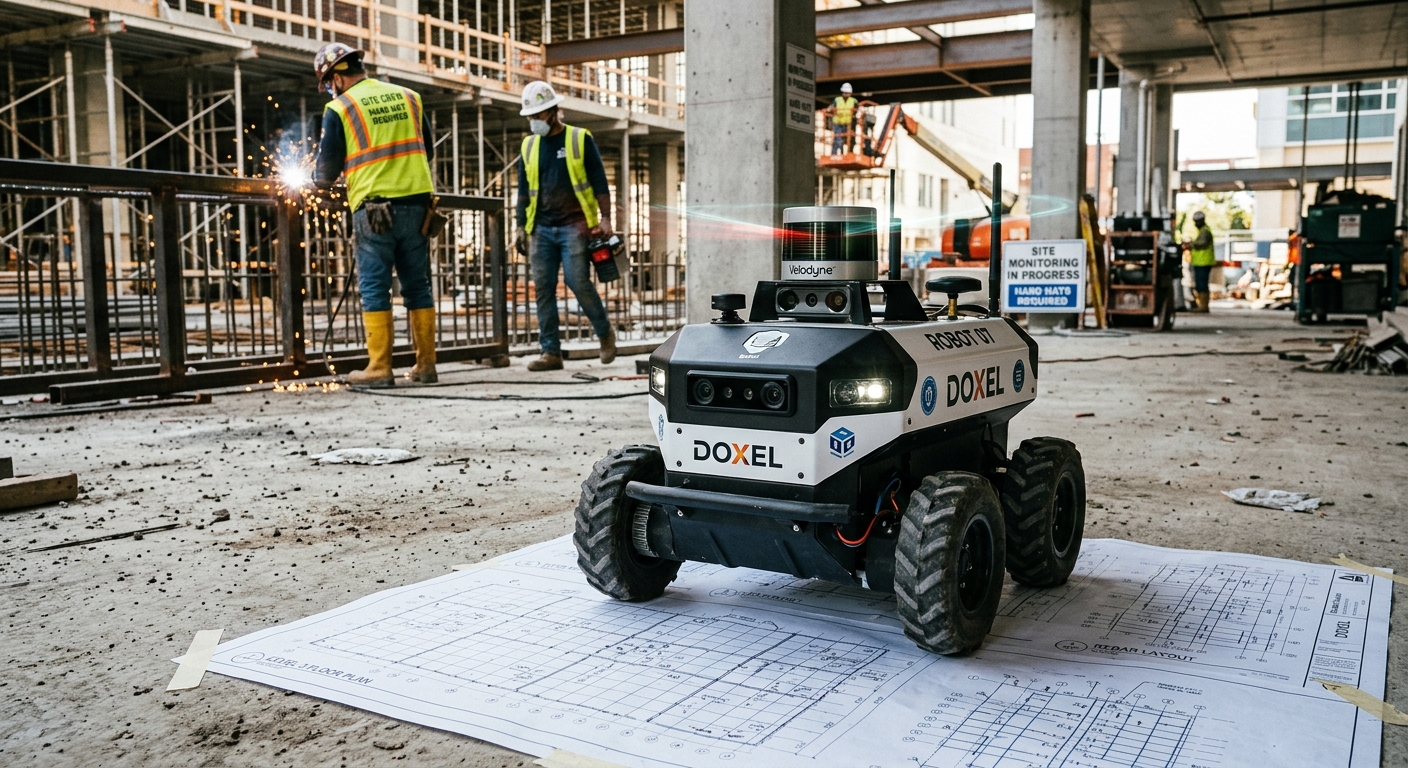
In a noteworthy example, Doxel’s lidar-equipped autonomous robots demonstrated a remarkable 38% increase in labor productivity during a medical office building pilot. The project not only finished approximately 11% under budget but also showcased how robots can provide greater site visibility and early issue detection, which are crucial for successful project delivery.
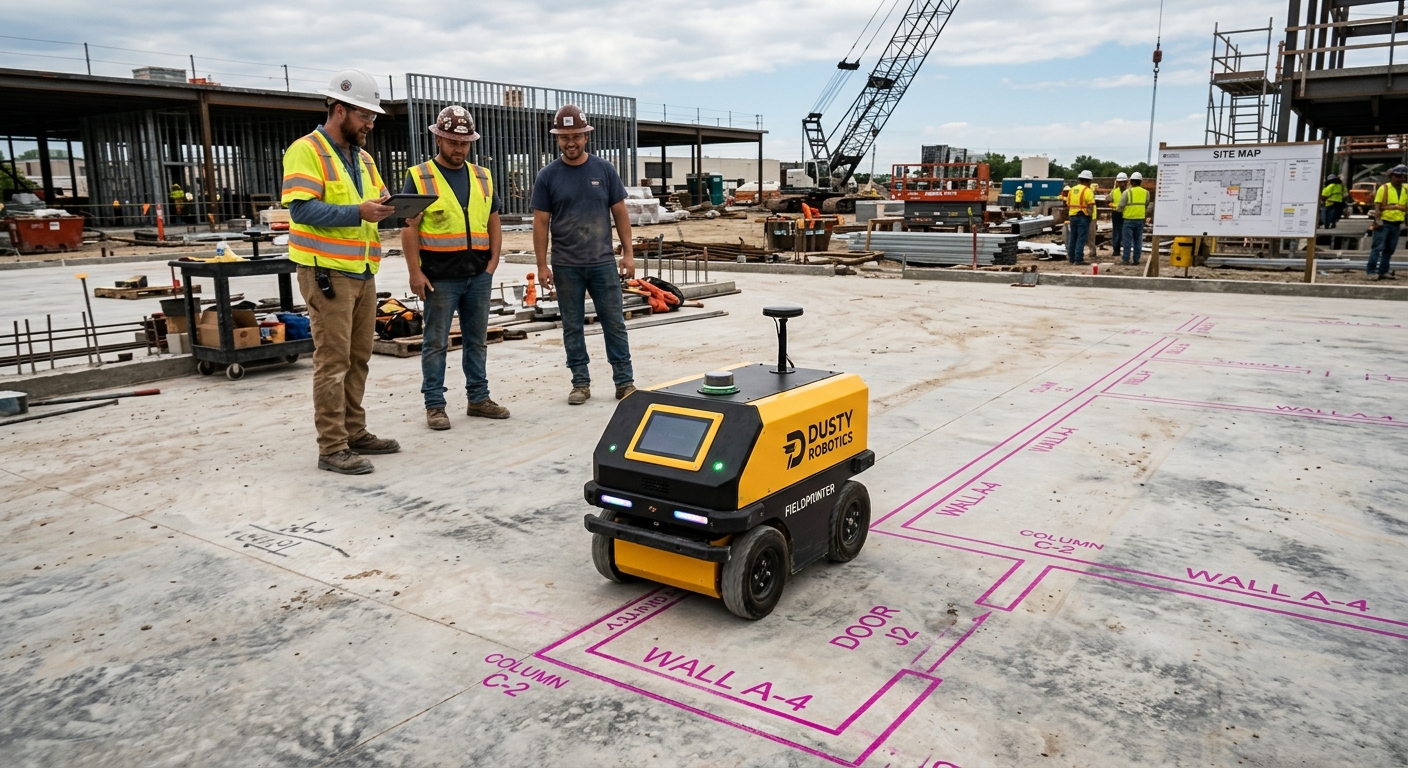
Additionally, safety on construction sites is a paramount concern, and robotics play a transformative role in this area as well. By assuming dangerous tasks—such as heavy lifting or working in hazardous conditions—robots can significantly reduce workplace accidents. The Dusty Robotics FieldPrinter, for example, achieved 100% layout accuracy and completed tasks 50% faster than traditional methods, resulting in 75% less rework and compressing the project timeline by over three weeks.
Real-World Examples of Robotics in Action
The real-world impact of construction robotics can be seen in various projects across North America, demonstrating both the potential and versatility of these technologies. One such example is the implementation of autonomous robots by Doxel in a medical-office building project, as previously mentioned. These robots enhanced site productivity and budget performance through their capabilities in monitoring progress and accuracy.
Another notable case is the Dusty Robotics FieldPrinter, which has shown remarkable results across multiple construction sites. On a project by Skanska, the FieldPrinter achieved impressive metrics—100% layout accuracy and significant reductions in both rework and project timelines. Such outcomes underline the effectiveness of robotics in real-life scenarios, translating into tangible benefits for construction firms and their clients.
However, the widespread adoption of robotics is met with mixed results across different regions. In 2025, about 46% of U.S. construction firms reported using robotics, a slight decline from the 65% recorded in 2024, revealing a significant gap between interest and actual deployment. This disparity indicates that while many companies are eager to explore robotic solutions, practical implementation often encounters challenges.
Meanwhile, Canada’s adoption remains low, with only 2% of enterprises incorporating robotics technologies as of 2022. The regional breakdown shows Ontario leading with 3.0% adoption, followed by Quebec at 2.2%. The most cited obstacle among adopters is the difficulty in recruiting qualified personnel, with over 61% of those surveyed indicating this as a key barrier to implementation.
The Future of Robotics in the Construction Industry
The future of construction robotics is promising, with a market projected to grow significantly. North America’s construction robotics segment was valued at approximately USD 379.3 million in 2024, expected to reach USD 1,020.3 million by 2030—a compound annual growth rate (CAGR) of 18.1% from 2025 to 2030. This growth trajectory is fueled by various factors, including labor shortages, a heightened focus on safety, and a shift toward off-site fabrication.
Moreover, advancements in digital workflows and technologies such as Building Information Modeling (BIM) and digital twins are enhancing the synergy between robotics and construction processes. The combination of these technologies can lead to more efficient and streamlined operations, as robotic systems become integral components of project planning and execution.
Despite this growth, several challenges remain. The discourse around humanoid and general-purpose robots is becoming increasingly prominent, with analysts predicting substantial investment in these areas. McKinsey reports over $1 billion in investments in humanoid robotics, indicating that interest in versatile robots is growing. However, for large-scale deployment, unit costs of general-purpose robots must decrease significantly—from around $150,000 to an estimated $20,000–$50,000 for broad adoption.
Ultimately, the successful integration of robots into construction will heavily depend on cost reductions, regulatory clarity, and the establishment of robust safety frameworks. As automation becomes more prevalent, the industry’s approach to training workers and integrating robotic systems into existing workflows will also need to evolve.
Conclusion
The transformative impact of construction robotics on building projects is palpable. From enhancing efficiency and safety to reducing costs and rework, robotics are paving the way for a new era in construction. Real-world applications are demonstrating that these technologies can lead to improved project outcomes when effectively integrated into the construction process.
As the industry continues to navigate the challenges and opportunities associated with robotics, it is crucial for construction professionals and homeowners alike to stay informed about advancements in this field. The future of construction robotics is bright, promising increased efficiency, safety, and precision—ultimately reshaping how buildings are constructed across North America and beyond.



No Comment! Be the first one.