



Clean mobility is often described as a climate solution, and that is certainly true. Transportation remains one of the largest sources of greenhouse gas emissions in North America, with the U.S. Environmental Protection Agency reporting that transportation has accounted for roughly 28 to 29 percent of total U.S. emissions in recent years. Yet if we talk about clean mobility only in terms of carbon, we miss the fuller and more human story. The way people move through their communities affects health, household budgets, stress levels, local air quality, and the overall feel of a neighborhood.
Table Of Content
- What Clean Mobility Really Means
- Why Clean Mobility Matters Beyond Emissions
- Active Transportation: The Most Accessible Clean Mobility Option
- How to Make Active Transportation More Realistic
- Public Transit as a Lifestyle Upgrade
- Electric Vehicles: A Growing and Practical Part of Clean Mobility
- The Infrastructure Question
- Shared Mobility and the Rise of Flexible Transportation
- Why Community Design Shapes Personal Choice
- Practical Ways to Start Without Changing Everything at Once
- Common Misconceptions About Clean Mobility
- The Future of Clean Mobility in North America
- Conclusion: Better Transportation, Better Daily Life
At its core, clean mobility refers to transportation choices and systems that reduce emissions, use energy more efficiently, and support healthier, more livable communities. It includes walking, cycling, wheeling, public transit, electric vehicles, car-sharing, ride-sharing, and daily routines designed to require fewer car trips in the first place. Clean mobility is not a single technology or purchase; it is a broad, interconnected system that depends as much on infrastructure, land use, and access as it does on individual choices. Someone practicing clean mobility might walk to a nearby store, take transit to work most days, occasionally rely on a car-share vehicle for larger errands, and eventually replace an aging car with an electric or hybrid model when the time comes. None of those choices alone define clean mobility; together, they describe a household gradually shifting toward lower-emission, lower-cost, and often healthier ways of getting around.
For many households, this can feel like a large and complicated topic. Some people live in dense areas with excellent transit. Others live in suburbs where driving is still the default. Some are ready to buy an electric vehicle. Others simply want a more realistic way to get to work without spending more money or adding more stress. The reassuring truth is that clean mobility does not require a perfect lifestyle overhaul. It often begins with one practical shift, made in the context of real life.
That is why this conversation has become so important. Statistics Canada reported in 2025 that 18.2 percent of commuters mainly used public transit or active transportation, while 169,972 zero-emission vehicles were sold, making up 8.7 percent of all new motor vehicle sales. Those numbers suggest momentum, even if progress is uneven. Clean mobility is steadily moving from a niche environmental concept toward a mainstream household decision.
This article looks at clean mobility through a practical lens. It explores what it means, why it matters, which transportation choices are most accessible, and how everyday people can make sustainable travel work in their own routines. The goal is not pressure. The goal is clarity, confidence, and a better understanding of the options that can improve both personal well-being and community life.
What Clean Mobility Really Means
One of the biggest misconceptions about clean mobility is that it simply means replacing gas cars with electric cars. Vehicle electrification is an important part of the transition, but it is only one part. A cleaner transportation system also depends on more walking, better transit, safer cycling networks, shared mobility services, and neighborhoods that make short trips easier to complete without a car. In other words, clean mobility is an ecosystem, not a single purchase.
It helps to think of clean mobility as a spectrum of choices that reduce environmental impact while supporting daily life. At one end of that spectrum are the simplest options, such as walking to a nearby store, combining errands into one trip, or taking the bus downtown instead of driving and paying for parking. At the other end are larger shifts, such as buying a zero-emission vehicle or moving to a more transit-connected neighborhood. Both small and large changes matter because transportation habits are cumulative.
Clean mobility also includes the idea of mode shift, which means choosing a different travel mode when it makes sense. A short trip that could be walked or cycled does not need to be driven. A daily commute along a strong transit corridor may be easier by train or bus than by car. A family that only occasionally needs a second vehicle may find that car-share or ride-share fills the gap. This flexibility is central to a healthier transportation system.
There is also an infrastructure side to the story. People are much more likely to choose sustainable transportation when communities make those choices comfortable, safe, and convenient. Protected bike lanes, reliable buses, accessible sidewalks, mixed-use neighborhoods, secure bike storage, and visible EV charging stations all make a difference. Clean mobility is partly about personal behavior, but it is equally about whether the built environment supports better habits.
Clean mobility works best when it feels less like a sacrifice and more like a natural part of everyday life.
Why Clean Mobility Matters Beyond Emissions
The environmental case for clean mobility is strong, but the wider benefits are just as compelling. Transportation choices shape the air people breathe, the amount of noise on local streets, and the amount of physical movement built into daily routines. They influence how children get to school, how older adults stay connected, and how much public space is dedicated to moving and storing private vehicles. When transportation becomes cleaner, communities often become healthier and more enjoyable in ways that residents can feel directly.
Health is a major part of this discussion. The World Health Organization states that walking, cycling, and wheeling are simple and cost-effective forms of active mobility that improve cardiovascular health, mental well-being, and social inclusion. WHO also notes that physical activity reduces the risk of heart disease, stroke, diabetes, several cancers, depression, and dementia. That means a transportation decision can also function as a small, recurring health investment.
Local air quality matters too. Tailpipe pollution contributes to respiratory problems and other health concerns, especially in areas with heavy traffic. Cleaner vehicles and fewer unnecessary car trips can improve the quality of air around homes, schools, and workplaces. For families living near busy roads, this is not an abstract environmental issue. It is a quality-of-life issue with everyday consequences.
Noise is another overlooked factor. Streets dominated by constant engine noise tend to feel stressful and less welcoming. Electric vehicles are quieter at low speeds, and streets that support more walking, cycling, and transit often feel calmer overall. In practical terms, clean mobility can help create neighborhoods where outdoor spaces are more comfortable and where people are more inclined to spend time outside.
There is also a social dimension. Transportation systems shape connection. A walkable street with benches, safe crossings, and local shops creates more opportunities for everyday interaction than a landscape built entirely around high-speed vehicle movement. Transit and active transportation support a more inclusive public realm because they can be used by people across a wider range of ages and incomes. Clean mobility, in this sense, supports community life as much as it supports sustainability.
Active Transportation: The Most Accessible Clean Mobility Option
For many people, the most immediate clean mobility option is also the simplest. Walking, cycling, and wheeling are forms of active transportation that can replace some car trips without requiring major new equipment or long-term planning. They are particularly well suited to short local journeys, such as trips to school, nearby errands, coffee meetings, or connections to bus and train stations. Even a modest increase in active travel can have a measurable impact over time.
One reason active transportation is so powerful is that it combines several benefits at once. It lowers emissions, reduces traffic, saves fuel, and introduces movement into routines that might otherwise be entirely sedentary. For people who struggle to make time for exercise, walking or cycling as part of transportation can feel more manageable than setting aside separate workout time. It makes activity functional rather than optional.
This approach is also flexible. Active transportation does not require every trip to be completed on foot or by bike. Many people use a blended model, sometimes called multimodal travel, where walking or cycling is paired with transit. A person might walk to a train station, take the train to work, and then walk the final few blocks. Another might cycle to a grocery store once or twice a week while continuing to drive for larger family errands. Clean mobility often succeeds through these realistic combinations.
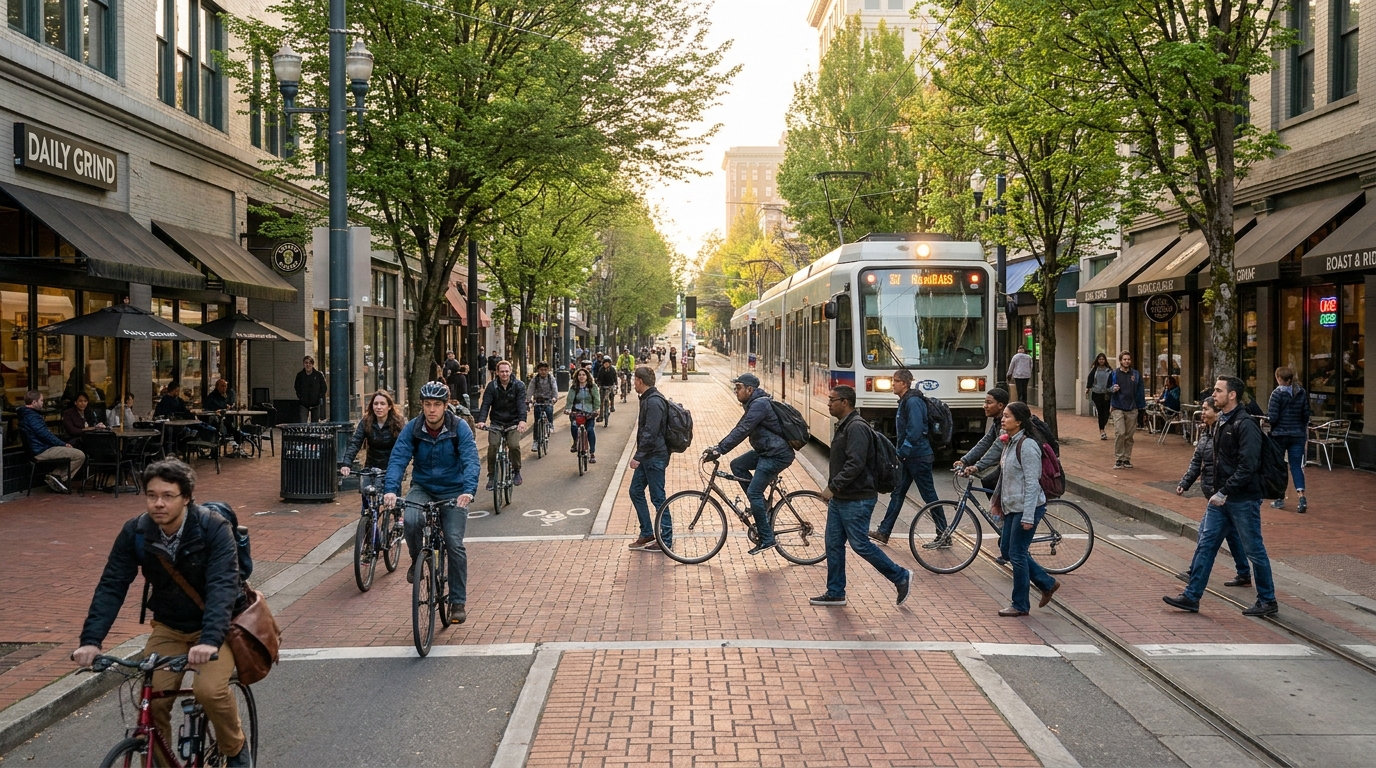
Of course, access matters. Not everyone lives in a place with safe sidewalks or connected cycling routes. Weather, distance, disability, and caregiving responsibilities also shape what is possible. This is why active transportation should be discussed with nuance. It is not only for fitness enthusiasts or urban professionals. It is an everyday mobility option that becomes more useful when communities invest in complete streets, traffic calming, protected lanes, and safe intersections.
Public health authorities in Canada encourage active transportation for exactly this reason. Practical actions such as cycling to work or combining walking with errands can fit naturally into daily schedules. Even one or two active trips a week can begin to shift habits, especially when paired with small planning changes like leaving a little earlier, carrying a backpack, or mapping a quieter route. The value of active transportation lies not in perfection but in consistency.
How to Make Active Transportation More Realistic
Many people assume active transportation only works if they live very close to everything. In reality, it becomes much more feasible when approached strategically. A short walk to pick up lunch, a bike ride to a nearby appointment, or a stroll to complete one errand before driving to another location all count. These are not dramatic changes, but they build a pattern of lower-impact mobility over time.
Comfort also matters more than many people expect. Good shoes, weather-appropriate clothing, a backpack, and basic trip planning can transform how manageable walking or cycling feels. For cycling, an e-bike can be especially helpful because it lowers the barrier created by hills, distance, or limited physical energy. As micromobility options grow, more households are discovering that bikes and e-bikes are practical transportation tools, not just recreational equipment.
There is a mindset shift involved as well. If active transportation is framed as an all-or-nothing commitment, it can feel unrealistic. If it is framed as a way to replace the shortest and simplest car trips, it becomes much more approachable. That is often the right starting point for busy households.
Public Transit as a Lifestyle Upgrade
Transit is sometimes dismissed as inconvenient or slow, but that assumption does not always match reality. In dense corridors, city centers, and congested commuting routes, buses, trains, and rapid transit can be highly time-competitive. They may also eliminate the costs and frustrations associated with parking, traffic, and vehicle wear. For many people, the question is not whether transit is perfect. It is whether transit can serve some trips more efficiently than driving.
Using transit can also change the experience of travel itself. Instead of focusing on traffic, the rider can read, answer emails, listen to a podcast, or simply sit quietly. That shift can make commuting feel less draining. For people who value calmer routines, transit can be a surprisingly meaningful quality-of-life improvement.
Transit supports cleaner mobility because it moves more people with less energy and road space per person than private cars. When transit systems are reliable and frequent, they reduce congestion and create a more efficient transportation network overall. They also support more compact development patterns, which in turn make walking and cycling more viable. In this way, public transit is not just a travel service. It is part of the physical structure of a lower-emission community.
Statistics Canada data showing that 18.2 percent of commuters mainly used public transit or active transportation in 2025 suggests progress, but it also highlights room for growth. Many households may not be ready to fully switch modes, yet could still benefit from partial transit use. One or two transit commutes per week can reduce fuel use and ease the mental load of driving in traffic. For some readers, that may be the most practical next step.
Transit becomes even more useful when paired with local planning principles such as transit-oriented development and 15-minute neighborhoods. These approaches place housing, services, and employment closer to reliable transportation links. The result is a more connected daily life where fewer errands require separate car trips. For residents, that often means less time behind the wheel and more flexibility in how they move.
Electric Vehicles: A Growing and Practical Part of Clean Mobility
Electric vehicles are now a central part of the clean mobility landscape, and the market has matured significantly. The International Energy Agency reported that global electric car sales exceeded 17 million in 2024 and represented more than 20 percent of new car sales worldwide. That level of adoption shows that EVs are no longer experimental or niche. They are becoming a mainstream transportation option, supported by improving technology and expanding infrastructure.
In Canada, Natural Resources Canada reported that zero-emission vehicles accounted for 13.8 percent of new vehicle sales in 2024, with adoption rising above 30 percent in Quebec. These regional differences are important because they show how policy, infrastructure, and consumer familiarity influence uptake. In places with stronger incentives, denser charging networks, and more visibility, EV ownership tends to feel more practical and less uncertain.
For households considering a vehicle purchase in the next few years, an EV or hybrid may be worth serious attention. Electric vehicles eliminate tailpipe emissions, operate quietly, and can offer lower operating costs over time, particularly when home charging is available. Maintenance can also be simpler in some respects because EVs have fewer moving parts than internal combustion vehicles. Over the long term, these practical advantages can matter as much as the environmental ones.
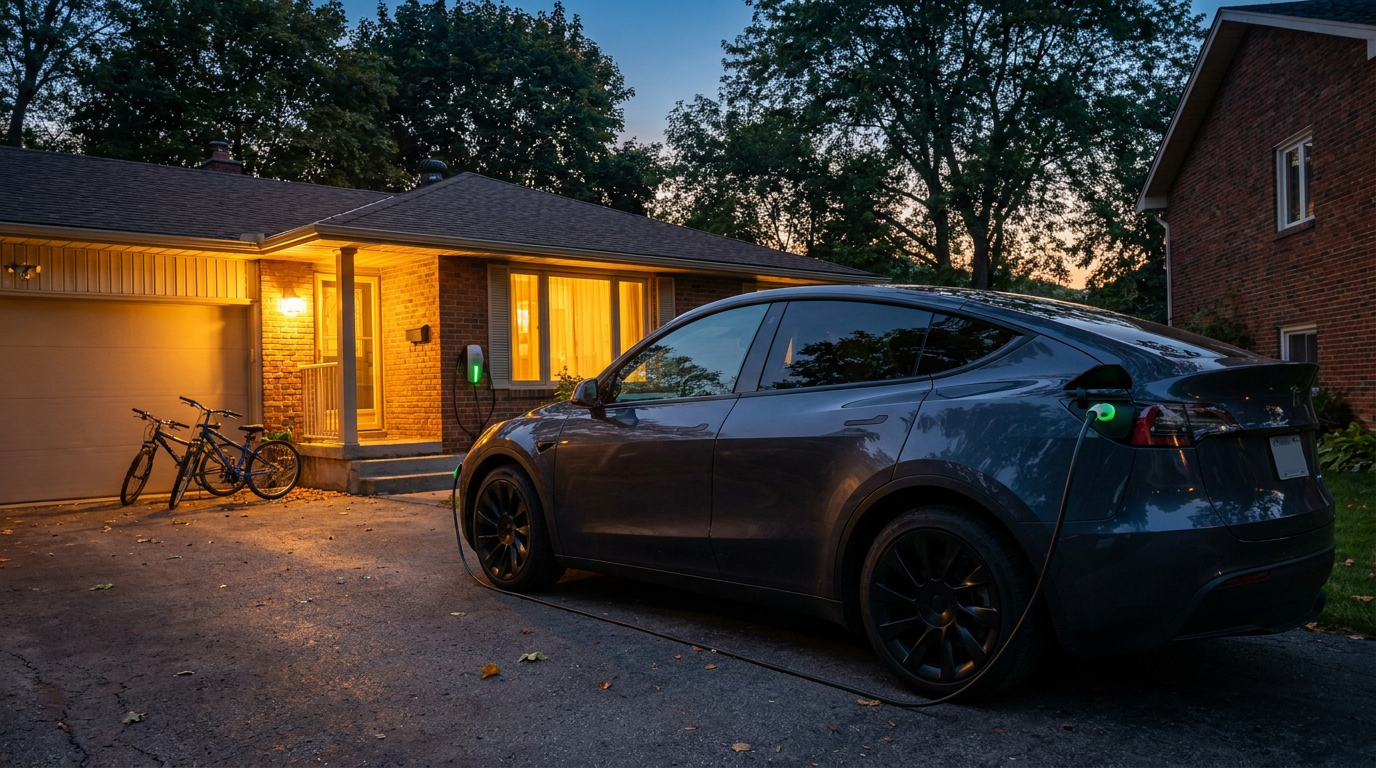
At the same time, it is helpful to be realistic about common misconceptions. An electric vehicle is not zero-emission in every sense. While it produces no tailpipe emissions, its full environmental impact depends on electricity sources, manufacturing, battery production, and vehicle size. A smaller EV powered by a cleaner grid will generally have a lighter footprint than a very large electric vehicle used for short, unnecessary trips. Clean mobility is still about using the right tool thoughtfully.
Charging is often the key practical concern. For many households, the best EV experience comes when overnight home charging is possible. That creates a routine similar to charging a phone, where the vehicle starts each day with a full battery. Public charging is important, especially for longer trips and for people who live in apartments or multi-unit buildings, but home charging tends to be the strongest convenience advantage. Readers who are EV-curious should assess not only the vehicle itself, but also their charging options.
The Infrastructure Question
As promising as electric mobility is, its future depends heavily on infrastructure. NRCan estimates that Canada could need about 679,000 public charging ports by 2040 under one baseline scenario, equivalent to roughly one port for every 31 light-duty EVs. That is a substantial buildout, and it underscores how quickly charging access must scale to support mass adoption. Public confidence in EVs grows when charging is visible, reliable, and easy to understand.
Multi-unit residential buildings remain a particularly important challenge. Tenants and condo owners often need approval from landlords, building boards, or property managers before installing chargers. Electrical upgrades may also be needed. This is why clean mobility cannot be framed solely as a matter of personal willingness. Many people are ready to adopt cleaner transport but are constrained by infrastructure, housing type, or local policy.
There are encouraging signs, however. Public and private charging investment continues to expand, and many charging standards are increasingly compatible across Canada and the United States. Broader adoption of the North American Charging Standard by automakers is also improving simplicity for future EV owners. These developments reduce friction, which is often what mainstream adoption requires.
Shared Mobility and the Rise of Flexible Transportation
Clean mobility is also being shaped by shared services that give people access to transportation without requiring private ownership for every trip. Car-share programs, bike-share systems, e-scooters where permitted, ride-pooling, and integrated transit apps all create more flexible travel patterns. For households that do not need a car every day, these services can reduce the pressure to own multiple vehicles.
This matters because private car ownership carries fixed costs whether the vehicle is used often or not. Insurance, parking, maintenance, depreciation, and financing can add up quickly. Shared mobility can sometimes allow a household to avoid purchasing a second car, or even to live comfortably with no car in the right neighborhood. That can free up money for housing, savings, or other priorities.
Shared mobility also complements transit and active transportation. A person might take transit for most commuting, use bike-share for short local trips, and reserve car-share for weekend errands or occasional appointments. This layered approach can be more efficient than depending on one mode for everything. It also reflects the reality that different trips have different needs.
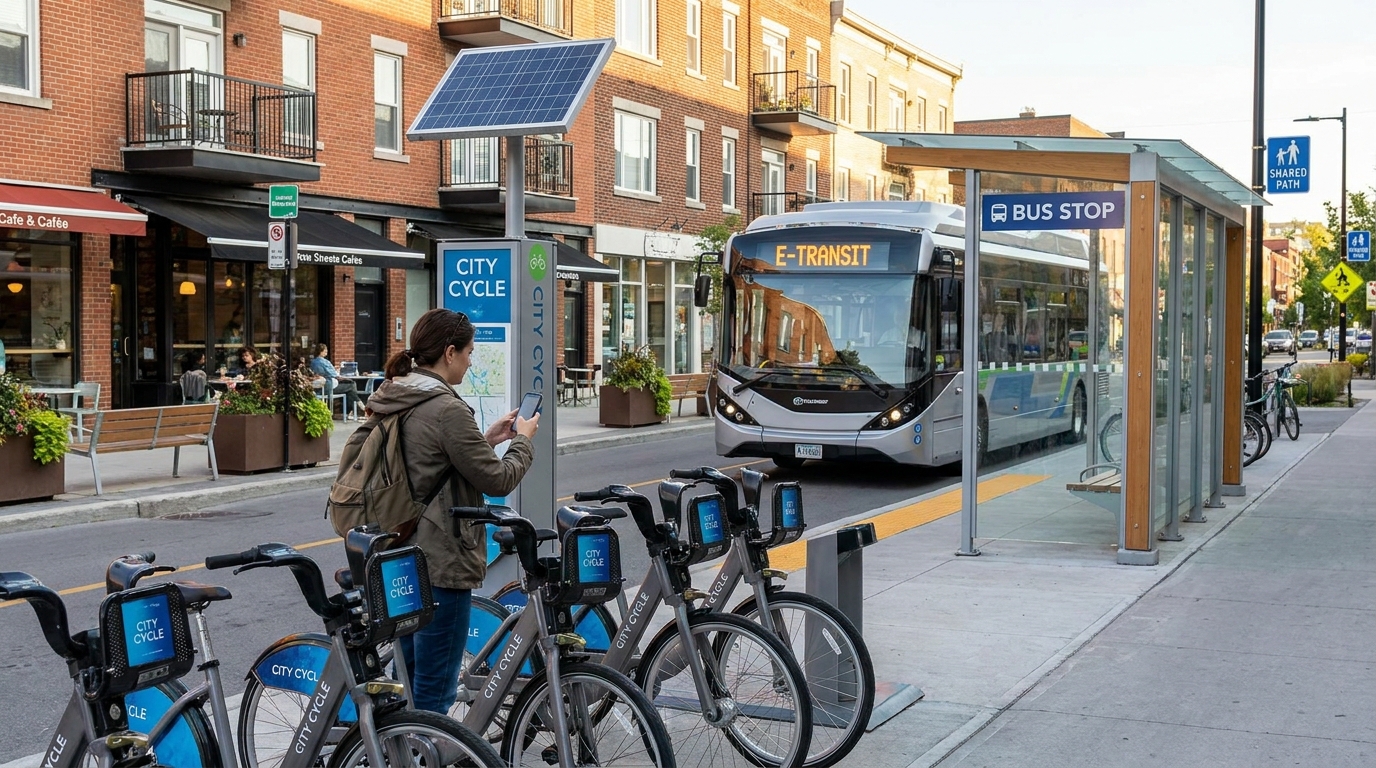
As cities and towns experiment with lower-emission zones, electrified bus fleets, and digital mobility platforms, these options are likely to become more visible. The shift is not only technological. It is cultural. Clean mobility increasingly means access to a menu of transportation choices rather than dependence on a single default.
Why Community Design Shapes Personal Choice
One of the most important truths about clean mobility is that people make transportation decisions within the constraints of the places where they live. If homes are far from shops, sidewalks are incomplete, cycling feels unsafe, and transit is infrequent, driving will naturally dominate. By contrast, when communities are walkable, bikeable, transit-rich, and charge-ready, cleaner choices become much easier. This is why sustainable transportation is deeply connected to planning and design.
Ideas such as complete streets, transit-oriented development, and 15-minute neighborhoods are becoming more influential because they support cleaner movement patterns at the local level. Complete streets are designed for all users, including pedestrians, cyclists, transit riders, drivers, children, and older adults. Transit-oriented development places homes and services near frequent public transportation. A 15-minute neighborhood aims to make daily needs accessible within a short walk or bike ride. These are not abstract planning theories. They affect how daily life actually feels.
Low-emission urban design can also improve resilience and public health. Tree-lined streets, safe crossings, and mixed-use districts encourage more walking while reducing heat and creating more inviting public spaces. Protected bike networks make cycling less intimidating for new riders. Visible charging stations and electrified fleets normalize cleaner transportation. Small design details can produce large behavior changes when they reduce friction and increase comfort.
For readers who are homeowners, renters, builders, or property managers, this is worth noting. Housing choices and transportation choices are closely linked. A home with transit access, secure bike storage, or EV charging readiness may support lower-emission living more effectively over time than a slightly cheaper option in a more isolated location. Clean mobility often begins before a trip starts, in the choices made about where and how people live.
Practical Ways to Start Without Changing Everything at Once
The most persuasive case for clean mobility is often the most grounded one. You do not need to become a daily cyclist, sell your car immediately, or purchase an EV tomorrow. What matters is identifying the transportation changes that fit your life now and can grow over time. A practical transition is far more durable than an idealized one.
For some households, the first step may be to examine which trips are shortest and easiest to change. These are often local errands, school drop-offs within walking distance, lunch runs, or visits to nearby shops. Replacing even a few of those with walking, cycling, or transit can reduce fuel use and build confidence. It can also reveal how many car trips have become habitual rather than necessary.
For others, the next step may be planning around trip reduction. Combining errands into one outing, working from home when possible, sharing rides, or choosing services closer to home can all reduce the total number of miles driven. Clean mobility is not only about changing the vehicle. It is also about changing the pattern of travel.
If a vehicle replacement is already on the horizon, that is a natural moment to assess cleaner options. A hybrid may make sense for one household. A battery electric vehicle may work beautifully for another, especially if home charging is available. The key is to match the technology to actual driving needs rather than to assumptions. Many people drive fewer daily kilometers than they think, which can make electrification more feasible than expected.
The following practical ideas can help readers begin in a way that feels achievable:
- Try one cleaner commute per week. Use transit, walk, or cycle for a single recurring trip and evaluate how it feels in practice.
- Replace short car trips first. Short journeys are often the easiest to shift and can be surprisingly costly in fuel and time when repeated often.
- Bundle errands. Fewer total trips usually means lower emissions, less stress, and better time efficiency.
- Explore shared mobility. If your household rarely uses a second vehicle, test whether car-share, bike-share, or ride-pooling can cover those occasions.
- Prepare for future electrification. If you own a home, consider whether adding EV charging readiness during other electrical work could save time later.
- Pay attention to local infrastructure. New bike lanes, transit upgrades, and charging installations often create opportunities that were not practical a few years ago.
These actions may seem modest, but they align with how real transportation transitions happen. Most people change travel habits incrementally. Once a cleaner option proves reliable and convenient, it becomes easier to repeat.
Common Misconceptions About Clean Mobility
Because clean mobility spans technology, health, design, and policy, misunderstandings are common. One frequent misconception is that the topic is only about electric cars. In reality, a transportation system can become cleaner through many strategies, including active transportation, transit use, shared mobility, and fewer unnecessary trips. Electrification matters, but it is not the whole picture.
Another misconception is that active transportation is only for highly fit or highly committed people. Public health guidance from WHO and Canadian sources frames walking and cycling as accessible everyday mobility options, not elite sports. A ten-minute walk to a local store, or a bike ride to the station using an e-bike, is still active transportation. It does not need to look athletic to be valuable.
Some people assume transit always takes longer. That depends heavily on the route, the city, and the time of day. In many urban corridors, transit can be highly competitive once parking, congestion, and total trip costs are considered. Even when it is slightly slower, some riders prefer the reduced stress and improved ability to use travel time productively.
There is also the idea that clean mobility is mainly a moral or political topic. In practice, it is often a practical household topic. People choose cleaner transportation because it can reduce costs over time, improve health, lower stress, and make neighborhoods feel more pleasant. Climate benefits are a major reason to care, but they are not the only reason these choices resonate.
The Future of Clean Mobility in North America
Looking ahead, clean mobility is likely to become broader, more integrated, and more visible. Electric buses, vans, and fleet vehicles are expanding, though adoption still varies by region and policy environment. Cities and states continue to experiment with low-emission zones, zero-emission transit, and streets designed for multiple travel modes. Charging infrastructure is spreading, connector standards are converging, and more automakers are committing to electrified lineups.
At the same time, active transportation and compact neighborhood design are gaining attention because they address several problems at once. They support public health, reduce emissions, ease congestion, and improve the daily experience of moving through a place. This is a meaningful shift. The future of clean mobility is not only about changing engines. It is about changing the relationship between transportation and everyday life.
That future will still require public investment, thoughtful policy, and better access. Apartment charging, rural mobility, transit funding, road safety, and equitable infrastructure all remain important challenges. But the direction of travel is clear. Clean mobility is steadily becoming part of the mainstream conversation about how households live well in a lower-emission world.
Conclusion: Better Transportation, Better Daily Life
Clean mobility can sound like a large systems issue because, in many ways, it is. It depends on infrastructure, policy, technology, and community design. Yet it is also deeply personal. It shapes how much time we spend in traffic, how active we feel, what our streets sound like, and whether our neighborhoods support connection or isolation. That is why it deserves to be understood not only as an environmental necessity, but as a lifestyle choice with very practical benefits.
The encouraging part is that progress does not require all-or-nothing thinking. One transit commute a week, one walkable errand route, one decision to bundle trips, or one future vehicle purchase informed by cleaner options can all move a household in the right direction. These changes are meaningful because they are repeatable. Over time, they help create demand for better infrastructure and more supportive communities.
In the end, clean mobility is about making movement smarter, healthier, and more aligned with the kind of places people want to live in. It offers a way to reduce emissions while also improving comfort, access, and well-being. For most readers, that makes it less of a sacrifice and more of an opportunity. The path toward sustainable transportation does not begin with perfection. It begins with the next trip.



No Comment! Be the first one.