



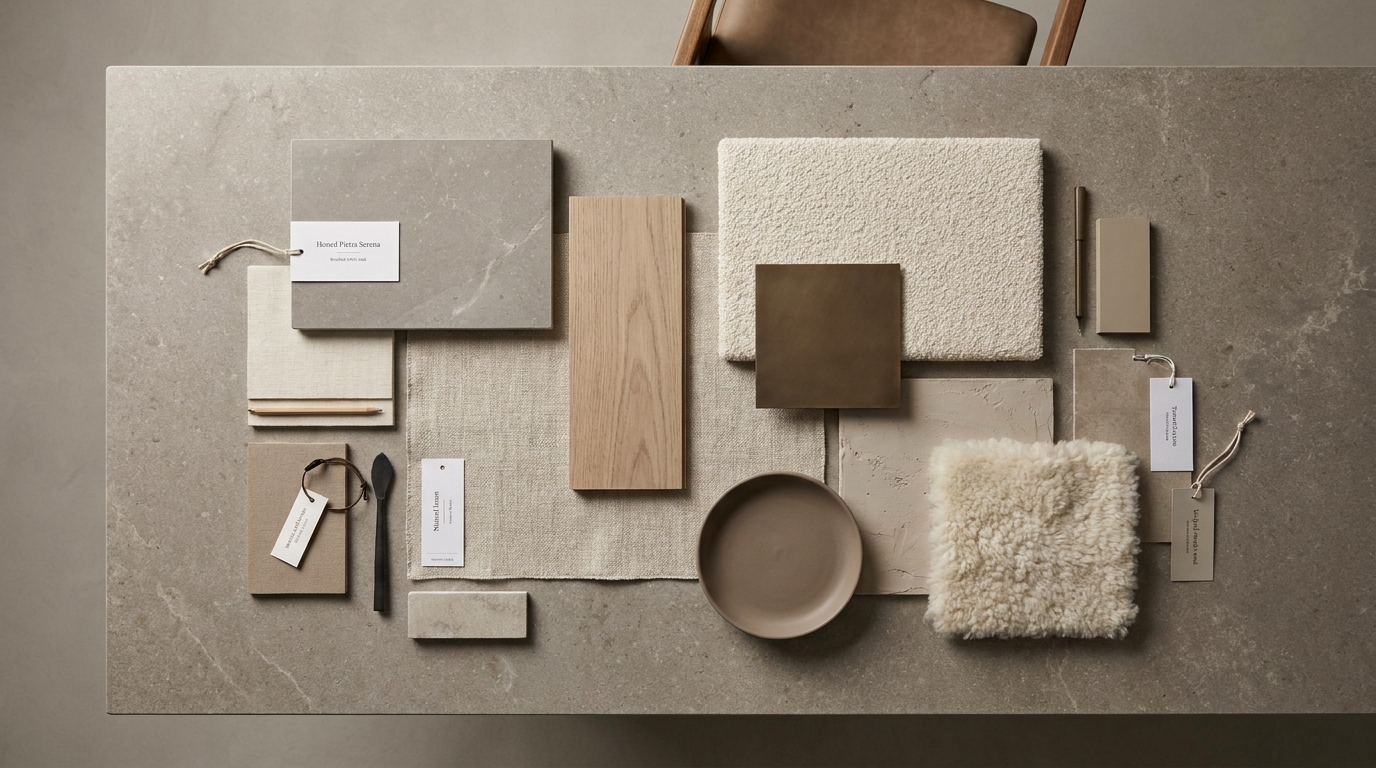
Texture composition in interior design refers to the deliberate layering of tactile and visual materials, such as wood, stone, plaster, metal, and textiles, to create balance, depth, and emotional atmosphere in a room. Long before a room is understood in detail, it is felt through atmosphere. A space can appear calm, refined, warm, dramatic, or cold simply because of the way its surfaces relate to one another. In interior design, texture is not an afterthought reserved for cushions and throws. It is a foundational language that shapes comfort, visual identity, material authenticity, and the emotional resonance of a room.
Table Of Content
- Why Texture Matters More Than Many People Realize
- Understanding the Two Dimensions of Texture
- Tactile Texture and the Body’s Response
- Visual Texture and the Eye’s Interpretation
- The Foundational Principle: Balance Contrast with Harmony
- How to Build a Layered Texture Scheme
- Start with the Architectural Envelope
- Layer Upholstery and Textiles with Restraint
- Use Hard Materials to Add Structure and Light Play
- Texture and the Emotional Mood of a Space
- Room by Room Guidance for Elegant Texture Layering
- Living Rooms
- Bedrooms
- Kitchens and Dining Spaces
- The Role of Light in Revealing Texture
- Healthier Texture Composition: Beauty, Air Quality, and Material Responsibility
- Common Texture Mistakes and How to Avoid Them
- A Practical Framework for Choosing Textures
- The Future of Texture in Interior Design
- Conclusion: Designing Rooms That Feel as Beautiful as They Look
When designers speak about texture, they are referring to both tactile texture and visual texture. Tactile texture concerns the physical sensation of a material, whether it feels smooth, rough, soft, cool, dense, or dry. Visual texture, by contrast, is what the eye perceives from a distance. A plaster wall may read as soft and atmospheric without being touched. A ribbed glass partition can bring rhythm and complexity even before anyone experiences its surface by hand. The finest interiors understand that these two dimensions work together continuously.
Research on tactile perception supports this broader view. People do not judge materials purely by appearance, and they do not respond to comfort as a single quality. Roughness, softness, hardness, friction, and warmth all affect how a surface is perceived, while psychological interpretation also shapes whether something feels inviting or severe. This helps explain why well layered interiors often feel more luxurious and more human centered than rooms that rely only on color or furniture form. Texture gives depth to beauty, and substance to comfort.
In contemporary North American interiors, this conversation has become even more relevant. Warm minimalism, natural materials, exposed grain, raw stone, earthy palettes, and performance fabrics are all part of a larger shift toward design that feels grounded rather than decorative. The current idea of luxury is less about gloss and excess and more about restraint, nuance, and material honesty. A room with oak, wool, plaster, bronze, and linen can feel richer than one filled with ornate finishes because its elegance comes from balance, not display.
This article explores the principles of texture composition in depth. It will show how to build a strong material hierarchy, how to balance contrast with cohesion, how to compose texture for comfort and visual appeal, and how to choose finishes that support both beauty and healthy indoor living. The goal is not simply to add more texture to a room. It is to create a harmonious environment where every surface contributes to an elegant and inviting whole.
Why Texture Matters More Than Many People Realize
Texture is one of the primary tools for shaping how a room is experienced. Even in a monochromatic interior, differences in surface quality create movement, hierarchy, and mood. Without texture, a neutral palette can feel flat and unfinished. With texture, that same palette becomes layered, luminous, and emotionally rich. This is why many of the most sophisticated interiors are not filled with dramatic color, but rather with carefully considered contrasts between matte and polished, woven and smooth, structured and soft.
Texture also changes spatial perception. A room with hard reflective finishes may appear more formal, more open, or more acoustically active, while one with woven textiles, upholstered elements, and matte wall treatments can feel quieter and more intimate. Architectural research has shown that material and surface cues influence emotional responses such as calmness and pleasure. In practical design terms, this means texture is inseparable from atmosphere. It helps define whether a living room feels social or serene, whether a bedroom feels restorative, and whether a workspace feels inspiring or sterile.
Another reason texture matters is that it creates visual hierarchy. Not every material in a room should ask for equal attention. The eye needs a point of entry and a rhythm to follow. A textured stone fireplace, a softly grained wood floor, or a deeply upholstered sofa can serve as an anchor around which subtler materials are composed. When every surface competes, the room becomes visually noisy. When textures are arranged with clarity, the result feels intuitive and elegant.
Texture further contributes to what many people identify as luxury. Luxury today is often communicated through evidence of thoughtful material selection rather than ornament alone. Honed marble, brushed oak, pure linen, hand formed ceramic, and softly aged metal all carry a sensory richness that polished excess cannot always achieve. They suggest permanence, care, and a relationship to craftsmanship. In this sense, texture is not decoration layered onto design. It is the expression of design values.
Understanding the Two Dimensions of Texture
Tactile Texture and the Body’s Response
Tactile texture is the direct physical experience of a material. The hand registers whether a textile feels supple or crisp, whether a tabletop is cool or warm, whether a floor has a forgiving softness or an unforgiving hardness. Studies of tactile judgment identify roughness, hardness and softness, temperature, and friction as key dimensions of this experience. These sensations matter because they affect how comfortable a space feels in use, not only how stylish it appears in photographs.
Consider a bedroom layered with stone, lacquer, and glass but little fabric. It may look sleek, yet it can feel emotionally distant if the body encounters only cold or rigid surfaces. Introduce cotton sateen, a wool rug, a padded headboard, and a softly textured wall finish, and the room immediately becomes more inhabitable. Comfort is not defined by softness alone, but softness often needs to be present somewhere in the composition so the body can relax. This is one reason upholstered furniture and textiles remain central to residential interiors, even in minimalist homes.
Tactile texture is also essential in high use environments. In hospitality, for example, guests respond strongly to the hand feel of bedding, seating, towels, and drapery because these details shape the sense of care. In family homes, performance matters alongside touch. A velvet sofa may look sumptuous, but if it is difficult to maintain, it may create low grade tension rather than comfort. Thoughtful texture composition therefore blends sensory pleasure with durability, choosing surfaces that age gracefully and support daily life.
Visual Texture and the Eye’s Interpretation
Visual texture can be just as powerful as touch. A wall finished in limewash or clay plaster has movement, depth, and shadow that instantly soften architecture. Riven stone, visible wood grain, slubbed linen, ribbed paneling, and woven cane all offer visual complexity that makes a room feel layered before any physical contact occurs. This is especially important in open plan interiors where materials must carry atmosphere across larger visual fields.
Visual texture also helps translate light. Matte surfaces absorb and diffuse, while glossy ones reflect and sharpen. This affects not only mood but also the legibility of form. A matte plaster wall under natural light may feel serene and enveloping. A polished lacquer cabinet may bring precision and energy. Neither is inherently better. What matters is how they are balanced and where they are placed within the overall composition.
One of the most common misconceptions in decorating is that texture is only about touch. In reality, visual texture often does the heavier lifting in design because people perceive a room long before they physically engage with it. A successful interior composes tactile and visual cues together so that what the eye anticipates and what the hand discovers feel coherent. This alignment is one of the subtle ingredients behind interiors that feel deeply resolved.
The Foundational Principle: Balance Contrast with Harmony
The essence of texture composition lies in the tension between contrast and harmony. A room composed of entirely smooth materials can feel one dimensional. A room composed of too many contrasting surfaces can feel restless. Elegance emerges when variation is present, but edited. Designers often combine soft and hard, matte and reflective, crisp and organic, dense and airy. These oppositions create depth, yet they must be organized around a clear idea.
One of the most useful ways to think about this is through a three part hierarchy. Begin with a dominant base texture that establishes the character of the room. This might be wide plank oak flooring, softly veined stone, or a matte plaster envelope. Introduce a secondary supporting texture that complements the first without overpowering it, such as linen drapery, woven wool, or brushed metal. Then add a limited number of accents that provide contrast and focal interest, perhaps a leather chair, a polished marble object, or a bouclé bench.
This hierarchy helps the eye move through the room with clarity. It also prevents a common problem in material rich interiors, which is over layering without structure. More texture does not automatically produce more beauty. Too many statements can cancel one another out. A room becomes stronger when a few textures are allowed to lead while others support.
In warm minimalist interiors, this principle is especially effective. Because the palette is often restrained, texture takes over the role that bold color might play elsewhere. Subtle differences become meaningful. The interplay between a chalky wall, a brushed wood table, a woven rug, and a smooth ceramic lamp can create a powerful sense of sophistication without visual excess. This is texture composition at its most refined.
How to Build a Layered Texture Scheme
Start with the Architectural Envelope
The most successful texture composition begins not with accessories, but with the room’s architectural surfaces. Floors, walls, ceilings, millwork, and large fixed elements form the canvas upon which all other materials will sit. If these surfaces are ignored, the room often feels decorative rather than integrated. Start by considering what baseline atmosphere you want to create. Is the room meant to feel airy and calm, moody and intimate, or sculptural and contemporary?
A floor in brushed oak introduces warmth, rhythm, and a moderate level of visual activity. Honed stone feels cooler and more grounded. A polished concrete slab can communicate urban clarity, yet it often benefits from softer companion textures to avoid severity. Walls finished in flat paint will behave differently from walls with plaster, paneling, or textile covering. Because these are the largest surfaces in the room, their texture should be chosen deliberately and with an understanding of how light will interact with them throughout the day.
Ceilings deserve attention as well. In many interiors they are left visually silent, but a subtle timber treatment, a matte limewashed finish, or even a softly reflective paint can contribute to a room’s sensory balance. When the envelope carries a coherent material language, everything added afterward feels more natural. Texture composition becomes easier because the room already has a point of view.
Layer Upholstery and Textiles with Restraint
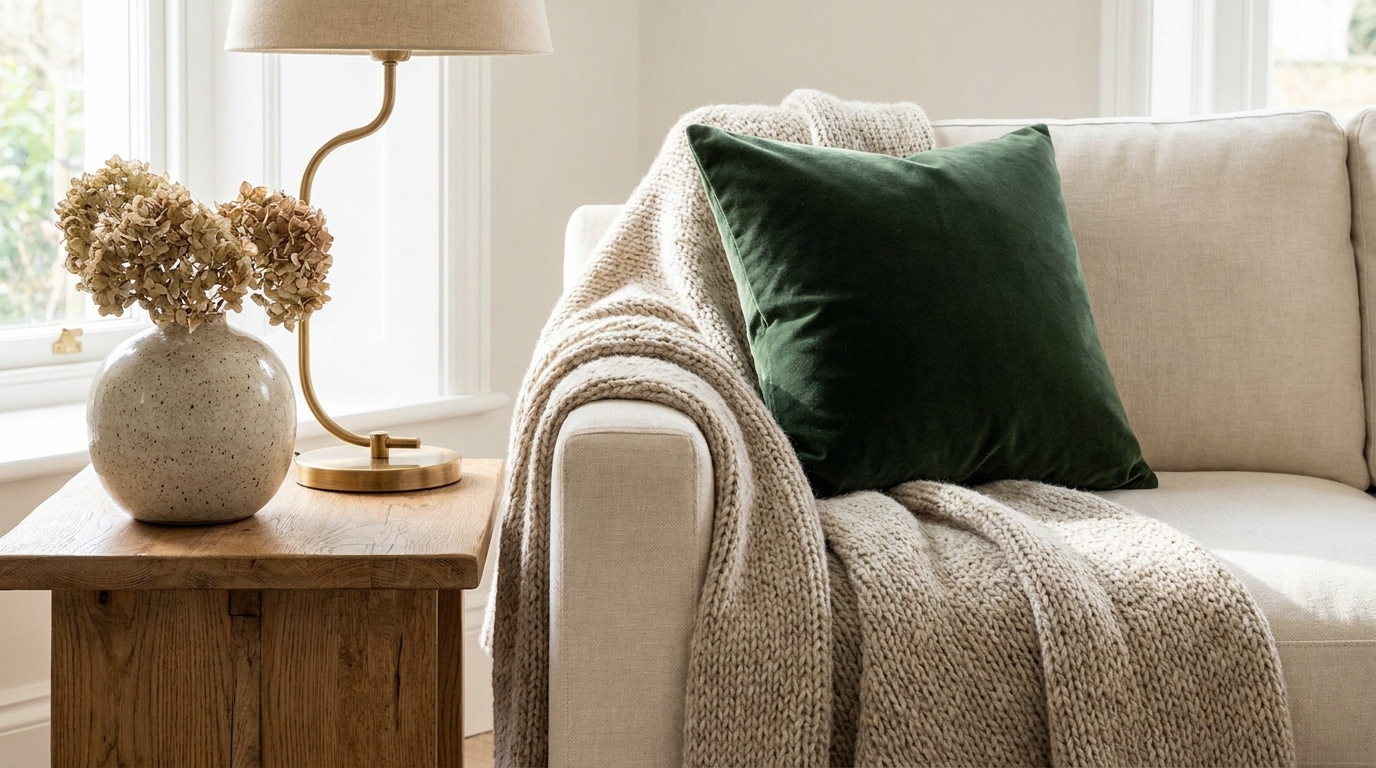
Textiles are where many homeowners first think of texture, and rightly so. Upholstered furniture, curtains, rugs, bedding, and cushions bring softness, acoustic absorption, and immediate tactile comfort. Yet the key is not simply to mix many fabrics. It is to create a measured conversation among them. If a sofa is upholstered in a dry, textural linen blend, the adjacent rug might offer denser softness in wool, while the cushions introduce one richer note such as velvet or bouclé.
Scale matters here. Large upholstered pieces should usually carry the calmer and more versatile textures, while smaller items can hold the more expressive ones. A highly nubby sofa can dominate a room very quickly, whereas a smooth sofa with textural accents often feels more adaptable. Drapery can either soften architecture quietly with washed linen or sharpen it with tailored wool blends. Bedding can layer crisp percale with quilted cotton, cashmere, or matelassé for a sense of quiet abundance.
The secret to elegance is variation within a family of related moods. A room can combine sheer and dense, matte and lustrous, woven and velvety, but these differences should feel intentional rather than random. The most graceful interiors often stay within a limited tonal range and let texture do the work of differentiation. This creates complexity without clutter.
Use Hard Materials to Add Structure and Light Play
Texture composition is not complete without harder elements that bring definition. Stone, metal, glass, ceramic, and wood all contribute structure, reflectivity, and contrast. The question is not whether to use them, but how to calibrate their finish. A honed travertine table feels different from polished marble. Brushed brass is softer and more atmospheric than mirrored chrome. Smoked glass introduces depth in a more muted way than clear high gloss glazing.
Wood deserves particular attention because it is among the most versatile textural materials in contemporary interiors. Its grain, stain, cut, and finish can make it read rustic, refined, Scandinavian, architectural, or deeply luxurious. Open pore oak, walnut with visible figure, and charred timber all offer distinct emotional registers. Recent design trends have renewed appreciation for exposed grain and material honesty because they ground interiors in something elemental and enduring.
Hard materials are especially useful for balancing softness. A room filled only with upholstery may feel visually heavy or overly diffuse. Introduce a stone plinth, a glazed ceramic lamp, a bronze side table, or a ribbed glass screen, and the composition gains rhythm. These firmer textures catch light differently and create a welcome tension against fabrics and rugs. The result is not hardness for its own sake, but a more articulate room.
Texture and the Emotional Mood of a Space
Texture has extraordinary power over atmosphere because it mediates between design and emotion. A serene room typically relies on surfaces that absorb light gently and invite a slower visual rhythm. Think washed linen, pale oak, textured plaster, wool boucle, and handmade ceramic. Their softness is not merely tactile. It creates a visual quiet that can lower the intensity of the environment and make the room feel restorative.
More dramatic spaces often use texture to sharpen contrast. Dark stained wood, velvet, leather, metal, lacquer, and veined stone can create sensuality and depth when carefully composed. In these interiors, light is often used more theatrically, grazing across surfaces to reveal sheen and shadow. The mood becomes richer and more enveloping, though it still requires moderation to remain elegant rather than overwhelming.
Texture also affects perceived scale. Large rooms can feel more intimate when acoustically soft materials are introduced through rugs, drapery, upholstered seating, and absorbent wall treatments. Smaller spaces, on the other hand, benefit from a controlled mix that avoids visual crowding. Fine grain wood, smooth paint, one tactile textile, and a single expressive accent surface may be enough. The principle is always the same. Texture should support the intended emotional and spatial reading of the room.
Beautiful texture composition is not about filling a room with surfaces to notice. It is about creating a sequence of sensations that allows the room to be felt as a whole.
Room by Room Guidance for Elegant Texture Layering
Living Rooms
The living room is often the ideal place to explore layered texture because it must balance aesthetics, social comfort, and everyday use. Begin with a grounding element such as wood flooring or a large area rug. Add a sofa in linen, cotton blend, or performance boucle depending on the lifestyle of the household. Then introduce contrasting pieces through leather, stone, ceramic, or metal to avoid an overly soft composition.
Accent textiles should deepen the conversation rather than scatter it. One knitted throw, two or three cushions in distinct but related finishes, and drapery with a graceful hand are often enough. Coffee tables and side tables can be used strategically to bring in honed stone, dark timber, or softly reflective metal. Lighting should not be ignored, because shades, bases, and the quality of glow all contribute to perceived texture.
If the room is open plan, repeat materials thoughtfully so the scheme feels connected. A bronze detail from the living area might reappear in shelving or a dining light fixture. This repetition builds visual continuity and keeps the space from fragmenting. In larger rooms especially, cohesion matters as much as richness.
Bedrooms
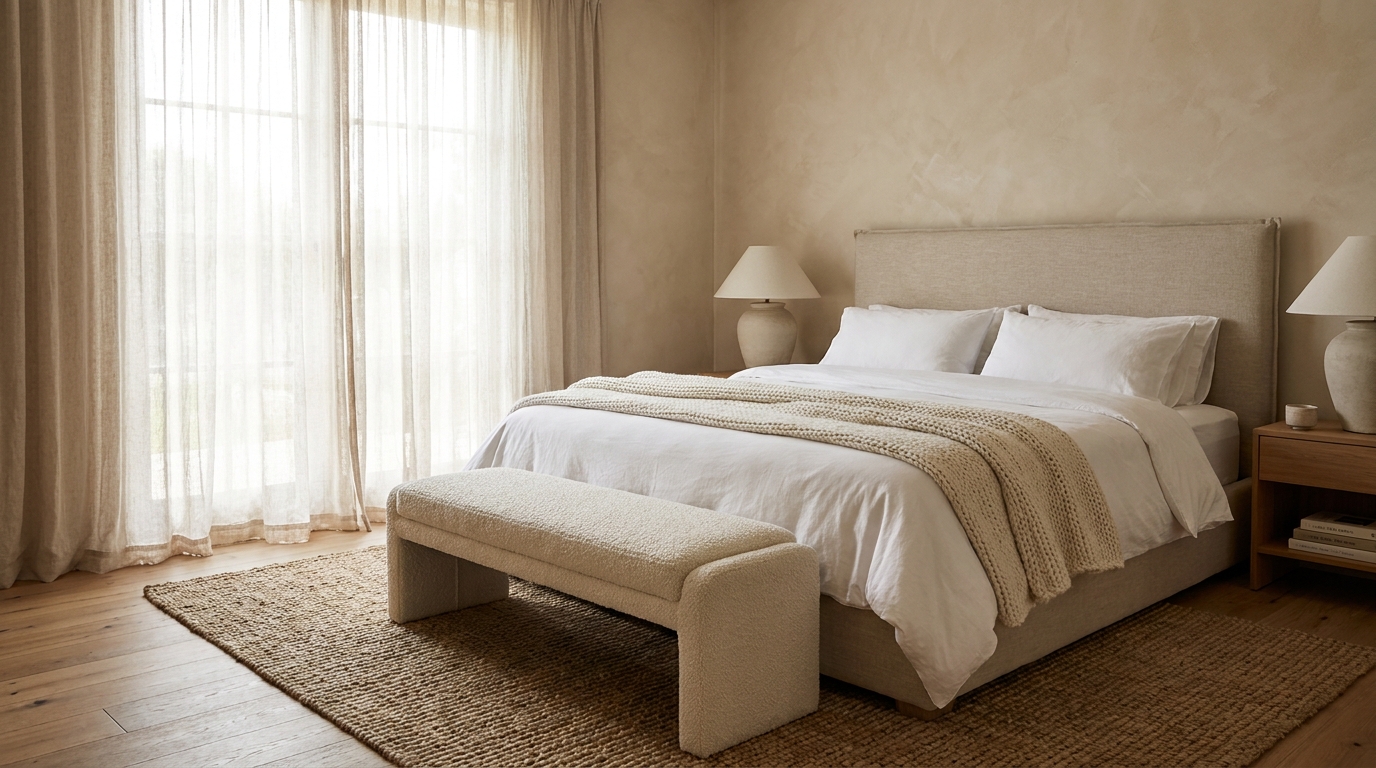
Bedrooms call for a gentler material composition because their purpose is restorative. Texture should support calm, softness, and sensory ease. Upholstered headboards, wool or wool blend rugs, layered bedding, and drapery that filters light gracefully are almost always effective. The walls can contribute quietly through matte paint, limewash, or subtle paneling that adds depth without demanding attention.
Bedding offers one of the most rewarding opportunities for texture layering. Crisp sheets, a quilted coverlet, a textured blanket, and perhaps a single velvet or linen cushion create a bed that feels inviting and complete. The trick is not to over decorate. Too many fabrics, patterns, and trims can make the room feel busy when it should feel composed. The highest form of bedroom luxury is often restraint paired with tactile generosity.
Side tables and lighting can introduce firmer notes. A travertine lamp, a brushed brass sconce, or a walnut nightstand can create elegant contrast against softer textiles. These harder surfaces help the room feel finished and anchored without interrupting its quiet mood.
Kitchens and Dining Spaces
Kitchens often rely heavily on hard surfaces, which makes texture composition particularly important. Cabinet finishes, countertops, backsplashes, flooring, hardware, and seating all need to work together. A kitchen can feel sterile if every element is sleek and reflective. It can also feel chaotic if too many grains, stones, and metals compete. The most successful spaces usually pair one expressive hard material with quieter supporting ones.
For example, richly veined stone might be balanced by matte cabinetry and simple wood stools. Or rift cut oak cabinetry might be paired with a restrained counter surface and hand glazed ceramic pendants. Dining areas benefit from similar thinking. Upholstered chairs, timber tables, woven runners, and ceramic tableware can soften the rigor of architecture and make meals feel more intimate.
In the kitchen at 216 Duncan Rd, a white marble waterfall island and full-height slab backsplash are balanced by panelled cabinetry, a brass-trimmed hood and upholstered counter stools.
Because kitchens are high performance spaces, maintenance should guide texture choices. This is where current interest in performance materials becomes valuable. Elegant texture no longer requires fragility. There are now many surfaces and textiles that offer stain resistance, easy cleaning, and visual refinement at once. A beautiful room should also support the realities of living.
The Role of Light in Revealing Texture
No discussion of texture composition is complete without light. Texture is only fully legible when light reveals it. Natural daylight changes across the day, pulling grain, shadow, and depth into view or flattening them temporarily. Artificial lighting does the same with even greater precision. The angle, temperature, and intensity of light can make a plaster wall glow, a velvet chair deepen in tone, or a stone surface appear either dramatic or subdued.
Side lighting is especially powerful for textured finishes. It grazes the surface and emphasizes subtle irregularities, which is why wall washers and carefully placed sconces can make plaster, wood slats, or ribbed materials feel alive. Diffused ambient light, by contrast, creates a softer reading that suits restful spaces. Layered lighting allows texture to be experienced in multiple moods, which enriches the room over time.
When planning a texture scheme, always ask how the material will look at morning, midday, evening, and under lamp light. A finish that seems understated in a bright showroom may become heavy in a dim room. Another may appear plain until warm directional light brings out its depth. Texture and light are partners, and they should be designed together.
Healthier Texture Composition: Beauty, Air Quality, and Material Responsibility
Texture is often discussed as a visual or sensory concern, but it also intersects with indoor environmental quality. In North America, this matters greatly because indoor air can contain higher concentrations of certain pollutants than outdoor air. Building materials, furnishings, adhesives, finishes, and composite products may emit volatile organic compounds or formaldehyde, particularly during and after installation. This means texture selection should include a conversation about what materials are made from, how they are finished, and how they affect the home over time.
Choosing low emission paints, sealants, textiles, and furnishing materials is therefore part of sophisticated design practice. A beautifully textured room loses some of its value if it compromises comfort in a less visible way. Low VOC and low emission products are no longer niche concerns reserved for major renovations. They are increasingly relevant to everyday furnishing, from rugs and upholstery to casegoods and wall treatments.
Ventilation and installation practices matter as well. During remodeling, dust control, off gassing management, and adequate airflow should be considered alongside aesthetics. Some materials benefit from airing out before installation when possible. Others should be specified with certifications or manufacturer transparency that supports healthier indoor use. This does not limit creativity. On the contrary, it makes texture composition more intelligent and more aligned with contemporary values.
Durability belongs in this conversation too. A surface that deteriorates quickly may need frequent replacement, which can create more waste, more disruption, and more exposure to new materials. Sustainable elegance often comes from choosing textures that age well, develop character, and retain performance. Natural fibers, responsibly finished woods, durable stone, and high quality performance textiles can all contribute to this long view.
Common Texture Mistakes and How to Avoid Them
One of the most frequent mistakes is assuming that a room needs many textures to feel layered. In truth, too much variation can create visual fatigue. If every object introduces a new grain, weave, sheen, or pattern, the eye cannot rest. A more effective strategy is to repeat a few materials in different scales and contexts. This creates continuity while still allowing richness.
Another mistake is equating luxury only with shine. Glossy finishes certainly have their place, but contemporary elegance often relies more heavily on matte and natural surfaces. Honed stone, brushed wood, unlacquered metal, linen, and plaster communicate sophistication through subtlety. They feel grounded and enduring, especially when paired with excellent proportions and thoughtful lighting.
People also sometimes neglect the practical effects of texture. A room may look beautiful but sound harsh if there are too few absorbent surfaces. Or a stunning fabric may prove impossible to live with in a household that needs resilience. Texture influences acoustics, maintenance, and use just as much as appearance. The goal is not a styled image, but a livable environment.
Finally, there is the misconception that healthier materials matter only during renovation. In reality, everyday selections contribute to the sensory and environmental quality of a room. Specifying lower emission upholstery, rugs, paints, and cabinetry is part of designing with care. Elegance today is inseparable from well being.
A Practical Framework for Choosing Textures
If you are building a texture scheme from scratch, it helps to move through a clear sequence. Begin by defining the mood you want the room to express. Then choose one anchor material that captures that mood. Add one or two supporting textures that complement it in tone and scale. Only after that should you select accent textures that bring contrast, light play, or tactile interest.
- Define the atmosphere by deciding whether the room should feel calm, earthy, tailored, dramatic, airy, or intimate.
- Select the dominant material from the architectural envelope, such as wood flooring, stone, plaster, or cabinetry finish.
- Add softening layers through textiles that introduce comfort and acoustic balance.
- Introduce structured contrast with metal, ceramic, glass, or a more defined stone or leather element.
- Edit rigorously by removing any texture that repeats the same idea too loudly or breaks the room’s rhythm.
- Review performance and health so the final palette supports maintenance, durability, and lower emission living.
This process keeps texture composition grounded in intention rather than impulse. It also helps prevent one of the most common problems in decorating, which is adding items individually without considering how their surfaces converse. A room becomes elegant when its materials seem to belong to one another.
The Future of Texture in Interior Design
Current design trends suggest that texture will remain central to how interiors express value and identity. Material storytelling is becoming more important, with designers and clients alike seeking finishes that feel authentic, durable, and emotionally resonant. Earthy tones, terracotta, exposed wood, raw concrete, tactile plaster, and woven natural fibers continue to shape contemporary spaces because they connect modern living with a sense of groundedness.
At the same time, innovation is expanding what is possible. Performance textiles now offer elegance once associated only with delicate fabrics. Surface technologies are improving durability without sacrificing nuance. Sustainable and lower emission materials are becoming more available, allowing interiors to be both beautiful and responsible. The future of texture composition is not about novelty for its own sake. It is about deeper intelligence in how materials are chosen, layered, and lived with.
This is especially meaningful in a design culture that increasingly values emotional well being at home. As people expect interiors to support restoration, social life, productivity, and health all at once, texture becomes one of the most effective tools for shaping that complexity. It can soften modern architecture, enrich minimal spaces, and create a sense of tactile belonging in rooms that might otherwise feel abstract.
Conclusion: Designing Rooms That Feel as Beautiful as They Look
The art of texture composition in interior design lies in understanding that beauty is not only seen. It is also sensed, anticipated, and remembered through material experience. A truly elegant room does not rely on decoration alone. It balances surfaces with care, allowing matte and sheen, softness and structure, warmth and clarity to exist in poised relationship. It invites both the eye and the body into a coherent atmosphere.
When texture is layered thoughtfully, interiors gain far more than visual interest. They acquire comfort, acoustic softness, emotional depth, and a subtle feeling of luxury rooted in material honesty. They also become more intelligent when health, durability, and maintenance are considered alongside aesthetics. This wider approach reflects the most compelling direction of contemporary interior design, where sophistication is measured not by excess, but by refinement and care.
To compose texture well is to design with sensitivity. It means knowing when to contrast and when to quiet, when to let wood grain speak and when to let linen soften, when stone should anchor and when plaster should dissolve into light. In that balance, rooms become more than attractive. They become intimate, expressive, and enduring places to live.

No Comment! Be the first one.