



Luxury upgrades have undeniable appeal in real estate. They photograph well, they help a property feel more exclusive, and they can shift buyer perception within seconds of entering a listing. For investors, however, the critical question is not whether a premium feature looks impressive. The question is whether that feature creates measurable financial return through higher resale value, stronger rent performance, faster absorption, reduced concessions, or a combination of all four.
Table Of Content
- Why luxury ROI is more nuanced than most investors assume
- The data-backed case for exterior-first luxury upgrades
- How curb appeal contributes to ROI beyond resale price
- The kitchen and bath question: still powerful, but only with discipline
- What design-neutral luxury looks like in practice
- Outdoor living, wellness, and practical lifestyle luxury
- Energy efficiency and low-maintenance luxury are rising in value
- Neighborhood fit and comparable sales determine recoverability
- How to use comps before approving a luxury renovation budget
- Over-improvement risk is real and often underestimated
- Luxury upgrades in rental properties: measuring rent premium and tenant quality
- A practical framework for choosing the right luxury upgrades
- High-ROI luxury upgrade priorities for most investors
- Common luxury upgrade mistakes that reduce ROI
- Final perspective: luxury works best when it is strategic, not indulgent
That distinction matters more in the current market than it did in easier periods of appreciation. Across Canada and North America, supply constraints, affordability pressure, and higher financing costs have made every capital decision more consequential. CMHC reported that housing starts in Canada increased 2 percent in 2024 versus 2023, yet supply remains under pressure and affordability remains challenged in major urban centres. In practical terms, that means investors cannot rely on market momentum alone to bail out poor renovation choices. Upgrades must be selected with discipline, local awareness, and a clear understanding of buyer psychology.
The strongest market evidence does not support the idea that the most expensive renovation automatically produces the best return. In fact, the research points in the opposite direction. The best performing upgrades are often the ones that improve a property’s competitive position in visible, broadly appealing, and low risk ways. Exterior improvements, design-neutral finishes, functional kitchens and baths, energy-conscious systems, and turnkey presentation consistently outperform highly personalized luxury features that narrow the buyer pool.
This is where many investors miscalculate. They treat luxury as a spending category rather than as a strategy. A luxury upgrade that fits neighborhood expectations, aligns with local comparable sales, reduces objections, and supports a premium positioning can be an excellent capital decision. The same expenditure in the wrong property, the wrong submarket, or the wrong finish level can compress returns and even weaken resale performance. Luxury is not just about cost. It is about relevance, recoverability, and timing.
In this article, we will examine which luxury upgrades tend to deliver the best ROI, why curb appeal often beats flashy interior spending, how rent premiums and days on market fit into the analysis, and where over-improvement risk becomes a serious threat. The goal is not to discourage premium renovation. It is to help investors make premium renovation decisions with sharper financial logic.
Which luxury upgrades actually add value in real estate? The strongest returns come from upgrades that are visible, broadly appealing, and low risk rather than the most expensive available. Exterior improvements — premium garage doors, steel entry doors, manufactured stone veneer, and refined landscaping — consistently rank among the highest-ROI projects because they influence buyer perception before anyone steps inside. Design-neutral kitchen and bathroom updates, focused on quality surfaces, better layouts, and durable fixtures, also perform well when they avoid over-customization. Functional outdoor living space and energy-efficient, low-maintenance systems round out the highest-performing category. By contrast, big-ticket items like pools, extensive landscaping, and highly personalized remodels often fail to return their full cost, according to Zillow’s 2024 home improvement research. The most effective luxury upgrade strategy is selective, market-aligned, and measurable, prioritizing tasteful, durable, and broadly desirable improvements over the most expensive ones.
Why luxury ROI is more nuanced than most investors assume
One of the most persistent misconceptions in real estate is that luxury upgrades produce dollar for dollar returns at resale. That belief survives because high-end finishes are emotionally persuasive. Buyers may praise a dramatic kitchen, a spa-style bath, or a resort-inspired backyard, and investors can easily mistake admiration for recoverable value. The problem is that admiration does not always translate into price support, especially when comparable sales do not justify the spend.
Zillow’s 2024 home improvement research reinforces this point. It found that some trendy or highly personalized upgrades can reduce resale appeal, and it specifically noted that big ticket items such as pools, major kitchen and bath remodels, and extensive landscaping do not always return their full cost. This is a critical reminder that perceived luxury and actual ROI are not the same thing. The financial value of an upgrade depends not only on what was installed, but on how many buyers want it, how much they are willing to pay for it, and whether nearby competing properties establish a ceiling.
Investors should think about luxury spending through three lenses. The first is appraisal and resale support, which asks whether the local market can recognize and reward the improvement. The second is marketability, which includes visual impact, showing quality, online listing performance, and reduced days on market. The third is income enhancement, especially for rental assets, where upgraded finishes may justify rent premiums, attract stronger tenant profiles, and reduce vacancy or leasing incentives.
What complicates the analysis is that these lenses do not always move together. A feature may create strong lifestyle appeal without producing a proportional appraisal increase. Another may not dramatically raise headline value but may improve speed of sale, which has real carrying cost implications. In a higher rate environment, shortening the selling or leasing cycle can materially improve total return even if the nominal value increase is modest.
That is why sophisticated investors increasingly look beyond a simple resale recapture percentage. They focus on total return, which includes appraisal uplift, rent premium, reduced concessions, lower maintenance, stronger buyer confidence, and shorter absorption time. Luxury upgrades should be evaluated as part of a broader asset performance strategy, not as isolated design decisions.
The data-backed case for exterior-first luxury upgrades
If there is one lesson the renovation data has repeated consistently, it is that curb appeal remains one of the most efficient places to deploy capital. The 2024 Cost vs. Value Report showed that garage door replacement, steel entry-door replacement, and manufactured stone veneer were among the strongest ROI projects in the U.S. market. That is a powerful signal. It suggests that buyers place outsized value on visible, immediate impressions that make a property feel cared for, secure, and move-in ready.
For investors, this is strategically important because exterior upgrades work across multiple buyer segments. Owner occupants respond to curb appeal emotionally. Tenants associate a polished exterior with quality and security. Appraisers and agents recognize stronger presentation relative to competing listings. In many cases, an investor can create a more meaningful pricing advantage through exterior refinement than through a deeply expensive interior customization that only some buyers appreciate.
Exterior-first investing also works because it reduces friction. A worn front elevation, dated entry, or neglected façade creates doubt before a buyer even crosses the threshold. That doubt can lower the perceived quality of the entire property, even when interior finishes are solid. By contrast, a clean, premium, well-proportioned exterior makes the property easier to trust and easier to justify at the asking price.
Luxury in this category does not mean excess. It means high quality materials, modern proportion, and durability. A premium garage door with architectural detail, a sharp steel entry door, restrained stone veneer, upgraded lighting, and low maintenance landscaping can elevate the perceived class of a property without creating over-improvement risk. These are luxury signals that still feel broadly marketable.
For investors working in mid to upper tier neighborhoods, exterior upgrades often generate a dual benefit. They improve the listing thumbnail that drives online click-through, and they strengthen in-person emotional response during showings. In a market where attention is fragmented and buyers compare dozens of listings quickly, that first impression can have a measurable impact on both price resilience and days on market.
How curb appeal contributes to ROI beyond resale price
Curb appeal should not be measured only by direct valuation uplift. It also improves a property’s ability to compete efficiently. A stronger exterior can reduce time on market, limit lowball behavior, and improve the quality of buyer inquiries. For rental investors, it can increase showing conversion and support more confident tenant screening because the asset attracts renters who are willing to pay for condition.
In a market with higher carrying costs, every week saved matters. Mortgage interest, taxes, insurance, utilities, staging costs, and vacancy all erode net returns. If an exterior package costing materially less than a major interior overhaul accelerates sale or lease execution while preserving price, the true ROI can be superior. This is one reason exterior luxury upgrades continue to outperform expectations.
The kitchen and bath question: still powerful, but only with discipline
Kitchens and bathrooms remain central to buyer decision making because they are high-use spaces and expensive to renovate after purchase. A property that feels turnkey in these areas often commands stronger interest. That said, investors need to separate smart premium improvement from full-scale overcapitalization. The data does not support the assumption that major luxury remodels automatically recover their cost.
Zillow’s findings are instructive here. Major kitchen and bath remodels do not always return their full cost, particularly when they become too customized, too trendy, or simply too expensive relative to the surrounding market. This does not mean investors should ignore these rooms. It means they should focus on the luxury elements buyers consistently value: better layout function, quality surfaces, upgraded lighting, durable cabinetry, efficient storage, and modern fixtures that communicate cleanliness and permanence.
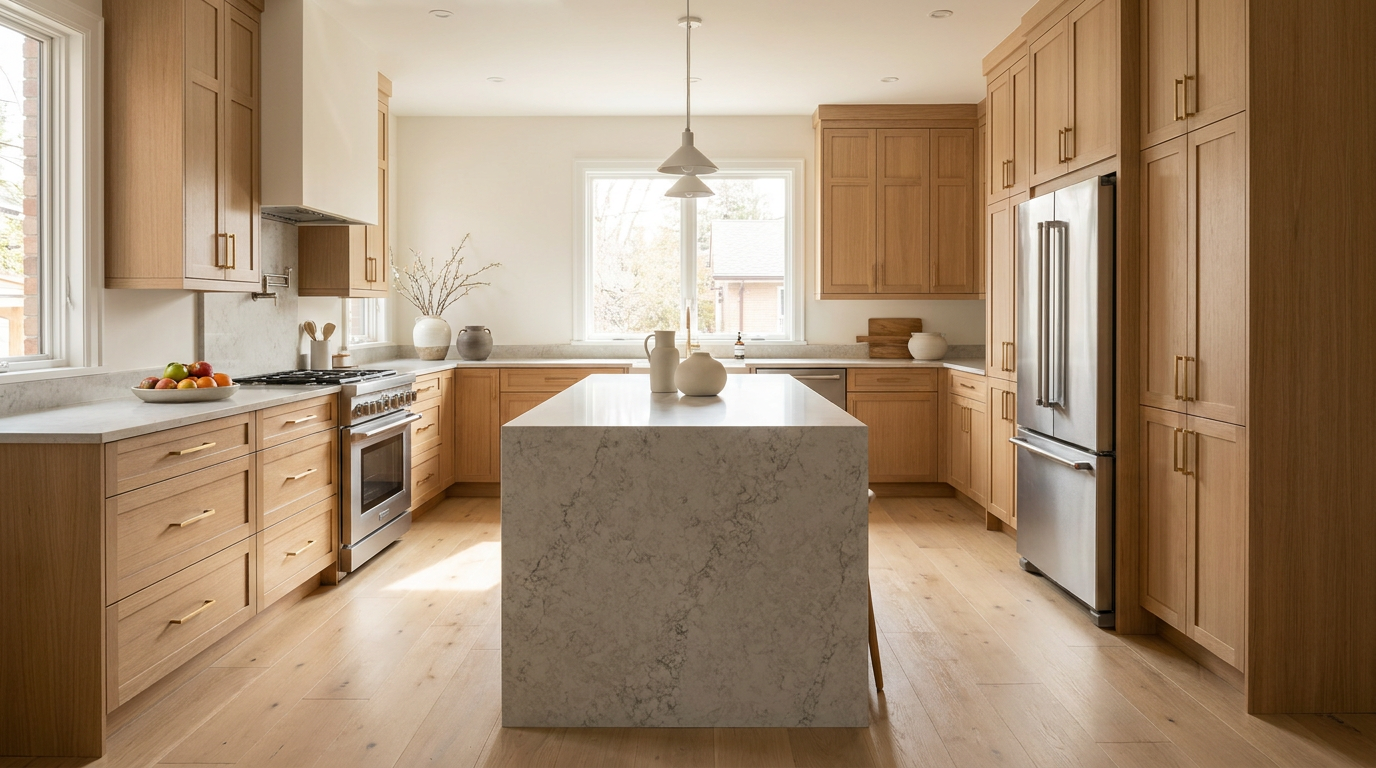
A premium kitchen with design-neutral luxury tends to outperform a hyper-personal kitchen designed around the current owner’s taste. Investors should prioritize finishes that photograph beautifully and age well. Quartz or natural stone counters, warm but restrained cabinetry tones, quality pulls, layered lighting, integrated storage solutions, and reliable premium appliances all help create a sense of upscale utility. Buyers tend to reward a kitchen that feels polished and functional more than one that feels theatrical.
The same principle applies to bathrooms. Spa-like cues remain attractive, especially in upper-tier urban and suburban markets, but the best returns usually come from tasteful execution rather than maximalist spending. Frameless glass showers, larger format tile, floating vanities in some contexts, upgraded mirrors, quality fixtures, and excellent lighting can elevate the room significantly. Heated floors, soaking tubs, and specialty materials may add appeal in specific luxury segments, but they should be benchmarked carefully against neighborhood standards.
In rental investment scenarios, kitchens and baths often support rent premium more reliably than some other luxury categories because they influence daily living. However, the premium must be considered against wear, replacement cycles, and maintenance. The goal is to create a finish level that feels decisively above average without introducing fragile materials or niche choices that create operational drag.
What design-neutral luxury looks like in practice
Design-neutral luxury does not mean bland design. It means sophisticated restraint. The property should feel elevated, current, and premium without relying on polarizing colours, unusual layouts, or statement materials that may date quickly. Think of it as broad-spectrum desirability. The highest value upgrades appeal to the largest credible buyer or tenant pool while still differentiating the property from standard inventory.
Examples include seamless cabinetry lines, integrated under-cabinet lighting, brushed metal hardware in timeless finishes, slab or shaker door profiles depending on market context, stone surfaces with subtle veining, and high-quality flooring that balances style with durability. These choices make a property feel expensive in the right way. They signal quality without forcing a buyer to pay for someone else’s taste.
Outdoor living, wellness, and practical lifestyle luxury
One of the clearest recent shifts in buyer behavior has been the growing value placed on outdoor living and wellness-oriented spaces. Buyers and renters increasingly respond to properties that support flexible living, relaxation, and a sense of retreat. This trend is especially relevant in markets where interior square footage is expensive and outdoor usability creates a meaningful lifestyle advantage.
For investors, this category can be highly effective when approached with practicality. A covered patio, thoughtful lighting, defined seating areas, high-quality decking, privacy screening, and low maintenance landscaping can make a property feel materially more premium. These improvements create emotional lift without necessarily carrying the same overcapitalization risk as a pool or highly specialized backyard build-out.
That distinction is important because Zillow’s research specifically notes that pools and extensive landscaping do not always return their full cost. In some luxury submarkets, a pool may be expected and therefore necessary to compete. In many others, it narrows the buyer pool due to safety concerns, maintenance, insurance, seasonality, or simple lack of interest. The right question is not whether a pool looks luxurious. It is whether the local buyer base treats it as an asset, a neutral feature, or a liability.
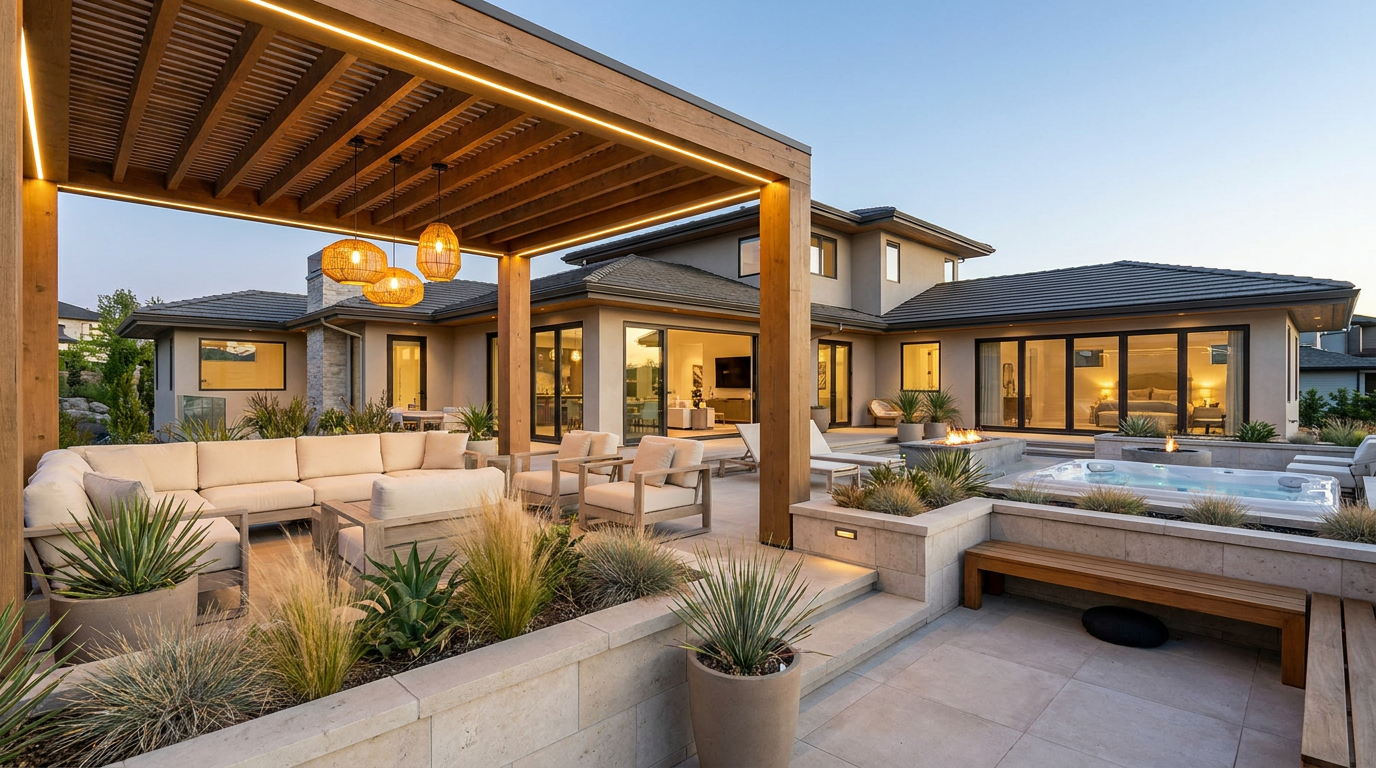
Wellness features should be evaluated with the same discipline. A serene primary bath, excellent ventilation, natural light, acoustic insulation, and a flexible room for fitness or work can all have broad appeal. A highly specialized sauna suite or elaborate home spa may fit a narrow slice of luxury inventory, but it can become difficult to monetize outside that slice. The best investor-grade wellness upgrades are the ones that improve livability while remaining easy for the next owner or tenant to adopt.
Outdoor living also has strong rental implications. For urban townhomes, suburban houses, and low-rise multifamily assets, well-executed outdoor areas can support both rent premium and lower turnover. Tenants increasingly place value on private or semi-private external space, especially when it is ready to use and easy to maintain. In this sense, practical lifestyle luxury can be a highly productive category when aligned with the local tenant profile.
Energy efficiency and low-maintenance luxury are rising in value
Another important trend shaping luxury upgrade ROI is the growing buyer preference for efficiency, durability, and low maintenance living. In uncertain economic conditions, buyers want premium aesthetics, but they also want reassurance that the property will not become a capital drain immediately after purchase. That is why improvements that combine luxury presentation with operational intelligence are increasingly valuable.
Higher quality windows, improved insulation, efficient HVAC systems, smart thermostats, upgraded doors, and durable exterior materials support this trend. While not every one of these features is glamorous in marketing language, they contribute to what many buyers now perceive as true luxury: comfort, quiet, energy performance, and reduced maintenance burden. In many cases, these upgrades do not headline the listing, yet they strengthen the property’s credibility and support a turnkey premium.
Turnkey premium is an important concept for investors. It reflects the additional value buyers and tenants place on properties that require little immediate work. In a market where financing costs remain elevated and many buyers are stretching affordability, the appeal of a property that does not need major repairs or updates can be significant. This is especially true in Canada’s major urban centers, where affordability pressure remains pronounced even as new supply is being added.
CMHC’s 2024 reporting also showed that apartment starts in Canada’s six largest CMAs were a major driver of new supply, underscoring ongoing strength in multi-unit and investor-relevant housing types. In that context, investors need to think carefully about how upgrades help their unit stand out within a growing but segmented field. Efficient systems, quality finishes, and lower ongoing maintenance can be more compelling than conspicuous luxury that does not meaningfully improve daily use.
Neighborhood fit and comparable sales determine recoverability
Luxury ROI often depends more on neighborhood fit than on raw construction cost. This is one of the most important principles in investment renovation and one of the most commonly ignored. If you improve a property materially beyond the standard supported by local comparable sales, you may create a beautiful asset that the market cannot fully price. The result is compressed returns, even when the work itself is excellent.
Comparable sales analysis should therefore guide every major luxury upgrade decision. Investors should review recent sales in the immediate competitive set, paying close attention to finish level, property age, lot characteristics, square footage, and days on market. The goal is to identify what the market has already rewarded. If the top-performing comparable homes all feature upgraded exteriors, premium but restrained kitchens, and turnkey baths, that is a useful signal. If none of them have resort-scale backyards, imported specialty materials, or intensely custom design, that is also a signal.
Neighborhood conformity does not mean mediocrity. It means strategic alignment. You want to reach the upper edge of local expectations, not leap so far past them that buyers resist paying for the difference. In some luxury enclaves, high-end outdoor kitchens, natural stone, custom millwork, and advanced home systems may be standard. In many middle to upper-middle markets, buyers will pay more for tasteful quality, but not enough to justify extravagant customization.
This issue is especially relevant in Canada, where luxury market performance has become more segmented by city and price band. Ultra-luxury demand has been described as resilient in selected metro segments, while broader high-end performance has been more uneven and more sensitive to economic uncertainty. Investors cannot assume that what works in a top luxury pocket in Toronto or Vancouver will translate to another market, or even to a lower band within the same city. Submarket discipline is everything.
How to use comps before approving a luxury renovation budget
Before committing capital, investors should compare the property against at least three groups: current direct competition, recently sold comparables, and aspirational comparables that sold at the top of the local range. This provides a clear picture of where the asset sits today and what finish level is required to move it up the ladder. If the spread between current value and aspirational value is smaller than the renovation budget plus risk margin, the project deserves scrutiny.
Pay close attention to the specific features that seem to influence pricing. Sometimes the premium is driven by superior layouts, larger lots, or school district differences rather than by finishes alone. Investors who misread this can attribute pricing power to luxury upgrades that were not the real value driver. Accurate comp interpretation protects against renovation optimism and helps allocate capital to the improvements most likely to be recognized.
Over-improvement risk is real and often underestimated
Over-improvement occurs when an investor adds features or finish levels that exceed what the market is willing to reward. It is one of the easiest ways to damage ROI while still producing a visually impressive result. Because luxury upgrades are often emotionally satisfying, investors can slip into owner mentality and justify spending based on what feels desirable rather than what is financially recoverable.
Common examples include installing ultra-custom kitchens in neighborhoods where buyers primarily want freshness and function, adding a pool in a market where maintenance concerns outweigh appeal, selecting highly distinctive materials that polarize buyers, or landscaping to a level that creates beauty without pricing support. These are not bad design choices in the abstract. They are bad investment choices when the market context does not justify them.
Over-improvement risk rises when investors focus exclusively on resale value and ignore buyer pool segmentation. Every niche feature reduces universality to some degree. In the right luxury segment, that can be acceptable because the buyer pool is deep enough and the price point supports specialization. In broader markets, niche luxury can slow showings, increase negotiation pressure, and lengthen days on market. Even if the property eventually sells well, the carrying costs and concessions can erode the projected return.
The antidote is value engineering. This means selecting materials, layouts, and finish levels that maximize perceived value relative to cost. A well-designed engineered approach can look every bit as polished as a far more expensive one, especially in photos and showings. Investors should not confuse costliness with effectiveness. The objective is to create premium impression and practical performance at a spend level the market can absorb.
Luxury upgrades in rental properties: measuring rent premium and tenant quality
For income properties, luxury upgrade ROI should be measured not only by future resale potential but by operating performance. A higher-end finish package can justify rent premium, attract stronger tenants, reduce vacancy, and lower turnover frequency. Those benefits can be significant over time, particularly in supply-constrained urban markets where professionally finished units stand out.
However, the same discipline applies. Investors should distinguish between features tenants will pay for and features they will simply enjoy if included. In many markets, tenants pay more for in-suite laundry, premium kitchens, modern bathrooms, quality flooring, air conditioning, noise reduction, and functional storage. They may appreciate highly specialized built-ins or extravagant materials, but not at a rent level that covers the cost difference.
Cap rate and rent premium analysis matter here. If a luxury upgrade package costs a large amount but only supports a modest monthly rent increase, the payback period may be too long unless the same package also materially improves exit value and occupancy resilience. By contrast, a targeted upgrade set that supports a meaningful rent step-up while reducing vacancy and wear can generate a very attractive total return. The best rental upgrades are often those that deliver both lifestyle enhancement and operational efficiency.
Tenant profile should also shape the finish strategy. Executive renters, students, downsizers, families, and urban professionals value different things. Investors who understand the target renter can select luxury upgrades that feel specific without becoming niche. This improves leasing precision and can reduce the need for concessions in competitive periods.
A practical framework for choosing the right luxury upgrades
Investors need a repeatable decision framework, particularly when renovation budgets are large. The first step is to define the asset’s intended strategy. Is the property a short-hold resale, a medium-term rental, or a long-term hold with future repositioning potential. The answer changes what kind of luxury investment makes sense, because resale liquidity and rental durability do not always reward the same features equally.
The second step is to benchmark local expectations through comparable sales and active listings. This establishes the finish ceiling and helps identify under-improved areas where capital can move the needle. The third step is to rank potential upgrades by four criteria: resale recoverability, rent premium potential, marketability impact, and maintenance burden. Projects that score well across all four categories are usually the strongest candidates.
The fourth step is to prioritize visible improvements with broad appeal. Exterior presentation, kitchens, baths, lighting, flooring, and functional outdoor spaces typically outperform highly personalized projects. The fifth step is to stress test the budget. Assume resale support comes in lower than expected or the rent premium takes longer to achieve. If the numbers still work, the project is more resilient.
Finally, investors should remember that timing matters. NAR’s 2025 Remodeling Impact Report stated that Americans spent an estimated $603 billion on home remodeling in 2024. That level of activity means buyers are seeing more renovated inventory and comparing quality more aggressively. In competitive conditions, the right upgrade can help a property stand out decisively. The wrong one can disappear into a crowded field without generating the expected premium.
High-ROI luxury upgrade priorities for most investors
- Exterior curb appeal upgrades such as premium garage doors, steel entry doors, architectural lighting, refined stone accents, and low-maintenance landscaping that elevate first impression.
- Design-neutral kitchen improvements focused on layout, surfaces, cabinetry quality, storage, lighting, and durable premium appliances rather than theatrical over-customization.
- Modernized bathrooms that feel clean, bright, and spa-influenced through quality fixtures, glass enclosures, tile upgrades, and strong lighting.
- Functional outdoor living areas that add usable lifestyle value without excessive maintenance or niche specialization.
- Energy-efficient and low-maintenance systems that support turnkey appeal, lower operating friction, and long-term buyer confidence.
Common luxury upgrade mistakes that reduce ROI
Even experienced investors can make mistakes when chasing premium positioning. The first is assuming that expensive equals valuable. The second is ignoring neighborhood fit. The third is designing for personal taste instead of market demand. The fourth is allocating too much budget to low-visibility features while neglecting areas that shape first impression and perceived condition.
Another mistake is evaluating ROI only through eventual sale price. Investors should measure changes in absorption rate, showing activity, negotiation strength, vacancy, concessions, and maintenance profile. A property that sells faster and cleaner may produce better real-world returns than one that achieves a slightly higher price after a longer, more expensive marketing period. Total return is what matters.
There is also a tendency to underweight simplicity. Buyers increasingly value properties that feel complete, calm, and easy to own. This is why design-neutral luxury has become so effective. It offers quality without friction. It reassures buyers that the property is current without making them pay for bold customization they may want to undo.
- Do not assume luxury spending automatically produces luxury return.
- Do not ignore comparable sales and neighborhood price ceilings.
- Do not over-personalize high-cost spaces.
- Do not undervalue exterior improvements and first impression.
- Do not forget the role of days on market, concessions, and carrying costs in ROI.
Final perspective: luxury works best when it is strategic, not indulgent
Luxury upgrades can absolutely boost property value and ROI, but only when they are selected with investor discipline. The market evidence is clear. The highest performing strategy is rarely the most extravagant one. Instead, it is the one that combines visual impact, broad buyer appeal, neighborhood conformity, durability, and measurable financial logic.
For most investors, that means starting with curb appeal, refining kitchens and baths with design-neutral quality, adding practical outdoor living, and incorporating efficiency and low-maintenance systems that strengthen turnkey appeal. It also means resisting the temptation to over-improve beyond local comparables or to assume that a feature admired in one luxury segment will perform equally well in another.
In both Canada and the wider North American market, real estate is becoming more segmented, more data-sensitive, and less forgiving of renovation errors. Affordability pressure, supply shifts, and financing costs have elevated the importance of smart capital allocation. Investors who understand luxury as a strategic tool rather than a decorative category are best positioned to win.
The strongest returns come from making a property feel clearly better than its competition without making it so specialized that the market cannot absorb the premium. That is the balance to aim for. In real estate, true luxury ROI is not created by spending the most. It is created by spending where the market actually rewards you.


No Comment! Be the first one.