



The luxury market in 2026 is not simply changing at the surface level. It is being restructured by a deeper shift in what affluent consumers value, how they evaluate brands, and where they expect premium experiences to happen. Across North America, the modern luxury buyer is still motivated by status, emotion, quality, and taste, but those signals are now filtered through digital behavior, sustainability expectations, and a stronger demand for relevance. In practical terms, luxury is no longer defined only by heritage, rarity, and price. It is increasingly defined by intelligence, responsiveness, and trust.
Table Of Content
- Why the 2026 Luxury Consumer Looks Different
- Personalization Is Becoming the Core Luxury Expectation
- What Better Personalization Looks Like in Practice
- Sustainability Is Moving From Moral Signal to Value Signal
- The Rise of Circular Luxury Thinking
- Resale and Recommerce Are Now Mainstream Luxury Behaviors
- Why Resale Supports Premium Positioning
- Digital Engagement Is Expanding, But Luxury Remains Hybrid
- What Hybrid Luxury Journeys Require From Brands
- AI and Clienteling Are Reshaping Service Without Replacing People
- Customization and Emotional Relevance Are Growing Stronger
- How Luxury Brands Can Read the Signals More Clearly
- The 2026 Luxury Consumer Profile
- What This Means for the Future of Luxury
- Key Takeaways for Brands and Consumers
Recent findings from McKinsey, Deloitte, and Bain point in the same direction. Luxury consumers want experiences that feel personal without becoming invasive, digital without feeling generic, and sustainable without compromising quality or prestige. This is a more selective market than many brands were used to during earlier growth cycles. Bain projected worldwide luxury spending at about €1.44 trillion in 2025, broadly flat year over year, which suggests that demand remains significant but more segmented and more difficult to win. Growth is still available, but it increasingly goes to brands that understand behavior at a granular level.
That is where technology and data analysis become especially useful. They help brands detect patterns that are easy to miss when luxury is viewed only through taste or tradition. Search behavior, social engagement, clienteling data, resale activity, purchase timing, and product customization demand all reveal a consumer base that is becoming more informed and more intentional. For consumers, these shifts also matter because they shape what is available, how luxury products are marketed, and which values now carry premium weight.
This article explores the most important luxury consumer trends emerging in 2026, with a focus on sustainability, personalization, and digital engagement. It also examines the rise of recommerce, hybrid shopping journeys, and AI-assisted service. Taken together, these trends show that the luxury market is becoming more analytical without becoming less emotional. The best brands are learning how to combine exclusivity with convenience, craftsmanship with data, and aspiration with accountability.
In 2026, luxury value is no longer created only by what a brand makes. It is also created by how well the brand understands, guides, and reassures the customer across every touchpoint.
Why the 2026 Luxury Consumer Looks Different
The first important insight is that luxury consumers have not become less interested in premium products. They have become more disciplined in how they buy and more sophisticated in how they define value. A few years ago, it was easier to assume that luxury demand could rely on brand history, visual identity, and store experience alone. Today, those assets still matter, but they are not enough on their own. Consumers compare faster, research more deeply, and increasingly expect the path to purchase to feel curated rather than chaotic.
McKinsey’s 2026 consumer outlook identifies a new tech-driven path to purchase as one of the major trends reshaping consumer behavior. That matters in luxury because the category has traditionally relied on controlled environments and carefully managed brand storytelling. Now, the early stages of luxury discovery often happen elsewhere. They happen on social platforms, inside messaging apps, through recommendation engines, and on resale marketplaces. The customer may encounter the brand long before entering a boutique, and that first interaction may be shaped more by algorithmic visibility than by a storefront window.
At the same time, affluent consumers are not abandoning the emotional dimension of buying. They still want products that feel meaningful, reassuring, and identity-driven. What has changed is the standard they apply to that emotional reward. They increasingly want to know whether the product will retain value, whether the service experience respects their time, whether the brand’s sustainability claims are credible, and whether the digital journey reflects the same care as the physical one. In that sense, luxury buying is becoming less impulsive at the high end and more intelligence-led.
For North American brands and retailers, this creates a strategic challenge. They must preserve exclusivity while expanding accessibility across digital channels. They must use data to become more relevant without becoming intrusive. They must also understand that new luxury buyers, especially younger affluent and aspirational consumers, may enter the category through very different doors than prior generations did. A resale platform, a creator recommendation, or an AI-powered product suggestion can now be the starting point for a long-term relationship.
Personalization Is Becoming the Core Luxury Expectation
Among all the 2026 shifts, personalization may be the most important. McKinsey’s luxury research notes that luxury overindexes on personalization compared with specialty retail, and that AI can function as a scalable digital proxy for the traditional client adviser relationship for newer luxury customers. This is a significant finding because it confirms that personalization is no longer a nice extra in luxury. It is becoming part of the category’s core value proposition.
Historically, luxury personalization was delivered through human memory and high-touch service. A trusted sales associate knew a client’s preferences, sizing, purchase history, and timing. That model remains powerful, but it does not scale easily across digital channels or across newer customer segments that may not yet have deep brand relationships. AI and clienteling tools help close that gap. They can identify patterns in browsing, style affinity, gifting cycles, and prior interactions to make the experience feel more curated from the first touchpoint.
The important nuance is that personalization in luxury does not have to mean aggressive data capture or overly familiar communication. In many cases, consumers simply want relevant recommendations, smoother service, and a sense that the brand understands context. They want fewer irrelevant offers and more thoughtful guidance. A tailored product edit, a well-timed appointment reminder, a personalized follow-up after an in-store visit, or a digital assistant that narrows choices intelligently can all create a premium feeling without crossing into discomfort.
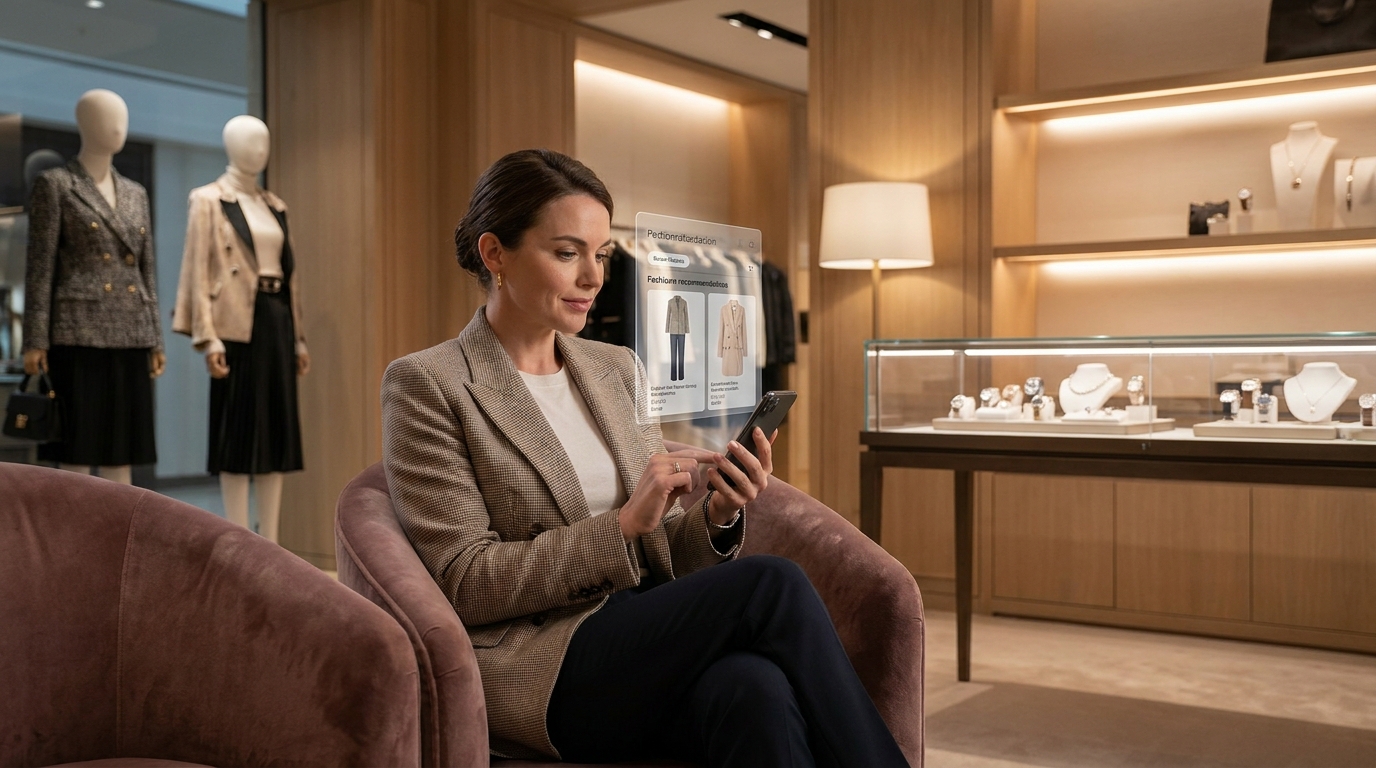
Deloitte also argues that luxury brands are entering an AI era where personalization, efficiency, and immersive engagement can deepen consumer relationships without eroding craftsmanship. That point is essential because one of the common misconceptions around AI in luxury is that technology cheapens the experience. In reality, the stronger use case is not replacing human service. It is augmenting it. The ideal outcome is a brand ecosystem where digital tools make advisers more informed, communication more relevant, and customer journeys more seamless.
This is especially important for categories where choice can be overwhelming or highly emotional. Jewelry is a good example. Bain and Altagamma projected jewelry growth of 4% to 6% in 2025, supported partly by customizable designs and emotional appeal. Consumers in this category often want guidance, symbolism, and assurance, not just a transaction. Data-enabled personalization helps brands understand which stones, settings, price bands, or gifting moments are most relevant to each customer. It makes the experience feel intentional, which is precisely what luxury buyers are paying for.
What Better Personalization Looks Like in Practice
The most effective luxury personalization in 2026 usually combines digital signals with human judgment. It might begin online through curated recommendations based on prior browsing, then continue with a store appointment informed by those preferences, and end with a post-purchase follow-up that feels attentive rather than automated. The customer experiences one coherent relationship instead of separate digital and physical interactions.
Brands that do this well tend to focus on a few specific outcomes rather than trying to personalize everything. They improve discovery, reduce friction, and increase reassurance. They help the customer find the right piece faster, understand the craftsmanship more clearly, and feel recognized across channels. In other words, personalization works best when it serves confidence and convenience, not novelty alone.
For luxury consumers, that change is easy to feel even when it is difficult to describe. A site that surfaces the right products immediately, a boutique associate who already understands your preferences, or a digital concierge that remembers your prior purchases all create a sense of calm. In luxury, calm is powerful. It signals control, care, and competence, which are all part of premium perception.
Sustainability Is Moving From Moral Signal to Value Signal
Sustainability remains one of the most discussed forces in luxury, but the language around it is evolving. Earlier messaging sometimes framed sustainable consumption as a tradeoff, with responsibility positioned against indulgence. In 2026, that framing is less effective. Luxury consumers increasingly respond when sustainability is presented as a dimension of quality, durability, craftsmanship, circularity, and long-term value. Rather than reducing desirability, sustainability can enhance it when it reinforces premium standards.
Deloitte’s luxury perspective emphasizes that circularity can strengthen rather than weaken premium positioning. Bain’s 2025 packaging research adds another layer, concluding that greener, lighter, and smarter packaging is becoming a competitive edge in luxury, not merely a compliance issue. That distinction matters because luxury consumers pay attention to details. Packaging, repairability, traceability, and material longevity are no longer peripheral. They are part of how the brand communicates seriousness and modernity.
For North American buyers, especially those in affluent urban markets, sustainability often functions as a filter rather than a standalone reason to buy. Consumers may not always choose a product solely because it is responsibly sourced, but they increasingly expect luxury brands to clear a higher threshold on environmental and ethical credibility. The absence of that credibility can weaken the brand, while visible investments in craftsmanship, longevity, and circular systems can strengthen trust.
This is one reason the luxury sustainability conversation now extends beyond raw materials. Buyers are paying more attention to whether a product can be repaired, whether it holds resale value, whether packaging feels wasteful, and whether the brand can demonstrate continuity between image and operations. In a category built on permanence and taste, disposability feels especially misaligned. Durability, by contrast, fits naturally with luxury logic.
The Rise of Circular Luxury Thinking
Circular luxury is gaining traction because it aligns sustainability with economics and aesthetics. A product that can be maintained, resold, refurbished, or passed on carries a different kind of prestige. It suggests lasting relevance, not just momentary status. That is increasingly attractive to consumers who want luxury to feel intelligent as well as beautiful.
This shift is also changing how brands talk about ownership. Instead of presenting the sale as the end of the relationship, more luxury businesses are exploring care programs, trade-ins, authentication services, refurbishment, and brand-managed resale. These systems create a longer lifecycle and a richer data loop. They also help reassure buyers that the product they are purchasing has value beyond the first owner.
Consumers tend to interpret these signals in a pragmatic way. A luxury item that lasts, can be repaired, retains market value, and arrives in thoughtful packaging feels more credible than one that only claims sustainability in abstract terms. That is why the strongest sustainability strategies in luxury are often the most concrete. They demonstrate quality through actions that the buyer can actually see and use.
Resale and Recommerce Are Now Mainstream Luxury Behaviors
One of the clearest market signals heading into 2026 is the rise of recommerce. McKinsey’s fashion outlook says the secondhand fashion and luxury market is expected to grow two to three times faster than the firsthand market through 2027. Its 2026 consumer research also found that 30% of consumers buy apparel secondhand, with more than 20% doing so across categories. At this point, resale is no longer a niche behavior associated only with budget-minded shoppers. It has become a mainstream layer of luxury consumption.
This matters because resale changes the meaning of ownership. Many affluent buyers now approach luxury purchases with an eye toward long-term value preservation. They think about authentication, condition, future trade-in potential, and brand recognition in the secondary market. For younger consumers, resale can also be the entry point into luxury, allowing access to premium brands in a financially rational way while still participating in status and style culture.
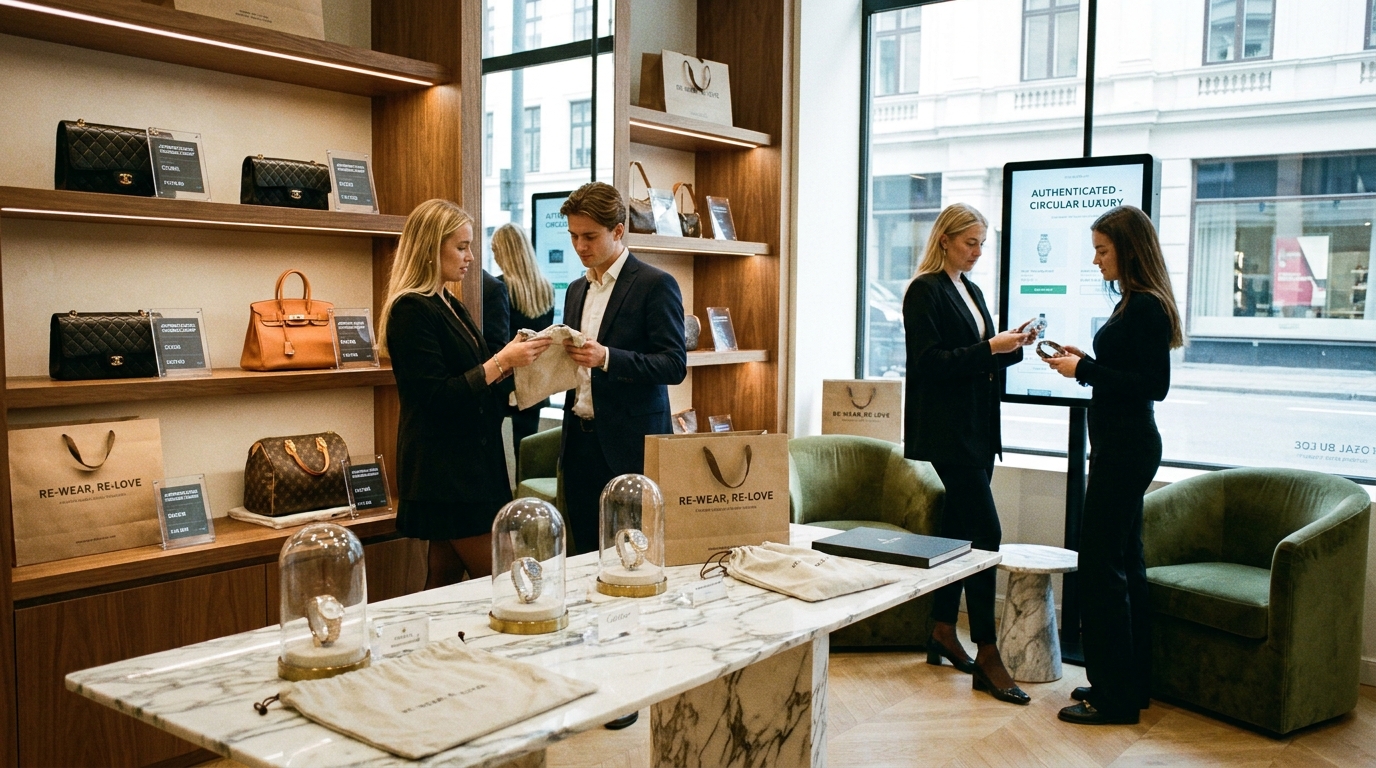
There is also a psychological shift behind this trend. Resale is increasingly associated with smart consumption rather than compromise. A limited-edition bag, a collectible watch, or a well-kept piece of jewelry can function as both personal expression and asset-conscious purchase. That mindset fits a broader 2026 consumer environment where resourceful consumption is becoming more normalized, even among high-income groups.
For luxury brands, recommerce creates both risk and opportunity. The risk is losing control over authentication, customer experience, and pricing narratives when secondary markets grow independently. The opportunity is building new ecosystems around certified resale, refurbishment, trade-ins, and lifecycle services. Brands that engage directly can protect authenticity, generate new customer data, and reinforce trust in the durability of their products.
Why Resale Supports Premium Positioning
Some luxury executives once worried that resale might dilute exclusivity. In practice, the opposite can happen. Strong resale markets often reinforce which brands, product lines, and design signatures retain desirability over time. They create an external measure of relevance. If a product holds demand in the secondary market, that persistence can strengthen the brand’s reputation for lasting value.
Resale also complements sustainability goals in a credible way. It extends product life, encourages care, and reduces the pressure for constant new production. For consumers, it adds flexibility. They can experiment, rotate, collect, and re-enter the market without treating every purchase as permanently fixed. In 2026, that flexibility is a meaningful part of luxury appeal.
The brands most likely to benefit are those that treat resale as a service layer rather than as an afterthought. Authentication, repair, condition grading, secure logistics, and clear brand standards can turn recommerce into a premium experience. That matters because luxury customers may accept secondhand, but they still expect first-rate service.
Digital Engagement Is Expanding, But Luxury Remains Hybrid
It is tempting to frame the future of luxury as purely digital, but the evidence points to a more nuanced reality. Digital engagement is becoming central to discovery, comparison, and relationship-building, yet physical retail still plays a crucial role in validation, reassurance, and emotional immersion. The luxury customer journey in 2026 is best described as hybrid. Consumers move between digital interfaces and real-world experiences depending on what stage of the decision they are in.
Deloitte’s retail trends research found that 64% of Gen Z use social media to research products and 35% use social media to discover products. For luxury brands, this confirms that social-first discovery is no longer optional. Product awareness increasingly starts in feeds, stories, short videos, creator content, and cultural conversations. These environments shape desire early, especially for younger affluent and aspirational consumers who expect inspiration to be immediate and visually compelling.
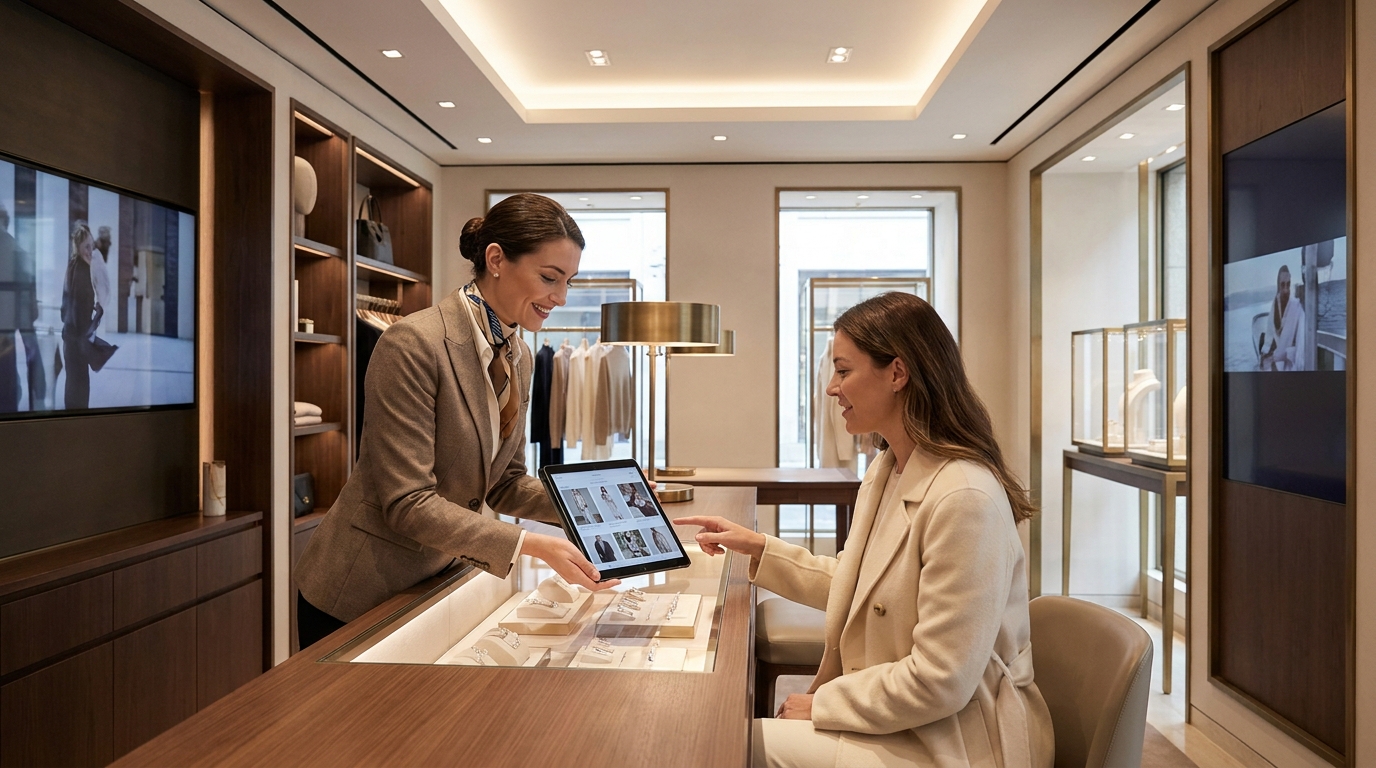
However, discovery is not the same as conversion. Luxury products often require confidence before purchase. Consumers may first notice a brand on social media, then visit the website for detail, speak with a client adviser, book an in-store appointment, and complete the purchase after seeing the product physically. This path is especially common for high-ticket items, first-time purchases, and categories where fit, finish, or symbolism matters. Digital channels open the relationship, but physical touchpoints often finalize trust.
This hybrid behavior explains why immersive retail still matters. Store design, appointments, hospitality, and personal service remain essential because they deliver the sensory and emotional reassurance that screens cannot fully replace. The most effective brands do not choose between digital and physical. They design continuity between the two, so that the customer experiences one consistent level of quality across every stage.
What Hybrid Luxury Journeys Require From Brands
To support hybrid behavior, luxury brands need systems that connect data across channels without making the experience feel mechanical. An online wish list should inform in-store service. A social campaign should link naturally to product education. A boutique visit should trigger relevant follow-up rather than generic marketing. The more expensive or emotionally significant the purchase, the more valuable this continuity becomes.
Hybrid journeys also require stronger content strategy. Social media may generate discovery, but the brand still needs editorial depth, provenance storytelling, craftsmanship education, and post-purchase care information. Luxury consumers are often willing to spend more when they feel more informed. Rich digital storytelling can support that confidence, especially when it is aesthetically controlled and clearly tied to the brand’s identity.
In this sense, digital engagement is not just a sales channel. It is the intelligence layer around the product. It helps consumers interpret value, imagine ownership, compare options, and feel included before they commit. That is why digital performance now matters even for brands that still sell much of their volume through physical locations.
AI and Clienteling Are Reshaping Service Without Replacing People
Artificial intelligence is one of the most closely watched developments in luxury, and it often generates both excitement and skepticism. The most useful way to understand AI in this sector is not as a substitute for human touch, but as an enhancer of judgment, timing, and relevance. Deloitte’s 2026 luxury commentary argues that AI, personalization, and immersive digital engagement are increasingly central to luxury value creation. That is not because luxury wants more automation for its own sake. It is because service quality now depends on the ability to interpret customer signals quickly and accurately.
Clienteling tools are a strong example. They allow sales associates and brand teams to see purchase history, browsing behavior, favorite categories, occasion-based preferences, and service notes in one place. Used well, that information supports conversations that feel informed rather than scripted. It helps advisers recommend products with greater precision and follow up in ways that feel timely. For customers, the result is a relationship that seems attentive even when the brand operates at scale.
AI can also improve product discovery on websites and apps. A digital assistant can narrow options, explain differences between collections, suggest complementary products, and reduce friction for customers who are curious but not yet experts. For newer luxury buyers, this matters a great deal. McKinsey’s point that AI can serve as a scalable proxy for client advisers reflects the reality that many customers first enter the category online, where they may need guidance before they ever speak to a person.
Importantly, luxury customers still expect discretion and control. The strongest AI applications are usually the least flashy. They sit behind the scenes, improving relevance, pacing, and consistency. They do not overwhelm the customer with aggressive prompts or overpersonalized messages. In luxury, restraint remains part of the service experience, even when advanced technology is doing much of the analytical work.
Customization and Emotional Relevance Are Growing Stronger
Another major trend in 2026 is the growing appeal of customization and made-to-order elements. This is not entirely new in luxury, but consumer demand is broadening beyond the very top tier. Buyers increasingly want products that feel specific to them, whether through engraving, modular design, material selection, personalized colorways, or curated sets. This trend fits naturally with the rise of personalization, but it goes one step further by shaping the product itself, not just the service around it.
Jewelry offers one of the clearest examples. Bain and Altagamma’s projected jewelry growth reflects, in part, the category’s ability to combine emotional meaning with design flexibility. Consumers often approach jewelry purchases with life events, relationships, or identity markers in mind. Customizable designs make the purchase feel less interchangeable and more enduring. That emotional relevance is powerful in a market where consumers are becoming more selective about what deserves premium spend.
Customization also aligns with sustainability and value preservation in subtle ways. A piece designed around personal significance is less likely to be discarded quickly. It may be kept longer, cared for more carefully, or passed on. That does not mean every customized product becomes timeless, but it does suggest a closer relationship between product design and product longevity. For luxury brands, that is an attractive position because it links creativity, customer attachment, and responsible consumption.
From a data perspective, customization demand provides valuable insight into what consumers care about most. It shows which features they want to control, which categories hold emotional weight, and where standard assortments may no longer be enough. In 2026, the luxury brand that listens carefully to those signals can create both stronger products and stronger relationships.
How Luxury Brands Can Read the Signals More Clearly
The brands best positioned for 2026 are not simply collecting more data. They are asking better questions of it. Instead of focusing only on sales totals or campaign reach, they are examining how consumers move between channels, where confidence drops in the buying journey, which services improve conversion, and what factors correlate with repeat purchasing and loyalty. Luxury strategy is becoming more analytical because the consumer journey is becoming more fragmented and more measurable.
Several signals deserve close attention. One is the gap between digital discovery and purchase completion. If customers engage heavily on social platforms or resale sites but convert only after store visits, that suggests physical validation remains essential. Another is the relationship between personalization and average order value. If tailored recommendations or adviser follow-up significantly improve conversion, brands have evidence that relevance is not just a marketing concept but a commercial lever.
Resale activity is another critical signal. Secondary market pricing, item turnover speed, authentication demand, and trade-in patterns can reveal which products have enduring appeal. Packaging feedback, repair requests, and care-service uptake can also show whether sustainability investments are visible enough to matter. The key is to connect these signals rather than treating them as isolated datasets. Luxury consumers experience the brand as one organism, so the analysis should do the same.
For consumers, this intelligence-led approach should produce a better outcome when done responsibly. It means fewer irrelevant messages, smoother service transitions, more thoughtful assortments, and stronger confidence in quality claims. Data becomes most valuable when it removes friction and improves trust. In a sector where trust is tied so closely to price, that matters enormously.
The 2026 Luxury Consumer Profile
If we combine the strongest patterns from current research, a distinct portrait emerges. The 2026 luxury consumer is highly informed, digitally fluent, values-aware, and still emotionally motivated. This buyer may discover a product through social media, compare it against resale pricing, expect a personalized digital interaction, visit a store for reassurance, and evaluate the purchase partly through durability and lifecycle value. The purchase is still aspirational, but it is also more calculated than before.
This profile helps explain why some old assumptions no longer hold. Luxury consumers are not abandoning physical retail. They are not rejecting technology. They are not treating sustainability as a fringe issue. They are not using resale only when budgets are tight. Instead, they are building more layered decision frameworks. They want exclusivity and convenience, story and evidence, beauty and functionality. The brands that satisfy these combined expectations will be the ones that gain share in a more selective market.
In North America especially, this evolution is visible in the tension between accessibility and control. Luxury must remain distinctive, but it also needs to meet consumers in the channels where attention now lives. That is why omnichannel strategy, social discovery, AI-assisted service, and circular business models are now central to growth. They are not side experiments. They are becoming part of the operating system of modern luxury.
What This Means for the Future of Luxury
The deeper lesson from 2026 is that luxury is not losing its essence. It is updating the conditions under which that essence is recognized. Craftsmanship still matters. Heritage still matters. Emotional reward still matters. But increasingly, these qualities must be supported by digital competence, data-enabled relevance, and visible responsibility. Consumers want brands that feel both timeless and current, rare and responsive, elevated and easy to engage with.
That balance will define competitive advantage over the next few years. Brands that lean too heavily on tradition may feel out of step with digitally fluent buyers. Brands that overautomate may lose the intimacy and discretion that luxury depends on. Brands that speak vaguely about sustainability without building circular or durable systems may also lose credibility. The winning approach is not maximalism in any one direction. It is thoughtful integration.
For consumers, this is a meaningful moment. The luxury market is offering more ways to participate, from personalized digital discovery to certified resale and customization. At the same time, consumers are being asked to make more conscious judgments about quality, authenticity, and value. That may sound complex, but it is ultimately a sign of a more mature market. Luxury is becoming easier to access in some ways, while becoming more demanding in what it asks brands to prove.
As 2026 unfolds, the most important luxury trend may not be any single product category or aesthetic movement. It may be the rise of a more intelligent luxury ecosystem, one where data sharpens service, sustainability deepens value, and digital engagement expands the path to desire without replacing the human side of buying. That is the future taking shape now, and the brands that read these signals clearly will be the ones that define premium culture next.
Key Takeaways for Brands and Consumers
The trends shaping luxury in 2026 are interconnected rather than separate. Personalization improves service, but it also supports hybrid shopping and customization. Sustainability strengthens brand trust, but it also connects to resale, packaging, and lifecycle value. Digital engagement expands discovery, but it works best when paired with in-store validation and human expertise. The market is moving toward integration, not fragmentation.
For readers who want a concise view of the current signal set, the following themes stand out most clearly:
- Personalization is now expected, especially when it improves discovery, relevance, and service continuity across channels.
- Sustainability is strongest when framed through quality, durability, repairability, circularity, and premium packaging innovation.
- Resale is mainstream, not marginal, and increasingly influences how consumers judge long-term value.
- Luxury shopping is hybrid, with digital-first discovery and physical validation often working together.
- AI adds the most value when it augments advisers, reduces friction, and preserves the calm, curated feeling that premium buyers expect.
- Customization is growing because consumers want emotional relevance, not only product ownership.
These are not temporary signals. They reflect structural changes in how luxury is being understood, marketed, and purchased. For brands, they offer a roadmap for smarter investment. For consumers, they explain why the premium experience increasingly feels more connected, more informed, and in some cases more accountable than it did just a few years ago.



No Comment! Be the first one.