



Urban farming can sound ambitious at first. The phrase often brings to mind rooftop greenhouses, commercial hydroponic systems, or large community plots run by seasoned growers. In reality, urban farming is much broader and much more approachable. It includes herbs on a windowsill, tomatoes on a balcony, vegetables in a backyard bed, and shared growing spaces that bring neighbors together around fresh food. For many people, the first step into urban farming is not a major lifestyle change. It is simply a decision to grow something edible where they live.
Table Of Content
- What urban farming really means
- Why urban farming matters in sustainable communities
- The biggest misconceptions that stop people from starting
- Choosing the right type of urban farm for your life
- How to start small without wasting time or money
- The essentials: light, soil, water, and crop choice
- Managing common urban farming concerns safely and realistically
- Composting, circular systems, and making the garden more sustainable
- The social side of urban farming
- A simple first season plan
- How urban farming can grow with you
- Final thoughts
That matters because sustainable food production does not only happen on large rural farms. It also happens close to home, in the spaces woven into everyday city life. Major food and agriculture organizations now describe urban and peri urban agriculture as an important part of local food systems, climate resilience, and community wellbeing. Public agencies in Canada and the United States increasingly support community gardens, local food infrastructure, and innovative growing models because urban farming can improve access to fresh produce while strengthening social connection and local capacity.
If you are curious about urban farming but unsure whether you have enough space, knowledge, time, or confidence, you are in very good company. Many city residents assume food growing is only for people with large yards or expert skills. The evidence suggests otherwise. Statistics Canada has reported that about half of Canadians grow at least one fruit or vegetable at home, and about one quarter of home gardeners live in the urban core. Urban growing is not a fringe activity. It is already part of how many people live, learn, and contribute to more sustainable communities.
This guide is designed to make urban farming feel clear, feasible, and genuinely useful. Rather than presenting it as a perfect environmental solution, it treats urban farming as a practical tool that can improve food access, increase resilience, and build stronger neighborhoods when it is done thoughtfully. You do not need to do everything at once. You do not need expensive equipment. You do not need to call yourself a farmer. You only need a place to begin and a willingness to learn as you go.
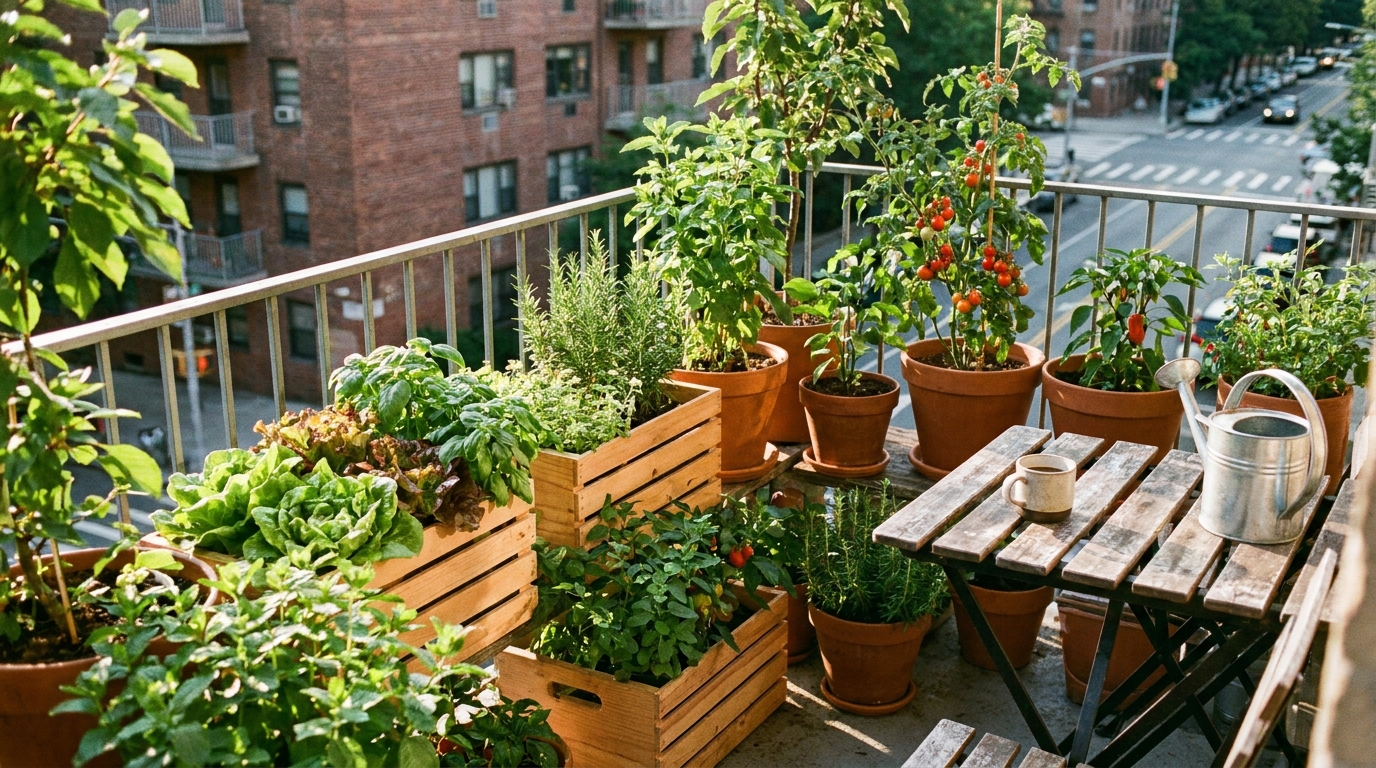
What urban farming really means
At its simplest, urban farming means growing food within or around cities. That can include backyard gardens, community plots, school gardens, rooftop beds, greenhouse growing, hydroponics, aquaponics, edible landscaping, and indoor systems that use shelves and grow lights. Some projects are personal and very small in scale. Others are cooperative, educational, or commercial. What connects them is their location within the urban environment and their role in producing food closer to where people live.
It helps to separate urban farming from the narrow image many people have of it. Urban agriculture is not only high tech vertical farming, and it is not only large community initiatives. A few pots of herbs and salad greens count. So does a raised bed shared by a few households in an apartment courtyard. The idea is not to compete with large scale agriculture or replace regional food networks. The value of urban farming is that it adds another layer to the food system, one that can be local, educational, flexible, and deeply connected to daily life.
Organizations like the FAO and USDA increasingly frame urban agriculture as part of a broader resilience strategy. That is an important shift. For years, urban growing was often seen as a nice hobby or community amenity. Today it is more often discussed in terms of food security, climate adaptation, public health, and community development. This does not mean every urban farm will transform a city, but it does mean these efforts are being taken seriously by planners, funders, and public agencies.
For beginners, this broader definition is encouraging because it removes unnecessary pressure. Urban farming does not need to start with a big vision. It can start with one container, one season, and one crop you actually enjoy eating. That may sound modest, but modest beginnings are often the most durable ones.
Why urban farming matters in sustainable communities
Urban farming appeals to people for many reasons, and food is only one of them. It can certainly increase access to fresh herbs, vegetables, and fruit, especially in neighborhoods where quality produce is expensive or less available. Yet the benefits extend much further. Research on community gardens has linked them with higher fruit and vegetable intake, more physical activity, lower body mass index, and stronger social connection. In other words, growing food locally can support both environmental goals and human wellbeing in practical, measurable ways.
Canadian public health research on the askîy urban agriculture project found benefits that included food literacy, social relationships, physical activity, and pride in community settings. That combination is especially meaningful in cities, where many people are looking for ways to feel more grounded, more connected, and more capable in the places they live. A garden can be a source of nutrition, but it can also become a place to exchange knowledge, support neighbors, and reconnect with seasonality in an urban context that often feels fast and disconnected.
There are environmental benefits as well, though they depend on how a project is designed. Urban farming can support composting, local nutrient cycling, green infrastructure, and biodiversity when it includes practices like healthy soil building, rainwater capture where permitted, pollinator friendly planting, and careful resource use. Vegetated spaces can also contribute to urban cooling and stormwater management. These outcomes are not automatic, and they vary by method and location, but they show that urban farming can be more than a food trend. It can become part of a city’s ecological fabric.
It is also worth noting the policy momentum behind this shift. Agriculture and Agri Food Canada has continued supporting community food security through the Local Food Infrastructure Fund, including projects such as community gardens, greenhouses, kitchens, and food forests. This growing institutional support reflects a wider understanding that local food production can be a meaningful part of long term resilience. For individuals, that means urban farming is becoming easier to access through community programs, grants, shared spaces, and public awareness.
Urban farming works best when it is treated as a practical layer of the food system. It does not need to do everything to be worth doing. Even small growing projects can improve access, connection, confidence, and community resilience.
The biggest misconceptions that stop people from starting
One of the most common barriers to entry is the belief that urban farming requires a lot of land. This is understandable because traditional ideas about farming are tied to large plots, rows of crops, and rural space. But urban growing often happens in much smaller footprints. Containers, windowsills, balconies, rooftops, raised beds, and shared garden plots can all produce meaningful amounts of herbs and vegetables. If your goal is to start growing some of your own food, you likely need far less space than you think.
Another misconception is that growing food is only for experts or people with a rural background. In practice, many successful urban growers begin with almost no prior experience. Community gardens, nonprofit programs, and neighborhood networks often rely on simple peer learning rather than specialized training. The basics are learnable. Plants need enough light, the right container or bed, healthy growing medium, water, and attention over time. You do not need to master every gardening technique before putting a seed in soil.
Safety concerns also come up frequently, especially around urban soil. This concern is valid, but it should not become a reason to dismiss urban farming altogether. Urban grown food is not automatically unsafe. Safety depends on the specific site, whether the soil has been tested, whether clean compost is used, and whether the growing area is protected from contamination sources like old industrial sites or flaking lead paint. Urban gardening is safest when it is planned carefully, which is very different from saying it is inherently risky.
A final misconception is that urban agriculture cannot matter because cities will never feed themselves fully. That is true, but it misses the point. Urban farming is not an all or nothing proposition. It can matter by increasing access to fresh food, reducing some household food costs, building knowledge, supporting local resilience, and strengthening communities. A balcony full of herbs will not replace a regional farm, but it can absolutely change a household’s relationship with food.
Choosing the right type of urban farm for your life
The most successful urban farming projects usually begin with a clear match between ambition and reality. Before buying supplies, it helps to think about your space, schedule, climate, budget, and goals. Are you hoping to cut your grocery bill a little, teach children where food comes from, meet neighbors, support pollinators, or simply enjoy the process of growing something edible? There is no single correct answer, and the best setup is the one you can maintain with reasonable consistency.
If you have very limited space, a windowsill herb garden or a few containers on a balcony may be the ideal starting point. Herbs like basil, mint, parsley, cilantro, and chives are useful, rewarding, and relatively beginner friendly. Salad greens, radishes, and compact tomatoes can also work well in containers if they receive enough sunlight. This kind of setup is manageable, low cost, and well suited to people who are still building confidence.
If you have access to a yard, a raised bed can provide a more flexible and productive option. Raised beds help with soil control, drainage, and crop planning, especially in areas where in ground soil quality is uncertain. They are also easier on the body than gardening directly in compacted ground. Even one small raised bed can produce herbs, leafy greens, beans, and seasonal vegetables with good planning.
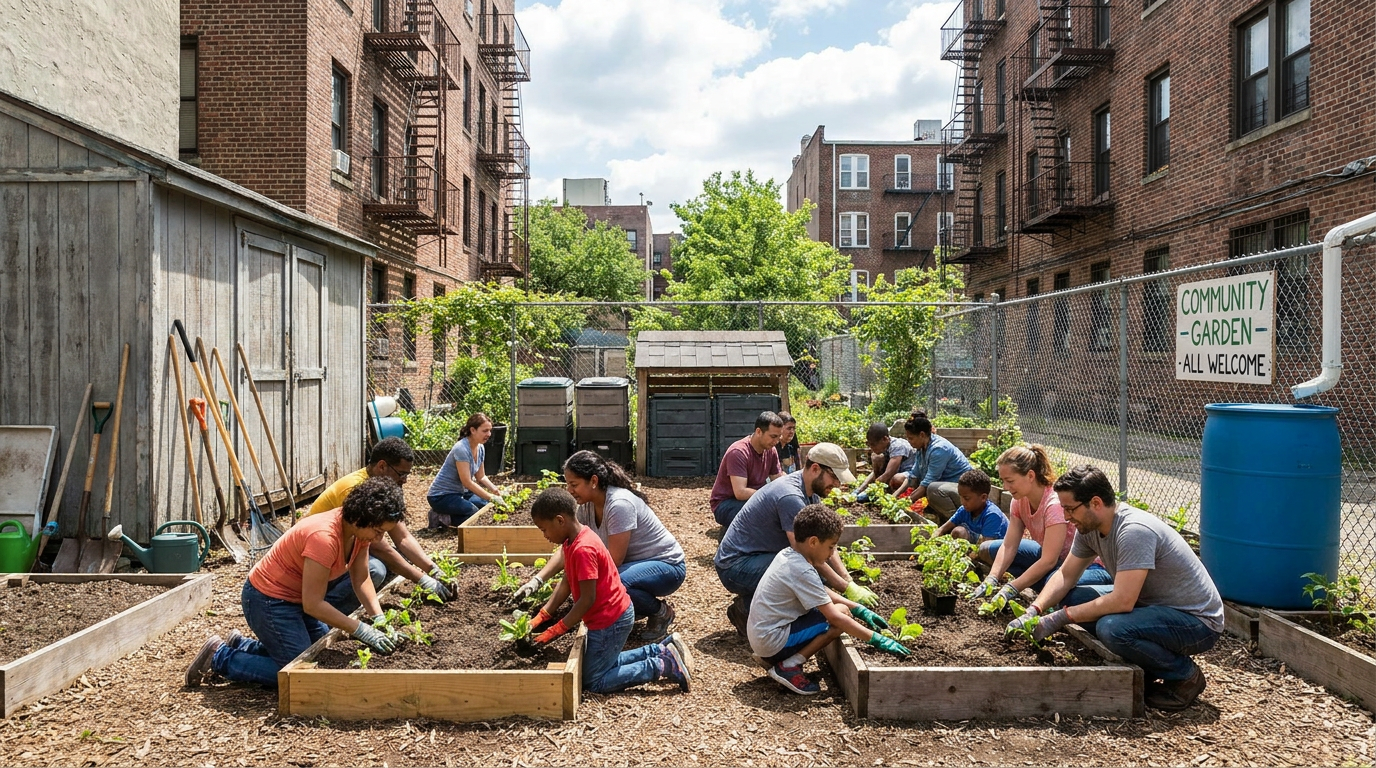
For people living in denser buildings or seeking more social connection, a community garden can be an excellent entry point. Shared growing spaces reduce the need for private land and often come with built in knowledge exchange. Many community gardens have waiting lists, but they may also offer volunteer opportunities, collective beds, or educational events that help newcomers get involved before taking on a full plot. If your hesitation is rooted in inexperience, this is often one of the most supportive ways to begin.
Controlled environment systems like hydroponics and indoor growing can also be part of urban farming, especially in places with short seasons or limited outdoor access. These systems can be efficient and productive, but they may require more equipment, closer monitoring, and in some cases more energy use. They are a useful option for some households, but they are not the easiest entry point for everyone. It is often better to begin with a simple system you can understand well, then expand later if you are genuinely interested.
How to start small without wasting time or money
One reason people abandon urban farming early is that they begin with too much at once. They buy many seed varieties, set up more containers than they can manage, or choose crops that require more attention than expected. Starting small is not a compromise. It is a design principle. A smaller project helps you notice patterns, understand your space, and build routines before scaling up.
A practical beginner approach is to choose three categories of crops. First, grow something you use often, such as herbs, green onions, lettuce, or cherry tomatoes. Second, grow something fast, such as radishes or salad greens, so you can experience an early success. Third, grow something enjoyable or beautiful, perhaps strawberries, nasturtiums, or a compact pepper variety, so the garden feels engaging and personal. This mix supports motivation while keeping the project grounded.
It is also wise to keep your first season inexpensive. Reuse containers if they are food safe and have drainage. Borrow tools when possible. Buy a quality growing mix rather than many accessories. Good soil or potting medium is often a better investment than decorative supplies. If you are joining a community garden, ask what infrastructure is already available so you do not purchase items you will not need.
Most importantly, accept that the first season is partly an experiment. Plants may thrive or struggle based on light, weather, pests, and timing. That is normal. Urban farming is not a test of personal competence. It is a practice of observation and adaptation. What matters is building enough familiarity that the process becomes less intimidating over time.
The essentials: light, soil, water, and crop choice
Every successful growing setup depends on a few core conditions. Light is often the most important. Most fruiting crops such as tomatoes and peppers need several hours of direct sun, while many herbs and leafy greens can tolerate somewhat less. Before planting, spend a few days observing your space. A balcony that feels bright may not actually receive enough direct sunlight for certain crops. Matching crops to available light will save frustration later.
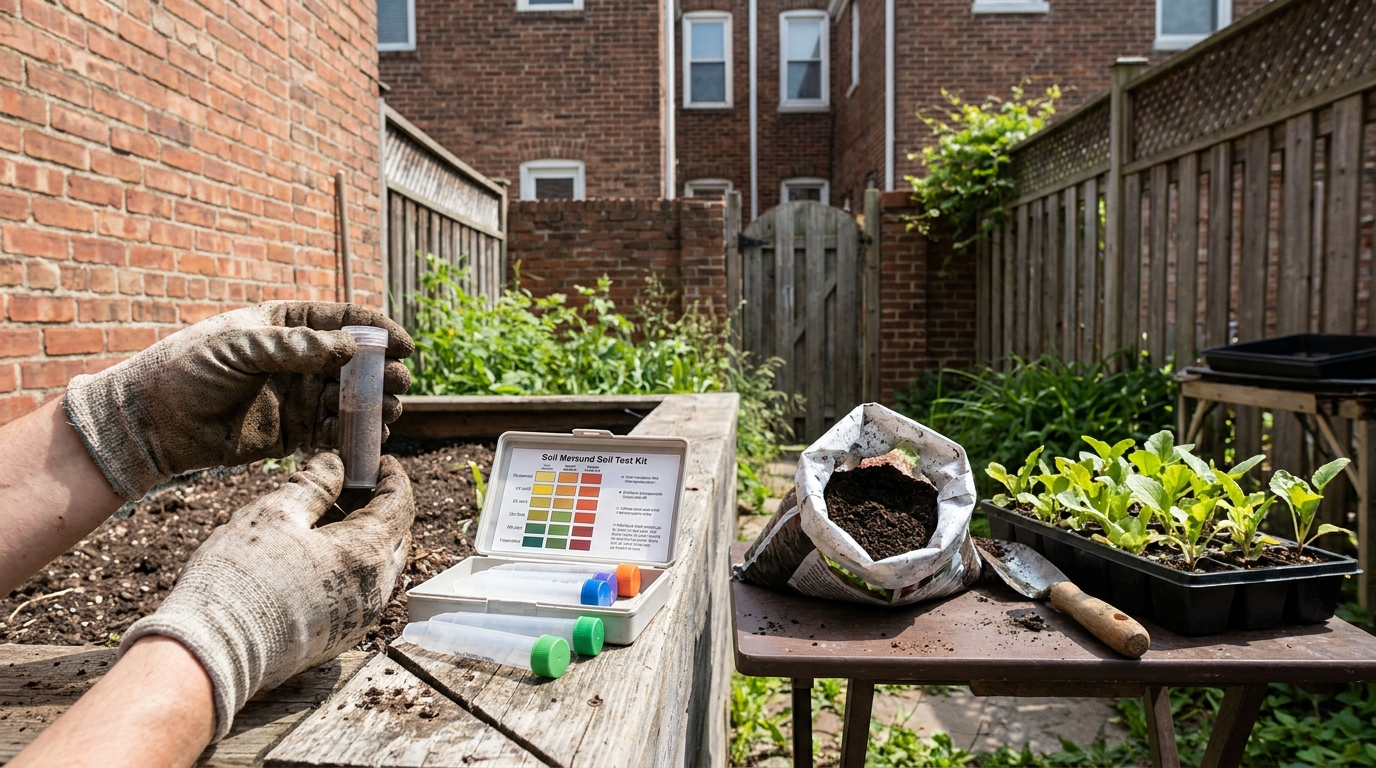
Soil quality matters just as much. For containers, use a good potting mix rather than garden soil, which can compact and drain poorly in pots. For raised beds or in ground spaces, think carefully about soil safety and fertility. In urban settings, especially in older neighborhoods or near former industrial uses, soil testing is a prudent first step. If there is any uncertainty, raised beds with clean imported soil can provide greater control and peace of mind.
Watering is where many beginner gardens either thrive or falter. Containers dry out faster than people expect, particularly in hot weather or windy high rise settings. Raised beds are a little more forgiving, but they still need consistent attention. The goal is not simply to water often. It is to water deeply enough and regularly enough that plants develop strong roots. Mulch, where appropriate, can help reduce evaporation and support soil health.
Crop choice should reflect both climate and practicality. Start with varieties that are suited to your region and season length. In many Canadian cities, quick growing crops and compact varieties are more forgiving than long season, space hungry plants. If you are unsure, local garden centers, seed companies, cooperative extension services, or community gardening groups can point you toward reliable options. There is no shame in choosing the easy crops first. That is often the smartest choice.
Managing common urban farming concerns safely and realistically
Urban farming is most rewarding when enthusiasm is paired with practical care. One of the clearest examples is soil contamination. Urban land can have a complex history, and not every space is suitable for edible growing without assessment. If you are planting directly in the ground, especially near old buildings, roads with heavy traffic histories, or former industrial areas, consider a soil test before planting food crops. If testing is not feasible immediately, container gardening and raised beds with clean soil are sensible alternatives.
Water access is another factor that deserves attention. Community gardens may have shared taps, rain barrels, or restrictions on use. Balconies and rooftops can make carrying water physically demanding, especially in summer. Planning for convenience is important because a garden that is hard to water regularly is harder to sustain. If possible, place containers near a reliable source and use saucers or self watering systems where appropriate to reduce maintenance.
Land tenure can also affect larger urban growing projects. A community lot may feel stable for years and then face redevelopment pressure. Backyard access may change with a move. This does not mean such projects are not worthwhile, but it does mean flexibility is valuable. Portable containers, modular raised beds, and community partnerships can help reduce the disruption that comes with uncertain long term access.
Energy use is an important consideration for indoor systems and controlled environment agriculture. Grow lights, pumps, and climate control can make year round production possible, but they can also increase environmental impact if not used efficiently. For home growers, this is a reminder to choose systems that align with your goals. If low impact living is a priority, a seasonal outdoor garden supported by composting and simple tools may be a better fit than an energy intensive setup. Sustainability is not about choosing the most advanced method. It is about choosing the most appropriate one.
Composting, circular systems, and making the garden more sustainable
One of the most compelling aspects of urban farming is that it can connect food production with local waste reduction. Kitchen scraps, yard trimmings, and plant residues can become compost that improves soil structure, supports moisture retention, and returns nutrients to the growing cycle. Agencies such as the EPA and FAO note that composting and nutrient management can strengthen the environmental sustainability of urban agriculture, especially when systems are designed thoughtfully.
For a household grower, composting does not have to be complicated. Some people use backyard bins. Others rely on municipal organics programs while adding purchased compost to garden beds. Apartment residents may try small scale worm composting if building rules allow. The point is not to achieve a perfectly closed loop. It is to recognize that food growing becomes more sustainable when organic matter is treated as a resource rather than waste.
Urban farms can also support biodiversity when they include pollinator friendly flowers, avoid unnecessary pesticide use, and maintain healthy soil life. A productive edible space does not need to look purely utilitarian. In fact, gardens that mix beauty and function often attract more care from the people around them. Edible landscaping, flowering herbs, and habitat friendly planting can make food spaces feel integrated into the neighborhood rather than set apart from it.
Even small design choices can contribute to resilience. A rain barrel, where permitted and practical, can reduce pressure on municipal water use. Mulching can limit evaporation. Shared tools can reduce material waste. Collective workdays can spread knowledge and labor. Sustainability in urban farming is usually the result of many grounded decisions rather than one dramatic intervention.
The social side of urban farming
It is easy to focus on the physical act of growing food and overlook how social urban farming can be. Yet in many communities, this is where some of the deepest value emerges. Gardens create reasons for people to talk, trade advice, share harvests, and show up for one another in ordinary ways. The result is not only produce. It is a stronger local culture of participation and care.
Community gardens are especially powerful in this regard. Research has associated them with improved social connection and community engagement, and that aligns with what many gardeners describe from lived experience. A shared plot can become a place where newcomers feel welcome, elders pass down knowledge, children learn through direct experience, and neighbors meet outside the usual routines of urban life. In a time when many people feel isolated, that kind of place has real value.
Urban farming also intersects with larger conversations about food justice, food sovereignty, and culturally appropriate food access. Community led projects often emerge not simply to beautify an area, but to respond to gaps in the local food environment or preserve food traditions that matter to residents. Indigenous food sovereignty initiatives and culturally rooted neighborhood gardens are increasingly visible across North America, reminding us that growing food locally can also be about identity, autonomy, and belonging.
If you are hesitant to start alone, this social dimension offers a gentle path in. You do not have to build a fully independent garden on day one. You can attend a volunteer day, ask a neighbor what grows well locally, share seedlings, or join a gardening group online and then in person. Urban farming becomes much easier when it is seen as a community practice rather than a solitary challenge.
A simple first season plan
If you are ready to begin, it can help to follow a straightforward seasonal plan. Start by observing your available space for sunlight, wind, and water access. Then decide whether your best first setup is a windowsill, containers, a raised bed, or a shared community plot. Keep your crop selection narrow and practical. Choose a few things you will actually eat and that suit your conditions well.
Next, gather only the essentials. You generally need containers or bed space, quality soil or potting mix, seeds or seedlings, a watering can or hose access, and perhaps a small hand trowel. Label your plants if you are growing several kinds. Keep notes on what you planted and when. This may seem basic, but simple records make a surprising difference when you want to improve next season.
Once planting begins, focus on consistency rather than intensity. Check moisture regularly, harvest often, and look at your plants closely enough to notice changes. If a crop struggles, ask why before assuming you failed. Was there enough sun? Was the container large enough? Did the soil dry out too quickly? These observations are what turn a beginner into a capable grower.
At the end of the season, reflect on what felt manageable and worthwhile. Perhaps the herbs thrived but the tomatoes needed more light than you had. Perhaps the community bed gave you more support than gardening alone. Perhaps composting became the most satisfying part. Let the next season grow from what worked. Urban farming becomes sustainable at the household level when it fits into real life, not when it follows an idealized plan.
How urban farming can grow with you
One of the best qualities of urban farming is that it scales naturally. A single pot of basil can lead to a small salad garden. A raised bed can become a seasonal routine. A neighborhood volunteer shift can become long term civic involvement. You do not need to map the full journey in advance. The value often reveals itself gradually as skills build and relationships deepen.
Over time, you may decide to expand into seed starting, food preservation, composting, rainwater collection, pollinator planting, or collective growing efforts. You might support a school garden, advocate for edible public spaces, or help your building create shared planter areas. These are all ways urban farming can move from a personal habit to a wider contribution. Public support and municipal interest in local food infrastructure mean there are increasing opportunities to connect private action with community level change.
Just as importantly, urban farming can shift your understanding of sustainability. It makes abstract ideas tangible. Food systems become visible. Waste becomes material. Seasons become relevant again. The work of caring for a small growing space often creates a quieter and more durable environmental awareness than dramatic lifestyle messaging ever could. It is practical, embodied, and rooted in place.
That is perhaps the most reassuring truth about getting started. Urban farming does not ask you to become someone else. It simply invites you to participate more actively in the life of your home, your food, and your community. Whether you grow herbs on a sill, tend a few containers on a balcony, or join neighbors in a shared plot, you are contributing to a more resilient and connected local future.
Final thoughts
Urban farming is accessible because it can begin at the scale of ordinary life. You do not need acres, expensive equipment, or years of experience to take part. You need a realistic starting point, a willingness to learn, and a setup that matches your space and habits. When approached this way, urban farming becomes not only feasible but deeply rewarding.
The broader sustainability benefits are real, especially when projects are designed with care around soil safety, water use, composting, and community value. Yet perhaps the strongest reason to begin is simpler than that. Growing food, even in small amounts, changes how a place feels. It turns overlooked corners into living systems and private routines into shared possibilities.
In a time when many environmental challenges feel distant or overwhelming, urban farming offers something refreshingly grounded. It is local, practical, and collaborative. It can feed people, teach useful skills, reduce waste, and create connection. Most of all, it reminds us that sustainable communities are built not only through large policies and technologies, but also through small acts of care repeated season after season.
If you have been waiting for the right moment to begin, let this be the encouragement you need. Start with one container, one bed, or one community conversation. Keep it simple. Let it be imperfect. The first harvest may be modest, but the long term return can be much larger than it looks.


No Comment! Be the first one.