



Cities have always been systems of movement, pressure, timing, and tradeoffs. Roads wear down slowly until they fail suddenly, transit delays ripple outward from one small incident, and utility networks often reveal their weaknesses only after residents lose service. Predictive infrastructure changes that pattern by helping municipalities anticipate needs before breakdowns, bottlenecks, and disruptions become visible to the public. It is not a futuristic abstraction. It is an operational approach that uses data, sensors, analytics, and connected systems to make urban life more reliable in practical ways.
Table Of Content
- What Predictive Infrastructure Actually Means
- Why Growing Cities Need a More Predictive Operating Model
- Practical Applications Where Predictive Infrastructure Changes Daily Life
- Transportation That Responds Before Congestion Locks In
- Water Systems That Catch Trouble Early
- Energy and Lighting Networks That Improve Reliability
- Transit Operations That Prioritize Reliability Over Recovery
- Buildings and Civic Assets That Last Longer
- Why Integration Matters More Than Individual Smart Devices
- How Predictive Infrastructure Improves the Resident Experience
- The Governance Questions Cities Cannot Skip
- What Good Implementation Looks Like in the Real World
- Common Misconceptions That Distort the Conversation
- The Next Phase: AI, Digital Twins, and Urban Foresight
- What Residents and Local Leaders Should Watch For
- Conclusion: Smarter Cities Start With Better Anticipation
The timing matters. According to the UN World Urbanization Prospects 2025, cities housed 45% of the global population in 2025, and roughly two-thirds of the world population is projected to live in urban areas by 2050. Canada is already highly urban, and Statistics Canada has documented continued growth and densification in major centres such as Toronto, Montréal, and Calgary. As more people depend on the same roads, pipes, transit systems, buildings, and public services, the cost of reactive management becomes harder to absorb.
This is where predictive infrastructure earns attention. Instead of asking what failed and how quickly crews can respond, cities can increasingly ask what is likely to fail, when risk is rising, and what intervention would prevent a wider disruption. That shift sounds technical, but the effects are deeply human. It can mean fewer missed buses, fewer flood-prone intersections, fewer power outages, safer public spaces, and more confidence that essential systems will work as expected.
The strongest case for predictive infrastructure is not that it makes cities look smarter. It is that it makes them function better. For residents, that means better daily experiences. For city leaders, it means lower lifecycle costs, better asset performance, improved safety, and more resilient service delivery. For planners and operators, it creates an intelligence layer that connects what cities know with how cities act.
In practice, predictive infrastructure is already appearing across transportation, water, energy, public works, asset management, and emergency response. The technology includes IoT sensor networks, connected devices, machine learning models, digital twins, centralized asset platforms, and real-time operations dashboards. But the true value comes from integration and decision-making, not from gadgets alone. A city does not become predictive because it installs sensors. It becomes predictive when data is turned into operational foresight.
What Predictive Infrastructure Actually Means
Predictive infrastructure refers to physical and digital city systems that monitor conditions continuously and use historical and real-time data to forecast what is likely to happen next. That can include anticipating a water-main break, estimating traffic congestion thirty minutes before it peaks, identifying a transit vehicle component at high risk of failure, or detecting when energy demand is likely to spike in one district. The concept is broad because cities are broad. The same logic can apply to roads, bridges, substations, streetlights, elevators, buildings, waste collection routes, and emergency operations.
It is important to separate predictive infrastructure from a common misconception. It is not the same as fully autonomous infrastructure. In most real municipal settings, predictive systems support human decision-making rather than replace it. Engineers, public works teams, transit operators, and emergency coordinators still decide what to do, but they do so with earlier warnings and better prioritization.
Another misconception is that predictive infrastructure only refers to mobility and traffic lights. Transportation is a visible use case, but it is only one part of the picture. Water utilities can use anomaly detection to flag leakage patterns, building managers can use predictive maintenance to reduce equipment downtime, and public safety teams can combine weather, event, and traffic signals to position resources more effectively. The intelligence layer spans multiple services because urban friction rarely stays in one department.
NIST has identified smart-city systems as cyber-physical systems supported by IoT infrastructure, with the potential to improve transportation, energy, public safety, and quality of life. That definition matters because it frames predictive infrastructure as more than software. It is the joining of digital signals and physical systems, where data about the city can influence how the city performs. Once that link exists, operations can become more proactive and more adaptive.
Why Growing Cities Need a More Predictive Operating Model
Urban growth creates a compounding challenge. It is not simply that there are more residents. It is that every network becomes denser, more interdependent, and less tolerant of failure. A burst pipe beneath a major road can affect traffic, bus schedules, business access, emergency routing, and even local power systems if repairs require closures or shutdowns. In a lower-density environment, the same failure might remain local. In a dense city, it can cascade.
That is why reactive maintenance becomes expensive in ways that standard budgets do not always capture. The direct repair cost might be manageable, but the social and economic cost of disruption can be much larger. Lost commuting time, delayed deliveries, service interruptions, reputational damage, and emergency overtime all accumulate quietly. Predictive infrastructure aims to reduce those knock-on effects by moving intervention earlier in the timeline.
There is also a strategic policy context in Canada. The Government of Canada’s Smart Cities Challenge and related support programs were designed to help communities use data and connected technologies to address complex social, environmental, and economic problems. A 2024 evaluation noted a federal commitment of $300 million over 11 years. That funding story matters because it reflects a broader shift in public-sector thinking. Municipalities are not only purchasing technology. They are building capacity to use data for service planning, infrastructure monitoring, and preventive action.
For residents, the need is simpler than the policy language suggests. People want streets that move, utilities that hold up, public spaces that feel safe, and services that respond before inconvenience becomes disruption. Predictive infrastructure aligns with that expectation because it focuses on reliability. In many ways, the smartest city service is the one people barely notice because it works consistently in the background.
Predictive infrastructure is valuable not because it makes cities look futuristic, but because it makes ordinary urban life less fragile.
Practical Applications Where Predictive Infrastructure Changes Daily Life
Transportation That Responds Before Congestion Locks In
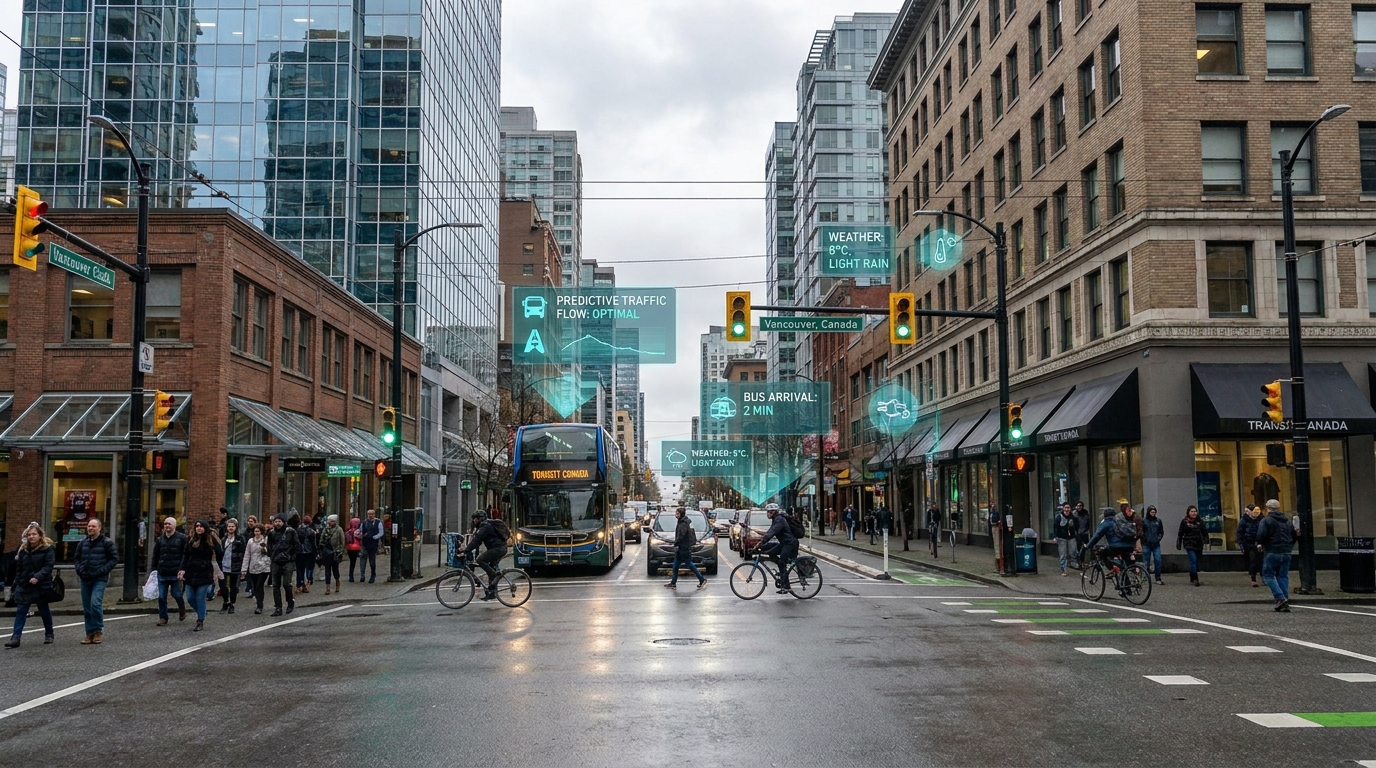
Traffic is one of the easiest urban frustrations to recognize, which is why transportation often becomes the public face of predictive infrastructure. But the real opportunity goes beyond adaptive signal timing. Connected transportation systems can combine data from road sensors, weather feeds, transit schedules, event calendars, vehicle counts, and historical traffic patterns to anticipate where congestion will form and how it will spread. That gives cities a chance to intervene before intersections become choke points.
Those interventions can take different forms. Signal timing can be adjusted dynamically. Transit priority can be increased along overcrowded corridors. Incident response teams can be routed faster if analytics indicate abnormal slowdown patterns that suggest a collision or obstruction. Commuters can be informed through apps and signage before delays intensify, giving them time to reroute or switch modes.
NIST has noted that an integrated IoT-enabled transportation infrastructure can save up to 60 hours per year for a typical driver. That figure is useful because it converts a technical system into a human outcome. A predictive transport network is not just reducing abstract congestion metrics. It is giving people time back, lowering stress, improving bus reliability, and helping businesses operate with fewer unpredictable delays.
Real-world city operations show that transportation prediction works best when cities connect transit and roads instead of managing them in separate silos. A delayed bus can contribute to crowding at one station, which can influence nearby curb activity and spill into traffic flow. A weather event can reduce cycling volume while increasing short car trips. Predictive models become more useful when they understand these cross-system relationships rather than treating each mode independently.
Water Systems That Catch Trouble Early
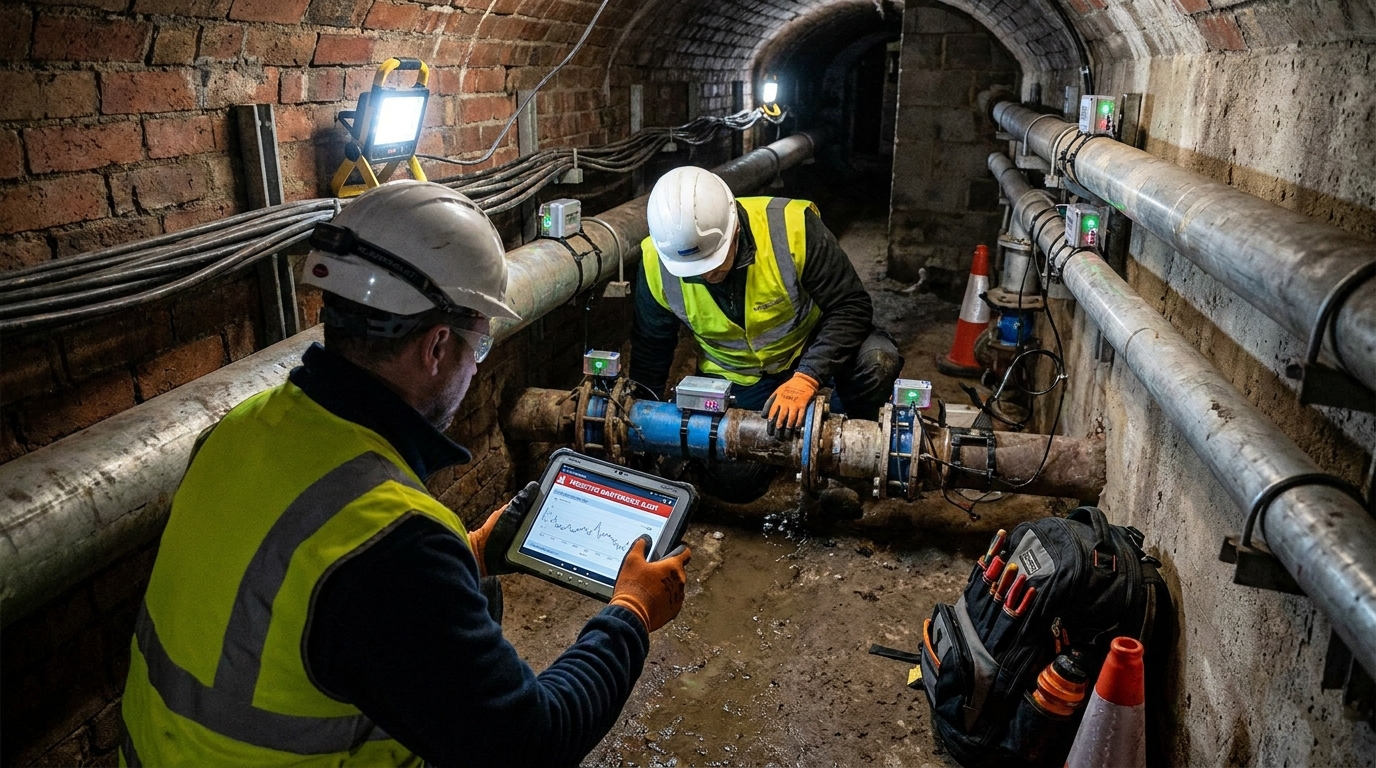
Water infrastructure is one of the clearest examples of why prediction matters. Much of it is buried, aging, and expensive to replace. Traditionally, problems become visible only when they surface as leaks, pressure loss, contamination concerns, or disruptive roadwork. Sensor-driven monitoring changes that by tracking variables such as pressure, flow, vibration, and usage anomalies across pipelines, pumps, and treatment assets.
When those signals are paired with maintenance history and environmental conditions, municipalities can identify where risk is rising. For example, a pipe segment under repeated stress, combined with freeze-thaw cycles and age data, may be flagged for targeted inspection or replacement before a catastrophic break occurs. That does not eliminate maintenance. It improves timing and prioritization, which is exactly where cities gain value.
The resident impact is immediate even if invisible. Fewer bursts mean fewer road closures, fewer basement flooding incidents, and fewer periods of service interruption. For public works departments, the benefit includes more efficient capital planning and better crew scheduling. Instead of reacting to emergencies at the worst possible time, teams can address high-risk assets under more controlled conditions.
Energy and Lighting Networks That Improve Reliability
Electricity systems and public lighting are often judged by their reliability, which makes them strong candidates for predictive approaches. Connected substations, transformers, meters, and lighting assets can generate continuous performance data that helps utilities detect unusual load patterns, equipment stress, and likely points of failure. If demand spikes are forecast accurately, cities and utilities can balance loads more effectively and prevent wider outages.
Streetlights are a particularly practical example because they affect safety, visibility, public confidence, and maintenance costs. A reactive model means crews wait for complaints or visible outages. A predictive model uses sensor data to identify assets that are degrading or behaving abnormally before they fail. That can reduce downtime, lower inspection costs, and keep public spaces functioning more consistently.
In dense urban neighbourhoods, even a small service outage can have broader consequences. Power interruptions affect elevators, traffic systems, retail operations, communications equipment, and public comfort during extreme temperatures. Predictive infrastructure helps cities move closer to resilience by reducing the chance that one unnoticed issue becomes a network-scale problem.
Transit Operations That Prioritize Reliability Over Recovery
Transit systems are full of interconnected assets, from vehicles and tracks to signals, HVAC equipment, escalators, and passenger information displays. In many cities, maintenance still follows a mix of fixed schedules and emergency response. Predictive maintenance offers a more adaptive model by identifying when a component is likely to fail based on usage patterns, sensor data, and historical performance.
This is especially valuable because transit disruptions compound quickly. A single train issue during peak periods can create crowding, delay platform turnover, push riders to buses or roads, and alter demand across multiple corridors. Predictive alerts give operators more room to stage repairs, pull vehicles out of service strategically, and communicate with passengers earlier. The result is not perfection, but fewer avoidable breakdowns and more dependable service.
IBM and other infrastructure case studies have highlighted how analytics and centralized asset platforms are already helping operators improve reliability, prioritize maintenance, and respond faster. The lesson is straightforward. Transit reliability is not just a rolling stock issue. It is an asset intelligence issue, and predictive systems provide that intelligence layer.
Buildings and Civic Assets That Last Longer
Modern cities own and operate a wide range of facilities, including libraries, recreation centres, schools, administrative buildings, parking structures, and housing assets. These buildings contain mechanical systems that can be monitored continuously, from boilers and chillers to elevators and ventilation systems. Predictive maintenance allows facility managers to spot degradation patterns early and reduce costly downtime.
This matters for urban quality of life because public buildings are part of the resident experience. If a community centre closes unexpectedly due to mechanical failure, the effect goes beyond repair bills. Programs are disrupted, bookings are lost, and trust in public service reliability weakens. Predictive tools help municipalities maintain continuity in the places people depend on most often.
Asset life extension is also significant financially. Cities face budget pressure, deferred maintenance backlogs, and complex replacement decisions. Better data on condition and performance supports more rational capital planning. Instead of replacing assets too early or too late, municipalities can time interventions more accurately and make scarce funding go further.
Why Integration Matters More Than Individual Smart Devices
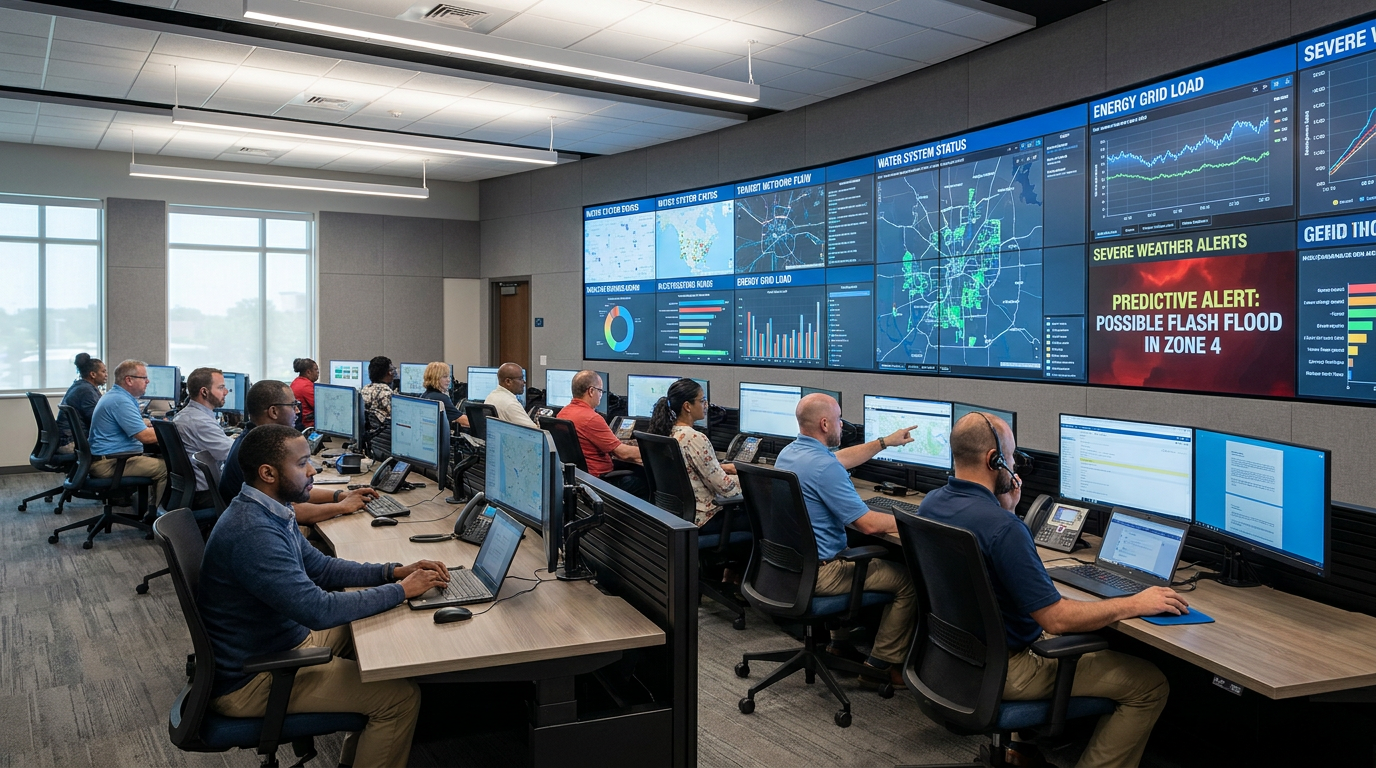
One of the most important lessons in predictive infrastructure is that isolated tools rarely create full value. A city can install smart meters, adaptive traffic signals, connected pumps, or air-quality monitors, but if each system remains operationally separate, the city still lacks a common picture. The biggest gains come when municipalities combine signals from traffic, weather, transit, utilities, public works, and citizen service requests into a shared operational framework.
This systems view is essential because urban disruptions are interconnected. Heavy rainfall can increase flood risk, alter road conditions, slow buses, strain drainage systems, and increase emergency calls in low-lying areas. If departments operate from separate data environments, each may respond late or narrowly. If those signals are integrated, the city can coordinate traffic diversions, deploy field crews, monitor pumping stations, alert residents, and prioritize the most vulnerable locations before impacts spread.
Digital twins are becoming increasingly useful in this context. A digital twin is a dynamic digital representation of physical assets or systems that can be used to simulate conditions, test interventions, and understand interdependencies. For city operators, that means they can model what happens if a major corridor is closed, if demand shifts to a different transit route, or if severe weather hits a known weak point in the drainage network. Simulation does not replace field knowledge, but it gives decision-makers a way to see consequences before committing resources.
That broader operational picture is often more valuable than any single prediction. It helps cities understand not only what might fail, but also what that failure would affect. In infrastructure planning, context is everything. A moderate issue in a strategic location may deserve more urgent action than a larger issue with limited system impact.
How Predictive Infrastructure Improves the Resident Experience
The phrase resident experience can sound vague, but in cities it usually comes down to a few measurable things. How long people spend traveling. How often essential services are disrupted. How safe and accessible public spaces feel. How easy it is to trust that a city can handle pressure without descending into chaos. Predictive infrastructure influences all of these by reducing uncertainty.
Consider a normal workday. A predictive transportation system reduces the chance that one lane closure triggers an hour of unnecessary delay. A predictive transit maintenance system lowers the odds that a train is removed from service at peak rush. A predictive utility network catches abnormal pressure before a major main break closes roads and affects homes. A predictive building management system prevents a recreation centre from shutting down due to HVAC failure during a heat event. Individually, these are operational wins. Collectively, they shape how livable a city feels.
There is also an equity dimension that cities should not ignore. Service disruptions do not affect all residents equally. People with longer commutes, less schedule flexibility, mobility constraints, or fewer alternatives are often hit harder by unreliable infrastructure. If predictive systems are designed thoughtfully, they can help cities identify where failures would have the greatest social impact and allocate preventive resources more fairly. But this depends on governance choices, not on algorithms alone.
The Governance Questions Cities Cannot Skip
For all its promise, predictive infrastructure raises serious governance concerns. Privacy, cybersecurity, procurement complexity, interoperability, and equity are not side issues. They are central to whether these systems deserve public trust. A city that collects large volumes of data without clear safeguards can weaken confidence even if the technical system performs well.
Canada’s CSIS has warned that smart-city environments collect and analyze large volumes of data from public infrastructure and can create national security and data governance concerns. The more interconnected critical infrastructure becomes, the larger the attack surface and spillover risk. That warning is especially relevant because predictive infrastructure often depends on shared platforms, connected devices, remote monitoring, and cross-department integrations. A vulnerability in one area may affect others.
NIST similarly emphasizes cybersecurity, privacy, standards, and interoperability as foundational requirements for smart-city systems. In practical terms, this means cities need more than vendor promises. They need data governance frameworks, clear procurement standards, transparent retention policies, resilient architectures, access controls, and regular security testing. They also need to communicate clearly with residents about what data is collected, why it is collected, and how it is protected.
Interoperability is another common stumbling block. Cities often inherit fragmented technology stacks through years of separate procurement. If one department uses a closed system that cannot exchange data easily with another, predictive value remains trapped. Open standards and modular design matter because they protect cities from building expensive silos that cannot evolve.
Governance also includes accountability. Predictive systems may recommend interventions, but cities need to know who validates those outputs, how false positives are handled, and what safeguards exist when models perform unevenly. Data volume alone does not create intelligence. Value comes from integrated workflows, model quality, and operational discipline.
What Good Implementation Looks Like in the Real World
The most effective predictive infrastructure programs tend to share a few characteristics. They start with a real operational problem rather than a desire to appear innovative. They define measurable outcomes clearly, such as fewer water-main breaks, reduced bus downtime, shorter road incident response times, or lower energy waste in public facilities. And they align technology investments with staffing, governance, and process change.
In practice, a useful implementation sequence often looks like this:
- Identify high-impact pain points such as recurring service failures, costly emergency repairs, or congestion hotspots with known ripple effects.
- Assess available data including sensor feeds, maintenance logs, weather inputs, GIS layers, and citizen service records.
- Integrate systems so data can be viewed across departments rather than in isolated operational silos.
- Develop predictive models focused on specific use cases, not generic dashboards with unclear operational value.
- Test interventions through pilots, digital twin simulations, and controlled maintenance planning.
- Measure outcomes such as downtime reduction, response speed, avoided failures, or resident satisfaction improvements.
- Strengthen governance by formalizing privacy, cybersecurity, procurement, transparency, and accountability practices.
What this sequence shows is that predictive infrastructure is as much an organizational transformation as a technical one. A dashboard alone does not change a city. A better operating model does. Municipal teams need to trust the data, understand the recommendations, and have workflows that support preventive action. Without that, predictive insights remain interesting but underused.
Common Misconceptions That Distort the Conversation
Public conversations about smart urban systems often swing between hype and fear. That makes it harder to evaluate predictive infrastructure on its actual merits. One common misunderstanding is that predictive analytics eliminates maintenance. It does not. Roads still need resurfacing, pipes still need replacement, and equipment still wears out. Prediction improves timing, prioritization, and planning, which can reduce costs and disruption, but it cannot repeal physical reality.
Another misconception is that more data automatically leads to better decisions. In reality, poor data quality, weak integration, and unclear workflows can generate noise instead of insight. Municipalities need disciplined data architecture, not just high data volume. A well-scoped model trained on useful inputs is more valuable than a sprawling platform full of disconnected feeds.
There is also a tendency to equate smart with good. A city becomes more intelligent when technology improves service outcomes, not when it adds visible complexity. If predictive systems increase surveillance concerns, concentrate benefits unevenly, or introduce cyber risk without clear safeguards, they can make urban life feel less trustworthy rather than more efficient. Smartness without governance is not progress.
The Next Phase: AI, Digital Twins, and Urban Foresight
Looking ahead, predictive infrastructure is likely to become more capable as AI-assisted urban operations mature. Demand forecasting, anomaly detection, automated service routing, and scenario modeling are already improving across sectors. The cities that benefit most will be those that combine these tools with clear public purpose and operational discipline.
Digital twins will likely play a larger role in municipal planning and resilience work. They can help cities test maintenance strategies, model infrastructure investments, and evaluate how one subsystem affects another under changing conditions. In a world of denser cities, more climate stress, and tighter budgets, the ability to simulate decisions before making them is increasingly valuable.
There is also a cultural shift underway in public infrastructure management. For decades, many systems were judged mainly by response quality after something went wrong. The emerging standard is different. Increasingly, cities will be judged by how well they prevent avoidable disruption in the first place. Predictive infrastructure supports that shift by making foresight operational rather than theoretical.
Still, the future should be framed carefully. Most predictive infrastructure will remain human-guided for the foreseeable future. City staff will interpret signals, balance tradeoffs, and make final decisions. That is appropriate. Urban systems are too socially complex to reduce to pure automation. The goal is not to remove people from city operations. It is to give them better visibility, better timing, and better tools.
What Residents and Local Leaders Should Watch For
If municipalities want public support for predictive infrastructure, they should focus on visible outcomes rather than abstract technical claims. Residents are more likely to engage positively when they see fewer repeated road closures, more reliable transit, faster utility restoration, and clearer communication during disruptions. Public trust grows when people can connect data investments to lived improvements.
Local leaders should also ask practical questions before approving new systems. What problem does this solve? How will success be measured? What data is required, and how will it be governed? Can the system integrate with existing platforms? What happens if a vendor relationship changes? How is cybersecurity handled? Which communities benefit first, and who might be left out? These questions are not barriers to innovation. They are the conditions for responsible innovation.
The most promising urban technology programs tend to be humble in presentation and rigorous in execution. They do not promise a flawless city. They aim for a city that learns faster, responds earlier, and wastes less time and money on avoidable disruption. That is a practical standard, and it is far more useful than a glossy smart-city narrative.
Conclusion: Smarter Cities Start With Better Anticipation
Predictive infrastructure represents a meaningful shift in how cities manage complexity. By using sensors, connected devices, analytics, and integrated operational systems, municipalities can move from reactive repair toward preventive and predictive action. The result is not only technical efficiency. It is a more stable urban experience for the people who rely on public systems every day.
The strongest applications are already visible in transportation, water, energy, transit, buildings, and asset management. When these systems are treated as part of a connected urban whole, their value increases. Digital twins, cross-department data integration, and AI-assisted operations make it easier to understand where pressure is building and how interventions should be prioritized.
But the promise only holds if cities pair predictive capability with strong governance. Privacy, cybersecurity, interoperability, transparency, and equity have to be built into the operating model from the beginning. Done well, predictive infrastructure can help cities become not just more digital, but more dependable. In an urban future defined by density, climate pressure, and rising resident expectations, that may be one of the most important upgrades a city can make.



No Comment! Be the first one.