



Tech-enhanced routines are the small, intentional ways that smart home devices, apps, and connected systems support daily life — adjusting lighting, temperature, reminders, and household tasks so a home runs more smoothly with less manual effort. Rather than turning a home into a showroom of gadgets, this approach uses technology gently: lights soften as evening arrives, the temperature feels right when you wake up, a grocery list updates itself before the week gets busy, and a bedroom quiets down before bedtime without much conscious effort. For both homeowners and renters, this idea of a more intuitive home has become far more mainstream. Statistics Canada reported that the use of Internet-connected smart home devices rose from 42 percent in 2020 to 47 percent in 2022, with smart speakers among the most popular categories — a sign that connected living is now part of ordinary household behavior, not just something for early adopters.
Table Of Content
- Why Tech-Enhanced Routines Matter Now
- Start With the Feeling You Want at Home
- Climate Control That Supports Comfort Every Day
- Lighting Scenes That Change the Mood of a Room
- Voice Assistants and Home Hubs as Everyday Helpers
- Routine Apps That Lighten the Mental Load
- Making Remote Work and Multi-Use Spaces Feel Better
- Wellness Technology That Supports Rest Instead of Pressure
- Subtle Home Monitoring for Peace of Mind
- How to Choose Technology That Feels Human-Centered
- A Practical Checklist Before You Buy
- Common Misconceptions About Smart Home Comfort
- Simple Tech-Enhanced Routines to Try First
- Creating a Home That Feels Softer, Smarter, and More Supportive
The most appealing part of this trend is not the novelty. It is the emotional effect. A well-set home can feel nurturing. It can help mornings begin with less friction, make work-from-home hours more focused, and support evenings that feel gentler on the nervous system. In a time when so many people are managing full schedules, multi-use spaces, and a constant stream of digital demands, the best home technology offers relief rather than more noise.
This article explores how to bring that feeling into everyday life. We will look at smart thermostats, lighting, voice assistants, routine apps, wellness tools, and quiet forms of home monitoring that protect comfort without becoming intrusive. Just as important, we will also talk about boundaries. The smartest home is not necessarily the most automated one. It is the one that supports your well-being, respects your privacy, and fits naturally into the way you actually live.
The most meaningful smart home upgrade is not more technology. It is more ease, more comfort, and more room to enjoy being at home.
Why Tech-Enhanced Routines Matter Now
Home life has changed in subtle but lasting ways across Canada and North America. Many people now ask more of their homes than they once did. A single room might need to function as a place to work, relax, host friends, help children with homework, and unwind before bed. That layering of needs can make home feel rich and alive, but it can also create friction when the environment does not support different moods and tasks well.
Technology can help by taking repetitive decisions off your plate. Instead of constantly adjusting the heat, switching lights on and off, checking whether the front door is secure, or remembering every household task manually, simple systems can handle some of that background work. This is not about being lazy. It is about conserving energy for the parts of life that deserve your attention more.
There is also a broader cultural shift behind this category. One market estimate places North American smart home revenue at about USD 32.8 billion in 2024, which signals sustained interest in connected lighting, climate systems, security, and home automation. In practical terms, that means consumers now have far more choices than they did a few years ago. Products are becoming easier to use, more design-conscious, and increasingly able to work together across brands and platforms.
Still, not all technology improves life by default. OECD research on digital technologies and well-being notes that digital tools can support empowerment and access, but they can also create privacy risks and mental strain if used without care. That is why the best approach to a tech-enhanced home is not to automate everything. It is to identify a few moments in your day where friction is highest and choose tools that solve those moments simply and quietly.
Start With the Feeling You Want at Home
Before buying any device or downloading any app, it helps to ask a softer question than what most technology guides suggest. Instead of asking what your home is missing, ask how you want your home to feel. Do you want mornings to be calmer. Do you want your home office to feel more focused. Do you want evenings to feel warmer and less overstimulating. Do you want to worry less when you are away. These emotional goals often lead to better decisions than technical specifications alone.
When people skip this step, they can end up with too many disconnected tools that create more admin than comfort. An app for one lamp, another app for the thermostat, a different interface for a speaker, and constant notifications from every corner of the home can quickly feel tiring. Intention creates clarity. If your goal is a cozier evening atmosphere, then a simple lighting scene and a bedtime audio routine may be enough. If your goal is better winter comfort and lower heating waste, then a smart thermostat may give you the biggest return.
It is also worth remembering that a successful routine should feel almost invisible once it is set. Good home tech fades into the background. It supports the atmosphere of a room, the cadence of a morning, or the smoothness of a weekly reset without demanding attention all day long. In that sense, home technology is at its best when it acts more like good hospitality than like entertainment.
Climate Control That Supports Comfort Every Day
If there is one category that blends comfort, practicality, and long-term value especially well, it is climate control. In Canada, where cold weather shapes daily life for a large part of the year, indoor temperature has an emotional weight that goes beyond utility. A chilly room can make a morning feel abrupt. A well-heated home can feel restorative before you have even made breakfast. This is why smart thermostats are often one of the most worthwhile starting points for a tech-enhanced routine.
ENERGY STAR says certified smart thermostats save the average household about 8 percent on heating and cooling bills, or roughly $50 per year. Those savings are helpful, but the real lifestyle benefit is how much easier it becomes to maintain comfort without constant manual adjustments. A thermostat that learns your schedule or allows easy remote control can warm the house before you wake up, lower energy use while you are out, and bring the temperature back up before you return in the evening.
Natural Resources Canada also recommends choosing ENERGY STAR-certified connected thermostats and notes that lowering the temperature by 2 to 3 degrees Celsius is optimal for energy savings while maintaining comfort. That guidance is especially useful because it frames smart living in a realistic way. The goal is not to sacrifice coziness. It is to use better timing and smarter settings so comfort and efficiency work together.
For renters, climate control can be a little more complicated, since not every building allows thermostat replacement. But even then, there are small options worth exploring. Portable smart heaters used safely and according to product instructions, app-connected fans for summer airflow, and routine-based reminders to open and close curtains at strategic times can all influence comfort in meaningful ways. Homeowners may have more permanent options, but renters can still create a more responsive environment with a few well-chosen tools.
The emotional beauty of smart climate control is that it supports you before you notice the need. A home that feels right when your feet hit the floor in the morning creates a different tone for the day. It is one of those quiet luxuries that quickly starts to feel essential because it removes a layer of low-level discomfort that many people have simply learned to tolerate.
Lighting Scenes That Change the Mood of a Room
Lighting is one of the fastest ways to transform how a home feels, and it is also one of the most approachable places to begin with smart routines. Unlike more complex systems, smart bulbs, plugs, and switches can offer immediate emotional impact. They help a room shift from bright and practical to soft and welcoming in a moment. That matters because home life is full of transitions, and lighting can support those transitions beautifully.
A bright kitchen light may help with breakfast and getting organized, while a warmer, lower glow in the same space can make dinner feel more relaxed. In a living room, layered lighting can create the feeling of a retreat rather than a pass-through zone. In a hallway, gentle evening lights can make a home feel safe and soothing after dark. Technology adds convenience here, but the real effect is atmospheric.
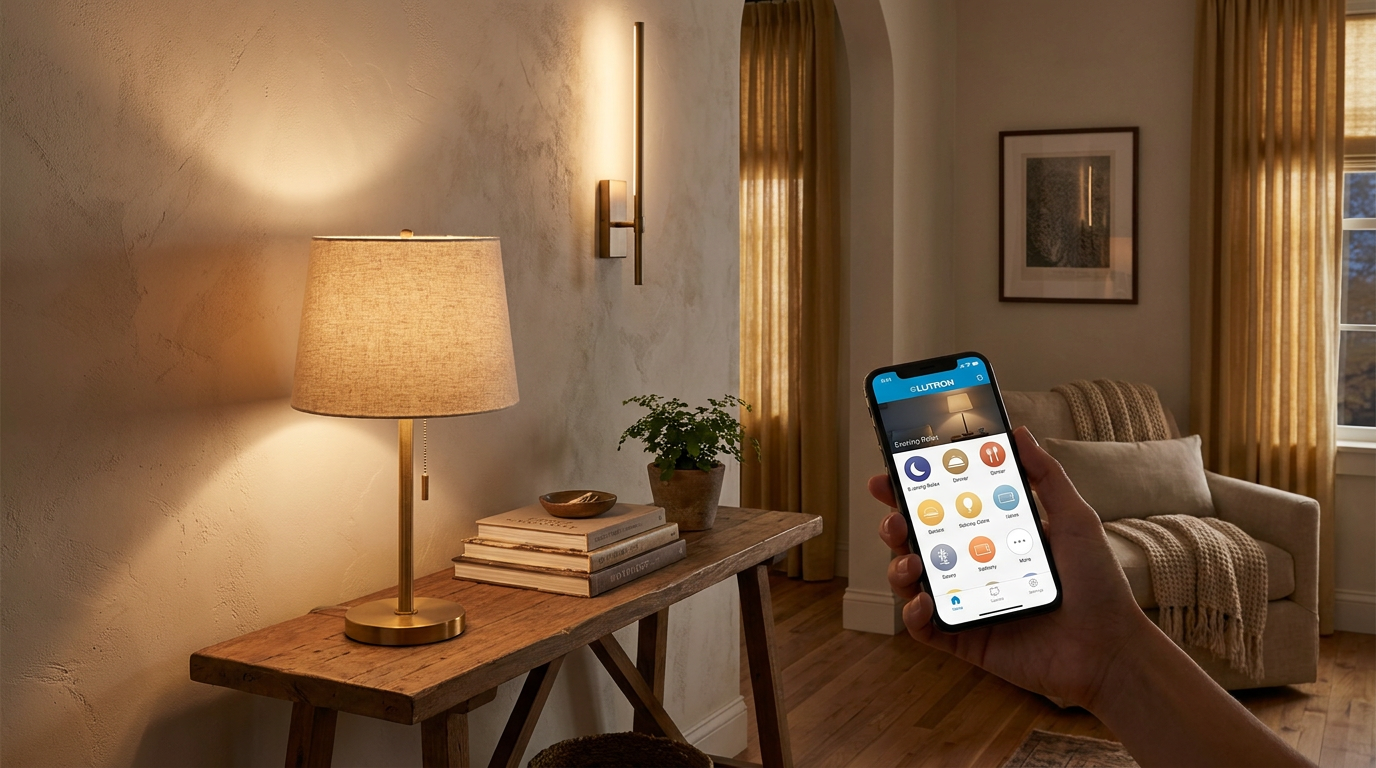
One of the simplest and most satisfying routines is to create lighting scenes for different moments of the day. A morning scene might gently brighten key areas of the home. A focus scene might use clearer, cooler light in a desk area. An evening wind-down scene can dim overhead lights and switch on lamps for a softer mood. These routines reduce the constant micro-decisions that can make home feel less restful.
For households with children, lighting routines can be especially helpful. A soft entryway light that comes on at the same time every winter afternoon can make the return from school feel welcoming. Night lights triggered by motion can support independence without overstimulating the house in the middle of the night. For anyone who lives alone, automated lighting can offer a sense of comfort and presence, especially during darker months.
The key is restraint. You do not need every bulb in your home to be smart. Start with the areas that define the emotional tone of the day, such as the bedroom, living room, kitchen, or entry. A few carefully planned lighting choices often do more for comfort than a fully connected setup that feels complicated to maintain.
Voice Assistants and Home Hubs as Everyday Helpers
Smart speakers remain one of the most common connected devices, and it is easy to understand why. They offer a low-friction way to interact with your home when your hands are full, your mind is occupied, or you simply want one place to manage small tasks. A voice assistant can set timers while you cook, play a favorite playlist during cleanup, remind you to take out recycling, or switch off lights without requiring another app interaction.
For many people, the value of a voice assistant is not that it feels futuristic. It is that it reduces the mental juggling that fills ordinary days. If you are carrying groceries, helping a child, packing lunches, or settling in after work, speaking a command can be easier than moving through multiple steps. That ease adds up over time, especially when it is attached to repeatable routines.
Voice assistants can also support accessibility. For people with mobility challenges, fatigue, or temporary injuries, voice control can make daily life noticeably easier. It can help with lights, music, reminders, and climate adjustments in ways that preserve independence and comfort. This is an important reminder that convenience technology can also be assistive technology, depending on who is using it and why.
That said, voice-enabled devices do raise understandable privacy questions. Since they are often listening for a wake word, buyers should be thoughtful about placement, microphone settings, and account permissions. The Government of Canada’s IoT consumer guidance advises checking privacy expectations, security, and whether devices will work offline before buying connected products. Those questions deserve a place in every purchase decision. A helpful device should feel trustworthy as well as useful.
Routine Apps That Lighten the Mental Load
Not every tech-enhanced routine requires a physical device. Some of the most effective systems live quietly on a phone, tablet, or shared household screen. Routine apps, digital calendars, meal planners, shopping list tools, and habit trackers can bring order to the invisible work of running a home. This can be especially helpful for couples, families, and roommates who want to share responsibilities without constant back-and-forth.
The emotional burden of home life is often less about the tasks themselves and more about remembering, coordinating, and anticipating them. When is the next grocery run. Did the water filter need replacing this month. Who is handling the dog walk on Thursday. What needs to be packed before tomorrow morning. A shared system can reduce this cognitive clutter and make home life feel more balanced.
These apps work best when they are simple and realistic. If you choose a system that requires too much upkeep, it may become one more thing to manage. A better approach is to pick one or two categories where reminders truly help. Weekly meal planning, recurring cleaning tasks, medication prompts, bill due dates, or family appointments are all strong examples. The goal is not to digitally organize every second of life. It is to create a little more breathing room.
One often overlooked benefit of routine apps is how they support emotional calm before busy periods. A Sunday evening reset can feel much gentler when the week’s meals are noted, a few household tasks are scheduled, and upcoming obligations are visible to everyone who needs them. That sense of preparedness can make home feel steady rather than reactive.
Making Remote Work and Multi-Use Spaces Feel Better
The relationship between technology and home is especially important in spaces that need to do double duty. A dining corner may become a workstation by day. A guest room may also hold fitness equipment. A bedroom may occasionally become a quiet place for video calls. This flexibility can be practical, but it can also create stress when the environment does not support concentration, boundaries, or physical comfort.
A 2024 systematic review found that home work environments can support satisfaction and well-being, but inadequate sound insulation, ergonomics, and technological support can also cause health complaints and stress. That finding is deeply relatable. When a home workspace is poorly set up, the friction is not only professional. It spills into the emotional texture of the whole house. A room that never quite works can start to feel draining.

Thoughtful technology can help create boundaries and comfort in these spaces. A scheduled focus playlist, noise-masking speaker, desk lamp with adjustable brightness, or smart plug that powers your workspace on in the morning and off at the end of the day can create a psychological transition between work mode and home mode. These may seem like small touches, but they make it easier to protect the restorative feeling of home.
Video meetings and screen time already ask a lot of our attention, so supportive home technology should reduce friction rather than add another digital layer. Cable organization, reliable charging stations, strong Wi-Fi placement, and a few ambient settings often matter more than flashy upgrades. The ideal home office routine should help you focus while preserving the calm and beauty of your home once the laptop closes.
For households sharing space, communication matters too. Simple tools such as shared calendars, a visual indicator for meeting hours, or noise-aware routines can help everyone coexist more peacefully. Technology can support the system, but the larger goal is emotional harmony. A well-managed multi-use home feels considerate, not crowded.
Wellness Technology That Supports Rest Instead of Pressure
Wellness technology can be wonderfully supportive when it is approached with a light touch. Sleep apps, meditation tools, white-noise machines, sunrise alarms, and wearables that track rest or activity can encourage healthier rhythms at home. But the most helpful versions of these tools are the ones that gently inform rather than judge. Home should not feel like a performance lab.
Research published in 2024 suggests health apps and wearables can support well-being, though the benefits vary and can be limited by maintenance costs, access, and other barriers. That nuance is important. A sleep tracker may help one person notice patterns that improve bedtime routines, while another person may feel more anxious when every night is scored. The right technology is the one that helps you tune into your body and your environment without creating pressure.
A soothing evening routine is a perfect example of where wellness technology can shine. A phone can trigger a bedtime scene that dims the bedroom lights, starts a meditation or calming audio track, and sets the thermostat to a cooler sleep-friendly temperature. A sunrise alarm can make winter mornings feel less abrupt. A gentle reminder to pause screens before bed can support better rest. These are small rituals, but they can shape the emotional tone of the entire day by improving how it begins and ends.
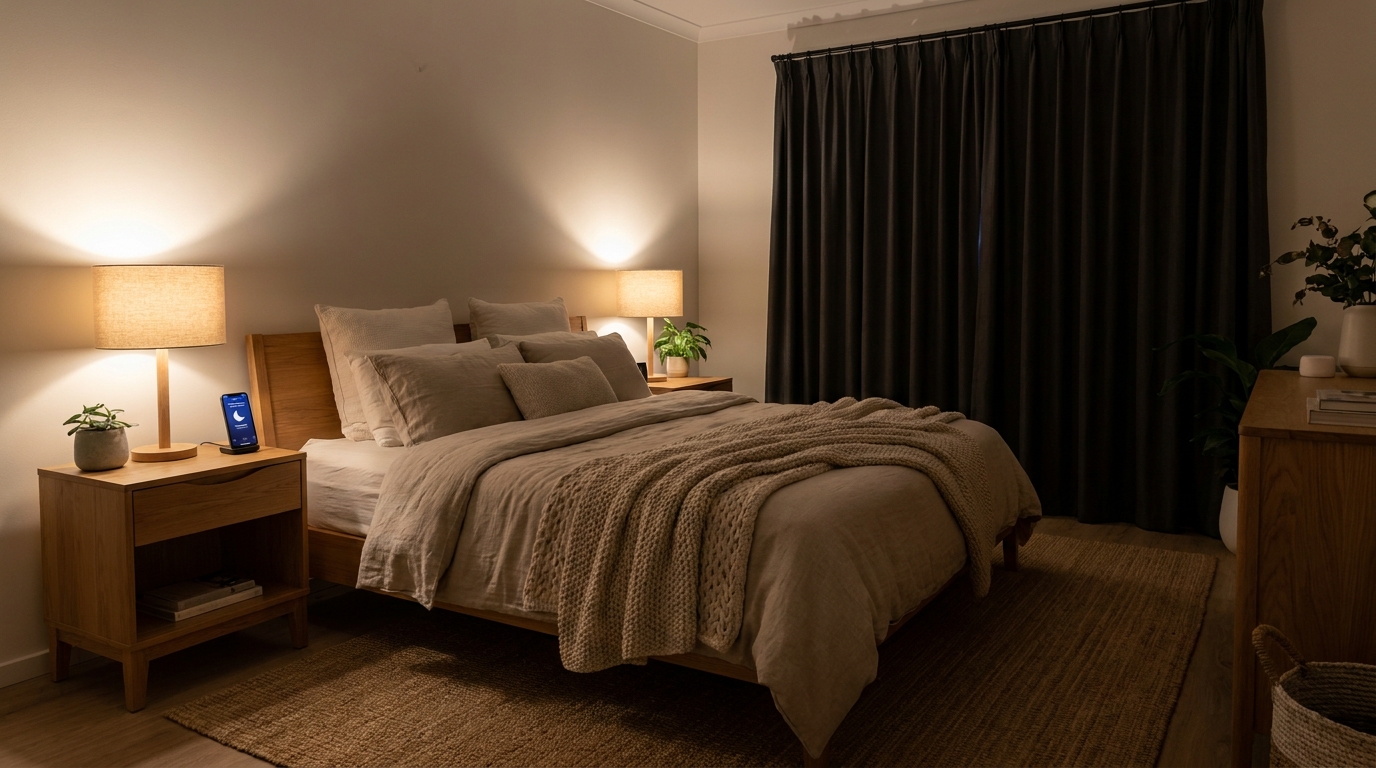
It is also worth expanding the definition of wellness beyond fitness metrics. At home, wellness often looks like reduced overstimulation, a more stable sleep environment, fewer household arguments over forgotten tasks, or the simple pleasure of walking into a room that feels settled. In that sense, smart lighting, climate control, and sound management can be just as relevant to well-being as a wearable device.
Subtle Home Monitoring for Peace of Mind
Some of the most practical home technologies do not center on ambience at all. They center on reassurance. Leak sensors, door and window alerts, indoor air quality monitors, and basic security tools can reduce the background worry that comes with maintaining a home. This is true for owners protecting a long-term investment and for renters who want to avoid avoidable damage and disruptions.
A leak sensor under a sink or near a washing machine may not feel glamorous, but it can provide a meaningful sense of control. The same is true for a sensor that alerts you if a basement gets too cold or humid, or a camera at the front door that helps you see deliveries while away. These systems can reduce stress because they keep small issues from becoming larger ones.
Still, peace of mind should not come at the cost of feeling watched in your own home. The Government of Canada’s guidance is especially relevant here. Before choosing connected devices, consumers are advised to consider privacy, security, and whether the product can work offline. Those questions are not just technical details. They shape how comfortable a product will feel once it is part of daily life.
A good rule is to avoid over-monitoring. Most households do not need a sensor or camera in every room. Start with the areas where a practical risk exists, such as entry points, water-prone zones, or spaces that are often empty. The aim is calm, not surveillance. Technology should help you relax into your home, not make you feel as though you are constantly managing a control center.
How to Choose Technology That Feels Human-Centered
Because there are so many products on the market, it helps to have a simple filter for choosing what belongs in your home. The first question is whether a tool solves a recurring problem you genuinely have. If you are constantly adjusting the heat, forgetting household basics, or struggling to wind down at night, technology may help. If a product only adds novelty, it may not earn its place for long.
The second question is whether it will fit your home and your life. Renters often need portable, non-invasive options. People in older homes may face compatibility limits. Families may prioritize reliability and ease of use over advanced features. A device that looks perfect online but feels fussy in real life can quickly become a source of frustration. Comfort is always more important than complexity.
The third question is about ecosystem and interoperability. As trends move toward connected systems that work across devices and apps, it is worth looking for products that play well with others. That does not mean building a perfectly integrated smart home all at once. It simply means avoiding isolated purchases that make future routines harder to manage. A few flexible pieces can go much further than a patchwork of incompatible ones.
Finally, consider the emotional cost of maintenance. Will this tool ask for constant charging, notifications, troubleshooting, or updates. Or will it quietly support your day without demanding attention. The best lifestyle technology is often the easiest to live with. It blends into your routines with grace.
A Practical Checklist Before You Buy
-
Identify one routine you want to improve, such as waking up, leaving the house, cooking, working from home, or preparing for bed.
-
Decide whether the issue is about comfort, time, memory, safety, or atmosphere so you can choose the right kind of support.
-
Check whether the product suits your housing situation, especially if you rent or live in an older building.
-
Look for strong privacy settings, secure account practices, and clear information on what data is collected.
-
See whether the device can still function in a useful way if the internet goes down.
-
Choose simple setup over feature overload whenever possible.
Common Misconceptions About Smart Home Comfort
One common misconception is that smart home products automatically save money. In reality, savings depend on device quality, home layout, local climate, and how consistently features are used. A smart thermostat, for example, can absolutely help, but only if the settings align with real routines rather than random experimentation. Technology supports better choices, but it does not replace them.
Another misconception is that more automation always means more comfort. In practice, too much automation can create frustration if a system behaves unpredictably or triggers at the wrong time. A living room light that turns off while someone is quietly reading is not luxurious. It is annoying. Thoughtful routines should feel intuitive, and that usually means keeping them simple.
There is also the belief that wellness apps and wearables guarantee better health. They can help, but they are not magic. Their effectiveness varies from person to person, and for some, too much tracking can create unnecessary stress. It is better to think of these tools as supportive companions rather than authoritative judges of how well you are living.
Finally, many people assume connected devices work the same for everyone. They do not. Homeowners, renters, families, solo dwellers, and people living in condos or older houses all face different constraints. The most beautiful home routines are customized to real life, not copied from someone else’s setup.
Simple Tech-Enhanced Routines to Try First
If you are curious but do not want to overhaul your home, there are a few gentle starting points that can make an immediate difference. A smart lamp or bulb in the living room can create a relaxing evening scene with almost no effort. A digital household calendar can reduce repeated conversations and forgotten appointments. A voice assistant in the kitchen can make timers, shopping lists, and music easier to manage during busy hours.
A smart thermostat is another strong first step if your home setup allows it, especially in climates with significant heating needs. The combination of comfort and energy awareness makes it one of the most practical upgrades for daily life. For bedtime, a simple routine that dims lights, lowers the temperature slightly, and starts calming audio can quickly become a cherished ritual rather than a tech experiment.
-
Create a morning routine that gently raises lights and starts a favorite playlist or weather update.
-
Set an away routine that turns off unnecessary lights and adjusts the thermostat when you leave.
-
Use a shared app for groceries, recurring home tasks, and family scheduling.
-
Build a wind-down routine with warmer bedroom lighting and screen-free reminders.
-
Add one practical sensor in a high-risk area, such as under a sink or near a laundry space.
What matters most is choosing one friction point and solving it well. That creates confidence and helps you understand what kind of support truly enhances your life. From there, additional routines can grow naturally if they are useful.
Creating a Home That Feels Softer, Smarter, and More Supportive
There is a lovely paradox at the heart of a well-designed smart home. When technology is working beautifully, you notice it less. You notice instead how peaceful the house feels when the light is right, how pleasant it is to wake up to a comfortable room, how much easier it is to remember what matters, and how your evenings begin to feel less scattered. The effect is emotional before it is technical.
That is why tech-enhanced routines are best understood as part of a larger approach to living well. They are not about filling a home with gadgets. They are about supporting the rituals that make a home restorative. A thermostat that anticipates your comfort, a lamp that softens a dark corner, a shared list that prevents stress, or a bedtime routine that invites real rest can all contribute to a more grounded and welcoming home life.
As connected devices become more common, more interoperable, and more personalized, the opportunity is not simply to own smarter products. It is to live more intentionally with them. In a world that can feel noisy and demanding, there is real value in tools that reduce friction and give a little calm back to the day. That is the kind of progress that feels worthwhile.
So if you are ready to begin, start small. Choose one routine that could feel easier or more comforting. Let technology support that moment with grace. Over time, those small shifts can create something bigger than convenience. They can create a home that feels deeply attuned to the life unfolding inside it.



No Comment! Be the first one.