



Coastal Luxury Design: Elegant Seaside Style for Your Home
There is something eternally captivating about the idea of living near the sea. Even for those who do not wake to the sound of waves, coastal interiors hold a special emotional power. They suggest exhale, softness, and a slower rhythm of living, yet today’s most compelling interpretation of this style is far more refined than the themed beach houses of the past. Coastal luxury has evolved into a sophisticated design language that blends serenity with substance, beauty with resilience, and understated elegance with genuine everyday comfort.
Table Of Content
- What Coastal Luxury Really Means Today
- The Coastal Luxury Color Palette for 2025 and Beyond
- How to Build a Balanced Coastal Palette
- Materials That Make Coastal Interiors Feel Luxurious
- Choosing Materials That Can Handle Everyday Life
- Designing the Coastal Luxury Living Room
- The Coastal Luxury Kitchen: Beautiful, Social, and Hardworking
- Indoor and Outdoor Connection in the Kitchen
- Bathrooms That Feel Like Private Coastal Retreats
- Bedrooms with a Soft, Seaside Calm
- The Role of Wellness in Coastal Luxury Design
- How to Avoid Common Coastal Design Mistakes
- Practical Ways to Bring Coastal Luxury Home on Any Budget
- A Room by Room Coastal Luxury Checklist
- Final Thoughts: Luxury That Lives Beautifully
Coastal luxury is a refined interior design style that captures the calm, light-filled feeling of the seaside without relying on literal beach décor like shells, rope, or nautical stripes. Instead of navy-and-white cliché, it builds atmosphere through a warm neutral palette (sand, shell, mist, limestone, sage, and sea glass) grounded by deeper accents such as mocha, tobacco, clay, and weathered oak. The look depends on natural, durable materials, including wood grain cabinetry, quartzite or stone-inspired surfaces, and linen or wool textiles, chosen for their resilience against humidity, sun, and daily wear as much as their appearance. Industry research from the National Association of Home Builders and the National Kitchen and Bath Association points to exactly this shift: warmer materials, softer forms, and neutral, wood-toned palettes replacing harsher, more literal finishes. Because it depends on light, proportion, and material choice rather than location, coastal luxury can be achieved in any home, whether on the shoreline or far inland.
In its most elevated form, coastal luxury is not defined by shells on shelves or obvious nautical references. It is built instead through atmosphere. Light moves gently across warm neutrals, organic textures invite touch, and natural materials create a sense of permanence and calm. Rooms feel open but not sparse, polished but never precious. This balance is precisely what makes the aesthetic so desirable for contemporary homes, especially as more homeowners seek interiors that support wellness, functionality, and timeless visual harmony.
Recent North American design direction strongly supports this shift. Industry reporting from the National Association of Home Builders has highlighted a move away from harsh finishes and toward warm, rich materials, soft corners, and more organic forms. The National Kitchen and Bath Association has likewise documented a growing preference for neutral palettes, wood grain cabinetry, larger connected spaces, and designs that prioritize both beauty and practical living. In other words, the coastal luxury home is no longer simply an escapist fantasy. It has become a thoughtful way to design for real life.
This article explores how to create an elegant seaside aesthetic that feels refined, grounded, and highly livable. From color palettes and materials to kitchens, bathrooms, and styling choices, the goal is not to imitate the coast literally but to capture its emotional grace. Whether you live on the shoreline, in the city, or somewhere far inland, coastal luxury can bring a sense of calm sophistication into your home with remarkable ease.
What Coastal Luxury Really Means Today
To understand coastal luxury, it helps to begin with what it is not. It is not a room overwhelmed by navy stripes, rope details, anchors, and decorative driftwood competing for attention. Those familiar motifs may have once defined beach-inspired interiors, but contemporary luxury has moved in a quieter and more nuanced direction. Today, coastal design is less about iconography and more about sensation. It is the feeling of airiness, the visual softness of rounded forms, and the tactile pleasure of natural materials layered with care.
This modern interpretation aligns closely with related design ideas such as quiet luxury, organic modern, and soft minimalism. Each of these aesthetics values restraint over excess and emotional comfort over display. In a coastal setting, that restraint becomes especially powerful. Rather than trying to announce itself, the room invites you in through subtle contrasts, sun-washed tones, and surfaces that become more beautiful with use.
There is also a practical reason why the style has matured in this way. Homes in coastal environments must contend with humidity, salt air, sand, sunlight, and wear. Fragile finishes and overly decorative schemes do not age well under these conditions. True coastal luxury therefore depends on durability as much as appearance. A beautifully chosen ceramic tile, a resilient wood floor, or a quartzite counter can feel more luxurious than something visually dramatic but poorly suited to everyday life.
Coastal luxury is not about decorating with the sea. It is about designing with the same calm, depth, and natural elegance the sea inspires.
This distinction matters because it makes the aesthetic more accessible. You do not need waterfront architecture to embrace coastal luxury. Light, proportion, texture, and a considered material palette can evoke the same emotional clarity in an urban apartment, a suburban family home, or a countryside retreat. The coast becomes a mood rather than a location.
The Coastal Luxury Color Palette for 2025 and Beyond
Color is often where homeowners first begin, yet it is also where many coastal interiors go astray. The traditional formula of crisp white and sharp navy can feel clean, but it can also become cold or overly expected. The emerging coastal luxury palette is noticeably warmer, softer, and more atmospheric. It draws from sand, shell, mist, limestone, weathered timber, pale sage, and sea glass, then grounds these airy notes with richer natural accents such as mocha, tobacco, clay, or weathered oak.
This evolution mirrors wider residential design trends. The National Kitchen and Bath Association reported that 96 percent of respondents identified neutrals as the most popular colors, while greens and blues remain strong secondary directions. Pantone’s 2025 Color of the Year, Mocha Mousse, further reflects the market’s movement toward comfort, warmth, and sensory richness. In a coastal context, these deeper tones are especially useful because they prevent interiors from feeling washed out or overly thematic.
A successful luxury coastal palette is rarely flat. It relies on layering tonal variations so that the room feels composed and immersive. Soft white might appear on trim and ceilings, driftwood beige on walls, oat or flax in upholstery, muted olive in ceramics, and a smoky blue in art or textiles. A note of mocha in wood furniture or woven leather details can ground the scheme beautifully, giving it the depth that contemporary luxury demands.
If you are planning a whole-home approach, consistency is essential. Coastal luxury works best when rooms speak to one another through a shared language of warmth and restraint. This does not mean every space should match exactly, but there should be a quiet continuity between the kitchen, living areas, bathrooms, and bedrooms. Such cohesion makes the home feel expansive, effortless, and deeply considered.
How to Build a Balanced Coastal Palette
One of the most effective ways to prevent a coastal palette from becoming simplistic is to think in layers rather than contrasts. Begin with a base of warm neutrals, then introduce softened versions of coastal references. A misty blue is often more elegant than a bright marine tone. A sage green can evoke dune grasses and coastal vegetation without becoming obvious. Pale wood, stone, plaster, and linen help these colors feel lived in and natural rather than staged.
Accent shades should be used with precision. A room grounded in shell, sand, and oak may benefit from a deeper espresso vessel, a bronze lamp, or a tobacco-toned leather stool. These notes create sophistication and visual maturity. They also reflect a broader truth about luxury interiors, which is that serenity often depends on contrast handled with exceptional control.
Materials That Make Coastal Interiors Feel Luxurious
If color creates atmosphere, materials create credibility. The finest coastal interiors feel luxurious because they are rooted in surfaces that have integrity, texture, and longevity. According to NKBA’s 2026 Kitchen Trends Report, wood grain cabinets are rising in popularity, natural quartzite is increasingly favored for countertops, and wood flooring remains a dominant choice. These preferences align perfectly with the coastal luxury sensibility, which depends on materials that feel both grounded and tactile.
Wood is one of the most important elements in this story. Light oak, whitewashed ash, and weathered walnut all bring warmth that crisp white schemes often lack. Their grain introduces movement and character, especially when cabinetry and furniture are kept simple in profile. Rather than highly glossy finishes, consider matte or low-sheen treatments that allow the material to feel honest and calm.
Stone also plays a vital role, though the most elegant use of stone is often restrained. A quartzite kitchen island with subtle veining, limestone-inspired porcelain in a bathroom, or a lightly textured travertine side table can all add substance without overpowering the room. Given the rising cost of renovation materials, as noted by Statistics Canada in late 2024, targeted investment in these touchpoints can be a more intelligent path than trying to cover every surface in premium stonework.
Textiles complete the sensory experience. Linen, cotton, wool, bouclé, washed velvet, and woven natural fibers each contribute a different softness. The goal is not to fill a room with endless textures but to create a balanced conversation between smooth and tactile surfaces. A coastal luxury interior should feel inviting enough to live in fully, not so pristine that it becomes untouchable.
Choosing Materials That Can Handle Everyday Life
Luxury becomes truly meaningful when it survives the rhythm of daily use. In homes exposed to humidity, sunlight, and frequent traffic, performance matters. This is especially relevant in coastal regions, where salt air and moisture can take a toll on poorly chosen finishes. Guidance from the Canada Mortgage and Housing Corporation emphasizes moisture-resistant materials such as ceramic tile, natural stone, and laminates for areas like bathrooms, and the same logic can be applied across the home.
For flooring, engineered wood with a durable finish or high-quality porcelain that mimics limestone or pale oak can deliver the beauty of natural materials with better resilience. In kitchens, quartzite or durable composite surfaces may offer the refined look homeowners want while standing up to daily cooking and entertaining. Upholstery should favor practical elegance, such as performance linen blends or tightly woven fabrics that resist wear and clean more easily.
Sustainability also deserves attention within the conversation around luxury. Increasingly, beautiful design is expected to consider not only appearance but also environmental impact and service life. Natural Resources Canada’s MCE2 tool, designed to compare embodied carbon of materials, reflects the rising importance of low-carbon material selection. A coastal luxury home can therefore feel especially modern when it chooses materials that are not only timeless and resilient but also more responsible.
Designing the Coastal Luxury Living Room
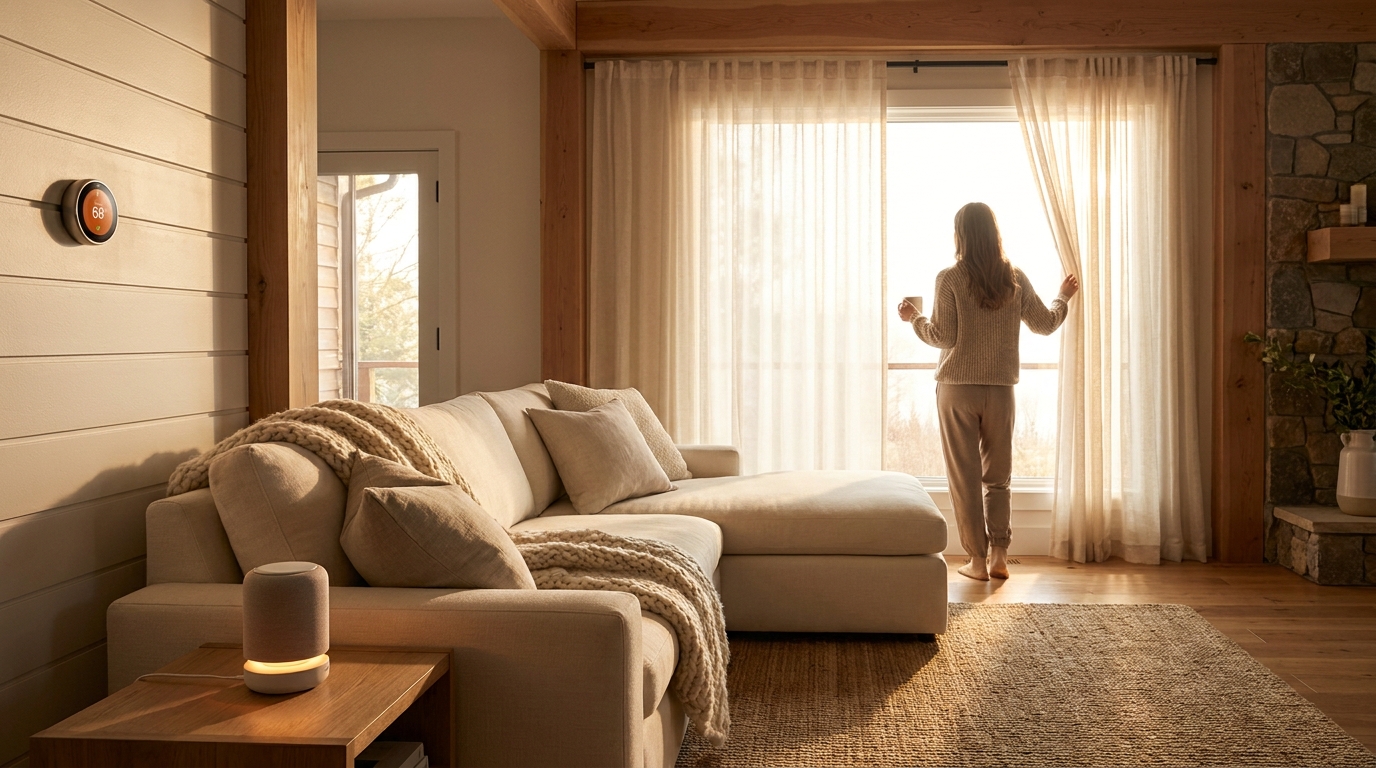
The living room is often where the language of coastal luxury is most immediately felt. This is the space that sets the emotional tone for the entire home, and it should express ease without sacrificing refinement. A successful room begins with light, both natural and artificial. Sheer window treatments, pale walls, and reflective but not glossy surfaces help daylight move gently through the space, creating a sense of openness that is central to the coastal mood.
Furniture should feel generous, sculptural, and comfortable. Recent design shifts noted by NAHB toward softer corners and less harsh forms are particularly relevant here. Curved armchairs, rounded coffee tables, softened-edged sofas, and organic silhouettes help remove visual tension from the room. This creates the feeling of calm that so many homeowners now associate with luxury.
Scale is equally important. Coastal luxury does not ask a room to be crowded. It benefits from thoughtful negative space, allowing key pieces to breathe. A substantial sofa in a warm white or flax tone, a pair of sculptural chairs in muted sage or sand, and a textural rug in soft ivory may be enough. The room becomes elegant because each element has presence, not because there are many of them.
Styling should remain restrained. A few hand-thrown ceramics, a stack of art books, a branch arrangement, or a glass vessel with sea-toned subtlety can be enough. The atmosphere should suggest cultivated ease rather than decorative effort. In this way, coastal luxury overlaps beautifully with quiet luxury, where quality and composition speak more powerfully than abundance.
The Coastal Luxury Kitchen: Beautiful, Social, and Hardworking
No room demonstrates the modern practical side of coastal luxury more clearly than the kitchen. According to NKBA’s 2026 report, 76 percent of respondents expect kitchen footprints to increase over the next three years, underscoring the continued demand for larger, more connected living spaces. This makes perfect sense within the coastal framework, where the kitchen is not merely a place to cook but a hub for gathering, serving, and flowing naturally into indoor and outdoor life.
The ideal coastal luxury kitchen feels bright but grounded. Cabinetry in pale oak, driftwood, or a warm painted neutral offers far more depth than stark white alone. Wood grain has become increasingly popular for good reason. It introduces visual warmth, conceals wear more gracefully, and gives the room a material richness that feels both contemporary and timeless. Pairing wood cabinets with lightly veined quartzite or soft matte counters creates a balanced sense of polish.
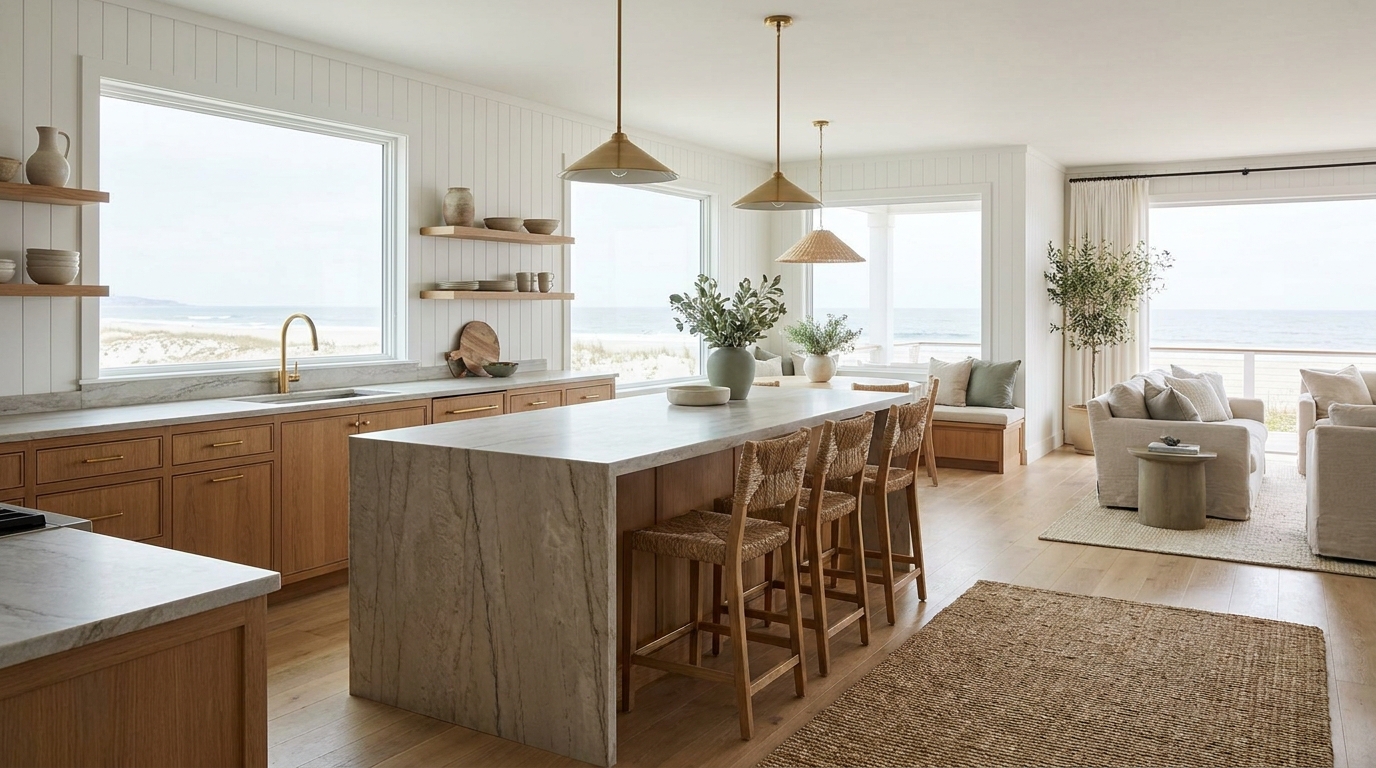
Storage is essential to preserving the serene look. A coastal luxury kitchen should not rely on exposed clutter to feel lived in. Appliance garages, integrated pantry cabinetry, deep drawers, and custom organizational details allow the space to remain calm while serving the realities of family life. This is where practical design becomes deeply luxurious. There is great elegance in a kitchen that supports routine beautifully while still feeling open and composed.
Hardware and lighting offer ideal opportunities for selective investment. Since renovation costs continue to rise, focusing on touchpoints can have an outsized effect. Unlacquered brass, brushed nickel, aged bronze, or refined matte finishes can add quiet richness. Pendant lights in woven natural materials, alabaster, or softly frosted glass help maintain the coastal atmosphere while bringing sculptural interest to the room.
Indoor and Outdoor Connection in the Kitchen
One of the strongest ideas shaping luxury homes today is the connection between interior life and the outdoors. Coastal homes are especially suited to this approach, but even inland properties can borrow the principle. Large windows, doors opening onto a terrace, continuity in flooring tone, and a color palette that echoes natural surroundings all help the kitchen feel like part of a broader lifestyle experience.
Dedicated beverage areas, breakfast nooks, and casual serving stations can make the kitchen more welcoming for both everyday use and entertaining. These zones support the effortless hospitality associated with seaside living. The room should feel prepared for a quiet morning coffee, a long lunch with friends, or a family evening that stretches outdoors as the light changes.
Bathrooms That Feel Like Private Coastal Retreats
The bathroom is perhaps the most natural setting for coastal luxury because it already lends itself to rituals of water, restoration, and retreat. Yet true luxury in this room depends on careful material selection as much as visual serenity. In moisture-heavy environments, elegant choices must also be highly durable. This is where coastal design becomes especially intelligent, because practical resilience can heighten, rather than diminish, the sense of refinement.
Start with a palette that feels spa-like but not sterile. Soft whites, pale stone tones, muted sand, and the gentlest blue-green accents can create a soothing setting. A floating wood vanity in a light or medium oak tone adds warmth, while ceramic or porcelain tiles with stone-inspired texture offer long-term performance. CMHC guidance around moisture-resistant finishes underscores the importance of choosing surfaces that can withstand humidity without sacrificing beauty.
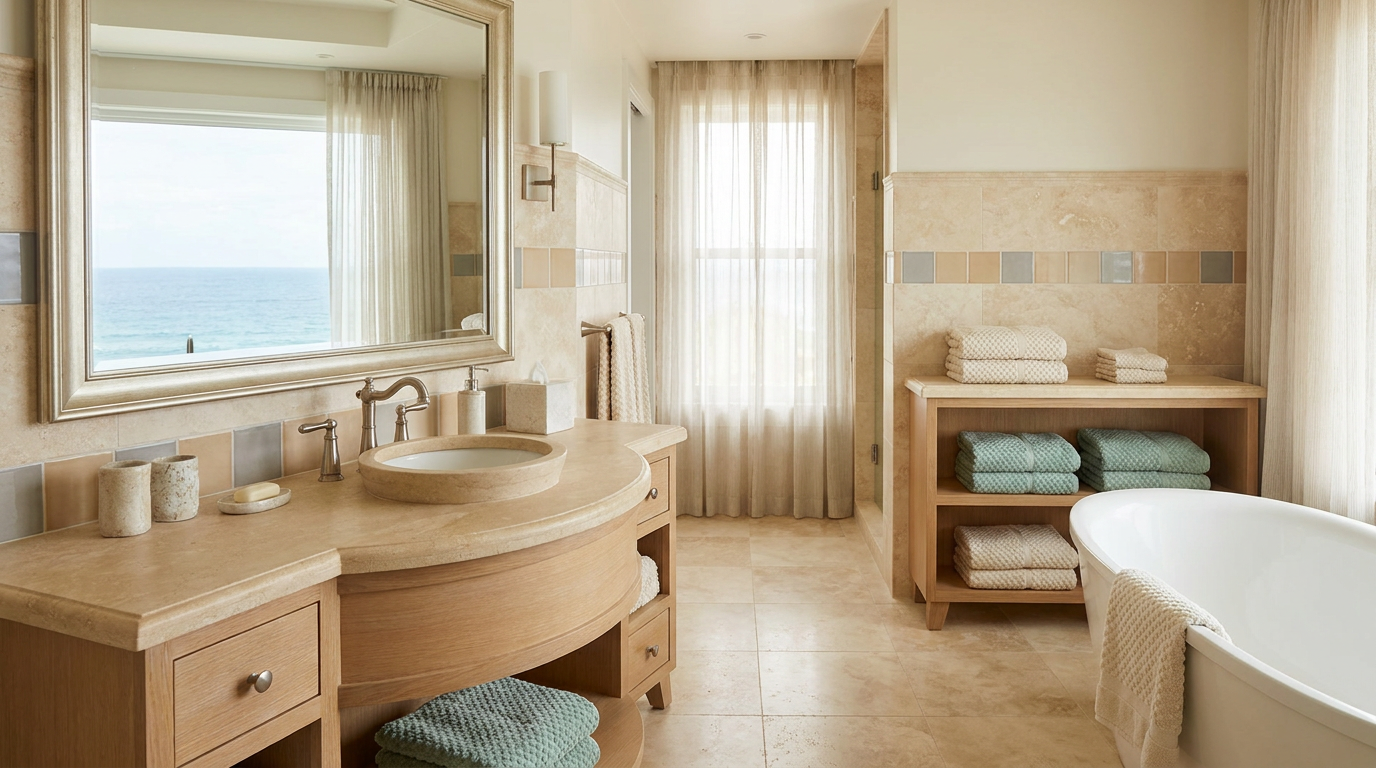
Fixtures should feel sculptural but not flashy. Brushed nickel, warm chrome, or subtle brass can all work beautifully depending on the palette. Rounded mirrors, curved vanities, and softly contoured basins reflect the wider trend away from hard-edged forms. Even a simple linen Roman shade or slubbed cotton window treatment can make the room feel gentler and more layered.
Storage deserves as much attention here as it does in the kitchen. A bathroom cannot feel tranquil if every surface is crowded with products. Recessed niches, vanity drawers with dividers, concealed cabinets, and built-in shelving can protect the visual quiet of the room. When the practical details are handled elegantly, the space feels less like a utility room and more like a private retreat.
Bedrooms with a Soft, Seaside Calm
In the bedroom, coastal luxury becomes deeply personal. This room should embody the restorative side of the style, where comfort is elevated through material layering and visual softness. The bed naturally becomes the focal point, and it is best dressed in tones that feel restful rather than bright. Sand, shell, mist, oat, and pale mocha create a beautiful range for bedding, upholstery, and drapery.
Linen is especially compelling in this setting because it captures the relaxed elegance at the heart of coastal design. Layering washed linen sheets, a lightly quilted coverlet, and a cashmere or wool throw creates visual richness without heaviness. An upholstered headboard in a soft neutral can add a sense of enveloping comfort, while light oak or weathered wood nightstands echo the natural material language used throughout the home.
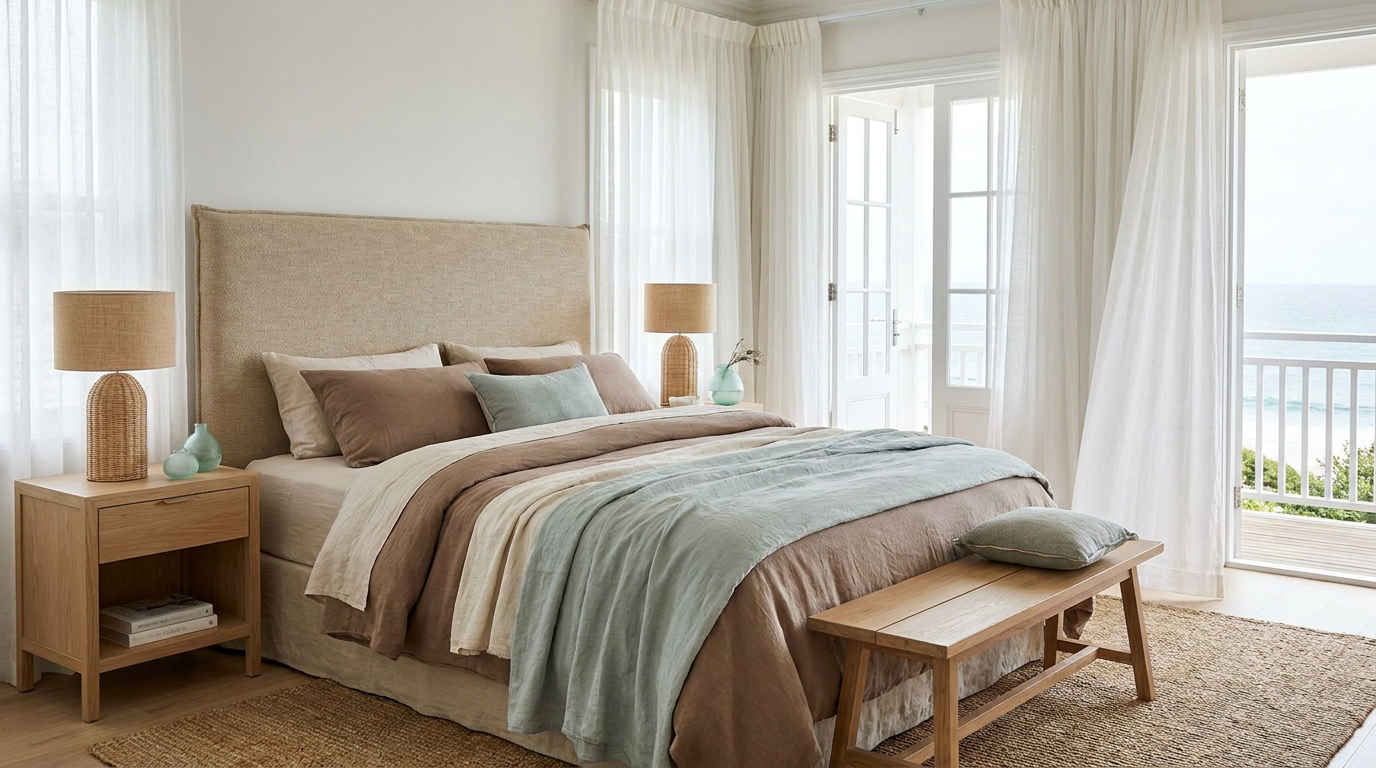
The bedroom is also a wonderful place to use deeper grounding tones sparingly. A mocha bench, a tobacco leather reading chair, or a softly abstract artwork with sea and earth pigments can keep the room from feeling too pale. Once again, the most luxurious effect comes from balance. The space should feel serene and sun-washed, but it should also have enough contrast to feel curated and complete.
Lighting should be soft and layered. Bedside lamps with linen shades, concealed dimmable lighting, and perhaps a sculptural pendant can all contribute to the room’s sense of ease. Blackout functionality may be practical, but it can be concealed behind sheer drapery or elegant woven shades so that the atmosphere remains graceful during the day.
The Role of Wellness in Coastal Luxury Design
One of the reasons coastal luxury resonates so strongly today is that it aligns with a broader cultural interest in wellness at home. Increasingly, homeowners understand that luxury is not measured only by expensive finishes. It is also reflected in how a room supports calm, light, air quality, acoustics, privacy, and emotional ease. Coastal interiors, when designed thoughtfully, are exceptionally well suited to this wellness-driven approach.
Natural light is central to the aesthetic, but so is the way it is moderated. Sheer textiles, soft matte walls, and pale surfaces create a flattering glow rather than glare. Ventilation matters too, especially in humid regions. Ceiling fans, operable windows, and well-planned airflow can make spaces more comfortable while reinforcing the breezy sensibility associated with seaside living.
Acoustics are often overlooked, yet they shape how a room feels on a sensory level. Upholstered furniture, rugs, drapery, and textured wall finishes can soften sound and create a quieter atmosphere. A luxurious coastal interior is rarely echoing or overly sparse. It should feel cushioned and composed, as though every surface has been considered not only for appearance but also for comfort.
Biophilic design principles also fit naturally here. Plants with elegant forms, natural views, raw textures, and a visual connection to landscape all deepen the home’s emotional resonance. Coastal luxury does not need abundant greenery to be effective, but it benefits from gestures that remind us of living systems and seasonal change. This keeps the home from feeling staged and helps it remain deeply restorative.
How to Avoid Common Coastal Design Mistakes
Because coastal style is so beloved, it is also easily oversimplified. The most common mistake is relying too heavily on literal beach references. While a subtle nod to place can be charming, too many obvious motifs can quickly diminish sophistication. If the goal is luxury, think less about themed décor and more about light, materiality, and proportion.
Another frequent misstep is assuming that coastal interiors must be bright white from wall to wall. In reality, all-white spaces can feel stark, especially in climates with strong light. Warmer neutrals are often more flattering and more timeless. They also pair more naturally with wood, stone, and woven textures, which are essential to the contemporary expression of this style.
Homeowners also sometimes confuse minimalism with emptiness. A coastal luxury space should feel edited, but never barren. Layering is crucial. Rooms need softness, tactile richness, and moments of visual grounding. Without them, the aesthetic can become flat and emotionally distant. The goal is not to remove personality but to refine it.
Finally, it is a mistake to prioritize image over performance. In coastal settings especially, materials must stand up to moisture, sun, and use. A beautiful room that deteriorates quickly is not luxurious. Enduring elegance always depends on wise choices beneath the surface.
Practical Ways to Bring Coastal Luxury Home on Any Budget
Not every coastal luxury transformation requires a full renovation. In fact, one of the most encouraging aspects of this design direction is that its impact often comes from thoughtful editing rather than excess. If budgets are constrained, selective investment can still create a significant shift in atmosphere. Start with the most visible and tactile elements. Paint, lighting, textiles, hardware, and a few key furniture pieces can dramatically reshape the mood of a room.
Because construction and renovation costs have risen, especially for projects involving substantial stone or concrete work, prioritization matters. You may decide to invest in one exceptional countertop rather than a complete overhaul, or to replace dated lighting and cabinet hardware before changing cabinetry. These strategic moves can create a layered sense of luxury without requiring indiscriminate spending.
Textiles offer one of the most effective entry points. Swapping heavy or synthetic fabrics for linen, cotton, wool, or textured blends instantly softens the space. Replacing stark white accessories with warmer shells, sands, and muted natural tones can also move a room closer to the current coastal palette. Even decluttering and improving storage can be transformative, because visual calm is a major part of the luxury effect.
If you are planning a larger renovation, consider creating a hierarchy of materials. Use premium natural stone or artisan finishes in focal areas where they can be appreciated up close, then pair them with durable secondary surfaces that support the same palette. This approach respects both budget and longevity while preserving an overall sense of refinement.
A Room by Room Coastal Luxury Checklist
For homeowners who want a clear path forward, a room by room checklist can be useful. The goal is not to follow rigid rules but to ensure that each space contributes to the same harmonious language of coastal elegance and practical ease.
- Living room: prioritize soft forms, layered neutrals, warm wood, tactile textiles, and a sense of openness with restrained styling.
- Kitchen: choose wood grain or warm neutral cabinetry, durable countertops, concealed storage, and lighting that feels sculptural yet calm.
- Bathroom: focus on moisture-resistant finishes, spa-like tones, integrated storage, and subtle organic texture.
- Bedroom: build around layered linens, soft tonal bedding, warm wood accents, and gentle lighting for restfulness.
- Whole home: maintain continuity in palette, hardware families, flooring tones, and material character to create a seamless experience.
Final Thoughts: Luxury That Lives Beautifully
The enduring appeal of coastal luxury lies in its ability to feel aspirational without becoming distant. It offers beauty, yes, but not a brittle kind of beauty. Its sophistication comes from restraint, material honesty, and rooms that support real life with grace. In this sense, it reflects a broader evolution in how we think about luxury itself. We are moving away from display and toward environments that feel deeply nourishing to inhabit.
By embracing warm neutrals, organic materials, soft forms, and practical performance, you can create a home that evokes the calm majesty of the seaside without relying on cliché. Whether expressed through a serene living room, a hardworking kitchen, a spa-like bathroom, or a restful bedroom, the style invites a gentler relationship with space. It asks for less visual noise and more sensory intelligence. It values atmosphere as much as finish.
Perhaps that is the true magic of coastal luxury. It reminds us that elegance does not need to be rigid, and comfort does not need to be casual. When thoughtfully brought together, the two create interiors that feel timeless, restorative, and beautifully suited to everyday life. A home shaped by this philosophy does not merely look refined. It lives refined, with sunlight, softness, and a quiet confidence that never goes out of style.

No Comment! Be the first one.