



Security has changed quietly but fundamentally inside modern properties. A camera is no longer just a camera, and a lock is no longer just a lock. In smart homes, apartment buildings, offices, and mixed-use sites, connected devices generate streams of data that can be analyzed in real time to identify patterns, highlight anomalies, and trigger automated actions. Security intelligence is the analytics and automation layer that turns that raw device data into real-time understanding: sensing what is happening on a property, interpreting whether it matters, and triggering the right response. It is not just hardware, and it is not just software. It is the logic that helps a property sense, interpret, and respond.
Table Of Content
- What security intelligence really means in a smart property
- The technologies that make security intelligence possible
- How data-driven security systems work in practice
- Why smart homes and commercial properties use security intelligence differently
- The benefits that matter most
- Where the risks and misconceptions begin
- Why standards and public guidance matter more than product hype
- How to evaluate a smart property security system before buying
- Best practices for safer deployment and management
- The future of security intelligence in North American properties
- Final thoughts
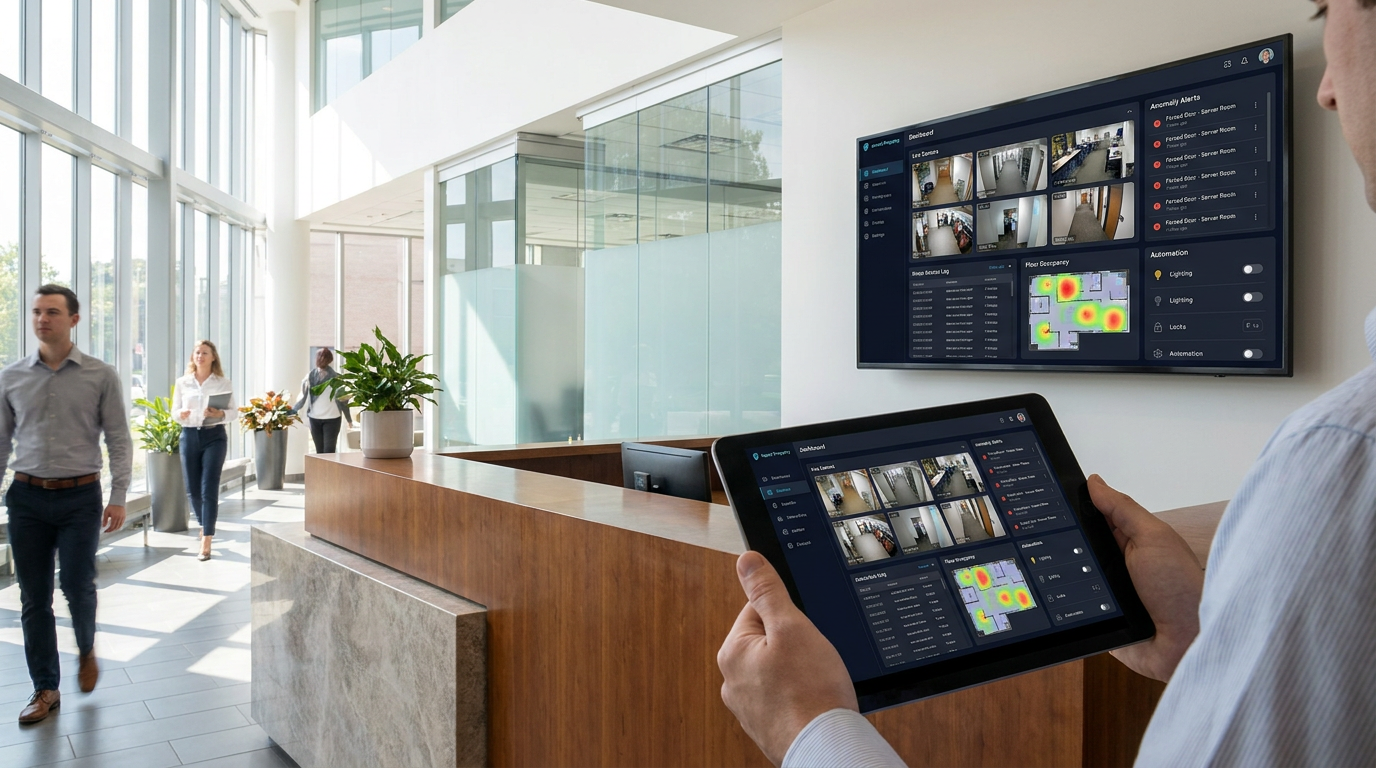
For both homeowners and businesses, this shift matters because security is increasingly becoming a property-wide nervous system. Instead of relying only on a siren after a break-in or a manual review of footage after an incident, smart properties can detect unusual activity earlier, reduce false alarms, and support faster decision-making. A connected system can distinguish between routine motion and suspicious movement, compare access activity against expected occupancy patterns, and automatically change settings after hours. When done well, this improves safety without making daily living or operations more difficult.
The need for better intelligence is also grounded in real risk. Statistics Canada reported that 16.1% of private-sector businesses in Canada were affected by cybersecurity incidents in 2024. That figure is a reminder that physical security and cyber risk are now tightly linked in connected environments. A compromised camera, router, or access control device can become more than a technical inconvenience. It can weaken trust in the entire property system and expose operations, privacy, and safety all at once.
At the same time, adoption keeps rising because convenience is compelling. NIST research on smart home privacy and security found that many users continue using smart-home devices despite concerns because the benefits are tangible in daily life. The same dynamic appears in commercial property. Managers want visibility, automation, and operational insight. Occupants want easier access, faster responses, and fewer disruptions. Security intelligence sits at the center of that tradeoff, promising better outcomes if systems are designed and managed with care.
This article explains how security intelligence in smart properties actually works, which technologies make it possible, where the risks sit, and how owners can evaluate systems more intelligently. The goal is to demystify the topic. You do not need to be a cybersecurity engineer or a building systems specialist to understand the logic. What you do need is a clear view of how data becomes action inside the places where people live and work.
What security intelligence really means in a smart property
A common misconception is that security intelligence simply means installing more devices. It does not. Cameras, sensors, alarms, smart locks, and intercoms are only data sources. They collect inputs from the physical environment, but they do not automatically create understanding. Intelligence emerges when those signals are organized, compared, contextualized, and translated into decisions. In practical terms, that means software platforms and analytics engines determine whether a door opening is routine, whether a noise event is relevant, or whether unusual movement after hours deserves an alert.
This distinction matters because many property owners overestimate the value of hardware and underestimate the value of integration. A site with ten uncoordinated devices may generate a lot of activity but very little insight. A site with fewer, well-integrated devices can often perform better because the system understands relationships between events. For example, if a back entrance unlocks, a camera sees motion, and occupancy data shows no scheduled presence, the system can rate that sequence as higher risk than any single event on its own.
In that sense, security intelligence acts like a decision layer above the hardware stack. It brings together physical security systems, digital infrastructure, user permissions, and often automation rules. In larger properties, this can extend into physical security information management or other centralized control platforms. In smaller homes, it may be handled through a unified app connected to cameras, locks, lighting, and sensors. The scale changes, but the logic remains consistent: collect, analyze, decide, and respond.
The best way to think about it is to separate devices from intelligence. Devices capture what is happening. Intelligence interprets what it means. That interpretation can reduce noise, improve relevance, and create a more measured response. Instead of flooding a user with every motion event, a smarter system can elevate only the activity that looks out of pattern, happens at an unusual time, or conflicts with expected behavior.
The technologies that make security intelligence possible
Security intelligence in smart properties depends on a cluster of technologies rather than a single tool. The foundation is the Internet of Things, often shortened to IoT. Canada’s Cyber Centre explains that IoT devices collect data through embedded sensors and send it over the internet to cloud services for processing, often connecting through Bluetooth, Wi-Fi, or RFID. In a property setting, that can include cameras, video doorbells, environmental sensors, badge readers, thermostats, intrusion alarms, and building controls.
Each of these devices contributes part of the picture. Cameras provide visual evidence and motion detection. Smart locks and access control systems record who entered and when. Occupancy sensors estimate presence in a room, zone, or floor. Glass-break sensors, contact sensors, and alarms identify physical breaches. Network infrastructure connects these devices and allows data to flow to local hubs, on-site servers, or cloud platforms. Once connected, those signals can be analyzed together, often continuously.
The next layer is analytics. This includes rule-based logic, statistical modeling, anomaly detection, and increasingly AI-assisted interpretation. Rule-based systems are straightforward. If a door opens after midnight and the property is armed, send an alert. Statistical and anomaly-based systems go further by learning baseline patterns over time. If deliveries usually occur between 9 a.m. and 2 p.m., a loading zone event at 3 a.m. may carry more weight even if there is no single rule explicitly written for it. AI is especially useful when large volumes of video or sensor data would be difficult for people to review manually.
Edge computing is another important part of the picture. Not every decision needs to wait for the cloud. Some systems process data locally on the device or on a nearby gateway so they can respond faster and reduce bandwidth use. A smart camera may identify a person, vehicle, or package at the edge, then send only the most relevant alert and clip to the cloud. That can improve performance and support privacy goals, especially when raw footage does not need to be transmitted continuously.
Cloud monitoring still plays a major role because it provides aggregation, storage, software updates, remote access, and broader system coordination. The cloud is often where dashboards, alert histories, audit logs, and multi-site oversight live. For commercial operators, that means a regional manager can review security events across several locations without being on-site. For homeowners, it means checking status from a phone while away. The intelligence layer often sits between edge and cloud, balancing speed, convenience, and control.
Another enabling technology is integration with building systems. Security intelligence becomes more powerful when it can interact with lighting, HVAC, elevators, parking systems, and building management systems. This is where the idea of a property-wide nervous system becomes especially useful. If an area is unexpectedly occupied after hours, the system can illuminate hallways, focus nearby cameras, restrict elevator access, and notify designated contacts. These are not dramatic science-fiction scenarios. They are practical examples of connected logic reducing response time and increasing situational awareness.
How data-driven security systems work in practice
To understand the value of security intelligence, it helps to follow the journey of a typical event. Imagine a side entrance opens at a small office at 10:47 p.m. The access control system records that the credential used belongs to a maintenance contractor. The occupancy sensor in the zone shows no previous movement for two hours. A nearby camera identifies one person entering, not a group. The alarm status changes from armed to partial access. On their own, these may be routine signals. Together, they create context.
The platform then compares the event against schedules, permissions, and known behavior. Is maintenance work scheduled tonight? Is this contractor allowed after-hours access? Was this person expected only in the mechanical room or in all common areas? If the answers align with the approved pattern, the system may simply log the event. If they conflict, it may generate a moderate or high-priority alert. More advanced setups can automatically notify a property manager, display nearby camera feeds, and preserve clips for review.
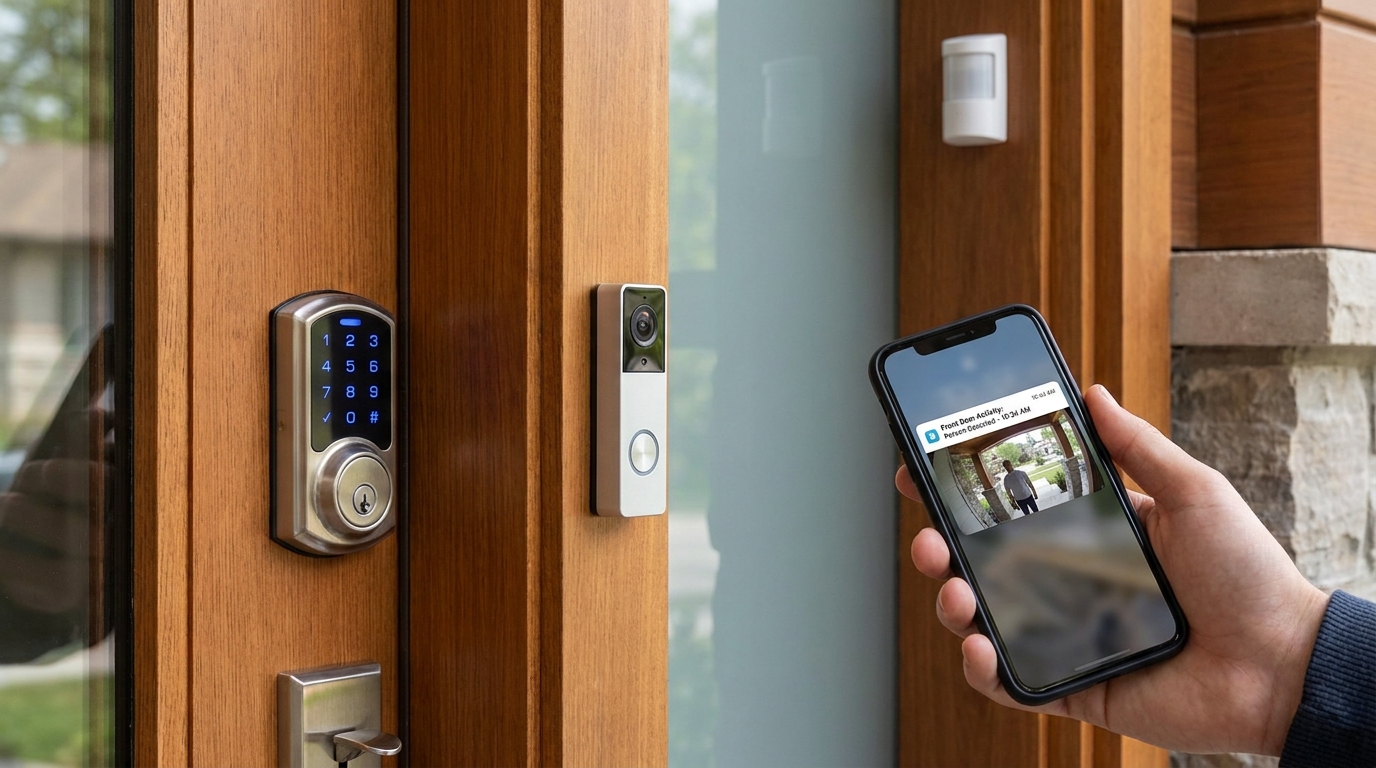
The same logic applies in homes. A video doorbell detects movement at the front entrance, but security intelligence asks whether that movement matters. Is it a familiar household member arriving based on phone proximity or access history? Is it a delivery during the usual time window? Is it prolonged loitering after dark with no door interaction? Smarter systems help reduce irrelevant alerts and highlight the moments that deserve attention. That is how they lower alert fatigue, which is one of the most common weaknesses in security monitoring.
One of the biggest practical benefits is the reduction of false alarms. Traditional systems often treat every trigger with the same urgency. A data-driven system can be more selective. Motion plus a recognized resident at 6 p.m. is normal. Motion plus glass-break plus forced-door vibration at 2 a.m. is not. Better prioritization protects time, improves trust in the system, and can lead to faster action when a genuine issue appears.
Another important function is automation. Security intelligence does not only detect threats. It also handles routine actions that improve reliability. Doors can auto-lock when a site closes. Lights can activate in response to verified after-hours movement. Temporary credentials can expire on schedule. Shared spaces can be opened or restricted according to occupancy patterns. In a business setting, this saves staff time and reduces reliance on manual checks. In a home, it adds convenience while preserving a stronger security baseline.
Why smart homes and commercial properties use security intelligence differently
Homes and businesses share many of the same technologies, but their risk models are not identical. A homeowner usually wants convenience, visibility, and peace of mind. The questions are practical. Did a package arrive? Was the garage left open? Who is at the door? Did the kids get home? Security intelligence in this context often focuses on accessible alerts, mobile control, simple automations, and a balance between privacy and reassurance.
Commercial properties operate under wider obligations. There may be employees, visitors, tenants, contractors, compliance requirements, and multiple points of access. One compromised device can affect broader networks and operations, which is why governance matters more in business environments. Security intelligence in offices, retail spaces, industrial properties, and multi-tenant buildings often includes role-based access, audit trails, incident workflows, centralized dashboards, and procurement review for connected systems.
This difference is easy to underestimate because the devices can look similar. A smart camera in a home and a smart camera in a warehouse may have overlapping features, but the expectations around retention, access, resilience, and response are very different. Businesses also tend to care more about integration with operations. They may want security data to support staffing, occupancy planning, delivery control, and facility management. In these settings, security intelligence becomes part of business continuity, not just loss prevention.
There is also a scale issue. A homeowner can often evaluate events personally. A business cannot rely on that model once properties, doors, shifts, or tenants increase. The intelligence layer becomes necessary because volume rises faster than human attention can. That is where dashboards, anomaly scoring, and coordinated alerts become less of a luxury and more of an operational requirement.
The benefits that matter most
The strongest case for security intelligence is not that it creates a futuristic building. It is that it helps people make better decisions with less friction. Early threat detection is one of the clearest benefits. By combining multiple signals, a system can surface suspicious activity sooner than a single standalone device could. This shorter gap between event and awareness can be critical in protecting occupants, property, and assets.
False alarm reduction is equally valuable, even if it sounds less dramatic. Frequent irrelevant alerts teach people to ignore systems. Once trust drops, response quality drops with it. Intelligent filtering, contextual analysis, and event correlation help preserve attention for events that actually matter. In daily use, this may be the difference between a security platform people respect and one they silence.
Operational efficiency is another major benefit, especially for business and multi-property owners. Security intelligence can automate recurring tasks, centralize oversight, and document activity in ways that simplify management. Access logs, video verification, occupancy trends, and exception alerts can all support faster reviews and clearer accountability. For residential users, efficiency appears as convenience. For business users, it also appears as lower administrative burden.
There is also a safety and occupancy dimension that deserves more attention. Smart properties increasingly use connected systems to support safer occupancy, whether that means identifying unauthorized access, monitoring vacant zones, or helping staff understand whether a space is active or unexpectedly empty. When security and occupancy data interact responsibly, buildings become easier to manage and potentially safer to use. This is one reason integrated monitoring is becoming more important across North America.
Finally, security intelligence supports better long-term decision-making. Property owners can identify patterns over weeks and months rather than reacting incident by incident. Which entrances generate repeated exceptions? Which zones have poor camera coverage? When do false alarms spike? Where do temporary access permissions persist too long? Data does not replace judgment, but it sharpens it. That is where the intelligence layer creates value beyond moment-to-moment alerts.
Where the risks and misconceptions begin
For all its advantages, security intelligence is easy to misunderstand. The first misconception is that smart devices are secure by default. They are not. Default passwords, outdated firmware, weak router settings, and excessive permissions can undermine an otherwise advanced system. Canadian guidance specifically recommends inventorying smart devices, applying strong passwords, keeping firmware updated, and securely configuring routers and device settings. Those basic controls still do a great deal of practical work.
The second misconception is that AI replaces cyber hygiene. It does not. AI can improve detection, classification, and prioritization, but it cannot compensate for poor access control or a neglected network. If devices are exposed on an insecure home or office network, or if credentials are shared casually, the intelligence layer may simply be analyzing risk on top of avoidable vulnerabilities. Strong foundations matter more than marketing language.
A third misconception is that more data is always better. In reality, excessive collection can increase privacy risk, create compliance exposure, and make systems harder to manage. A thoughtful smart property collects what it can justify and uses retention rules that make sense for the purpose. This is where privacy-by-design becomes important. Owners should ask not only what a system can collect, but what it needs to collect to solve the actual security problem.
There is also a governance challenge. In a commercial property, who can view footage, export logs, approve new devices, or grant temporary access? If those questions are not formalized, the technology may outpace the organization’s ability to use it responsibly. Security intelligence should make control clearer, not murkier. In practice, mature systems are often defined less by the sophistication of their cameras and more by the quality of their processes.
Security intelligence is not the device on the wall. It is the discipline of turning property data into trustworthy decisions while keeping risk, privacy, and maintenance in view.
Why standards and public guidance matter more than product hype
In a market full of confident claims, public standards and guidance offer a more stable way to evaluate smart property security. NIST remains one of the most credible anchors in this space. Its IoT cybersecurity work has focused not just on technical controls but on product life cycles, including what happens before deployment, during support, and near end of life. That life cycle view matters because connected devices often stay in properties for years, long after their initial setup looks complete.
NIST published an updated revision of its foundational IoT manufacturer guidance on April 20, 2026, expanding cybersecurity considerations across pre-market and post-market product life cycles. For property owners, this reinforces an important reality. Buying a device is not the end of the security conversation. Update commitments, support windows, vulnerability disclosure practices, and end-of-life communication all affect whether a device remains trustworthy over time.
The FCC’s Cyber Trust Mark is another notable development, especially for consumer wireless IoT products. It is a voluntary cybersecurity labeling program intended to help consumers identify smarter security choices at the time of purchase. That does not solve every problem, but it does improve the purchasing environment by making cybersecurity a visible criterion rather than an invisible one. As labeling gains traction, it may help reduce the gap between convenience buying and informed buying.
For Canadian readers, guidance from Canada’s Cyber Centre is especially useful because it translates broad cybersecurity principles into practical steps for homes and offices. Inventory devices. Change default credentials. Update firmware. Secure the router. Review settings. These recommendations are not glamorous, but they are effective. The more intelligent a property becomes, the more important these foundational controls are, because every connected convenience depends on them.
How to evaluate a smart property security system before buying
Buying based on features alone is one of the fastest ways to end up with a fragmented or risky setup. A better approach is to start with use cases. What are you trying to solve? Front-entry monitoring in a home requires one level of sophistication. Managing after-hours access across several business locations requires another. Once the use cases are clear, it becomes easier to judge whether a platform is offering real security intelligence or just a collection of disconnected gadgets.
Procurement should include technical and operational questions. How are devices updated? How long is software support guaranteed? Can the system work with network segmentation? What happens if the cloud service is temporarily unavailable? Are role-based permissions available? Can data retention be configured? Is there an audit trail? Commercial buyers in particular are paying closer attention to vendor security assurances for connected-building systems, and that trend is healthy.
It is also worth asking where analytics happen. If all intelligence depends on cloud processing, what are the implications for speed, bandwidth, and privacy? If edge processing is available, what can be handled locally? A balanced design often performs best, especially when properties need both responsive automation and centralized visibility. Owners should also look for transparency around data handling rather than assuming all platforms operate similarly.
Interoperability is another critical issue. Smart properties rarely stay static. New cameras, locks, occupancy tools, and building systems are added over time. A system that integrates well today is less likely to become a silo tomorrow. Open standards, documented APIs, and broad compatibility can have long-term value that far exceeds a flashy interface. Security intelligence improves as systems share context. Closed ecosystems can limit that growth.
Best practices for safer deployment and management
The first best practice is simple: know what is connected. Device inventory is one of the most practical and most overlooked controls in smart properties. If owners do not know which cameras, locks, sensors, gateways, and apps are active, they cannot manage updates, credentials, or risk effectively. Even in a home, documenting what is installed and which accounts control it can prevent confusion later. In businesses, this should be a formal process.
The second is credential discipline. Strong passwords, unique credentials, and where possible multi-factor authentication should be standard. Shared logins are particularly risky in commercial settings because they erase accountability. If several people use the same account to manage cameras or access permissions, it becomes much harder to investigate changes or misuse. Good security intelligence depends on clean identity practices.
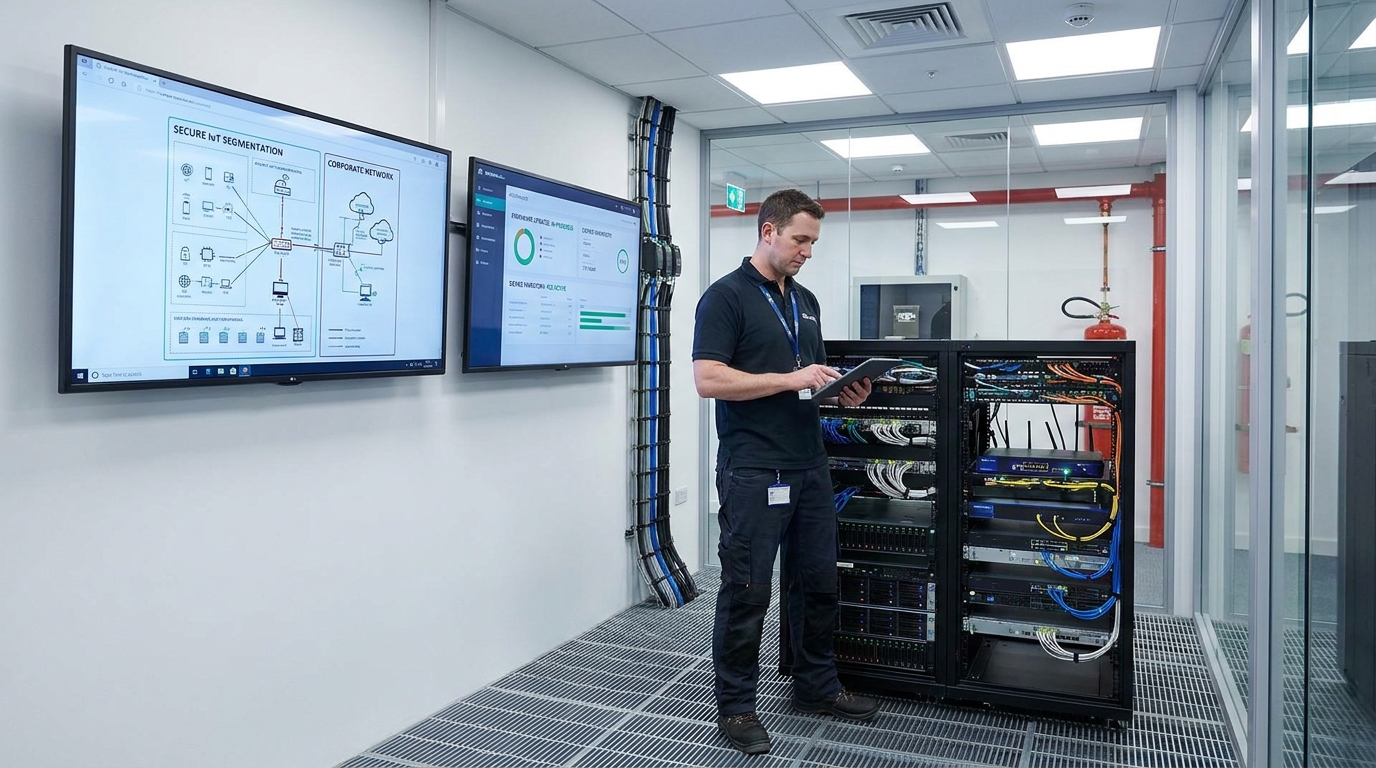
The third is network segmentation. Smart property devices should not always sit on the same network as laptops, financial systems, or sensitive business applications. Segmenting IoT and building devices can reduce the blast radius if one device is compromised. Canadian and U.S. guidance increasingly stresses secure configuration, network segmentation, and router hardening as foundational controls, and for good reason. Connectivity creates value, but it also creates pathways that must be managed.
The fourth is update management across the device life cycle. Security does not end after installation day. Devices need firmware updates, software patches, and retirement planning when support ends. NIST’s growing emphasis on pre-market and post-market security reflects this exact issue. Owners should know who is responsible for updates, how they are applied, and what happens when a product reaches end of life. Unsupported smart devices can quietly become long-term liabilities.
The fifth is privacy review. Smart properties should define what data is collected, how long it is retained, who can access it, and why. This is not only a compliance issue. It is also a trust issue. Occupants are more likely to accept intelligent monitoring when the purpose is specific, the controls are understandable, and the boundaries are visible. Vague data practices can undermine confidence even when the technology itself is useful.
The future of security intelligence in North American properties
The North American market is moving toward more integrated and more intelligent security environments. A 2025 estimate from Grand View Research placed North America at 36.6% of global smart home security revenue, which reflects both demand and ecosystem maturity. As adoption expands, the focus is shifting from simple remote control toward better analytics, anomaly detection, and connected monitoring across security, occupancy, and building operations.
Cybersecurity labeling is likely to become more influential in consumer decisions, particularly as programs like the FCC’s Cyber Trust Mark improve visibility at the point of purchase. At the same time, commercial buyers will probably continue pushing harder on procurement criteria, support commitments, and vendor assurances. This is a sensible evolution. The question is no longer whether a product is smart. The better question is whether it is secure, manageable, and useful over its full life cycle.
We should also expect tighter interaction between physical security and the broader intelligence layer of buildings. That means more cross-system automation, more edge analysis, and more contextual awareness. It does not necessarily mean more surveillance for its own sake. If the market develops responsibly, the better systems will be the ones that collect more selectively, interpret more accurately, and support clearer human decisions.
The most successful smart properties will probably not be the ones with the most devices. They will be the ones with the best architecture, the strongest maintenance discipline, and the clearest understanding of what they are trying to protect. Security intelligence works best when it is intentional. It should support life and work quietly in the background rather than adding noise or complexity.
Final thoughts
Security intelligence in smart properties is best understood as the layer that turns connected devices into coordinated awareness. It brings together cameras, locks, sensors, occupancy signals, analytics, and automation so that a property can respond more intelligently to what is happening inside and around it. For homeowners, that can mean more convenience and better peace of mind. For businesses, it can mean stronger oversight, safer occupancy, and more resilient operations.
But the value of security intelligence depends on how it is deployed. Advanced analytics cannot compensate for weak passwords, outdated firmware, or poor governance. More data does not automatically mean more safety. Better outcomes come from secure design, clear use cases, careful integration, and a willingness to treat connected devices as long-term assets that need active management. Public guidance from NIST, the FCC, Canada’s Cyber Centre, CISA, and Statistics Canada provides a more reliable foundation than product hype ever will.
In practical terms, the future of property security is neither purely physical nor purely digital. It is cyber-physical, data-driven, and increasingly automated. That can sound abstract, but its impact is very concrete. A smarter property can notice more, miss less, and respond faster, all while helping people feel safer in the spaces they use every day. That is the real promise of security intelligence, and it is why understanding the intelligence layer matters as much as understanding the devices themselves.



No Comment! Be the first one.