



Inflation is one of the most important forces in real estate, yet it is also one of the most misunderstood. Many investors assume property automatically performs well when prices rise across the economy. That idea contains some truth, but it is incomplete. Inflation can support rents, lift replacement costs, and reinforce the long-term appeal of hard assets, but it can also push financing costs higher, weaken affordability, and compress investment returns if expenses rise faster than revenue.
Table Of Content
- Why Inflation Matters So Much in Real Estate
- The Positive Side of Inflation for Property Investors
- The Negative Side of Inflation for Property Investors
- Inflation and the Canadian Housing Context
- Rental Housing: Where Inflation Becomes Most Visible
- Why Supply Growth Does Not Fully Solve Inflation Pressure
- Not All Property Types Hedge Inflation Equally
- Interest Rates, Valuations, and Cap Rate Pressure
- Nominal Returns Versus Real Returns
- Practical Strategies for Investing Through Inflation
- A Disciplined Inflation Playbook
- Common Investor Misconceptions During Inflation
- What Smart Investors Should Watch Next
- Conclusion: Inflation Is a Filter, Not a Guarantee
For real estate investors, inflation is best understood as a dual force. It creates upside in some parts of the market while exposing vulnerabilities in others. Asset selection, debt structure, tenant profile, lease duration, and local supply conditions all determine whether inflation becomes a tailwind or a drag. The difference between a resilient investment and a stressed one often comes down to whether the property can pass rising costs through to tenants without damaging occupancy or long-term demand.
That distinction has become especially relevant in Canada. Statistics Canada reported that the shelter component of CPI rose 5.7% on an annual average basis in 2024, while all-items CPI rose 2.4% in 2024. This matters because it shows housing-related inflation can remain elevated even after broader inflation cools. In practice, that means investors cannot rely on headline inflation alone when evaluating property performance. Shelter costs can continue rising, and so can the financial pressure on both owners and tenants.
The right response is not to avoid inflation-sensitive markets altogether. Instead, it is to approach real estate with sharper underwriting, realistic assumptions, and a clear understanding of real returns rather than nominal headlines. Investors who navigate inflation well are not simply those who own property. They are the ones who own the right property, financed the right way, in a market where pricing power is still credible.
This article examines how inflation works its way through real estate economics, where the risks are most visible, and which strategies can help investors maximize returns during changing economic conditions. The goal is not to present inflation as purely positive or purely negative. It is to explain why disciplined investors treat inflation as a variable to manage rather than a trend to celebrate.
Why Inflation Matters So Much in Real Estate
Real estate is unusually exposed to inflation because it sits at the intersection of household budgets, credit markets, construction costs, and income generation. Unlike many financial assets, property performance depends on both capital values and operating cash flow. Inflation influences each side of that equation. It changes what tenants can pay, what buyers can finance, what owners must spend, and what investors are willing to accept as a return.
In simple terms, inflation reduces the purchasing power of money. When that happens, the cost of labor, insurance, utilities, maintenance, property taxes, and building materials tends to rise. At the same time, lenders and central banks respond to inflation by increasing borrowing costs or maintaining tighter financing conditions for longer. That policy response is critical because higher rates affect affordability, transaction volume, valuation multiples, and debt service coverage ratios across the market.
In Canada, the Bank of Canada has been a key transmission channel between inflation and real estate. As inflation accelerated after the pandemic period, tighter policy materially changed the cost of financing. By 2025, rates had come down from their 2024 peak, but they remained above the ultra-low levels investors had grown used to earlier in the decade. That shift illustrates an important point. Even when inflation starts to normalize, financing conditions may remain restrictive enough to keep pressure on valuations and cash flow.
Real estate investors therefore need to think in layers. Inflation does not just affect prices in the abstract. It influences the monthly mortgage payment on a purchase, the refinance proceeds available at maturity, the rent growth potential on turnover, the replacement cost of building new supply, and the net operating income left after recurring expenses. Looking at only one of these variables leads to weak decision-making.

The Positive Side of Inflation for Property Investors
There are valid reasons real estate is often described as an inflation hedge. Property is a tangible asset with income potential, and in many segments, revenue can be repriced over time. When inflation lifts wages, household formation, or nominal income levels, landlords may be able to raise rents as leases renew or units turn over. At the same time, the cost to build comparable new product usually rises, which can support the value of existing assets.
One of the most important benefits is replacement cost inflation. When construction materials, labor, permitting, and land development costs increase, it becomes more expensive to add new supply. Existing buildings may therefore become more valuable relative to what it would cost to develop a competing asset from scratch. This can be particularly supportive for well-located multifamily buildings in supply-constrained urban markets, where replacement economics already tend to be challenging.
Inflation can also benefit owners who locked in fixed-rate debt before rates moved higher. If an investor financed an asset at a low nominal rate and rental income rises over time, the real burden of that debt may decline. In other words, the debt stays fixed in nominal terms while the income stream has a chance to grow. This is one reason conservative, long-duration financing can become a strategic advantage in inflationary periods.
Rental housing often shows this effect most clearly. If higher mortgage rates reduce homeownership affordability, more households remain renters for longer. That shift can support occupancy and demand for rental units, especially in markets with population growth and constrained lower-cost supply. In those conditions, inflation can improve the relative position of landlords, particularly if they own functional, well-managed assets serving essential housing demand rather than highly discretionary product.
There is also a behavioural dimension. During periods of inflation uncertainty, many investors seek assets with visible cash flow and real-world utility. Real estate can satisfy both, provided the income is durable and the financing structure is sound. That does not make every property a safe inflation play, but it does help explain why certain segments continue to attract capital even when broader economic conditions are unsettled.
The Negative Side of Inflation for Property Investors
The mistake many investors make is assuming the benefits arrive automatically. They do not. Inflation can raise revenue, but it can just as easily erode margins. Insurance premiums rise, contractors charge more, wages increase, taxes move up, utilities become more expensive, and deferred maintenance turns into a much larger future bill. If these costs outpace rent growth, net operating income weakens even if gross revenue looks better on paper.
Financing pressure is often the more immediate threat. Higher interest rates directly increase borrowing costs for acquisitions, refinances, and variable-rate debt. They also reduce the amount many buyers can afford to pay for an asset while still meeting debt service coverage requirements. In practical terms, this can cool transaction activity and lower valuations, especially in segments where investors had been underwriting aggressive rent growth or very low cap rates.
Affordability is another major constraint. Inflation affects tenants and owner-occupiers alike. When food, transportation, childcare, and household expenses become more expensive, rent-paying capacity does not always keep pace. That means landlords cannot assume they will recover all cost increases through pricing. In some markets, especially where rent levels are already stretched relative to incomes, inflation can create more resistance to rent increases rather than less.
Properties with high leverage are especially vulnerable. A building that looked attractive under low-rate assumptions can become fragile when interest expense resets materially higher. If the asset also has near-term capital expenditure needs, the pressure compounds quickly. Investors then face a difficult combination of weaker refinancing terms, higher operating costs, and more selective tenant demand.
This is why inflation is often most damaging when it is paired with tight monetary policy. Rising prices on their own are not the whole issue. The broader problem is that inflation changes the cost of money, and real estate is an asset class built heavily on leverage. Once the price of debt rises, the margin for error shrinks significantly.
Inflation and the Canadian Housing Context
Canada provides a particularly useful case study because the recent cycle made the split effects of inflation very visible. Headline inflation moderated, yet shelter inflation remained elevated. Statistics Canada reported annual average shelter CPI growth of 5.7% in 2024 against 2.4% for all-items CPI. That gap shows why housing can continue feeling expensive long after the broader inflation story appears to improve.
For property investors, this matters in several ways. First, it confirms that housing-related costs have their own momentum and may not cool in line with general consumer prices. Second, it shows that tenants and homebuyers are often facing a different reality than headline inflation data might suggest. Third, it reinforces why underwriting rental growth, expense growth, and affordability should be done with segment-level discipline rather than broad assumptions.
The post-2022 period also showed how central bank policy can reshape market behaviour. Higher rates reduced affordability for home purchases, softened some transaction activity, and changed investor return thresholds. At the same time, many would-be buyers remained in the rental market longer, adding pressure to already tight rental conditions. That tension supported rents in some places but also pushed affordability concerns into more cities beyond Toronto and Vancouver.
As conditions evolved, not all property types responded the same way. Some condo investor demand softened, while purpose-built rental supply expanded. Newer rental buildings in some major markets began competing more aggressively for tenants, in some cases through incentives like free rent or cash bonuses. That is a useful reminder that inflation does not create universal landlord pricing power. Market positioning still matters, and newer premium units may behave very differently from older stabilized stock.
Rental Housing: Where Inflation Becomes Most Visible
Rental housing is one of the clearest channels through which inflation affects real estate. It sits close to household cash flow, can often be repriced more quickly than longer-leased commercial assets, and responds directly to shifts in homeownership affordability. When mortgage rates rise and purchasing power declines, rental demand can strengthen because more households are forced to delay buying.
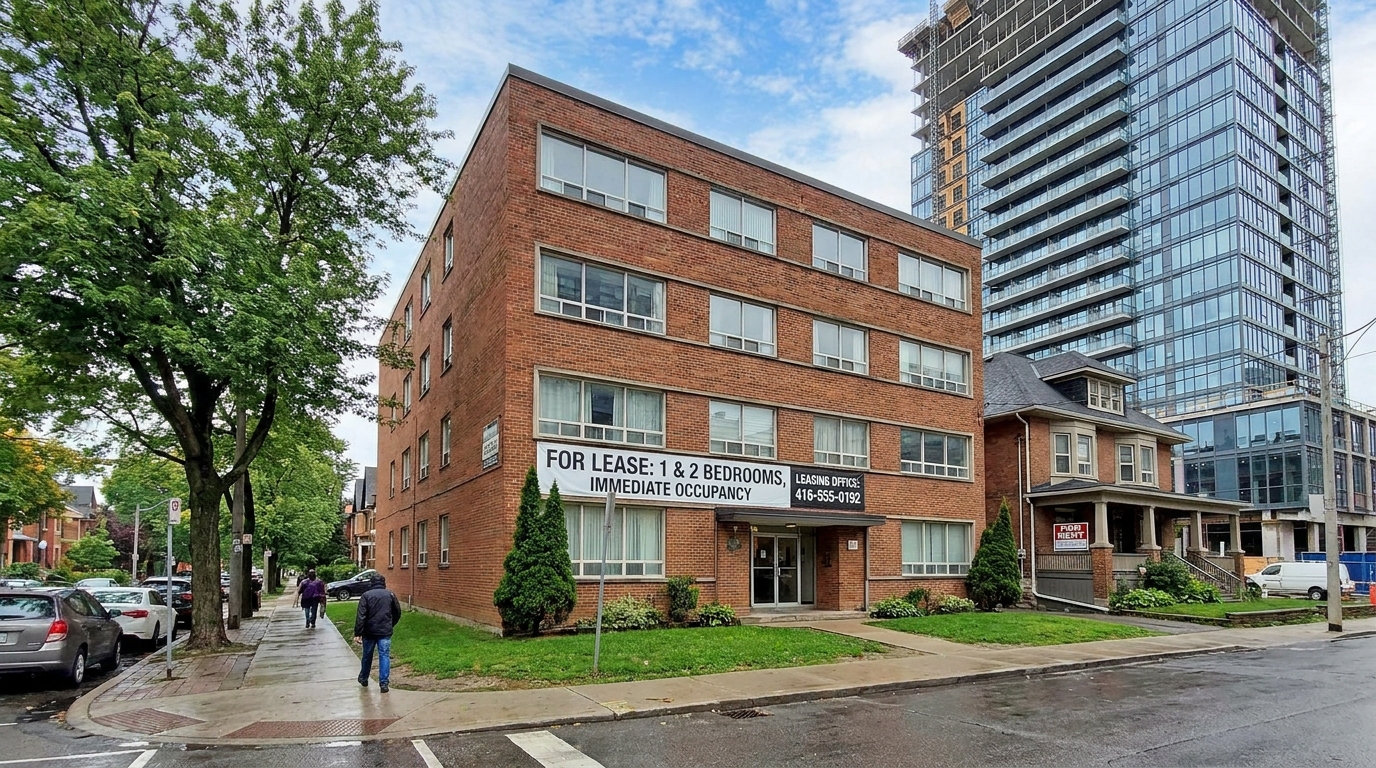
Canada’s recent rental data highlights this dynamic, but it also adds an important layer of complexity. CMHC reported that purpose-built rental supply grew 4.1% in 2024, the fastest increase in more than 30 years. It also reported that the national vacancy rate rose from 1.5% in 2023 to 2.2% in 2024. That is a meaningful shift because stronger supply growth can reduce the landlord’s ability to pass inflation through uniformly, especially in newer and higher-priced inventory.
CMHC’s 2026 mid-year update added further nuance by noting that rising supply is now easing rental pressures in many major Canadian cities, while lower-rent segments remain tight. This is exactly the kind of market split investors need to pay attention to. Broad national averages may suggest easing conditions, yet affordable older stock in strong locations can still experience persistent demand and very limited availability.
The difference between turnover rents and occupied-unit rents is another critical factor. CMHC noted that turnover has become a larger driver of inflation in some major markets, including Toronto and Vancouver. For investors, this means sitting tenants and incoming tenants may be experiencing very different rent levels. Assets with natural turnover and renovation potential may therefore have stronger inflation pass-through than properties where most units remain occupied under older rent levels for extended periods.
Why Supply Growth Does Not Fully Solve Inflation Pressure
It would be a mistake to interpret rising vacancy and stronger supply growth as a simple end to rental inflation. New supply often enters at the upper end of the market because land, construction, and financing costs are high. That means the addition of new units can improve headline vacancy while doing less to relieve pressure in lower-rent segments. Investors focused on workforce or mid-market housing should recognize that demand can stay firm even as luxury leasing slows.
This is also where local submarket analysis becomes essential. A city may report a higher vacancy rate overall, but older transit-oriented properties or buildings near employment nodes can remain effectively undersupplied. Inflation strategies therefore need to be based on actual tenant demand and competitive positioning, not just on macro narratives. Investors who understand where affordability remains most constrained are better positioned to preserve occupancy and grow income responsibly.
Not All Property Types Hedge Inflation Equally
One of the most persistent misconceptions in real estate is that all properties naturally hedge inflation. In reality, performance varies significantly depending on lease structure, tenant quality, operating intensity, and capital needs. Multifamily assets often receive attention because leases reset relatively quickly and housing demand is essential. That does not mean every apartment building performs well, but the ability to reprice units more frequently can offer better inflation responsiveness than longer-duration lease structures.
By contrast, long-leased assets may have less immediate pricing power unless rent escalators are strong enough to keep pace with inflation. If lease terms were signed during a low-inflation period with limited annual increases, the landlord may experience a real decline in income even while expenses rise. The same principle applies to properties where tenant demand is weak or highly discretionary. If a building cannot command higher rents without sacrificing occupancy, inflation becomes more of a cost problem than a revenue opportunity.
Capital expenditure requirements also matter. Older properties can offer attractive value and below-market rents, but only if the future renovation burden is manageable. Inflation magnifies the cost of roofs, windows, mechanical systems, common area upgrades, and unit turns. A property that appears cheap on an acquisition basis can become expensive very quickly if deferred capital work must be completed in an inflationary construction environment.
Location remains the most durable differentiator. Well-located assets in supply-constrained areas tend to preserve pricing power better because tenant alternatives are limited and replacement barriers are higher. In contrast, assets in oversupplied or weak-demand markets may struggle to pass through inflation even if the broader economy is experiencing price growth. Inflation is therefore not merely a macro theme. It is filtered through local market strength and property-level quality.
Interest Rates, Valuations, and Cap Rate Pressure
When investors discuss inflation, they often focus on rent growth but pay too little attention to valuation mechanics. Real estate values are highly sensitive to the cost of capital. If interest rates rise, investor return requirements usually rise as well. That can push cap rates outward or at least reduce the willingness to accept very aggressive pricing, particularly when income growth is uncertain.
This relationship helps explain why an asset can show stronger nominal rents while still losing market value. Suppose net operating income rises modestly, but the market’s required yield rises more because debt is expensive and refinancing risk is elevated. In that scenario, value can flatten or decline despite apparent operating momentum. Investors who ignore this interaction may mistake income growth for investment outperformance.
Debt service coverage ratio, or DSCR, becomes especially important in this environment. Lenders are more cautious when rates are higher and values are less certain. If an asset cannot support required DSCR thresholds under stressed assumptions, financing proceeds may fall short of expectations. That can create equity gaps at refinance or reduce acquisition competitiveness for highly leveraged buyers.
The broader point is that inflation cannot be assessed only through revenue trends. Real estate is valued on income relative to risk and financing conditions. As inflation changes the price of money, it changes the market’s view of acceptable returns. Investors should underwrite not only rent growth and expenses, but also exit cap assumptions, refinance conditions, and interest rate sensitivity.
Nominal Returns Versus Real Returns
This is where many investment narratives become misleading. A property may appreciate in nominal dollar terms and still deliver weak performance after inflation, financing costs, taxes, and maintenance are fully accounted for. Investors often celebrate rising rents or sale prices without asking whether purchasing power actually improved. In high-inflation periods, that distinction becomes critical.
Nominal returns refer to the headline gain before adjusting for inflation. Real returns measure what is left after inflation erodes the value of those gains. In property investing, the difference can be substantial because real estate involves not just asset price movements but also operating expenses, interest expense, transaction costs, and periodic capital reinvestment.
Consider a simple example. If rents rise 6% but operating costs rise 7% and debt service jumps 15% due to a loan reset, the investor may be worse off even though gross income is higher. Similarly, if a property’s market value rises 4% while inflation runs at 5%, the real value of that appreciation is negative before accounting for selling costs. These examples are not theoretical edge cases. They are common outcomes when inflation is elevated and leverage is not carefully managed.
In inflationary periods, the most important question is not whether your asset is worth more on paper. It is whether your cash flow and equity are compounding faster than the loss of purchasing power.
Professional investors therefore track inflation-adjusted performance, not just nominal growth. They test cash flow against multiple rate scenarios, apply realistic expense growth assumptions, and avoid treating price inflation as evidence of real wealth creation. This discipline becomes even more important when market sentiment is changing quickly.
Practical Strategies for Investing Through Inflation
The best response to inflation is not broad optimism or broad fear. It is selectivity. Investors who want to protect and grow wealth during inflationary periods need assets that can absorb cost pressure, financing structures that limit shocks, and operating plans grounded in realistic tenant economics. The most resilient strategies tend to look disciplined rather than aggressive.
One of the clearest priorities is moderating leverage. High leverage can amplify returns when rates are low and values are rising, but it becomes far less forgiving when inflation pushes borrowing costs up. More moderate leverage gives investors flexibility at refinance, reduces pressure on DSCR, and allows properties to withstand periods when rent growth slows or expenses spike unexpectedly.
Debt structure also matters. Fixed-rate or longer-duration financing can be a major advantage when inflation is uncertain because it protects cash flow from sudden interest rate resets. Variable-rate debt is not always wrong, especially if rates are expected to decline, but it introduces more vulnerability during inflation shocks and tightening cycles. Investors should choose debt based on downside resilience, not just on initial pricing.
Asset selection is equally important. Properties with strong tenant demand, below-market rents, and manageable upgrade potential often offer better inflation pass-through than luxury assets dependent on discretionary spending. Essential housing, functional layouts, strong transit access, and durable neighborhood demand tend to outperform when affordability becomes the central issue. The goal is to own product that remains relevant even when household budgets are strained.
Expense underwriting should also become more conservative. Too many investors underwrite rent growth carefully but treat operating costs as stable. In an inflationary environment, that is a mistake. Insurance, repairs, payroll, taxes, and turnover costs all deserve stress testing. If a deal only works under mild expense growth assumptions, it may not be robust enough for the cycle.
Markets with structural supply constraints deserve special attention. Where zoning, land scarcity, development costs, or approval timelines limit new supply, existing assets usually enjoy stronger long-term pricing power. That does not eliminate inflation risk, but it improves the odds that revenue can keep pace with cost growth over time. In markets where abundant new product can arrive quickly, competitive pressure may cap rent increases even as owner costs rise.
A Disciplined Inflation Playbook
- Focus on pricing power. Target properties where rents can adjust over time without materially damaging occupancy or tenant quality.
- Control leverage. Use debt levels that preserve refinance flexibility if rates remain higher for longer.
- Prefer durable financing. Fixed-rate or longer-duration debt can stabilize returns when monetary policy is volatile.
- Underwrite expense growth honestly. Model higher insurance, taxes, labor, repairs, and capital costs rather than relying on low-inflation assumptions.
- Differentiate between asset segments. New luxury supply, older stabilized units, and lower-rent stock can perform very differently in the same city.
- Track real returns. Measure performance after inflation and financing costs, not just through headline rent growth or sale price appreciation.
Common Investor Misconceptions During Inflation
Several misconceptions tend to appear whenever inflation becomes a major market topic. The first is that inflation always benefits real estate. It does not. Benefits depend on debt structure, lease flexibility, demand quality, and whether expenses can be passed through without damaging occupancy. Some assets become stronger during inflation. Others become exposed very quickly.
The second misconception is that higher rents automatically mean higher returns. That view ignores the possibility of margin compression. An owner can collect more rent and still produce weaker cash flow if insurance, maintenance, taxes, and financing rise faster. Revenue growth is only part of the equation. Net operating income and debt service determine actual investment resilience.
A third misconception is that lower headline inflation means housing is becoming affordable again. The Canadian data shows this is not necessarily true. Shelter inflation can remain elevated even after all-items CPI slows. That means both tenants and investors may still be operating under housing-specific pressure despite broader economic improvement.
Finally, many people assume vacancy rate alone explains market conditions. It does not. Newer units, older buildings, premium product, and lower-rent segments can all perform differently within the same city. Incentives in one segment do not automatically mean weak demand everywhere. Serious investors look beyond averages and study where demand remains most durable.
What Smart Investors Should Watch Next
Going forward, investors should pay attention to several linked indicators rather than relying on one headline number. Shelter CPI, wage growth, vacancy by segment, turnover rent trends, and Bank of Canada policy will all remain central to property performance. Supply growth is helping ease rental conditions in some major markets, but affordability pressure is still significant in lower-rent segments and in many cities outside the traditional focal points.
Refinancing conditions will also be a major dividing line. Assets acquired or financed during the low-rate era may face materially different economics when debt matures. Investors should assess not only whether rates are falling, but whether they are falling enough to support prior underwriting assumptions. A lower policy rate does not automatically restore peak-cycle valuations or peak leverage comfort.
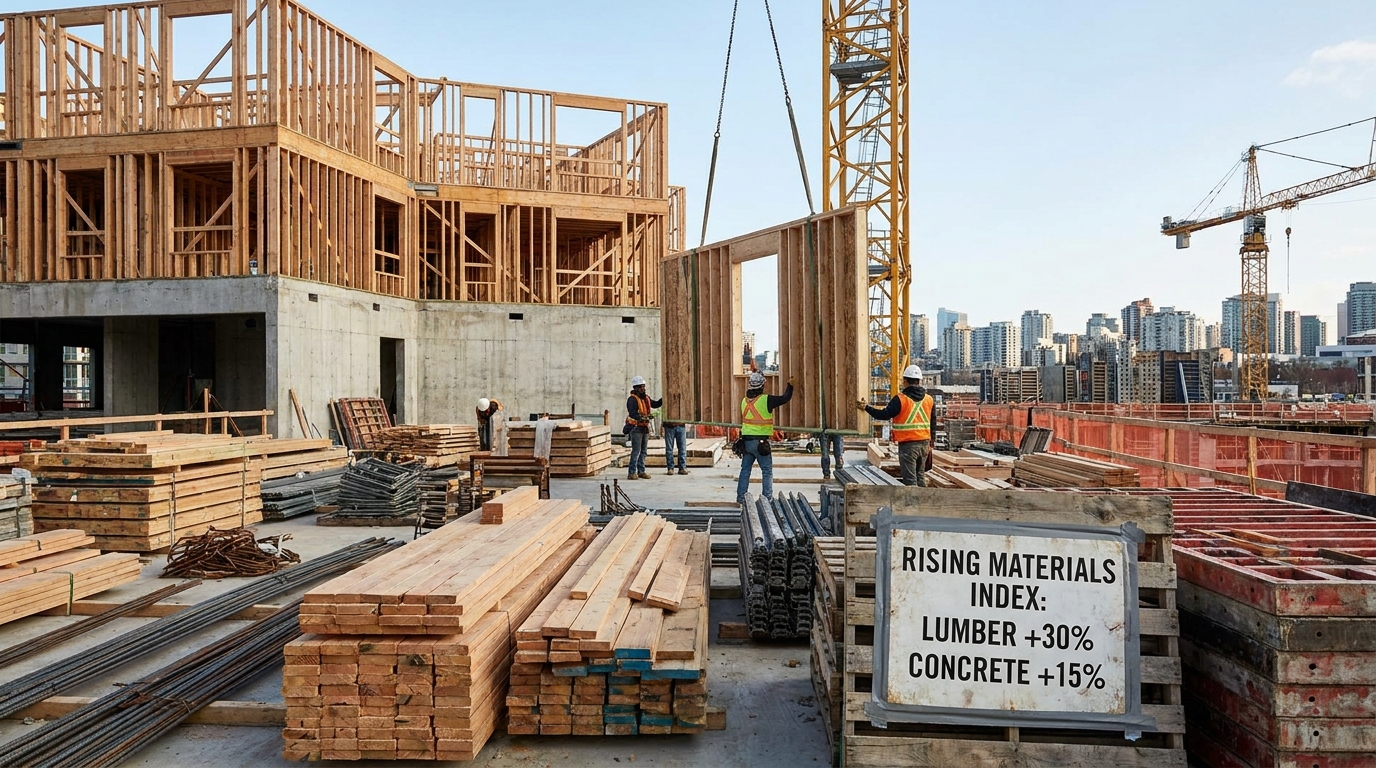
Construction economics deserve close attention as well. If replacement cost inflation remains elevated, existing assets in strong locations may continue to benefit from limited new competition. But if operating costs and tenant affordability remain pressured at the same time, owners still need disciplined expense management and realistic rent expectations. Inflation opportunities are most attractive when replacement barriers are high and demand is broad, not when investors are relying on optimistic pricing alone.
The strongest operators will continue to separate signal from noise. They will identify where inflation supports strategic repricing and where it is simply creating friction. Most importantly, they will understand that capital preservation and compounding are not the same as chasing every nominal increase in rent or value.
Conclusion: Inflation Is a Filter, Not a Guarantee
Inflation is neither a pure threat nor a guaranteed tailwind for real estate investors. It can support property values through replacement-cost pressure, reinforce the appeal of hard assets, and create room for rent growth in markets with strong demand and limited supply. At the same time, it can raise financing costs, compress affordability, and expose overleveraged properties to refinancing and margin pressure.
The recent Canadian experience makes this clear. Shelter inflation remained elevated even as headline CPI cooled, rental supply expanded while lower-rent segments stayed tight, and monetary policy reshaped both affordability and investor return expectations. These are not contradictions. They are the normal expression of real estate as a complex asset class affected by both household economics and capital markets.
For investors, the takeaway is straightforward. Real estate can perform well during inflationary periods, but only when the asset truly has pricing power, the debt structure is durable, and the underwriting reflects real rather than nominal outcomes. Properties that can pass through inflation responsibly will stand apart from those that cannot. That is where disciplined strategy becomes more valuable than broad market optimism.
In the end, inflation acts as a filter. It rewards quality locations, resilient demand, prudent leverage, and operational discipline. It penalizes weak assumptions, thin margins, and financing structures built for a different rate environment. Investors who understand that distinction will be far better positioned to protect capital and maximize long-term returns as economic conditions continue to evolve.



No Comment! Be the first one.