
Why a Stalled Bank of Canada Rate Could Be the Smartest Setup for Buyers
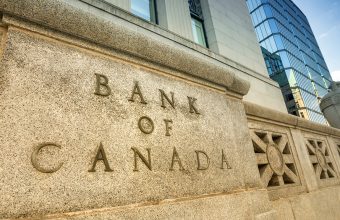
The Bank of Canada has now held its overnight rate steady for a sixth straight decision, anchoring it at 2.25% and keeping variable mortgage rates near 3.4% through at least September. For investors and buyers alike, the instinct is to treat a hold as a missed opportunity for cheaper borrowing. I see it differently. In today’s market, a hold may be doing more for buyer positioning than a cut ever could.
Toronto and Vancouver are both showing early signs of stabilization. Toronto sales climbed 2.8% month over month in June and were up 9.4% year over year, while Vancouver posted an 11.2% monthly gain and a 9.6% annual increase. Crucially, benchmark prices in both cities are still down significantly from a year ago, 5.4% in Toronto and 7.1% in Vancouver. That combination, rising activity against a backdrop of softer pricing, is exactly the window disciplined buyers wait for.
Here is the strategic tension. A rate cut lowers financing costs for everyone at once, and that “everyone” is the problem. When affordability improves broadly and simultaneously, dormant demand tends to flood back into the market faster than inventory can absorb it. Prices firm up, bidding activity returns, and much of the savings a cut was supposed to deliver gets bid straight back into the purchase price. A hold, by contrast, keeps that latent demand on the sidelines a little longer, extending the negotiating leverage that current buyers are enjoying.
Run the numbers on a theoretical $600,000 property. A 25 basis point cut, dropping the typical five-year variable to 3.15%, is the kind of move that can reignite bidding wars and push a listing price up by something like 10%, to $660,000. At a 10% down payment and 25-year amortization, that shift pushes the monthly payment to roughly $2,946. Hold conditions steady instead, and that same buyer could be paying about $200 less per month, not because the rate dropped, but because the price never got a chance to run.

A rate cut shrinks mortgage costs for everybody at once, and that is precisely why it can push prices higher before it makes anything more affordable.
This dynamic is not uniform across the country, and that matters for anyone building a diversified property strategy. Ontario and B.C. still have real upside room after their pullbacks. Saskatchewan and Newfoundland are the opposite story, sitting on historically low inventory and record prices after a hot 2025, which is now capping sales. Alberta and Quebec are cooling too, with Alberta sales down 10% year to date and Quebec down 5% in the second quarter following a 2% dip in the first. Investors chasing rebound markets should be looking west and east to Ontario and B.C., not assuming the same setup applies everywhere.
For buyers with financing already in place, the message is straightforward. This stretch of policy stillness is not a delay, it is a discount window with a shelf life. The moment the Bank moves toward easing, expect competition, and price appreciation, to move faster than the savings on your mortgage rate.
Source: NerdWallet Canada, “Should Home Buyers Be Grateful for Bank of Canada Rate Holds?”