



There was a time when home technology felt like a novelty, something fun to test but not necessarily something that changed daily life in a meaningful way. That has shifted. Today, the most helpful home productivity tech is less about flashy features and more about how a space feels to live in when small, repetitive tasks are handled more smoothly. The right technology can help a home wake up gently in the morning, support a more focused workday, keep family life organized, and make evenings feel calmer and more restorative.
Table Of Content
- What home productivity really means today
- The devices that make the biggest difference
- Smart speakers and voice assistants as the starting point
- Smart lighting for mood, focus, and flow
- Smart thermostats and the comfort of a well-timed home
- Robot vacuums and background cleaning
- Smart plugs for quiet automation
- Home energy dashboards and smarter awareness
- How technology supports your day from morning to night
- A calmer morning routine
- A more focused remote work setup
- Family coordination with less mental clutter
- Evening wind-down and better rest
- Comfort and energy use can work together
- Privacy, cybersecurity, and why trust matters
- What to check before you buy
- Interoperability is the secret to a calmer smart home
- Accessibility and inclusive comfort
- How to choose the right home productivity tech for your lifestyle
- A simple path to building a more supportive home
- The future of home productivity feels more human
What makes this category so appealing is that it sits at the intersection of comfort and function. A productive home is not one that feels mechanical or overly controlled. It is one that quietly supports the people who live there. When lighting adjusts to the time of day, when the temperature feels right before anyone has to think about it, when reminders happen naturally, and when cleaning takes place in the background, the home begins to feel less demanding and more nurturing.
That idea is becoming mainstream across North America. Statistics Canada reported that 47% of Canadians used at least one internet-connected smart home device in 2022, and 30% used a smart speaker or smart home assistant. Pew Research has also found that roughly 1 in 3 U.S. adults have a smart speaker, making voice-enabled technology one of the most common starting points for connected home living. In other words, this is no longer a niche conversation for early adopters. It is increasingly part of everyday home life.
What matters most, though, is not how many devices you own. It is whether they reduce friction in the moments that make up a day. A productive home should feel easier to maintain, easier to enjoy, and easier to share with the people you live with. In that spirit, this guide looks at the best home productivity tech for everyday living, along with how to choose and use it in ways that bring real comfort, not just more notifications.

What home productivity really means today
When people hear the word productivity, they often think of work. At home, productivity means something softer and more personal. It means spending less time repeating small tasks and less mental energy keeping track of everything. It means a home that helps you move through routines with more ease, whether that routine is getting children ready for school, settling into a remote workday, preparing dinner, or winding down for sleep.
In this context, the best technology is often almost invisible. It does not demand constant attention. Instead, it supports a sense of rhythm. Lights can brighten gradually in the morning rather than shocking you awake. A thermostat can warm the living room before breakfast and lower energy use while the house is empty. A smart speaker can hold the grocery list, set timers, and answer quick household questions without anyone needing to stop what they are doing.
This shift matters because people are increasingly looking for homes that feel calming and adaptive, not just efficient. Lifestyle technology has evolved from the idea of collecting gadgets to the idea of creating an atmosphere. The most successful smart homes today are not the ones with the most products. They are the ones where devices work together to support comfort, organization, energy awareness, and peace of mind.
The devices that make the biggest difference
If you are trying to build a more productive home, a few categories stand out as especially useful. These are the devices that tend to offer the clearest everyday value because they touch routines people already have. Instead of asking you to create entirely new habits, they fit into the flow of the home that already exists.
Smart speakers and voice assistants as the starting point
For many households, a smart speaker is the easiest first step into connected living. That is one reason adoption is so strong in both Canada and the United States. Voice assistants can feel surprisingly helpful because they remove tiny pauses from the day. You can set reminders while cooking, add items to a shopping list with your hands full, ask about the weather before walking out the door, or start a music playlist while folding laundry.
What makes voice control so practical is that it is accessible and immediate. You do not need to open an app every time you want something basic. You simply say what you need. For busy families, that can be a real relief. Children can ask for timers while brushing teeth, a parent can create calendar reminders in the middle of meal prep, and older adults or people with mobility limitations can control lights or routines more easily.
It is important, though, to understand a common misconception. A voice assistant is often an entry point into smart home living, but it is not always the same thing as a full smart home hub. Some households will eventually want broader automation, stronger cross-device compatibility, or more advanced routines. Still, as a first layer of useful home productivity tech, voice control remains one of the most approachable options available.
Smart lighting for mood, focus, and flow
Lighting has an enormous effect on how a home feels, yet it is often overlooked as a productivity tool. Smart lighting can improve both atmosphere and function by making illumination more responsive to time, activity, and comfort. Bright, cooler light can support focus in the morning or during work hours, while warmer, dimmer light can help the home transition into a more restful evening mood.
Beyond ambience, smart lighting reduces a surprising amount of daily friction. You can schedule lights to come on before you wake up, automate entryway lighting around sunset, or create simple scenes for reading, cooking, movie nights, and bedtime. In family homes, this can be especially helpful because it reduces the need to constantly move through the house adjusting switches.
There is also an emotional value to lighting that should not be underestimated. A home that gently brightens in the morning and softens at night feels more cared for. It feels intentional. That kind of environmental support can make everyday routines less abrupt and more grounding, which is part of what turns a functional home into a comforting one.
Smart thermostats and the comfort of a well-timed home
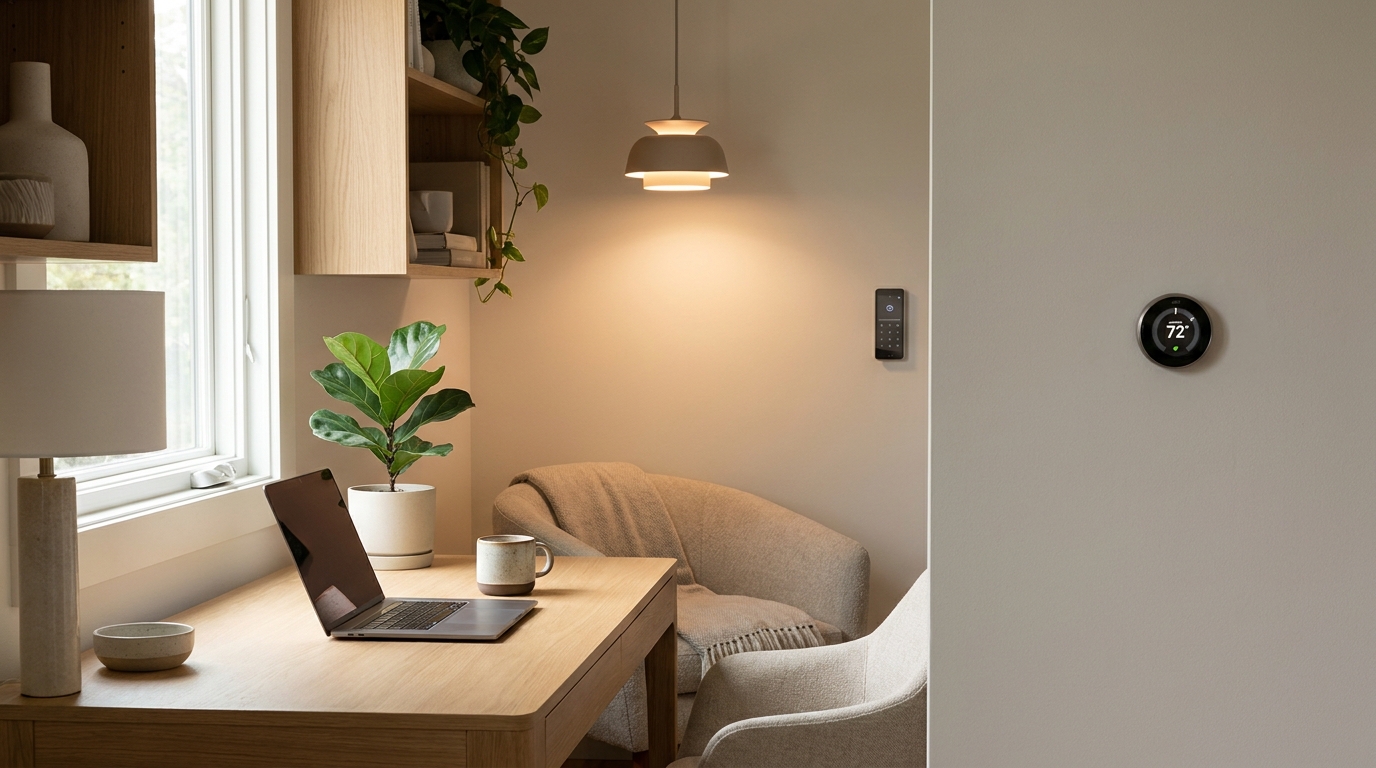
If there is one category that captures the connection between comfort and productivity, it is the smart thermostat. Temperature influences sleep, concentration, mood, and how welcoming a space feels from one room to the next. A house that is too warm, too cold, or constantly fluctuating creates low-level stress that people often normalize without realizing it.
The U.S. Department of Energy says a programmable thermostat can save up to about 10% a year on heating and cooling when set back properly. Smart thermostats build on that concept with occupancy-based control, remote access, and energy tracking. That means your home can become more comfortable when you are there and less wasteful when you are not. It is one of the clearest examples of technology doing double duty for lifestyle and efficiency.
There is also a useful myth to clear up here. Many people assume that adjusting the thermostat up or down means the system somehow works harder in a way that erases savings. The Department of Energy notes that this is a misconception. In many situations, temperature setbacks still reduce overall energy use. Of course, savings depend on factors such as climate, HVAC type, insulation, and how the home is used, but the larger point remains: smart climate control is not only about cutting bills, it is about creating a home that feels right at the right times.
Robot vacuums and background cleaning
Cleaning is one of the most persistent forms of household mental load because it never fully disappears. A robot vacuum does not replace deep cleaning, but it can remove one layer of maintenance from the week. That matters because dusty floors, crumbs, pet hair, and daily debris affect how settled a home feels. When they are handled more consistently, the whole space feels lighter.
The appeal of a robot vacuum is not perfection. It is continuity. Running it while the house is empty or while everyone is occupied elsewhere allows cleaning to happen in the background rather than becoming a separate event. In busy households, that can make a noticeable difference. Floors stay more manageable, high-traffic areas feel fresher, and weekend cleaning sessions may become shorter and less draining.
This is also where the best productivity tech tends to shine. It addresses tasks that are repetitive but not deeply meaningful. Few people feel emotionally attached to vacuuming crumbs under the dining table. Offloading that task makes room for better uses of time and energy, which is exactly what a well-designed home system should do.
Smart plugs for quiet automation
Smart plugs are often less glamorous than bigger devices, but they can be some of the most practical tools in the home. They allow ordinary lamps, coffee makers, fans, and other small appliances to become part of a schedule or routine. This can be a gentle and affordable way to begin home automation without replacing everything you already own.
Used thoughtfully, smart plugs create a sense of order. A lamp can turn on in a dark hallway before anyone wakes up. A fan in the bedroom can switch off after the house cools down. Decorative lights can follow a predictable evening rhythm. Even these small changes matter because they reduce tiny decisions and repetitive actions that add up over time.
Smart plugs are also helpful for seasonal living. During winter, they can support cozy lighting routines that make early evenings feel warm instead of abrupt. During summer, they can help control fans or accent lighting in a way that feels more responsive. In that sense, they are not just simple adapters. They are quiet tools for shaping a home’s atmosphere.
Home energy dashboards and smarter awareness
One of the most interesting developments in lifestyle technology is the idea that energy use can become more visible and more intuitive. The U.S. Department of Energy notes that smart meters and home energy management systems can help customers program when their home uses energy. This moves the conversation beyond utility bills and into the realm of everyday awareness.
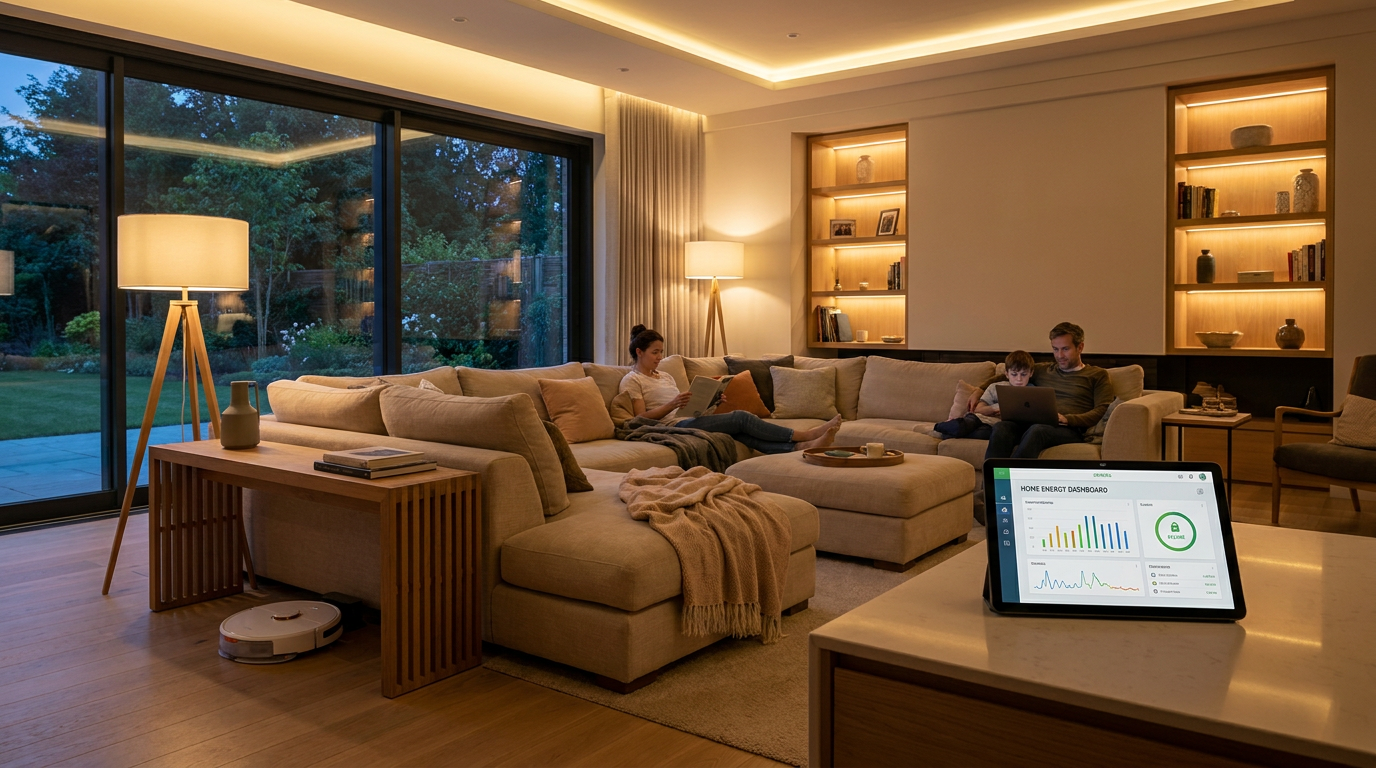
A home energy dashboard can help households understand which routines use the most electricity, when usage peaks, and where there may be opportunities to shift patterns. That does not mean staring at charts all day. It means having enough information to make calmer, better-timed decisions. Running certain devices during lower-cost periods or understanding how temperature settings affect energy use can help a household feel more in control.
For readers who care about sustainable living, this category is especially appealing because it links comfort with lower waste. A more adaptive home can be one that feels beautiful to live in while also using resources more thoughtfully. That balance increasingly defines luxury in a modern sense. It is not excess. It is ease with intention.
How technology supports your day from morning to night
One of the best ways to think about home productivity tech is not by product type, but by moments. Most people do not want a list of disconnected devices. They want a home that helps them move through the day with less stress and more comfort. When you look at technology through the lens of routines, its value becomes much easier to understand.
A calmer morning routine
Mornings set the tone for the day, and they are often the most rushed part of family life. Smart lighting can begin brightening before the alarm goes off, creating a gentler wake-up. A thermostat can warm key rooms before anyone leaves the bed. A smart speaker can share weather, calendar items, traffic updates, and reminders while breakfast is underway.
These details may sound small, but together they create something powerful: momentum without chaos. Instead of beginning the day with abrupt transitions and forgotten tasks, the home acts like a supportive backdrop. For households with children, this can be particularly useful because cues become more predictable. Lights, music, and reminders can all work together to help the morning feel less fragmented.
The most productive homes are not the busiest ones. They are the ones where small systems quietly reduce stress so people can focus on living, not constantly managing.
A more focused remote work setup
For people who work from home even part of the week, environment matters deeply. Productivity is influenced not only by a desk and a laptop, but by air temperature, glare, lighting quality, sound, and how easily the rest of the household can communicate. Smart home tools can help create a workday that feels more structured without making the home feel like an office building.
Smart lighting can shift toward brighter task-friendly settings during work hours. A thermostat can keep the workspace comfortable without overheating the entire house. Voice assistants can create timers for focused work blocks, reminders for meetings, or quick shopping notes when household needs arise in the middle of the day. Smart plugs can turn on a desk lamp or small fan automatically as the workday begins.
This matters because concentration often depends on reducing micro-disruptions. When your physical environment is already adjusted to support the task at hand, it is easier to settle into the work itself. A productive home office is not only organized on the surface. It feels supported at a systems level.
Family coordination with less mental clutter
Many homes struggle not because they lack effort, but because too much information is being carried in people’s heads. Appointments, meals, pet care, school forms, sports schedules, package deliveries, and maintenance reminders all compete for attention. Smart speakers and connected displays can help by serving as shared touchpoints for household information.
Voice reminders are especially useful because they meet people in motion. You do not have to stop and search for a notebook or unlock a phone while carrying groceries or helping with homework. You can simply say what needs to be remembered. Combined with routines such as evening reminder check-ins or morning calendar summaries, this can make a household feel more coordinated and less reactive.
Technology cannot replace good communication, of course, but it can support it. A family that uses connected tools well often experiences fewer forgotten details, fewer duplicated tasks, and less tension around who was supposed to remember what. That reduction in mental clutter is one of the most underrated benefits of home productivity tech.
Evening wind-down and better rest
Productivity is not only about getting more done. It is also about protecting rest. A home that never shifts out of daytime mode can make evenings feel overstimulating and flat. Smart lighting is especially valuable here because it can soften automatically as the night unfolds, helping signal that the household is moving toward rest.
A bedtime routine might include dimming lights in living spaces, switching on warm bedside lamps, lowering the thermostat slightly for more comfortable sleep, and setting white noise or calming music through a smart speaker. None of that is extravagant. It is simply thoughtful. The result is often a home that feels more emotionally aligned with the end of the day.
For families, bedtime routines can also become more consistent when the environment itself helps guide them. Hallway lights can dim at a certain hour, bedroom lamps can turn off on a schedule, and reminder routines can gently move everyone toward the next step. Good home technology should not feel controlling. It should feel like support you can trust.
Comfort and energy use can work together
One of the most important ideas in this space is that comfort and efficiency are not opposites. In well-chosen systems, they reinforce each other. A home that is heated or cooled according to occupancy, that uses lighting intentionally, and that gives owners visibility into energy use can often feel better while wasting less.
This is a subtle but meaningful shift in how we think about domestic technology. Older narratives framed energy-conscious living as sacrifice. Today, the more appealing model is adaptive comfort. Your home can respond to your presence, your schedule, the season, and even utility signals in ways that reduce waste without asking you to constantly monitor every detail.
That said, it helps to stay realistic. Smart home devices do not magically guarantee savings in every home and every climate. Results depend on the building itself, the heating and cooling system, the quality of setup, and how people actually live. Automation can also create waste if devices are poorly configured or left running unnecessarily. The goal is not to automate everything. The goal is to automate thoughtfully.
Privacy, cybersecurity, and why trust matters
As homes become more connected, trust becomes part of the buying decision. Devices may process information about schedules, occupancy, energy use, audio, video, or daily habits. That means privacy and security are no longer optional concerns. They are central to what makes a home system feel truly supportive rather than intrusive.
NIST’s consumer IoT guidance emphasizes baseline cybersecurity capabilities in connected devices, including areas such as software updates, device identity, data protection, and safer default settings. For everyday shoppers, that means looking beyond convenience features. A beautifully designed device that lacks long-term update support or has weak default security is not a strong lifestyle choice, no matter how elegant it appears.
The conversation is also becoming more consumer-friendly. The FCC has launched the Cyber Trust Mark initiative, which is designed to help people identify smart devices with stronger cybersecurity practices. As more households mix brands and ecosystems, visible trust signals like this may become increasingly helpful. For homeowners, the bigger takeaway is simple: a calm home should also be a secure one.
What to check before you buy
Before adding a connected device to your home, it helps to ask a few practical questions. Does the brand clearly state how long the device will receive software updates? Can you create strong unique passwords and enable multi-factor authentication if available? Are privacy settings easy to find and adjust? If the device uses a camera or microphone, do you understand what data is stored and where?
These questions may not sound glamorous, but they are part of building a home that feels safe as well as smart. Security is a form of comfort. The less uncertainty you have about how your devices behave, the more naturally they can fade into the background and do their job well.
Interoperability is the secret to a calmer smart home
One of the biggest frustrations in connected living happens when devices do not work well together. A smart home should not feel like a collection of separate apps and conflicting commands. It should feel coherent. That is why interoperability has become one of the most important trends in the category.
As households mix brands, platforms, and price points, it becomes more important to choose products that can integrate smoothly. This does not require building a highly technical system. It simply means thinking ahead. If you start with a smart speaker, consider whether future lighting, thermostat, and plug choices will work with it. If you prefer app-based control, make sure routines can still be shared or adjusted by other members of the household.
Good interoperability supports not just convenience, but emotional ease. When one routine can lower lights, adjust temperature, and turn off unnecessary devices all at once, the home feels coordinated. When every action requires a separate platform and a separate habit, technology starts to create clutter instead of reducing it.
Accessibility and inclusive comfort
Another reason this category matters is that it can make homes more accessible. Voice control can help people who have mobility limitations, chronic pain, low vision, or simply full hands during caregiving. Automated lighting can reduce the need to move through dark spaces. Scheduled routines can support older adults who benefit from consistency and environmental cues.
Accessibility should not be treated as a niche use case. It is part of good design. Many features that help one household member end up helping everyone else too. A home that responds more easily to spoken commands, one-touch scenes, or predictable routines is often a home that feels more humane and less demanding.
In that sense, home productivity tech is not only about speed. It is about reducing unnecessary barriers. The best systems create a feeling that the home meets people where they are, which is one of the loveliest expressions of comfort technology can offer.
How to choose the right home productivity tech for your lifestyle
It is tempting to start with what looks exciting online, but the best approach is to begin with pain points. Think about the moments in your week that feel repetitive, rushed, or mentally noisy. Is it the dark winter mornings, the uneven temperature in key rooms, the constant floor cleaning, or the challenge of remembering small family tasks? The right device is the one that addresses a real source of friction.
It also helps to start small. Many people begin with a smart speaker or a few smart bulbs because these are easy to understand and relatively affordable. From there, they may add a thermostat, smart plugs, or a robot vacuum once they know what matters most in their own home. This gradual approach is often wiser than trying to automate everything at once.
When comparing products, prioritize a few qualities that tend to age well.
- Ease of use matters more than novelty because every member of the household should be able to live with the system comfortably.
- Compatibility matters because mixed-device homes are increasingly common and disconnected ecosystems can become frustrating quickly.
- Security support matters because updates, privacy settings, and trustworthy defaults are part of long-term value.
- Practical daily benefit matters because the most worthwhile purchase is the one that improves your actual routine, not just your idea of a future routine.
A simple path to building a more supportive home
If the world of smart home devices feels overwhelming, it can help to think in layers rather than categories. The first layer is often control, such as a voice assistant or app that makes the home easier to manage. The second layer is comfort, including lighting and climate. The third layer is maintenance, such as robot vacuums and smart plugs for recurring tasks. The fourth layer is awareness, which includes energy dashboards and more intentional privacy settings.
This sequence works well because it mirrors how people actually adopt technology. They usually begin with one useful entry point, gain confidence, and then expand into deeper routines. That pattern also reflects broader consumer behavior across North America, where voice assistants often serve as the gateway into a larger connected ecosystem.
A home does not need to become fully automated to feel transformed. Even one or two thoughtful additions can change how a day unfolds. The real luxury is not endless control. It is a home that quietly handles more of the background work of living.
The future of home productivity feels more human
The most encouraging trend in lifestyle technology is that it is moving away from gadget obsession and toward a more humane vision of domestic life. People want homes that support wellness, organization, sustainability, and peace of mind. They want technology that blends in, works reliably, and respects privacy. They want systems that save time, but also preserve atmosphere.
That is why the best home productivity tech is not necessarily the most complex. It is the technology that understands what a home is for. A home is not a command center. It is where mornings begin, where work and care often overlap, where people recover from busy days, and where comfort takes shape through repeated small moments.
When chosen with care, connected devices can help make those moments smoother and more enjoyable. They can lower mental load, support routines, encourage better energy habits, and create a more soothing environment overall. In the end, that is what productivity at home should really mean: not squeezing more out of every hour, but making everyday living feel easier, warmer, and more beautifully supported.



No Comment! Be the first one.