

What a Toronto Research Facility Teaches Us About Building Smarter
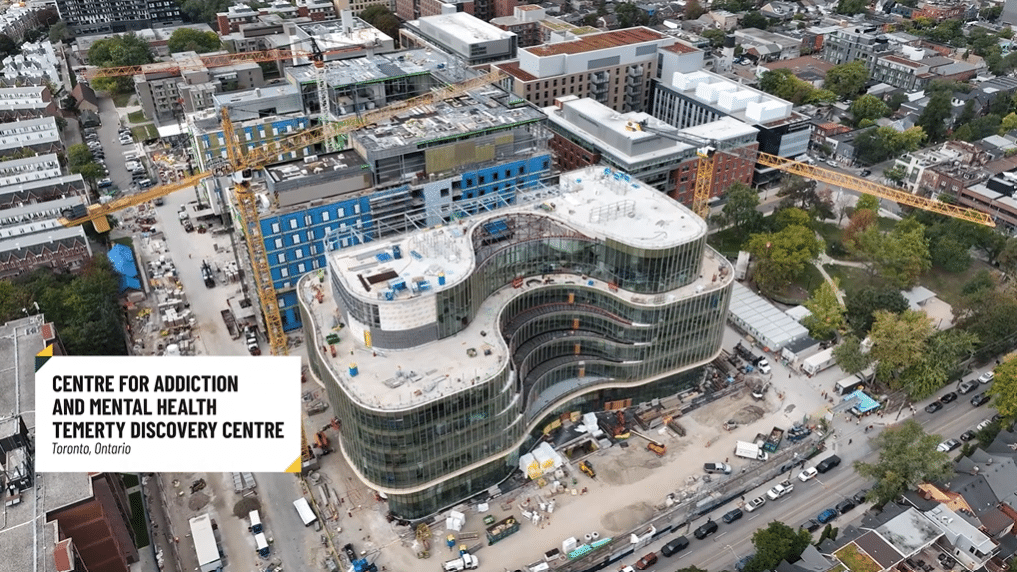
Every so often a project comes along that shows what happens when a construction team stops treating technology as an add-on and starts treating it as part of the build itself. That is exactly what caught my eye with the Temerty Discovery Centre, the 385,000-square-foot research facility PCL Construction is building on the active Queen Street West campus of the Centre for Addiction and Mental Health in Toronto. PCL recently picked up a 2026 Building Transformations Innovation Spotlight Award, specifically the Collaborative Project Award, for how the team approached this job.
I have spent enough time around job sites to know that building on an active hospital campus is never simple. You are not just managing a build, you are managing a live environment with patients, staff, and daily operations happening right next to your crews. That kind of constraint is where good planning either proves itself or falls apart. On this one, it proved itself.
What stands out to me is the toolkit the team leaned on. Building information modelling, Autodesk Forma, physical mock-ups, digital workflows, and real-time monitoring were all used to catch risks and work out solutions before they ever became problems on site. That is the difference between reacting to issues and designing them out ahead of time. Any tradesperson who has had to tear out work because a clash wasn’t caught early will tell you how much time, material, and money that kind of early coordination saves.
The building systems themselves are worth a closer look too. A 75-borehole geothermal field, mass timber structural elements, BubbleDeck void-form slabs, and low-activation mass concrete are not throwaway specs. Each of those choices affects schedule, structural performance, and long term durability. Mass timber in particular has been showing up more on institutional projects because it can speed up erection time while cutting down on embodied carbon, without giving up strength where it counts.
Innovation is strongest when it brings people together to solve complex challenges.
Myke Badry, PCL’s vice-president and district manager in Toronto, put it simply when he said the award reflects how technology and collaboration help the industry find better ways to deliver projects. That lines up with what I keep telling readers here: the strongest builds are rarely the result of one clever idea. They come from a whole team, trades, project managers, and partners, working from the same coordinated plan.
Once finished, the facility will house more than two-thirds of CAMH’s 1,400-plus research staff and boost research capacity by 43 per cent. But from where I sit, the real story is the build process itself. It is a solid reminder that the right digital tools and careful coordination, used properly and early, lead to a stronger, more reliable result once the walls go up for good.
Source: Ontario Construction News