When Data Centres Compete for Land: What the GTA’s AI Infrastructure Pause Means for Housing Growth
Land is never neutral. Every parcel carries a decision about what a community becomes, and right now, across the Greater Toronto Area, that decision is being tested by a new kind of applicant: the hyperscale AI data centre. In Mississauga, Coun. Martin Reid is moving a notice of motion for an interim control bylaw that would pause approval of major digital infrastructure facilities for up to a year, giving city staff time to study the planning implications. Toronto councillors are moving in a similar direction this week, with motions targeting proposed facilities near Islington Avenue and at Birchmount Road and Danforth Avenue.
This is not, at its core, a story about technology. It is a story about land use competition, and land use competition is exactly the terrain I have spent my career mapping. The Mississauga site under discussion sits beside a house, a church, greenspace and a warehouse, with a shopping centre and housing subdivisions just hundreds of metres away. That is the defining tension of urban growth in this region: high-demand infrastructure and residential communities are increasingly forced to share the same ground, the same grid, and the same water supply.
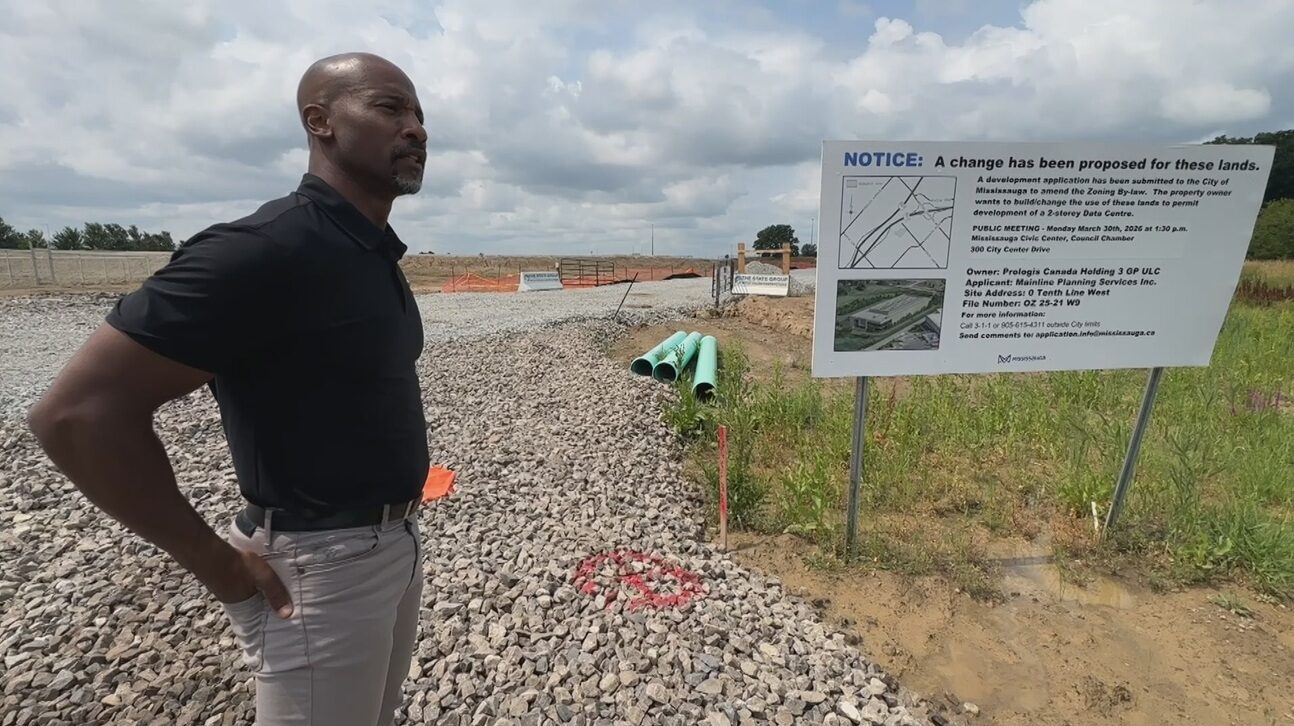
Councillor Parthi Kandavel’s motion in Toronto raises the questions that matter most from a development strategy lens: water impact, grid pressure, and noise, all inside an established residential community, on a site where the land use is already permitted as of right. That last point deserves attention. When a use is permitted without discretionary review, municipalities lose the leverage they normally have to negotiate mitigation, phasing, or community benefit. That is precisely why staff-driven planning studies and interim control bylaws exist. They buy time for policy to catch up to demand, something this sector has rarely allowed.
The province’s position, articulated through a spokesperson for Economic Development Minister Vic Fedeli, is that no project should proceed unless it “contributes to the local economy” and covers the full cost of energy. That is a reasonable starting principle, but it leaves the harder feasibility questions to municipalities: how much electrical capacity can a growth corridor absorb before it competes with the housing and transit infrastructure planned for the same land, and who pays when it does not.
Strong development decisions are never made in isolation. A single 50-megawatt facility does not just occupy a parcel, it draws on the same grid, water systems, and community goodwill that housing growth depends on.
Stack Infrastructure, the applicant behind the Birchmount and Danforth proposal, points to a closed-loop cooling system and its own funding of electrical distribution upgrades as evidence of responsible integration. That is the kind of mitigation that should be standard practice, not a selling point offered after community pushback. Hamilton’s council rejected a similar one-year pause over fears of legal exposure and lost investment, a reminder that municipalities are weighing real economic tradeoffs, not simply resisting change.
For readers tracking long-term housing supply and infrastructure capacity in this region, the outcome of these motions matters well beyond data centres themselves. Every megawatt and every litre committed to digital infrastructure is a resource planners must account for when forecasting what future residential density these same corridors can actually support. Land decisions made now, thoughtfully or hastily, will shape what gets built next.
Source: CityNews Toronto