



The kitchen has always been more than a place to prepare food. It is where mornings begin, where family members drift in and out of conversation, where weeknight routines unfold, and where comfort often takes its most familiar form. When people talk about a smart kitchen, it can sound as if the focus is only on screens, sensors, and expensive appliances. In reality, the most meaningful part of smart kitchen technology is much more human. It is about making daily life feel smoother, helping cooking feel less rushed, and creating a space that supports both function and warmth.
Table Of Content
- What Is a Smart Kitchen, Really?
- Why Smart Kitchens Feel So Good to Live In
- The Best Smart Kitchen Devices for Beginners
- Smart Ovens and Ranges
- Smart Refrigerators
- Smart Dishwashers
- Smart Plugs and Small Appliances
- Voice Assistants and Smart Displays
- Smart Lighting
- How Smart Kitchens Support Energy Awareness
- Creating a Smart Kitchen That Still Feels Warm and Human
- Privacy, Security, and Trust in a Connected Kitchen
- How to Start Small Without Regret
- Common Misconceptions About Smart Kitchens
- A Beginner-Friendly Smart Kitchen Setup to Imagine
- What to Look for Before You Buy
- The Future of Smart Kitchens Looks More Seamless
- Final Thoughts
For beginners, the idea of building a smart kitchen can feel slightly intimidating. There are so many products, so many features, and so many promises about convenience that it becomes hard to tell what actually matters. The good news is that a smart kitchen does not need to be complicated. You do not need to replace every appliance or turn your kitchen into a futuristic showroom. The best smart kitchens are thoughtful, calm, and tailored to real routines. They solve everyday problems, reduce mental load, and make the room feel better to live in.
That emotional shift matters more than most people realize. A refrigerator that reminds you the door is still open can spare wasted food and one more thing to worry about. An oven that preheats before you get home can make dinner feel possible on a busy evening. Smart lighting that softens after sunset can change the tone of the whole room, turning cleanup and late snacks into something calmer and more comfortable. These are small changes, yet together they can reshape the rhythm of home life.
There is also a practical side worth paying attention to. Research from ENERGY STAR notes that connected appliances can offer convenience features such as alerts, remote control, and energy-use reporting, while also supporting energy savings. Natural Resources Canada highlights that standby power can account for 5% to 10% of a household’s electricity bill, which is an important reminder that smart choices work best when they are made intentionally. In other words, the goal is not simply to add technology. The goal is to choose technology that genuinely improves your day.
This beginner’s guide will help you understand what a smart kitchen really is, which devices are worth considering first, and how to create a connected cooking space that feels inviting rather than overwhelming. If you are drawn to the idea of a kitchen that is more efficient, more supportive, and more enjoyable to spend time in, this is where to begin.
What Is a Smart Kitchen, Really?
A smart kitchen is a cooking space that uses connected devices, automation, and digital controls to make everyday tasks easier. That can include large appliances like ovens, refrigerators, and dishwashers, but it can also mean smaller upgrades such as smart plugs, voice assistants, lighting systems, and app-based timers. The technology itself may vary, yet the underlying idea stays the same. A smart kitchen should help you spend less energy managing tasks and more energy enjoying the experience of being in the space.
For many homeowners, the term can bring to mind luxury homes with built-in screens and highly customized systems. While those versions certainly exist, today’s smart kitchen is much more accessible. A beginner setup might start with a single connected appliance, or even a simple voice assistant that handles timers, grocery lists, and music while you cook. You can build from there slowly, choosing additions that fit your budget, your habits, and the way your household actually moves through the day. Kingsgate has brought this kind of connected living to life in one of its custom North York builds, where smart home automation was woven throughout the home rather than added as an afterthought — you can see it here: 3B Stuart Ave, North York.
What makes this category especially appealing is that smart kitchen technology often supports both convenience and atmosphere. It is not only about faster tasks. It is also about creating a kitchen that feels less chaotic. Instead of juggling reminders in your head, you can let certain systems carry some of the burden. Instead of constantly checking on a preheating oven or wondering if the dishwasher has finished, you receive useful information at the right moment. The effect is subtle, but it can make cooking feel more approachable and less tiring.
That is why a beginner-friendly perspective matters so much. You do not have to chase every new feature. In fact, some of the smartest choices are the simplest ones. A kitchen becomes truly smart not when it has the most devices, but when the devices it has work naturally within your life.
Why Smart Kitchens Feel So Good to Live In
There is a reason the emotional side of home technology is becoming a bigger conversation. Most people are not searching for kitchen gadgets because they want more complexity. They want a kitchen that feels easier to use, less stressful to maintain, and more supportive of real life. This is where smart kitchens quietly shine. They reduce friction in a room that asks a lot of us every single day.
Think about the moments that make cooking feel draining. You forget to defrost something, lose track of time while multitasking, realize too late that the refrigerator door was not fully closed, or stand in a dim kitchen finishing dishes long after dinner ends. These are not dramatic problems, but they add up. Smart technology can smooth these small points of tension, which means the room begins to feel calmer. Less friction often translates into a better mood, more confidence, and more willingness to cook at home.
That sense of ease can also deepen family connection. When a kitchen works well, people linger. Meals become less rushed. Cleanup feels more manageable. A room with better lighting, easier routines, and fewer repeated tasks naturally becomes more welcoming. This lifestyle benefit is sometimes overlooked in conversations about connected homes, yet it is one of the most valuable. A smart kitchen can support not just efficiency, but also togetherness.
Consumer Reports has emphasized that many smart appliance features improve convenience and usability, which is a useful way to frame the category. The value is often not in the novelty of controlling something from your phone. It is in the mental breathing room that comes from knowing your kitchen is helping you stay on top of things. When technology gives you back time and attention, even in small ways, it changes how the room feels.
A good smart kitchen does not try to impress you every minute. It quietly supports your routine, reduces stress, and helps the heart of the home feel a little more generous with your time and energy.
The Best Smart Kitchen Devices for Beginners
If you are just starting out, the most effective approach is to begin with devices that solve a real pain point. This keeps the process from feeling expensive or overwhelming, and it helps you learn what kinds of features you will actually use. Not every connected product deserves a place in your kitchen. The right choices are the ones that blend seamlessly into your day.
Smart Ovens and Ranges
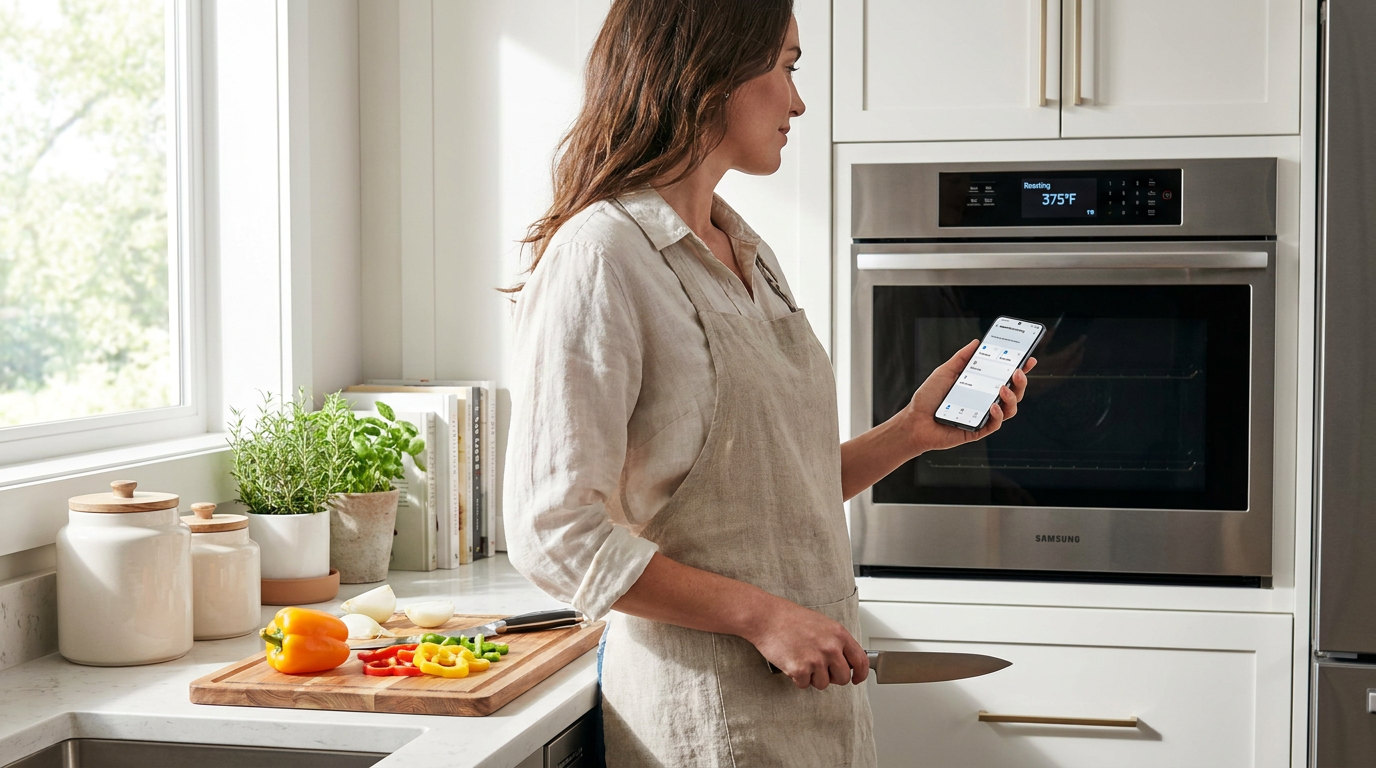
For many households, a smart oven is one of the most compelling upgrades. Remote preheating can be genuinely helpful on busy evenings, especially when you are heading home from work, wrapping up errands, or managing children’s schedules. App alerts can let you know when preheating is complete or when cooking time is up, which reduces the chance of overcooking and makes meal prep feel less scattered. If you often find dinner stressful, this kind of support can have an immediate impact.
There is also growing interest in induction cooking, which Consumer Reports notes is among the more energy-efficient cooking options. For households already planning a range upgrade, a smart induction model can be a thoughtful choice. It can offer precision, speed, and a cleaner look, while also fitting into a broader energy-conscious lifestyle. This kind of purchase makes the most sense when you are replacing an older appliance anyway, rather than upgrading purely for the connected features.
Smart Refrigerators
A smart refrigerator may sound like a luxury, but some of its most useful features are refreshingly practical. Door-open alerts can help prevent wasted energy and spoiled food, especially in homes with children or busy shared routines. Temperature notifications can add peace of mind, and some models help with inventory tracking or grocery planning. While not everyone needs a refrigerator that does everything, a few well-designed alerts can make the appliance feel more supportive in daily life.
It is worth remembering, though, that the smartest refrigerator is not necessarily the one with the largest screen or longest feature list. Beginners should pay attention to what will truly be used. If your main concern is preserving groceries well and catching accidental door openings, those core functions are enough. More tech does not always mean more value.
Smart Dishwashers
A dishwasher is one of the most quietly transformative appliances in a smart kitchen. Scheduling features can let you run a cycle later in the evening or during off-peak utility hours, which may help reduce costs depending on your local rate structure. Notifications can tell you when a cycle is complete, which is especially useful in open-concept homes where the machine blends into the room and is easy to forget. This kind of automation does not just save time. It makes cleanup feel less mentally demanding.
There is also an energy story here. Consumer Reports says today’s dishwashers use about half the water and energy of models from 20 years ago. If you are replacing an older model, a new efficient dishwasher with practical smart scheduling can be one of the most balanced upgrades in the room. It serves comfort, convenience, and sustainability all at once.
Smart Plugs and Small Appliances
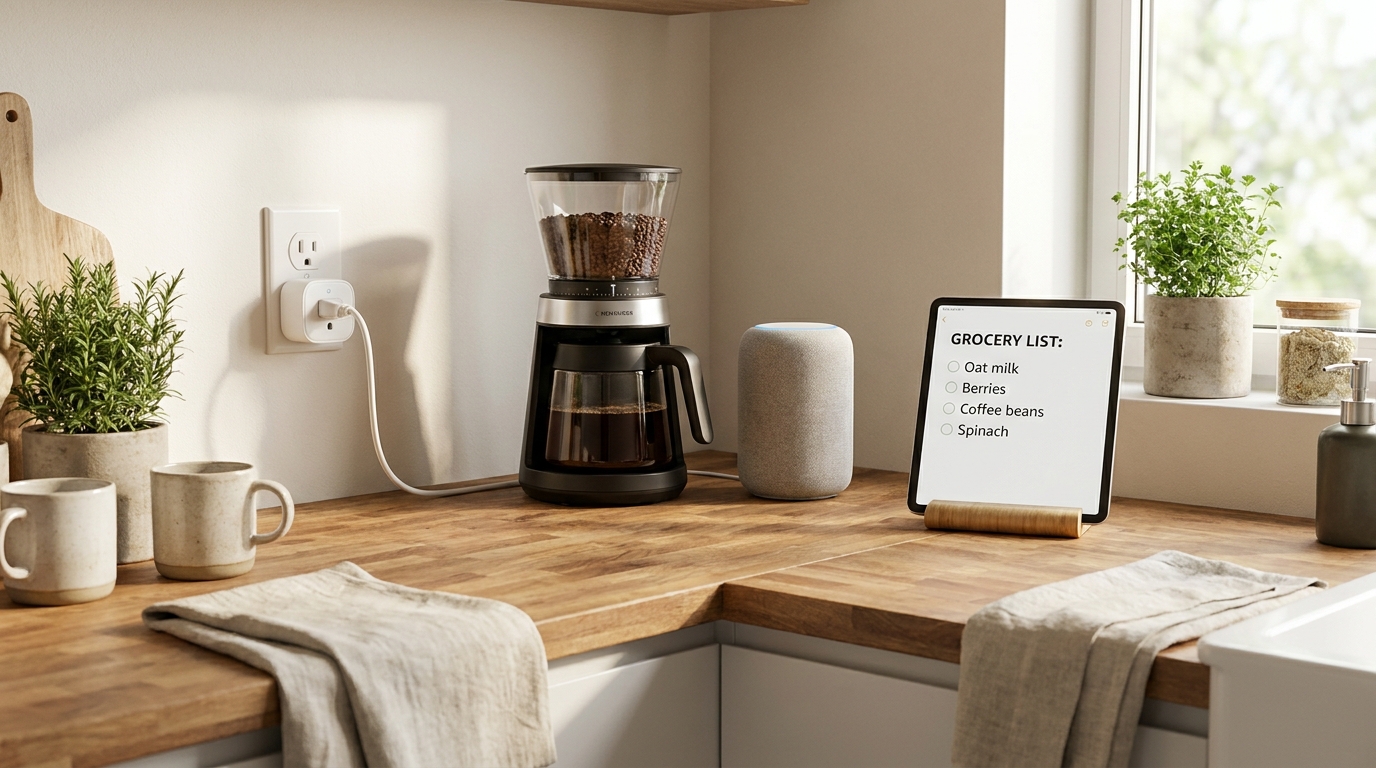
One of the easiest entry points into a smart kitchen is a smart plug. This small device can give ordinary countertop appliances a degree of smart control, allowing you to schedule them or switch them off more easily. It can be useful for lamps, coffee stations, or occasional appliances that you want to manage more intentionally. For beginners, smart plugs are a low-commitment way to experience the benefits of automation without replacing major appliances.
That said, this is also where restraint matters. Natural Resources Canada notes that connected devices use standby power, so there is little benefit in connecting everything just for the sake of it. Focus on devices that either improve convenience meaningfully or help you avoid waste. The goal is thoughtful use, not endless connectivity.
Voice Assistants and Smart Displays
In many homes, a voice assistant becomes the invisible helper that ties the smart kitchen together. It can set multiple timers, convert measurements, read recipes aloud, play music, and add ingredients to a shopping list without requiring messy hands to touch a screen. These little conveniences may sound minor, yet they can make cooking feel noticeably smoother. Instead of interrupting your flow, the kitchen starts responding to you more naturally.
For families, voice assistants can also simplify shared routines. Different people can add to the grocery list, ask about the weather before school runs, or check whether the dishwasher is still running. This can make the kitchen feel more coordinated and collaborative, which is often exactly what busy households need.
Smart Lighting
Lighting is one of the most underrated parts of a smart kitchen. Good kitchen lighting should shift with the day, supporting task work in the morning and creating a softer mood later in the evening. Smart bulbs, dimmers, or under-cabinet systems make it easy to move from bright prep lighting to a gentler dinner atmosphere with almost no effort. This is a simple way to make the kitchen feel more polished and more emotionally comfortable.
Smart lighting also supports practical routines. You can schedule lights to turn on before early mornings, brighten work zones while cooking, and lower the intensity during cleanup or nighttime visits for water or snacks. This kind of quiet environmental control can be just as meaningful as any major appliance feature because it changes the feeling of the room every day.
How Smart Kitchens Support Energy Awareness
One of the most appealing parts of a modern smart kitchen is the possibility of using energy more thoughtfully. That does not mean every connected appliance automatically saves electricity. In fact, it is important to understand that smart products still consume some power while connected. Natural Resources Canada warns that standby power can account for 5% to 10% of a household’s electricity bill, which makes selective purchasing and careful settings especially important.
The value of smart technology lies in how it helps you notice patterns and make better decisions. ENERGY STAR points to features such as energy-use reporting, scheduling, and utility-program participation with consumer permission. In real life, that can mean running a dishwasher when electricity is cheaper, receiving reminders that support better use habits, or monitoring how certain appliances perform over time. It turns energy awareness into something more visible and manageable.
This is especially helpful in kitchens because so many appliances operate daily and often in overlapping ways. When you can align cooking, cleaning, and lighting with more efficient habits, the savings may not feel dramatic in one moment, but they build over time. Just as important, they support a lifestyle of greater intention. A smart kitchen can encourage you to be more tuned in to your home without making the process feel burdensome.
The most balanced mindset is to view smart energy features as helpful tools rather than guaranteed savings. A delayed-start dishwasher that you use regularly may be worthwhile. A connected feature on an appliance you rarely use may not be. Beginners will do best when they stay focused on practical, repeatable value.
Creating a Smart Kitchen That Still Feels Warm and Human
One of the common worries about smart homes is that they can feel cold or overly engineered. That concern is understandable, especially in a room as personal and sensory as the kitchen. The smell of food, the warmth of lighting, the sound of family conversation, and the texture of everyday routines all matter here. Technology should support that atmosphere, not compete with it.
The most beautiful smart kitchens are the ones where the technology recedes into the background. You notice the calm, not the system. You notice that dinner prep feels easier, that the room is lit exactly as you want it, and that cleanup no longer drags on mentally. This is why design decisions matter so much. Choose appliances with clean interfaces, use hidden or integrated charging where possible, and avoid cluttering counters with devices that do not serve a clear purpose.
Materials and mood are equally important. Warm woods, natural stone, soft lighting, comfortable seating, and meaningful accessories help ensure that the room still feels grounded and welcoming. Even if your kitchen includes impressive connected features, its success should be measured by how well it supports everyday comfort. A smart kitchen should feel like a home kitchen first.
This is also where routines come into play. A smart kitchen is most effective when it fits gently into habits you already value. Perhaps your morning begins with lights that slowly brighten and a coffee maker on a schedule. Perhaps evenings feel easier because the oven can be preheated remotely and the dishwasher runs later after dinner. These are lifestyle touches, not just technical upgrades, and they are what make the room feel special.
Privacy, Security, and Trust in a Connected Kitchen
A smart kitchen should feel safe as well as convenient. Because connected appliances and devices can collect data, use Wi-Fi, and sometimes store account information, it is important to be thoughtful about privacy and security from the beginning. This does not mean you should avoid smart kitchen technology altogether. It simply means you should choose products with the same care you would use for any other important household investment.
Innovation, Science and Economic Development Canada advises consumers to check whether connected devices meet privacy expectations, whether they can work offline, whether security updates are provided, and whether data can be removed before the device is sold or discarded. For beginners, this guidance is extremely helpful because it turns an abstract concern into a simple checklist. Before buying, ask practical questions. Does this device really need to be connected? Will the brand continue to support it? Can I reset it easily if I move or upgrade later?
It is also wise to avoid paying extra for features you do not intend to use. Consumer Reports has noted that many smart-appliance benefits relate to convenience and software updates, but active use of smart features remains relatively limited in many households. If a product’s connected functions do not align with your habits, they may become unnecessary clutter rather than real value. Trust often comes from simplicity.
For many people, the most comfortable smart kitchen is one where only a few carefully selected devices are connected. That approach can reduce risk, reduce standby energy use, and keep the experience feeling straightforward. A well-edited system is often the most elegant one.
How to Start Small Without Regret
If you are interested in a smart kitchen but unsure where to begin, start with the part of your current routine that feels most frustrating. Maybe you constantly forget timers. Maybe your kitchen lighting is too harsh at night. Maybe cleanup feels chaotic, or dinner prep is difficult to time on workdays. Once you identify the friction point, the right technology becomes easier to choose. You are no longer shopping for a concept. You are solving a real problem.
For many beginners, the best first steps are modest ones. A voice assistant, smart lighting, or a dishwasher with scheduling features can make an immediate difference without requiring a full renovation. If you are already planning to replace an appliance, that is a natural time to consider whether smart features would genuinely improve the experience. This is often a better path than replacing functional appliances simply to gain connectivity.
It also helps to choose products that work well with the ecosystem you already use. Interoperability is becoming more important as smart home standards evolve, and a beginner-friendly setup should feel simple to manage. If your devices speak to one another smoothly, the kitchen feels more intuitive. If every product requires a different app and different process, the experience can quickly become tiring.
One of the smartest things you can do is leave room to learn. Live with one or two connected upgrades for a while and notice what you actually enjoy. You may discover that voice controls transform your cooking routine, while app-based refrigerator features matter very little to you. That kind of insight will help you invest more wisely over time.
Common Misconceptions About Smart Kitchens
There are several misconceptions that keep people from exploring smart kitchen technology in a way that would truly suit them. One of the biggest is the idea that smart kitchens are only about luxury or status. In truth, many of the most useful features are simple and practical. They save time, reduce stress, and support smoother daily routines. The value is often quiet rather than flashy.
Another misconception is that smart appliances are always more energy efficient. Some certainly can support better energy habits, especially when they provide reporting, scheduling, or work with efficient modern designs. But connected devices also use standby power, and not every feature is worthwhile in every household. Being selective is part of being smart.
People also sometimes assume that all connected products are equally secure, which is not the case. Privacy practices, update support, offline functionality, and reset options all matter. A little research before you buy can help you feel much more comfortable with your choices. The best kitchen technology should create confidence, not concern.
Finally, there is the belief that more connectivity automatically means a better kitchen. Often the opposite is true. A kitchen feels best when the technology is purposeful, calm, and aligned with the rhythms of the people who use it. More is not always better. Better is better.
A Beginner-Friendly Smart Kitchen Setup to Imagine
If you want a simple picture of what a smart kitchen might look like in real life, imagine a space that wakes up gently with you. The lights come on softly in the morning. A voice assistant reads the weather and adds breakfast staples to the grocery list. In the late afternoon, you preheat the oven from your phone before leaving work. While cooking, you ask for measurement conversions and set two timers without touching a screen.
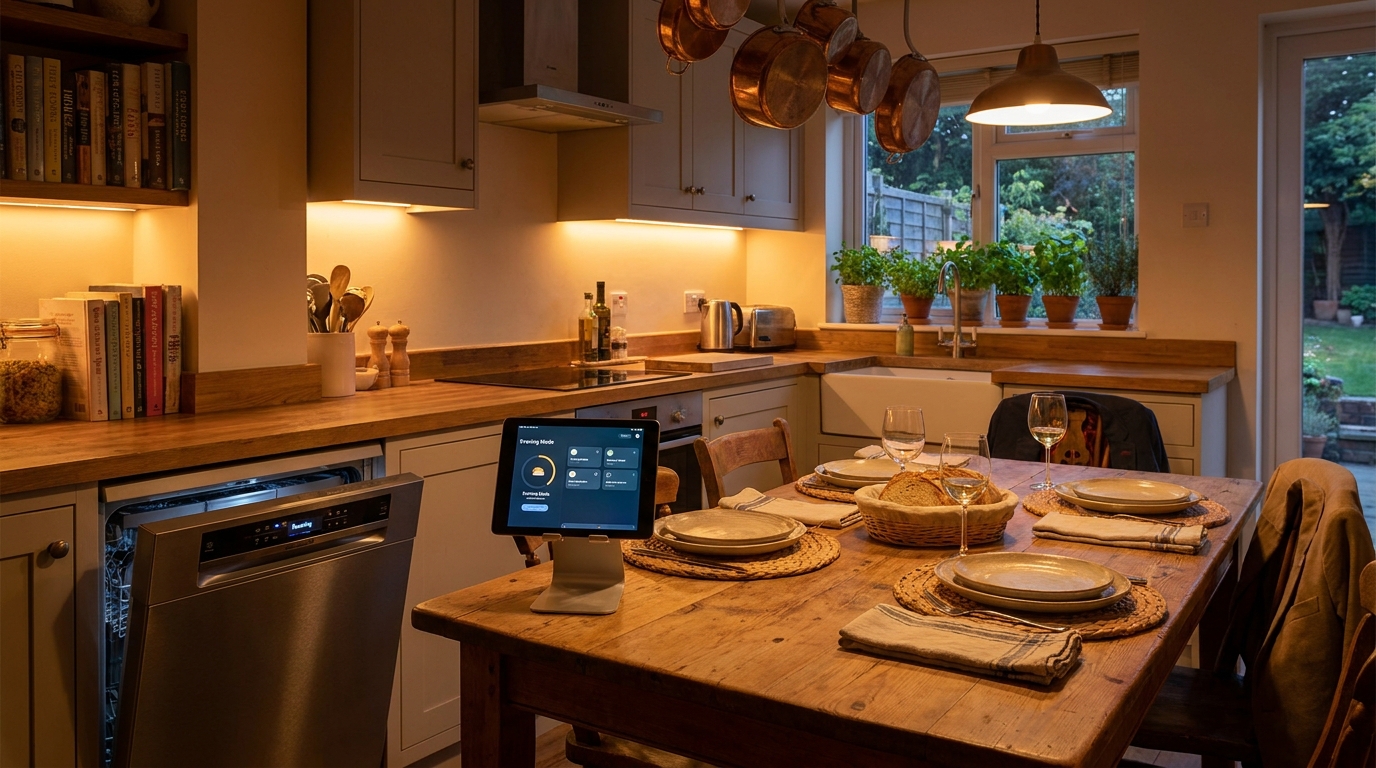
After dinner, the dishwasher is scheduled to run later when rates are lower. Under-cabinet lights dim as the evening winds down, making the room feel more relaxed for tea, homework, or conversation. Nothing about this kitchen feels mechanical or impersonal. It simply feels well supported. The technology is there, but it is serving the mood and the routine rather than taking over the room.
This is the version of a smart kitchen that tends to have the most lasting appeal. It is not about chasing every upgrade. It is about using a few thoughtful tools to shape a more comfortable daily experience. When the kitchen feels easier to inhabit, people naturally cook more, gather more, and enjoy the room more fully.
What to Look for Before You Buy
Before bringing any smart kitchen product home, it helps to pause and ask a few grounded questions. Is this device solving a problem I have often? Will I realistically use its smart features at least several times a week? Does it come from a brand with a good reputation for updates and support? Can it function in a useful way even if the app is unavailable or I decide not to use every connected feature?
You should also pay attention to energy efficiency and standby use. Look for efficient appliance models overall, not just connected features. If available, energy reporting can be useful, but only if it leads to real habits. It is easy to be seduced by possibilities that never become part of everyday life. The best purchases are the ones that keep proving their worth quietly over time.
Design should not be ignored either. Because the kitchen is such a visible and frequently used room, your devices should contribute to a sense of visual ease. Clean lines, intuitive controls, and minimal clutter will help your smart kitchen feel cohesive. Technology should support beauty and comfort, not interrupt them.
The Future of Smart Kitchens Looks More Seamless
Looking ahead, the smart kitchen is likely to become less about novelty and more about integration. Interoperability is becoming a stronger focus, as are energy reporting, utility participation, and more thoughtful security standards. These trends matter because they suggest a future in which connected kitchens are simpler to use, easier to trust, and better aligned with broader household energy goals.
For homeowners, that is encouraging news. It means the category is maturing beyond gimmicks and toward practical, lifestyle-friendly value. We are moving closer to a vision of the kitchen where technology supports comfort invisibly, helps reduce waste, and works within the rhythms of ordinary life. That is a far more appealing future than one filled with unnecessary complexity.
And perhaps that is the real promise of the smart kitchen. It is not just about doing things faster. It is about making one of the most important rooms in the home feel more supportive, more responsive, and more enjoyable to be in. When technology helps a space feel calmer and more welcoming, it has done something genuinely meaningful.
Final Thoughts
A beginner’s smart kitchen does not need to start with a renovation or a dramatic investment. It can begin with one thoughtful change that makes cooking feel easier and home life feel lighter. Whether that is a connected oven, a more efficient dishwasher, voice-guided help during meal prep, or smart lighting that changes the atmosphere of the room, the best upgrades are the ones that fit naturally into your habits.
As you explore the world of smart kitchens, keep your focus on the emotional and practical benefits that matter most. Choose technology that saves time, reduces mental clutter, supports energy awareness, and helps your kitchen feel more welcoming. Be selective, stay curious, and trust that the smartest room is not the one with the most devices. It is the one that makes everyday life feel beautifully easier.
When your kitchen begins to support you in these quiet, intentional ways, cooking can become more enjoyable again. The room feels less like a place of constant tasks and more like a space that holds you through the day. That is the heart of smart home living, and it is a lovely place to begin.



No Comment! Be the first one.