

Ottawa’s $2.7 Billion Bet on Toronto: What Federal Capital Means for Housing Supply Strategy
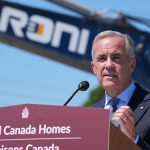
When federal money moves at this scale, it is never just a funding announcement. It is a signal about where a government believes growth needs to happen next. This week, Prime Minister Mark Carney stood alongside Toronto Mayor Olivia Chow to commit at least $2.7 billion toward more than 18 housing projects across the city, a package aimed at delivering over 5,600 rental homes, with 1,800 built as affordable or rent-controlled units. That is not a modest gesture. It is a supply intervention, and one worth reading carefully.
The mechanics matter as much as the headline figure. Funds are set to flow over the next three years, with construction on roughly 4,500 homes expected to begin before the end of this year. That timeline tells us something important: this is capital designed to move fast into shovel-ready sites, not a long-horizon planning exercise. For a city that has spent decades under-delivering relative to population growth, speed of deployment is the real variable to watch, not just the dollar amount attached to the press release.
Carney was direct about the structural forces that got Toronto here. He pointed to development charges, taxes, rising construction costs, and constrained land availability as the compounding pressures that made housing unaffordable for most residents. None of that is new to anyone who has worked a development file in this city, but hearing it framed as federal policy priority, backed with capital, is a meaningful shift. Land economics do not change because a government writes a check. They change when that check is paired with intent to address the charges, approvals, and land constraints that made projects unfeasible in the first place.
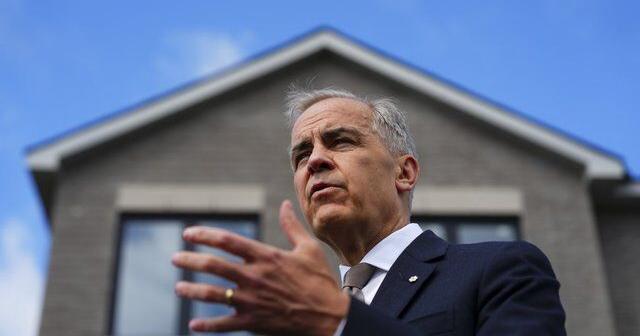
The best way to meet the challenge that is created is to build more supply and to build it faster.
For those of us who think in terms of feasibility studies and pro formas, the affordable housing component deserves particular attention. Roughly a third of the promised units carry affordability or rent control conditions, which changes the underwriting for any developer partnering on these sites. Projects blending market and below-market rental typically require patient capital and coordinated municipal support on charges and approvals to pencil out. Whether this federal package includes that kind of coordination, or simply provides construction financing and hopes the rest follows, will determine if the 4,500-home target by year end is realistic or aspirational.
There is also a broader infrastructure story running alongside this one. Carney’s visit included a planned transit site tour with Ontario Premier Doug Ford, set against the backdrop of tension over the Alto high-speed rail project and the rejected city airport expansion. Housing supply and transit investment are rarely separable in a city like Toronto. Rental intensification without transit capacity simply relocates congestion rather than solving it. Readers tracking large-scale development in this market should watch whether these housing dollars arrive paired with transit commitments, or in isolation.
Mayor Chow’s framing was blunt and, from a development standpoint, accurate: renters running out of money at the end of the month cannot wait for multi-year planning cycles. That urgency is exactly why the execution timeline on this announcement matters more than the total commitment. Capital announced is not capital built. The next twelve months, watching how many of those 4,500 units actually break ground, will tell us whether this is the start of a genuine supply correction or another well-intentioned figure that outpaces delivery.
Source: Kelowna Daily Courier, “Carney promises $2.7 billion to build rental homes in Toronto”