



Ultra-luxury estates occupy the highest echelon of residential real estate. They are the properties that sit beyond conventional luxury, beyond premium finishes, and beyond simple square footage comparisons. These homes are defined by a combination of scarcity, pedigree, land value, privacy, architectural distinction, and location power. In practice, that means a waterfront compound in a globally recognized market, a gated estate with acreage in a supply-constrained city, or a one-of-a-kind residence whose value is supported as much by what cannot be replicated as by what has been built. Beyond their role as extraordinary living environments, these estates are increasingly treated as prestige assets and long-term investments, valued for capital preservation, wealth positioning, and scarcity-driven pricing power in a global market shaped by inflation, volatility, and mobile capital.
Table Of Content
- What Makes an Estate Truly Ultra-Luxury
- Why Ultra-Luxury Estates Behave Differently From the Broader Housing Market
- The Investment Case for Trophy Properties
- Global Demand, Local Scarcity
- Canada’s Luxury Market and the Demographic Support Story
- The Rise of Amenity-Rich Compound Living
- Market Trends Shaping Ultra-Luxury Estates Right Now
- How to Evaluate an Ultra-Luxury Estate as an Investment
- Risks Investors Should Not Ignore
- The Estates That Hold Their Value Best
- Final Perspective: More Than Status, Less Than Certainty
For many buyers, the appeal of ultra-luxury real estate begins with lifestyle. These estates offer extraordinary living environments, tailored amenities, and a level of control over space that few assets can match. Yet the modern market has made another reality clear. At the very top end, these properties are also increasingly evaluated through the lens of capital preservation, wealth positioning, and long-horizon investment strategy. In a world shaped by inflation concerns, market volatility, and global capital mobility, the right estate can function as both residence and store of value.
This is what makes the current conversation around ultra-luxury estates so compelling. They are no longer viewed purely as symbols of excess. They are part of a specialized asset class where buyer behavior differs markedly from the broader housing market. Cash purchases are more common, financing sensitivity is lower, international demand can be influential, and scarcity often carries a measurable premium. At the same time, the category is not immune to risk. Carrying costs are significant, liquidity can be limited, and local market conditions still matter.
Understanding that balance is essential for buyers, investors, and observers alike. The estate that delivers long-term value is rarely the one with the biggest price tag alone. It is usually the one with a combination of irreplaceable characteristics, disciplined positioning, and a location that remains desirable across market cycles. The ultra-luxury segment rewards selectivity, patience, and context.
This article explores the world’s most exclusive ultra-luxury estates through that dual lens of lifestyle and investment. It examines what defines the category, why this segment has remained relatively resilient, which trends are shaping demand, and how investors should think about value in a market where prestige and performance increasingly intersect.
What Makes an Estate Truly Ultra-Luxury
One of the biggest misconceptions in high-end real estate is that luxury has a universal price point. It does not. In some North American markets, a home above $1 million may be considered luxury. National reports have placed broader luxury thresholds around $900,000 for single-family homes and about $700,000 for attached homes, which immediately shows why ultra-luxury must be treated as a separate category. In major global and U.S. gateway markets, ultra-luxury often begins far above $10 million, and in certain coastal, resort, or trophy locations, the threshold can climb much higher.
That distinction matters because pricing alone does not define the category. An ultra-luxury estate tends to have a set of durable attributes that place it in a rare class. These include meaningful land holdings, exceptional privacy, prime waterfront or view exposure, architectural significance, and a location with proven long-term prestige. In many cases, the land itself is the real asset, especially when zoning restrictions, topography, shoreline limits, or neighborhood build-out make new comparable offerings nearly impossible to create.
Design pedigree also plays a role. Buyers at the top end are not simply purchasing square footage. They are buying proportion, flow, light, craftsmanship, materials, and narrative. A home designed by a recognized architect, a restored heritage estate with modern infrastructure, or a newly built compound with resort-grade amenities will each command attention for different reasons. What unites them is their inability to be easily substituted.
Privacy is another defining feature. For ultra-high-net-worth buyers, privacy is not a luxury add-on. It is often a core requirement. Long driveways, gated entries, natural buffers, large lot dimensions, and discreet service access all contribute to value. In globally visible markets, estates that offer seclusion without sacrificing accessibility often command the strongest premiums.
The market therefore rewards more than spectacle. It rewards scarcity. A dramatic home can attract attention, but an irreplaceable home attracts conviction. That is the line that separates luxury from the super-prime tier.
Why Ultra-Luxury Estates Behave Differently From the Broader Housing Market
The mainstream housing market is heavily influenced by mortgage affordability, consumer confidence, employment conditions, and local inventory. Ultra-luxury estates are influenced by a different set of forces. Wealth creation, capital market performance, family office allocation, cross-border mobility, tax planning, and long-term asset diversification often matter more at this level than monthly financing costs.
That does not mean interest rates are irrelevant. The Bank of Canada’s key policy rate stood at 2.25% on December 10, 2025, and central bank policy still shapes market psychology, transaction timing, and the comparative appeal of holding real estate relative to other assets. Lower rates can improve sentiment and support broader residential activity, while periods of elevated uncertainty can create caution even among affluent buyers. However, ultra-luxury purchasers are more likely to transact in cash or use tailored financing strategically rather than out of necessity.
This difference helps explain why the segment has remained comparatively resilient in recent years. Research from Sotheby’s International Realty and Compass has pointed to elevated activity at the high end even while affordability challenges weighed on mainstream housing. Compass reported that 2025 U.S. $10 million-plus home sales re-accelerated to $31.4 billion, with strong growth across top ultra-luxury markets. That level of activity signals a buyer pool that remains active when broader conditions might suggest caution elsewhere.
Buyer motivation also differs. The purchase of an ultra-luxury estate is often about more than shelter or even convenience. It can be driven by wealth preservation, multigenerational planning, second-home strategy, status, seasonal mobility, or the desire to secure a finite piece of land in an irreplaceable location. Those motivations tend to be less cyclical than standard housing demand, though they are still affected by confidence and global macro conditions.
In practical terms, this creates a market with fewer participants, longer evaluation periods, and sharper selectivity. A standout estate may retain pricing power even in a softer environment, while an overbuilt or mispriced property can sit for an extended period. That dispersion is normal in ultra-luxury. The segment is resilient, but it is also unforgiving.
The Investment Case for Trophy Properties
The investment thesis for ultra-luxury estates is fundamentally different from that of conventional income-producing property. Buyers are usually not chasing strong cash yield. Instead, they are acquiring an asset that may offer a mix of scarcity premium, inflation resilience, emotional utility, and global tradability. In many cases, the return profile is best understood over a long holding period rather than through short-term appreciation expectations.
A trophy property’s strongest value driver is usually rarity. There may be only a limited number of true waterfront parcels in a city, only a handful of estates with meaningful acreage near an urban core, or only one residence with a specific combination of view corridor, design quality, and historical significance. When wealth concentration increases and supply remains fixed, these assets can benefit disproportionately.
This is especially relevant in globally recognized markets. Prime neighborhoods in cities and resort destinations continue to attract mobile capital because they combine utility with prestige. A family can use the property, hold it through cycles, and potentially position it as part of a broader estate-planning strategy. That is one reason many affluent buyers are comfortable paying premiums for turnkey quality and highly usable compounds.
Another key factor is the increasing role of all-cash purchases. Sotheby’s International Realty noted a larger share of cash transactions and stronger international buyer activity at the high end entering 2026. Cash enhances certainty, reduces financing friction, and can improve negotiating leverage. It also reinforces the idea that buyers in this segment are often allocating capital rather than simply securing housing.
Still, no investor should romanticize the category. High-end real estate can preserve wealth, but it can also absorb it. Property taxes, staffing, insurance, deferred maintenance, security systems, landscaping, marina upkeep, and amenity operation can all materially affect net performance. An estate may appreciate on paper while underperforming on a fully loaded cost basis. The best investments in this segment are those where the long-term scarcity case is strong enough to justify those carrying costs.
In ultra-luxury real estate, price alone does not create value. Enduring value comes from rarity, location credibility, and the inability of the market to reproduce the asset.
Global Demand, Local Scarcity
One of the most important truths about ultra-luxury real estate is that it is globally influenced but locally determined. International demand can support pricing and broaden the buyer pool, yet long-term value is still anchored by the fundamentals of the immediate market. Zoning, access, neighborhood reputation, school systems, shoreline restrictions, architectural controls, and scarcity of buildable land often matter more than broad global narratives.
This is why some locations consistently outperform. Buyers trust markets with established prestige and predictable demand from domestic and international wealth. These are often gateway cities, iconic coastal enclaves, mountain resort destinations, and culturally relevant urban districts. They offer more than luxury housing. They offer permanence, recognition, and confidence in future resale relevance.
Waterfront and waterfront-adjacent land remain particularly powerful within this framework. Shoreline is finite by nature. View corridors can be protected by geography. Dock access, beach rights, and elevation all shape value in ways that are difficult to replicate elsewhere. In many ultra-luxury transactions, the land component and locational advantage account for a larger share of intrinsic value than the home itself.
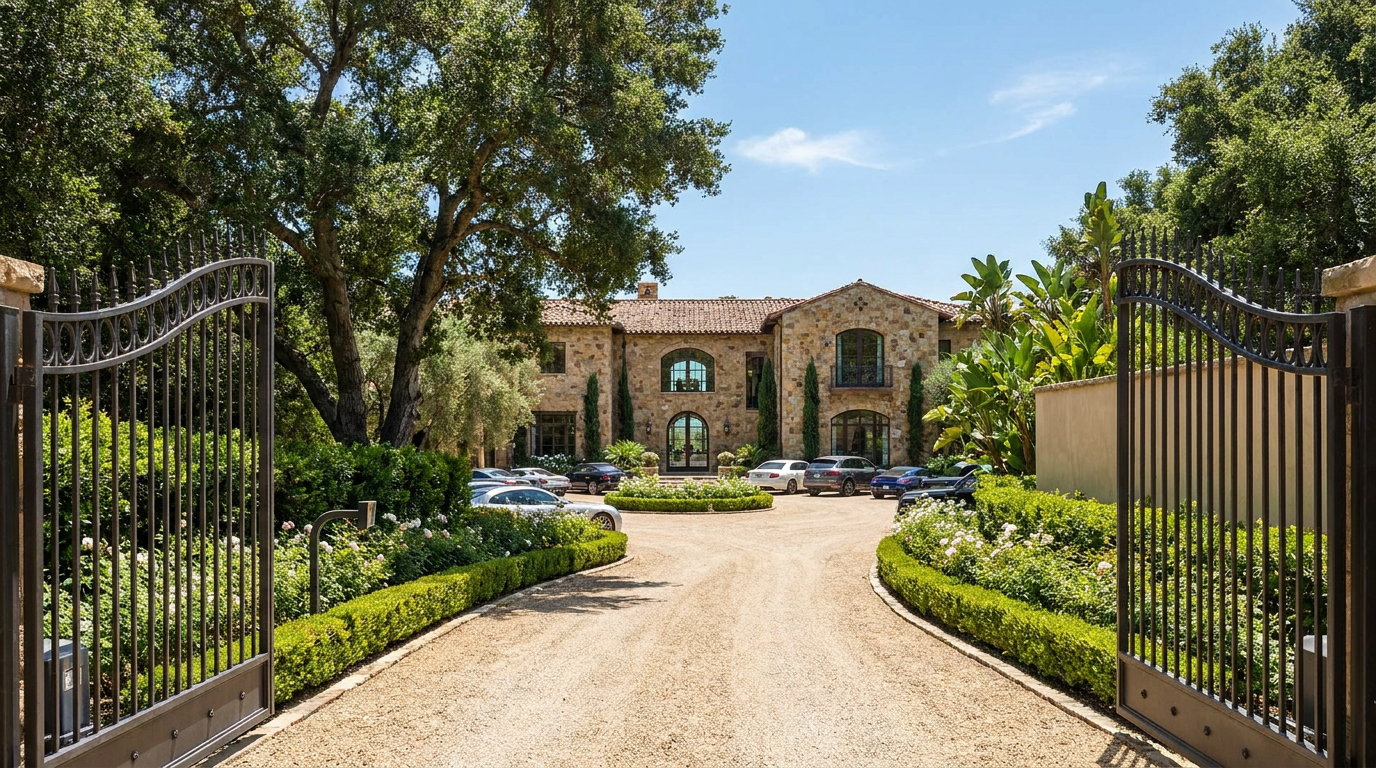
Scarcity also matters in urban settings where large parcels are rare. A city estate with meaningful lot size, mature trees, setback privacy, and walkable access to elite retail or cultural districts can command premiums because the supply of comparable homes is effectively fixed. The same logic applies to heritage mansions that have been modernized without losing their character. Buyers are often paying for stewardship as much as square footage.
The strongest properties therefore sit at the intersection of global appeal and hyper-local constraints. They attract cross-border interest because they are located in markets with enduring credibility, but their pricing power is reinforced by neighborhood-level scarcity. That combination is what gives certain estates their long-term strategic edge.
Canada’s Luxury Market and the Demographic Support Story
Canada offers a particularly interesting case study because its luxury market has been shaped by powerful demographic and supply-side forces. The country admitted 483,640 permanent residents in 2024, while Statistics Canada estimated total population growth of 744,324 people in the same year. Even though policy efforts have aimed to rebalance housing pressure through reduced non-permanent resident levels, the cumulative demand effect in major metropolitan regions remains significant.
Sotheby’s Canada linked luxury demand in 2024 and 2025 to immigration-led population growth, constrained supply, and macroeconomic volatility, especially in major centers such as Toronto and Vancouver. That combination has created a nuanced market environment. On one hand, top-tier demand has remained active because affluent households still want best-in-class locations and properties. On the other hand, performance has been uneven across submarkets, with some areas becoming more buyer friendly, particularly where inventory has improved.
For ultra-luxury investors, this underscores an important principle. National housing narratives are often too broad to be useful. A prime estate in a deeply supply-constrained neighborhood can perform differently from a large luxury property in a less established enclave, even within the same city. Micro-location, land quality, and neighborhood prestige remain decisive variables.
Toronto and Vancouver continue to demonstrate how demographic support can coexist with selectivity. Population growth helps sustain long-term housing demand broadly, but buyers at the top end are exceptionally discriminating. They tend to favor estates with turnkey quality, privacy, and design integrity. They are not simply buying into a city. They are buying the best version of a specific location within that city.
From an investment perspective, Canada’s luxury market also illustrates why ultra-luxury should not be conflated with conventional luxury. The top tier often has different holding periods, a narrower but more capitalized buyer pool, and a stronger reliance on scarcity. Investors who understand those distinctions are far better positioned to assess true opportunity.
The Rise of Amenity-Rich Compound Living
Today’s most exclusive estates are increasingly designed as private ecosystems. Buyers are not only seeking elegant homes. They are pursuing self-contained compounds that support wellness, entertainment, remote work, security, and multigenerational use. This evolution has expanded the definition of value within the ultra-luxury segment.
Wellness amenities are now among the most influential features at the top end. Indoor pools, saunas, treatment rooms, fitness pavilions, meditation gardens, and recovery spaces have become standard expectations in many super-prime listings. These features add practical utility, but they also reflect a deeper shift in buyer priorities toward health, privacy, and year-round comfort.
Entertaining infrastructure remains equally important. Large-format kitchens, professional-grade service zones, wine rooms, screening rooms, outdoor kitchens, guest accommodations, and event-ready terraces all contribute to marketability. In estate living, flexibility matters. A home must function for intimate family use while also accommodating larger social and corporate gatherings with ease.
Technology and security systems have become another differentiator. Buyers expect seamless smart-home integration, climate zoning, advanced surveillance, backup power, and discreet service planning. In this market, true luxury is often invisible. The best estates conceal complexity behind calm and elegant execution.
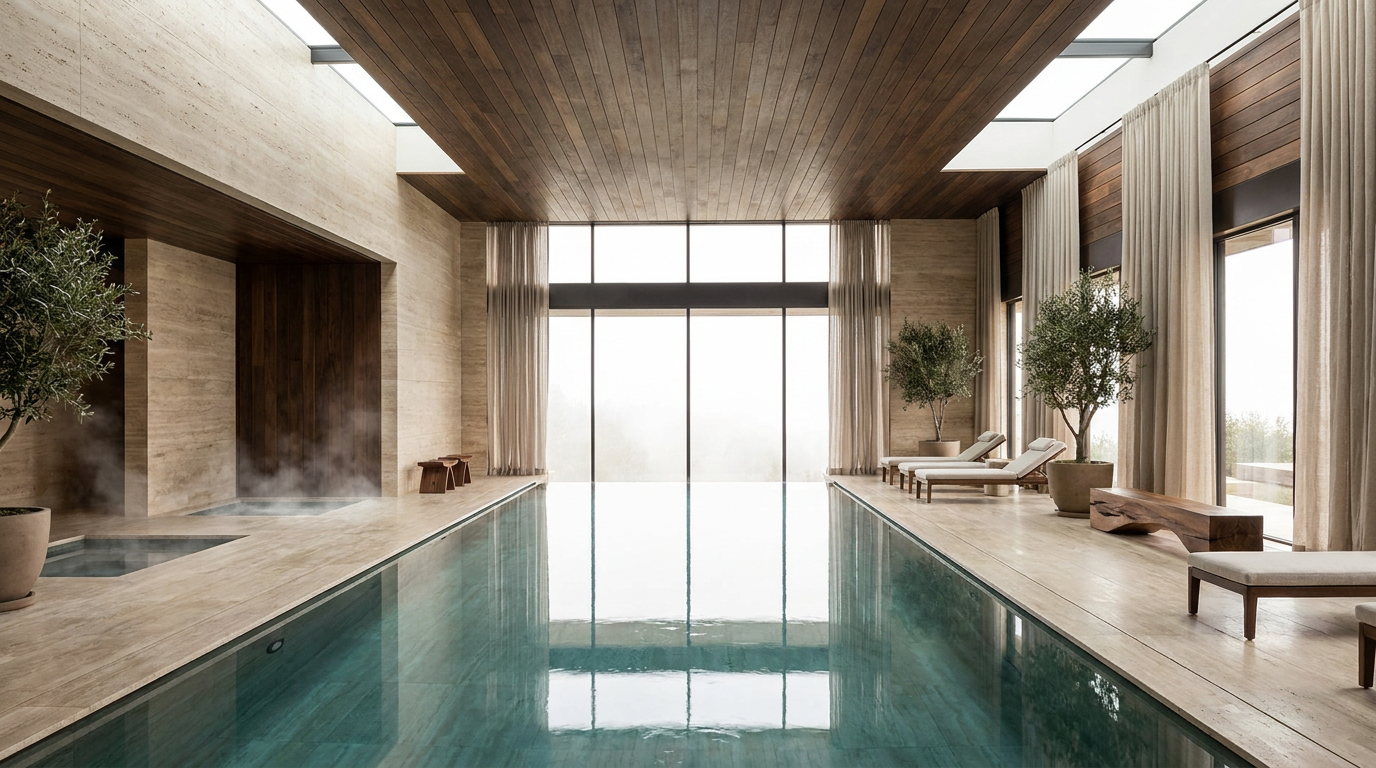
The compound model also supports multigenerational ownership. Guest houses, staff quarters, detached offices, and recreational structures expand the estate’s utility over time. For wealthy families, that adaptability matters because the asset is not being evaluated only for current use. It is being assessed for relevance over a decade or more. Estates that can evolve with a family’s needs tend to maintain stronger demand.
As a result, amenity value should not be measured solely by construction cost. The real question is whether the amenities improve the estate’s competitive position within its peer set. In some markets, a private dock is indispensable. In others, equestrian facilities, full wellness infrastructure, or a championship-level entertainment suite may carry more weight. The most successful properties align amenity strategy with location and buyer expectations.
Market Trends Shaping Ultra-Luxury Estates Right Now
Several trends are currently defining the uppermost tier of the market. The first is greater inventory in some luxury enclaves. More choice at the top end can benefit buyers by widening the opportunity set and creating leverage where sellers are motivated. However, increased inventory does not affect all properties equally. Generic luxury homes may face more competition, while truly exceptional estates remain difficult to replace and therefore more insulated.
The second trend is a higher share of all-cash purchases. This supports transaction certainty and allows sophisticated buyers to move quickly when a compelling asset appears. It also means that sellers of prime estates can often prioritize buyer quality and closing reliability over nominal headline terms. In highly competitive situations, certainty itself becomes a form of currency.
The third trend is stronger international buyer participation. Cross-border capital continues to target recognized wealth-preservation markets, especially where legal systems are transparent, ownership rights are secure, and lifestyle quality is high. Yet international demand is not a substitute for local fundamentals. It amplifies strong markets rather than rescuing weak ones.
The fourth trend is heightened selectivity around turnkey quality. Affluent buyers increasingly prefer estates that are immediately usable and operationally refined. Renovation risk, supply-chain uncertainty, and construction complexity have reduced tolerance for major post-closing projects unless the discount is substantial or the underlying land is extraordinary. This has widened the premium between finished best-in-class homes and properties that still require heavy execution.
Finally, privacy has become even more valuable. The appeal of gated compounds, low-visibility entries, mature landscaping, and discreet layouts continues to grow. In markets where public exposure and density have increased, estates that preserve a sense of retreat can command a notable premium. Privacy is not just a lifestyle feature. It is an investment attribute.
How to Evaluate an Ultra-Luxury Estate as an Investment
Investors considering ultra-luxury estates need a framework that goes beyond aesthetics. The first question should be whether the location has durable prestige. This includes global recognition, domestic demand depth, constrained supply, and a consistent track record of attracting high-net-worth buyers. Markets with these characteristics are more likely to support long-term value even through cyclical slowdowns.
The second question concerns irreplaceability. What, specifically, cannot be replicated? It may be the parcel size, the frontage, the elevation, the privacy envelope, the walkability, or the historic provenance. In some cases, the replacement barrier comes from legal constraints such as shoreline rules, subdivision limits, or heritage restrictions. The stronger the barrier to replication, the stronger the estate’s long-term positioning tends to be.
The third question is functional quality. A visually impressive estate can still be strategically weak if circulation is awkward, systems are outdated, or the amenity mix is misaligned with the market. Investors should assess whether the property is truly usable by the likely future buyer. The best homes are not only beautiful. They are intuitive, adaptable, and operationally efficient at their scale.
The fourth question is carrying cost discipline. High-end ownership involves recurring expenses that can materially change effective return. Investors should model property taxes, insurance, staffing, utility intensity, deferred capital expenditure, and specialized maintenance. A lower-cost estate with stronger land scarcity may ultimately outperform a more expensive showpiece with excessive overhead.
The fifth question is liquidity profile. Ultra-luxury assets can take longer to sell because the buyer pool is limited. This is not necessarily a flaw, but it must be understood in advance. Investors who need quick exits are often poorly matched to this asset class. Those who can hold through cycles and wait for the right buyer are better positioned to realize the property’s full value.
A useful way to think about due diligence is to balance emotional appeal with strategic rigor. The home should inspire confidence on first impression, but the investment case must stand independently of emotion. When both are present, the estate moves from indulgence to intelligent ownership.
- Prioritize location hierarchy. Start with the neighborhood, the street, and the specific site before considering finishes or decorative appeal.
- Analyze scarcity drivers. Determine whether land constraints, zoning, waterfront access, or heritage features create a meaningful replication barrier.
- Assess usability. Confirm that scale, layout, privacy, and amenities suit the most likely future buyer profile.
- Underwrite full carrying costs. Calculate taxes, insurance, staffing, maintenance, and long-term capital needs rather than relying on headline appreciation alone.
- Plan for patience. Recognize that super-prime real estate is often a long-duration asset that rewards disciplined timing more than rapid turnover.
Risks Investors Should Not Ignore
There is a tendency to assume that trophy assets are automatically safe because they are rare and expensive. That assumption can be costly. Ultra-luxury estates are still exposed to regional economic shifts, tax changes, insurance pressures, climate-related risk, changing buyer preferences, and execution risk if the property requires updates. Scarcity helps, but it does not eliminate vulnerability.
Liquidity is one of the most important risks. A highly specialized estate may command enormous attention, but attention does not always translate into immediate offers. In soft conditions, sellers can wait longer for the right buyer, especially if the property sits at a very specific price point. The more unique the asset, the narrower the likely buyer universe can become.
Carrying costs are another major consideration. Waterfront exposure can increase insurance costs. Large grounds require continuous maintenance. Heritage assets may involve restoration obligations. Properties with extensive amenities often need dedicated management. These factors can reduce realized returns even when headline appreciation appears strong.
There is also the issue of over-improvement. Not every expensive feature adds proportional market value. Homes that are too personalized, excessively scaled for the neighborhood, or configured around niche tastes may struggle to achieve their target resale pricing. In ultra-luxury, the best properties feel distinctive without becoming alienating.
Finally, buyers must think about timing. While top-tier assets can outperform over long horizons, entry price still matters. A great property purchased at an undisciplined level can underperform for years. The market always rewards quality, but it does not always reward overpayment.
The Estates That Hold Their Value Best
When market conditions become uncertain, the hierarchy within luxury real estate becomes clearer. The estates that tend to hold value best are those with a compelling site, trustworthy location credentials, and broad appeal within the ultra-high-net-worth buyer pool. These properties usually combine privacy, turnkey execution, and some element of true scarcity that cannot be manufactured later.
Waterfront estates with excellent orientation and legal access rights remain among the strongest examples. So do urban compounds in tightly held neighborhoods where large parcels rarely trade. In resort markets, homes with ski-in access, beach proximity, club affiliation, or panoramic view protection can carry enduring pricing power because future supply is structurally limited.
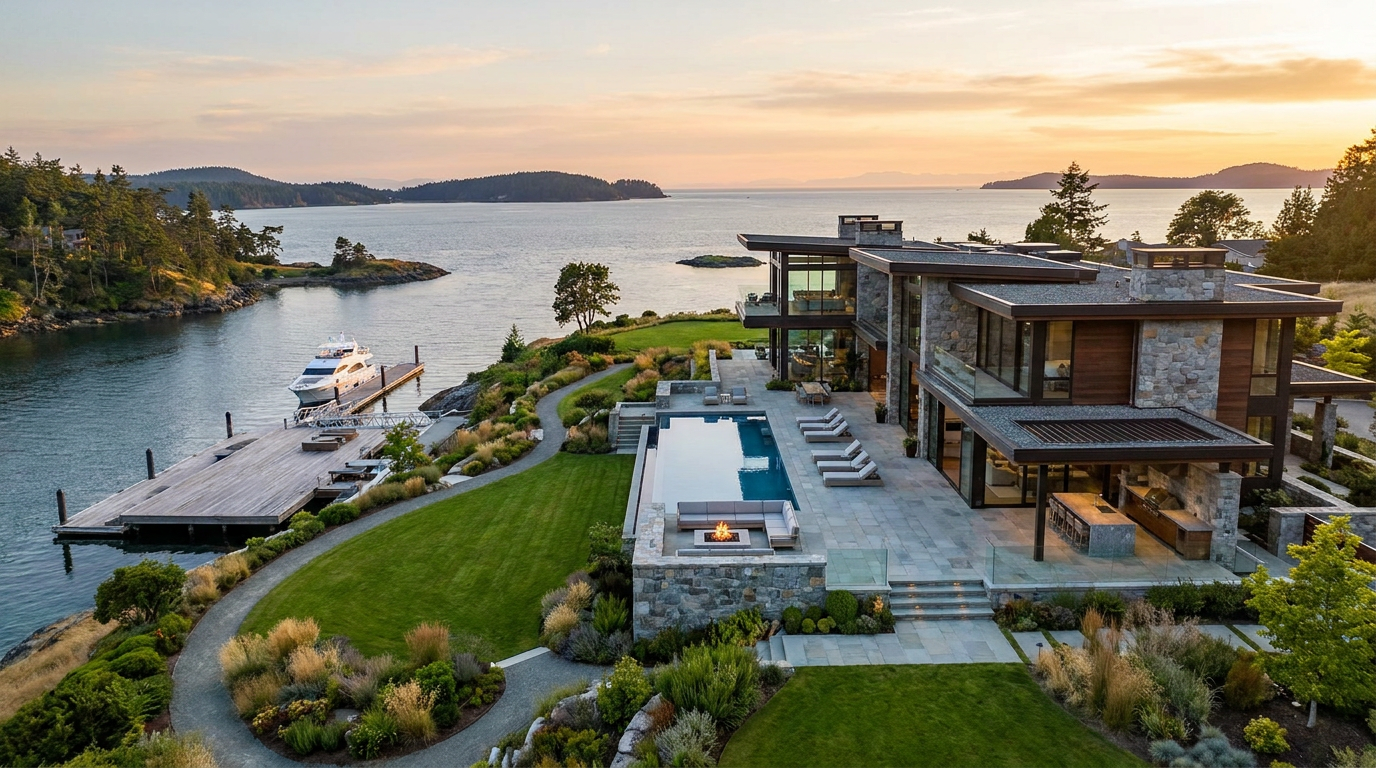
Turnkey condition increasingly separates leaders from laggards. In the current environment, many affluent buyers will pay a premium to avoid the friction of major renovation, especially when construction timelines and costs remain unpredictable. A fully resolved estate with refined systems, updated finishes, and a coherent design story often outperforms a similarly located property that still requires heavy investment.
Properties with flexible use also stand out. The market rewards homes that can accommodate family growth, seasonal living, guest hosting, security needs, and work-from-home requirements without compromise. Adaptability improves the buyer pool and extends relevance over time, which in turn supports resale strength.
Ultimately, the highest-performing estates are rarely the loudest. They are usually the most complete. They combine emotional resonance with disciplined fundamentals in a way that feels obvious to the right buyer. That is why they continue to command interest in changing markets.
Final Perspective: More Than Status, Less Than Certainty
Ultra-luxury estates are among the most fascinating assets in global real estate because they operate at the intersection of aspiration and analysis. They are living spaces of extraordinary quality, but they are also financial decisions shaped by scarcity, demographics, capital flows, and holding strategy. For the right buyer, they can function as prestige residences, family compounds, inflation-sensitive hard assets, and long-horizon stores of value all at once.
The strongest case for ownership is not based on extravagance alone. It is based on selectivity. Investors who understand local supply constraints, distinguish true ultra-luxury from standard high-end housing, and remain disciplined on carrying costs are far more likely to acquire assets that preserve and potentially compound value over time. In that sense, the best estates are not simply expensive homes. They are curated positions in finite locations.
Recent market evidence supports that view. Reports have highlighted stronger inventory in some top-tier markets, rising international participation, and a larger share of all-cash buying. Compass’s reported rebound in $10 million-plus U.S. sales and Sotheby’s observations about resilient high-end activity suggest that wealth buyers continue to treat prime real estate as a serious allocation category. In Canada, population growth, immigration-linked demand, and constrained supply in major metros have added another layer of support, even as macro volatility and policy shifts introduce selectivity.
Still, investors should remain clear-eyed. Ultra-luxury estates are not risk-free, and not every trophy listing deserves to be treated as a trophy asset. The difference lies in location hierarchy, replacement difficulty, design intelligence, and ownership economics. When those elements align, an estate can become far more than a statement purchase. It can become one of the rare residential assets that satisfies both emotional ambition and strategic discipline.
That is the enduring appeal of the world’s most exclusive ultra-luxury estates. They are private worlds, public signals, and in the right circumstances, remarkably effective long-term stores of prestige and value.



No Comment! Be the first one.