



Luxury Real Estate Market Trends: 2025 Investor Insights
The luxury real estate market has entered a more selective phase. It is no longer enough to assume that high prices, prestigious addresses, or architectural flair alone will deliver durable performance. Across Canada and North America, luxury property is being shaped by a more complex mix of macroeconomic pressure, wealth concentration, lifestyle preferences, urban development constraints, and cross border capital behavior. For investors, that complexity is not a reason to step back. It is a reason to become more precise.
Table Of Content
- The Luxury Market Is Slower, Not Broken
- Why Wealth Creation Still Supports Prime Residential Demand
- Lifestyle Utility Has Become a Core Pricing Driver
- Branded Residences and Service Rich Developments Are Gaining Ground
- Canada’s Luxury Market Is Mixed, Not Uniform
- Urban Development Constraints Continue to Support Scarcity
- The Interest Rate Story Is Real, but Often Misunderstood
- Luxury Condos, Trophy Homes, and Resort Markets Behave Differently
- Luxury condominiums
- Ultra prime detached homes
- Resort and lifestyle properties
- Migration, Demographics, and Demand Composition Matter More Than Headline Population Growth
- The Biggest Misconceptions Investors Need to Avoid
- How to Evaluate a Luxury Market Like an Investor
- A practical due diligence checklist
- Where the Better Opportunities May Sit in 2025 and Beyond
- Strategic Investment Approaches for This Cycle
- Final Takeaway for Investors
Recent data supports this more measured view. Knight Frank’s Prime Global Cities Index recorded 2.8% annual growth in luxury home values in the year to March 2025, below the long run trend of 5.3%. Knight Frank also reported that global luxury house prices rose 3.6% in 2024, while North American growth came in at 2.4%, held back in part by softer Canadian prime market conditions. These numbers do not suggest collapse, but they do confirm that the market has moved from broad based momentum to differentiated performance. That distinction matters. Luxury real estate does not behave like the rest of the housing market. It is more globally connected, more sensitive to wealth effects than to standard mortgage affordability, and more dependent on scarcity, uniqueness, service quality, and lifestyle positioning. In practical terms, the best luxury opportunities in 2025 and beyond are not simply the most expensive assets. They are the assets located where economic strength, supply scarcity, and lifestyle appeal intersect.
This article provides an analytical breakdown of the major forces driving the luxury segment, with a particular focus on Canada and North America. It also translates those forces into investor strategy, helping readers understand where resilience is likely to hold, where risk is increasing, and how to assess opportunities in a market where segmentation matters more than headline averages.
In luxury real estate, price alone does not define quality. Scarcity, buyer profile, service level, and long term desirability determine whether an asset preserves wealth or simply carries a premium label.
The Luxury Market Is Slower, Not Broken
One of the most important starting points for investors is to separate slowdown from structural weakness. The luxury market has moderated from the rapid gains seen during lower rate periods, but moderation is not the same as erosion across the board. Higher borrowing costs have unquestionably changed buyer psychology, transaction pace, and underwriting discipline. Yet the impact is uneven because many luxury buyers, especially in the ultra high end category, depend less on mortgage financing and more on liquidity, equity, portfolio performance, business income, and broader wealth conditions.
This helps explain why the top of the market often looks more stable than premium but still finance sensitive segments. A buyer considering a $12 million trophy home in a scarcity driven enclave may be far less affected by a quarter point rate shift than a buyer weighing a smaller luxury condo with more debt exposure. That does not make the ultra luxury tier immune to downturns. It simply means the drivers are different. Equity market confidence, tax policy, currency moves, and business sentiment often matter as much as borrowing rates.
For investors, the implication is straightforward. Broad housing headlines can be misleading when applied to luxury assets. A national slowdown may coexist with local strength in highly constrained, globally recognized, or service rich submarkets. Conversely, a resilient headline market can still hide oversupply and weak absorption in speculative luxury projects. Understanding this distinction is essential for capital allocation.
Why Wealth Creation Still Supports Prime Residential Demand
Luxury housing remains closely tied to wealth creation, and this is one of the clearest reasons the segment continues to attract investor attention despite tighter financial conditions. Knight Frank’s Wealth Report 2025 noted that around 40% of the world’s wealthy live in the United States, reinforcing the central role of the U.S. in global luxury residential demand. This concentration of wealth matters not only for domestic buying activity in cities such as New York, Miami, and Los Angeles, but also for spillover demand across North America, including select Canadian markets.
At the institutional and family office level, real estate continues to be treated as a strategic store of value. Knight Frank reported that direct real estate accounts for 22.5% of the typical family office portfolio, and more than four in ten family offices planned to increase that allocation. This is a significant signal for investors because it confirms that prime property remains part of long term wealth preservation thinking, not merely a lifestyle purchase. In times of volatility, real assets with scarcity value often retain strategic appeal.
However, investors should be careful not to mistake this support for a guarantee of indiscriminate appreciation. Wealth does not flow equally into all luxury assets. It concentrates in properties that offer confidence, usability, identity, and relative insulation from oversupply. The more globally mobile and sophisticated the buyer, the more selective the acquisition process tends to be. This favors best in class product over generic high price inventory.
Lifestyle Utility Has Become a Core Pricing Driver
Perhaps the clearest structural shift in the luxury market is the move from prestige only to lifestyle utility. Luxury today is increasingly defined by how a property functions as much as how it signals status. Buyers want privacy, wellness amenities, flexible space, seamless technology, premium service, and strong neighborhood access to culture, dining, schools, transit, and outdoor recreation. This has elevated demand for properties that support everyday performance, not just visual appeal.
In urban markets, this trend has strengthened well designed luxury condominiums and branded residences that combine convenience with service. The appeal is especially strong among affluent downsizers, global buyers, executives with multiple residences, and investors who understand that operational quality can support value retention. A luxury condo with concierge service, strong security, wellness facilities, and a walkable location may outperform a larger but less differentiated product because it aligns more closely with how wealthier buyers actually want to live.
At the same time, detached trophy homes and estate properties remain attractive when they offer meaningful advantages such as land scarcity, privacy, architectural distinction, and access to top tier amenities. What has changed is that square footage alone no longer carries the same premium if the layout is dated, inefficient, or disconnected from current lifestyle needs. Home offices, indoor outdoor living, wellness features, and multigenerational flexibility now play a larger role in both buyer demand and pricing power.

Branded Residences and Service Rich Developments Are Gaining Ground
One of the most notable trends in the North American luxury landscape is the growth of branded residences. These developments pair residential ownership with a recognized hospitality, fashion, or lifestyle brand, offering curated experiences, elevated service standards, and stronger product differentiation. Knight Frank’s 2025 report on branded residences noted that North America remains the dominant region for branded residences, even as its share of the global pipeline declines due to international expansion.
The investor logic behind branded residences is not difficult to understand. In a more selective market, trust and execution matter. Buyers often place a premium on developments that offer reliable management, predictable service, design consistency, and brand backed prestige. From an investment perspective, these attributes can improve marketability and help support resale performance, especially in major urban hubs and internationally visible lifestyle destinations.
That said, not every branded residence is automatically a strong investment. Investors still need to assess the local market, service fees, unit mix, competitive supply, and whether the brand truly adds long term value or simply marketing appeal. In some markets, branded product can command a significant premium at launch, but underperform later if the surrounding submarket becomes saturated or if the brand does not translate into lasting buyer demand. Discipline remains essential.
Canada’s Luxury Market Is Mixed, Not Uniform
Canada’s top tier market is often discussed as if it moves in one direction, but the data suggests a much more segmented reality. According to Sotheby’s International Realty Canada, the country’s top tier market has been reshaped by record population growth, including 471,771 new permanent residents in 2023 and a target of 485,000 in 2024. Canada.ca research has also found that rapid population growth from immigration can intensify housing demand, particularly in urban centers where newcomers concentrate. While this dynamic matters, it does not fully explain luxury performance.
Luxury housing is less responsive to population growth in the mass market sense and more responsive to local wealth creation, high income employment, interprovincial migration, and scarcity in elite neighborhoods. As a result, market conditions vary considerably by city. Toronto’s ultra luxury segment has shown pockets of resilience, particularly at the very top. Sotheby’s International Realty Canada reported that the Greater Toronto Area market for homes over $10 million remained one of Canada’s rare strongholds in early 2025. That is an important distinction because it shows that capital at the highest level is still willing to transact when the asset is exceptional.
Vancouver, by contrast, has faced a more cautious environment amid broader economic uncertainty and sensitivity to policy and taxation concerns. Montreal and Calgary have often looked comparatively firmer, supported by more balanced valuations, local economic conditions, and in Calgary’s case, relative affordability for affluent buyers compared with the most expensive coastal markets. For investors, this reinforces a central principle: luxury should be analyzed city by city, neighborhood by neighborhood, and product by product.
Urban Development Constraints Continue to Support Scarcity
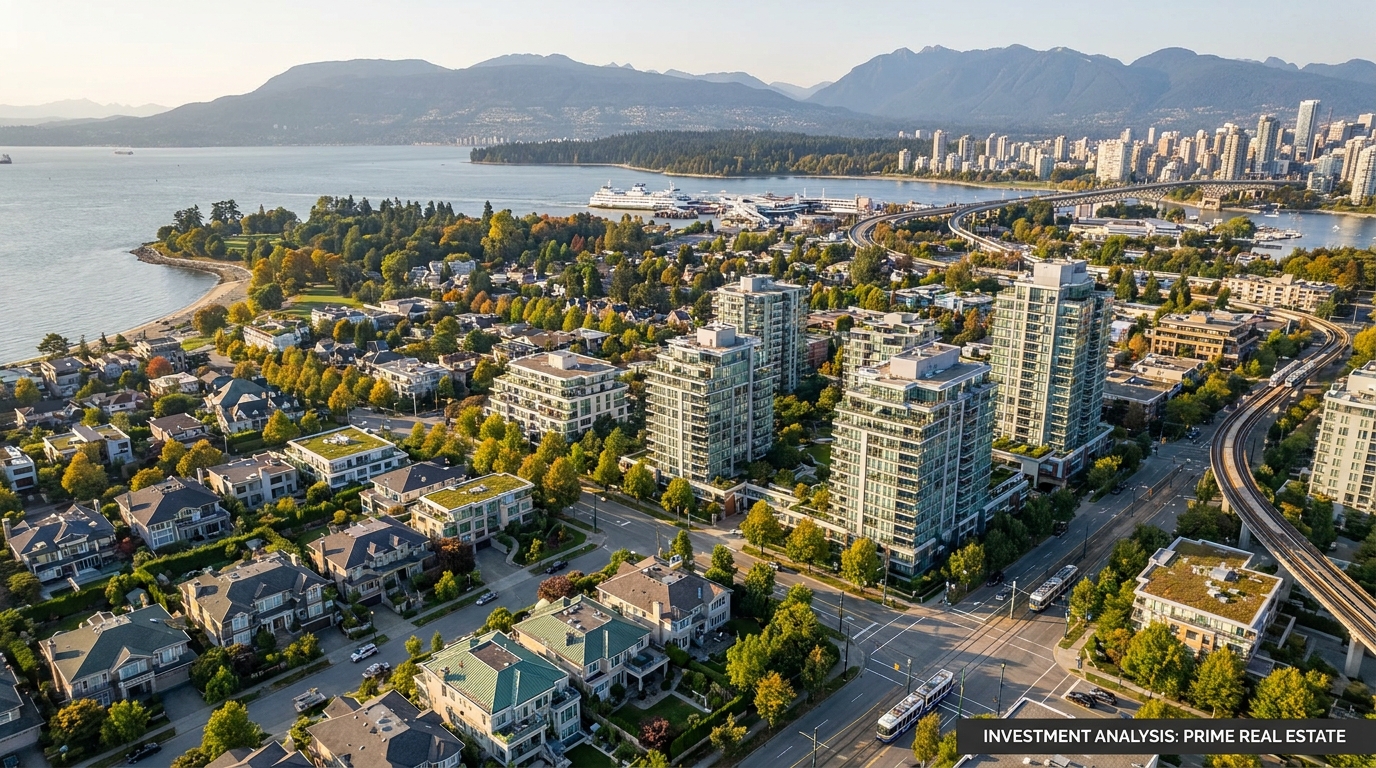
Supply remains one of the most powerful long term forces in the luxury market. In many prime Canadian and North American neighborhoods, new supply is structurally constrained by limited land, zoning friction, heritage considerations, construction costs, community resistance, and long development timelines. When these restrictions coincide with stable or rising wealth demand, pricing power can remain surprisingly firm even during softer broader market conditions.
This is especially relevant in elite urban neighborhoods where replacement inventory is difficult to produce. Scarcity does not just refer to a low number of listings. It refers to a shortage of truly comparable assets. A rare penthouse with protected views, a detached home in a tightly held school district, or a branded residence in a top tier mixed use node may face little direct competition. That kind of uniqueness can help preserve value even when transaction volume slows.
Investors should nevertheless differentiate scarcity from artificial exclusivity. Some developments market themselves as limited opportunities while entering submarkets with significant future pipeline risk. Real scarcity is measurable through land constraints, planning barriers, low turnover, and consistent demand from deep buyer pools. Artificial scarcity fades when the next wave of supply arrives. This is why development pipeline analysis is so important in luxury underwriting.
The Interest Rate Story Is Real, but Often Misunderstood
A common misconception is that luxury real estate moves primarily with mortgage rates. Rates absolutely matter, but they matter differently across the segment. Higher borrowing costs have made affluent buyers more selective, increased the importance of carrying cost analysis, and slowed decision cycles. This is particularly true in the upper middle luxury bracket, where financing still plays a material role and where buyers may compare real estate more actively against bond yields or equity market returns.
In the ultra high end, however, rates are often less direct than they appear. Cash rich buyers may be more influenced by portfolio performance, liquidity preferences, taxation, business confidence, and perceived value than by the cost of debt itself. This is why ultra prime markets can remain active even when conventional housing weakens. The buyer base is simply different.
For investors, the more useful question is not whether rates are up or down. It is how rates interact with local inventory, developer financing conditions, buyer urgency, and wealth effects in a specific submarket. In a city where new luxury condo inventory is rising and buyers are still financing a meaningful share of purchases, rates may create strong negotiating opportunities. In a trophy detached market with low turnover and cash heavy demand, the same rate environment may have a much smaller pricing impact.
Luxury Condos, Trophy Homes, and Resort Markets Behave Differently
Another mistake investors make is treating luxury as one product class. In practice, luxury condominiums, ultra prime detached homes, and resort lifestyle assets often move on different cycles and respond to different drivers. Understanding these distinctions can improve both acquisition timing and portfolio construction.
Luxury condominiums
Luxury condos can offer compelling value where temporary oversupply has outpaced demand in fundamentally strong cities. In these markets, investors may find opportunities to acquire premium units at more negotiable pricing, especially if the building has strong management, distinctive amenities, and lasting locational advantages. The key risk is differentiation. If a condo lacks service quality, design distinction, or neighborhood depth, it may struggle even if priced within the luxury bracket.
Ultra prime detached homes
Trophy detached homes tend to hold value best in scarcity driven neighborhoods where land is limited and buyer profiles are durable. These properties are often less liquid, but also less exposed to commoditized competition. Investors should focus on lot quality, privacy, school access, long term neighborhood status, and barriers to replication. In this category, uniqueness can be a major asset, provided it aligns with market taste rather than becoming too personalized.
Resort and lifestyle properties
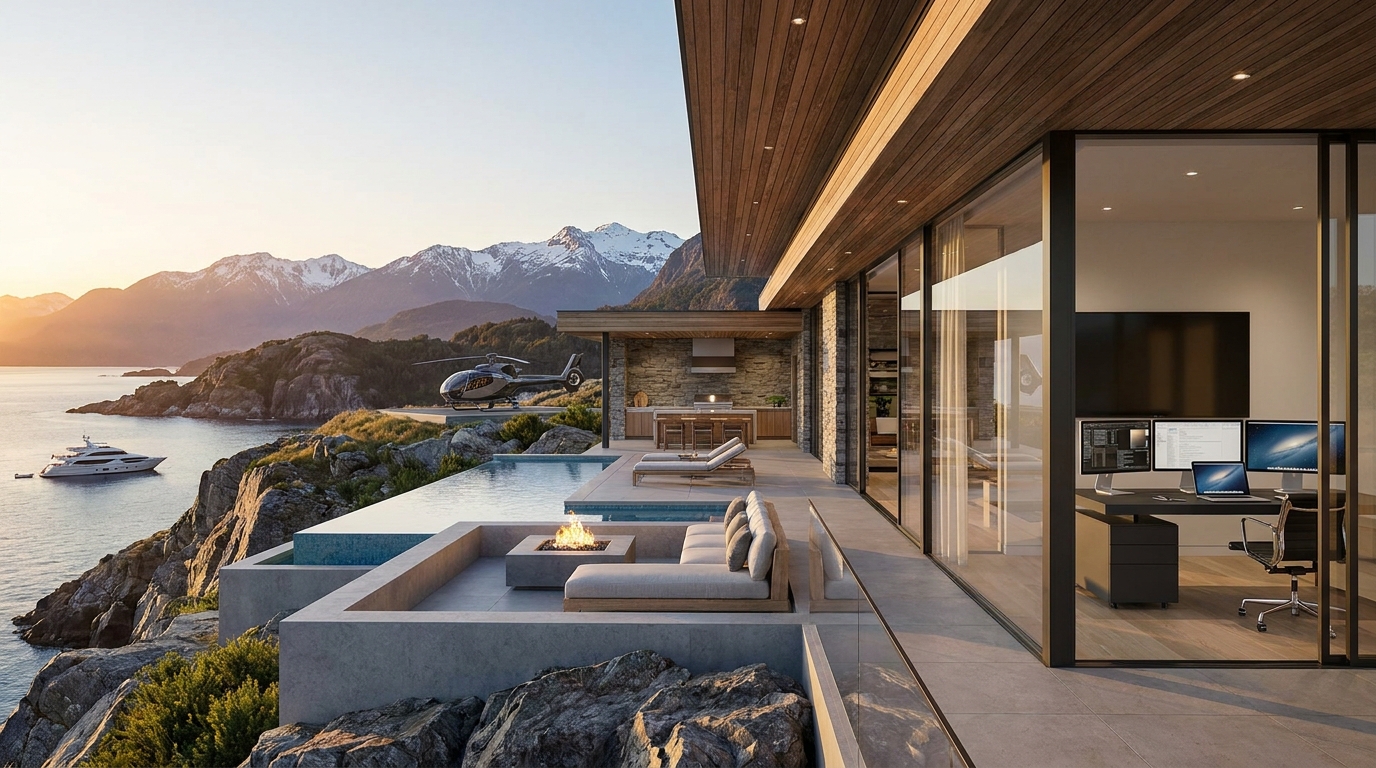
Resort markets have benefited from remote and hybrid work trends, which allowed more affluent buyers to spend longer periods in amenity rich destinations. Properties in year round lifestyle markets with strong service infrastructure and multiple demand drivers can perform well. However, resort assets are generally more cyclical than primary urban luxury homes. They are more exposed to travel trends, discretionary spending, tax changes, and shifts in financing conditions. Investors should approach them with return expectations that account for variability.
Migration, Demographics, and Demand Composition Matter More Than Headline Population Growth
Population growth is an important housing variable, but in the luxury segment, raw population numbers tell only part of the story. Canada’s recent immigration growth has increased housing demand, especially in major metropolitan areas. Yet luxury demand is driven less by aggregate population expansion than by who is arriving, who is moving within the country, what industries are creating income, and where affluent households choose to concentrate.
Interprovincial migration can be especially relevant. When high earning professionals and entrepreneurs move toward lower tax, more affordable, or higher amenity markets, luxury demand can shift quickly. Similarly, if a city is attracting technology, finance, energy, or executive level employment, the resulting buyer pool can support premium neighborhoods and product categories in ways broad migration data might not capture. This is one reason Calgary and Montreal have at times shown more relative firmness than expected.
Cross border capital flows also play a role. Prime markets in North America continue to attract globally mobile wealth that seeks political stability, educational access, lifestyle quality, and hard asset exposure. Investors should therefore analyze domestic and international buyer composition, not just local demographics. A submarket supported by both local wealth and international demand usually has a deeper resilience profile than one dependent on a single buyer channel.
The Biggest Misconceptions Investors Need to Avoid
Several persistent misconceptions continue to cloud decision making in the luxury segment. These assumptions can lead investors to overpay, misread risk, or overlook stronger opportunities in less obvious locations.
-
Luxury always outperforms during downturns. In reality, the best capitalized and most desirable submarkets tend to hold up better, while overbuilt or speculative luxury inventory can stagnate. Resilience is selective, not universal.
-
National averages tell you what luxury is doing. Luxury markets are highly local. Toronto’s over $10 million market can be resilient while other premium categories in the same metro soften. The same national market can contain both scarcity pricing and oversupply risk.
-
Mortgage rates explain everything. Many ultra high end buyers are less rate sensitive and more influenced by wealth effects, tax policy, currency movements, and the lifestyle value of the asset.
-
Immigration alone drives luxury demand. High income employment, interprovincial migration, local business growth, and global capital access are often more decisive in top tier residential demand.
-
High price means high investment quality. A luxury asset can still underperform if it is poorly located, overbuilt, difficult to resell, or undifferentiated relative to competing stock.
Experienced investors know that luxury real estate is not a blanket category. It is a selective allocation that rewards deep local knowledge, buyer psychology analysis, and disciplined underwriting. In this segment, avoiding weak luxury can be just as valuable as identifying strong luxury.
How to Evaluate a Luxury Market Like an Investor
The most effective luxury investors follow a submarket framework rather than relying on broad sentiment. They study the layers underneath headline pricing and ask whether a location is gaining or losing strategic relevance. In practical terms, due diligence should center on inventory pressure, product differentiation, buyer depth, and the future supply pipeline.
Several indicators deserve close attention. Days on market can reveal whether pricing is aligned with current demand or whether sellers are anchored to outdated expectations. Active inventory and months of supply can indicate whether negotiating leverage is shifting. Development pipelines can uncover hidden future competition, especially in the condo and branded residence categories. The mix of domestic versus foreign buyers can also indicate how exposed a market is to policy shifts or currency swings.
Neighborhood level economic fundamentals matter as well. Investors should look at high income employment growth, school quality, transit investment, public realm improvements, cultural amenity expansion, and patterns of business formation. Luxury buyers do not just purchase homes. They buy access, convenience, privacy, and long term confidence. The strongest submarkets tend to deliver several of these advantages at once.
A practical due diligence checklist
- Inventory levels: Is current luxury inventory rising or tightening in the target submarket?
- Days on market: Are well priced listings moving, or is product sitting due to weak absorption?
- Future supply: How many luxury units or competing homes are in the construction or approval pipeline?
- Buyer composition: Is demand driven by local wealth, global capital, lifestyle migrants, or a narrow niche?
- Scarcity profile: Is the asset difficult to replicate because of land, views, location, or brand quality?
- Lifestyle utility: Does the property align with current demand for wellness, privacy, security, and flexible living?
- Exit liquidity: How broad is the likely buyer pool when it is time to sell?
Where the Better Opportunities May Sit in 2025 and Beyond
Based on current conditions, the most compelling opportunities appear to be concentrated where three forces overlap: economic strength, supply scarcity, and lifestyle appeal. Prime urban cores with limited land and strong employment bases remain important, particularly where high end condo supply has become more negotiable without undermining long term desirability. In these settings, patient investors may find quality assets below prior peak enthusiasm levels.
High income suburban enclaves should also remain relevant, especially those with school quality, privacy, and restricted new supply. In these neighborhoods, detached homes with strong land value and adaptable layouts can serve both lifestyle users and long term capital preservation investors. Scarcity matters here, but so does functionality. A well located home with modern living features has a wider resale audience than a large but outdated estate.
Select resort and lifestyle markets merit attention as well, particularly those with durable year round demand rather than purely seasonal traffic. Investors should favor destinations with broad amenity infrastructure, reliable air access, stable local governance, and a mix of leisure and practical living appeal. These characteristics reduce dependence on a single demand wave and can improve resilience across cycles.
The best luxury opportunities are rarely the loudest. They are usually the assets where scarcity is real, buyer demand is deep, and the property delivers both emotional appeal and practical long term utility.
Strategic Investment Approaches for This Cycle
In a slower but still active luxury market, strategy matters more than momentum. Investors should not approach 2025 with the assumption that broad appreciation will lift all premium assets. Instead, this is a cycle that favors selectivity, patience, and price discipline. The right approach depends on investment horizon, liquidity profile, and appetite for operational complexity.
One strategy is to target temporary dislocation in strong urban luxury condo markets where supply has run ahead of current demand. If the city has durable employment growth, strong transit connectivity, and an enduring affluent buyer base, short term softness can create entry opportunities. The key is to focus on buildings that will remain relevant five to ten years from now, not simply projects that look attractive at launch.
A second strategy is to prioritize scarcity protected detached assets in elite enclaves. These properties may not offer frequent buying windows, but when they do, they can provide better downside protection than more commoditized luxury stock. Investors should be prepared for lower liquidity in exchange for stronger uniqueness and potentially more durable long term pricing power.
A third strategy is to treat branded residences and service rich developments as a specialized subcategory rather than a generic luxury premium. In the right market, with strong branding and disciplined supply, these assets can attract a broad global buyer audience. In the wrong market, they can become expensive versions of conventional product. Careful underwriting remains the difference.
Final Takeaway for Investors
The luxury real estate market in Canada and North America is not defined by one narrative. It is being shaped by several forces at once: higher borrowing costs, global wealth creation, changing buyer lifestyles, urban supply constraints, migration patterns, and a growing preference for service rich, differentiated product. That complexity is exactly why a simple headline view is no longer sufficient.
For investors, the core lesson is to move beyond the assumption that luxury is inherently defensive or automatically superior. Some segments will remain resilient because they are driven by scarcity, cash rich demand, and lifestyle value. Others will struggle because they are overbuilt, weakly differentiated, or misaligned with how affluent buyers now live and spend. The winners will not be defined by price point alone, but by quality of demand and quality of supply.
Looking ahead to 2025 and beyond, the strongest opportunities are likely to emerge where prime location, constrained inventory, and modern luxury utility converge. Investors who track local inventory levels, branded development pipelines, days on market, and the connection between rates and buyer composition will be better positioned to identify mispriced assets and long term holds. In a more selective market, precision is the edge.
Luxury real estate remains a meaningful allocation for wealth preservation, portfolio diversification, and strategic growth. But it should be approached the way sophisticated capital approaches any premium asset class: with clear assumptions, rigorous local analysis, and the discipline to distinguish true luxury value from expensive noise.


No Comment! Be the first one.