

Why Toronto’s $63.7M Bridge Rehab Is a Blueprint for Smarter Urban Infrastructure Planning
Cities rarely get credit for the infrastructure that keeps growth possible. A $63.7 million rehabilitation of four aging bridges in east-end Toronto, spanning roughly 1.5 kilometres of some of the most congested corridors in the city, is a case study in what disciplined long term infrastructure planning actually looks like when the stakes include daily traffic, adjacent development, and a fixed deadline nobody controls.
The Eastern Avenue Bridge, the Richmond Street East Bridge, the Adelaide Street East Bridge, and the Don Valley Parkway off ramp connecting to Richmond Street were all built in 1963 and last touched in 1992. That is more than three decades of deferred wear finally being addressed under the city’s State of Good Repair initiative, with Soncin Construction as general contractor and Stantec consulting. For anyone tracking how mature cities fund and sequence aging infrastructure, this project is worth studying closely.
What stands out from a development strategy lens is the coordination layer. Toronto’s chief engineer, Jennifer Graham Harkness, described intensive long range planning before construction even began, balancing the need for high quality rehabilitation against the reality that thousands of vehicles move through that corridor every day. The city also had to synchronize with Metrolinx, Waterfront Toronto, and private developers working nearby, a reminder that no single infrastructure project exists in isolation in a dense urban core. Land value, transit access, and construction timelines are always tangled together.
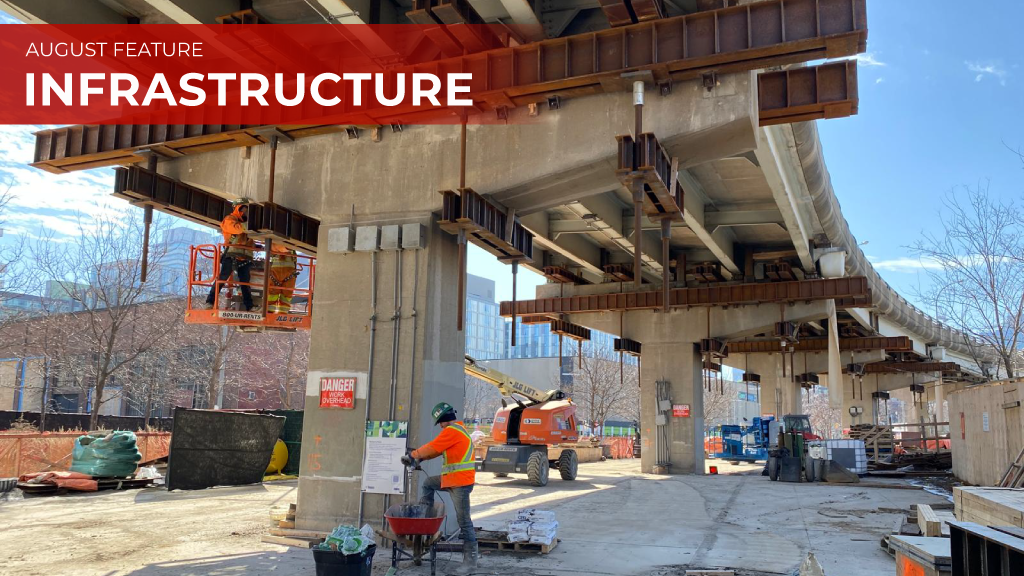
The technical execution reinforces the point. Harrison Muir Inc. used a Rapid Deployment Unit system to coat structural steel on the bridge undersides without closing lanes on the Don Valley Parkway, one of the city’s busiest arteries. At peak, three to five specialized crews worked simultaneously across structural jacking, bearing replacement, steel coating, electrical work, paving, waterproofing, and finishing. To compress the schedule, crews worked extended shifts covering roughly 20 hours within a 24 hour cycle, including 80 overnight shifts and strategically placed weekend work.
We’re trying to balance our goals in terms of getting work done and easing congestion along with making sure that we get very high-quality work.
There is a lesson here for anyone evaluating how external events reshape infrastructure timelines. Harkness confirmed the accelerated push on the Don Valley Parkway off ramp, closed fully from fall 2025 to this past spring, was influenced by the arrival of the FIFA games at Toronto Stadium, several kilometres away. The original plan was to work through the event. Instead, the city shifted its sequencing shortly after the project began in 2024, recognizing that traffic impacts ripple well beyond a construction perimeter. That kind of adaptive planning, responding to demand pressure rather than rigid scheduling, is exactly the mindset large scale development strategy requires.
For developers and planners watching Toronto’s growth, the takeaway extends past four bridges. Aging infrastructure is a quiet constraint on density and connectivity in every major city, and how a municipality funds, sequences, and communicates that work directly affects investor confidence in surrounding land. A well managed rehabilitation, finished with minimal disruption, signals that a city can maintain the arteries supporting future intensification. Most of the complex work on these bridges is now complete, with undercoating and remaining tasks expected to close out in early 2027.
Source: ConstructConnect Canada