



5 Simple Ways to Reduce Drafts for a Cozier Home
There is something deeply comforting about a home that feels warm in all the right ways. Not just warm in temperature, but warm in mood, in atmosphere, and in the small daily moments that make you want to stay in a little longer. If your rooms feel chilly even when the heat is on, or if certain corners always seem a little cold and unsettled, drafts may be quietly shaping the way your home feels.
Table Of Content
- Why draft reduction matters more than people think
- Before you start: know where drafts usually hide
- 1. Weatherstrip doors and windows the right way
- How to make this fix feel easy
- 2. Add door sweeps and draft stoppers where cold air pools
- What to look for before you buy
- 3. Caulk stationary cracks around trim, baseboards, and frames
- Choosing the right approach
- 4. Seal small gaps around outlets, pipes, and other hidden leak points
- Why hidden leaks matter so much
- 5. Do not ignore ducts, utility spaces, and the larger comfort picture
- When to keep it simple and when to call for help
- Simple draft-reduction priorities for renters
- Simple draft-reduction priorities for homeowners
- Common mistakes that make draft fixes less effective
- A room-by-room approach that feels manageable
- What a cozier home really feels like
- Final thoughts
Drafts are one of those household issues that can seem minor until you live with them every day. A slight stream of cold air near the sofa, an entryway that never quite feels comfortable, a bedroom window that makes the whole room feel sharper and less restful. Over time, those little leaks can affect both comfort and cost. The U.S. Department of Energy says reducing drafts may save about 5% to 30% per year in energy use, while also improving comfort. Even better, simple fixes like caulking and weatherstripping often pay for themselves in one year or less.
That is what makes draft reduction such an appealing home upgrade. It is practical, affordable, and immediate. You do not need a full remodel, special design plans, or an advanced toolkit to make a noticeable difference. Whether you own your home or rent it, there are easy ways to help your space feel calmer, warmer, and more inviting.
In this guide, we will walk through five simple ways to reduce drafts for a cozier home. These are approachable solutions that work in real homes with real budgets. Along the way, we will also cover where drafts really come from, what products actually work, and why comfort starts with sealing the small gaps that let warmth slip away.
Why draft reduction matters more than people think
Many people assume drafts are simply a winter annoyance, but they do more than make a room feel cold. Uncontrolled air leakage changes how a home feels from morning to night. It can create uneven temperatures, make floors feel colder, force heating systems to run longer, and leave a room feeling less relaxed even when it looks beautiful. Comfort is not only about your thermostat setting. It is also about whether the heat stays where you need it.
There is also a common belief that drafts mostly come from old windows. Windows can absolutely be part of the problem, but they are far from the whole story. Guidance from the Department of Energy and ENERGY STAR consistently points out that hidden leaks in attics, basements, plumbing penetrations, and places where building materials meet can be just as important, and sometimes more important, than the visible gaps people notice first.
This is why thoughtful air sealing often has such a satisfying effect. It addresses the subtle discomforts that make a home feel harder to settle into. It can also support energy affordability, which matters more than ever. Recent rebate programs in the U.S. increasingly prioritize air sealing and insulation because they are among the lowest-cost ways to reach meaningful savings. In other words, these simple fixes are not just cosmetic improvements. They are part of a smarter way to live well at home.
Comfort tip: If a room feels chilly even when the thermostat says it should be warm, trust how the room feels. Drafts often show up as cold spots, moving air, or uneven comfort before they become obvious visually.
Before you start: know where drafts usually hide
Before jumping into the five fixes, it helps to understand where air leaks tend to show up. Some are easy to spot, like daylight under a door or a noticeable breeze near a window frame. Others are quieter and less visible, such as gaps around baseboards, openings where pipes pass through walls, or little seams around attic hatches and utility penetrations.
A simple walk-through on a cool day can tell you a lot. Move slowly from room to room and pay attention to how the air feels near windows, exterior doors, outlets, baseboards, and the edges of floors. In basements, utility rooms, and laundry areas, check around plumbing lines and any visible ductwork. In upper-level hallways, look at attic access panels or pull-down stairs. You do not need special equipment to notice many of these issues. Often, your skin notices a draft before your eyes do.
It is also useful to remember one of the biggest misconceptions around comfort upgrades: more insulation is not always the first step. ENERGY STAR guidance recommends finding and sealing air leaks before adding insulation, because insulation works best when air movement is controlled. Think of it this way: if warm air is escaping through gaps, even a well-insulated home can still feel less comfortable than it should.
1. Weatherstrip doors and windows the right way
If you want a quick, affordable place to begin, start with the moving parts of your home. That means exterior doors and operable windows. These are among the most common sources of obvious drafts, especially in older homes and apartments. They are also some of the easiest places to improve with a small amount of time and money.
The key is using the right material for the right job. According to the Department of Energy, weatherstripping is best for movable parts like doors and windows, while caulk is best for stationary joints and cracks. This distinction matters. One of the most common mistakes people make is assuming one product can do everything. In reality, the edge of a door that opens and closes needs a flexible seal that can compress and rebound. That is exactly what weatherstripping is designed to do.
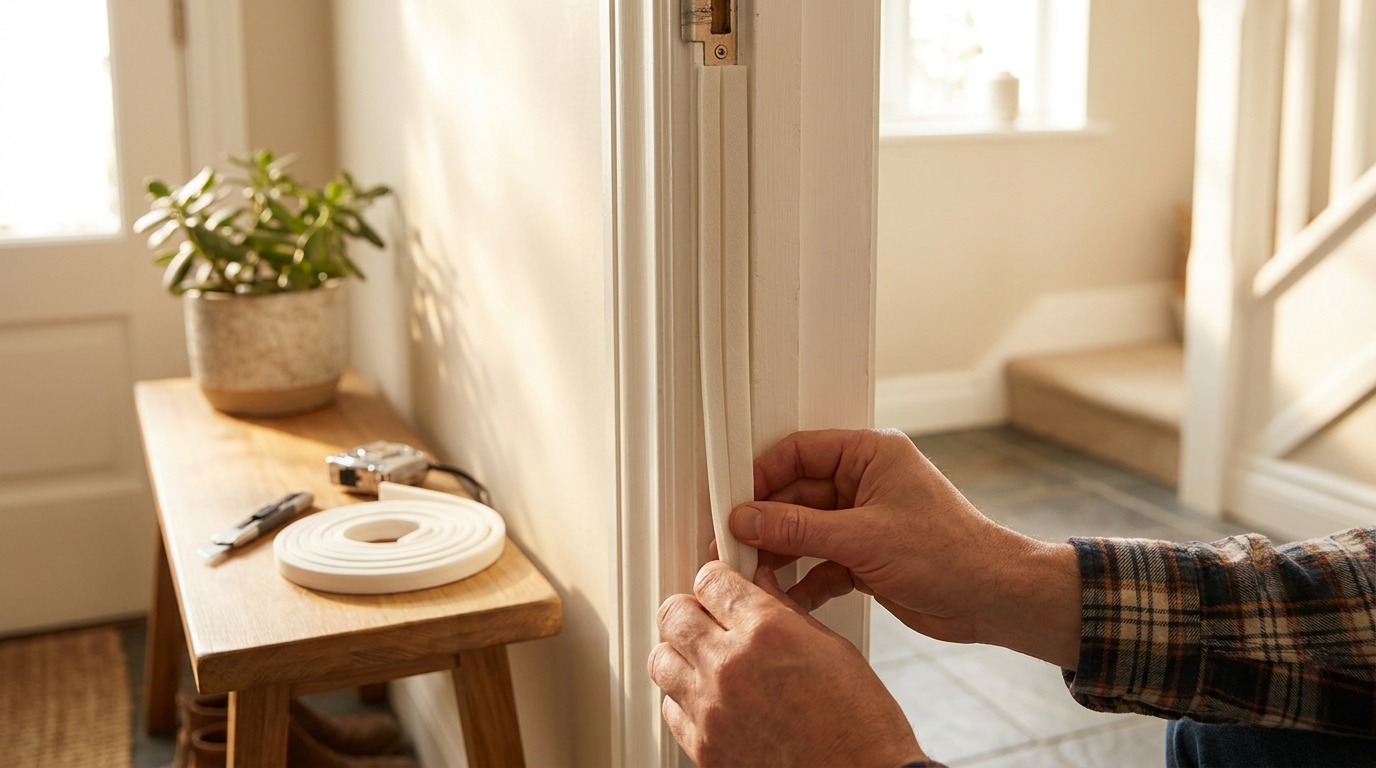
For doors, check the perimeter first. If you can feel air around the sides or top of the door, self-adhesive foam weatherstripping can be a simple solution. For a more durable option, V-strip or tension seal products can work beautifully around certain door and window frames. If you notice daylight beneath the door, that is usually a sign you also need a door sweep, which we will talk about in the next section.
For windows, focus on operable sashes and places where the moving parts meet. If a window closes but still feels chilly around the edges, fresh weatherstripping can make it noticeably snugger. This can be especially helpful in bedrooms and living areas where comfort matters most. In rental homes, removable weatherstripping is often one of the most practical and landlord-friendly improvements you can make.
How to make this fix feel easy
Choose one exterior door and one drafty window to start. Clean the surfaces well so adhesive products stick properly, then cut strips carefully and test the fit before pressing them in place. Close the door or window slowly to make sure the seal is snug without making it hard to operate. A good weatherstripping fix should feel almost invisible in daily life, except for the fact that the room suddenly feels calmer and warmer.
This is one of those changes that can make your home feel better the same day. The front hall may stop feeling so cold when someone comes and goes. A bedroom may feel less crisp at night. A reading corner near a window may become a place you enjoy again rather than one you avoid in colder months.
2. Add door sweeps and draft stoppers where cold air pools
If drafts make themselves known anywhere, it is often at floor level. You may feel cold air moving under the front door, the back entry, or even an interior door that separates a garage or porch from the rest of the home. That low, creeping chill can make an entire room feel less comfortable, because cold air settles where people walk, sit, and gather.
A door sweep is one of the simplest ways to address this. It attaches to the bottom of the door and creates a tighter seal against the threshold. Some versions are adhesive and easy for renters to remove later, while others screw into place for a more permanent finish. If your door already has a sweep but still feels drafty, it may be worn out, misaligned, or no longer making proper contact with the floor.
Draft stoppers, sometimes called draft snakes, are another budget-friendly option. They are especially useful for renters or anyone who wants a quick seasonal solution with no installation. While they are not as airtight as a properly fitted sweep, they can still make a noticeable difference in spaces where a little extra protection helps. They also add a soft, homey feeling. There is something charming about solving a practical problem with a simple textile piece that blends into everyday life.
This category of fix tends to work best in entry areas, older apartment doors, mudrooms, and basement access points. These are places where little leaks can shape the feeling of the whole house. Sealing the gap at the bottom of the door helps hold warmth inside the room where you actually want it.
What to look for before you buy
Measure the width of the door and pay attention to the size of the gap underneath. If the threshold is uneven, a flexible sweep may work better than a rigid one. If you are renting, look for removable or pressure-fit solutions that do not damage the finish. If you own your home, a more fitted sweep can give a cleaner and longer-lasting result.
Some homeowners also like to layer solutions. A door sweep creates the main seal, while a decorative draft stopper adds extra softness on especially cold days. This can be particularly nice in family spaces, where comfort is about both function and atmosphere.
3. Caulk stationary cracks around trim, baseboards, and frames
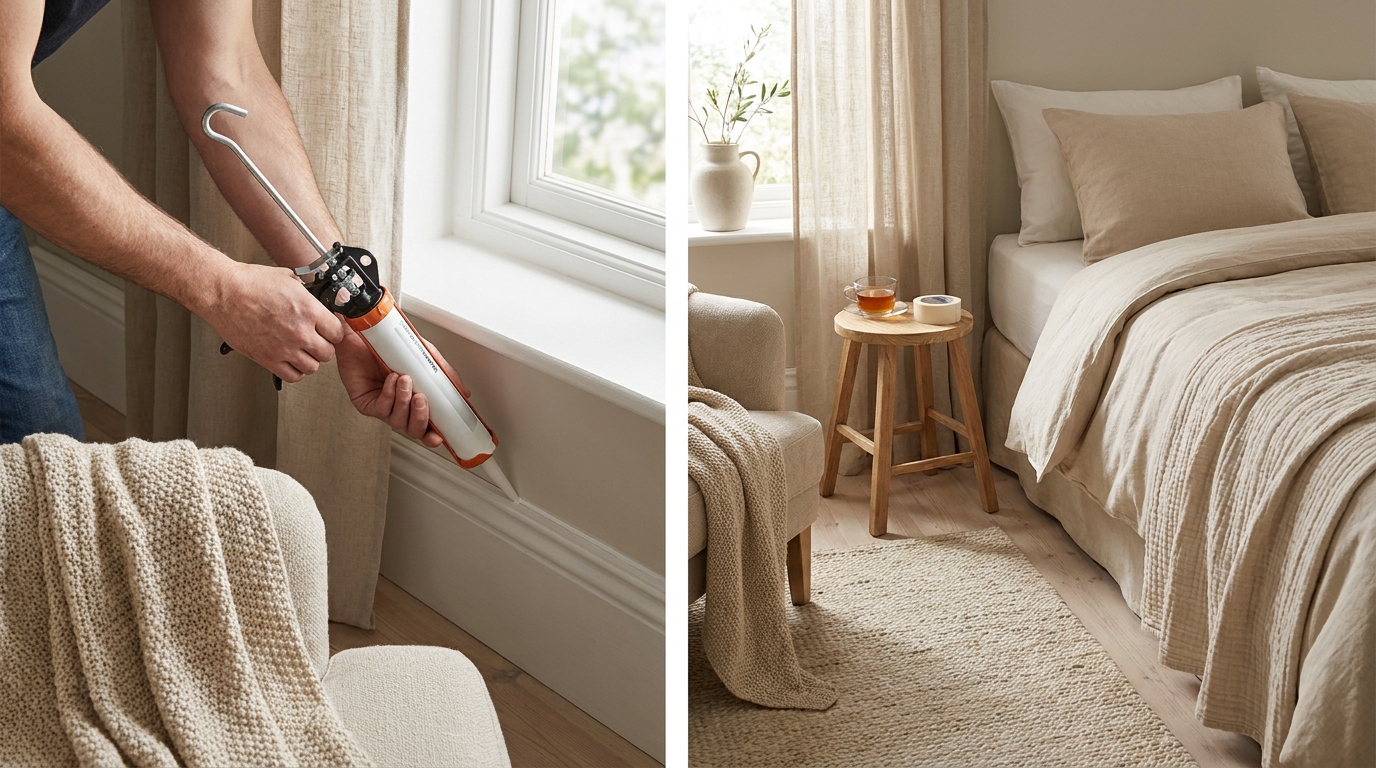
Once the moving parts are addressed, turn your attention to the places that stay still. This is where caulk becomes your best friend. The Department of Energy notes that caulk is best for stationary cracks and joints, which includes gaps around window trim, door frames, baseboards, and areas where materials meet. These little openings are easy to overlook because they often seem too small to matter, yet together they can let a surprising amount of air pass through.
One reason this step is so satisfying is that it makes a home feel more finished. A neat line of caulk along a drafty baseboard or around aging trim does not just reduce air leaks. It can also visually clean up the room and support that polished, cared-for look many of us want at home. In that sense, draft reduction and design often go hand in hand.
Start by checking around the edges of window casings, door trim, and baseboards on exterior walls. If you notice tiny gaps, cracks, or places where old caulk has shrunk or pulled away, those are good candidates. In older homes, this can be especially worthwhile because materials naturally shift over time. In apartments, even modest touch-ups in obvious drafty spots can improve comfort in a meaningful way.
Choosing the right approach
For very narrow cracks, paintable caulk is often enough. For larger gaps, a foam backer rod paired with caulk may create a better seal and a cleaner finish. This matters because another common misconception is that every gap should simply be filled with whatever sealant is on hand. In reality, the size and location of the gap affect which method works best.
Take your time with prep. Remove loose debris, clean the area, and apply the product smoothly. A careful application usually looks better and lasts longer. If this is your first time caulking, choose one hidden area to practice, then move to more visible places once you feel comfortable. It is a simple skill that pays off quickly.
For renters, it is wise to check your lease or ask for approval before making cosmetic changes, especially in highly visible locations. Many landlords appreciate small comfort improvements, particularly when they also support energy savings and keep the property in better condition.
4. Seal small gaps around outlets, pipes, and other hidden leak points
This is where draft reduction becomes especially effective, because some of the most important leaks are not always obvious. Air often sneaks in around electrical outlets and switch plates on exterior walls, around plumbing penetrations under sinks, and around points where wiring or pipes pass through ceilings, floors, or walls. These are easy to miss because each opening seems so small. But when a home has many of them, they add up.
Natural Resources Canada’s EnerGuide resources emphasize air sealing as a key step for improving comfort and reducing drafts, and this kind of detail work is a big reason why. Small penetrations can create cold pockets in otherwise comfortable rooms. You may notice it when sitting near an exterior wall, standing at a kitchen sink, or reaching into a cabinet beneath a bathroom vanity where the air feels unexpectedly cool.
One of the simplest upgrades here is adding foam gaskets behind outlet and switch plates on exterior walls. These are inexpensive, easy to install, and popular in both homes and rentals. You simply remove the cover plate, place the gasket behind it, and reinstall the plate. It is a very small project, but often one that contributes to a more even feeling in a room.
For larger openings around pipes, careful sealing can make a bigger difference. Under sinks, in laundry areas, and near utility connections, check for visible gaps where lines enter the wall or floor. Depending on the size of the opening, caulk or low-expansion foam may be appropriate. The goal is not to overdo it, but to create a clean, controlled barrier where outside air should not be entering.
Why hidden leaks matter so much
People often focus only on the leaks they can feel right away, such as those around windows. But guidance from DOE and ENERGY STAR reminds us that hidden leaks in attics and basements are often more significant than the visible ones around windows. That is why this step can have such a quiet but powerful impact. It targets the background losses that make a house feel harder to keep comfortable.
If your home has an attic hatch or pull-down stairs, inspect that area as well. A poorly sealed attic access point can be a major source of heat loss in winter. Even adding weatherstripping around the hatch perimeter can help create a better seal. In basements, check along rim joists, utility penetrations, and the edges where foundation and framing meet. These are not glamorous spots, but improving them can make the floors above feel noticeably less cold.
Remember: Drafts do not only come from windows. Significant leakage often occurs in attics, basements, rim joists, and around plumbing and wiring penetrations.
5. Do not ignore ducts, utility spaces, and the larger comfort picture
Although this article focuses on simple room-by-room draft reduction, it would be incomplete without talking about ducts and utility spaces. If your home has forced-air heating, leaky ducts can quietly undermine comfort even when your rooms are sealed well. The Department of Energy says that in a typical house, about 20% to 30% of the air moving through duct systems is lost due to leaks, holes, and poorly connected ducts. That is an enormous amount of conditioned air to lose before it even reaches your living space.
This does not mean every homeowner needs a major HVAC project tomorrow. But it does mean ductwork is worth noticing, especially in basements, crawl spaces, attics, or utility closets. If you can see disconnected sections, damaged joints, or obvious leaks at seams, that is a comfort issue as much as an energy issue. Sealing accessible duct joints with the proper materials can help more warm air arrive where you actually live.
Even if you are a renter and cannot address ductwork directly, this idea is still useful because it expands how you think about comfort. A cozier home is not only about the spots you decorate. It is also about the systems and spaces that support those rooms in the background. The laundry room, utility corner, attic access, and basement edges all contribute to the way your bedroom and living room ultimately feel.

When to keep it simple and when to call for help
If you notice only a few visible duct seams in an accessible area, sealing them may be a manageable project for a confident DIYer. But if your home still feels drafty after basic sealing, or if certain rooms never seem to heat properly, it may be worth asking a professional for a home energy assessment. Whole-home performance is becoming a much bigger part of the conversation around comfort, and for good reason. Sometimes the most meaningful issues are happening behind walls, above ceilings, or within systems you do not see every day.
The Department of Energy has also highlighted newer methods such as aerosol envelope sealing in some retrofit projects, reporting an average leak reduction of 47% across 34 sites in one project. That is not a starter fix for most households, but it reflects a larger trend. Air sealing is no longer seen as a niche improvement. It is increasingly recognized as one of the smartest ways to improve comfort, lower energy waste, and support a healthier home.
Simple draft-reduction priorities for renters
Renters often assume there is little they can do about drafts, but that is rarely true. In fact, many of the most effective comfort upgrades are low-cost, reversible, and easy to install without major tools. This is one reason renter-friendly draft reduction has gained more attention recently. It delivers a quick quality-of-life improvement without requiring construction work.
If you rent, start with what you can remove later without damage. Draft stoppers, removable weatherstripping, outlet gaskets, heavier curtains, and temporary window insulation film can all help create a warmer feeling. Ask your landlord about adding a new door sweep or refreshing old caulk in visible problem areas. Framing the request around comfort and energy efficiency can make the conversation easier, because these changes benefit the property as well.
It is also helpful to focus on the rooms where you spend the most time. If you work from home, seal the office first. If your living room is where the household gathers in the evening, begin there. A small comfort improvement in one high-use room can change the whole rhythm of winter at home.
Simple draft-reduction priorities for homeowners
Homeowners have the advantage of being able to go a little deeper. In addition to doors, windows, and baseboards, you can inspect attic access points, basement rim joists, plumbing penetrations, and visible ductwork. These are often the hidden places where noticeable comfort gains happen. If your budget allows, consider a basic energy audit to identify the biggest leakage points before investing in larger upgrades.
It can be tempting to jump straight to insulation, especially if a home feels cold, but sealing first is usually the wiser path. ENERGY STAR guidance emphasizes finding and plugging air leaks before adding insulation, because insulation performs better once air movement is controlled. This sequencing matters. It helps every future comfort investment work harder for you.
Homeowners should also keep an eye on moisture and condensation. Good air sealing should support comfort without trapping unwanted moisture in places it does not belong. If you notice recurring condensation, musty smells, or signs of dampness, it may be wise to pause and get professional advice before sealing more aggressively in that area.
Common mistakes that make draft fixes less effective
The first mistake is assuming all sealing products do the same thing. They do not. Weatherstripping is for moving components like doors and windows, while caulk is for stationary cracks. Larger gaps may need backer rod or low-expansion foam. Using the wrong material can lead to poor results or a fix that does not last.
The second mistake is focusing only on windows. Windows are important, but they are only part of the picture. Attic hatches, basement edges, plumbing penetrations, and the bottom of exterior doors can all be major contributors to discomfort. If you fix only one visible draft and ignore the hidden ones, the home may still feel colder than it should.
The third mistake is skipping the easy wins because they seem too small. Outlet gaskets, door sweeps, fresh weatherstripping, and a tube of caulk may not sound transformative, but together they can create a noticeable shift in how a room feels. The beauty of these upgrades is that they layer. Each one contributes to a home that holds warmth more gracefully.
A room-by-room approach that feels manageable
If the idea of draft reduction feels overwhelming, think small. You do not need to solve the entire house in one weekend. Choose the room that affects your daily life the most and start there. Maybe it is the nursery that needs to feel gentler at night, the living room where everyone gathers, or the bedroom where comfort matters most.
Begin with the obvious moving parts, then work toward hidden gaps. Check the window, the door, the baseboard, the outlet, and any noticeable penetration points. Once that room feels better, repeat the process in the next one. This creates momentum, and it also helps you notice which fixes make the biggest difference in your particular home.
Many of the best home improvements work this way. They are not dramatic at first glance, but they quietly change everyday life. Draft reduction belongs in that category. It supports warmth, calm, and the subtle sense that your home is taking care of you a little better.
What a cozier home really feels like
When drafts are reduced, the difference is often less about a dramatic temperature jump and more about a shift in overall ease. The room feels steadier. The sofa by the window becomes a place you enjoy. The hallway near the front door no longer feels like a cold transition zone. Your heating system may cycle less often, and the house may feel quieter and more settled.
That is why this topic matters beyond utility bills, although the savings are certainly meaningful. Comfort shapes how we cook, rest, gather, and unwind. It affects how long we linger at the table, how easily children play on the floor, and how inviting a guest room feels. Warmth in a home is emotional as much as physical, and small fixes can support that feeling in a very real way.
The research supports the practical side of this story. The Department of Energy links draft reduction to better comfort and lower energy use, and notes that simple sealing measures often pay back quickly. Natural Resources Canada also emphasizes air sealing as a key step in improving comfort and reducing energy loss. The guidance is clear across North America: sealing unwanted gaps is one of the smartest low-cost upgrades you can make.
Final thoughts
If your home has been feeling a little colder, less inviting, or harder to heat than it should, drafts are a wonderful place to start. They are common, they are fixable, and the solutions are often refreshingly simple. With weatherstripping, door sweeps, caulk, outlet gaskets, and attention to hidden leaks, you can change the feeling of a space more quickly than you might expect.
The five methods in this guide are not about perfection. They are about making home feel better in everyday life. They are affordable enough to try, practical enough to matter, and flexible enough for both renters and homeowners. Best of all, they support the kind of comfort that you can actually feel, which is often the most rewarding kind of upgrade.
Sometimes a cozier home does not require new furniture, a full renovation, or a bigger heating bill. Sometimes it begins with closing the small gaps that let comfort drift away. Seal those, and the warmth you already have gets a much better chance to stay.



No Comment! Be the first one.