



How to Maintain Your Rainwater Harvesting System: Essential Tips for Eco-Friendly Homeowners
A rainwater harvesting system can be one of the most satisfying upgrades a homeowner makes. It saves water, reduces pressure on municipal supplies, helps manage stormwater on site, and gives your landscape an additional source of water during dry stretches. It also fits naturally into a more resilient home, especially as more households look for practical ways to reduce utility use without sacrificing comfort or convenience.
Table Of Content
- Why maintenance matters more than many homeowners expect
- Start with the catchment area: your roof, gutters, and downspouts
- What to look for on routine roof and gutter inspections
- Clean screens, gutter guards, and pre-filters before they become a problem
- Do first-flush diverters eliminate all water quality issues?
- Protect the tank: lids, vents, screens, and visible condition
- Checking for sediment, odor, and algae concerns
- Do not ignore the overflow path
- Pumps, valves, and plumbing need occasional attention too
- When homeowners should consider professional support
- Water quality: the most important maintenance topic
- Simple water quality habits for homeowners
- Seasonal maintenance makes the whole system easier to manage
- A simple seasonal checklist
- Winterizing is not optional in freeze-prone climates
- Misconceptions that lead to preventable problems
- Create a one-page maintenance log you will actually use
- What to include in a homeowner log
- Rainwater harvesting as a resilience tool, not just a green feature
- Final thoughts: small checks, better performance, less stress
The good news is that most residential rainwater systems are not difficult to maintain. The more important truth is that they are low maintenance, not no maintenance. A few consistent checks throughout the year can prevent clogged gutters, murky water, mosquito problems, frozen fittings, pump wear, and avoidable leaks. In most cases, maintenance is less about heavy labor and more about paying attention before small issues become expensive ones.
This guide focuses on the everyday steps that keep a rainwater harvesting system in good condition. Whether you use a simple rain barrel for garden watering or a larger cistern that supplies outdoor irrigation or non-potable indoor uses, the same principle applies. Clean water in, protected storage, reliable flow out, and a routine that feels manageable. With a calm seasonal approach, your system can stay efficient, safe, and useful for years.
It is also worth keeping one expectation clear from the start. Rainwater collected from a roof is not automatically safe to drink. Roof runoff can pick up dust, pollen, bird droppings, rodent debris, and traces of contaminants from roofing materials or the surrounding air. For non-potable uses like gardening, toilet flushing, or outdoor cleaning, maintenance still matters for performance and odor control. For potable or indoor uses, treatment, inspection, and testing become much more important and should be treated as essential parts of the system.
A well-maintained rainwater system does not demand constant attention. It rewards simple, regular care with better water quality, longer equipment life, and fewer surprises when you need it most.
Why maintenance matters more than many homeowners expect
Rainwater harvesting is often marketed as a simple sustainability feature, and that is true to a point. Once installed, the system can quietly collect and store water with very little day to day involvement. But because the system is exposed to weather, roof debris, insects, and seasonal temperature changes, it benefits from routine observation. In practical terms, maintenance protects both the water and the equipment.
When leaves pile up in gutters, they break down and send organic matter toward your barrel or tank. When screens clog, flow slows down or bypasses the parts of the system meant to keep debris out. If a lid is loose or a vent screen is damaged, mosquitoes and pests may find their way inside. If overflow lines back up or dump water too close to your foundation, the system that was meant to reduce stormwater problems can start contributing to them.
Maintenance also protects the value of the system itself. Pumps last longer when they are not forced to work through clogged filters or sediment-heavy water. Tanks stay cleaner when the dirtiest initial runoff is diverted before it enters storage. Valves and fittings are less likely to crack when they are drained before freezing weather. Each of these tasks is small on its own, but together they create reliability.
For many homeowners, the most helpful mindset is to treat rainwater maintenance the same way you treat changing HVAC filters or cleaning dryer vents. It is a recurring household habit that supports efficiency and prevents larger disruptions. Once it is written into a seasonal checklist, it stops feeling technical and starts feeling routine.
Start with the catchment area: your roof, gutters, and downspouts
The roof is where your harvested water begins, so any maintenance routine should start there. You do not need a perfect roof to harvest rainwater, but you do need a reasonably clean and well-managed collection surface. Dirt, leaves, twigs, pollen, and droppings that settle on the roof will be washed into the system during rainfall. The goal is not sterile conditions. The goal is reducing the amount of debris and contamination entering the tank in the first place.
Gutters and downspouts deserve special attention because they are the most common chokepoints in a residential system. When they clog, water can overflow before reaching the barrel or cistern, or it can carry decomposing organic matter directly into storage. A visual check after heavy leaf fall, windstorms, or pollen season can prevent most of these issues. Homeowners with nearby trees may need to check more often than those with a clear roofline.
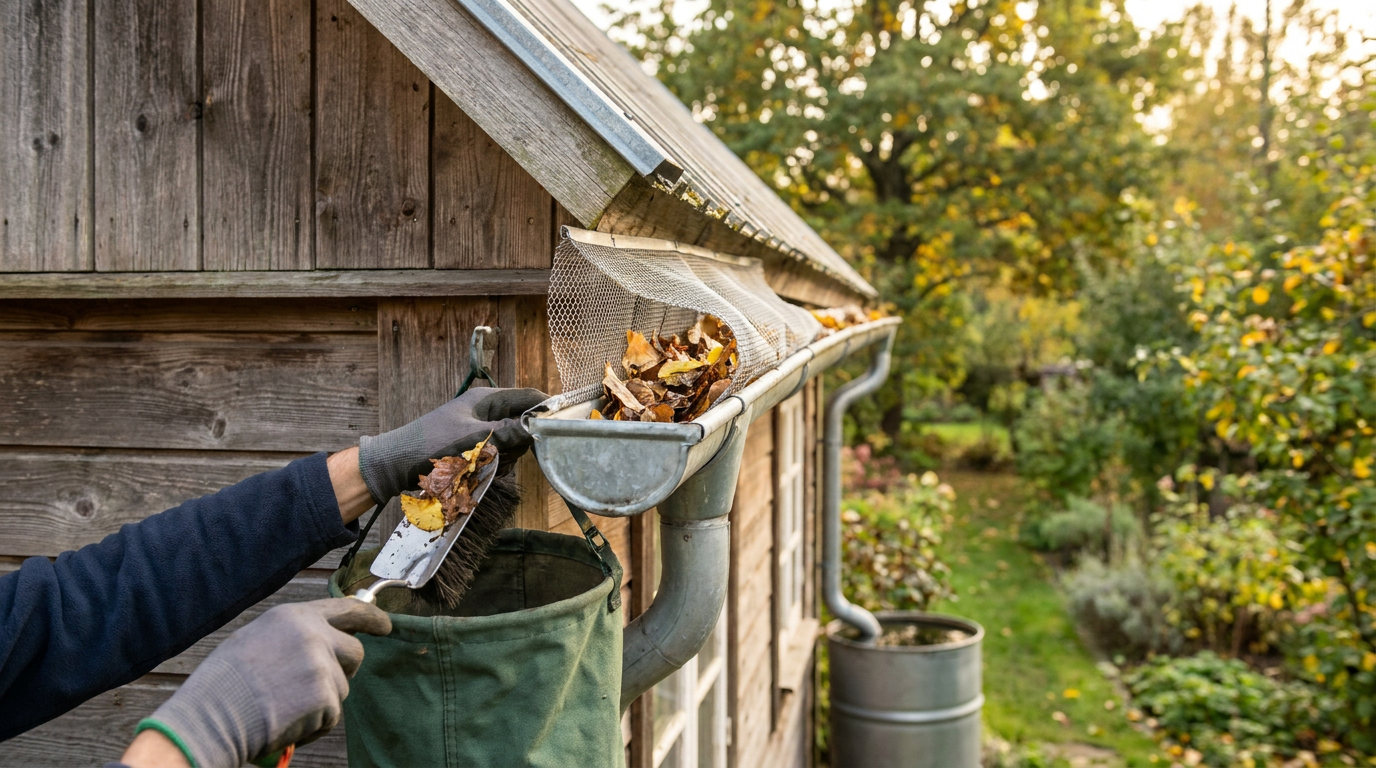
Cleaning gutters is one of the highest value maintenance tasks you can do because it supports both water harvesting and roof drainage. If the gutter system is already part of your normal home maintenance schedule, simply make the rainwater system part of that same routine. After cleaning, make sure downspouts are still securely connected and that the path into the diverter, barrel, or pretreatment device is unobstructed.
What to look for on routine roof and gutter inspections
A practical inspection does not need to be complicated. Look for visible debris, standing water in gutters, loose joints, sagging sections, disconnected downspouts, and any sign that water is spilling where it should not. If your home has overhanging branches, check whether they are dropping extra organic material into the catchment area. Trimming back problem areas can reduce maintenance significantly.
It is also wise to think about roof materials. Some roofing surfaces are more suitable for harvested water than others, particularly if water may be used in ways that bring people into closer contact with it. Even if your system is strictly non-potable, keeping the catchment path clean supports better water quality and fewer odors in storage. If you ever plan to change the intended use of the system, understanding your roof material becomes even more important.
Clean screens, gutter guards, and pre-filters before they become a problem
One of the simplest ways to protect a rainwater tank is to keep debris out before it gets there. Leaf screens, gutter guards, and pre-filtration devices act as the first line of defense. They reduce the amount of leaves, twigs, insects, and sediment entering storage, which means less buildup over time and cleaner water for the uses you have in mind.
These parts are easy to forget because they often do their job quietly until they clog. Once blocked, however, they can cause water to bypass the intended path or reduce the amount of rain you actually capture. A homeowner might assume the tank simply is not filling because rainfall has been light, when in reality the screen is matted with debris and flow has dropped dramatically.
Make it a habit to inspect screens after storms, during heavy leaf drop, and at least once during spring and fall. Most screens can be brushed, rinsed, or gently hosed off. The key is to avoid letting wet organic matter sit in place long enough to decompose. This is especially important in warmer weather, when trapped debris can create odors and attract insects.
Do first-flush diverters eliminate all water quality issues?
First-flush diverters are extremely helpful, but they do not solve everything. Their purpose is to capture and divert the initial runoff from the roof, which often contains the highest concentration of dust, pollen, bird droppings, and other contaminants that have accumulated between storms. By preventing that dirtiest first wave from entering the tank, they improve the quality of stored water and reduce sediment buildup.
That said, a first-flush diverter does not make harvested rainwater potable on its own. It is a pretreatment device, not a complete treatment system. Water can still carry microbes, dissolved contaminants, or fine particles after passing through a diverter. For homeowners, the practical takeaway is simple. Keep the diverter clean and functioning, but do not assume it replaces testing, filtration, disinfection, or other water quality measures when those are needed.
If your system has a first-flush diverter, check that it empties and resets properly between rain events. Sediment can accumulate inside, and valves or seals may occasionally stick. A quick inspection during seasonal maintenance can confirm that it is still diverting runoff the way it was designed to.
Protect the tank: lids, vents, screens, and visible condition
Your storage tank or rain barrel is the heart of the system, and most of its maintenance is straightforward. The main priorities are keeping contaminants out, keeping pests out, limiting light exposure where possible, and noticing early signs of wear. A tank that is sealed, shaded or opaque, and fitted with intact screens will usually perform much better than one left partly open to the elements.
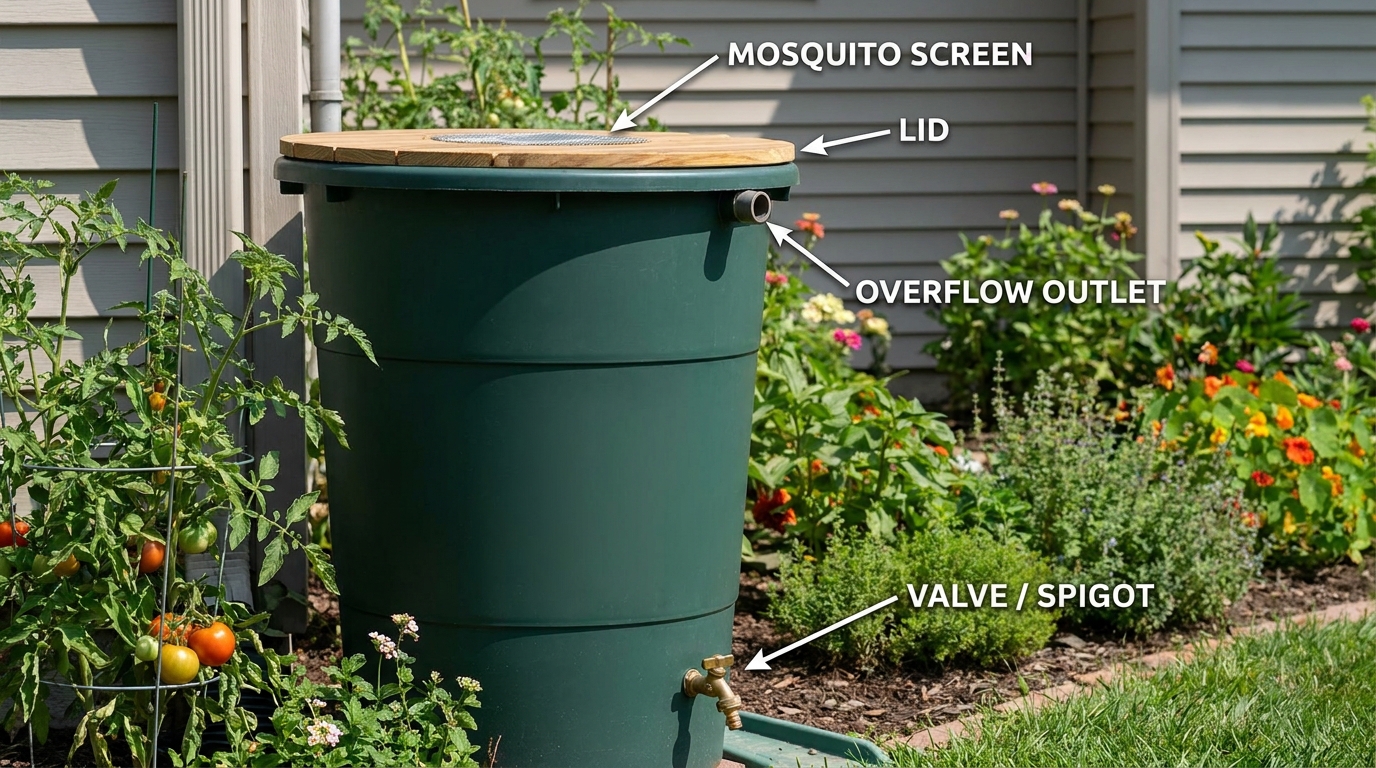
Start with the lid. It should fit securely and remain in place after storms or windy weather. A loose lid allows debris and insects to enter, and it may create a safety concern if children or animals are nearby. Vents and inlet points should have fine mesh screening that is still intact, firmly attached, and not torn. Even a small opening can become an entry point for mosquitoes.
Look over the outside of the tank for cracks, bulging walls, UV damage, stains indicating leaks, and movement around the base. A stable, level foundation matters because even a modest amount of stored water is heavy. If the tank has shifted, settled unevenly, or started leaning, address that sooner rather than later. Structural stress is easier to correct before fittings begin to fail.
Checking for sediment, odor, and algae concerns
Over time, some sediment in the bottom of a tank is normal. Dust, pollen, small particles, and traces of organic matter settle out of the water, especially if pretreatment is basic. The question is not whether sediment exists, but whether it is accumulating enough to affect water quality, clog equipment, or reduce useful storage volume.
If the water develops a strong odor, looks unusually cloudy, or shows visible algae growth, it is worth investigating the source. Light entering through translucent walls or loose covers can encourage biological growth. Heavy organic loading from dirty gutters can lead to stagnant conditions, especially during warm weather. In smaller rain barrels, a partial drain and rinse may be enough. In larger cisterns, occasional professional cleaning or a more structured maintenance procedure may be the better approach.
The need for cleaning depends on debris load, tank size, and how the water is used. A barrel collecting from a clean roof and used only for garden watering may need very little intervention beyond seasonal checks. A larger active system with pumps, filters, and indoor non-potable uses should be watched more closely. The more integrated the system is with the house, the more disciplined maintenance should become.
Do not ignore the overflow path
Overflow routing is often overlooked because homeowners tend to focus on what happens inside the tank rather than what happens when the tank is full. Yet a well-managed overflow is an important part of both performance and property protection. During heavy rainfall, the system needs a clear path to discharge excess water safely away from the home.
Check that the overflow outlet is unobstructed and screened if needed. Debris, nesting insects, or plant growth near the outlet can slow or block discharge. During a large storm, that blockage can force water to back up or spill in the wrong place. If the overflow exits near the foundation, walk the route and confirm that water is directed well away from the house, basement walls, crawl spaces, and neighboring structures.
This is especially important during freeze-thaw periods and spring storm seasons. Saturated ground around a foundation is something most homeowners work hard to avoid. A rainwater system should support drainage management, not undermine it. If the overflow currently discharges into an inconvenient or risky area, rerouting it to a rain garden, swale, or another suitable stormwater feature can be a practical improvement.
Pumps, valves, and plumbing need occasional attention too
If your system includes a pump, irrigation connections, or plumbing that delivers water beyond a simple hose outlet, a few additional checks are worth adding to your routine. Pumps do not usually require constant maintenance, but they benefit from observation. Listen for unusual noise, watch for pressure changes, and notice whether flow has become weaker or intermittent. These symptoms can point to filter clogging, air leaks, sediment issues, or pump wear.
Inspect visible plumbing for drips, corrosion, cracked fittings, and loose connections. A small leak may not seem urgent, but over time it can reduce system efficiency, create damp areas near the tank base, and add wear to connected components. Valves should open and close smoothly. If one becomes stiff, leaks around the stem, or no longer seals properly, replacing it early is usually easier than waiting for failure during peak use.
For active systems, filter maintenance is especially important. The exact cleaning interval depends on the design, but the principle remains the same. A neglected filter restricts flow and increases stress on the system. Keep the manufacturer instructions for any specialized cartridges or pump assemblies in a visible folder or waterproof sleeve near the equipment. That simple step saves time when seasonal maintenance comes around.
When homeowners should consider professional support
Most homeowners can manage basic maintenance themselves, especially for barrels and straightforward outdoor systems. However, there are times when outside help makes sense. If the system provides water for indoor non-potable uses, includes electrical pump controls, shows recurring water quality problems, or requires access into a large enclosed cistern, a professional inspection may be appropriate. Safety and code compliance matter more as the system becomes more complex.
If your rainwater system is connected to household plumbing in any way, ask questions about cross-connection protection, backflow prevention, and local requirements. Some jurisdictions have specific standards for operation and maintenance, especially for regulated non-potable uses. Even if your setup is simple, understanding the rules can help you maintain it correctly and avoid expensive adjustments later.
Water quality: the most important maintenance topic
It is easy to think of rainwater as naturally pure because it comes from the sky, but once it touches a roof and enters a home-scale collection system, the picture changes. Dust, pollen, airborne pollutants, insects, bird droppings, and animal waste can all enter the flow path. Certain roof materials may also contribute metals or chemical residues. This does not mean rainwater harvesting is unsafe or impractical. It means water quality has to be managed intentionally.
For outdoor garden use, many homeowners can maintain good results with clean catchment surfaces, pretreatment devices, sealed storage, and routine checks for odor and sediment. But if the water is used indoors for toilet flushing, laundry, or other non-potable applications, stronger filtration and maintenance discipline are often warranted. If the system is intended for drinking water, treatment and regular testing are essential. Stored rainwater should never be assumed potable without the proper design and verification.
Important: A lid, a screen, and a first-flush diverter improve rainwater quality, but they do not make roof-collected rainwater safe to drink on their own.
Simple water quality habits for homeowners
The most useful water quality habits are preventive. Keep organic debris out of the system, reduce stagnation where possible, and inspect the tank after major seasonal changes. If water suddenly smells different, becomes visibly dirtier, or leaves more residue than usual, treat that as useful information rather than a minor nuisance. Often, a change in water appearance points back to a maintenance issue upstream.
If your system supports indoor uses or if anyone in the home is relying on harvested water more directly, develop a relationship with local guidance, water testing resources, or qualified installers who understand residential rainwater systems. A calm, informed approach is best here. The goal is not alarm. It is making sure your confidence in the system is grounded in maintenance and evidence rather than assumptions.
Seasonal maintenance makes the whole system easier to manage
One of the easiest ways to avoid feeling overwhelmed is to organize maintenance by season instead of trying to remember everything at once. Rainwater systems respond strongly to changes in weather, leaf drop, pollen loads, heat, drought, and freezing temperatures. A seasonal rhythm lets you match your effort to the times when the system is most likely to need attention.
In spring, focus on clearing winter debris, checking for damage, and making sure flow paths are open before the heaviest growing season water demand begins. In summer, watch for algae, odor, mosquito issues, and the performance of pumps or hoses under active use. In fall, prepare for leaves and organic buildup while cleaning screens more frequently. In winter, protect vulnerable components from freezing and make sure overflow remains safely routed.
This approach has another benefit. It turns maintenance into a series of short, predictable tasks rather than one large annual chore. Most systems stay healthier when they are checked in small increments, and homeowners are far more likely to keep up with a routine that feels realistic.
A simple seasonal checklist
- Spring: Clear gutters and downspouts, inspect screens and diverters, check the tank base, verify lids and mosquito mesh, and test any pump or irrigation connection.
- Summer: Watch water clarity and odor, clean pre-filters if needed, inspect for leaks, and confirm that overflow remains clear before storm season.
- Fall: Remove leaves regularly, rinse screens more often, inspect sediment trends, and plan winterizing steps before the first hard freeze.
- Winter: Drain or disconnect exposed barrels where needed, protect pumps and pipes from freezing, and verify that overflow and drainage paths will not send meltwater toward the foundation.
Winterizing is not optional in freeze-prone climates
In Canada and the northern United States, winterizing is one of the most important maintenance tasks on the list. Water expands as it freezes, and that expansion can crack barrels, split fittings, damage valves, and stress exposed plumbing. Even regions with only periodic hard freezes can experience damage if a system is left full and unprotected.
For rain barrels, winter preparation often means disconnecting the barrel from the downspout, draining it fully, and storing it or leaving it upside down in a protected area if recommended by the manufacturer. Some homeowners redirect the downspout back to its winter drainage path and reinstall the barrel in spring. For larger cistern systems, winterization may involve protecting pumps, insulating vulnerable lines, draining exposed sections, and confirming that any active components are suitable for low temperatures.
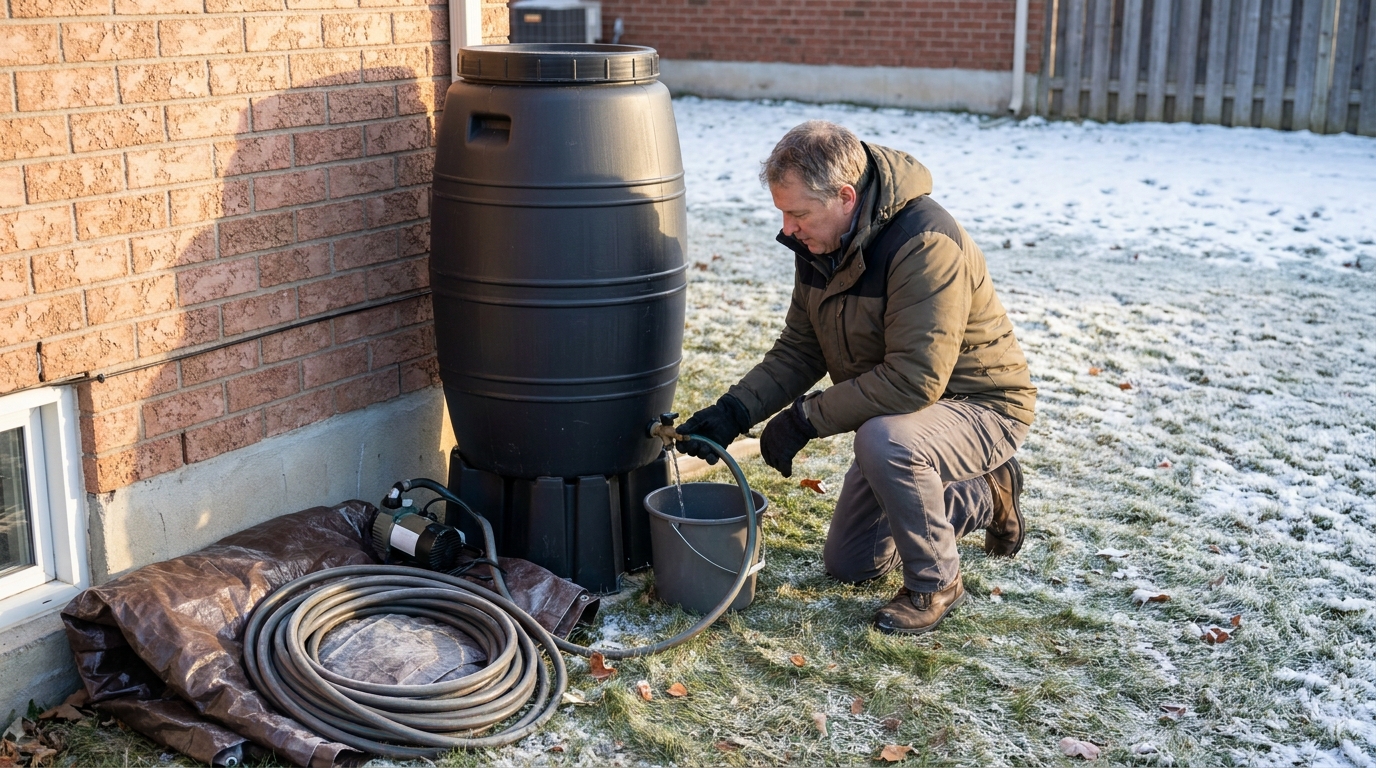
Do not forget the overflow route during winter planning. Freeze-thaw cycles, snowmelt, and early spring storms can create concentrated flows at a time when soils are saturated or drainage paths are partially blocked. Make sure excess water will still move away from the house safely. In practical terms, freeze protection is part of maintaining the entire water path, not just the storage container.
Misconceptions that lead to preventable problems
A few common misunderstandings cause more trouble than homeowners realize. The first is the idea that rainwater systems are maintenance-free. They are usually simpler than many people expect, but they still benefit from regular care. Ignoring them for long stretches tends to produce predictable issues such as clogs, poor water quality, and damaged fittings.
The second misconception is that rainwater is naturally clean enough to drink. This can lead people to underestimate the role of treatment and testing, particularly when a system looks tidy from the outside. Visual cleanliness is not the same as potable water quality. If drinking water is the goal, the system needs to be designed and maintained to that standard from the beginning.
A third misconception is that one component, such as a leaf screen or first-flush diverter, solves all contamination concerns. These devices are valuable, but they are only one layer of protection. Good performance comes from the whole system working together, including the roof, conveyance path, storage, screening, overflow, and ongoing maintenance routine.
Finally, many people underestimate winter risk. They assume freeze damage is only an issue in severe climates, when in reality even a short period of hard freezing can ruin a barrel or split a connector. If temperatures drop below freezing where you live, winterizing deserves a place in your annual plan.
Create a one-page maintenance log you will actually use
One of the smartest and easiest improvements you can make is to create a simple maintenance log. It does not need to be technical. In fact, the best version is often a one-page checklist clipped near the system or stored in a digital notes app. The purpose is to reduce guesswork, support consistency, and make it easier to spot patterns over time.
Your log might include dates for gutter cleaning, filter rinsing, pump testing, tank inspections, seasonal shutdown, and spring startup. You can also note anything unusual, such as stronger odor, visible sediment, slower flow, mosquito activity, or overflow problems during a storm. These notes become surprisingly useful, especially if a recurring issue appears at the same point each year.
This habit aligns with the direction many standards and water reuse guidelines are taking. There is growing emphasis on operation and maintenance planning, even for smaller decentralized systems. For homeowners, that does not need to feel bureaucratic. It can simply be a practical tool that supports better care and less mental load.
What to include in a homeowner log
- Date of inspection or maintenance task
- Condition of gutters, downspouts, and roof catchment area
- Status of leaf screens, pre-filters, and first-flush diverter
- Tank observations, including lid, vents, screens, leaks, and sediment
- Pump or plumbing performance notes
- Overflow condition and drainage path check
- Winterizing or spring startup actions completed
- Any water quality concerns, testing, or treatment updates
Rainwater harvesting as a resilience tool, not just a green feature
There is a reason rainwater harvesting is gaining attention again. Homeowners are increasingly interested in decentralized water reuse, practical resilience, and ways to reduce runoff while using resources more wisely. A rainwater system supports all of those goals, but only when it remains functional. Maintenance is what turns the idea of water savings into dependable day to day performance.
Seen this way, maintenance is not a chore attached to a sustainability feature. It is the small operational habit that allows the system to deliver on its promise. A clean screen means more captured water. A sealed lid means fewer pests. A clear overflow protects your foundation. A winterized barrel survives to serve another season. None of these actions is dramatic, but together they make the system genuinely useful.
That is also what makes rainwater harvesting feel so practical. You do not need to overhaul your lifestyle or become a water systems expert. You simply need to care for the equipment in a steady, informed way. For many households, that is exactly the kind of sustainable choice that lasts because it fits naturally into ordinary homeownership.
Final thoughts: small checks, better performance, less stress
If you already have a rainwater harvesting system, maintaining it well does not require an overwhelming schedule. Most of the important tasks are visual, seasonal, and manageable in short sessions. Clean the catchment path, keep debris out of storage, inspect screens and lids, watch overflow behavior, protect components from freezing, and pay attention to any change in water quality or system performance.
If you are just getting started, build maintenance into your expectations from the beginning. Think of it as part of the design, not an extra burden added later. The best residential systems are often the ones that are simple enough to inspect easily, protected enough to stay cleaner, and documented enough that no one has to rely on memory.
Rainwater harvesting is a practical expression of low impact living because it works quietly in the background. With a calm routine and a few well-timed checks, your system can keep saving water, reducing runoff, and supporting your home through changing seasons. That is what good sustainable design often looks like in real life. Not complicated. Just thoughtful, consistent, and built to last.



No Comment! Be the first one.