



Eco-automation sounds like a futuristic concept, but in practice it is often much simpler than people expect. At its core, it means using smart controls, schedules, sensors, and connected devices to help your home use less energy while staying comfortable and functional. For most homeowners, this is not about filling every room with gadgets. It is about making a few thoughtful upgrades that quietly reduce waste in the background.
Table Of Content
- Why Eco-Automation Matters in a Typical Home
- The Best First Step: Start with a Smart Thermostat
- What a Smart Thermostat Actually Does
- How to Set It Up for Real Savings
- Beyond Thermostats: Building an Eco-Automation System One Layer at a Time
- Smart Plugs and Standby Power
- Lighting That Responds to People and Daylight
- A Practical Step-by-Step Plan for Homeowners
- Real-Life Examples of Eco-Automation That Feel Achievable
- How Eco-Automation Connects to Bigger Home Upgrades
- The Role of Matter and Why Interoperability Matters
- Common Misconceptions That Make Eco-Automation Feel Harder Than It Is
- How to Keep Eco-Automation User-Friendly
- Costs, Rebates, and the Question of Value
- The Sustainable Home Is Often the One That Feels Most Natural
That distinction matters because many people assume sustainable technology is either expensive, technical, or all-consuming. In reality, the best eco-automation systems are often the least dramatic. They help your heating run only when needed, make lights respond to occupancy or daylight, and reduce the small but persistent energy drain from devices left on standby. Over time, these seemingly modest changes can add up to meaningful savings on both utility bills and household emissions.
The timing is also important. In North America, heating and cooling remain the largest annual electricity uses in U.S. homes, according to the U.S. Energy Information Administration. In Canada, Natural Resources Canada states that space heating accounts for more than 60 percent of the energy used in the average home. If a homeowner wants to make one practical move that supports sustainability, controlling how and when a home is heated or cooled is a very sensible place to begin.
What makes eco-automation especially appealing is that it can support comfort rather than ask for sacrifice. Instead of remembering to lower the thermostat before bed, switch off lights in empty rooms, or unplug electronics one by one, the home can handle those decisions more consistently. When done well, automation makes efficient behavior easier to maintain. That is why this technology tends to work best when it is designed around everyday routines rather than novelty.
This article takes a grounded, homeowner-friendly approach. We will look at the systems that offer the clearest benefits, explain where savings are most likely to come from, and walk through a step-by-step path for implementation. The goal is not to turn your home into a complicated tech project. It is to help you build a home that is calmer, more efficient, and easier to live in over the long term.
The simplest definition of eco-automation is this: using connected technology to reduce waste without making daily life harder. If a system saves energy but creates constant friction, it is not doing its job well.
Why Eco-Automation Matters in a Typical Home
When homeowners think about energy waste, they often picture major upgrades like solar panels or full insulation retrofits. Those improvements can be valuable, but they are not the only path to lower energy use. A great deal of waste comes from timing, habits, and lack of visibility. Rooms are heated when nobody is home, lights stay on because no one notices, and electronics continue drawing power around the clock. Eco-automation helps close that gap between intention and actual performance.
Heating and cooling are the clearest example. Since HVAC systems account for such a large share of household energy use, even small improvements in control can have an outsized impact. If the temperature is lowered slightly overnight or while the house is empty, the savings can be real without anyone feeling deprived. Natural Resources Canada recommends lowering the temperature by 2 to 3 degrees Celsius as an effective savings strategy, with practical guidance of 17 degrees Celsius when sleeping or away and 20 degrees Celsius when awake at home.
There is also a wider environmental benefit to using less energy at home, even if it can be difficult to see day to day. Lower demand means less strain on grids and fuel systems, and in many regions it can reduce associated emissions. The EIA reported that U.S. residential-sector CO2 emissions declined 3 percent in 2024 because of lower heating-related fuel demand during warmer weather. That is a reminder that household heating patterns have a measurable effect at scale.
For homeowners, though, the most compelling motivation is usually more personal. Eco-automation can reduce bills, smooth out routines, and make a home feel more responsive. It can also give families better information. Instead of wondering why a utility bill spiked, they can see how temperature settings, usage patterns, or standby devices contributed to the change. That level of feedback is one of the quiet strengths of smart home energy systems.
The Best First Step: Start with a Smart Thermostat
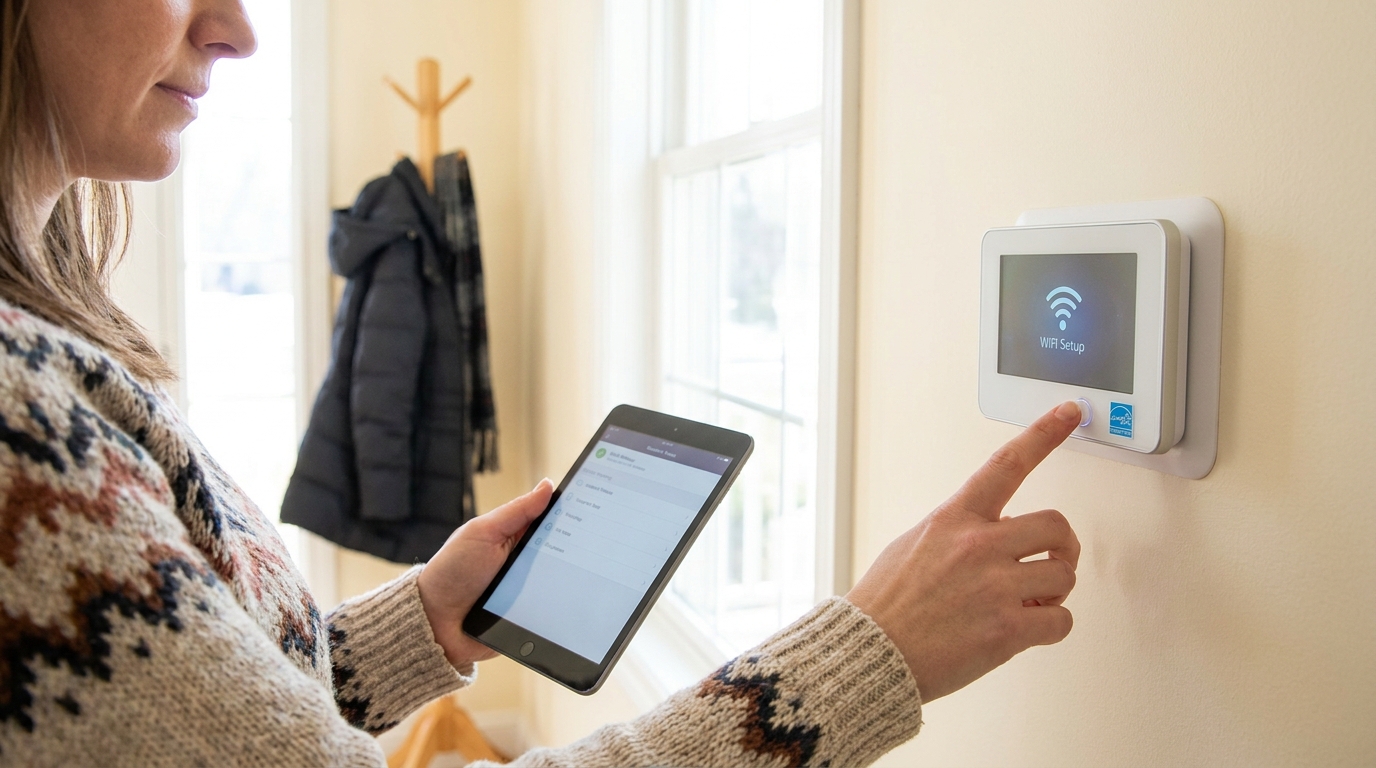
If there is one eco-automation upgrade that offers the best combination of simplicity, affordability, and potential impact, it is the smart thermostat. That is not because thermostats are glamorous. It is because they sit at the center of the largest energy use in many homes. They help manage when heating or cooling turns on, how long it runs, and whether the home stays at a high energy setting when nobody actually needs it.
ENERGY STAR-certified smart thermostats are especially worth considering because certification signals that the product has been independently evaluated against field-based performance criteria. These devices can learn household patterns, switch to energy-saving settings when people are sleeping or away, and provide energy-use data that helps homeowners make more informed choices. That combination of automation and feedback is what makes them more than just a digital replacement for an old wall control.
The scale of potential impact is substantial. According to Natural Resources Canada, if everyone used an ENERGY STAR-certified smart thermostat, annual savings would reach 11 petajoules of energy, $248 million, and 774 kilotonnes of greenhouse gas emissions avoided. Those numbers are useful because they move the conversation beyond convenience. They show that a single, familiar device can produce measurable environmental and financial benefits when adopted widely.
Smart thermostats are also a good entry point because they teach an important lesson about home sustainability. The most valuable technologies are not always the most complex. In many cases, a simple schedule that reflects real household patterns will outperform a more elaborate system that nobody understands. That is why starting with climate control often feels approachable. Nearly everyone already uses a thermostat, so the learning curve is lower than people expect.
What a Smart Thermostat Actually Does
A good smart thermostat does more than let you change the temperature from your phone. It can create daily and weekly schedules, detect occupancy patterns, and shift the home into energy-saving settings when residents are away. Many models also show usage reports, which can help identify whether a home is running too warm overnight or cooling more than necessary during work hours.
Some systems can also connect to utility programs or demand-response initiatives, depending on where you live. That means the thermostat may help reduce energy demand during peak periods, sometimes with incentives attached. For homeowners, this can be an additional layer of value because the device is not only improving efficiency inside the home, but also participating in a broader energy management system in the community.
None of this requires a major lifestyle change. In the best setups, the technology simply reflects what people already want. Most households do not need every room at full comfort temperature while everyone is asleep or out for the day. A smart thermostat helps translate those natural rhythms into consistent energy savings.
How to Set It Up for Real Savings
Automation is not magic, and this is where nuance matters. Some evaluations have shown mixed outcomes when smart thermostats are poorly configured or when user behavior overrides the system constantly. If someone repeatedly raises the heat far above the planned setting or disables schedules every few days, the device cannot deliver its full value. The technology works best when it is paired with reasonable expectations and a setup that matches daily life.
A strong starting approach is to begin with a simple schedule rather than turning on every advanced feature immediately. Set a comfortable temperature for waking hours, reduce it modestly at night, and use away settings during regular work or school periods. In a Canadian climate, for example, aligning with Natural Resources Canada guidance of 17 degrees Celsius when sleeping or away and 20 degrees Celsius when awake at home can provide a useful framework. You can then fine-tune based on comfort and building performance.
It is also wise to review energy reports after a few weeks. If the heating seems to run longer than expected, that may point to insulation gaps, drafty windows, or a system issue rather than a thermostat problem. This is another benefit of eco-automation. It can reveal where the home itself may need attention, creating a clearer roadmap for future efficiency upgrades.
Beyond Thermostats: Building an Eco-Automation System One Layer at a Time
Once a homeowner has one successful automation upgrade in place, the next step is usually not another major system. It is often a set of smaller additions that tackle waste in overlooked places. This gradual approach is usually the most practical because it lets you see results, build confidence, and avoid spending on devices that do not solve a meaningful problem.
The most effective sequence for many households is to start with the thermostat, then move to smart plugs or advanced power strips, followed by lighting controls, and then consider integration with larger loads like heat pumps or EV charging if the home setup supports it. This layered path keeps the project manageable. It also reflects how people actually live. Most households want a home that works better, not a weekend of device pairing and troubleshooting.
Another advantage of taking things step by step is interoperability. The smart home market has historically been frustrating because devices from different brands did not always communicate well. That is beginning to improve with the Matter standard, which is designed to simplify setup and cross-brand compatibility. Matter 1.5 added energy-management capabilities along with support for more device categories, making it easier to build a system gradually without being locked into one ecosystem too early.
Smart Plugs and Standby Power
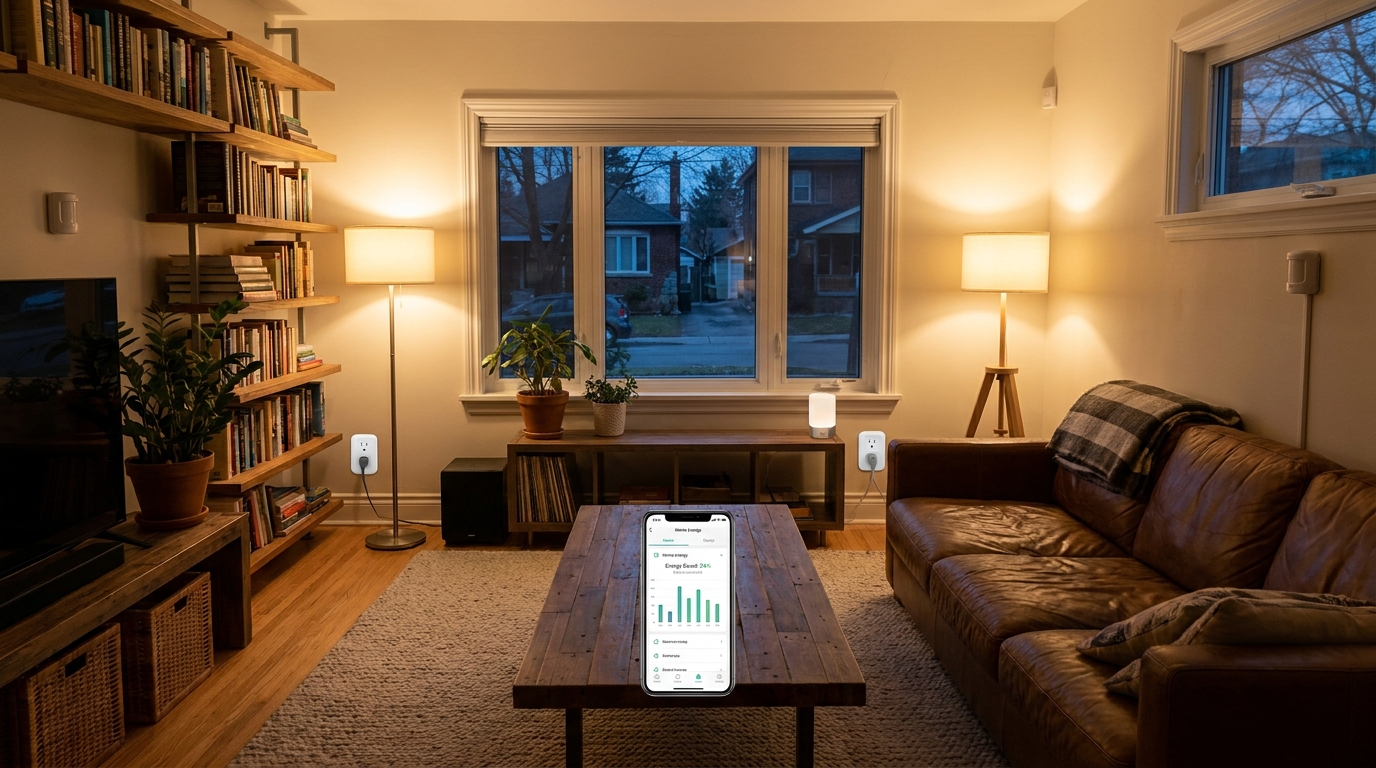
Standby power rarely feels dramatic, but it is one of the most common forms of everyday waste. Televisions, gaming consoles, printers, coffee stations, speakers, chargers, and office equipment can continue drawing electricity even when they appear to be off. Smart plugs and smart power strips help by shutting off selected devices automatically based on schedules, occupancy, or dependency rules.
For example, a media console can be set so that peripheral devices lose power when the main television turns off. A home office can be scheduled to fully power down overnight. In a guest room, lamps and chargers can be set to switch off during long vacant periods. These are not transformational changes on their own, but they are exactly the kind of steady background improvements that make eco-automation worthwhile.
This step is also useful because it builds awareness. Many homeowners discover just how many devices are quietly consuming power throughout the day. Once those loads become visible and manageable, it becomes easier to think strategically about energy use in the rest of the home.
Lighting That Responds to People and Daylight
Lighting automation is often one of the easiest ways to make a home feel more intuitive. Occupancy sensors, smart switches, and scheduled LED lighting can reduce waste without making the house feel rigid. Hallways, bathrooms, mudrooms, laundry areas, and exterior pathways are often excellent places to start because lights in those spaces are frequently left on by accident.
Daylight-responsive controls can add another layer of efficiency. In rooms with strong natural light, lamps or overhead fixtures can dim or remain off during bright hours. That does not just save electricity. It can also create a more comfortable visual environment by reducing overlighting, which is a common but often unnoticed issue in homes.
The key is to choose spaces where automation supports how people actually move through the house. A sensor in a pantry or stairwell tends to feel helpful. A sensor in a quiet living room may feel intrusive if the lights shut off while someone is reading still. Good eco-automation is thoughtful, not aggressive.
A Practical Step-by-Step Plan for Homeowners
One of the reasons people avoid home automation is that the category feels sprawling. There are too many products, too many promises, and too much jargon. A clearer path is to treat eco-automation like any other home improvement process. Start with the area of highest impact, make sure it works, and then expand only when the next step is justified.
The following sequence is often effective because it balances cost, usability, and energy potential. It is not the only approach, but it tends to fit well for households that want measurable benefits without overwhelm.
- Review your current energy pain points. Look at utility bills, comfort complaints, and wasteful habits. If the home is often overheated, cooled when empty, or full of lights left on, those are signs of strong automation opportunities.
- Install an ENERGY STAR-certified smart thermostat. This is usually the highest-impact starting point because heating and cooling represent such a large share of household energy use.
- Create a simple schedule first. Resist the urge to over-customize. Begin with wake, away, evening, and sleep settings that match your real routine.
- Add smart plugs or a smart power strip in one high-use zone. A media center or home office is often ideal because standby losses are common there.
- Automate lighting in just a few rooms. Choose transitional spaces like hallways, bathrooms, or entry areas where occupancy-based controls feel natural.
- Track results for a month or two. Compare utility patterns, comfort, and how often you manually override settings.
- Expand to larger systems only if it makes sense. If you have a heat pump, EV charger, or broader home energy management setup, then deeper integration may be the right next layer.
What matters most in this process is restraint. A home that automates three useful things well is often more sustainable than a home that attempts to automate twenty things poorly. Good systems should fade into the background. They should reduce decisions, not create more of them.
Real-Life Examples of Eco-Automation That Feel Achievable
Consider a young family in Toronto living in a detached house with inconsistent winter comfort and rising utility bills. Their first move is not a whole-house technology overhaul. Instead, they install a certified smart thermostat and program lower temperatures overnight and during weekday school and work hours. Within a month, the house feels just as comfortable, but the heating system is no longer running at full comfort settings when no one is home. They then add smart plugs to the media console and office printer setup, reducing standby draw with almost no effort.
In another example, a retired couple in Portland wants sustainability improvements but dislikes complicated interfaces. They choose a thermostat with a very simple app and large wall display, then add motion-based lighting in the hallway, laundry room, and garage entry. The changes are modest, but the house feels easier to navigate and less wasteful. Because the system supports their routine instead of disrupting it, they actually keep using it the way it was intended.
A third example might be a townhouse owner in Vancouver who is planning a heat pump upgrade. Before making that investment, she starts with automation basics and learns from the energy data. She notices frequent temperature swings caused by drafts near older windows, which helps her prioritize weatherization alongside the future equipment upgrade. In this case, automation does not replace building improvements. It helps clarify which improvements will matter most.
These examples all point to the same idea. Eco-automation is most successful when it is grounded in the realities of the home. Families with changing schedules, older homeowners who want simplicity, and sustainability-minded renovators can all benefit, but the setup should reflect their specific context.
How Eco-Automation Connects to Bigger Home Upgrades
Smart controls are powerful, but they work best when paired with an efficient building envelope and well-chosen equipment. If a home is poorly insulated, heavily drafty, or fitted with aging mechanical systems, automation can help but cannot solve everything. It may reduce waste, yet the home could still be losing large amounts of heat through walls, windows, doors, or attic spaces.
That is why government guidance in both Canada and the United States often frames smart controls as part of a broader efficiency strategy. Weatherization, insulation, efficient windows and doors, and heat pumps all complement eco-automation well. A tightly sealed and properly insulated home responds more effectively to automated temperature setbacks because it holds comfort longer. Likewise, a heat pump paired with good controls can operate more efficiently than one managed inconsistently.
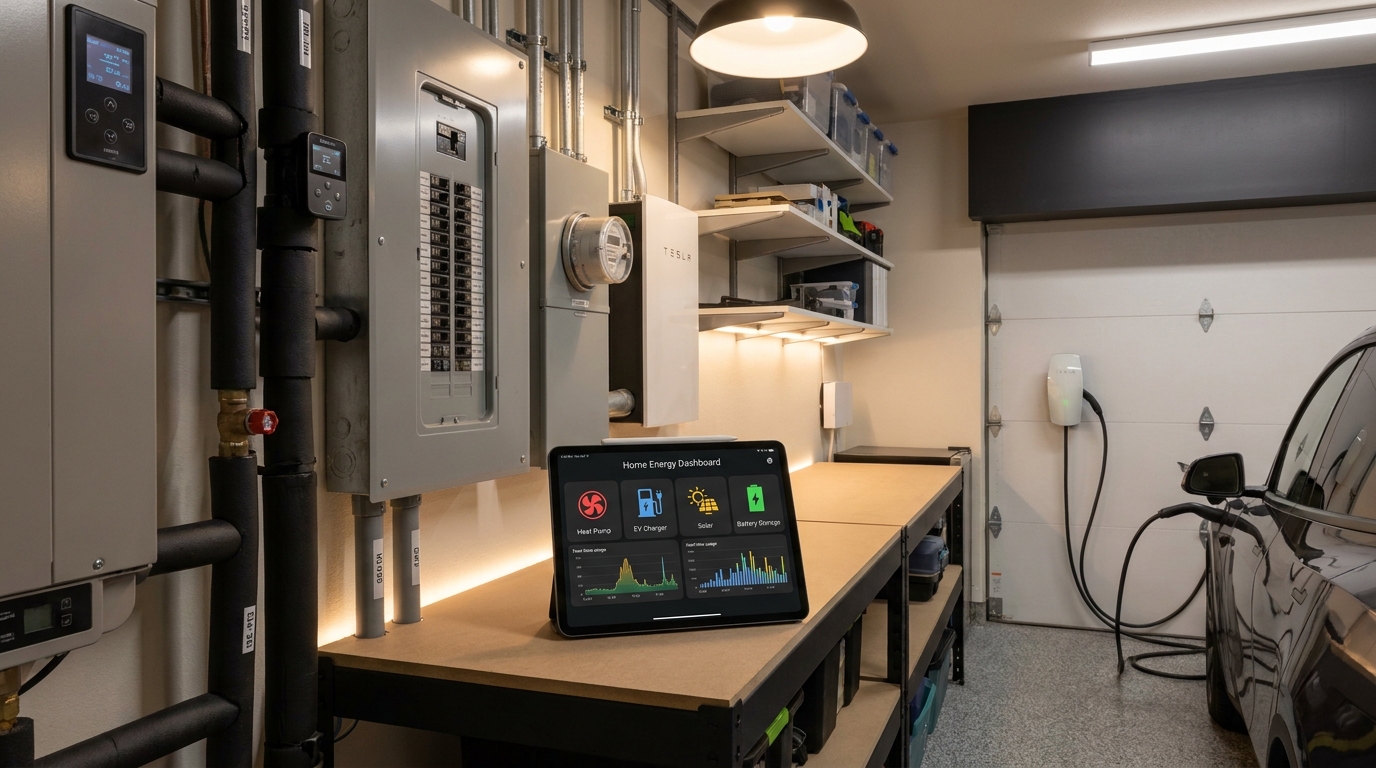
There is also growing relevance for households with electric vehicles. As home energy management becomes more coordinated, some homeowners will have the option to align EV charging with lower-demand periods or cleaner grid conditions. This is still a developing area for many households, but it reflects where the market is going. Matter and newer home energy management tools are making it more realistic to coordinate multiple systems without excessive complexity.
The Role of Matter and Why Interoperability Matters
One of the quiet barriers to sustainable home technology has been compatibility. Homeowners would buy a smart plug from one brand, a thermostat from another, and lights from a third, only to find that setup was awkward or functions were limited across platforms. This kind of friction discourages adoption, especially for people who simply want reliable tools rather than a hobby.
The Matter standard is important because it aims to reduce that friction. Developed as a cross-industry smart-home protocol, Matter is designed to make device setup easier and improve interoperability across brands and ecosystems. Matter 1.5 expanded energy-management capabilities, which is especially relevant for eco-automation because sustainability often depends on how different systems coordinate over time.
For homeowners, the practical takeaway is straightforward. When shopping for new devices, it is increasingly worth looking for products designed with strong interoperability in mind. That does not guarantee a perfect experience, but it lowers the risk of building a fragmented system. It also supports a more patient strategy where you can upgrade one room or one function at a time, knowing future additions are more likely to fit together.
For homeowners who want to see what a fully coordinated system looks like once every layer, from climate control to lighting, is integrated from the start, Kingsgate recently completed a custom home built around exactly this kind of whole-house smart home automation — you can see it here: Inside 1 Silvergrove Rd.
Common Misconceptions That Make Eco-Automation Feel Harder Than It Is
One of the biggest misconceptions is that smart automation is only useful for wealthy homeowners or technology enthusiasts. In truth, one smart thermostat can be a meaningful entry point for a wide range of households. It addresses a major source of energy use, requires relatively little day-to-day interaction, and can often qualify for rebates or incentives depending on region and utility programs.
Another misconception is that automation automatically saves energy no matter how it is configured. That is simply not true. A poorly designed schedule, frequent overrides, or sensors placed in the wrong areas can undermine savings. Eco-automation should be understood as a tool, not a guarantee. Like insulation, windows, or efficient appliances, its performance depends on fit and follow-through.
People also sometimes assume that all smart thermostats and connected devices are equally effective. Certification matters, especially in a category full of broad claims. ENERGY STAR-certified smart thermostats stand out because they are based on field data and independent criteria. For homeowners trying to make practical choices, that level of verification adds welcome clarity.
Finally, there is the idea that sustainable automation means replacing every appliance at once. That belief can make the entire subject feel financially unrealistic. In most homes, a phased approach is not only more affordable but also more effective. It gives you time to understand what works, where comfort improves, and which additions are actually worth pursuing.
How to Keep Eco-Automation User-Friendly
The best sustainable systems are the ones people continue using. That may sound obvious, but it is an area where many smart home purchases fall short. A device that is technically capable but confusing in practice will often be ignored, manually overridden, or abandoned altogether. The result is wasted money and little environmental benefit.
To avoid that, choose interfaces that feel calm and legible. If multiple people live in the home, make sure everyone understands the basic controls. Name scenes and schedules clearly. Keep automations intuitive enough that a guest or family member can still use the house without frustration. In most cases, simplicity is a stronger sustainability strategy than complexity because it supports consistency over time.
It also helps to revisit settings seasonally. A winter heating schedule may not make sense in spring, and daylight patterns can change how lighting automation should behave. These check-ins do not need to be frequent or technical. Even a short review every few months can improve performance and prevent an automation setup from drifting out of alignment with real life.
Costs, Rebates, and the Question of Value
For many homeowners, the first practical question is cost. Smart thermostats, plugs, and lighting controls do require upfront spending, even if they are relatively modest compared with larger renovations. The good news is that some smart or programmable thermostats are eligible retrofits under the Canada Greener Homes Initiative, and utility rebates may also be available in various jurisdictions. These incentives can make the first step more accessible.
Value should also be measured in more than payback alone. A thermostat that reduces overheating at night, a hallway light that responds automatically, or a home office that powers down cleanly each evening can improve comfort and convenience while supporting lower energy use. For many people, that blended return is what makes eco-automation worthwhile. It saves money, but it also makes the home easier to run.
When evaluating purchases, it helps to focus on devices that solve a clear problem. If your family frequently forgets to adjust temperatures, prioritize climate control. If standby power is a hidden drain, start in the media room or office. If lights are left on in transition spaces, add occupancy-based controls there first. Purpose-led buying tends to create better outcomes than buying a large kit and hoping the use cases appear later.
The Sustainable Home Is Often the One That Feels Most Natural
There is a tendency to imagine a sustainable home as one defined by sacrifice or relentless optimization. In reality, the most successful homes often feel quietly balanced. They stay comfortable without unnecessary excess, use energy thoughtfully, and rely on systems that support rather than dominate daily life. Eco-automation fits well into that vision because it can make good habits easier to maintain.
For most homeowners, the right path is not to automate everything. It is to identify the places where the home is wasting energy or asking for constant manual correction, then solve those issues with the lightest effective touch. A thermostat that reflects your real schedule, a few smart plugs in high-draw zones, and lighting controls in the right rooms may be enough to create a noticeable shift.
Over time, those small decisions can form the backbone of a more resilient and sustainable household. They can also make future upgrades, from heat pumps to EV charging to better ventilation, easier to integrate. That is the quiet promise of eco-automation. It does not ask you to become a smart home expert. It simply gives your home the ability to work a little harder on your behalf, with less waste and more intention.
In the end, eco-automation is less about technology itself and more about stewardship. It is about using tools wisely, respecting comfort, and making sustainability feel practical enough to last. For homeowners who want a realistic place to begin, that is very good news.



No Comment! Be the first one.