



Build-to-rent, often shortened to BTR, has become one of the most important shifts in modern real estate investment. In simple terms, it refers to housing that is designed, financed, and developed specifically for long-term rental rather than for individual unit sales. That distinction matters. Instead of treating rental income as a secondary outcome after construction, the BTR model starts with renter demand, operating performance, and long-term asset management as the central business case.
Table Of Content
- What Build-to-Rent Actually Means
- Why the Market Is Moving Toward Build-to-Rent
- The Canadian Data Behind the Opportunity
- How Build-to-Rent Differs From Traditional Rental Investing
- The Core Financial Appeal of BTR
- Key Return Drivers Investors Should Watch
- The Risks and Challenges Investors Cannot Ignore
- The Critical Role of Financing and Public Policy
- BTR as a Community and Sustainability Strategy
- Where Investors Should Be Most Selective
- Is Build-to-Rent a Viable Alternative to Traditional Rental Investment?
- Final Thoughts
For investors, this represents more than a change in product type. It marks a change in how rental housing is being conceived across Canada and North America. Traditional rental investing has often revolved around scattered-site ownership, condo units leased out by individual owners, or smaller multifamily holdings. Build-to-rent introduces a more institutional framework, with professional management, standardized operations, and a deeper focus on long-term cash flow. In a market shaped by affordability pressure, delayed homeownership, and persistent supply shortages, that framework is attracting serious attention.
The timing is not accidental. Canada’s rental market has been under strain for years, and supply is now responding at a pace not seen in decades. According to CMHC, purpose-built rental apartment supply grew by 4.1% in 2024, the fastest annual increase in more than 30 years. At the same time, the national purpose-built rental vacancy rate rose from 1.5% in 2023 to 2.2% in 2024, then to 3.1% in 2025. While a higher vacancy rate might appear negative at first glance, it can also signal a healthier rebalancing of rental conditions after an extended period of extreme tightness.
This article examines why build-to-rent is gaining momentum, how it differs from traditional rental strategies, where the financial opportunity lies, and what risks investors need to price in carefully. The central point is straightforward: BTR is not simply another way to own rental property. It is a distinct investment strategy with its own economics, timelines, financing requirements, and operational advantages. For investors willing to think beyond short-term resale logic, it can be a compelling path to durable income and portfolio diversification.

What Build-to-Rent Actually Means
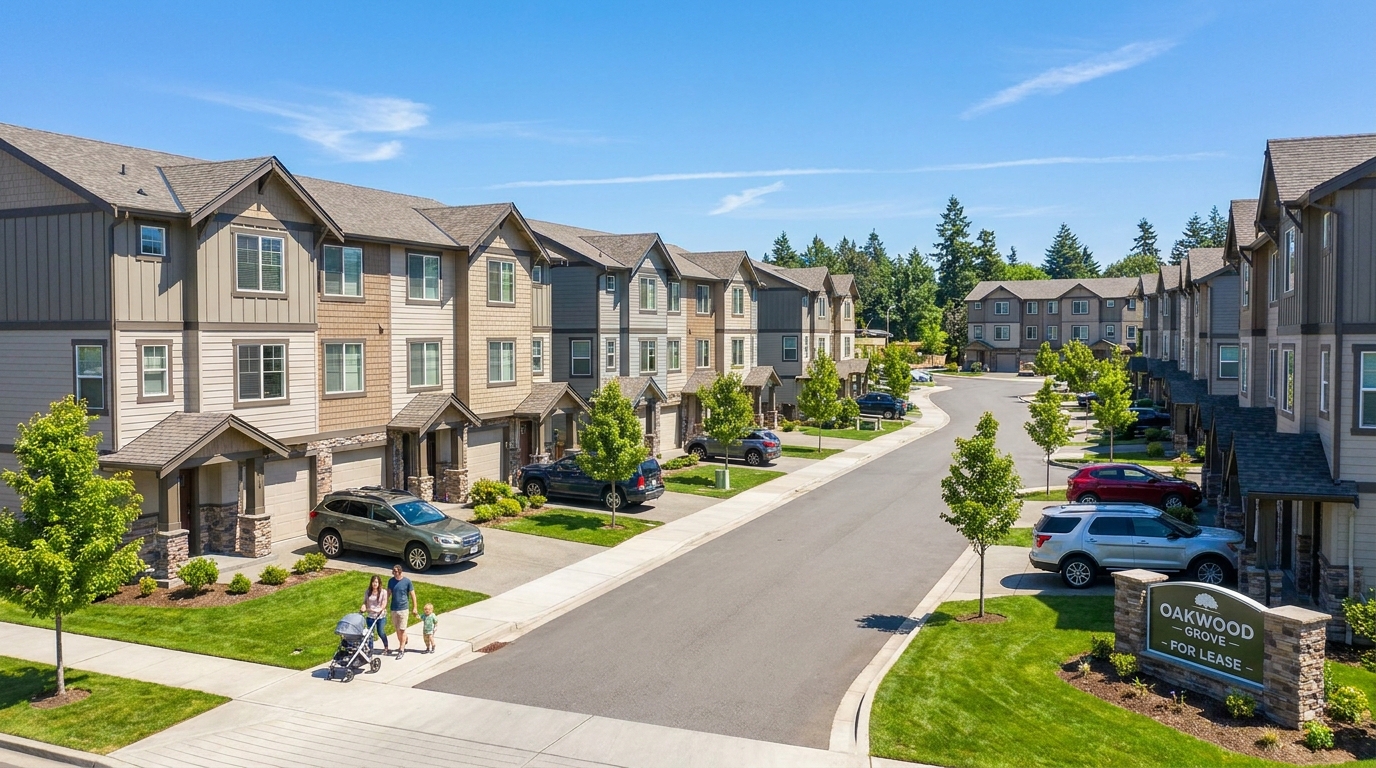
One of the most common misconceptions in the market is that build-to-rent is just another label for any rental property. It is not. In the Canadian context, BTR is most closely aligned with purpose-built rental housing, meaning the asset is conceived from day one as a rental community. In the United States, the concept can extend beyond apartment buildings to include professionally managed single-family rental homes and townhome communities held by one owner or institutional operator. In both cases, the defining feature is intentionality: the project is created for occupancy, retention, and operating income rather than sale.
That distinction has strategic consequences. A condo tower built for unit sales and later partially rented by investors may create rental supply, but it is not the same as BTR. Condo rentals often result in fragmented ownership, inconsistent management standards, uneven maintenance decisions, and unpredictable tenant turnover dynamics. By contrast, a BTR asset is managed as one business with coordinated leasing, maintenance, branding, amenity programming, and capital planning. That level of control can improve resident experience while also supporting more consistent financial performance.
CBRE defines U.S. build-to-rent as high-quality for-rent single-family homes or townhomes owned by a single entity and professionally managed. That model has gained traction because it serves households that want more space, privacy, and neighborhood character than a standard apartment often provides, but who are not yet ready or able to buy. In practice, this means the BTR umbrella now includes multiple formats, from urban multifamily buildings to suburban rental townhome communities. The common thread is scale, professionalization, and long-term hold strategy.
For investors evaluating the segment, the key is to avoid using ownership housing assumptions when underwriting a rental-first development. BTR succeeds when the design, amenity package, financing structure, and lease-up strategy are built around renter behavior. That means understanding unit mix, absorption pace, operating costs, renewal rates, and service expectations. It is an operating business as much as it is a real estate asset.
Why the Market Is Moving Toward Build-to-Rent
The rise of build-to-rent is closely tied to structural demand trends rather than temporary market enthusiasm. Across Canada, affordability constraints have made homeownership harder to access, especially for first-time buyers. Higher borrowing costs, large down payment requirements, and elevated home prices have extended the renter lifecycle for many households. At the same time, some renters are choosing flexibility over ownership, particularly in a labor market where mobility still matters. These conditions create a deeper and more durable tenant base for well-located rental communities.
Developers are responding to that demand with a notable shift in product mix. CMHC reported that almost half of apartment starts in Canada’s six largest cities in the first half of 2024 were purpose-built rentals, the highest share on record. This is one of the clearest indicators that capital allocation is changing. Instead of assuming condo-for-sale remains the default route for apartment development, more sponsors are directing land and construction budgets toward rental communities that can be held over time.
Institutional capital also has a role in this transition. Pension funds, private equity groups, REITs, and large private operators increasingly favor residential rental assets because they offer income-oriented characteristics and relative defensiveness compared with more cyclical property sectors. In uncertain economic periods, necessity-based housing tends to retain relevance. That does not remove risk, but it does make BTR attractive to investors looking for stable occupancy, recurring revenue, and inflation-linked rent growth over the long term.
Importantly, the conversation around rental development has matured. The market is no longer focused only on whether units can be filled. It is increasingly focused on whether projects can reach stabilization efficiently, operate at scale, and maintain resident quality over many years. That is where BTR has a meaningful edge. Because these projects are designed as long-term rental businesses, they can align architecture, operations, and resident services more effectively than fragmented rental stock.
Build-to-rent is best understood not as a short-term trend, but as part of the broader professionalization of rental housing across North America.
The Canadian Data Behind the Opportunity
The Canadian market provides one of the strongest real-world cases for the build-to-rent thesis. Rental supply is finally expanding, but it is doing so from a base of prolonged undersupply. CMHC reported that the country’s purpose-built rental apartment stock grew by 4.1% in 2024, the fastest annual increase in more than three decades. That growth helped push the national vacancy rate upward, but affordability remained strained, especially for new tenants entering the market at current pricing levels.
There is an important nuance here for investors. A rising vacancy rate from extremely low levels does not automatically imply weakening fundamentals. In many markets, a vacancy rate near zero creates unstable conditions, aggressive rent spikes, and limited consumer choice. A somewhat higher vacancy rate can indicate healthier market function, better tenant mobility, and less pressure on operations. CMHC’s 2025 update showed the national purpose-built rental vacancy rate increasing further to 3.1% as supply expanded and rent growth moderated. That kind of normalization can support more disciplined underwriting.
Rent trends also tell a more sophisticated story than top-line averages suggest. CMHC reported that 2-bedroom rent growth slowed to 5.4% in 2024, down from 8% in 2023. Yet turnover rents still rose by 23.5% in 2024, showing that newly available units continued to command substantially higher pricing than existing occupied stock. For BTR investors, this highlights the value of product quality, leasing strategy, and completion timing. New supply may slow the rate of rent acceleration, but demand for modern units in desirable locations remains very real.
Another critical factor is the role of public financing. CMHC estimated that its construction financing programs supported about 88% of Canada’s new purpose-built rental apartment starts in 2024. Since 2017, more than 200,000 new purpose-built rental apartment units have been funded through CMHC mortgage insurance and related financing products. That is not a side note. It is a direct signal that policy-backed finance is central to project feasibility in many Canadian markets. Any investor entering BTR without understanding this financing landscape is likely missing a large part of the economic equation.
How Build-to-Rent Differs From Traditional Rental Investing
To understand the investment case clearly, it helps to compare BTR with more familiar rental strategies. A traditional scattered-site portfolio may consist of detached homes, duplexes, or small rental properties spread across multiple neighborhoods. These can produce attractive returns, especially for hands-on investors, but they often come with operational inefficiency. Maintenance costs are less standardized, tenant service is harder to centralize, and branding is almost nonexistent. Scale exists on paper, but not always in day-to-day execution.
Condo rentals present a different set of challenges. While they allow investors to enter major markets on a unit-by-unit basis, they also leave owners exposed to condominium fees, board decisions, inconsistent building policies, and competition from both owner-occupiers and other investor landlords in the same tower. The asset itself was usually designed for sale, not for long-term tenancy. Unit layouts, amenities, and common-area rules may not reflect the needs of durable rental communities. As a result, the rental performance can be less predictable over time.
Build-to-rent changes the operating model by bringing the full asset under coordinated ownership and management. Leasing strategy can be optimized across the entire property. Maintenance can be standardized. Capital improvements can be timed strategically. Community identity can be curated. Resident retention can be managed as a deliberate business objective rather than left to fragmented ownership decisions. For investors, these factors can produce stronger data visibility and greater control over performance drivers.
That said, BTR is not inherently superior in every situation. It usually requires much more capital upfront, a development timeline that extends over several years, and a higher tolerance for construction and lease-up risk. The value proposition is less about ease and more about control, scale, and long-term efficiency. Investors need to decide whether they want a passive unit-level holding or an operating platform that behaves more like a business enterprise.
The Core Financial Appeal of BTR
The strongest argument for build-to-rent is the quality of income it can produce once the asset reaches stabilization. Unlike development-for-sale models that depend on unit absorption and market pricing at exit, BTR aims to create recurring cash flow through rent collections over time. That changes how returns are evaluated. Instead of focusing primarily on gross profit at disposition, investors pay closer attention to net operating income, occupancy durability, resident retention, financing terms, and future cap rate assumptions.
In an environment where many investors are looking for assets with inflation-hedging characteristics, rental housing remains compelling. Leases reset more frequently than many commercial asset classes, allowing owners to capture market movement over time. Purpose-built communities can also support ancillary revenue through parking, storage, pet fees, premium amenities, and furnished or flexible lease packages, depending on the market. These income layers may seem secondary, but they contribute meaningfully to margin when managed at scale.
Operational consistency is another major benefit. Because the entire project is delivered to a coordinated specification, maintenance systems, materials, appliances, and service procedures can be standardized from the start. That can improve cost forecasting and reduce friction across the asset’s lifecycle. Professional management also supports better resident communication, smoother renewals, and more responsive maintenance. These factors influence revenue more than many new investors appreciate, because turnover costs and vacancy loss can erode returns quickly.
For institutional and sophisticated private investors, BTR also offers a strategic way to diversify exposure within real estate. A portfolio concentrated in office, retail, or ownership-oriented residential product can benefit from adding stabilized rental income. Residential demand tends to be broad and persistent, especially in high-growth urban and suburban corridors. As a result, BTR can act as both a yield vehicle and a long-duration hedge against continued housing undersupply.
Key Return Drivers Investors Should Watch
The economics of a BTR project are shaped by a specific set of variables that must be underwritten carefully from the earliest planning stage. These include land basis, entitlement timing, construction cost escalation, debt structure, lease-up pace, achievable rents, operating cost ratios, and long-term exit cap assumptions. A project that appears attractive on rent growth alone can become fragile if any of those inputs are misjudged. The discipline lies in understanding how they interact over the full development and stabilization timeline.
- Land and entitlement efficiency influence whether the project can support rents that the local market will realistically absorb.
- Construction and financing costs determine how much pressure the project faces before it reaches income-producing stability.
- Lease-up execution affects how quickly revenue ramps and whether reserves are sufficient during early operations.
- Resident retention and operating quality drive the long-term margin profile after initial occupancy is achieved.
- Exit flexibility matters because investors may choose to refinance, recapitalize, or sell once the community is stabilized.
What separates strong BTR investing from speculative development is not optimism about future rents. It is rigorous alignment between product, market, and capital structure. That is particularly important in today’s environment, where feasibility can shift quickly when financing costs change or construction timelines extend.
The Risks and Challenges Investors Cannot Ignore
Build-to-rent may offer attractive long-term fundamentals, but it is not a low-friction strategy. The first challenge is straightforward: development risk. Before any rent is collected, investors must navigate site acquisition, zoning or entitlement issues, design approvals, construction execution, and financing milestones. Delays at any stage can affect carrying costs and compress returns. In a high-rate environment, time itself becomes an expensive line item.
Lease-up and stabilization risk also matter more than many first-time BTR investors expect. CMHC has noted that rental development projects may only begin to sustain themselves financially after completion and stabilization. That means the months following delivery are critical. If supply enters the market faster than expected, if competing projects offer aggressive concessions, or if the product misses local renter preferences, income can ramp more slowly than pro formas suggest. Strong pre-development research and disciplined leasing operations are essential.
Market specificity is another defining challenge. Build-to-rent is not equally feasible everywhere. High-cost markets such as Toronto and parts of British Columbia can present significant pressure on land costs, development charges, and construction budgets. Even where demand is strong, the spread between achievable rents and total development cost may not support attractive returns without incentives or lower-cost financing. Investors need to resist the temptation to apply a successful template from one city directly to another.
There is also a common misunderstanding around vacancy. Some investors see a rising vacancy rate and conclude that rental housing is becoming less attractive. In reality, context matters. After years of extremely tight supply, a modest increase in vacancy can create a more stable environment for professional landlords. However, a project underwritten to peak market conditions may still struggle if rent growth cools materially by completion. This is why conservative underwriting is far more valuable than optimistic assumptions.

The Critical Role of Financing and Public Policy
In Canada, no serious discussion of build-to-rent is complete without addressing financing policy. The economics of many purpose-built rental projects are directly influenced by government-backed loan programs, mortgage insurance structures, and policy interventions designed to encourage new housing supply. CMHC’s support for the sector has been substantial, and the scale of that support indicates how difficult many rental developments would be to execute on conventional terms alone.
For investors, this means financing is not just a technical step in the capital stack. It is a strategic advantage when structured well. Access to lower-cost debt, longer amortization periods, or insured financing can materially change project feasibility. It can improve debt service coverage, support more competitive rents, and create room for a more resilient operating plan. In some markets, the difference between a viable and non-viable BTR project may come down to whether the sponsor can secure policy-supported financing.
Public policy also shapes the supply side beyond debt. Municipal approvals, density allowances, parking requirements, development charges, and affordability incentives all influence whether a rental project can proceed at scale. Investors should view these factors not as peripheral civic issues, but as direct inputs into return analysis. The BTR market is increasingly being built at the intersection of private capital and public housing priorities.
This alignment can be beneficial when handled thoughtfully. Purpose-built rental housing serves both investor goals and broader social needs by adding professionally managed housing stock to markets facing sustained demand. When projects are designed around long-term livability rather than short-term sales, they can contribute to neighborhood stability, tenant experience, and more sustainable urban growth. That does not eliminate the need for disciplined returns, but it does explain why policy support remains central to the segment’s expansion.
BTR as a Community and Sustainability Strategy
One reason build-to-rent is attracting broader interest is that it can contribute to more coherent community development. Because the owner expects to hold and operate the asset over time, there is a stronger incentive to think beyond initial construction margins. Site planning, resident amenities, walkability, landscaping, energy efficiency, and service quality all become part of the long-term value equation. In other words, better places can support better performance.
This is particularly relevant in mixed-income and master-planned settings. A well-executed BTR community can provide housing flexibility within neighborhoods where ownership options have become less attainable. It can serve young professionals, families, downsizers, and mobile households without forcing every resident into the same housing format. In suburban markets, rental townhomes and single-family BTR can fill the gap between apartment living and homeownership. In urban settings, purpose-built rental apartments can deliver professionally managed housing in locations close to transit and employment.
Sustainability also fits naturally into the BTR model. Owners with long hold periods are more likely to benefit from energy-efficient systems, durable building materials, and lower long-term operating costs. While green features can increase upfront costs, they often improve utility performance, resident comfort, and asset competitiveness over time. For investors, sustainability is not only a branding exercise. It can be part of margin preservation and risk management.
The broader takeaway is that BTR works best when it is treated as a platform for durable housing quality. Investors focused only on near-term rent growth may miss the real value of the model. Long-term community appeal, operational discipline, and resident retention are not secondary benefits. They are central to the asset’s return profile.
Where Investors Should Be Most Selective
Not every market and not every product type will perform equally well in build-to-rent. Selectivity begins with location. Markets with sustained population growth, strong employment drivers, constrained ownership affordability, and a supportive planning environment tend to offer the best conditions. However, investors also need to look below citywide averages. Neighborhood-level competition, transportation access, school quality, and household income profiles all influence leasing outcomes and achievable rents.
Product selection matters just as much. An urban apartment BTR project serves a different renter base than a suburban townhome community. Households seeking privacy, more bedrooms, and outdoor space may respond more strongly to single-family or townhome rental formats. Young professionals and smaller households may prioritize convenience, transit, and amenity-rich multifamily buildings. Investors should align design decisions with the specific demand profile of the submarket rather than assuming one BTR format is universally superior.
Timing is another area where disciplined investors gain an edge. Delivering into a market that is adding substantial supply can still work if pricing assumptions are realistic and the product is differentiated. What becomes dangerous is underwriting based on conditions that existed two years earlier without accounting for new inventory, moderated rent growth, or shifting concessions. BTR is a long-duration strategy, so execution discipline matters more than short-term market excitement.
Finally, investors should be selective about operating partners. A strong site and sound financing structure can still underperform if leasing, resident service, and maintenance execution are weak. In build-to-rent, asset management is not an afterthought. It is a value driver. The difference between a well-run community and a mediocre one often shows up in renewals, bad debt, online reputation, and net operating income.
Is Build-to-Rent a Viable Alternative to Traditional Rental Investment?
For many investors, the answer is yes, but only if the strategy is understood on its own terms. Build-to-rent is not a shortcut to easy rental income. It is a capital-intensive, operations-heavy investment model that can produce compelling long-term results when executed well. Compared with scattered-site rentals or condo units, it offers greater control, better scale efficiencies, more deliberate resident experience, and a more institutional income profile. Those strengths are increasingly relevant in a market where rental housing is becoming both a necessity and a strategic asset class.
The profitability of BTR depends on disciplined market selection, realistic rent assumptions, financing structure, construction control, and post-completion operations. It also depends on understanding the evolving rental environment. Rising vacancy rates in Canada should not be read in isolation. They reflect a market adding much-needed supply after years of severe shortage. Slower rent growth does not eliminate the investment case if the asset is underwritten to a normalized operating environment rather than an overheated one.
Perhaps the strongest case for BTR is that it aligns with where housing demand is going. Homeownership remains out of reach for many households, while lifestyle preferences continue to support flexibility, quality rental options, and professionally managed communities. At the same time, capital is increasingly comfortable with residential income strategies that can provide resilience and inflation-sensitive returns. Build-to-rent sits directly at that intersection.
For investors building a future-focused real estate portfolio, BTR deserves serious consideration. It offers a way to diversify beyond fragmented rental ownership and sales-driven development, while participating in one of the most important structural trends in North American housing. The winners in this space will not be those who chase headlines. They will be those who treat rental housing as a long-term operating business, underwrite conservatively, and build communities designed around the realities of how people want to live.
Final Thoughts
Build-to-rent has moved from a specialized niche to a credible pillar of modern development investment. The data supports its momentum, the demand drivers remain durable, and the strategic logic is increasingly clear. In Canada especially, the shift toward purpose-built rental is now visible not only in policy language but in housing starts, financing programs, and capital allocation decisions. That makes BTR more than a concept. It makes it a measurable market transition.
Still, this is a strategy that rewards precision. Investors need to understand local feasibility, financing dependencies, lease-up risk, and operational execution. They also need to recognize that the best BTR projects are not built around resale thinking. They are built around resident retention, cost control, and long-term income durability. That is the real distinction.
As rental housing continues to professionalize across North America, build-to-rent is likely to remain one of the most relevant formats for investors seeking stable yield and exposure to a structurally undersupplied segment. The opportunity is real, but so is the need for disciplined execution. In that sense, BTR reflects the best kind of real estate investing: not a trend to follow blindly, but a strategy to approach with data, patience, and a clear view of long-term value.


No Comment! Be the first one.