



Land acquisition is where many development investments are won or lost. Before a shovel reaches the ground, the site already determines a large share of the project’s economics, timing, financing options, tax burden, and regulatory risk. For new investors, this is the part of the business that can appear deceptively simple. A parcel may look attractive on paper because of its price, size, or location, yet still prove difficult to service, slow to entitle, costly to hold, or impossible to develop as planned.
Table Of Content
- Why Land Acquisition Matters So Much in Development Investing
- Understanding the Main Types of Land Opportunities
- Raw Land
- Infill and Already Entitled Sites
- Assemblies, Brownfields, and Excess Density Plays
- Location Is Still Critical, but the Definition Has Evolved
- The Core Due Diligence Framework
- Title, Easements, and Restrictive Covenants
- Zoning, Official Plans, and Entitlements
- Servicing Capacity and Infrastructure
- Environmental and Physical Conditions
- The Financial Model: Land Cost Is Only the Beginning
- Residual Land Value and Backward Pricing
- Taxes and Transaction Costs Can Reshape Returns
- Financing Strategy and the Cost of Time
- Where Opportunity Is Emerging in Today’s Market
- Common Land Acquisition Mistakes New Investors Make
- A Practical Acquisition Process for New Investors
- Key Questions to Ask Before You Close
- Building the Right Team Around the Deal
- Final Perspective: Treat Land Acquisition as a Capital Allocation Decision
In Canada, the importance of disciplined land strategy is even more pronounced because broader housing demand remains strong while supply pressures, elevated construction costs, approval timelines, and financing sensitivity continue to shape the market. CMHC has repeatedly pointed to ongoing demand, supply constraints, and the market’s heavy reliance on apartment development in many regions. That context matters because it means land should not be viewed as a passive asset. It is better understood as a package of interrelated risks and opportunities involving zoning, infrastructure, municipal policy, taxes, capital structure, and exit timing.
For aspiring investors, the objective is not simply to buy land. The objective is to buy the right land at the right basis, with a realistic plan for creating value. Sometimes that value comes from rezoning. Sometimes it comes from assembling smaller parcels. Sometimes it comes from selecting a site that is already partially entitled, serviced, and positioned for faster delivery. In a competitive market, strategic land acquisition is less about chasing acreage and more about underwriting optionality.
This guide explains how to think about land acquisition with the discipline of a developer and the caution of a capital allocator. It covers the strategic role of land in a project, the distinction between raw and entitled sites, the core due diligence process, the tax and financing implications that can alter returns, and the most common mistakes that new investors make. If you approach land purchases as a full feasibility exercise rather than a simple transaction, you improve your odds of protecting capital and capturing upside.
Strategic principle: In development investing, land is not merely a location. It is the starting balance sheet, the first major risk decision, and the foundation of the project’s eventual return profile.
Why Land Acquisition Matters So Much in Development Investing
Every development project begins with a cost base, and land usually forms the most irreversible part of it. If an investor overpays for the site, the deal can struggle even if construction goes smoothly. If the investor underestimates entitlement or servicing challenges, months or years of delay can erode returns before revenue is generated. If tax treatment, municipal charges, or financing assumptions are not properly built into underwriting, the project can shift from viable to marginal very quickly.
That is why sophisticated investors start by asking a simple question: what exactly am I buying besides the dirt? The answer may include existing zoning permissions, frontage and access rights, utility connections, environmental liabilities, title encumbrances, development charge exposure, and the political feasibility of obtaining a higher density use. In other words, a site’s value is not defined only by geography. It is defined by what can be done on it, how long that process will take, and how much capital must be carried while waiting.
Recent market conditions reinforce this point. CMHC has highlighted strong housing need across Canada and ongoing pressure on supply, while also noting elevated construction costs and persistent barriers such as labour shortages. The agency has said that roughly 650,000 workers were building homes in Canada in 2023, yet labour constraints remain a barrier to meaningfully expanding supply. For investors, this means acquisition decisions must account for a market where demand can support development, but execution risk remains high. A site that allows faster, simpler delivery can be more valuable than a larger parcel with a slower path to construction.
There is also an important cyclical consideration. CMHC noted that Canadian housing starts were expected to decline in 2024 before recovering later, reflecting the lagged effect of higher interest rates. This matters because land is especially sensitive to time. The longer approvals or site preparation take, the more carrying costs accumulate and the more exposed the project becomes to changing rates, construction pricing, and end market demand. A land investment that looks compelling at acquisition can weaken if the timeline stretches beyond the original capital assumptions.

Understanding the Main Types of Land Opportunities
Not all land plays carry the same risk profile. New investors often hear that raw land offers the greatest upside, and that can be true, but upside without a realistic path to monetization is not a strategy. CMHC’s rental development survey ranked acquisition of raw land as the top development strategy in Canada in both 2024 and 2025, which shows how central it remains to project pipelines. At the same time, that popularity does not make raw land easy. In many cases, it is the highest risk version of the land thesis because approvals, servicing, and timing remain uncertain for longer.
Raw Land
Raw land typically refers to sites that have not yet been fully entitled or serviced for the intended development use. These parcels can offer meaningful value creation if an investor can secure rezoning, extend utilities, or benefit from future growth corridors. However, the investor must absorb a longer hold period, more planning complexity, and more uncertainty around ultimate density and buildability. For a new entrant with limited capital or limited access to patient financing, raw land can become a difficult first project.
The strategic appeal of raw land is clear. If municipal policy shifts, transit expands, or growth boundaries evolve, a low-basis site can appreciate significantly. Yet this type of investing rewards local knowledge, planning expertise, and negotiation with municipalities, consultants, and often neighbouring owners. The spread between purchase price and eventual land value can be substantial, but so can the cost of waiting for approvals or infrastructure.
Infill and Already Entitled Sites
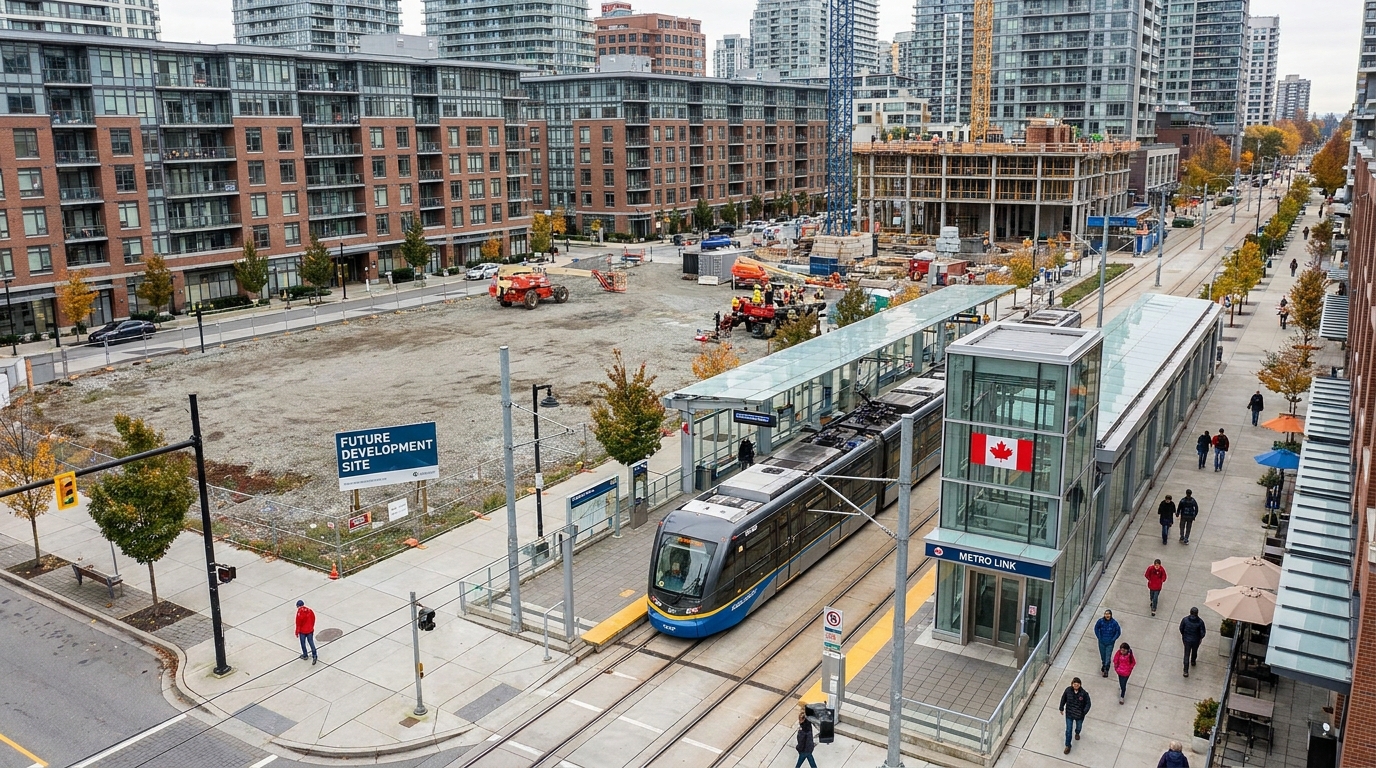
By contrast, infill parcels or already-entitled sites tend to offer lower uncertainty and a shorter route to construction. These sites may cost more per square foot or per buildable unit, but they can reduce the most dangerous part of development risk: the period before any meaningful progress occurs. In urban markets where apartment development and intensification are increasingly important, an infill site near transit or services may produce a stronger risk adjusted return than a cheaper parcel on the edge of the market.
For many new investors, this is the more disciplined entry point. Paying a premium for clarity can make sense when the premium buys speed, certainty, or financing flexibility. In an environment of elevated interest costs and tight execution margins, compressed timelines can be as valuable as lower land basis.
Assemblies, Brownfields, and Excess Density Plays
Some of the best opportunities do not come from buying a single obvious parcel. They come from seeing development potential where others see fragmentation or underuse. A land assembly can create a larger, more efficient development footprint than any one parcel alone. An excess density site may already support one use but hold potential for more units or a different built form. A brownfield can trade at a discount if contamination risk exists, but remediation planning may unlock value for a buyer with the right team and capital structure.
These strategies require sharper underwriting and stronger specialist support, but they illustrate a core principle of modern land investing: the highest value is often created through site optimization, not simply land ownership. As Canadian markets place more emphasis on intensification, missing-middle housing, and transit-oriented growth, the investor’s edge increasingly comes from understanding how policy and physical constraints intersect.
Location Is Still Critical, but the Definition Has Evolved
Location remains the first filter in land acquisition, but experienced investors define it more precisely than simply choosing a good neighbourhood. In development terms, location means demand depth, municipal growth direction, infrastructure readiness, political alignment, rental resilience, and eventual product fit. A site can be located in a desirable region yet still be weak if approvals are unlikely, access is constrained, or servicing upgrades are too expensive.
CMHC’s recent housing supply commentary suggests Canada continues to rely heavily on apartment development, while elevated construction costs have limited the supply of family-sized ownership housing. That market reality should influence site selection. Investors should ask whether a parcel supports the kind of product the local market can absorb and the financing market is willing to back. In many municipalities, the strongest land positions are those close to transit, employment corridors, schools, and established utilities where higher density can be delivered more efficiently.
This is one reason intensification has become such a major theme. A strategically located parcel in an existing urban area may offer better economics than a distant greenfield site because roads, transit, and servicing are already in place or easier to extend. Timing also tends to improve when municipalities prioritize supply within growth corridors. New investors should therefore evaluate location not only by what exists today, but by what planning documents, infrastructure investments, and demographic trends suggest will matter over the next five to ten years.
The Core Due Diligence Framework
Land due diligence is where many inexperienced buyers either protect themselves or expose themselves. A disciplined review should verify what the site is legally, physically, and financially capable of supporting. Ontario’s land registry framework underscores the importance of official records in confirming ownership and legal interests such as mortgages, transfers, leases, and other encumbrances. That is why title review is not a formality. It is the basis for understanding whether the investor can actually exercise the rights they think they are purchasing.
Title, Easements, and Restrictive Covenants
The first layer of diligence is legal. Investors need to confirm ownership, boundary descriptions, access rights, easements, rights of way, liens, mortgages, and restrictive covenants. An easement may allow a utility provider or neighbour to use part of the land. A covenant may limit the type of structure or use that can be built. A title defect may be curable, but curing it can cost time and legal fees. None of these issues are visible by standing on the site, yet all can materially affect value.
Access deserves special attention. A parcel without practical legal access is often far less useful than it appears. Investors should also confirm whether adjacent uses create setbacks, shadow concerns, shared driveway issues, or other development complications. A site can look straightforward on a map yet prove constrained once legal boundaries and adjacent rights are fully understood.
Zoning, Official Plans, and Entitlements
The next layer of diligence is planning analysis. Current zoning may permit only a fraction of the density that the investor has underwritten. The municipality’s official plan may signal support for intensification, but supportive language is not the same as approval. Investors should review zoning by-laws, permitted uses, height limits, setbacks, parking requirements, density measures, and any secondary plans or urban design guidelines that affect the parcel.
This is also where strategic upside can emerge. A site that is modestly underzoned but located in a corridor targeted for growth may offer a realistic rezoning pathway. However, that pathway must be treated as a probability, not a certainty. Sound underwriting applies a timeline, consultant cost, and risk discount to entitlement assumptions. New investors often make the mistake of underwriting best-case density from day one. Prudent investors underwrite what is legally possible today, then model upside separately.
Servicing Capacity and Infrastructure
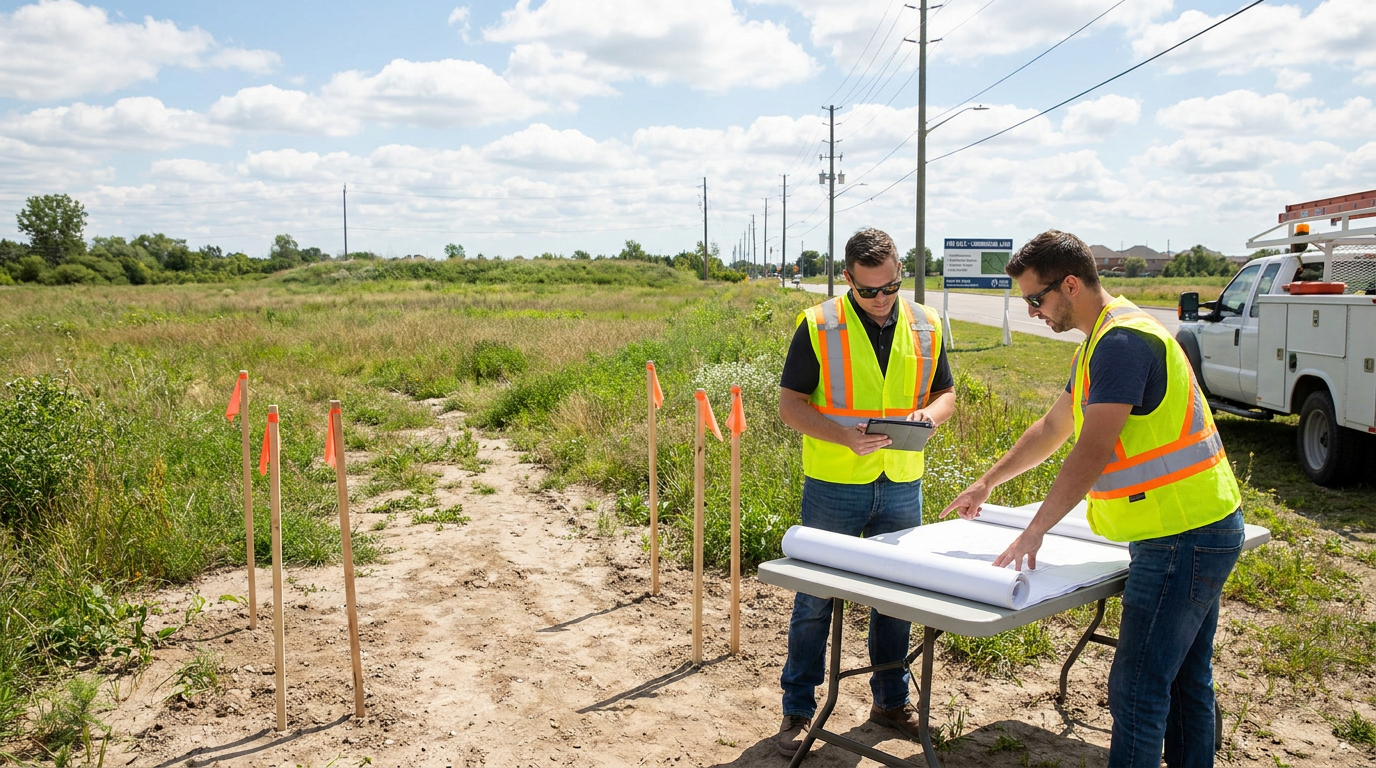
A site’s servicing profile can make or break feasibility. Investors need to understand whether water, sewer, stormwater, power, road access, and other municipal infrastructure can support the intended project. A cheap parcel without adequate servicing can become far more expensive than a pricier site that is fully connected. Utility upgrades, road improvements, or off-site infrastructure contributions can materially alter the project budget.
Servicing is one of the most underestimated risks in land investment because it is technical and easy to overlook in early deal discussions. Yet many development delays and cost overruns trace back to infrastructure limitations. Investors should involve engineers early enough to evaluate whether the intended density is realistic within existing capacity and whether any municipal requirements could delay approvals.
Environmental and Physical Conditions
Environmental site assessments are essential, especially for infill or previously used properties. Contamination, fill issues, groundwater problems, or prior industrial use can trigger remediation costs, lender concerns, and approval delays. A parcel that appears to be a bargain may simply be reflecting hidden environmental complexity. The same applies to floodplain risk, geotechnical conditions, slope stability, and other physical constraints that affect buildability.
Brownfield opportunities can still make sense, but only when the remediation path is understood and priced correctly. Investors should resist the temptation to assume environmental issues will be minor or negotiable later. By the time a problem is discovered after closing, the leverage has disappeared and the buyer owns the risk outright.
The Financial Model: Land Cost Is Only the Beginning
One of the biggest misconceptions in land acquisition is that the purchase price tells you whether the deal is attractive. In reality, land cost is only the first line of the capital stack. The real question is the all-in cost to control, hold, entitle, and prepare the site until it is ready for development or sale. Carrying costs become especially important in higher-rate environments because every month of delay compounds financing pressure.
Investors should build a feasibility model that includes the land price, closing costs, debt service, property taxes, legal fees, planning and engineering costs, consultant reports, municipal application fees, development charges where applicable, insurance, security, and a contingency for timeline slippage. Opportunity cost matters as well. Capital tied up in a stalled land position cannot be used elsewhere.
This is why time sensitivity should be underwritten explicitly. If approvals take six months longer than expected, what happens to the internal rate of return. If interest rates remain elevated, can the project carry the site without distress. If construction pricing softens only marginally but demand weakens, is the exit still acceptable. These are not pessimistic questions. They are the essence of disciplined development underwriting.
Residual Land Value and Backward Pricing
Professional investors often price land backward from what the completed project can support. This approach, commonly called residual land value analysis, starts with expected revenue from the finished development and subtracts construction costs, soft costs, financing, contingency, and target profit. What remains is the maximum land basis the project can absorb. If the seller wants more than that amount, the investor either needs a better strategy, a stronger density case, a lower cost structure, or the discipline to walk away.
For new investors, this is a crucial shift in thinking. Land is not worth what the seller hopes it is worth, or what neighbouring parcels sold for under different conditions. It is worth what a realistic and financeable project can pay for it while still meeting return thresholds. This is especially true when elevated construction costs and slower approvals compress the margin for error.
Taxes and Transaction Costs Can Reshape Returns
Tax treatment is not a side issue in land acquisition. In Canada, it can significantly affect project feasibility from the moment the purchase agreement is signed. Ontario applies land transfer tax to transfers of land, and buyers in Toronto may also face a municipal land transfer tax on top of the provincial amount. For certain purchasers, Ontario’s Non-Resident Speculation Tax can apply at 25 percent on some residential acquisitions involving foreign nationals, foreign corporations, or taxable trustees. These costs can materially change the capital required at closing.
Federal tax considerations also deserve careful attention. CRA guidance explains that GST or HST treatment can affect land purchases, construction, and new housing transactions, while certain rebates may be available only under specific conditions such as primary residence use or qualifying rental structures. Investors should never assume a rebate will apply without confirming the criteria. Misunderstanding GST or HST can distort underwriting, impair cash flow planning, and create unpleasant surprises later in the project.
It is not enough to estimate taxes generally. They need to be mapped to the exact ownership structure, intended use, and location of the transaction. A site acquired in one legal entity may carry different planning or tax implications than the same site acquired in a joint venture or trust structure. For new investors, this is a strong argument for involving tax and legal advisors before the agreement becomes unconditional.
Investor warning: Land transfer tax, GST or HST exposure, and rebate eligibility should be modeled before signing, not discovered during closing.
Financing Strategy and the Cost of Time
Land financing is structurally different from financing stabilized income-producing property. Because vacant or pre-development land does not generate cash flow, lenders often require lower leverage, stronger guarantees, and a clearer business plan. The capital is more speculative, and therefore more expensive. This is one reason land can be riskier than built assets despite the perception that it is simpler. There is no operating income to cushion delays.
Higher interest rates amplify this challenge. CMHC’s forecast on lower housing starts in 2024 reflected the lagged effect of higher rates on construction and development activity. For land investors, that same rate sensitivity shows up in carrying costs and refinancing risk. If the entitlement period extends longer than expected, the project may need additional equity, a loan extension, or a restructuring of the acquisition financing. Each outcome reduces flexibility and can dilute returns.
New investors should therefore match financing to the realistic timeline, not the optimistic one. Conservative leverage, adequate interest reserves, and contingency planning matter. It may be tempting to maximize debt to secure more acreage, but overleveraged land positions can become vulnerable very quickly when approvals slow or capital markets tighten.
Where Opportunity Is Emerging in Today’s Market
Current market trends suggest that modern land strategy is becoming more selective and more operationally focused. The conversation is shifting away from pure greenfield expansion and toward intensification, site optimization, transit-oriented development, and faster construction methods such as modular or prefabricated building. CMHC’s recent materials have highlighted support for prefab and modular construction, reflecting broader interest in reducing delivery time and execution risk. That trend matters because the best land opportunities increasingly align with speed to market.
In practical terms, this means investors should pay close attention to underused sites in established neighbourhoods, municipally influenced land opportunities, transit corridors, and parcels that can support apartment or missing-middle product with fewer infrastructure hurdles. A smaller site with a clear path to approvals may outperform a large speculative parcel if it reaches construction sooner and faces less servicing uncertainty. In today’s market, certainty often has a premium for good reason.
Land assemblies are also worth watching. In urban markets where individual lots are underutilized, assembling adjacent parcels can create enough scale to support a meaningful project. This requires negotiation skill and patience, but it can unlock density and design efficiencies that a standalone parcel cannot. The key is to underwrite the assembly risk honestly. If one owner refuses to sell or demands an unrealistic price, the strategy can break down.
Common Land Acquisition Mistakes New Investors Make
Most land investment mistakes are not caused by a lack of enthusiasm. They are caused by weak underwriting and overconfidence in assumptions that have not been tested. The first major error is believing that land is automatically safer than built property. In reality, land often concentrates the most uncertain elements of a project at the front end, before any rental income or sale proceeds exist. Entitlement, servicing, environmental, and timing risk all arrive early.
The second common mistake is assuming the cheapest parcel is the best deal. Price per acre can be a misleading metric if zoning is restrictive, access is poor, or infrastructure is missing. A more expensive site with stronger entitlements and faster buildability may be the better investment by a wide margin. Capital efficiency depends on total project feasibility, not just entry price.
The third mistake is minimizing approvals and servicing. Many first-time investors treat these as technical details that consultants can resolve later. In fact, they are often central to whether the project works at all. The fourth mistake is ignoring taxes and transaction costs until late in the process. Land transfer tax, GST or HST, legal fees, and potential speculation taxes can materially change required equity and closing economics.
The fifth mistake is underwriting all upside and no friction. If the pro forma depends on perfect rezoning, immediate servicing confirmation, stable rates, lower construction costs, and a premium exit valuation, then the margin of safety is likely too thin. Strong investments are structured to survive inconvenience, not just reward optimism.
A Practical Acquisition Process for New Investors
For investors entering the land space, process discipline matters as much as market insight. The strongest approach is sequential. Start with market selection, then narrow to product type, then identify the specific land characteristics required for that product. This prevents investors from falling in love with a parcel before confirming that the intended use fits local demand and municipal direction.
Once a potential site is identified, complete a preliminary screen before moving too far into negotiation. Review current zoning, official plan policy, basic title information, servicing context, comparable land transactions, and likely end product demand. If the site survives the screen, then move into formal due diligence with legal, planning, environmental, engineering, and tax support.
Underwrite multiple scenarios rather than one. Build a base case using existing permissions, an upside case reflecting a realistic entitlement improvement, and a downside case that assumes delay or cost escalation. If the downside case creates severe capital stress, the acquisition may be too fragile. The goal is not to eliminate all risk. It is to ensure the risk is priced and financed appropriately.
Key Questions to Ask Before You Close
-
What can be built on the site today under current zoning, and what evidence supports any expectation of increased density?
-
What legal encumbrances, easements, access issues, or title defects could affect development or financing?
-
Does existing servicing capacity support the intended project, and what upgrades or off-site costs may be required?
-
What environmental, geotechnical, flood, or physical risks could affect cost, schedule, or lender appetite?
-
How much equity is required not only to buy the land, but also to carry it through approvals and pre-development?
-
What taxes, transfer costs, GST or HST implications, and rebates apply to this exact transaction and ownership structure?
-
If approvals take longer than expected, how does that affect returns, debt coverage, and the viability of the exit strategy?
Building the Right Team Around the Deal
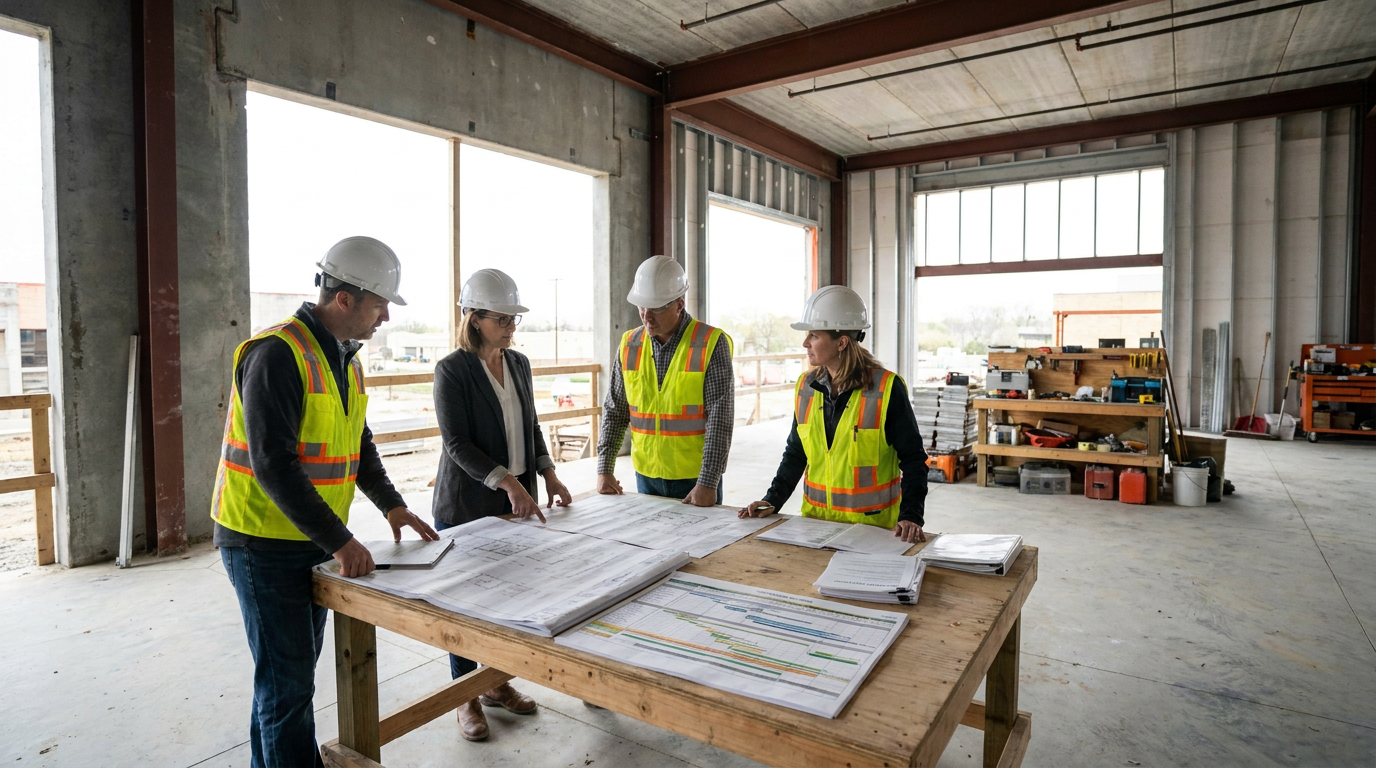
Land acquisition is not a solo exercise, particularly for first-time investors. A good broker can help source opportunities and provide local transaction intelligence, but brokerage insight alone is not enough. Development land requires coordinated input from a real estate lawyer, planner, surveyor, engineer, environmental consultant, tax advisor, and often a lender or mortgage broker experienced in land deals. The cost of assembling this team is small compared with the cost of closing on a flawed site.
One of the most effective habits an investor can develop is asking each advisor to identify the top reasons the project may fail. This creates a more honest diligence process and avoids the common trap of using consultants merely to confirm a preferred narrative. High quality land investing is not about proving the deal works. It is about testing whether it still works after the weak points are exposed.
Final Perspective: Treat Land Acquisition as a Capital Allocation Decision
Mastering land acquisition requires a shift in mindset. The land itself is only part of the investment. What matters more is the pathway from acquisition to value creation. That pathway runs through zoning, infrastructure, approvals, tax planning, financing discipline, and realistic market timing. Investors who understand those variables can uncover compelling opportunities. Investors who ignore them often buy uncertainty at too high a price.
For new real estate investors, the most important lesson is that land should be underwritten with precision, not enthusiasm. CMHC’s research shows raw land remains a leading development strategy in Canada, but that does not mean every raw land purchase is strategic. In a market shaped by supply pressure, elevated construction costs, and sensitivity to rates and timelines, the strongest acquisitions are usually those that combine a clear demand story with a practical delivery story.
That is the real edge in today’s market. Not simply finding land, but finding land where the risks are identifiable, the economics are defensible, and the route to execution is grounded in evidence. If you can evaluate a parcel through that lens, you are not just acquiring property. You are building the foundation of an investment strategy that can endure beyond a single cycle.
- Core takeaway: Buy land based on what it can realistically become, not what you hope it might become.
- Risk discipline: Model taxes, approvals, servicing, and carrying costs before committing capital.
- Strategic focus: In many Canadian markets, infill, intensification, and transit-oriented sites offer stronger risk adjusted potential than purely speculative greenfield positions.


No Comment! Be the first one.