


A Complete Guide to Caring for Your Leather Furniture
Leather furniture has a rare quality in the home. It feels substantial yet graceful, luxurious yet inviting, polished yet deeply livable. A leather sofa, armchair, or bench can anchor a room with warmth and refinement in a way few materials can. Its surface catches light beautifully, its texture adds richness to a space, and over time it can develop a character that feels uniquely personal. Yet this elegance does not remain untouched by daily life. Dust settles, sunlight fades, indoor air dries, and accidental spills happen even in the most carefully kept interiors.
Table Of Content
- Why Leather Care Matters in a Beautiful Home
- Start by Identifying Your Leather Type
- Your Beginner Leather Care Routine
- A simple starter routine for most finished leather furniture
- How to Clean Leather Furniture Safely
- Products and methods to avoid
- What to Do About Spills and Stains
- Conditioning Leather Without Overdoing It
- The Role of Sunlight, Heat, and Humidity
- A Seasonal Care Schedule for Beginners
- A practical yearly rhythm
- Common Mistakes That Damage Leather
- When to Call a Professional
- Leather Care and Everyday Living
- Your Leather Care Checklist
- Final Thoughts
The good news is that leather care is far less intimidating than many first-time owners imagine. Caring for leather furniture is not about constant polishing or complicated restoration techniques. In most homes, it is simply a matter of gentle routines, sensible product choices, and a little environmental awareness. When approached correctly, these habits help preserve color, softness, and structure so your furniture continues to look composed rather than tired. In other words, maintenance is not a chore that diminishes the pleasure of leather. It is the quiet practice that protects its beauty.
For beginners, the most important thing to understand is that not all leather behaves the same way. A sleek protected leather sectional will respond differently to care than an aniline chair with a more natural, open finish. Nubuck and suede have their own sensitivities, while full-grain and top-grain options are generally more resilient for everyday use. Once you recognize what kind of leather you have, the path becomes much clearer. The right routine does not need to be elaborate. It simply needs to suit the material in front of you.
This guide will walk you through every essential step, from identifying leather type to weekly upkeep, spot cleaning, conditioning, and managing the room itself. If you have ever wondered how often to condition, whether household cleaners are safe, or why winter air seems to affect your sofa, you will find practical answers here. Above all, this is a guide to helping leather age beautifully. With thoughtful care, it can remain one of the most enduringly elegant elements in your home.
Think of leather care as preservation, not perfection. Small, regular habits do more for long-term beauty than occasional aggressive cleaning.
Why Leather Care Matters in a Beautiful Home
Leather is often chosen because it instantly elevates a room. It introduces depth, softness, and a kind of visual confidence that works across many interior styles, from classic and traditional rooms to modern, tailored spaces. Unlike some fabrics that flatten the visual palette, leather has dimension. It reflects light in subtle ways, reveals grain and movement, and creates a sense of permanence. This is precisely why neglect becomes so visible. When leather dries out, fades unevenly, or collects grime in its seams, the entire room can feel less considered.
Well-kept leather supports the broader elegance of an interior. It retains a gentle sheen rather than looking greasy or dull. It feels supple rather than rigid. It sits within a room with the same quiet assurance it had when it first arrived. For homeowners who value a refined environment, this matters because furniture is never just functional. It shapes atmosphere. Maintaining leather properly helps the room continue to feel warm, intentional, and well-composed.
There is also a practical reason to care for it. Leather furniture is often a meaningful investment, and routine maintenance helps protect not only its appearance but also its lifespan and resale value. Durability is one of leather’s strongest qualities, but durability does not mean invulnerability. Even a sturdy top-grain sofa benefits from dusting, prompt spill care, and occasional conditioning. Neglect does not always show immediately, but over the years it can lead to dryness, surface wear, and preventable cracking.
In a time when many homeowners are thinking more carefully about sustainability and longevity, leather care also fits beautifully into a more responsible way of living. Extending the life of a well-made piece reduces the need for premature replacement. It allows the furniture to mature with the home instead of cycling out too soon. Proper care becomes an act of design stewardship, one that protects both beauty and utility.
Start by Identifying Your Leather Type
The first and most important rule of leather care is simple. Do not treat all leather the same way. Different finishes absorb moisture differently, show marks differently, and tolerate products differently. Before you use a cleaner or conditioner, look for the manufacturer’s care label or product information. If you no longer have it, check the retailer’s website or contact the brand directly. This small step can prevent a great deal of accidental damage.
Full-grain leather is considered one of the most durable and natural-looking choices. It retains the outermost layer of the hide and often displays a rich grain and natural markings. Top-grain leather is also durable, though it is typically sanded or refined for a more uniform finish. Both are common in quality furniture and are generally suitable for straightforward routine care. They still need maintenance, but they usually handle everyday life with more ease than delicate open-finish leathers.
Aniline leather has a more natural appearance because it is dyed without a heavy surface coating. This gives it exceptional depth and softness, but also makes it more vulnerable to staining, fading, and moisture imbalance. Semi-aniline leather has a light protective layer, making it slightly easier to care for while still preserving much of the natural look. If your furniture has a soft, richly nuanced finish that marks easily, it may fall into one of these categories. These leathers reward careful ownership, but they do ask for greater gentleness.
Nubuck and suede require even more caution. Their brushed surfaces have a velvety look and touch, but they are more susceptible to staining and should not be cleaned like smooth finished leather. These materials often need specialized products and techniques. For beginners, this is where reading the maker’s instructions becomes especially important. If there is any uncertainty, it is wiser to pause than to improvise.
Your Beginner Leather Care Routine
The most effective leather maintenance routine is gentle, regular, and uncomplicated. You do not need a cabinet full of products or a long monthly ritual. What leather responds to best is consistency. A little attention each week prevents grime from building up and keeps the material looking fresh without the need for aggressive intervention later.
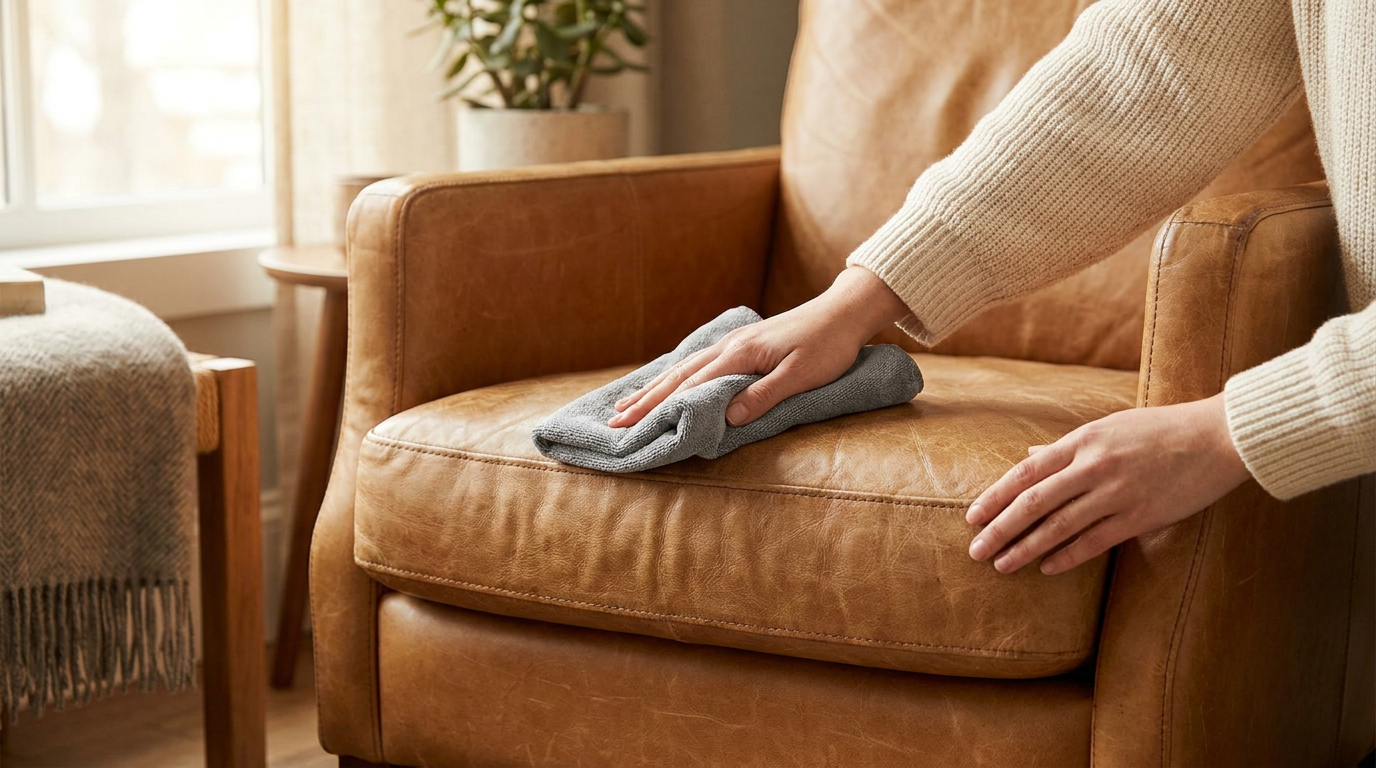
Start with weekly dusting. Use a soft, dry microfiber cloth to wipe the surface lightly, paying attention to arms, seat cushions, and headrest areas where oils from skin can accumulate. If the furniture has seams, tufting, or crevices, use a vacuum with a soft brush attachment on a low setting to remove dust without scratching the surface. This simple practice keeps particles from settling into the grain and dulling the finish over time.
Spills should be addressed immediately. The key word is blot, not rub. Use a clean, absorbent cloth to lift as much liquid as possible, working gently so the spill does not spread further into the leather. For many small incidents, this alone is enough. If additional cleaning is required, use only a lightly damp cloth or a manufacturer-approved leather cleaner, and always dry the area with a separate soft cloth afterward.
Beyond weekly upkeep, plan on occasional deeper cleaning and conditioning according to the leather type and the manufacturer’s instructions. Many finished leathers benefit from conditioning once or twice a year. More is not better. Over-conditioning can leave residue, alter the appearance, or attract more dirt. The goal is balance. You want leather that feels supple and healthy, not saturated.
A simple starter routine for most finished leather furniture
- Dust weekly with a soft microfiber cloth.
- Vacuum seams and creases gently with a brush attachment every one to two weeks.
- Blot spills immediately with a dry cloth.
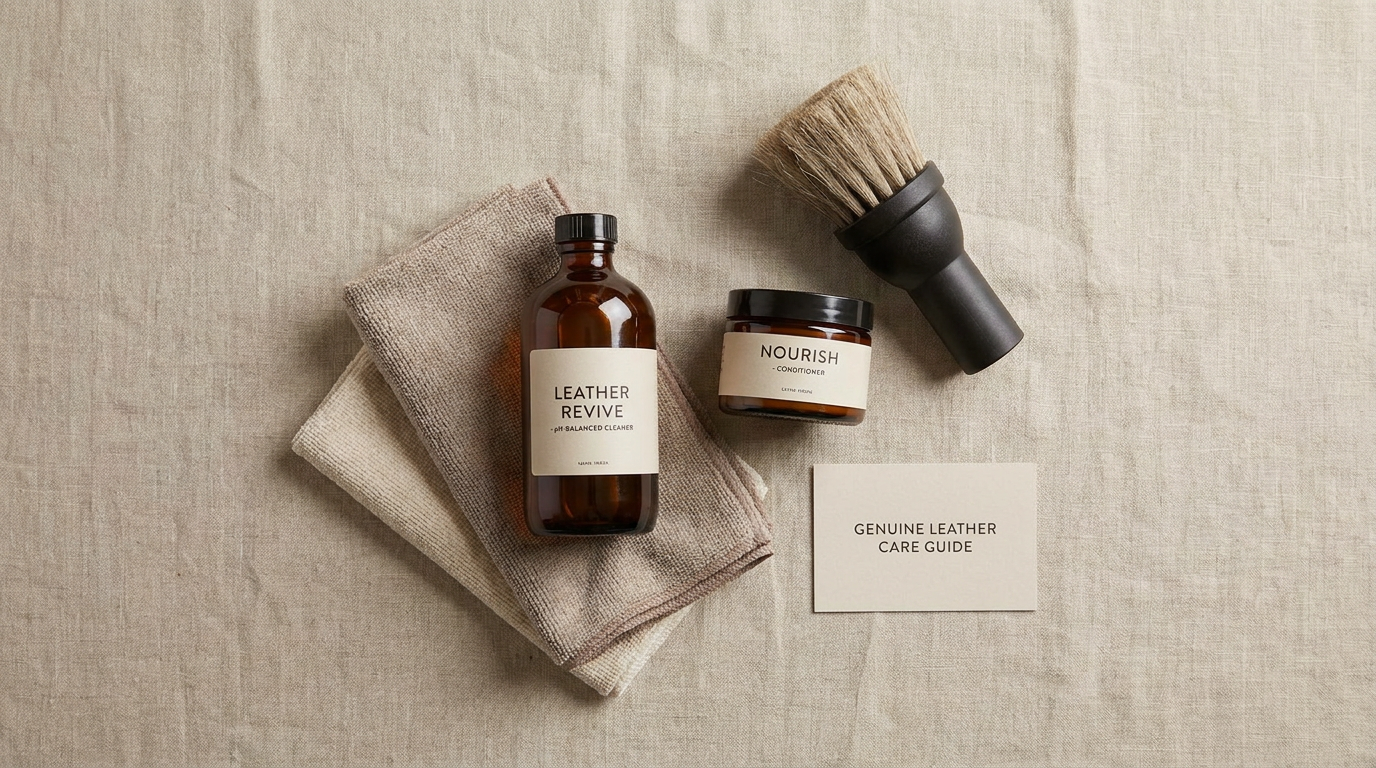
- Clean with a pH-balanced leather cleaner when the surface looks dull or lightly soiled.
- Condition once or twice a year if the manufacturer recommends it.
- Keep the piece away from direct sun, heaters, and strong airflow from vents.
How to Clean Leather Furniture Safely
Cleaning leather successfully is less about force and more about restraint. Many problems begin when people assume a stain needs strong chemicals or vigorous scrubbing. In reality, harsh treatment can strip away protective finishes, lift color, and leave the leather stiffer than before. A calm, measured approach is nearly always the safer one.
For regular cleaning, begin by removing dust and loose debris. Then apply a leather-appropriate, pH-balanced cleaner to a soft cloth rather than directly onto the furniture, unless the product instructions say otherwise. Work in small sections using light circular or sweeping motions. Avoid soaking the surface. Leather and excess water are not natural companions, and over-wetting is one of the easiest mistakes to make. After cleaning, wipe away any remaining product with a clean cloth and allow the piece to dry naturally.
If you are tempted to reach for household products, pause. Consumer and manufacturer guidance consistently warns against bleach, ammonia, acetone, window cleaners, alcohol-based products, and other harsh cleaners. These substances may seem effective in the moment, but they can damage the finish, remove protective oils, and cause discoloration. Even some disinfecting wipes and all-purpose sprays can be too aggressive for leather. The elegant surface you are trying to protect can be altered surprisingly quickly by the wrong formula.
Testing products before full use is essential. Choose an inconspicuous area, such as the back or underside of a cushion, and apply a small amount. Wait to see whether the color changes, the sheen shifts, or any residue remains. If the leather darkens unevenly or the finish becomes tacky, stop immediately. This small patch test is one of the simplest ways to avoid a much larger problem.
Products and methods to avoid
- Bleach and bleach-based sprays
- Ammonia-based household cleaners
- Acetone or solvent-based removers
- Alcohol-heavy products and disinfectants
- Window cleaners and glass sprays
- Hard brushes, abrasive sponges, and aggressive scrubbing
- Over-wetting with water
What to Do About Spills and Stains
Spills are a reality of daily living, and leather’s reputation for practicality is well deserved, but only when the response is swift and gentle. A fresh spill is almost always easier to manage than a dried or rubbed-in stain. The first movement should be calm and immediate. Reach for a clean cloth and blot the liquid softly, pressing enough to absorb but not enough to spread. If the spill is oily or richly colored, resist the urge to scrub harder. Friction often makes the mark worse.
For minor water-based spills on finished leather, a lightly damp cloth may help remove residue after blotting. Follow with a dry cloth so moisture does not linger on the surface. If the manufacturer allows it, a very mild soap solution may be acceptable for some protected leathers, but this should never be assumed. Test first in a discreet area and stop if the color lifts or the finish changes. Open-finish leathers such as aniline may react quite differently from more protected surfaces.
Tougher stains require judgment. Ink, grease, dye transfer from clothing, and pet accidents can become difficult quickly. In these moments, more product is rarely the answer. If a stain persists after the gentlest approved method, the safest path is often professional attention. This is especially true for valuable pieces, pale leather, vintage furniture, or any surface already showing wear. Early professional help can preserve the finish that repeated home attempts might destroy.
Water damage and mold are also reasons to bring in an expert. If a piece has been over-wetted or exposed to high humidity and poor air circulation, the issue may go deeper than a visible spot on the surface. Leather is a natural material, and once it has absorbed too much moisture, improper drying methods can lead to stiffness, discoloration, or microbial growth. If you notice odor, fuzzy patches, or an expanding stain, it is time to stop DIY efforts and seek professional care.
Conditioning Leather Without Overdoing It
Conditioning is the step most associated with leather care, yet it is also the one most misunderstood. Many people imagine that leather needs frequent heavy treatments to stay soft, but too much conditioner can be just as problematic as too little. Excess product may leave a sticky feel, darken the surface unevenly, or build up in a way that attracts more dust and dirt. Conditioning should be thoughtful and restrained.
For many furniture pieces, conditioning once or twice a year is enough, though manufacturer guidance should always lead. High-use seating in dry homes may need attention on the earlier side of that range, while some protected leathers need less. The goal is to support suppleness and reduce the risk of drying, cracking, and fading, not to saturate the hide. If the leather still feels balanced and looks healthy, there is no need to condition simply because a calendar suggests it.
Apply conditioner to clean leather only. Using it on a dirty surface can seal in grime and leave the piece looking cloudy rather than refreshed. As with cleaners, apply a small amount to a soft cloth and work it gently across the surface in thin, even layers. Then allow the product to absorb according to the instructions before buffing lightly with a dry cloth if recommended. Patience creates a more elegant finish than haste.
Some leather types may require highly specific conditioners, while others should not be conditioned in the traditional sense at all. Nubuck and suede, for example, often call for specialized care rather than standard conditioning creams. This is one more reason identification matters. When in doubt, less intervention is usually safer than experimenting with a generic product.
Conditioning should restore balance, not create shine for its own sake. Healthy leather feels supple and looks naturally rich, never slick or overworked.
The Role of Sunlight, Heat, and Humidity
Leather care is not only about what you put on the furniture. It is also about the room around it. Environmental conditions shape how leather ages, and this is especially important in homes that experience strong seasonal shifts. Dry heated interiors in winter can pull moisture from leather, leaving it less supple and more vulnerable to cracking. Intense sunlight can fade color and dry the surface unevenly. Heat from radiators and vents can quietly accelerate the same process.
Indoor humidity plays a particularly important role. Guidance for home environments commonly recommends keeping relative humidity below 60 percent, ideally between 30 and 50 percent. This range helps reduce mold risk while also supporting comfort for many natural materials. If the air becomes too dry, leather can embrittle over time. If humidity climbs too high and air circulation is poor, mold becomes a concern. For homeowners in Canada and northern North America, where winter dryness can be pronounced, this balance is especially relevant.
If your home becomes very dry in colder months, a humidifier may help, but it should be used thoughtfully and maintained properly. You are aiming for a stable environment, not excessive moisture. A simple hygrometer can help monitor the room so you avoid moving from one extreme to another. Leather responds best to moderation. Consistency in the room often makes as much difference as any product applied to the surface.
Furniture placement matters too. Try to keep leather away from direct sun through south-facing windows, and use curtains or sheer panels to soften strong daylight. Leave distance between the furniture and radiators, fireplaces, and heating vents when possible. These quiet spatial decisions protect the material while preserving the composed look of the room.

A Seasonal Care Schedule for Beginners
Many homeowners find leather care easier when it is tied to the rhythm of the year. Rather than wondering constantly whether the furniture needs attention, a seasonal approach creates a graceful routine. It also helps you account for changes in climate, indoor heating, and usage patterns. A sofa that sits comfortably through spring may feel different by late winter after months of dry indoor air.
In spring, take the opportunity to vacuum seams thoroughly, wipe down the surface, and assess the condition of the leather in clearer daylight. Look for any changes in tone, dryness, or minor marks that developed over winter. Summer is a good time to pay attention to sunlight exposure, especially if seasonal brightness reaches the furniture more directly. Adjust curtains or the furniture layout if needed. Autumn can be a useful moment for conditioning if your manufacturer recommends an annual treatment before heating season begins.
Winter is when environmental vigilance becomes especially important in colder climates. Indoor heating can reduce humidity significantly, and leather may begin to feel firmer or look duller if the air is too dry. This is the season to monitor room conditions with more care and to ensure furniture is not too close to heat sources. Small adjustments now can help prevent long-term stress on the material.
A practical yearly rhythm
- Weekly: Dust with a soft cloth and check for fresh spills or marks.
- Monthly: Vacuum creases and inspect high-contact areas like arms and headrests.
- Every season: Review furniture placement, sun exposure, and room humidity.
- Once or twice a year: Deep clean and condition if recommended for your leather type.
Common Mistakes That Damage Leather
Most leather damage in homes does not come from dramatic accidents. It comes from well-meaning habits repeated over time. One of the most common misconceptions is that leather needs no care because it is durable. Durability is real, but it does not cancel out the effects of dust, body oils, dryness, sunlight, and friction. A neglected leather sofa may last structurally for years while still losing much of its beauty.
Another frequent mistake is assuming all leather can be cleaned in the same way. This is particularly risky with aniline, nubuck, and suede. A cleaner or conditioner that works well on protected leather may stain or alter a more delicate finish. Skipping product labels and care instructions often leads to unnecessary damage. The material may seem resilient enough to handle experimentation, but finishes are more complex than they appear.
Over-cleaning and over-conditioning also deserve caution. Leather does not improve through constant product application. Too much moisture, too many treatments, and too much rubbing can flatten the finish and interfere with its natural texture. Similarly, using household disinfectants, glass sprays, or stain removers often causes more harm than the original mark. Leather responds best to gentleness, patience, and compatibility.
Placement mistakes are easy to overlook as well. A beautiful chair by a sunny window may seem ideal visually, but direct exposure can fade and dry the leather month after month. A sofa pushed against a radiator may feel cozy in winter while the material quietly loses moisture. Good care is as much about thoughtful interior planning as it is about cleaning technique.
When to Call a Professional
There is wisdom in knowing when home care should end. If your furniture has a persistent stain that does not respond to approved gentle methods, professional treatment is often the safer investment. This is especially true with pale leather, antique or designer pieces, and open-finish surfaces such as aniline. A trained specialist can identify whether the issue lies in the surface finish, absorbed moisture, transferred dye, or something more complex.
Cracking, peeling, widespread dryness, mold, and water damage are also situations better handled by professionals. Attempting to correct these issues with heavy product use or internet remedies can make restoration far more difficult. Leather restoration may involve targeted cleaning, rehydration, recoloring, or repair techniques that should be approached with technical skill. What looks like a simple cosmetic flaw may in fact be a finish problem that requires precision.
Professional help is not a sign that you failed at maintenance. Quite the opposite. It is often the most careful choice when a piece is valuable or particularly sensitive. Good homeowners understand the difference between routine care and restoration. The first can and should happen regularly at home. The second belongs in experienced hands when the situation calls for it.
Leather Care and Everyday Living
One of the loveliest qualities of leather is that it can accommodate real life while still feeling elegant. It can exist in family rooms, reading corners, open-plan living spaces, and formal sitting rooms alike. Caring for it does not require preserving it behind glass. It simply asks that daily living be met with intelligent habits. A throw blanket in a favorite seat can reduce wear. Cushion rotation can distribute use more evenly. Quick attention to spills can prevent deeper problems. These are subtle acts, but they are surprisingly powerful over time.
If you live with children or pets, leather can still be a highly practical choice, though a few precautions help. Keep pet nails trimmed to reduce scratching risk, and try not to let muddy paws or damp coats rest on the furniture for long. Be mindful of heavily dyed textiles that may transfer onto pale leather. None of this means leather is too precious to use. It simply means the material rewards attentiveness.
There is also an emotional pleasure in well-maintained natural materials. Leather that has been cared for properly does not look sterile. It looks alive, settled, and mature. It becomes more personal as it develops character, yet it avoids the neglected appearance that can make a room feel tired. This is why leather remains so beloved in thoughtful interiors. It ages, but with care, it ages beautifully.
Your Leather Care Checklist
If you are just beginning, keep the process simple. Start by identifying your leather type and finding any maker instructions available. Build a weekly habit of dusting and a reflex of immediate spill blotting. Use only pH-balanced, leather-appropriate products, and test them discreetly first. Condition only as needed and only with a suitable formula. Finally, pay attention to the environment around the furniture, especially sunlight, heat, and indoor humidity.
- Identify the leather type before using any product.
- Dust weekly with a soft cloth.
- Vacuum creases gently with a brush attachment.
- Blot spills immediately rather than rubbing them.
- Use a pH-balanced leather cleaner when needed.
- Avoid bleach, ammonia, acetone, alcohol-based cleaners, and harsh scrubbing.
- Condition once or twice a year if the manufacturer advises it.
- Keep indoor humidity ideally between 30 and 50 percent and below 60 percent.
- Protect the furniture from direct sun, radiators, and heating vents.
- Call a professional for mold, water damage, or persistent stains.
Final Thoughts
Leather furniture has an enduring place in beautiful interiors because it offers a rare combination of sophistication and comfort. It grounds a room, enriches a palette, and carries a sense of permanence that feels both luxurious and welcoming. Yet the true secret of its longevity is not mystery or expense. It is care that is gentle, informed, and consistent. When you understand the leather type, avoid harsh shortcuts, and protect the piece from environmental stress, maintenance becomes remarkably approachable.
For beginners, this should feel reassuring. You do not need to become a restoration specialist to keep your furniture looking elegant. You need a soft cloth, a thoughtful routine, compatible products, and a little awareness of the room itself. These modest habits preserve not only the material but also the atmosphere it helps create. Leather cared for well does more than last. It continues to bring depth, warmth, and refined character to the home year after year.
In the end, caring for leather is much like caring for any timeless design element. It asks for respect, not fuss. And that may be its most graceful quality of all.



No Comment! Be the first one.