


Maximize Your Space: A Step-by-Step Guide to Pantry Organization That Looks Beautiful and Works Better
There is something deeply comforting about opening a pantry and instantly finding what you need. It sets the tone for the entire kitchen. Dinner feels easier to start, grocery planning feels less stressful, and the room itself seems calmer. Pantry organization is often treated as a visual project, but in daily life, it is really about creating a space that supports the way you cook, shop, and live.
Table Of Content
- Why Pantry Organization Matters More Than You Think
- Step 1: Empty Everything and Start with a Clean Reset
- What to discard and what to keep
- Step 2: Measure Before You Buy Anything
- Step 3: Create Zones That Match Your Real Cooking Routine
- Smart pantry zones to consider
- Step 4: Choose Storage Tools That Solve Problems, Not Just Add Style
- How to choose a pantry style that suits your home
- Step 5: Organize for Visibility, Reach, and Food Safety
- Step 6: Use First-In, First-Out Rotation to Reduce Waste
- Simple ways to make rotation easy
- Step 7: Label Just Enough to Make the System Clear
- Step 8: Make It Beautiful in a Way You Can Maintain
- Pantry Organization for Small Spaces and Rentals
- Common Pantry Organization Mistakes to Avoid
- How Pantry Organization Supports Meal Planning and a Calmer Home
- A Simple Maintenance Routine That Keeps the Pantry Working
- Final Thoughts: Create a Pantry That Feels Good to Live With
A well-organized pantry does much more than look tidy on social media. It can speed up meal prep, reduce duplicate purchases, help you use ingredients before they go stale, and create a kitchen that feels more harmonious with the rest of your home. When ingredients are visible and grouped in a way that makes sense, your routine becomes lighter. Instead of searching through crowded shelves or wondering whether you already have pasta, rice, or canned tomatoes, you can move through the kitchen with more ease and confidence.
It also matters financially. In the United States, the Environmental Protection Agency estimates that more than one-third of food is never eaten, and that wasted food costs a household of four an average of $2,913 per year. In Canada, food remains one of the largest household expenses, with Statistics Canada reporting average household food spending of $12,046 in 2023. A pantry that helps you see what you have, rotate older items forward, and shop with more intention can quietly support your budget every single week.
Good pantry organization is also part of a healthy home. Food safety guidance recommends storing shelf-stable food in a cool, dry, dark place, away from moisture, heat sources, pests, and chemicals. That means your pantry should not only be pretty, but also practical in where and how food is stored. If your shelves sit beside a hot oven or a sunny window, or if deep corners tend to trap forgotten food, a few thoughtful changes can make a real difference.
This guide will walk you through the process step by step. The goal is not perfection, and it is not about buying an entirely new set of matching containers. The goal is to create a pantry system that feels easy to maintain, works for homeowners and renters, and blends beautifully with the atmosphere of your kitchen and home.
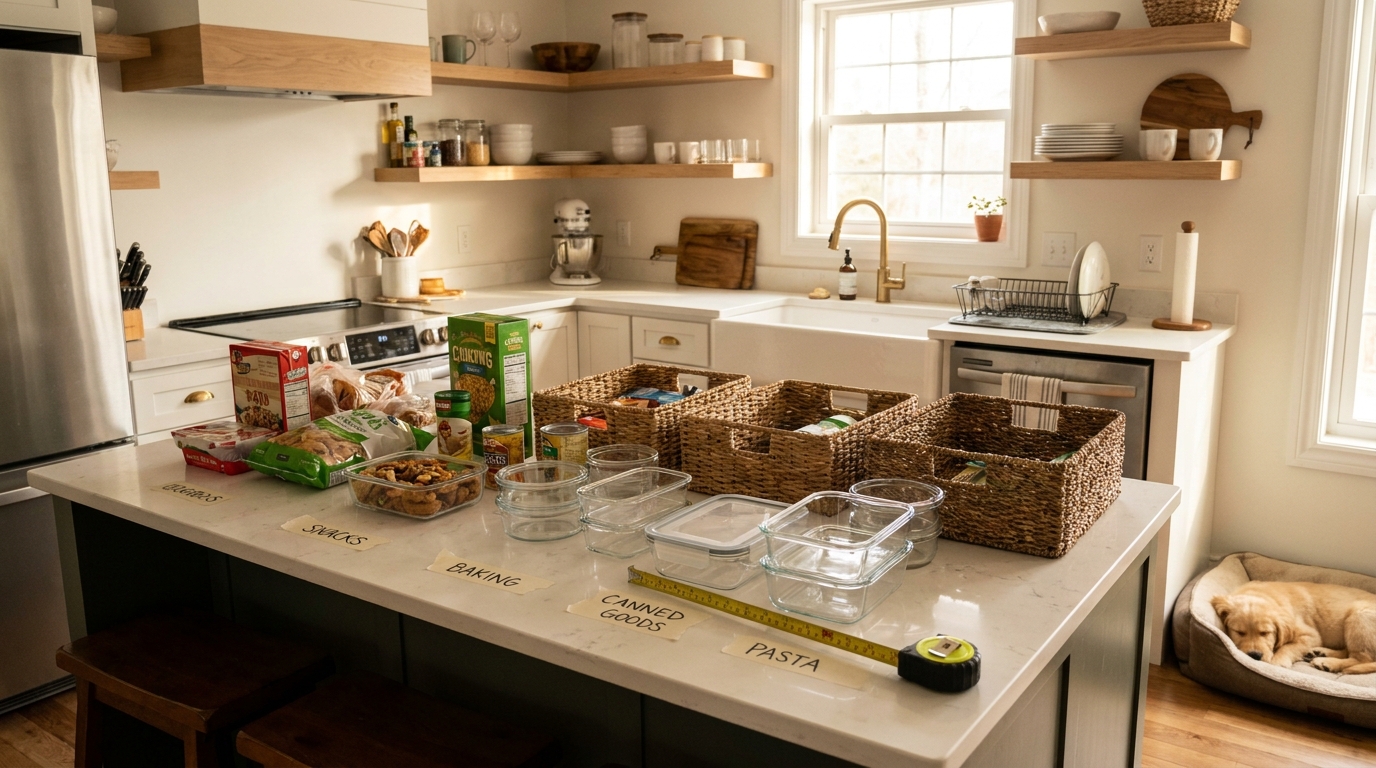
Why Pantry Organization Matters More Than You Think
When people imagine an organized pantry, they often picture rows of matching jars and carefully placed labels. That look can be lovely, but the real value of pantry organization is the feeling it creates in everyday life. It allows your kitchen to function with less friction. The breakfast rush feels simpler, weeknight dinners come together faster, and grocery lists become more accurate because you can quickly assess what is already on hand.
An organized pantry also supports emotional ease. Clutter in food storage areas has a way of creating quiet stress because it affects so many daily tasks. If you feel overwhelmed every time you reach for cereal, snacks, spices, or baking supplies, that disorganization can subtly shape your whole experience of being at home. Creating order in the pantry often has an outsized impact because it improves a routine you repeat several times a day.
There is also a strong connection between pantry visibility and waste reduction. Forgotten ingredients hidden at the back of a shelf are far more likely to expire in quality, get replaced unnecessarily, or be thrown away. A pantry that makes food visible can encourage better meal planning and more consistent cooking. It gently reminds you what you have and helps you use it while it is still at its best.
A beautiful pantry should not just impress at a glance. It should make your mornings smoother, your dinners easier, and your home feel calmer every time you open the door.
Step 1: Empty Everything and Start with a Clean Reset
The most effective way to organize a pantry is to begin with a complete reset. Take everything out, even if that feels inconvenient for an hour or two. This is the moment when the true shape of the problem becomes visible. You can see duplicates, expired items, half-used bags, and categories that never had a proper home. Trying to organize around existing clutter usually leads to a system that looks better at first but still fails in practice.
As you empty the shelves, place items into broad groups on a table or kitchen counter. Keep breakfast foods together, gather baking supplies, group grains and pasta, collect canned goods, and separate snacks, sauces, oils, and specialty items. Do not worry yet about containers or labels. This stage is simply about visibility and honesty. You are learning what your household actually stores and uses.
Once the shelves are bare, wipe them down thoroughly. Crumbs, dust, sticky residue, and old spills can attract pests and make a space feel stale. If possible, vacuum corners and shelf seams. If your pantry tends to be humid or warm, this is a good moment to assess whether airflow, lighting, or shelf liners would help.
As you sort, be realistic about what belongs in your pantry and what does not. Pantry goods should be shelf-stable and suited to a cool, dry, dark storage area. Foods stored near heat, direct sunlight, or moisture may lose quality faster. If you have food items currently tucked beside the stove or above a toaster oven because space is limited, consider whether another cabinet, a utility cart, or a secondary storage area would be safer and more practical.
What to discard and what to keep
This part can feel confusing because many people assume any date on a package means immediate disposal. In reality, many “best by” or “best before” dates relate to quality rather than absolute safety. Storage conditions matter greatly, and shelf-stable foods often last well when packaging is intact and the pantry is properly maintained. Rather than throwing things out automatically, check the condition of the package, the smell, the texture, and whether the item has been stored appropriately.
At the same time, do not keep items out of guilt if they are clearly stale, damaged, infested, leaking, or something your household simply will not use. A pantry should reflect your real habits, not your idealized self. If you never bake elaborate desserts, you may not need a large zone devoted to specialty baking decorations. If your family goes through oatmeal, crackers, rice, and canned beans constantly, those deserve accessible space.
Step 2: Measure Before You Buy Anything
One of the biggest pantry organization mistakes is shopping for bins and containers before understanding the space. Beautiful storage products can absolutely help, but buying them too early often leads to wasted money and awkward layouts. Before you purchase a single organizer, measure your shelves, the depth of your pantry, the height between each shelf, and the width of the door if you plan to use over-the-door storage.
Measurement-first planning is especially important in smaller homes, condos, apartments, and rentals, where every inch matters. A shelf riser that looks perfect online may block visibility in a shallow cabinet. A set of square containers may waste vertical space if your shelf heights are inconsistent. Pull-out bins may not fit if your pantry door clearance is limited. These details are easy to miss until you are trying to force products into a space that was never suited to them.
Take notes on how the pantry currently functions. Which shelves are easiest to reach. Which corners tend to become dead zones. Whether you have deep shelves that hide food in the back. Whether kids need access to their own snack area. Whether the pantry also has to hold paper goods, lunch supplies, pet items, or overflow cooking tools. A good organization plan respects these realities instead of pretending every pantry is a perfectly shaped walk-in closet.
Step 3: Create Zones That Match Your Real Cooking Routine
After decluttering and measuring, the most transformative step is zoning. Zoning means grouping food by function so the pantry works with your routine instead of against it. This is where efficiency and atmosphere come together. A zoned pantry looks calmer because similar items are stored together, and it feels calmer because your brain no longer has to scan every shelf to locate one thing.
The right categories depend on your household, but most pantries benefit from broad zones based on use. Think breakfast, lunchbox items, snacks, baking, pasta and grains, canned goods, sauces and condiments, oils and vinegars, quick dinners, and occasional or seasonal items. If you meal plan weekly, you may even create a small “use soon” section for ingredients you want to prioritize before shopping again.
Within each zone, place the most-used items at eye level or just below. This principle is simple but powerful. If the foods you reach for every day are visible and easy to grab, the pantry immediately becomes more efficient. Lesser-used or heavier items can go on higher or lower shelves, while children’s items can be placed where they can access them safely and independently.
Deep shelves benefit from a front-and-back logic. Put frequently used products in front and backstock behind them, or use bins so categories can be pulled out in one motion. If you have a cabinet-style pantry rather than open shelves, pull-out organizers and baskets can make a dramatic difference because they bring the hidden area to you instead of forcing you to bend and search.
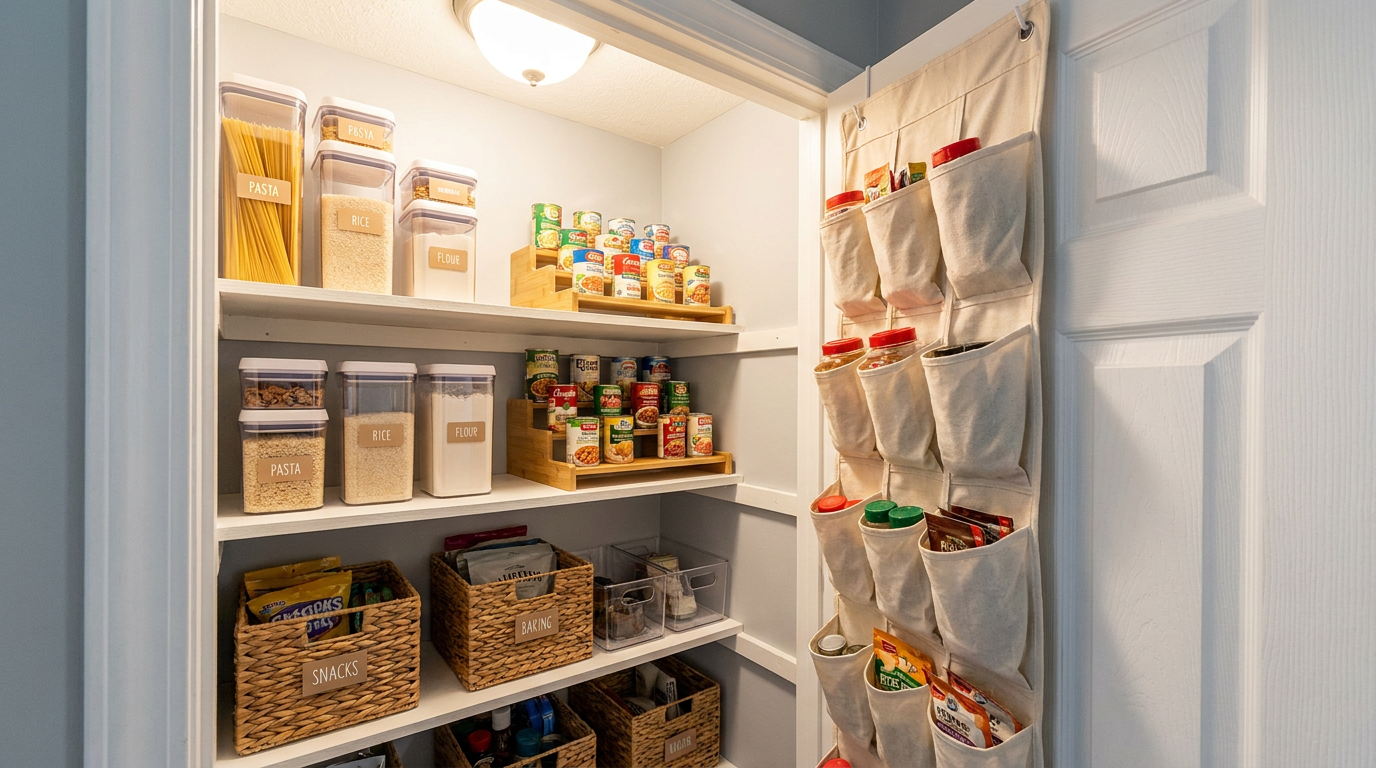
Smart pantry zones to consider
- Daily staples zone for cereal, bread alternatives, coffee, tea, oats, peanut butter, and foods used almost every day.
- Meal prep zone for pasta, rice, grains, canned tomatoes, broths, beans, and quick dinner basics.
- Baking zone for flour, sugar, leavening agents, chocolate chips, extracts, and decorating supplies.
- Snack zone for bars, crackers, chips, dried fruit, and lunchbox items, ideally grouped in baskets or bins.
- Specialty zone for holiday items, entertaining ingredients, bulk refills, or foods you use less often.
These zones do not need to be rigid. The point is to create broad visual order so your household can quickly understand where things belong. The simpler the logic, the more likely the system is to last.
Step 4: Choose Storage Tools That Solve Problems, Not Just Add Style
Once your zones are clear, you can choose storage tools with purpose. This is where many people get tempted by the idea that every item must be decanted into matching containers. In reality, an organized pantry can include a thoughtful mix of clear bins, jars, original packaging, baskets, risers, and turntables. The best system is the one your household can realistically maintain.
Clear containers are helpful for dry staples like flour, sugar, rice, oats, pasta, cereal, and snacks that tend to flop over in opened bags. They make quantities visible and can protect food from moisture and pests when properly sealed. But not everything needs to be decanted. Some items are perfectly fine in original packaging, especially if they are used quickly or stored inside a category bin.
Bins and baskets are especially useful for irregular packaging. Think granola bars, pouches, seasoning packets, specialty sauces, popcorn bags, or baking accessories. Rather than trying to make these items behave individually, let a basket hold the category. This instantly reduces visual clutter and creates a much easier reset after grocery shopping.
Shelf risers and tiered organizers are wonderful in shorter pantries because they improve visibility for canned goods, jars, and spices. Stackable solutions can make vertical space more useful without permanently altering the pantry. For renters, this is ideal because you can create a more customized system without installing built-ins or making structural changes.
Over-the-door storage is another rental-friendly hero. It can hold snacks, spices, wraps, baking supplies, or small jars in a way that frees up shelf space inside the pantry itself. If you live in a compact urban home, using the back of the pantry door may be the difference between constant crowding and a pantry that finally breathes.
How to choose a pantry style that suits your home
A pantry should feel connected to your kitchen, not like a separate utility closet with a completely different personality. If your home leans warm and natural, clear containers with wooden lids, woven baskets, and soft neutral labels may feel right. If your kitchen is more modern and crisp, you might prefer white bins, clean black lettering, and modular stackable containers. The details matter because visual harmony makes the pantry feel like part of the home’s atmosphere.
Still, style should always support function. Labels should be easy to read. Containers should open without frustration. Baskets should fit the shelf depth properly. A pantry is successful when it invites consistency. If your system is too fussy, too heavy, or too precious, it may look beautiful for a week and become tiring to maintain later.
Step 5: Organize for Visibility, Reach, and Food Safety
Now it is time to put everything back with intention. Place your grouped categories into their zones and think carefully about access. The foods used most often should be the easiest to see and reach. This may sound obvious, but it is often where efficiency is either won or lost. If the pantry makes common tasks awkward, the system will quickly begin to unravel.
Food safety should guide placement as much as convenience. Shelf-stable items belong in a cool, dry, dark area and should be kept away from warm appliances, direct sunlight, and moisture. If your pantry is beside an oven, dishwasher, radiator, or heat vent, reserve the most temperature-sensitive dry goods for the coolest part of the space. During heat waves, be extra aware of pantry warmth, especially in smaller apartments where kitchens can heat up quickly.
It is also wise to avoid overstuffing shelves. Packed shelves can hide spills, crush packaging, and reduce air circulation. A little breathing room helps you see what you own and makes cleaning easier. If your pantry is always packed to the edge, the real solution may not be more bins. It may be editing quantity, using backstock storage elsewhere, or narrowing your inventory to what your household actually uses.
Keep non-food items like cleaning products completely separate from edible goods. If your pantry doubles as a utility storage area, designate a clearly different zone, preferably on a separate shelf or in a separate cabinet altogether. The more intuitive the boundaries, the safer and easier the space will feel.
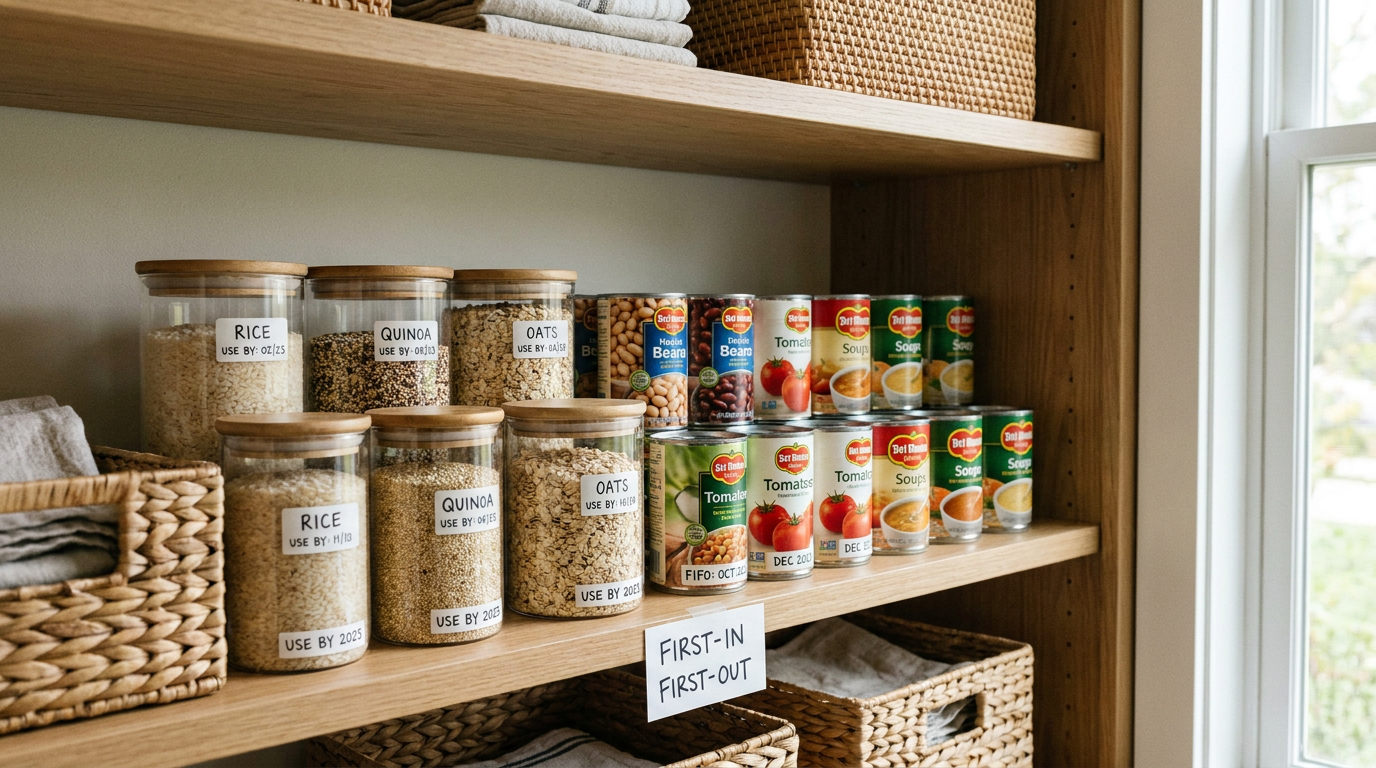
Step 6: Use First-In, First-Out Rotation to Reduce Waste
One of the simplest pantry habits with the biggest payoff is first-in, first-out rotation, often called FIFO. This means older items are placed at the front so they get used first, while newer purchases go behind them. It is a familiar retail principle, but it works beautifully at home because it prevents forgotten food from lingering in the back until it loses quality.
Rotation is especially useful for canned goods, boxed broths, crackers, grains, pasta, cereals, snacks, and other shelf-stable staples. Every time you grocery shop, take a moment to move existing items forward and place new ones behind. It takes very little time once the pantry is organized, and it can quietly save money month after month by helping your household consume what it already bought.
This practice also supports a more realistic relationship with food dates. Instead of treating every printed date as an alarm, rotation encourages awareness. You see what is older, what should be used soon, and what still has plenty of life left. Combined with proper storage conditions, this is one of the most practical ways to reduce waste without turning pantry management into a stressful chore.
Simple ways to make rotation easy
- Store duplicate items together so older ones are visible first.
- Use bins with open tops or front access for packaged foods.
- Add a small “use next” section for ingredients nearing their best quality window.
- Check dates briefly before and after grocery shopping.
- Keep a notepad or digital list of staples you actually need.
These habits may sound small, but they shape the entire mood of your kitchen. Instead of buying reactively, you start cooking from a place of awareness and ease.
Step 7: Label Just Enough to Make the System Clear
Labels are not only decorative. They create clarity, especially in homes where more than one person uses the pantry. A simple label can make it immediately obvious where snacks belong, where grains live, or which container holds flour versus powdered sugar. This supports consistency, which is really the foundation of lasting organization.
That said, not everything needs a printed label. If a basket clearly holds chips or a transparent container clearly shows spaghetti, the need for labeling may be minimal. The most helpful labels are the ones that remove friction. Use them where confusion is likely, where multiple family members need guidance, or where similar-looking items could get mixed up.
Try to choose a labeling style that suits the tone of your kitchen. Clean minimal text, soft script, black-on-clear labels, or warm neutral tags can all work beautifully depending on your space. When labels coordinate with the rest of the room, the pantry feels more integrated and considered. It becomes less of a storage afterthought and more of a natural extension of the home.
Step 8: Make It Beautiful in a Way You Can Maintain
There is nothing wrong with wanting your pantry to look beautiful. In fact, beauty often supports maintenance because people are more motivated to care for spaces that feel calm and inviting. The key is to define beauty in a way that fits your life. For some households, that means decanted staples and matching jars. For others, it means neat bins, visible categories, and shelves that feel orderly without being overly styled.
A beautiful pantry often shares a few qualities regardless of budget. It has visual rhythm, meaning similar items are grouped and spacing feels intentional. It has a restrained color palette, whether through labels, baskets, or storage pieces that complement the kitchen. And it has simplicity, which makes the space feel breathable instead of crowded.
If your kitchen is soft and classic, consider natural textures like seagrass baskets, pale wood lids, and cream-toned labels. If your space is contemporary, a grid of stackable containers and clean white bins may feel more aligned. You do not need expensive products to achieve this effect. Even a few coordinated pieces used thoughtfully can make the pantry feel polished and serene.
The most luxurious kind of organization is not excess. It is a system so intuitive that it makes daily life feel lighter.
Pantry Organization for Small Spaces and Rentals
Not everyone has a walk-in pantry, and many renters are working with a narrow cabinet, a hallway nook, or a single shallow closet. The encouraging truth is that good pantry organization is less about square footage and more about visibility, access, and habit. Small spaces often become highly efficient once every inch is assigned intentionally.
In compact homes, vertical thinking matters. Shelf risers can create double layers for canned goods and jars. Stackable bins help use height without losing order. Slim containers can fit where bulky packaging wastes space. Over-the-door storage can turn an empty surface into valuable square footage for snacks, spices, wraps, or packets.
Renters should lean into non-permanent solutions that travel well. Modular bins, baskets, clip-on labels, freestanding drawer units, and removable door organizers can all make a rented pantry feel custom without risking damage. If your kitchen lacks a dedicated pantry entirely, you can build a pantry zone in a cabinet, on a rolling cart, or in a nearby closet using the same zoning principles.
The secret in smaller homes is to avoid overbuying. Bulk shopping can be economical, but only if you truly have room to store and rotate what you buy. If large quantities create visual stress and crowd out the foods you actually use weekly, smaller but more intentional inventory may serve you better.
Common Pantry Organization Mistakes to Avoid
One common mistake is assuming the answer is simply more storage products. Organizers can help, but they do not fix unclear categories, overcrowding, or shopping habits that bring in more than the space can support. Begin with editing and planning, then buy tools that solve a specific problem.
Another misconception is that every pantry must be fully decanted to be considered organized. Decanting can be helpful for certain dry goods, but it is not essential for every category. A basket of neatly grouped packaged snacks is just as legitimate as a shelf of matching jars if it works better for your household.
People also sometimes think open shelving is automatically impractical or less hygienic. In reality, with proper dry storage conditions, routine cleaning, and good rotation, open or semi-open pantry storage can work very well. Visibility is often what keeps food from being forgotten. The issue is not openness itself, but whether the space stays clean, dry, and manageable.
Finally, many households assume date labels are simple expiration warnings. Food storage is more nuanced than that. Proper conditions, intact packaging, and an organized rotation system all affect quality and usefulness. Instead of blind disposal, a better pantry encourages regular review and thoughtful use.
How Pantry Organization Supports Meal Planning and a Calmer Home
One of the quiet joys of an organized pantry is how naturally it supports meal planning. When you can see your grains, canned goods, snacks, breakfast foods, and baking basics at a glance, it becomes much easier to build meals around what you already have. Grocery lists get shorter and more accurate. Last-minute dinners become less stressful because your staples are visible and easy to reach.
Pantry order also shapes the emotional texture of a home. It reduces the low-grade chaos of searching, shuffling, and second-guessing. Children can find their lunch supplies more easily. Partners can put groceries away without asking where everything belongs. Entertaining feels easier because serving items, snacks, and extra ingredients are not buried under unrelated clutter.
This is why pantry organization belongs in the larger conversation about wellness at home. It is not just a storage project. It is a practical act of care for your future self, your time, and the people you live with. It turns one of the busiest zones in the house into a place of quiet support.
A Simple Maintenance Routine That Keeps the Pantry Working
The best pantry systems are not the most elaborate. They are the easiest to reset. Once your pantry is organized, a light maintenance rhythm is what keeps it from slipping back into clutter. You do not need a major overhaul every month. You simply need a few repeatable habits.
- Do a quick reset after grocery shopping. Put older items in front, group like with like, and break down bulky outer packaging if needed.
- Wipe shelves and bins regularly. Even a five-minute clean every few weeks helps the pantry feel fresh and cared for.
- Check your “use soon” area weekly. This is a simple way to reduce waste and inspire your next few meals.
- Review labels and categories seasonally. Household habits change, and the pantry should change with them.
- Edit before holidays or big shopping trips. Clear space before bringing in extras so the system does not get overwhelmed.
If the pantry begins to drift, avoid the urge to start over from scratch. Instead, notice what is not working. Maybe one shelf needs a better bin. Maybe the snack area is too small. Maybe you are buying too much of one category. Small adjustments are often enough to restore order.
Final Thoughts: Create a Pantry That Feels Good to Live With
The most successful pantry is not the one that looks the most perfect. It is the one that helps your household cook more easily, waste less food, and feel more at home in the kitchen. It should support your routines, reflect your real habits, and make daily life feel just a little lighter. That is where true beauty in organization begins.
Whether you are working with a generous walk-in space or a single cabinet in a rental apartment, the same principles apply. Declutter first. Measure carefully. Build clear zones. Choose storage that improves visibility and access. Protect food from heat, moisture, and confusion. Then create a maintenance rhythm simple enough to keep going.
A pantry may seem like a small part of the home, but it touches so many moments of everyday life. Morning coffee, school lunches, family dinners, holiday baking, late-night snacks, grocery planning, and budget choices all pass through this one space. When it works beautifully, the whole kitchen feels calmer. And when the kitchen feels calmer, home does too.



No Comment! Be the first one.