



Creating the Perfect Patio Seating: A Step-by-Step Guide to Cozy, Stylish Outdoor Living
There is something deeply satisfying about a patio that feels finished. Not just furnished, but truly finished in the way a lovely living room feels complete when every chair, table, textile, and lamp works together. The best patio seating does exactly that outdoors. It creates a place where morning coffee feels calmer, family dinners feel easier, and casual visits stretch comfortably into the evening.
Table Of Content
- Step 1: Start by Thinking of Your Patio as an Outdoor Room
- Step 2: Define the Main Function Before You Buy Anything
- Step 3: Measure Carefully and Plan for Circulation
- Step 4: Choose Patio Seating That Matches Your Lifestyle
- Step 5: Pick Materials That Can Handle Real Weather
- Do Not Forget Fabrics and Finishes
- Step 6: Build Comfort Into the Layout, Not Just the Cushions
- Step 7: Create Shade and Climate Comfort From the Start
- Step 8: Use Zoning to Blend Aesthetics With Functionality
- Step 9: Layer in Style Through Texture, Color, and Accessories
- Step 10: Make It Safe, Stable, and Family Friendly
- Common Patio Seating Mistakes to Avoid
- A Simple Patio Seating Formula That Works
- Seasonal Care for a Patio That Stays Beautiful
- Final Thoughts: A Patio Should Feel As Good As It Looks
- Quick Planning Checklist for Perfect Patio Seating
When people start designing an outdoor space, seating is often where the vision begins. We picture a sofa under soft shade, a pair of chairs gathered around a fire feature, or a dining nook that makes simple meals feel special. Yet creating a patio that looks beautiful and also works well day after day requires more than choosing attractive furniture. It takes planning, thoughtful material choices, and a strong understanding of how people will actually move through and use the space.
Research consistently supports the idea that a patio works best when it is treated like an outdoor room rather than a random collection of chairs. That means defining purpose, creating zones, supporting circulation, considering enclosure, and layering details with intention. Once you approach your patio in that way, every decision becomes easier. The seating feels more natural, the patio feels more welcoming, and the whole outdoor area starts to feel connected to the life of your home.
This guide walks you through that process step by step. We will look at how to assess your space, define functions, choose weather-appropriate materials, arrange your seating for comfort and flow, and finish everything with personal touches that make the area feel warm and lived in. Whether you have a small balcony, a family patio, or a spacious backyard entertaining area, the principles are the same. A well designed patio should be beautiful, comfortable, and easy to enjoy.
Step 1: Start by Thinking of Your Patio as an Outdoor Room
One of the most helpful mindset shifts in patio design is to stop thinking of the area as leftover exterior space and start thinking of it as a room without full walls. Penn State Extension has emphasized that outdoor spaces function best when they are designed with the same logic we use indoors. That includes defining activity zones, using visual boundaries, and paying attention to how people enter, move through, and gather in the space.
That concept may sound simple, but it changes everything. Instead of asking where you can squeeze in a few chairs, you begin asking where conversation should happen, where dining should happen, and where open space should remain. This immediately improves both appearance and usability because the patio starts to feel intentional. Even a small space can feel balanced when each element has a clear purpose.
To begin, stand in your outdoor area and imagine it empty. Notice the views you love, the spots that feel too exposed, and the areas that get intense sun. Think about where the door opens, how guests naturally step outside, and what part of the patio feels easiest to settle into. These simple observations create the foundation for every later decision.
It is also useful to think about emotional atmosphere at this stage. Do you want your patio to feel social and energetic, quiet and cocooning, or flexible enough to move between both? A family patio may need room for conversation and play, while a smaller terrace may be more about peaceful morning routines and evening unwinding. The right seating arrangement is never only about fitting furniture into place. It is about creating the experience you want to have there.
Step 2: Define the Main Function Before You Buy Anything
One of the most common patio mistakes is buying furniture before deciding how the space will be used. The result is often a collection of attractive pieces that do not support real life very well. A deep lounge set may look luxurious but feel awkward if you mostly eat outdoors. A full dining table may dominate the space even though your household prefers casual drinks and reading outside. Function should lead, and style should follow closely behind.
Ask yourself what the patio needs to do most often. For some homes, the answer is outdoor dining. For others, it is lounging, entertaining, watching children play, or enjoying a quiet cup of tea in the early morning. Many patios need to handle more than one purpose, but usually one function is the anchor and everything else supports it.
If you need both dining and lounging in one footprint, zoning becomes especially important. A rug can define a conversational seating area, while a change in furniture shape can create a separate dining zone. A bench along one edge may save space while still allowing the patio to support meals and gathering. This is where designing the space like a room becomes incredibly helpful, because every zone gets its own identity without feeling disconnected.
Smaller patios benefit from being very honest about priorities. It is better to create one beautifully functioning seating area than to force too many uses into one tight layout. If your outdoor life revolves around evening chats and coffee breaks, a loveseat and two chairs may serve you far better than a cramped dining set. If family meals are the focus, comfortable dining chairs with supportive cushions may be the best investment.
Design tip: The most inviting patio seating arrangements begin with a clear purpose. Once you know how you want to live outside, furniture decisions become much more intuitive.
Step 3: Measure Carefully and Plan for Circulation
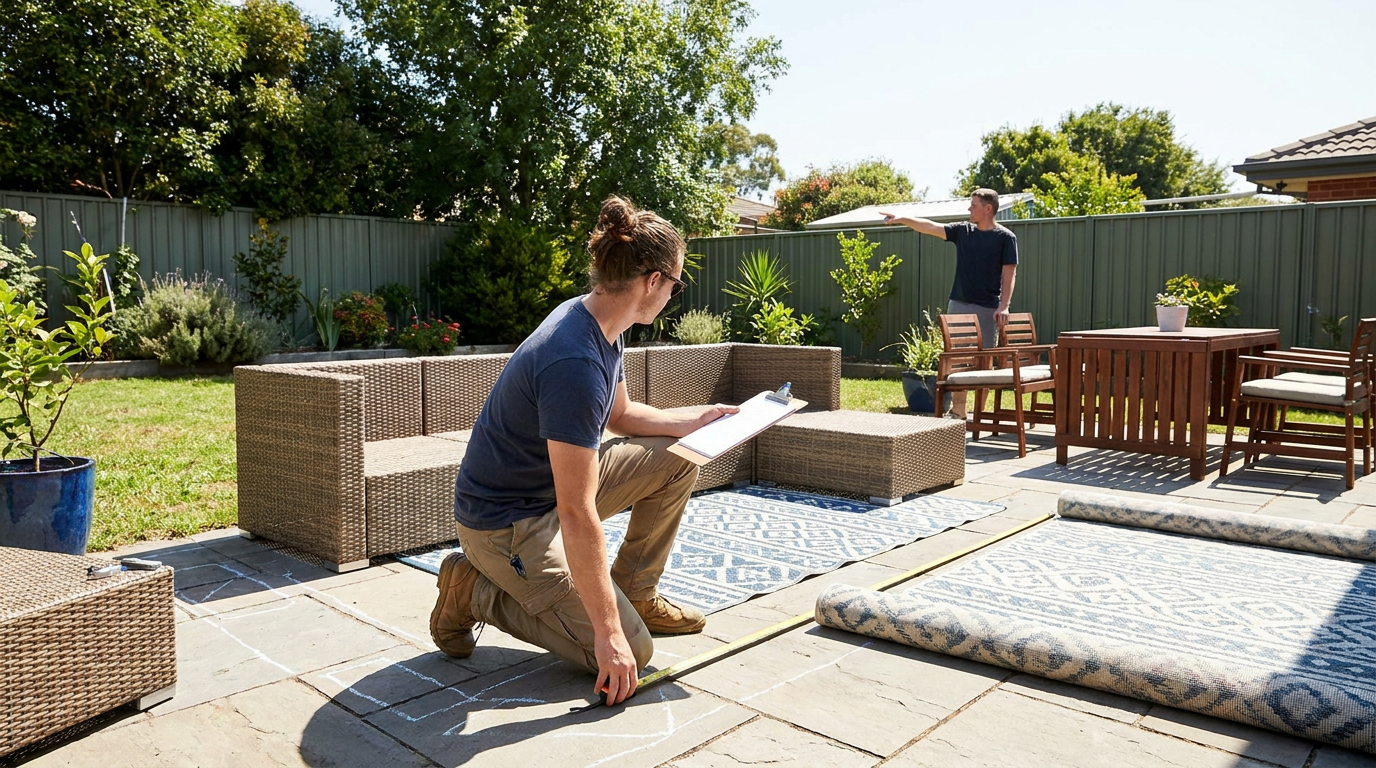
After identifying function, the next step is practical but essential. Measure the patio carefully. Include width, depth, door clearance, stairs, railings, built-in planters, grills, and any awkward corners. Outdoor spaces often appear larger than they are, especially when they are empty. Measuring prevents costly mistakes and helps you create a layout that feels airy rather than crowded.
Circulation matters just as much as the furniture itself. People need enough room to move around chairs, pull seats out, carry drinks, and pass through without bumping knees or side tables. A patio can look beautiful in photos and still feel frustrating if movement is blocked. This is why the most successful layouts leave breathing room around the main seating cluster.
As you sketch possible arrangements, think about pathways first. How do you move from the door to the seating area, from seating to dining, or from the patio to the yard? Those routes should feel natural and unobstructed. If family members regularly cross the patio to reach the garden, avoid placing delicate side tables or low stools in that path.
One simple trick is to use painter’s tape or cardboard to mark furniture footprints on the ground before buying. This gives you an immediate sense of scale. You can walk around the shapes, test clearances, and decide whether the patio feels open enough. It is an easy step, but it can save you from ending up with seating that overwhelms the space.
Step 4: Choose Patio Seating That Matches Your Lifestyle
Once the layout begins to take shape, you can think more specifically about seating types. The right pieces depend on how you relax, how often you entertain, and who uses the patio most often. A couple who loves reading outdoors may prioritize two generous lounge chairs and a table between them. A family that hosts often may prefer a sectional with flexible extra seating. A compact urban patio may benefit from stackable chairs or a slim bench.
There is no single ideal patio setup, but there are patterns that work well. Sofas and loveseats create a living-room feeling and encourage long, relaxed use. Club chairs add structure and comfort, especially when angled toward one another for conversation. Benches are practical where space is tight and can feel especially charming when softened with cushions. Dining chairs should support the back well enough that people linger comfortably after the meal.
Modular seating is especially useful for homes that want flexibility. Individual pieces can be rearranged for larger gatherings or opened up to improve circulation. Multifunctional pieces also deserve attention, particularly in smaller spaces. Storage ottomans, nesting tables, and benches with hidden storage help a patio stay uncluttered while still feeling generous and usable.
Try to match seating depth and height to the experience you want. Deep, low seating feels luxurious for lounging but may not be ideal for older guests or for spaces where people often eat. Upright seating feels more social and versatile. The most successful patios often include a mix, such as a sofa for lounging and one or two more supportive chairs for balance.
Step 5: Pick Materials That Can Handle Real Weather
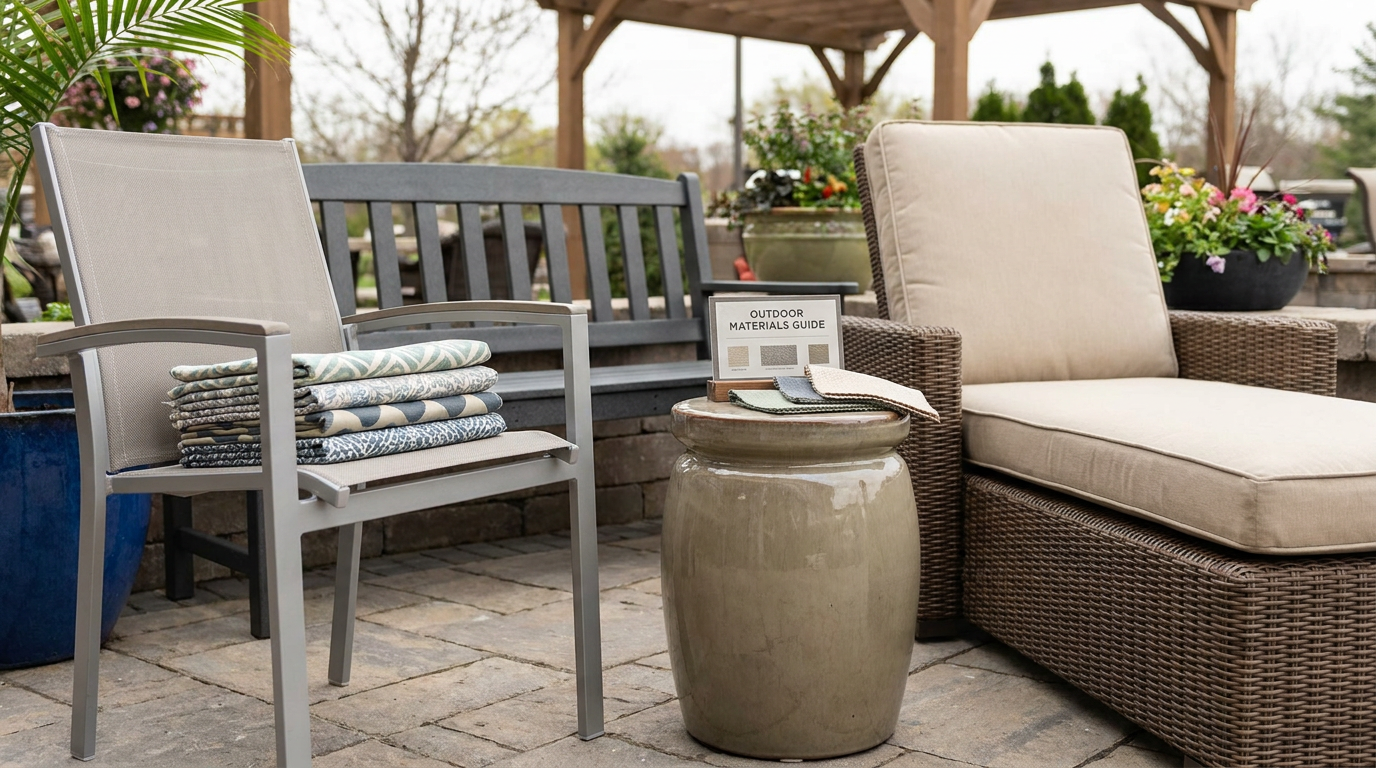
Patio seating should always feel good, but it also needs to survive your climate. Material choice has a major effect on maintenance, longevity, and everyday ease. According to Canadian Living, lightweight materials such as aluminum and plastic are easier to move and store, while heavier options like wood, polywood, and wrought iron offer more stability. That tradeoff matters, especially in North American climates where furniture may need to face sun, rain, humidity, and seasonal storage.
Aluminum is popular for good reason. It is lightweight, rust resistant, and easy to reposition, which makes it ideal for people who like to rearrange or store furniture frequently. It also works beautifully in modern and transitional patios because the frames can feel visually light. The main consideration is that lightweight furniture may need thoughtful placement in windy areas, especially if the pieces are narrow or top heavy.
Wood brings warmth and timeless character to a patio, which is part of why it remains so beloved. Teak and other hardwoods can age beautifully, but they are not maintenance free. Wood needs care, protection, and in some cases refinishing to preserve its best appearance. If you love the softness and depth of wood, it is worth the effort, but it helps to go in with realistic expectations.
Polywood and recycled plastic lumber have become especially appealing for homeowners who want a lower maintenance option with a substantial feel. These materials often resist moisture well and can handle a range of weather conditions with less fuss than some natural materials. They are also aligned with the growing interest in practical, eco-conscious outdoor living. For busy households, they can be a very satisfying balance of comfort and durability.
Wrought iron can feel elegant and enduring, particularly in classic or romantic patio designs. It tends to stay put once placed, which can be helpful in exposed locations. At the same time, it is heavier to move and may become hot in strong sun, so cushions and shade become more important. If you choose metal seating of any kind, think not only about appearance but also about how the surface will feel during summer heat.
Wicker style furniture remains a favorite because it softens a patio visually and adds texture. However, not all wicker is created equal outdoors. Natural rattan is generally less suitable for full sun and prolonged exposure because ultraviolet light and moisture can damage it over time. Resin wicker offers a similar look with much lower maintenance and better outdoor performance, making it a more practical choice for many patios.
Do Not Forget Fabrics and Finishes
Cushions are where comfort truly comes alive, but outdoor textiles need to work harder than many people expect. Covered patios are still exposed to humidity, drifting rain, airborne pollen, and sunlight. That is why weather-resistant fabrics with resistance to UV damage, mould, and water exposure are so important. A beautiful seat cushion that fades quickly or holds moisture will make the patio feel tired long before the furniture itself wears out.
For screened porches, sunrooms, and partially enclosed patios, it is also worth paying attention to lower-emission materials and finishes. Guidance from the EPA reminds us that volatile organic compounds can be released from many everyday products, including some finishes, sealers, and adhesives. In spaces where air lingers more than it would in a fully open yard, low-VOC choices can support a fresher and more comfortable atmosphere.
This matters especially if you are refinishing an older bench, sealing a tabletop, or customizing built-in seating. The healthiest patio often comes from many small thoughtful decisions. Beautiful design and personal wellness do not need to be separate goals. In a well planned outdoor room, they naturally support one another.
Step 6: Build Comfort Into the Layout, Not Just the Cushions
It is easy to think comfort comes entirely from soft cushions, but layout is just as important. Even the most luxurious chair will feel less inviting if it is placed too far from a table, angled awkwardly, or exposed to harsh sun. Great patio seating supports the body, the eye, and the flow of conversation at the same time.
Start with conversational distance. Seats should be close enough that people can speak easily without leaning or raising their voices. This usually means creating a central point around which seating can gather, such as a coffee table, fire table, or generous ottoman. A seating arrangement that is too spread out tends to feel disconnected, while one that is too tight can feel crowded and difficult to navigate.
Every primary seat should ideally have access to a convenient surface. A side table for a drink, a place to set a book, or a spot for a small lantern makes a huge difference in how usable the patio feels. Functional styling is often what makes a space feel effortless rather than staged. When daily life has been considered, people naturally relax.
Comfort also depends on visual balance. If every piece is pushed to the perimeter, the center can feel empty and the seating can seem disconnected. Pulling furniture inward, even slightly, often makes the patio feel more intimate. This is especially true when an outdoor rug anchors the arrangement and helps define it as its own room.
Step 7: Create Shade and Climate Comfort From the Start
A patio can be perfectly styled and still go unused if it is too hot. Environmental comfort is one of the most overlooked aspects of outdoor seating, yet it has enormous influence on whether a space feels inviting. Health guidance around urban heat and summer conditions reinforces the value of shade, cooler siting, and thoughtful material choices. In practical terms, that means planning for comfort before summer arrives at full intensity.
Whenever possible, place your main seating area where it will receive some relief from strong afternoon sun. This may mean locating a lounge zone closer to the house, beneath a pergola, near a fence line, or under the canopy of a well placed tree. If natural shade is limited, an umbrella or shade sail can make the difference between a patio that looks attractive and one that is truly livable.
Material temperature matters too. Dark surfaces can become uncomfortably hot, and some metal finishes retain heat more than expected. Lighter frames, breathable cushions, and layered textiles in soft tones tend to feel more pleasant in summer. A simple outdoor fan, where appropriate, can also greatly improve a covered patio or porch by encouraging airflow.
Do not forget the emotional side of climate comfort. Shade creates softness. It makes a patio feel more sheltered and intimate. A pergola with curtains, an umbrella over a dining table, or even a tall planter arrangement that gently screens the edge of the space can transform the mood from exposed to inviting. People linger where they feel physically and emotionally at ease.
Step 8: Use Zoning to Blend Aesthetics With Functionality
One of the most stylish things you can do on a patio is also one of the most practical. Create clear zones. Research on outdoor room design highlights the usefulness of separation through ground-plane changes, enclosure, and spatial organization. In everyday terms, that means using rugs, furniture groupings, planters, and lighting to gently signal what happens where.
For example, a lounge area might sit on an outdoor rug with a sofa, two chairs, and a coffee table. Nearby, a compact dining area could be anchored by a round table and a different lighting element. Even if the patio is modest in size, these subtle shifts help each function feel complete rather than competing. The patio then reads as polished and intentional, which instantly elevates its appearance.
Enclosure is equally powerful. Patios often feel more comfortable when there is some sense of boundary, even if that boundary is soft. Tall planters, a trellis, an outdoor screen, or the placement of furniture itself can create a cocooning effect. This makes seating feel more intimate and can also improve privacy without making the area feel closed off.
For long or narrow patios, zoning can solve awkward proportions. Instead of lining chairs against one side, create smaller destination areas that encourage movement and give the layout rhythm. One end might become a coffee-and-reading corner, while the other supports dining or evening gathering. This approach makes the most of every foot of space and helps a challenging patio feel layered and complete.
Step 9: Layer in Style Through Texture, Color, and Accessories
Once the furniture is selected and the layout works, styling gives the patio its personality. Current outdoor living trends continue to blur the line between indoors and out, which means patios can feel softer, more layered, and more expressive than they once did. Instead of relying on furniture alone to carry the look, create atmosphere through textiles, color, and decorative accents that also support comfort.
Warm neutrals, terracotta tones, light frames, ceramic pieces, and rattan-inspired textures remain especially appealing because they create a resort-like softness without feeling overly themed. These elements pair beautifully with greenery and natural materials, helping the patio feel grounded and calm. If you prefer a more modern look, you can still use these ideas in a restrained palette with cleaner lines.
Cushions and pillows should feel coordinated rather than identical. Layering solids with a subtle pattern or texture creates depth and makes the seating feel welcoming. An outdoor rug is one of the most transformative additions because it visually anchors the arrangement and supports the outdoor room concept. It also makes the space feel more finished underfoot.
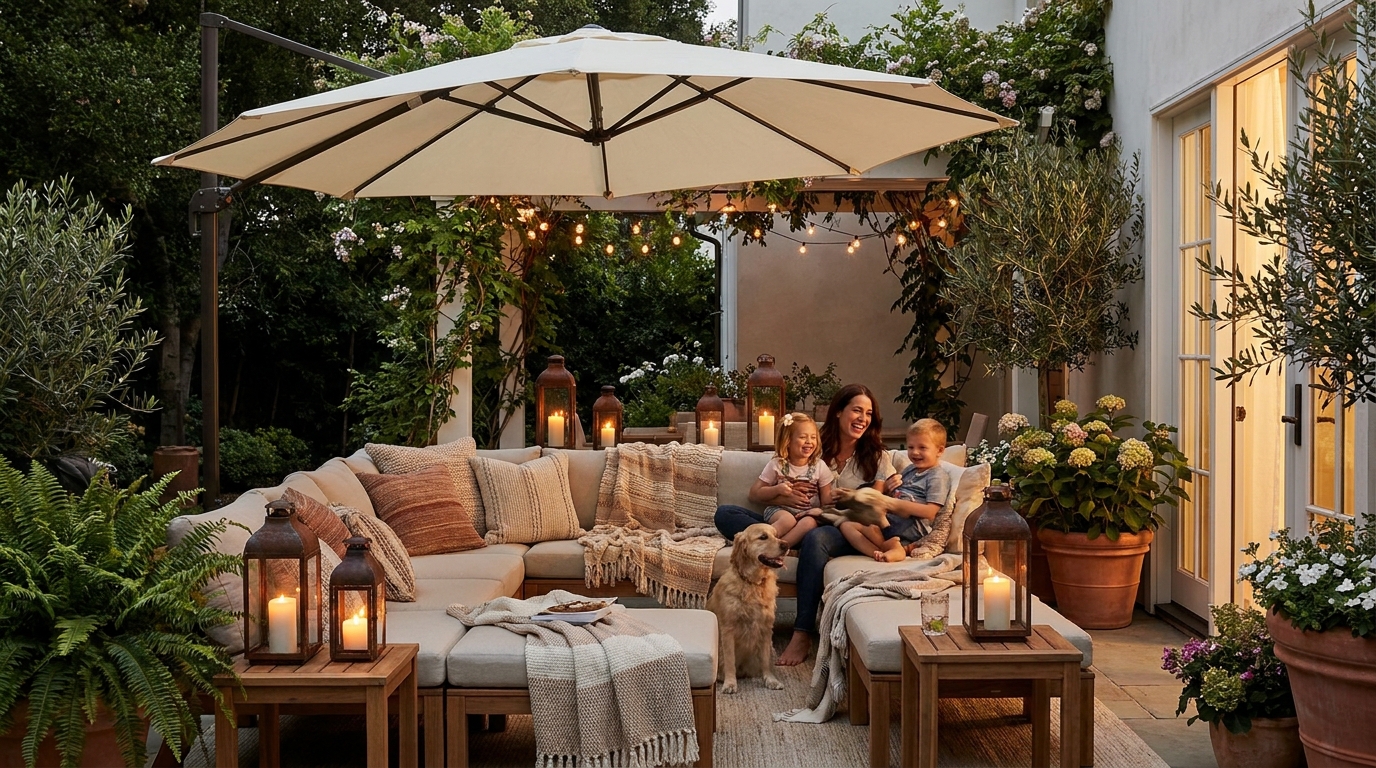
Lanterns, side tables, trays, and planters complete the picture. These details are not just decorative. They make the patio easier to use and more pleasant to spend time in. A tray on the coffee table encourages drinks and snacks. A lantern adds evening glow. A ceramic stool can serve as both sculpture and extra surface space. The most charming patios always mix beauty with usefulness.
Step 10: Make It Safe, Stable, and Family Friendly
Style should never come at the expense of safety. If your patio is used by children, older adults, or large groups, stability and placement deserve extra attention. Health Canada has advised choosing furniture with wide, stable bases and using anti-tip devices where appropriate. While this guidance is often discussed around indoor furniture, the principle absolutely applies outdoors as well.
Benches, tall planters, shelving, and any top-heavy accessories should be placed thoughtfully, especially in windy areas or near active play zones. A chair that looks sturdy can still feel unstable if it sits on uneven pavers or a sloped surface. Before finalizing your arrangement, sit in each piece, test table stability, and make sure nothing wobbles or shifts unexpectedly.
Family friendly design also means thinking about ease. Are there enough surfaces for cups and snacks? Is there open floor space for children to move safely? Are corners too tight when people stand up from the table? Good patio seating should support daily life gently and quietly. When safety and functionality are built in well, the space feels more relaxing for everyone.
If your area experiences strong wind, use heavier accessories selectively and secure umbrellas properly. Weight alone is not the whole story. A very heavy object with a poor base can still cause problems, while a lighter object with good stability may perform better. Smart outdoor design always balances beauty with common sense.
Common Patio Seating Mistakes to Avoid
Even a lovely patio can fall short if a few key details are overlooked. One common misconception is that outdoor furniture is maintenance free. In reality, every material requires some level of care, whether that means cleaning frames, storing cushions, covering pieces during storms, or refreshing protective finishes. Choosing low maintenance materials helps, but no patio remains beautiful without attention.
Another mistake is assuming heavier furniture is automatically better. Stability matters, but the shape of the base, the surface below, and the placement in the space matter too. A narrow, awkwardly placed piece can still feel unsafe even if it is substantial. Focus on balance and suitability, not just weight.
People also sometimes use indoor fabrics outdoors simply because the patio is covered. Unfortunately, covered spaces still expose furnishings to moisture, sunlight, and mould risk. True outdoor fabrics perform much better over time and preserve the fresh, polished feeling of the seating area. This is one of those practical choices that supports both appearance and longevity.
Finally, many patios focus too much on looks and not enough on movement, shade, ergonomics, or storage. The most beautiful outdoor spaces are rarely the most crowded ones. They are the ones where it is easy to sit, easy to set something down, easy to move through the area, and easy to relax. Function is what allows beauty to keep working long after the first reveal.
A Simple Patio Seating Formula That Works
If you want a reliable starting point, use a simple layered formula. Begin with an anchor seating piece such as a loveseat, sofa, or pair of lounge chairs. Add one or two supporting seats for flexibility. Include a central surface like a coffee table or ottoman, then make sure each side has a smaller table within reach. Ground the arrangement with a rug if space allows.
From there, add comfort and atmosphere through textiles, greenery, and light. Cushions should be supportive and weather resistant. Planters should frame rather than crowd the seating. Lighting should create glow, not glare. If the patio needs to work hard, choose pieces that can multitask, such as a storage bench or nesting side tables.
This formula scales beautifully. On a tiny balcony, it might mean two chairs, a slim table, and a soft rug. On a family patio, it could become a sectional, accent chairs, lanterns, and a second zone for dining. What matters is not the size of the space but the sense of intentionality. A patio feels luxurious when every element seems considered and useful.
Seasonal Care for a Patio That Stays Beautiful
Once your seating is in place, a little seasonal care will help it stay lovely longer. At the start of warm weather, clean frames, inspect cushions, tighten any loose hardware, and refresh styling elements like planters and lanterns. During the season, brush off pollen and debris regularly so the space always feels ready to use. Small habits keep a patio feeling fresh instead of neglected.
As weather shifts, think ahead about protection. Covers can be helpful, but they should fit properly and allow airflow where needed. Cushions often last longer when stored in a dry box or indoor area during heavy rain or extended off-season periods. If your patio furniture is lightweight, seasonal storage may also protect it from wind and wear.
Wood may need periodic treatment depending on the finish and exposure. Metal should be checked for chips or scratches. Resin wicker should be cleaned gently to prevent buildup in the weave. None of this is especially difficult, but it supports the long life of your outdoor room and protects the feeling you worked hard to create.
Maintenance should not feel like a burden. Instead, think of it as part of caring for a favorite gathering place. The same way we straighten cushions and light a candle indoors, outdoor upkeep is simply a way of making home feel welcoming again and again.
Final Thoughts: A Patio Should Feel As Good As It Looks
The perfect patio seating arrangement is never only about furniture. It is about creating a place that supports the way you want to live outside. When you define the function, plan the layout carefully, choose weather-wise materials, prioritize comfort, and layer in personal style, the result feels natural and lasting. The patio becomes more than a pretty corner of the yard. It becomes a true extension of home.
That is the beauty of thoughtful outdoor living. A few smart choices can turn an underused patio into a deeply enjoyable retreat. Morning coffee feels a little more peaceful. Family meals feel more relaxed. Even ordinary evenings feel more memorable when there is a welcoming place to sit together outside.
If you are starting from scratch, go step by step and trust the process. Focus on how the space needs to function, then let aesthetics build around that. The coziest and most stylish patios are the ones that honor both. When beauty and practicality meet, outdoor seating stops being just another design task and starts becoming one of the most rewarding spaces in the home.
Quick Planning Checklist for Perfect Patio Seating
-
Define your patio’s primary function before shopping for furniture.
-
Measure the space carefully and protect natural circulation paths.
-
Choose seating types that match how you actually relax, dine, and entertain.
-
Select materials based on weather exposure, maintenance expectations, and storage needs.
-
Invest in weather-resistant cushions and fabrics with UV, mould, and water resistance.
-
Create shade and cooler zones so the patio stays comfortable through warm weather.
-
Use rugs, planters, and furniture groupings to define clear outdoor room zones.
-
Layer style with textiles, ceramics, lighting, and greenery for warmth and personality.
-
Check stability, especially in homes with children or windy conditions.
-
Maintain your setup seasonally so it stays beautiful and ready to enjoy.
With those principles in place, your patio seating can feel polished, practical, and wonderfully personal all at once. That balance is what turns outdoor space into everyday pleasure.

No Comment! Be the first one.