



Transform Your Backyard: Easy DIY Décor Ideas for Every Home
There is something deeply comforting about a backyard that feels cared for. It does not have to be grand, expensive, or designed by a professional to become a place you love returning to at the end of the day. In many homes, the outdoor space becomes most meaningful when it reflects daily life, whether that means a quiet morning coffee corner, a relaxed family dinner spot, or a small garden that adds color and life just outside the door. The beauty of DIY backyard décor is that it lets you shape that feeling with approachable projects, modest budgets, and a personal touch.
Table Of Content
- Start by Thinking in Outdoor Rooms
- Create a Cozy Seating Area First
- Simple ways to make seating feel richer
- Use Outdoor Rugs and Textiles to Add Instant Warmth
- Light the Space for Evening Atmosphere
- Make Planters a Main Design Feature
- Choose plants that are both beautiful and meaningful
- Try an Easy DIY Privacy Screen or Trellis
- Add Personal Garden Art That Does Not Feel Overdone
- Build a Simple Dining Spot for Everyday Gatherings
- Refresh Fences, Sheds, and Walls for a Bigger Visual Impact
- Create a Quiet Retreat Corner
- Use Pathways and Borders to Make the Yard Feel Finished
- Make It Renter Friendly and Flexible
- Keep DIY Safety and Durability in Mind
- A Beginner-Friendly Backyard Décor Plan You Can Finish Step by Step
- Common Backyard Décor Mistakes to Avoid
- The Real Goal: A Backyard That Feels Like Home
Right now, outdoor living is less about perfection and more about creating spaces that genuinely support the way people live. Houzz’s 2026 Outdoor Trends Study found that 83% of renovated outdoor spaces include a lounge or seating area, while 55% include dining areas, 53% include quiet retreats or reading areas, 49% include gardening areas, and 48% include outdoor cooking areas. Those numbers tell a very simple story. People want their backyards to feel livable, flexible, and welcoming. That is excellent news for beginners because the biggest impact often comes from simple seating, lighting, planters, and easy styling layers rather than major construction.
This guide is designed for homeowners and renters alike, and every idea here is meant to be achievable. You do not need advanced tools or a design degree. You only need a little intention, a few materials that can handle the weather, and a vision for how you want your outdoor space to feel. Some ideas are decorative, some are practical, and many do both at once. Together, they can turn even a plain backyard into an inviting outdoor extension of home.
The most successful backyard décor is not the most expensive. It is the décor that makes you want to stay outside a little longer, relax a little more deeply, and share the space with the people you love.
Start by Thinking in Outdoor Rooms
One of the easiest ways to make a backyard feel polished is to stop seeing it as one big undefined area. Instead, think of it the way you think about your interior. Indoors, every room has a purpose. A living room invites conversation, a dining area brings people together, and a reading nook offers a quiet pause in the day. Outdoor spaces feel far more intentional when they follow the same idea.
You might create a lounge zone near the house with chairs and soft lighting, then use the far end of the yard for planting or a simple decorative focal point. Even a small patio can feel beautifully layered when there is one clear place to sit, one place to put a drink, and one visual anchor such as a planter grouping or a trellis. Defining zones makes a backyard easier to use and easier to decorate because every item has a role.
This approach is also especially helpful if you are working with a budget. Rather than trying to furnish and style everything at once, you can improve one area at a time. Start with the spot that will make the biggest difference in daily life. For many people, that is a seating area. Once that corner feels complete, the rest of the backyard starts to come into focus naturally.
Create a Cozy Seating Area First
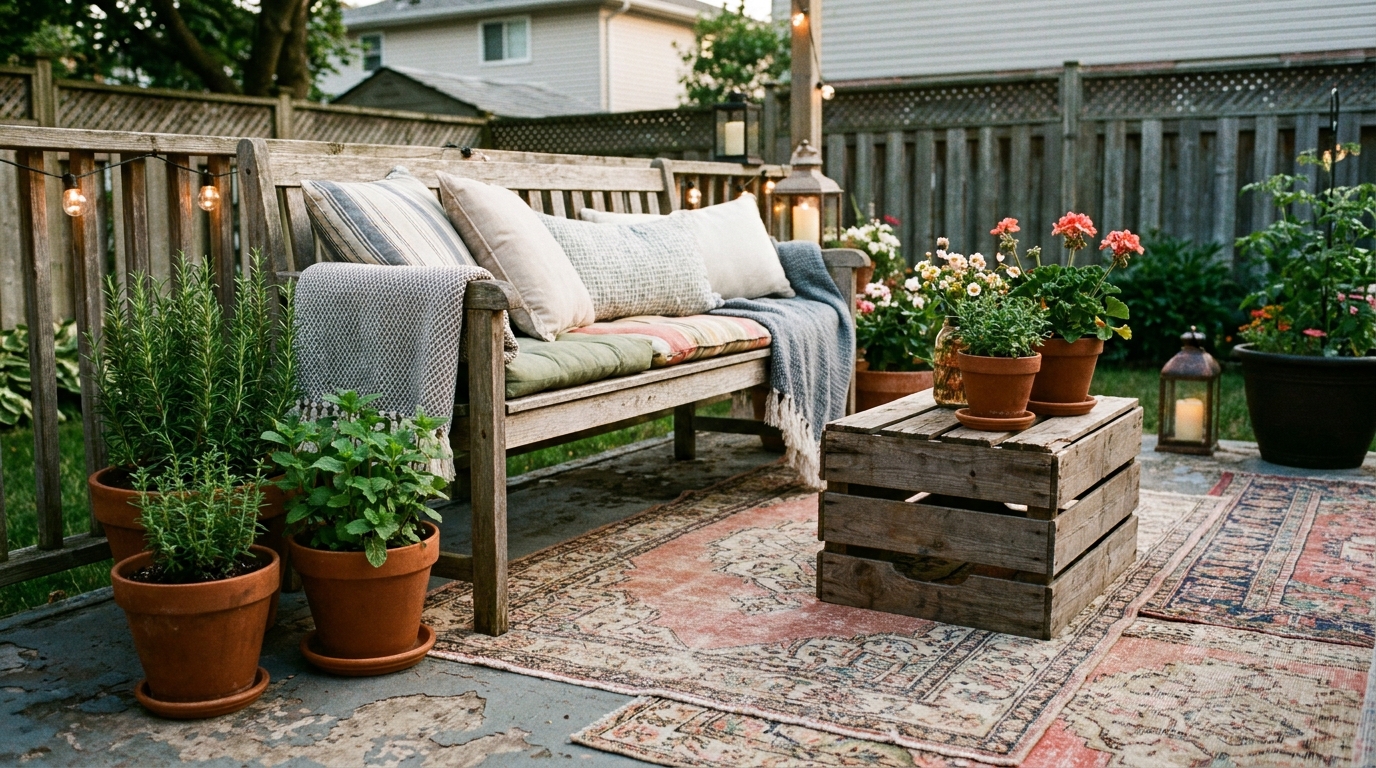
If you only tackle one backyard DIY project this season, make it a seating zone. Since lounge areas are the most common feature in outdoor upgrades, it makes sense to begin there. A place to sit transforms a backyard immediately because it changes it from something you look at into something you actually use. It can be as simple as two chairs and a small table, or a bench softened with pillows and an outdoor rug.
The charm of this project lies in layering. Start with functional seating, then add comfort. Weather-friendly cushions, a washable outdoor rug, and a side table for drinks create a space that feels thoughtful rather than temporary. If you already have mismatched furniture, do not dismiss it. A coat of outdoor-safe paint in one cohesive tone can pull old pieces together in a weekend and make them feel intentionally collected.
For homeowners who want something a little more built-in, a simple DIY bench using outdoor-rated lumber can be a lovely first project. For renters, folding bistro chairs or lightweight lounge seating work beautifully because they can move with you. The goal is not to fill the yard with furniture. It is to create one inviting moment that encourages use and relaxation.
Simple ways to make seating feel richer
Once the core seating is in place, texture does much of the design work. Outdoor pillows in soft stripes, earthy solids, or botanical prints add personality without overwhelming the space. A throw blanket stored in a lidded basket can make cool evenings feel cozier and more welcoming. Even one small stool or crate that doubles as a plant stand or extra perch can make the area feel more layered.
Think in terms of comfort rituals. Where will someone place a book, a glass of lemonade, or a lantern at dusk. That is what makes a backyard feel like an extension of home rather than an afterthought. A seating area should invite a pause, not just occupy space.
Use Outdoor Rugs and Textiles to Add Instant Warmth
Textiles are often what make an outdoor area feel emotionally complete. Hard surfaces such as concrete, deck boards, or pavers can feel visually flat on their own. An outdoor rug softens that effect immediately, creating a gentle sense of room definition and making furniture feel anchored. This is one of the easiest ways to make a patio or backyard corner feel styled in an afternoon.
Choose colors that connect with your home and garden. Natural tones, faded blues, warm terracotta, muted green, and classic black and ivory are all easy to build around. If you want a relaxed, collected look, layering a smaller patterned rug over a larger neutral base can be very effective, provided both are suitable for outdoor use and easy to shake out or clean. The effect feels cozy and elevated without becoming fussy.
Weatherproof textiles should still be treated thoughtfully. Bring cushions in during storms when possible, let rugs dry fully if they get soaked, and store soft goods in a deck box or lidded bin during the off-season. These little habits help affordable pieces last longer and keep your outdoor setup feeling fresh rather than worn out.
Light the Space for Evening Atmosphere
Lighting changes everything in a backyard. During the day, décor adds color and structure. In the evening, lighting creates mood. A simple string of warm lights, a few solar stake lights along a path, or battery-operated lanterns on a table can make even the most basic yard feel magical. The goal is not harsh brightness. It is a soft glow that helps the backyard feel usable, calming, and special after sunset.
Because safety matters, it is wise to choose low-effort lighting options that reduce risk while still delivering ambiance. Health Canada has warned about serious injuries connected to portable fireplaces and liquid or gel fuels due to flame jetting. For most households, especially with children, pets, or frequent guests, safer decorative choices such as solar lanterns, enclosed outdoor lighting, or battery string lights are the easiest and most reassuring way to create warmth without added stress.
Try placing lights at different heights for a more finished effect. Hang a strand overhead, place a lantern near seating, and line a garden edge with solar lights. This layered glow feels much softer than relying on one bright fixture. It also helps define zones in the backyard so each area feels considered and inviting.
Make Planters a Main Design Feature
Planters are one of the most useful tools in DIY backyard décor because they add shape, color, texture, and flexibility all at once. They work in large yards, small patios, side gardens, balconies, and rentals. If your backyard feels empty or unfinished, a grouping of planters can solve the problem quickly by creating visual fullness without requiring permanent changes.
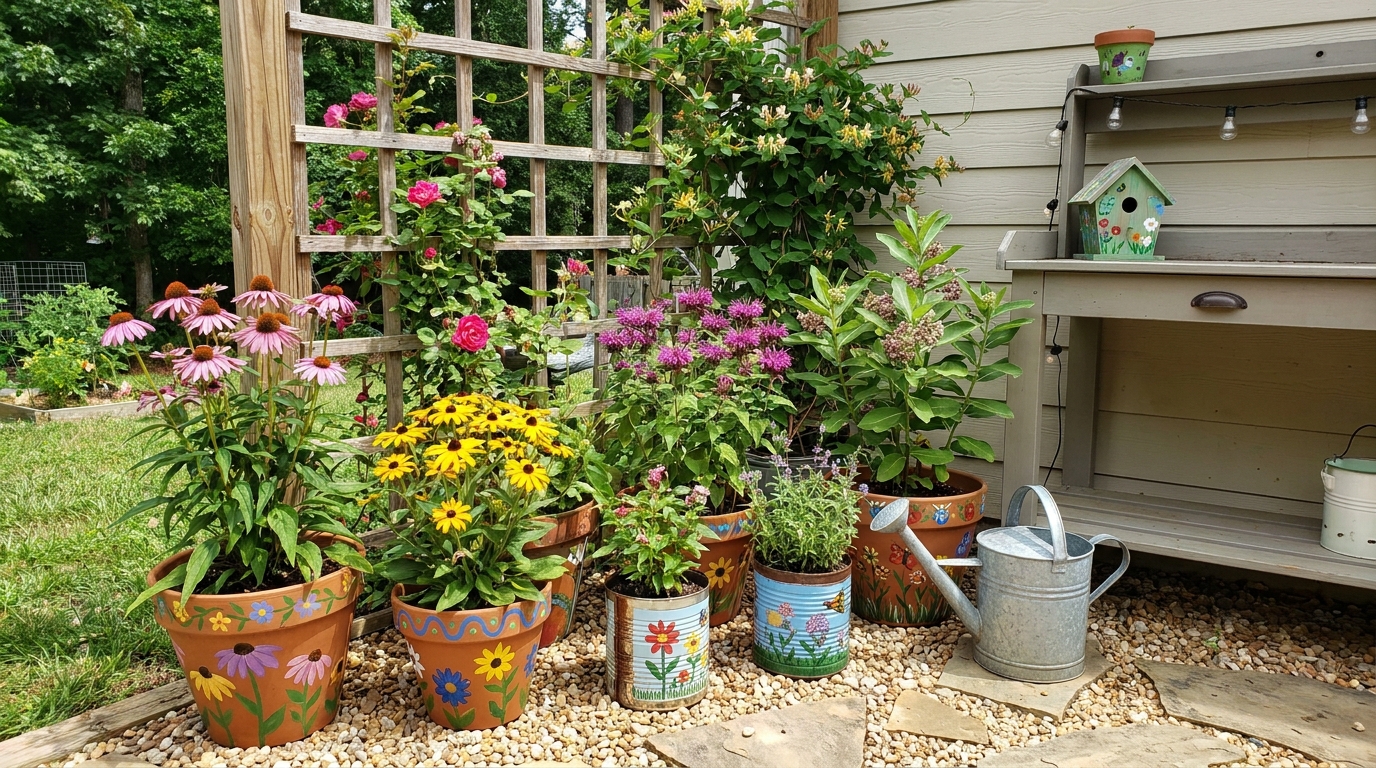
Painting plain terracotta or inexpensive composite pots is an easy beginner project with a lot of payoff. You might choose soft white for a fresh and airy look, charcoal for contrast, or warm clay tones for a relaxed Mediterranean feeling. If you want a little pattern, simple stripes, color blocking, or hand-painted dots can bring personality without looking overly crafty. The secret is repetition. When pots share a color family or style, the whole backyard starts to feel more cohesive.
When arranging planters, vary the heights and plant forms. Pair something upright, something spilling, and something soft and rounded. This creates movement and visual interest with very little effort. Planters can frame a doorway, soften the edge of a patio, guide the eye toward seating, or even function as a loose privacy screen when grouped generously.
Choose plants that are both beautiful and meaningful
One of the loveliest directions in backyard décor right now is the move toward pollinator-friendly planting. It adds life and color while also supporting the environment in a very tangible way. Environment and Climate Change Canada recommends using a wide variety of flowering native plants in pollinator gardens, and notes that pollinators in Canada include bees, flies, moths, butterflies, wasps, beetles, and hummingbirds. Parks Canada and USDA resources support the same general idea, reinforcing that native planting can be both decorative and habitat friendly.
This matters because backyard décor does not have to be purely ornamental. A container garden or planted border can be visually beautiful while also supporting local ecosystems. Native flowering plants often adapt well to local conditions, which can mean lower maintenance and more resilience once established. If you are new to gardening, ask a local nursery for native varieties suited to your region and light conditions. That way, your décor becomes part of a healthier, more vibrant outdoor space.
Try an Easy DIY Privacy Screen or Trellis
Backyards often feel less relaxing when they feel exposed. Privacy is not only about blocking views. It also creates emotional comfort, making a yard feel like a true retreat. A simple DIY privacy screen or freestanding trellis can change the atmosphere dramatically, especially in close suburban settings, townhomes, or rentals with neighboring sightlines.
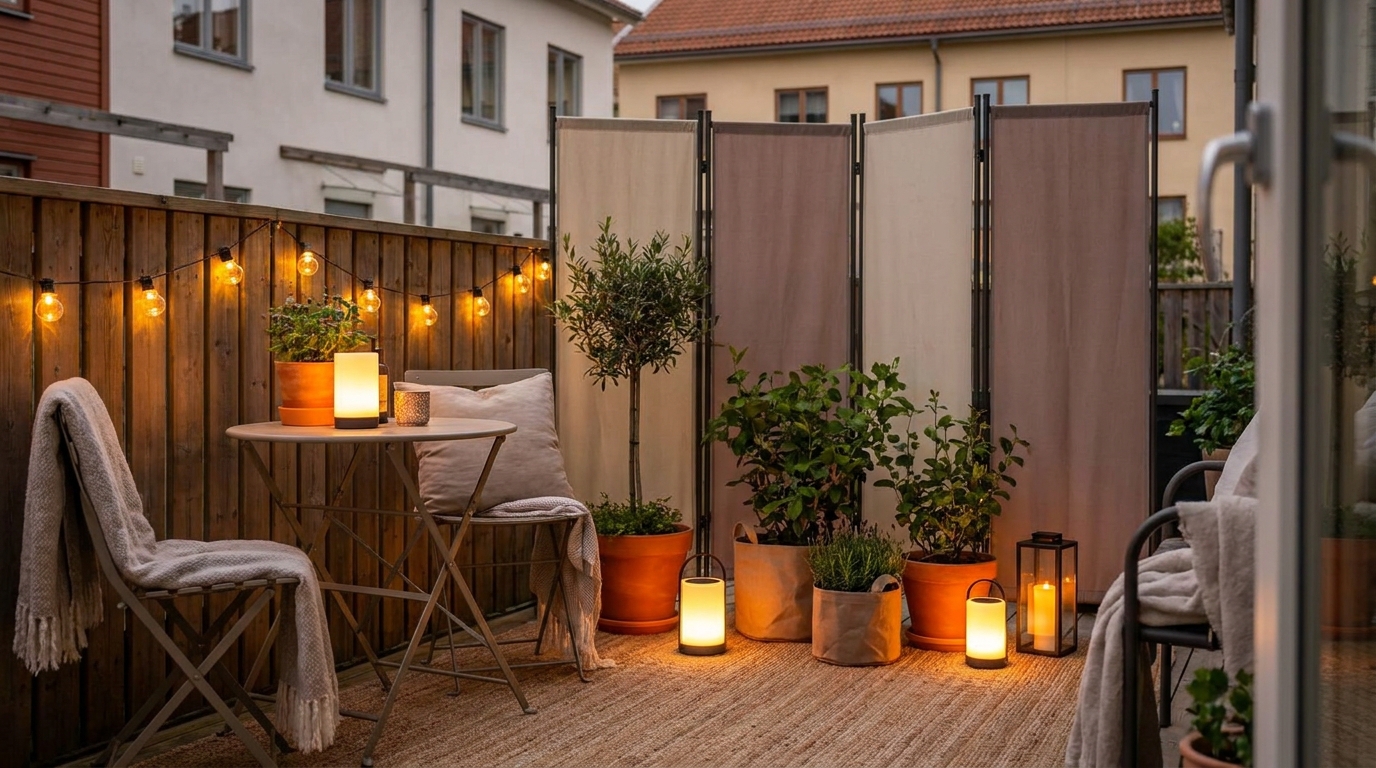
A wooden lattice panel framed with simple lumber is one approachable option, especially if you want to support climbing vines or hang lightweight planters. A folding screen made for outdoor use can also work beautifully and requires almost no installation. For renters, freestanding solutions are especially valuable because they add definition without altering fences or structures. Even a row of tall planters with ornamental grasses can offer a soft sense of enclosure.
If you build with wood, choose materials intended for outdoor use and read product guidance carefully. Natural Resources Canada notes that treated wood is designed to resist rot, fungi, and weathering, which can make it useful for backyard projects that need durability. At the same time, Health Canada advises caution around treated wood, so it is important to follow safety recommendations, wear gloves while handling materials, wash hands afterward, and use the wood appropriately for the project rather than casually repurposing scraps without understanding where they are best used.
Add Personal Garden Art That Does Not Feel Overdone
Personal details are what turn a pleasant backyard into one that feels truly yours. Garden art can absolutely help, but the most beautiful versions tend to be simple and restrained. Think less in terms of filling every surface and more in terms of adding one or two pieces that carry character. A hand-painted plant marker set, a weathered mirror on a fence, a ceramic wall piece, or a hanging bell can add charm without clutter.
One easy DIY project is creating a fence panel moment with a painted stencil design or a mounted outdoor-safe frame around a small mirror or plaque. Another is upcycling household items into planters, such as an old metal tub, crate, or basket lined properly for use. The key is coherence. Repeating one material, one finish, or one color across a few small decorative touches creates style that feels polished rather than random.
If your backyard already has strong natural beauty through greenery and flowers, let the plant life be the main attraction. In that case, the best décor may simply be a sculptural pot, a neat stepping stone path, or a painted bench in a quiet corner. Personal does not need to mean busy. It simply means intentional.
Build a Simple Dining Spot for Everyday Gatherings
Outdoor dining sounds like a luxury, but in practice it can be surprisingly simple. Since more than half of renovated outdoor spaces now include dining areas, this is one of the most relevant projects to consider. A dining spot does not require a large table or full outdoor kitchen. It can be as modest as a small bistro set, a narrow bench-and-table setup, or a compact folding table dressed with a washable cloth and a planter centerpiece.
The beauty of a small dining area is that it supports both routine and celebration. It can hold a weekday lunch, weekend coffee, homework in fresh air, or an easy dinner with friends. Once a table exists outdoors, people naturally find more reasons to use the yard. That practical shift is often what makes a space feel transformed.
To make the area feel special, think about visual softness. Place a potted herb nearby, add a lantern in the center, or position the table near flowering containers so the setting feels connected to the garden. Dining outdoors is rarely about perfection. It is about making everyday moments feel a little more relaxed and memorable.
Refresh Fences, Sheds, and Walls for a Bigger Visual Impact
Sometimes the fastest way to improve backyard décor is not by adding more things, but by giving the background a fresh start. Fences, shed walls, and exterior surfaces take up a lot of visual space. If they look tired, the whole yard can feel neglected, even if your furniture and plants are lovely. A new coat of outdoor paint or stain can create a cleaner, more intentional backdrop for everything else.
Before using any finish, read labels carefully and take product safety seriously. The EPA has noted that low VOC and zero VOC labels can still be misleading, which means those terms alone do not guarantee a product is non-toxic or ideal for every situation. Ingredients still matter, as do ventilation and proper use. If you are painting or sealing surfaces, work on a dry day, wear gloves, follow manufacturer directions, and let products cure fully before placing textiles or planters against them.
Color can also shape the feeling of the yard. A deep green fence makes foliage pop and creates a cocooning mood. Soft beige or warm gray keeps things bright and versatile. Crisp black can make simple wood details and potted plants feel especially elegant. If a full repaint is not realistic, even refreshing a gate, trim edge, or one focal wall can help the whole space feel tidier and more elevated.
Create a Quiet Retreat Corner
The rise of reading nooks and quiet retreats outdoors speaks to what many people actually want from their yards. Not every outdoor space has to entertain. Sometimes the best use of a backyard is offering calm. A chair under a tree, a bench by a planting bed, or a tucked-away corner with a side table and soft light can become one of the most restorative spots at home.
To create a retreat corner, choose a location that already has some natural appeal. That might be where the light is gentlest in the morning or where a fence and shrubs create a sheltered feeling. Add a comfortable seat, then one or two functional extras such as a table, a pot of fragrant herbs, or a lantern. Keep this zone visually simpler than a social area so it feels soothing from the moment you approach it.
This kind of space is especially meaningful for households that are busy, noisy, or shared. A backyard does not need to be large to offer restoration. It simply needs one corner where the pace feels slower and the atmosphere feels settled.
Use Pathways and Borders to Make the Yard Feel Finished
Backyard décor often becomes more convincing when movement through the space feels intuitive. A simple path of stepping stones, gravel, mulch, or pavers can guide the eye and subtly organize the yard. It does not need to be formal. In fact, a loose and natural path can feel especially charming in relaxed backyard settings. What matters is that it helps connect zones and gives the yard a sense of order.
Borders can have a similar effect. Defining the edge of a planting bed with stone, brick, or even a clean spade line makes everything look more maintained. These details may seem small, but they create a visual framework that supports every other decorative choice. Planters look more intentional near a neat edge. Seating feels more anchored when placed beside a path rather than floating awkwardly in open space.
If you are decorating on a budget, this is a smart area to focus on because it often uses affordable materials and sweat equity rather than expensive furnishings. A weekend of tidying edges, refreshing mulch, and laying a few stepping stones can make a backyard look noticeably more polished.
Make It Renter Friendly and Flexible
Not everyone has the freedom to build or permanently alter an outdoor space, but that does not mean a backyard or patio cannot be beautiful. In fact, some of the most effective outdoor décor ideas are completely non-permanent. Outdoor rugs, moveable planters, foldable furniture, battery lighting, freestanding trellises, and decorative storage boxes all help shape the atmosphere without leaving a lasting mark on the property.
For renters, portability is part of the design strategy. When every item can move, the backyard becomes easier to rearrange for entertaining, easier to store during winter, and easier to take to a future home. This flexibility can make a small outdoor area feel more useful because the layout can adapt to different needs. You might have a lounge setup one day and shift furniture to make space for a casual meal the next.
Look for pieces that do double duty. A bench with storage, a plant stand that can also hold drinks, or a screen that provides privacy and acts as a decorative backdrop all stretch your budget further. Thoughtful flexibility is one of the most stylish things a backyard can have because it supports real life.
Keep DIY Safety and Durability in Mind
Backyard projects should feel joyful, but they should also hold up well and be safe to live with. That begins with choosing materials intended for outdoor exposure. Wood, fabrics, paints, and hardware all perform differently when faced with sun, rain, humidity, and temperature swings. The more suitable your materials are from the start, the better your finished project will age.
It is also important to use protective gear and follow directions, even for seemingly simple tasks. Wear gloves when sanding or handling rough wood, use eye protection when cutting materials, and work in well-ventilated conditions when painting or sealing. If a finish claims to be safer because it is low VOC or zero VOC, do not stop there. Check product details, use it as directed, and be mindful that labels alone do not always tell the whole story.
With fire features, take a cautious approach. Decorative flame can be appealing, but improvised or poorly designed products are not worth the risk. If you want a warm evening atmosphere, enclosed and code-compliant features are a much better choice than casual fuel-based setups, and non-flame lighting is often the simplest and safest option of all. A backyard should feel relaxing, and safety is part of that comfort.
A Beginner-Friendly Backyard Décor Plan You Can Finish Step by Step
If the idea of redesigning your whole backyard feels overwhelming, break it into a simple sequence. This not only makes the work manageable, it also helps you spend wisely and see progress sooner. Most people find that once one area starts to look inviting, motivation builds naturally. You begin to notice how the entire yard could work better with just a few additional improvements.
-
Clean and clear the space first. Sweep, weed, prune, and remove anything broken or unused. A tidy baseline makes every decorative change feel more effective and helps you see the yard clearly.
-
Choose your main function. Decide whether your first priority is lounging, dining, gardening, or privacy. Let that lead the first project rather than trying to accomplish everything at once.
-
Add one anchor piece. This might be a bench, rug, dining set, or large planter grouping. The anchor gives the space identity and makes future choices easier.
-
Layer in lighting and textiles. Once the practical furniture is there, softness and atmosphere make the area feel complete.
-
Finish with personality. Add planters, garden art, herbs, flowers, or a small side table so the backyard reflects your routines and taste.
This kind of phased approach works beautifully because it respects budget and time. It also prevents the backyard from looking overdone or mismatched. Instead, the space evolves naturally and gains character in a way that feels personal.
Common Backyard Décor Mistakes to Avoid
One very common mistake is treating outdoor spaces as if they should be filled all at once. Too much furniture, too many décor items, or too many competing colors can make a yard feel cluttered rather than welcoming. It is far better to have one beautiful seating corner and a few well-placed planters than a crowded patio that feels difficult to use.
Another mistake is ignoring maintenance. A backyard that looks lovely in the first week but is hard to keep tidy will quickly lose its appeal. Choose washable textiles, manageable plants, and storage solutions that make cleanup easier. Low-maintenance does not mean boring. It simply means realistic and sustainable for your daily life.
It is also worth avoiding the assumption that decorative plants must be purely ornamental. Native and pollinator-friendly choices can be just as beautiful, and often more connected to place. Likewise, do not assume that every trendy product marketed as outdoor-safe or eco-friendly is automatically the best option. Read labels, check materials, and choose based on durability, safety, and how the item will actually be used.
The Real Goal: A Backyard That Feels Like Home
The most memorable backyards are rarely the ones with the biggest budgets. They are the ones with a sense of ease. They offer a place to sit, a little softness, a little beauty, and a reason to linger. A candle-free lantern glowing at dusk, herbs growing in painted pots, a bench cushion that makes a hard seat feel hospitable, and a tiny table waiting for morning coffee can do more for daily happiness than a complicated renovation ever could.
That is why easy DIY backyard décor is so powerful. It lets you shape atmosphere through small choices that feel doable now, not someday. Whether you are working with a large lawn, a narrow patio, or a rental backyard that you cannot permanently change, the principles remain the same. Create comfort first, add beauty with intention, choose materials wisely, and let the space support real life.
If you begin with one corner and one simple idea, your backyard can become much more than a patch of outdoor square footage. It can become a quiet retreat, a casual dining room, a family gathering spot, a tiny pollinator haven, or simply the place where the day ends a little more gently. And often, that is exactly what home should do.

No Comment! Be the first one.