



Artificial intelligence can sound abstract, expensive, or overly technical, especially when it is discussed in the context of climate and energy. In everyday homes, though, AI is often much simpler than the label suggests. It usually means a system that notices patterns, learns your routine, and automates small decisions so your house uses less energy without asking you to think about it constantly. That is what makes it so promising for people who want a greener home but also want comfort, predictability, and practical results.
Table Of Content
- What AI energy optimization really means at home
- Why heating and cooling should come first
- The most practical AI use cases for everyday households
- What kind of savings can you realistically expect?
- Simple tools that make AI adoption easier
- How home energy management systems bring everything together
- Why compatibility and installation matter more than hype
- Privacy, cybersecurity, and data questions worth asking
- A realistic path to getting started
- Common misconceptions that are worth clearing up
- The broader shift behind the technology
- Final thoughts: smarter homes, lower friction, better outcomes
For most households, the real opportunity is not in futuristic gadgets. It is in helping familiar systems run better. Your thermostat can learn when the house is empty. Your utility app can show when electricity is most expensive. Your dishwasher, EV charger, or water heater can run at better times. If you have a heat pump, solar panels, or a battery, AI can help them work together more intelligently. Rather than replacing the homeowner, it acts as a quiet control layer on top of equipment you may already own.
This matters even more in Canada, where the largest energy loads in a home are usually heating and hot water. Federal energy summaries show that space and water heating account for about 78% to 79% of residential energy consumption in Canada, with space heating alone historically around 63% of home energy use. That is an important reality check. While smart plugs and efficient electronics can help, the biggest savings usually come from optimizing heating and cooling first. If you want AI to make a measurable difference, that is where it should begin.
There is also a timing advantage right now. More homes have air conditioning than they did a generation ago, and Statistics Canada reported household air-conditioning ownership at 68% in 2025. That means cooling optimization is becoming more relevant across the country as summers get hotter. At the same time, more households are installing heat pumps, using time-of-use electricity pricing, buying electric vehicles, and considering home batteries or solar. All of these create more opportunities for AI driven coordination that lowers both bills and emissions.
The encouraging part is that you do not need to build a fully automated smart house to benefit. The most effective approach is to start small, automate gradually, and focus on the systems that consume the most energy. A smart thermostat, a utility account with usage data, and a few simple schedules can go a surprisingly long way. From there, you can decide whether broader home energy management is worth adding based on your home, your climate, and your lifestyle.

What AI energy optimization really means at home
When people hear the term AI energy optimization, they sometimes imagine a complicated platform making opaque decisions about their house. In reality, most consumer systems do a few understandable things. They learn occupancy patterns, compare indoor and outdoor conditions, react to electricity prices, and decide when to heat, cool, charge, or pause devices. The goal is not to make your home robotic. The goal is to reduce waste while preserving comfort.
A smart thermostat is the clearest example. Instead of following a rigid programmed schedule forever, it can notice that you usually leave at 8:15 on weekdays, come home at 5:45, and prefer the bedroom cooler at night. Over time, it adjusts setbacks and recovery periods so the system runs less when it is not needed. ENERGY STAR notes that certified smart thermostats must demonstrate real-world savings using aggregated, anonymized customer data, which is one reason they have become a practical starting point rather than a novelty.
Home energy management systems go a step further. These systems bring together data from smart meters, thermostats, appliances, EV chargers, batteries, and sometimes solar inverters. The U.S. Department of Energy has noted that smart meters and home energy management systems can display home energy use and enable remote control of thermostats and appliances. In practical terms, that means your home can respond to time-of-use pricing, utility peak alerts, or your own comfort preferences with less hands-on effort from you.
AI also works well because home energy use is repetitive. Most households have rhythms. Morning showers increase hot water demand. Midday often means lower occupancy. Laundry happens on certain days. EV charging often happens overnight. Because these routines repeat, AI tools can identify patterns and improve timing. They are not perfect, but they do not have to be perfect to be useful. Even modest adjustments made consistently can add up over a full season.
The simplest way to think about AI at home is this: it helps familiar equipment make better timing decisions. In most cases, the smartest home is not the one with the most devices. It is the one where heating, cooling, and major electrical loads run at the right times.
Why heating and cooling should come first
If you want a greener home, it is tempting to start with the easiest visible upgrades like LED bulbs, smart speakers, or app connected outlets. Those can be useful, but they rarely address the largest source of residential energy use in a Canadian home. Because space and water heating dominate household consumption, optimizing HVAC and hot water systems usually has far more impact than trimming small plug loads. This does not make the smaller steps irrelevant. It simply helps you prioritize where AI can create the biggest return.
That is especially true in colder regions where heating seasons are long. A house that is overheated when empty or poorly scheduled overnight can waste a significant amount of energy over the course of winter. Smart thermostats can help by automatically lowering temperatures when people are away or asleep, then bringing the house back to a comfortable level before occupancy resumes. DOE guidance emphasizes that programmable and smart thermostats save energy by reducing heating and cooling when occupants are away or asleep, which remains one of the most dependable forms of residential automation.
Cooling matters more than it used to as well. As air conditioner adoption rises and heat waves become more common, AI can help manage both comfort and cost. Instead of letting the home heat up excessively and then blasting the air conditioner during the most expensive hours, a smart system can precool modestly before peak rates begin. That approach smooths demand, reduces strain during critical periods, and can feel more comfortable than abrupt reactive cooling.
Homes with heat pumps may benefit even more from thoughtful optimization. DOE notes that air-source heat pumps can deliver two to four times more heat energy to a home than the electrical energy they consume when properly installed. That efficiency is powerful, but it works best when controls are compatible and intelligently tuned. AI can help avoid unnecessary auxiliary heat use, maintain steadier temperature bands, and align operation with occupancy and electricity pricing. In a well-set-up home, that can improve both comfort and operating cost.
The most practical AI use cases for everyday households
The good news is that the strongest use cases are not exotic. They are small adjustments that feel familiar almost immediately. One common example is occupancy-based heating and cooling. If everyone leaves for work or school, the thermostat lowers heating demand in winter or eases cooling in summer. When someone returns, the system restores comfort before the house feels uncomfortable. That simple behavior can reduce waste without requiring anyone to remember manual adjustments.
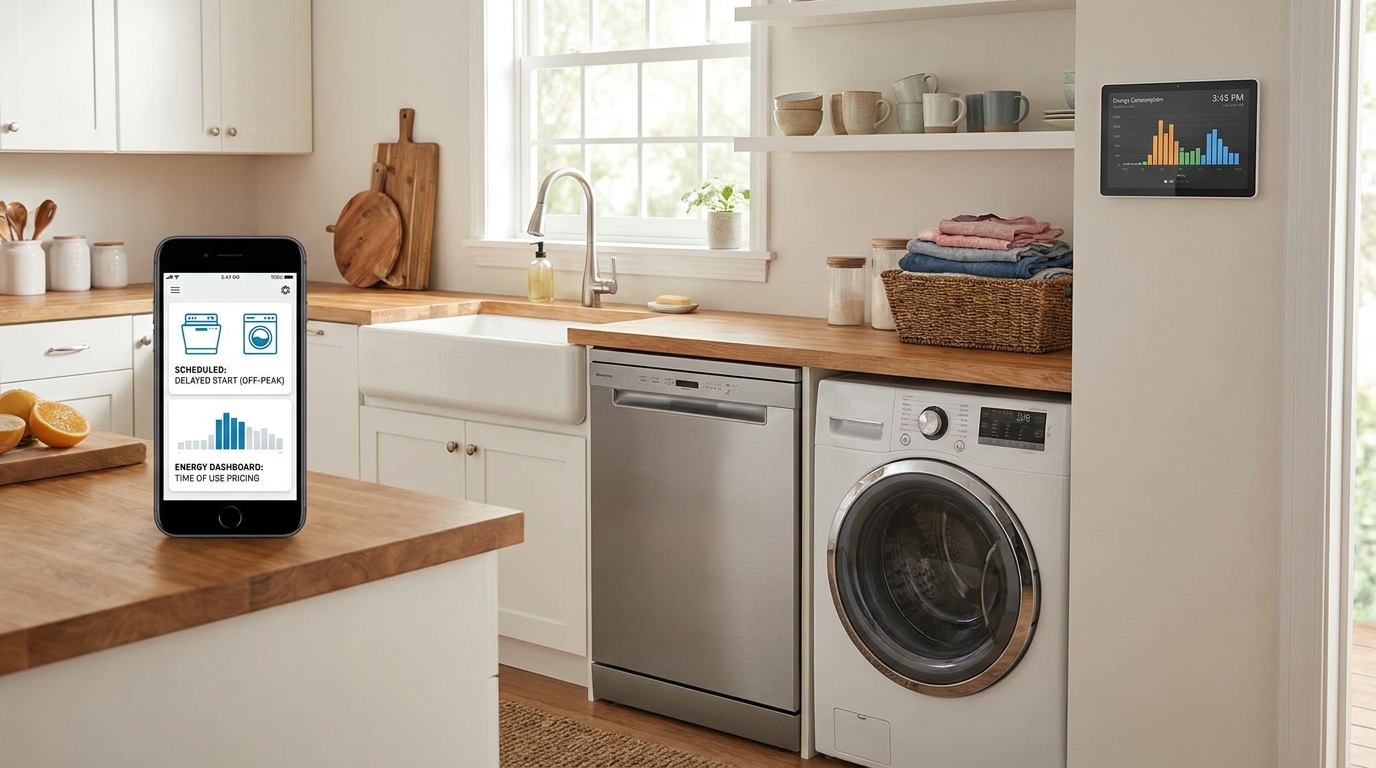
Another highly relatable application is price-aware scheduling. In places with time-of-use electricity pricing, AI can shift flexible tasks to cheaper hours. A dishwasher can run after peak pricing ends. Laundry can start overnight. Water heating can be timed around lower cost periods if the system supports it. If you drive an electric vehicle, charging can be moved away from high-cost evening demand and into lower-priced overnight windows. These are not dramatic lifestyle changes. They are mostly decisions about timing.
Preheating and precooling are also helpful when handled carefully. Suppose your utility charges more during late afternoon and early evening. Instead of consuming the most energy during those expensive hours, AI can warm or cool the house slightly beforehand when rates are lower, then let the indoor temperature drift within a comfortable range. This is one reason grid-aware automation is attracting so much attention. The home stays livable, but demand is shifted to a better time for both the household and the wider electricity system.
Lighting is another area where AI can quietly reduce waste. Occupancy or motion sensing can turn lights off in rooms that nobody is using, and more advanced systems can adjust brightness based on daylight levels or time of day. While lighting savings are usually smaller than HVAC savings, they can still be meaningful in larger homes or for households with a tendency to leave lights on. More importantly, lighting automation is often easy to understand and easy to trust, which makes it a good entry point for people who are cautious about smart home technology.
What kind of savings can you realistically expect?
It is wise to be skeptical of oversized savings claims. AI does not automatically make a home efficient, and no device can overcome poor insulation, failing equipment, or a system that is simply incompatible. That said, there is credible evidence that the right devices can deliver measurable results. ENERGY STAR indicates that smart thermostats can save about 10% on cooling and 8% on heating in qualifying conditions, and certified models must demonstrate savings based on real-world performance data.
Those numbers are helpful, but they are not universal. Actual savings depend heavily on climate, temperature swings, occupancy patterns, and the type of heating and cooling equipment in the home. ENERGY STAR also notes that households already using disciplined schedules may see smaller gains. If you already turn temperatures down every night and every workday, the incremental benefit of a learning thermostat may be modest. If your schedule changes often or you frequently forget to adjust settings, the benefit can be much larger.
Homes with heat pumps, electric resistance heating, central air conditioning, or large differences between occupied and unoccupied periods often have more to optimize. By contrast, a small apartment with stable indoor temperatures and someone home most of the day may see fewer meaningful opportunities. The same is true for appliance automation. If your utility charges flat rates all day, there may be less financial value in shifting dishwasher or EV charging cycles, though there may still be environmental value if your grid is cleaner at certain times.
There is another practical reason to keep expectations grounded. Comfort matters. If automation creates a house that feels too cold in the morning or too warm during dinner, people override the system. Once that happens, expected savings can erode quickly. The best setups are not the most aggressive. They are the ones that quietly fit your real habits, preserve comfort, and remain in place for the long term.
Simple tools that make AI adoption easier
If you are interested in energy optimization but do not want a major technology project, begin with a few tools that provide visibility and low-friction control. The first is a smart thermostat, ideally one that is certified and clearly compatible with your heating and cooling system. In Canada, connected thermostats are often recommended as a practical upgrade because they address the largest energy load in many homes and can work without changing your daily routine very much.
The second helpful tool is your utility portal or mobile app. Many utilities now provide near real-time or daily energy data, billing insights, and notifications about peak periods. Even before you automate anything, simply seeing when your home uses the most energy can be eye-opening. For some households, that visibility leads directly to better scheduling and lower use. For others, it helps confirm that heating and hot water really are the dominant loads, which can guide more intelligent next steps.
Smart plugs and smart power strips can also play a useful supporting role. DOE notes that smart power strips can reduce standby or vampire loads from electronics and appliances that draw power even when switched off. These savings are usually smaller than HVAC optimization, but the devices are inexpensive, simple to install, and helpful for home offices, entertainment areas, and clusters of electronics. They also give people a concrete sense of control, which can build confidence before moving into larger systems.
If your household uses time-of-use rates, app-based scheduling for appliances can be surprisingly effective. Many newer dishwashers, laundry machines, EV chargers, and water heaters already support delay start or scheduled operation. In those cases, AI may be less about buying new hardware and more about connecting existing capabilities into one routine. The technology feels lighter because it is often using functions your home already has.
How home energy management systems bring everything together
For households with more electrified equipment, a home energy management system can become the central brain for efficiency decisions. These systems coordinate multiple loads rather than optimizing one device at a time. The National Renewable Energy Laboratory describes home and building energy management as a way to tailor loads in response to price or control signals, and its research includes testing smart appliances, home batteries, EVs, and whole-home coordination. That broader coordination matters because one good decision can sometimes create another problem if nothing else in the home is considered.
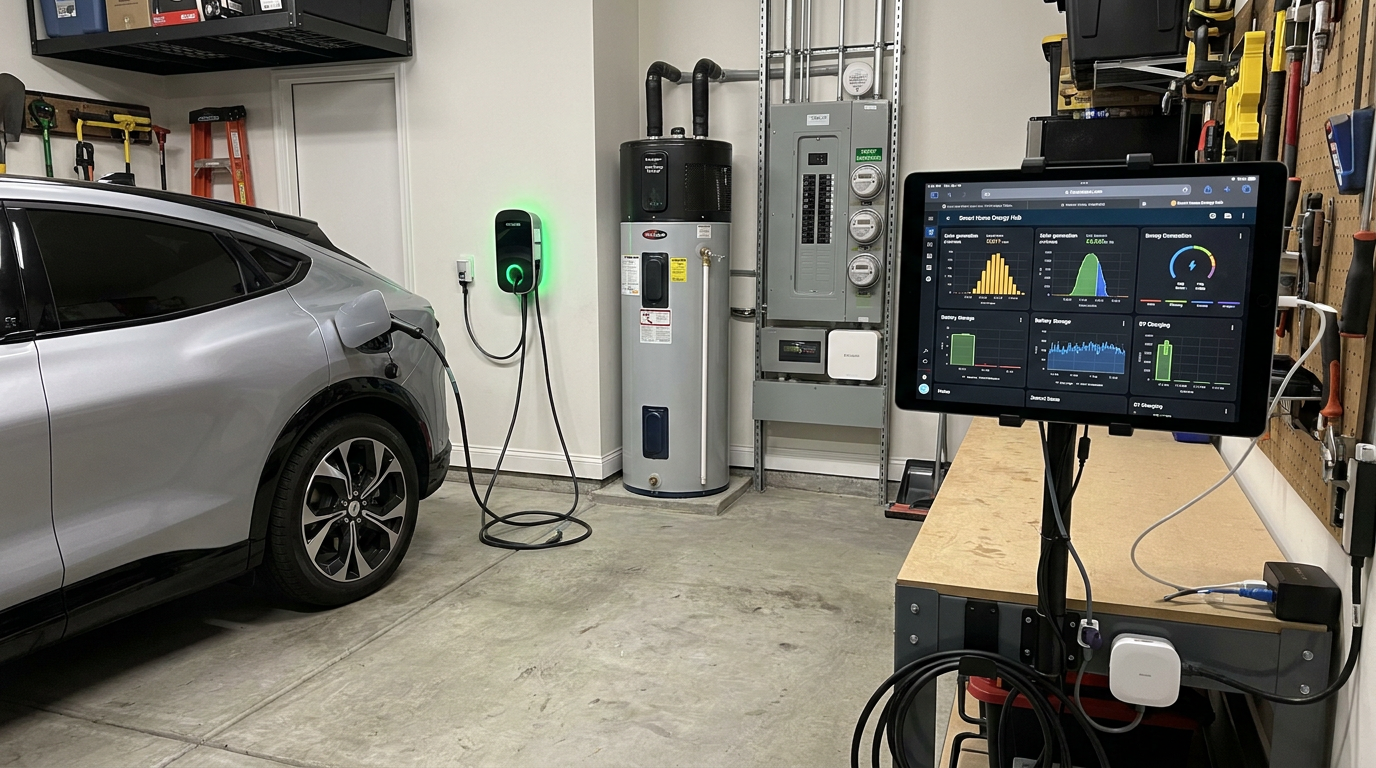
Imagine a household with a heat pump, electric vehicle, dishwasher, electric water heater, and rooftop solar. If each system runs independently, several heavy loads might turn on at the same time during a peak-price window. A home energy management system can smooth that out. It may decide to preheat water in the early afternoon when solar production is high, charge the EV overnight, and hold the dishwasher until the house is not actively heating or cooling. That kind of orchestration can lower costs and reduce demand spikes without anyone standing in the utility room making decisions.
This is also where grid-aware automation becomes especially useful. Utilities are increasingly interested in demand response programs that reward households for reducing or shifting electricity use during stressed periods. AI can make participation easier because it can respond automatically to those signals while staying within your comfort preferences. Rather than a blunt instruction to use less power, the system makes selective adjustments such as pausing charging, slightly relaxing temperature setpoints, or delaying a flexible appliance cycle.
For people considering solar-plus-storage, AI coordination can further improve value. A battery can store lower-cost or self-generated electricity and use it later when prices rise or when grid demand is high. AI can estimate when that stored energy will be most useful instead of discharging it too early. In homes with increasingly complex electric systems, that kind of forecasting is where automation starts to feel genuinely intelligent rather than simply convenient.
Why compatibility and installation matter more than hype
One of the biggest misconceptions about AI energy tools is that the software alone creates the savings. In reality, compatibility and installation are often more important than the intelligence layer itself. A smart thermostat that is poorly matched to your HVAC system can create discomfort, short cycling, or unexpected use of backup heat. A connected water heater that is never configured around your actual routine may not save much at all. The technology only works well when it fits the home.
This is especially important with heat pumps and systems that use auxiliary heat. Some thermostats and control strategies are better suited than others, and settings need to reflect how the equipment actually performs in your climate. A rushed installation or generic configuration can undermine the very efficiency gains you hoped to achieve. That is why certified devices, professional advice when needed, and careful setup are all part of practical adoption, not optional extras.
Interoperability deserves similar attention. Before buying anything, check whether the device works with your HVAC equipment, utility programs, Wi-Fi setup, smartphone platform, and any existing smart home ecosystem you already use. A fragmented setup can lead to frustration and abandoned features. A more connected system usually means better automation because the tools can share data and act on it consistently.
It is also worth remembering that AI is not a substitute for the building envelope. If a home is underinsulated, drafty, or poorly air sealed, controls can only do so much. Efficient automation works best in homes where the fundamentals are at least reasonably strong. The smartest thermostat in the world cannot fully compensate for heat leaking through the walls and attic.
Privacy, cybersecurity, and data questions worth asking
Because smart energy tools rely on data about occupancy, routines, temperatures, and device behavior, privacy deserves a calm and practical review. You do not need to reject the technology to take this seriously. Instead, treat connected devices the way you would treat any other household service that gathers information. Read what data is collected, whether it is stored locally or in the cloud, how long it is retained, and whether it is shared in aggregated or identifiable form.
It is also wise to check what controls are available if you want to limit data sharing. Some platforms let you turn off certain analytics, restrict third-party integrations, or opt out of utility-facing programs. Others are less flexible. The right choice depends on your comfort level, but the key is to make it an informed choice rather than an assumed one. Practical sustainability includes data awareness too.
Cybersecurity is another part of easy adoption. Basic steps go a long way. Use strong unique passwords, enable two-factor authentication when available, keep device firmware updated, and place connected devices on a secure home network. If a platform has a reputation for poor support or infrequent updates, that is a useful signal to pause. A product that will control major energy loads in your house should feel dependable not just in function, but in stewardship.
For many households, the reassuring truth is that you do not need dozens of devices to benefit. Fewer, better-integrated products often mean less data sprawl and fewer security concerns. A single good thermostat, a utility app, and a compatible EV charger may deliver more practical value than a crowded collection of disconnected gadgets.
A realistic path to getting started
If you are new to AI energy optimization, the best approach is incremental. Start with the systems that matter most and the decisions that are easiest to automate. This reduces complexity, improves trust, and gives you time to see whether the tools actually fit your home. It also keeps spending aligned with real results rather than enthusiasm for technology itself.
A sensible first step is to review your energy bills and identify your largest seasonal swings. If winter bills dominate, heating optimization should come first. If summer cooling costs are rising, focus on air conditioning schedules and temperature management. Then confirm what equipment you already have, whether your utility offers interval data or demand response programs, and whether time-of-use pricing applies to your household. That basic picture will shape everything else.
From there, a practical adoption sequence often looks like this:
- Install a compatible smart thermostat and use it for several weeks before changing too many settings. Let it learn your routine and watch whether comfort improves or declines.
- Open and regularly check your utility app or smart meter data so you can see when your home consumes the most energy and whether price peaks line up with major loads.
- Schedule flexible appliances such as dishwashers, laundry, and EV charging for off-peak periods if your rate structure rewards it.
- Add smart plugs or smart power strips for electronics clusters where standby consumption is common.
- Consider broader home energy management if you have a heat pump, solar panels, a battery, electric water heating, or multiple large electric loads that could be coordinated.
This step-by-step approach matters because it prevents the common mistake of buying too much technology before understanding where the real energy waste lies. It also gives you a baseline. If your thermostat saves noticeably and your app confirms lower consumption during empty periods, you have evidence that automation is working. If not, you can troubleshoot early instead of layering more complexity on top of uncertainty.
Common misconceptions that are worth clearing up
One frequent misconception is that AI automatically makes a home efficient. It does not. Savings depend on device quality, correct installation, compatibility, and settings that reflect how people actually live. A badly configured smart system can waste energy just as reliably as a badly configured conventional one. The difference is that automation can scale mistakes as easily as it scales good decisions.
Another misconception is that these tools are only useful for affluent smart-home enthusiasts. In reality, some of the best entry points are quite modest. A certified smart thermostat, a utility account, and appliance scheduling can create meaningful results without turning the house into a technology showroom. The strongest benefits often come from timing improvements rather than expensive hardware.
People also sometimes assume that a smarter thermostat always means lower bills. That is not guaranteed. If comfort problems lead to frequent overrides, if wiring is incorrect, or if auxiliary heat is triggered inefficiently, expected savings can disappear. The smart choice is not simply to install a connected device. It is to install one that is appropriate for the system and then pay attention to how it behaves in real life.
Finally, there is a tendency to overfocus on plug loads because they are visible and easy to control. Plug loads matter, but in many Canadian homes they are not the main story. Heating and hot water usually deserve more attention. Once that perspective is clear, AI becomes easier to use well because your priorities sharpen immediately.
The broader shift behind the technology
There is a reason AI energy optimization is appearing in more homes now. The wider energy system is becoming more digital, more electrified, and more flexible. The International Energy Agency has highlighted the growing role of AI in energy systems, and research organizations such as NREL are actively testing how homes can interact more intelligently with the grid through smart appliances, batteries, EVs, and coordinated control systems. In other words, the home side of the story is part of a much larger transition.
That shift can benefit households when it is handled well. A more flexible home can use cleaner electricity at better times, avoid high peak prices, and support grid stability without sacrificing comfort. This is especially valuable as more households electrify heating and transportation. Instead of simply adding more demand, AI can help shape that demand so it is easier and cheaper to serve.
What makes this moment encouraging is that practical sustainability is finally becoming more usable. Homeowners do not need to become energy analysts. The better tools translate complexity into simple outcomes such as lower bills, fewer wasted runtime hours, and more predictable comfort. That is how green technology becomes normal. It solves real household problems quietly enough that people keep using it.
Final thoughts: smarter homes, lower friction, better outcomes
Harnessing AI for a greener home does not require dramatic lifestyle changes or a full suite of advanced devices. In most cases, it starts with understanding where your energy goes and letting a few well-chosen tools manage timing more intelligently. For Canadian households especially, that often means beginning with heating and cooling, because that is where the biggest opportunity usually sits.
The most effective mindset is steady rather than extreme. Choose certified, compatible devices. Focus on comfort as well as savings. Review privacy and data settings before connecting major systems. Add scheduling and automation in layers, not all at once. When you approach it this way, AI becomes less of a buzzword and more of a quiet household assistant that helps your home use less energy with less effort.
That balance is what makes the technology worth considering. A greener home should not feel like a constant project. It should feel well run, comfortable, and easier to live in over time. AI can help deliver that outcome, not by taking control away from homeowners, but by handling the repetitive decisions that waste energy when nobody is paying attention.



No Comment! Be the first one.