



Outdoor living has taken on a new level of importance in recent years. Patios, terraces, balconies, decks, and garden lounges are no longer treated as seasonal afterthoughts, but as genuine extensions of the home. Across Canada and North America, growing consumer interest in outdoor furniture reflects a broader lifestyle shift toward spaces that support entertaining, dining, working, resting, and quiet daily rituals in the open air. The outdoor room is now expected to feel as considered as the living room, as welcoming as the kitchen, and as restorative as a private retreat.
Table Of Content
- Why Outdoor Furniture Matters More Than Ever
- The European Approach to Outdoor Elegance
- Start with Lifestyle, Not Just Style
- Choosing the Best Outdoor Furniture Materials
- Cast Aluminum: Lightweight Elegance with Practical Strength
- Resin Wicker: Texture Without Fragility
- Teak: The Quiet Luxury of Natural Wood
- Steel, Plastic, and Mixed Materials
- What Durability Really Means in Canadian and Northern Climates
- How to Make Outdoor Furniture Comfortable Without Losing Style
- Space Planning for Patios, Balconies, and Terraces
- The Role of Outdoor Dining Furniture
- Modular Furniture and Multifunctional Living
- Styling with Rugs, Cushions, Planters, and Light
- Sustainable Outdoor Furniture Choices
- Common Outdoor Furniture Misconceptions to Avoid
- How to Maintain Outdoor Furniture So It Stays Beautiful
- How to Shop Well Online for Outdoor Furniture
- Creating a Cohesive Outdoor Room
- Final Thoughts: Invest in Beauty That Lives Well
This evolution has changed the way we choose furniture. A chair must do more than survive the weather. A table must do more than simply provide a surface. Today, outdoor furniture is expected to express a mood, frame a way of living, and offer comfort without compromising resilience. It must answer practical demands while still creating beauty. For those who appreciate a touch of European design sensibility, that beauty often lies in restraint, in graceful proportion, in thoughtful materials, and in a sense of ease that never appears overdone.
To create a stylish and functional outdoor space, it helps to think like an interior designer and a realist at the same time. Elegance begins with silhouette, color, texture, and composition. Function begins with climate, maintenance, durability, and the actual ways the space will be used. The most successful outdoor environments unite the two. They feel calm and refined, yet deeply livable. They offer softness and atmosphere, yet remain practical in sun, wind, moisture, and seasonal change.
This guide explores how to choose outdoor furniture that brings together sophistication and performance. From understanding the best materials to planning layout, selecting textiles, and maintaining furniture through the seasons, the goal is simple: to help you create an outdoor setting that feels elegant, comfortable, and enduring.
Why Outdoor Furniture Matters More Than Ever
The rising popularity of outdoor living is not just a visual trend. It reflects the way people increasingly want their homes to work harder and feel richer in experience. Market research from Statista points to continuing growth in outdoor furniture across Canada and North America, supported by strong demand for outdoor living, sustainable products, and online shopping. This growth suggests that homeowners and renters alike are investing more intention, budget, and creativity into outdoor spaces.
That shift has also elevated expectations. People want furniture that adapts to different rhythms of life. A terrace may host breakfast in the morning, remote work in the afternoon, and candlelit conversation in the evening. A compact balcony may need to function as a reading nook, a dining corner, and a small urban garden. A family deck may need to withstand children, sunlight, spills, and sudden rain while still feeling polished enough for entertaining guests. The furniture chosen for these spaces now carries both aesthetic and practical responsibility.
There is also a psychological dimension to this change. Beautiful outdoor spaces encourage pause. They invite longer meals, slower mornings, and moments of calm that can feel rare in daily life. When furniture is chosen with care, the result is not merely a place to sit. It becomes a setting for memory and ritual. That is where design becomes powerful. It transforms utility into atmosphere.
Outdoor furniture works best when it feels like part of a home rather than a separate category of furnishing. The most inviting patios and terraces are composed with the same discipline, softness, and identity we expect indoors.
Kingsgate Luxury Homes brought this same philosophy to life on a recent custom build in North York, where the rear of the home opens into a fully realized outdoor living area that reads as a natural continuation of the interior — see it here.
The European Approach to Outdoor Elegance
European-inspired outdoor spaces often share several quiet qualities. They tend to favor proportion over excess, harmony over decoration, and lasting materials over fleeting novelty. Instead of crowding a terrace with too many pieces, the European approach often allows furniture to breathe. A slim metal frame, a beautifully weathering wood surface, or a restrained palette of stone, ivory, taupe, charcoal, and olive can create a setting that feels sophisticated without trying too hard.
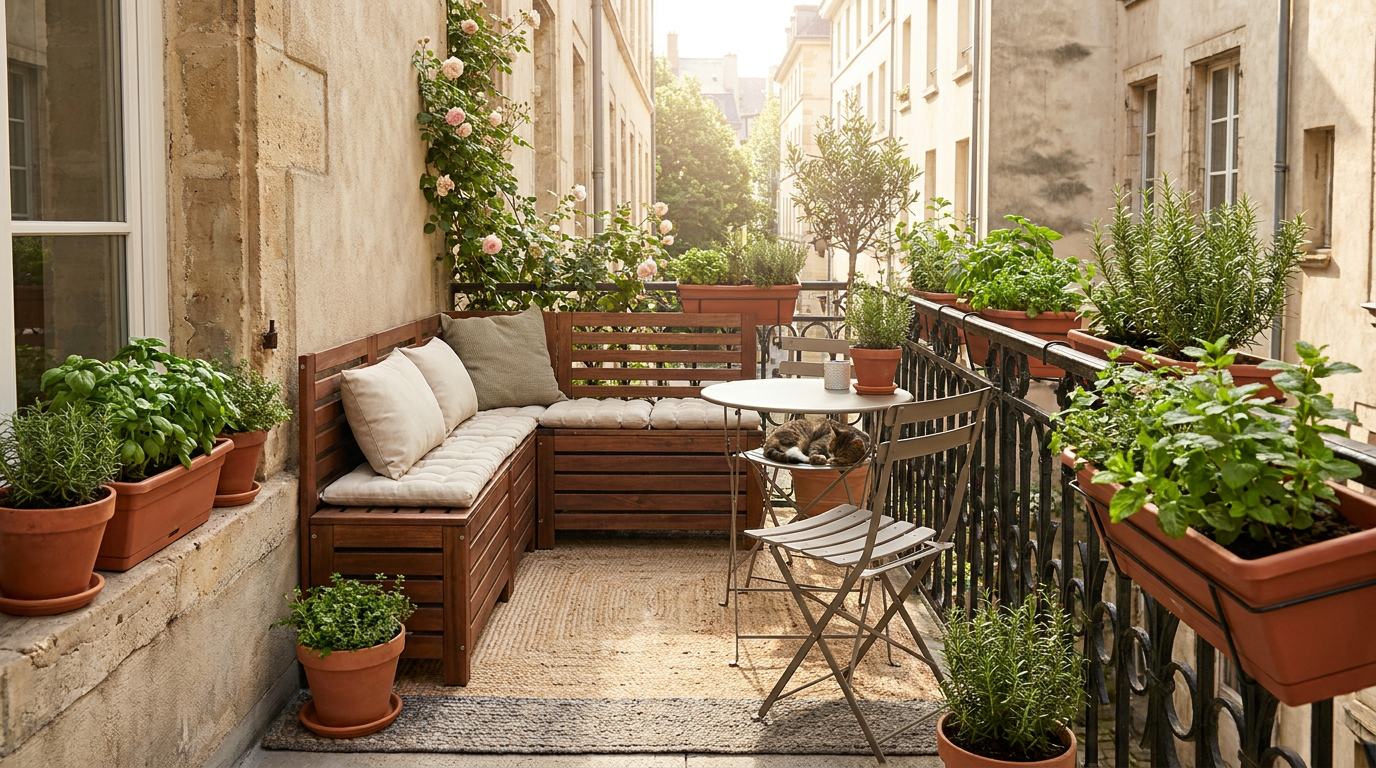
This sensibility does not require a grand estate or expansive garden. In fact, it is often most beautiful in smaller spaces where every element has been chosen with precision. A petite balcony with a round cafe table, two elegant folding chairs, and a planter of herbs can feel far more luxurious than a larger space cluttered with mismatched furniture. The key is visual calm. Shapes should feel intentional, materials should relate to one another, and accessories should support the whole rather than compete for attention.
European elegance also embraces the poetry of use. Furniture is selected not only for how it looks in a photograph, but for how it lives over time. A teak bench that softens to a silvery patina, a linen-toned cushion that brightens stone paving, or a powder-coated aluminum dining set that feels light in form and practical in changing weather all speak to this balance between beauty and reality. The outdoor space becomes effortless precisely because it has been carefully considered.
Start with Lifestyle, Not Just Style
Before choosing a single chair or table, begin with an honest reading of how the space will be used. This step is often overlooked, yet it is what separates beautiful outdoor rooms from frustrating ones. Ask whether the area is primarily for dining, lounging, entertaining, reading, working, sunbathing, or family life. Many spaces need to serve more than one purpose, which is why modular and multifunctional furniture has become so valuable.
If you love hosting dinners, a generous dining table with supportive seating may be your priority. If your dream is a serene garden retreat, deep lounge chairs, a low table, and soft lighting may matter more. If you have a narrow balcony, every centimeter counts, and compact pieces with foldable or stackable functionality will make the space feel more graceful and useful. Practicality here does not reduce beauty. It protects it. When the furniture suits real habits, the space remains composed rather than chaotic.
A strong outdoor plan usually considers circulation as well. There should be enough room to move comfortably around furniture, pull out chairs, place trays, and access planters or doors. Furniture that is too large can make even an attractive patio feel awkward. Furniture that is too small may make a large terrace feel underfurnished and cold. Scale is one of the quiet foundations of elegance.
Choosing the Best Outdoor Furniture Materials
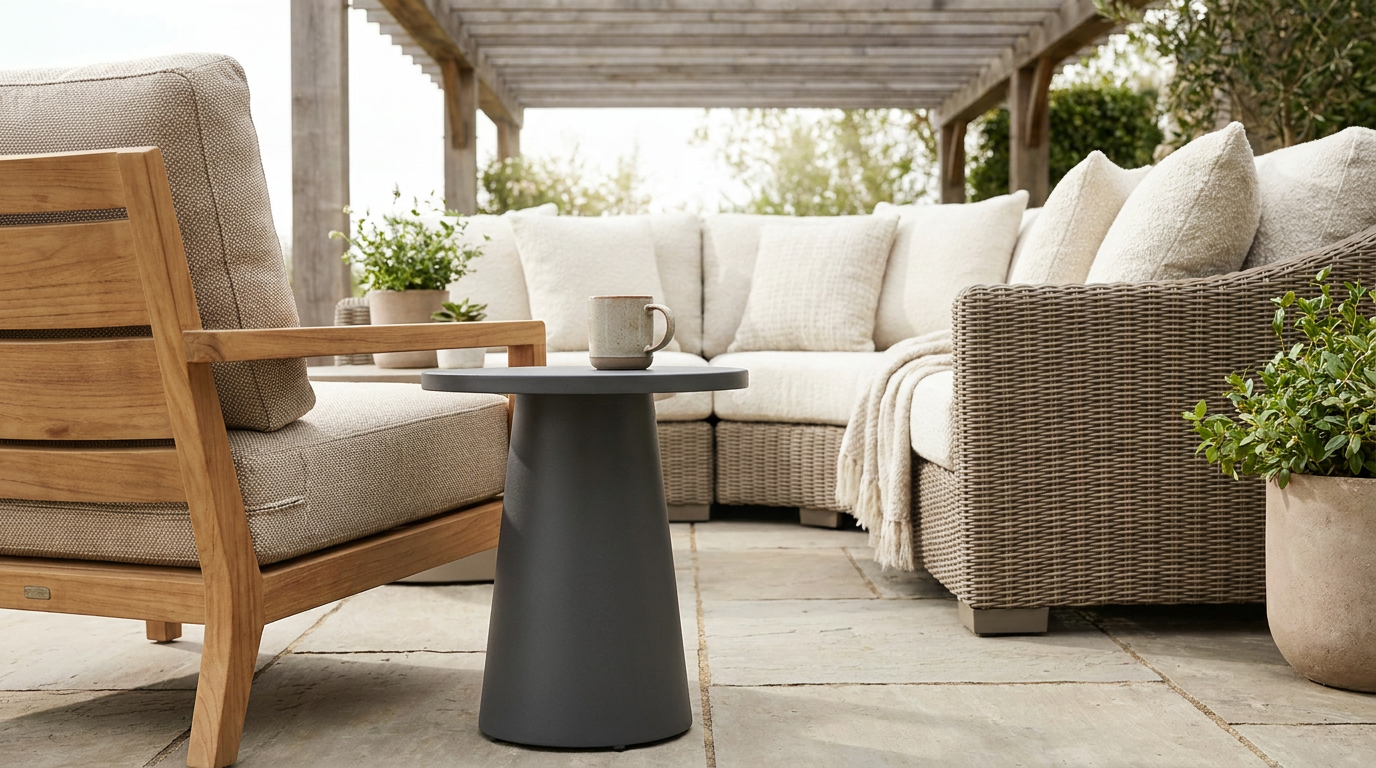
Material is the true heart of outdoor furniture selection. It determines not only the look of a piece, but its longevity, maintenance level, comfort, weight, and suitability for your climate. Research from Consumer Reports highlights several standout options, particularly cast aluminum, resin wicker, and teak, each of which offers a different balance of beauty and performance.
Cast Aluminum: Lightweight Elegance with Practical Strength
Cast aluminum is often one of the smartest choices for homeowners who want durability without visual heaviness. Consumer Reports notes that it offers an excellent combination of affordability and resilience. Because aluminum resists rust, it performs especially well in environments where moisture and seasonal exposure are concerns. Its lighter weight also makes it easier to rearrange, which is useful for flexible layouts or smaller spaces that need to adapt from one use to another.
From a design perspective, aluminum can be remarkably versatile. It can appear classic, contemporary, minimal, or softly traditional depending on its lines and finish. A powder-coated finish is especially important because it adds an extra layer of protection and helps the piece withstand the elements more gracefully. In a European-inspired setting, choose aluminum furniture with slender profiles, matte finishes, and understated detailing. This creates an airy look that feels polished rather than bulky.
Resin Wicker: Texture Without Fragility
Wicker has long appealed to those who love texture, informality, and relaxed charm. Yet one of the most common misconceptions in outdoor design is that all wicker belongs outdoors. Consumer Reports makes an important distinction: natural wicker is generally not suitable for wet outdoor conditions. It can deteriorate quickly when exposed to rain and humidity. For outdoor use, the practical choice is resin wicker, which is designed to resist weather far more effectively.
Resin wicker offers the visual warmth and woven character that many people love, but with greater durability. It works beautifully in lounge settings where softness and texture are desired. To keep the look elevated, avoid oversized, overstuffed shapes that can feel heavy. Instead, opt for crisp cushions, refined weaving patterns, and neutral tones such as sand, mushroom, greige, or charcoal. Used thoughtfully, resin wicker can feel sophisticated rather than casual.
Teak: The Quiet Luxury of Natural Wood
Few outdoor materials carry the same enduring prestige as teak. It is widely appreciated for its durability, natural oils, and ability to withstand outdoor conditions over time. Consumer Reports identifies teak as a premium long-lasting wood option, and for many design lovers, it remains one of the most elegant choices available. Teak has a quiet authority. It feels tactile, architectural, and timeless.
What makes teak especially attractive is its aging process. Left untreated, it gradually develops a soft silver-gray patina that many find deeply beautiful. If you prefer its original golden-brown tone, regular care can help preserve it. In either case, teak suits a wide range of aesthetics, from contemporary terraces to classic garden settings. Its natural grain also pairs beautifully with stone, linen-toned fabrics, black metal accents, and ceramic planters, making it ideal for a restrained European palette.
Steel, Plastic, and Mixed Materials
Other materials can certainly work outdoors, but they require more scrutiny. Steel can be strong and visually appealing, particularly in slim modern frames, but it must be properly finished to resist corrosion. In northern climates where moisture, snow, and freeze-thaw cycles are common, rust protection becomes essential. Plastic furniture can be affordable and lightweight, though quality varies considerably. Better pieces may perform well in casual settings, while lower-quality options can fade, crack, or feel less refined.
Mixed-material furniture can be especially compelling when thoughtfully designed. Teak arms on an aluminum frame, ceramic tabletops paired with metal bases, or upholstered modular seating with hidden rust-resistant structures can all offer a balance of warmth and resilience. The goal is not to select one fashionable material, but to understand how each component contributes to both function and atmosphere.
What Durability Really Means in Canadian and Northern Climates
When shopping for outdoor furniture in Canada or the northern United States, weather resistance must be taken seriously. Guidance from the Government of Canada notes that seasonal temperature swings, freeze-thaw cycling, moisture, and corrosion place significant stress on outdoor objects. That means durability is never just a label. It is the sum of material integrity, construction quality, protective finishes, hardware, drainage, and ongoing care.
For this reason, it is wise to look beyond surface appearance. Ask whether metal frames are powder-coated. Check whether screws, joints, and fasteners are rustproof. Notice whether cushions are designed for outdoor exposure and whether covers allow water to drain rather than pool. Examine how woven materials are attached, how tabletops are sealed, and whether wood is known for outdoor performance. A beautiful silhouette will not remain beautiful for long if its construction is weak.
Climate also influences how you arrange and protect furniture. A covered terrace can support a broader range of finishes than a fully exposed deck. A coastal environment may demand higher corrosion resistance due to salt air. A snowy climate may require off-season storage even for durable furniture, especially textiles. True outdoor elegance depends on stewardship. The most refined space is not the one that appears expensive on the first day, but the one that continues to feel composed after years of use.
How to Make Outdoor Furniture Comfortable Without Losing Style
Comfort is often where outdoor spaces either succeed beautifully or fall flat. Even the most visually striking terrace will be underused if the seating feels rigid, unstable, or unforgiving. Yet comfort does not mean excess. In refined outdoor design, comfort is created through proportion, support, upholstery quality, and layered softness rather than sheer bulk.
Look for chairs with supportive back angles, dining seats that invite lingering, and lounge pieces deep enough to relax in without swallowing the body. Cushions should feel substantial, not flimsy, and they should be made with all-weather fabrics and quick-drying fills whenever possible. Consumer Reports highlights the value of all-weather cushions as a durability signal, and that practical quality has an aesthetic advantage as well. Well-made cushions hold their shape better and preserve the clean lines that make a space feel elegant.
Textiles play a central role here. Choose fabrics in a restrained palette, then introduce interest through texture rather than loud pattern. Boucle-like weaves, subtle stripes, faded mineral tones, and natural-looking neutrals can create depth while maintaining calm. If you want a Mediterranean note, think of sun-washed terracotta, olive, chalk, or sea-glass blue used in moderation. This approach keeps the furniture timeless and gives the entire outdoor room a softer, more atmospheric finish.
Space Planning for Patios, Balconies, and Terraces
One of the most elegant things you can do for an outdoor space is to avoid overcrowding it. Thoughtful space planning creates generosity, even when square footage is limited. Begin by identifying the primary zone, whether that is dining, lounging, or a hybrid of both. Then build around that function with only what is necessary. Restraint often feels more luxurious than abundance.
On a compact balcony, consider a small round table instead of a rectangular one, as it softens movement and uses corners more gracefully. Folding chairs or stackable designs can make the space more adaptable. On medium-sized patios, modular seating can be especially effective because it allows you to rearrange the layout for conversation, entertaining, or solitude. On large terraces, zoning becomes important. A dining area, a lounging area, and a quiet reading corner can coexist beautifully when united by a consistent palette and material language.
Accessories should also be scaled to the space. Oversized planters can anchor a large deck but overwhelm a balcony. A slim bench can provide flexible seating without visual weight. Nested side tables offer convenience while remaining unobtrusive. A well-planned outdoor room feels easy to inhabit because nothing obstructs its purpose. Every piece contributes to comfort, movement, and visual coherence.
The Role of Outdoor Dining Furniture
Outdoor dining is one of the most cherished expressions of seasonal living. Whether it is a quiet breakfast on a balcony or a long summer dinner in the garden, the dining area often becomes the emotional center of an outdoor setting. Choosing the right dining furniture therefore requires attention to both usability and character.
Dining chairs should be upright enough for meals but still comfortable enough to encourage lingering conversation. Tables should offer adequate space without forcing guests too far apart. Round tables create intimacy and suit smaller spaces, while rectangular or oval tables often feel more formal and can accommodate larger gatherings. In a European-inspired scheme, the dining area benefits from simplicity. A beautiful table surface, elegant chairs, a few lanterns, and perhaps a linen tablecloth are often enough.
Materials matter greatly here because dining furniture sees heavy use. Powder-coated aluminum and teak are both excellent candidates. Ceramic or sintered stone tabletops can also be practical if properly selected for outdoor use, offering a sophisticated, architectural finish. If the space is exposed, choose pieces that clean easily and do not trap water. Practical details protect the grace of the scene.
Modular Furniture and Multifunctional Living
As outdoor spaces are asked to do more, modular furniture has become increasingly relevant. Statista’s market commentary supports the broader demand for multifunctional and space-conscious pieces, especially for urban living and flexible outdoor use. Modular seating allows a terrace to shift from a family lounge to a social setting with relative ease. Benches with hidden storage, ottomans that double as tables, and lightweight chairs that move effortlessly between zones all add value without visual clutter.
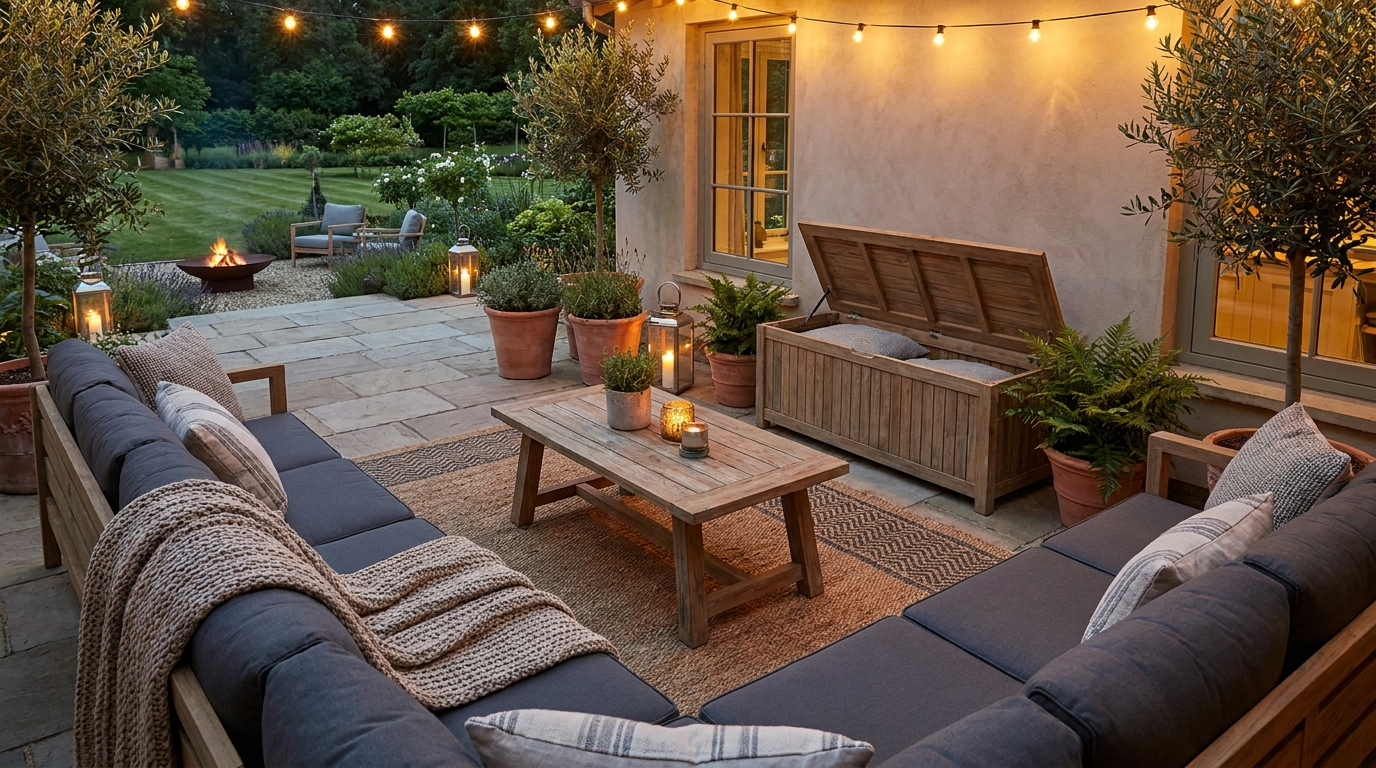
The danger with multifunctional furniture is that it can sometimes look overly mechanical or too casual. To keep it elegant, choose designs with refined profiles and a cohesive palette. Hidden functionality is often the most beautiful functionality. A storage bench finished in teak or a modular sofa upholstered in textured neutral fabric will feel far more timeless than a piece that advertises its cleverness too loudly.
In smaller homes, this adaptability is particularly useful. A balcony can become a morning coffee corner, a laptop perch, and an evening aperitif setting with just a few well-chosen pieces. The lesson is not to buy more, but to buy more intelligently. Beautiful outdoor living often rests on versatility expressed with discretion.
Styling with Rugs, Cushions, Planters, and Light
Once the core furniture is in place, styling gives the space its emotional texture. Outdoor rugs, cushions, throws, lanterns, and planters soften hard surfaces and help define the area as a true room. Yet this stage benefits from discipline. Too many accessories can quickly make an outdoor space feel busy and difficult to maintain. The most elegant styling feels edited.
Outdoor rugs are especially effective for grounding seating areas and adding warmth underfoot. However, they should be chosen with durability in mind. Consumer guidance notes that outdoor rugs require frequent cleaning and should be selected for mold and mildew resistance. In damp climates, that practical point is essential. Choose subtle patterns or tonal textures that conceal minor wear and harmonize with the surrounding architecture. A rug should support the atmosphere, not dominate it.
Cushions and pillows are an opportunity to add nuance. Rather than introducing many competing colors, build interest through layered fabrics in related shades. Combine smooth and textured surfaces, perhaps with one accent tone drawn from the garden or nearby materials. Planters can provide structure, especially if repeated in pairs or consistent finishes. Lighting completes the mood. Wall sconces, portable lamps, candles, and lanterns make the space usable after sunset and add a cinematic softness that furniture alone cannot create.
Sustainable Outdoor Furniture Choices
Sustainability is increasingly shaping the outdoor furniture market, and rightly so. Statista identifies eco-friendly products as an important growth driver in Canada, reflecting a wider consumer desire to invest in pieces that are both responsible and lasting. In outdoor design, sustainability is not only about recycled content or certifications, although those matter. It is also about longevity, repairability, and resisting the cycle of buying cheaply and replacing often.
Teak from responsibly managed sources, recycled or recyclable aluminum, durable resin materials, and high-quality textiles designed to last can all be part of a more sustainable approach. So can choosing timeless forms rather than highly trend-driven ones. Furniture that remains beautiful for a decade is often the more ecological choice than furniture that feels dated after two seasons. Durability and sustainability are deeply connected.
It is also wise to think about care as part of sustainability. Covers, proper cleaning, seasonal storage, and thoughtful placement all extend the life of furniture. A well-maintained piece consumes fewer resources over time because it does not need to be replaced prematurely. Elegance and conscience, in this sense, are entirely compatible.
Common Outdoor Furniture Misconceptions to Avoid
Several misunderstandings continue to shape poor outdoor furniture decisions. One of the most common is the belief that if a piece is sold for the outdoors, it is automatically weatherproof. In reality, performance varies widely depending on material, finish, cushion construction, and hardware. Two chairs may look nearly identical online and perform entirely differently after one wet season.
Another frequent misconception is that natural wicker belongs outside. As noted earlier, traditional wicker is generally not designed for prolonged exposure to moisture. Resin wicker is the appropriate alternative for outdoor settings. There is also a tendency to assume that all wood furniture is high-maintenance, when in fact woods like teak can be exceptionally durable outdoors with proper care. On the other hand, some shoppers assume a high price always guarantees quality, yet expensive furniture can still fail if hardware corrodes or finishes are poorly applied.
A better approach is to evaluate outdoor furniture with both aesthetic intelligence and material skepticism. Read specifications carefully. Ask questions about construction. Consider your climate. Then choose pieces that satisfy both the eye and the environment they must endure.
How to Maintain Outdoor Furniture So It Stays Beautiful
Maintenance is what allows elegance to last. Even the finest outdoor furniture benefits from regular care, and in climates with harsh winters or dramatic seasonal shifts, that care becomes essential. Begin with simple habits. Clean surfaces periodically to remove pollen, dust, moisture residue, and environmental buildup. Shake out and brush textiles. Check metal frames for chips in finishes and address them early if needed.
Cushions should be dried properly after heavy rain when possible, even if they are marketed as weather resistant. Storage boxes or indoor storage can help prolong their life. Outdoor rugs should be cleaned frequently and allowed to dry thoroughly to avoid mildew issues. Wooden furniture may require periodic oiling if you want to preserve a warmer tone, though many homeowners happily accept the natural patina of aging teak. Covers are useful, but they should fit well and allow some airflow rather than trapping moisture underneath.
In Canada and other northern climates, winter storage is especially important. If space allows, storing furniture in a dry garage, shed, or protected area can significantly extend its lifespan. If storage is not possible, invest in quality covers and elevate pieces slightly when needed to improve drainage and reduce contact with standing moisture. These are not glamorous decisions, but they are the hidden architecture of lasting outdoor beauty.
How to Shop Well Online for Outdoor Furniture
Because online shopping continues to grow in the outdoor furniture category, many buyers now make major decisions without seeing pieces in person. This can work well, but it requires a more deliberate process. Start by reading dimensions carefully. A common disappointment comes from underestimating or overestimating scale. Measure your space, mark furniture footprints on the ground, and compare them to the listed dimensions before purchasing.
Next, examine materials and construction details with precision. Look for references to cast aluminum rather than simply metal, resin wicker rather than wicker, and all-weather fabrics rather than generic cushion descriptions. Product photography can be seductive, but specifications are what reveal true value. Customer reviews can also be helpful, especially when they mention longevity, fading, rust resistance, or comfort after regular use.
Finally, consider delivery logistics and assembly. Some pieces arrive nearly ready to use, while others require significant setup. For more refined outdoor spaces, it is often worth investing in fewer, better pieces that arrive with strong construction and reliable finishing. Online convenience should not replace design discernment.
Creating a Cohesive Outdoor Room
The most compelling outdoor spaces feel intentional from the first glance. They do not rely on one dramatic piece alone, but on a sequence of relationships. Furniture relates to architecture. Textiles echo paving, planting, or facade tones. Materials repeat with subtle rhythm. Seating invites conversation. Light extends use into the evening. The result is a room that simply happens to be open to the sky.
To achieve this cohesion, begin with a restrained foundation. Choose one or two primary materials, one dominant neutral palette, and a clear furniture function. Then add texture through cushions, rugs, ceramics, and greenery. Let planting play a role in softening edges and framing the seating area. A terrace becomes more elegant when the line between furnishing and landscape is gently blurred.
Most of all, resist the temptation to over-style. Outdoor beauty often depends on breathing room, natural light, and a sense of ease. A beautiful chair, a generous cushion, a textured planter, and a small table for a glass of water can be enough. Luxury is not always abundance. Often, it is clarity.
Final Thoughts: Invest in Beauty That Lives Well
Choosing stylish and functional outdoor furniture is ultimately an act of designing a better daily life. It is about creating places where meals linger, conversations deepen, mornings soften, and seasons are more fully enjoyed. It is also about making wise choices. Material quality, weather resistance, scale, maintenance, and versatility matter just as much as visual appeal. When those practical concerns are handled thoughtfully, beauty has the structure it needs to endure.
A European-inspired approach offers a particularly graceful model for outdoor living because it values simplicity, proportion, texture, and permanence. It asks us to edit carefully, choose lasting materials, and create atmosphere through harmony rather than excess. Whether you are furnishing a compact balcony or a spacious garden terrace, that sensibility can make the result feel both elevated and deeply comfortable.
As outdoor living continues to grow in importance across Canada and North America, the best spaces will be those that balance aspiration with realism. Choose furniture that can weather your climate, support your habits, and age with dignity. In doing so, you create more than a patio or deck. You create a sanctuary with style, purpose, and quiet enduring charm.


No Comment! Be the first one.