



Designing a home for family life is one of those projects that feels deeply practical and deeply emotional at the same time. Parents want rooms that look beautiful and feel calm, but they also need spaces that can handle crawling, climbing, spills, toys, and the constant movement that comes with daily life with children. The good news is that a child-friendly home does not have to look temporary or chaotic. In fact, some of the most inviting homes are the ones that have been thoughtfully designed around real routines, real comfort, and the changing needs of a growing family.
Table Of Content
- Start with a child’s-eye view of the home
- Why prevention should lead your design decisions
- Choose furniture that is stable, anchored, and family-friendly
- Designing a safe, soothing nursery
- Make storage part of your safety plan, not an afterthought
- Create safe circulation paths throughout the home
- Childproofing can be subtle, beautiful, and rental-friendly
- Design the kitchen for both togetherness and caution
- Think beyond the nursery and playroom
- Use age-based zoning to support independence
- Prioritize comfort and sensory calm
- Common misconceptions that deserve a second look
- How to keep a child-friendly home feeling beautiful
- Final thoughts
- Quick room-by-room safety and comfort checklist
There is also a very real safety reason to approach home design with care. According to Health Canada guidance on home safety, most injuries to young children happen at home. That single fact shifts the conversation from decoration alone to design with intention. A beautiful room matters, but in a family home, beauty works best when it is paired with prevention, ease, and a layout that supports the way children actually move through space.
A child-friendly interior is not about turning every room into a playroom or covering every surface in primary colors. It is about seeing your home from a child’s point of view and then making thoughtful design choices before a hazard becomes a problem. Canadian public-health guidance emphasizes that hazards change as children grow and begin to roll, crawl, pull up, climb, and explore. That means the ideal family home is not just nicely furnished. It is layered with smart, mostly invisible decisions that protect children while preserving the atmosphere adults want to live in.
This balance between functionality and style is where thoughtful family design becomes so rewarding. When storage is planned well, floors feel calmer. When furniture is anchored and stable, rooms feel more secure. When nursery choices support safe sleep, parents often feel more at ease too. And when children can move through the home comfortably and safely, the entire household tends to feel softer, more relaxed, and more enjoyable to live in.
In this guide, we will look at how to create a child-friendly home that feels polished, warm, and practical. From furniture anchoring and safe sleep to clutter control, sensory comfort, room zoning, and rental-friendly safety upgrades, these ideas are meant to help families build homes that work beautifully for both children and adults.
Start with a child’s-eye view of the home
One of the most helpful mindset shifts for parents is to stop looking at a room only as an adult and start seeing it from a child’s height, mobility level, and curiosity. A coffee table corner, a dangling cord, an unstable lamp, or a drawer that opens like a ladder may not look threatening to an adult. To a baby who is learning to pull up or a toddler determined to climb, these are invitations. This is why prevention matters so much more than reacting after a close call.
Designing from a child’s-eye view does not mean becoming fearful or removing every object with character. It means understanding that development happens quickly. A home that feels safe for a newborn can become much riskier once that baby starts rolling, crawling, or trying to stand. Planning ahead before each new stage gives families the chance to integrate safety calmly and stylishly instead of making rushed fixes later.
This is also where many common misconceptions begin. Many parents assume babyproofing can wait until a child starts moving more noticeably, but guidance consistently suggests planning ahead. Others assume that if a room looks neat, minimal, and curated, it must also be safe. Unfortunately, a visually calm room can still hide hazards such as unsecured furniture, decorative cords, soft bedding in a crib, or accessible small objects.
A truly child-friendly home is not a visually “kidified” home. It is a thoughtfully layered home where safety is integrated almost invisibly into a warm, stylish environment.
When you begin with this lens, design decisions become clearer. You start valuing wider walkways, lower visual clutter, stable furniture, softer textures, better storage, and finishes that can handle family life without constant anxiety. The result is not only safer for children, but often more comfortable and livable for everyone.
Why prevention should lead your design decisions
The safest family homes are usually the ones designed proactively, not reactively. This is especially important because childhood hazards tend to appear before parents feel fully ready for them. A baby may begin rolling sooner than expected. A toddler may learn to drag a stool across the kitchen and reach a countertop in a single afternoon. A preschooler may turn bookshelves into climbing structures without any warning. Prevention means adjusting the environment before those leaps happen.
Health Canada guidance strongly supports this approach, and it aligns with what many parents learn in everyday life. It is easier and more effective to install stair gates before stairs become a fascination, anchor dressers before drawers become footholds, and lock away cleaners and medicines before children can reach or imitate adult routines. This is not about expecting the worst. It is about building a home that quietly supports safer exploration.
From a lifestyle perspective, prevention also protects the emotional tone of the home. When spaces are set up thoughtfully, adults spend less time hovering and correcting every movement. Children gain more freedom to play and move comfortably within boundaries that feel natural rather than harsh. That shift can make a home feel more peaceful, more confident, and much more enjoyable on a daily basis.
If you are not sure where to begin, focus first on the areas with the highest risk. Research and public-health guidance repeatedly highlight key concerns such as falls, tip-overs, choking and poisoning, burns and scalds, and sleep safety. These are not dramatic outlier issues. They are the everyday realities that make thoughtful family design so important.
Choose furniture that is stable, anchored, and family-friendly
Furniture is one of the most important places where style and safety need to work together. Many adults understandably choose pieces based on shape, color, storage, and visual appeal, but in a home with children, stability must become part of the aesthetic conversation. Health Canada warns that even furniture that looks stable can tip if a child climbs or pulls on drawers. That means relying on appearance alone is not enough.
Anchoring heavy furniture to the wall is one of the most meaningful safety upgrades a family can make. Bookcases, dressers, storage cabinets, and television stands should all be evaluated carefully. The American Academy of Pediatrics reports that a child is treated in the emergency department at least once every hour for furniture or TV tip-over injuries, and that 77% of tip-over deaths from 2000 to 2019 involved children under age six. These numbers make tip-over prevention feel less like a small extra step and more like a core design responsibility.
Fortunately, this is an area where good design can remain beautifully understated. Concealed wall anchors allow parents to keep rooms looking polished without introducing visible clutter. Lower, broader furniture with a lower center of gravity can also support safer styling. In living rooms and bedrooms alike, it helps to place heavier items lower and avoid displaying tempting objects on top of tall units that might encourage climbing.
Storage habits matter just as much as the furniture itself. Open drawers can act like steps. Toys, remotes, or decorative items placed on top of a dresser can lure a child upward. A safer and more elegant approach is to keep surfaces restrained, use integrated storage where possible, and reserve tall shelving for lightweight, nonessential objects. The room still feels stylish, but it becomes far more secure.
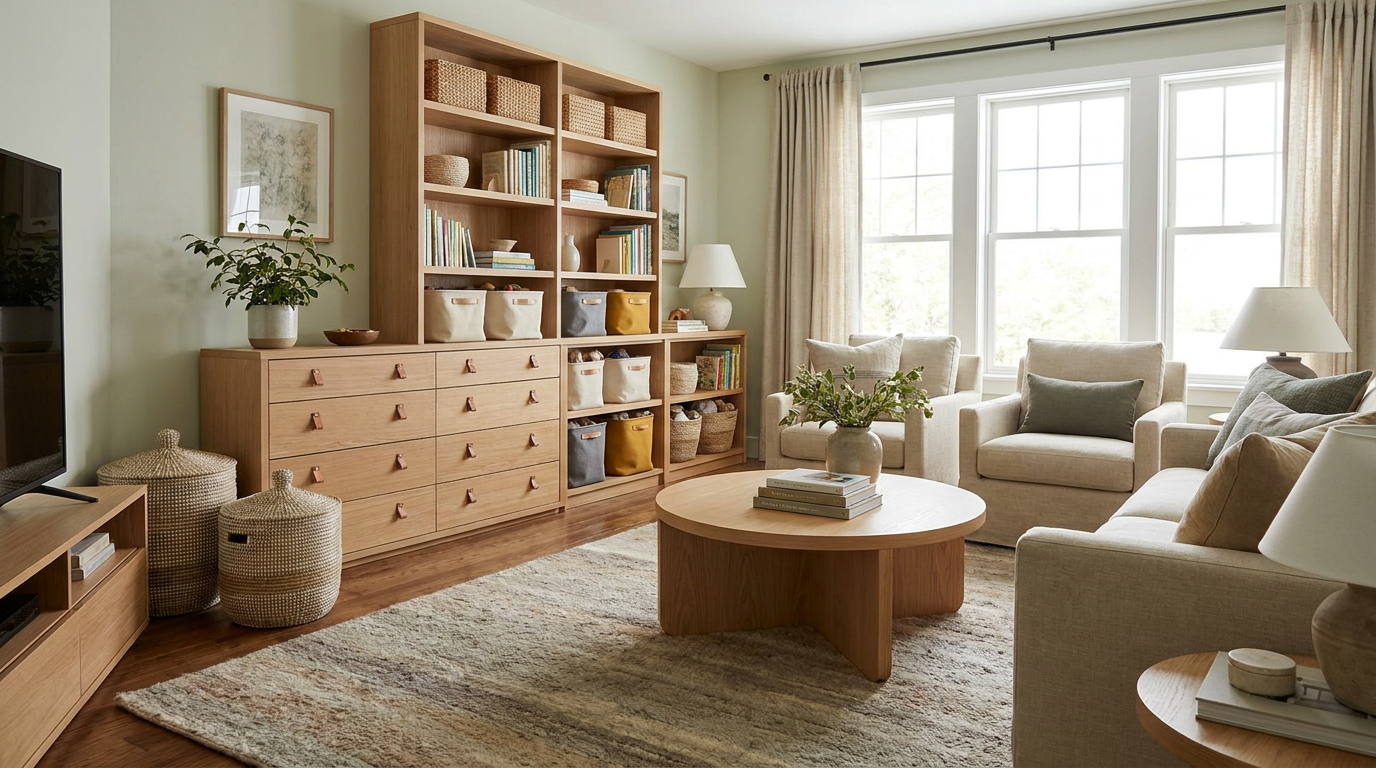
It is also worth checking furniture during each stage of development. What felt harmless when a baby stayed on the floor may become risky once that same child begins climbing. Anchoring is not just for nurseries. It belongs in living rooms, hallways, bedrooms, offices, and anywhere a child may wander or play.
Designing a safe, soothing nursery
The nursery often gets the most visual attention in early family design, but it is also one of the spaces where misinformation can quietly creep in. Many products marketed for nurseries look comforting, decorative, or luxurious, yet not all support infant safety. One of the clearest recommendations from Health Canada is that the safest sleep space for a baby is a crib, cradle, or bassinet that meets current Canadian safety regulations, with a bare sleep surface. That means no soft bedding, no pillows, no padded accessories, and no decorative items inside the sleep space.
This guidance is especially important because many families understandably assume that if a product is sold in a store, it has already been approved or tested for nursery safety. Health Canada’s updated nursery guidance warns that consumer products in Canada do not have to be approved or tested before being sold. Parents are encouraged to check recalls and advisories rather than assuming retail availability equals safety. That is a powerful reminder that nursery design should be informed by current guidance, not just by trends or product styling.
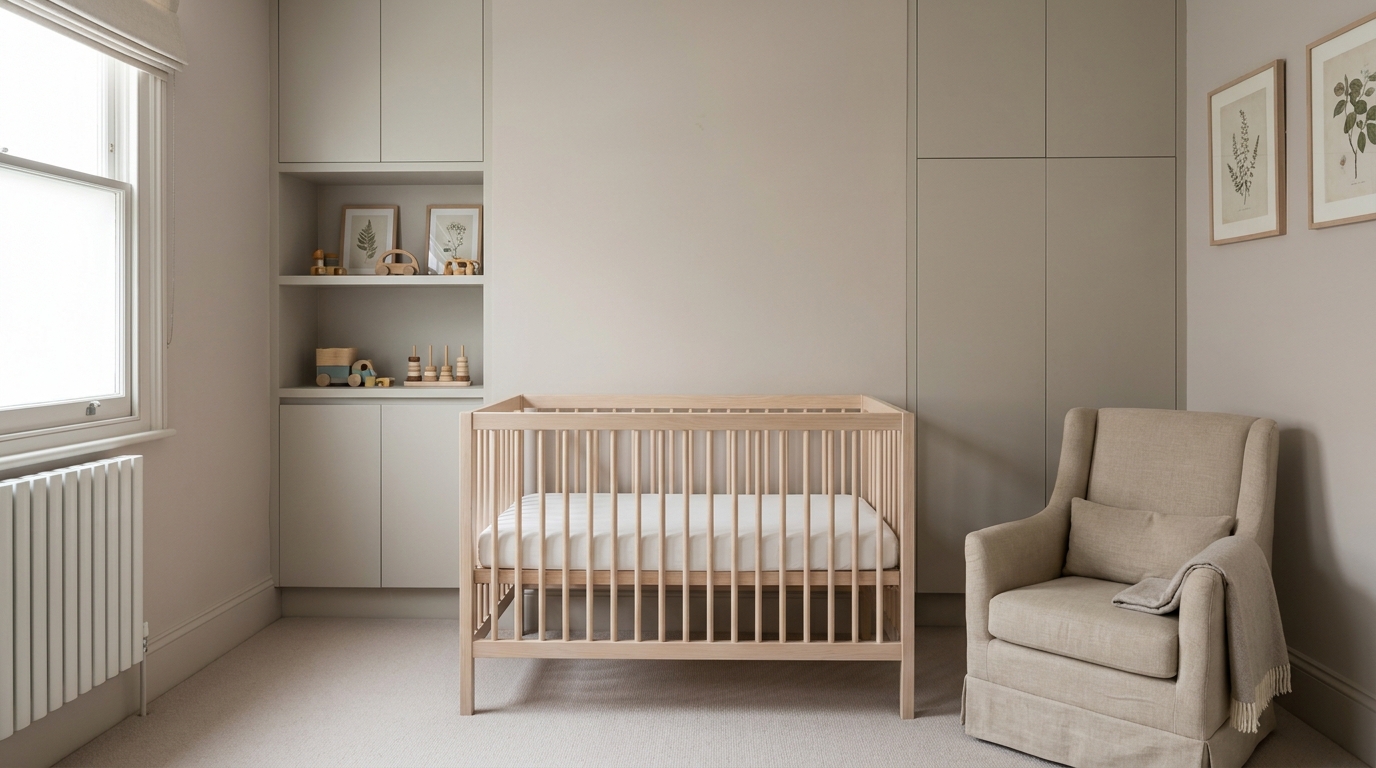
Crib placement matters as much as crib selection. Health Canada advises keeping the crib away from windows, cords, and nearby furniture that could be used for climbing. In design terms, this often leads to a cleaner, calmer room anyway. Positioning the crib on a clear wall can reduce visual noise and create a more restful focal point, while also lowering risks related to falls, strangulation, and climbing.
A soothing nursery is still absolutely possible within these safety guidelines. Focus on atmosphere through paint color, lighting, texture, and comfort outside the crib. A soft rug underfoot, a beautiful chair for feeding, breathable window treatments secured properly, and a restrained palette can make the room feel cocooning and elegant without placing decorative items in unsafe areas. In many ways, safe nursery design naturally supports a more peaceful aesthetic because it encourages simplicity.
Parents should also think beyond infancy when planning the nursery. As babies become toddlers, changing tables, shelves, cords, and nearby furniture may suddenly become reachable. Designing with future movement in mind helps the room transition more smoothly and safely. Choose pieces that can evolve with the child, and revisit the room regularly as mobility changes.
Make storage part of your safety plan, not an afterthought
Storage shapes how a home feels every single day. In family life, it also shapes how safe a room is. Good storage reduces clutter, keeps hazards out of reach, and gives children a clearer sense of where their things belong. Poor storage, on the other hand, often creates tripping risks, encourages climbing, and allows dangerous items to drift into everyday reach.
One especially important tip from Canadian guidance relates to toy storage. Open storage such as baskets or canvas bins is generally preferred over heavy-lidded toy chests, because lids can cause crushing or trapping injuries. From a design point of view, this is useful news. Open bins, woven baskets, and low shelves are often visually lighter and easier to integrate into living spaces than bulky toy chests anyway. They support a relaxed, organized atmosphere and make cleanup far simpler.
In shared living areas, consider storage that blends into the room rather than announcing itself loudly. A beautiful sideboard with child locks, a built-in bench with open cubbies, or a low media unit with concealed compartments can hold family items while preserving a calm adult aesthetic. This kind of storage allows toys and supplies to be accessible when needed but easy to tidy away, which helps the whole home feel more balanced.
It is also essential to think about what should never be stored within reach. Health Canada advises keeping medicines, cleaners, lighters, sharp objects, batteries, and other hazardous items locked away. This is a whole-home design issue, not just a kitchen concern. Bathrooms, laundry rooms, home offices, bedside drawers, and entry consoles all deserve attention. Stylish containers are not enough if they remain accessible. Safety depends on actual secure storage.
If you want to keep the house looking polished, hidden organization can do a great deal of work. Drawer dividers, cabinet latches, labeled bins, and designated drop zones help reduce the visual and mental clutter that often comes with family life. The more intuitive storage is for adults, the easier it becomes to maintain a home that feels both livable and serene.
Create safe circulation paths throughout the home
One of the simplest and most overlooked ways to make a home more child-friendly is to improve how people move through it. Family homes are active places. Children run, stop suddenly, carry toys, and change direction constantly. Adults carry babies, laundry, groceries, and meals. A room may be beautiful on paper, but if pathways are tight or awkward, it becomes harder to live in safely.
Look at the routes your family uses most often. The path from the nursery to the bedroom at night, the route from the kitchen to the dining area, the stretch between the front door and the place where shoes and bags land, all of these deserve enough clearance to feel comfortable. Wide pathways reduce bumps, trips, and frustration. They also make the home feel more open and graceful, which is a design benefit in its own right.
Rugs should be secure and flat, cords should be managed and kept out of reach, and small furniture that catches knees or toes should be reconsidered. Rounded corners can help in high-traffic areas, especially where toddlers are learning to walk. If a room always feels slightly chaotic, the issue may not be the decor. It may be the circulation.
Stairs deserve special attention in family homes. They are a well-known fall risk, particularly for babies and toddlers who are still developing balance and judgment. Stair gates may not be glamorous, but today’s options can be much more discreet than parents expect. Choosing gates that complement wall colors or wood tones helps them feel more integrated, and installing them properly is far more important than treating them as temporary visual interruptions.
Childproofing can be subtle, beautiful, and rental-friendly
Some parents hesitate to childproof because they imagine it will make the home feel clinical, damaged, or visually busy. In reality, many safety updates can be impressively discreet. Hidden anchors, clear corner guards, outlet covers in matching finishes, and cabinet latches installed inside doors can preserve the style of a room while adding an important layer of protection. The goal is not to announce safety features in every direction. It is to let them quietly support the way the home functions.
This matters especially in rentals, where families may feel constrained by what they can alter. The encouraging trend is that rental-friendly childproofing has become much more accessible. Some anti-tip products, cabinet solutions, and cord-management systems are designed to minimize visible damage while still improving safety. Even when a rental limits structural changes, there is usually still room to improve furniture placement, remove climbing temptations, secure hazards, and create better room zoning.
Parents should still take anchoring seriously in rentals whenever possible. The perception that a heavy-looking dresser or shelf is safe on its own is one of the most dangerous misconceptions in family design. Health Canada explicitly notes that stable-looking furniture can tip when children climb or pull drawers. If there is any uncertainty, consult the landlord, use approved mounting methods, and prioritize high-risk pieces first.
The larger point is that childproofing is not a separate design phase that ruins a finished room. It is part of the room. When integrated thoughtfully from the beginning, it often supports a cleaner and more intentional aesthetic by reducing clutter, cords, and visual unpredictability.
Design the kitchen for both togetherness and caution
The kitchen is often the emotional center of family life, but it is also one of the highest-risk rooms in the home. Burns, scalds, sharp tools, choking hazards, and accessible cleaning products all converge there. A child-friendly kitchen should still feel welcoming and social, but it needs clear boundaries and secure systems built into everyday use.
Start with secure storage for anything dangerous. Cleaners, dish pods, alcohol, sharp utensils, matches, and batteries should be locked away and kept out of reach. This is especially important because children often mimic what they see adults doing. A beautifully organized lower cabinet may look practical, but if it stores risky items without locks, the design is incomplete from a safety perspective.
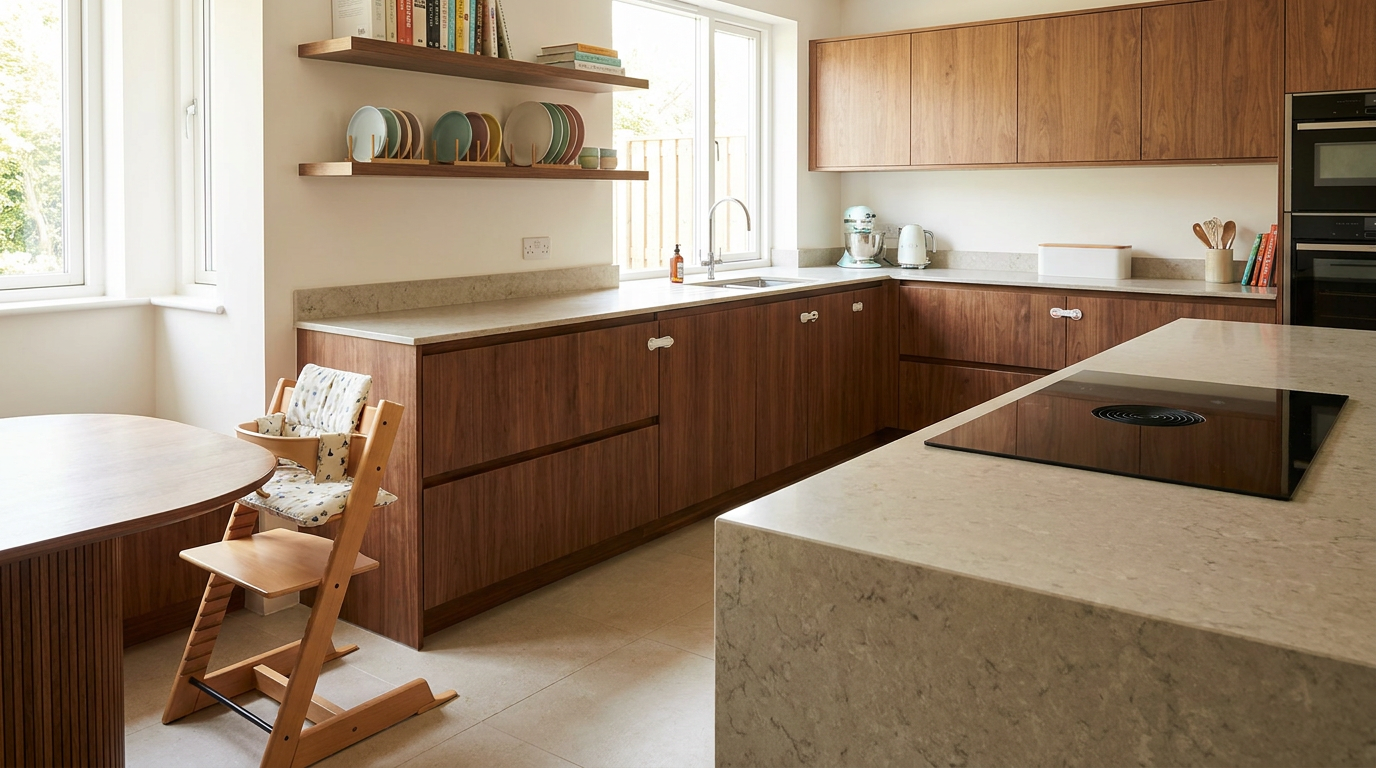
Layout can help too. If possible, create a child-friendly zone within the kitchen that allows participation without placing children in the middle of the most hazardous workflow. A low drawer for safe utensils, a nearby stool used only with supervision, or a small table where children can snack or color while a parent cooks can support connection while reducing underfoot chaos. This kind of zoning makes the room more functional and often more harmonious.
Durable, easy-to-clean materials are particularly helpful in kitchens. Washable paint, wipeable surfaces, and flooring that handles spills gracefully can reduce stress for parents and encourage a more relaxed atmosphere. Family-friendly design is not about expecting less mess. It is about choosing finishes that let life happen without every splash feeling like a disaster.
Good lighting matters as well. Kitchens should be bright enough for safe food prep, but also warm enough to feel like part of the home’s overall atmosphere. Layered lighting, soft-close storage, and clear counters all support a calmer, safer room. When the kitchen works well, it becomes easier to enjoy the family moments that happen there rather than constantly managing hazards.
Think beyond the nursery and playroom
One of the biggest myths in child-friendly design is that only bedrooms or playrooms need special attention. In reality, children move everywhere. Living rooms become obstacle courses, bathrooms become curiosity zones, stairs become adventures, and entryways become landing pads full of shoes, keys, and bags. A whole-home approach is far more effective than concentrating all safety energy in one room.
Bathrooms should have secure medicine storage, reduced slip risks, and carefully managed hot water routines. Living rooms need anchored furniture, controlled cords, stable lamps, and thoughtful placement of breakables. Bedrooms benefit from uncluttered floor space and secure window treatments. Entryways should keep small objects, pet supplies, and sharp seasonal items out of reach. Even home offices may need attention if they contain batteries, chargers, paper clips, or unstable equipment.
This whole-home perspective aligns with public-health advice because hazards are rarely isolated. Health Canada highlights the need to secure stairs, cords, medicines, cleaners, batteries, and small parts as part of comprehensive home safety. Outlet covers can help, but they are only one piece of a much larger picture. A genuinely child-friendly home relies on multiple layers working together.
When families approach the entire home with consistency, the result often feels more cohesive aesthetically too. Similar storage systems, restrained clutter, and repeated safety habits create a sense of order that supports both beauty and daily ease. Rather than making one room hyper-functional and leaving the rest untouched, the home begins to work as a connected environment.
Use age-based zoning to support independence
Children thrive in homes where some areas are clearly meant for them and others are thoughtfully protected from them. This is where age-based room zoning becomes especially useful. Zoning does not have to be rigid or formal. It simply means designing parts of the home according to what a child can safely use, reach, or enjoy at a specific stage.
For babies and toddlers, lower shelves with a limited selection of safe toys can encourage calmer play and easier cleanup. For preschoolers, accessible hooks, low baskets, and simple storage labels can support independence. In family rooms, a small child-height zone for books or puzzles can help children feel included in the shared home rather than constantly redirected away from adult spaces.
At the same time, zoning helps adults protect higher-risk areas without feeling punitive. A reading corner in the living room may be open and relaxed, while an office cabinet remains locked. A kitchen can include a child-friendly snack drawer while sharp tools stay secured. This kind of layered access makes family life smoother and reduces conflict because children understand where they can engage comfortably.
As children grow, zoning can evolve with them. A crawling baby’s soft floor play area may become a preschool art station later. A nursery corner may become a cozy book nook. The most successful family homes are not static. They are responsive, and that flexibility is often what makes them feel truly luxurious to live in.
Prioritize comfort and sensory calm
Safety is essential, but comfort is what makes a family home feel emotionally supportive. Children are affected by noise, lighting, texture, and overstimulation just as adults are, often even more strongly. A child-friendly home should include places that feel soft, predictable, and calm. That does not mean the home must be silent or minimal. It simply means paying attention to atmosphere.
Soft textiles, gentle color palettes, and natural materials can make a home feel more grounding. Washable rugs, cozy throws, upholstered seating, and blackout options in sleeping spaces all support daily comfort. For sensory-sensitive children, reducing visual clutter and creating quieter corners can make a significant difference in how the home feels to navigate.
Lighting deserves special thought. Harsh overhead light can make evenings feel agitated, while layered light through lamps, dimmers, and soft bedside sources can support winding down. This is especially helpful in bedrooms, nurseries, and family rooms where transitions matter. A home that feels good at different times of day tends to support better routines for everyone.
There is also something quietly powerful about choosing materials that can handle real life. Easy-to-clean fabrics, matte finishes that forgive fingerprints, and durable surfaces help parents relax into the home instead of guarding it constantly. In my view, true style in a family house is not precious. It is confident enough to be lived in.
Common misconceptions that deserve a second look
Many well-intentioned parents begin with assumptions that deserve updating. One of the most common is that babyproofing can wait until the child starts crawling or walking. In reality, planning ahead is much safer and much less stressful. Children often reach new stages unexpectedly, and once they do, hazards can become immediate.
Another misconception is that a piece of furniture that looks heavy or solid cannot tip. Both Health Canada guidance and broader injury-prevention messaging make it clear that visual weight is not reliable protection. A child pulling on drawers can destabilize even substantial-looking pieces, which is why anchoring matters so much. Recent Canadian surveillance data underscore the issue, with Health Canada reporting 90 furniture tip-over incident reports between June 20, 2011 and September 30, 2024, including 12 deaths and 42 injuries.
Parents also sometimes assume that nursery products sold in stores are automatically safe. Health Canada’s reminder that products do not have to be approved or tested before sale is an important corrective. Recall checks and current guidance should be part of nursery planning. The prettiest option is not always the safest option, particularly for infant sleep.
Finally, it is easy to overestimate the protection offered by a single safety measure. Outlet covers can help, but they do not address tip-overs, cords, open stairs, unsafe sleep setups, poisonous products, or accessible batteries. Safety works best as a system. When multiple layers are in place, the home becomes much more resilient and much easier to enjoy.
How to keep a child-friendly home feeling beautiful
A fear many parents carry quietly is that once safety and practicality enter the picture, beauty has to leave. Happily, that is rarely true. In fact, child-friendly homes often become more beautiful because they are designed with greater clarity. They rely less on excess and more on thoughtful choices that support everyday life.
If you want the home to feel polished, focus on a few consistent design principles. Keep the palette cohesive so toys and family items feel less visually disruptive. Use baskets, bins, and closed storage in materials that echo the rest of the room. Choose fewer, better accessories rather than many fragile ones. Let comfort carry some of the decorative weight through rugs, cushions, curtains, and warm lighting.
It also helps to define what beauty means in this stage of life. A family home does not need to look untouched to feel elegant. Beauty can live in a calm layout, a cozy reading corner, a secure nursery, a dining table used every day, or a living room where children can play safely near the adults they love. There is something deeply luxurious about a home that feels both welcoming and well-considered.
When design supports the rhythms of family life, the emotional effect is immediate. Parents exhale more easily. Children move more freely. Routines become simpler. The home begins to hold everyone a little better, and that may be the most meaningful form of style there is.
Final thoughts
Creating a child-friendly home is not about choosing between style and safety. It is about understanding that the best family spaces are built on both. When you anchor furniture, secure hazards, support safe sleep, plan thoughtful storage, and create calmer circulation, you are not compromising design. You are refining it around the people who live there most fully.
The most helpful approach is to stay proactive and realistic. Look at the home from your child’s point of view. Reassess rooms as development changes. Check recalls and current guidance instead of assuming every product on the market is automatically safe. And remember that many of the strongest design choices for family life, such as simplicity, durability, hidden function, and emotional warmth, are also the ones that make a home feel timeless.
A child-friendly home can absolutely be sophisticated, comfortable, and full of personality. It can feel soft without being fragile, organized without being sterile, and safe without looking institutional. With thoughtful choices, your home can become a place where children are protected, adults feel at ease, and everyday family life unfolds beautifully.
Quick room-by-room safety and comfort checklist
- Living room: Anchor heavy furniture, manage cords, choose stable lamps, use soft rugs with non-slip backing, and keep climbing temptations off tall surfaces.
- Nursery: Use a crib, cradle, or bassinet that meets current Canadian safety regulations, keep the sleep space bare, and place the crib away from windows, cords, and nearby furniture.
- Kitchen: Lock away cleaners, sharp objects, batteries, and matches, create clear walkways, and establish a child-friendly supervised zone.
- Bathroom: Secure medicines and grooming items, reduce slip risks, and keep hot water routines carefully managed.
- Stairs and hallways: Install proper gates where needed, maintain clear paths, and avoid clutter that can cause trips or falls.
- Bedrooms and storage areas: Reassess furniture anchoring, keep floors clear, and use open toy storage instead of heavy-lidded toy chests.
- Whole home: Think ahead before each developmental stage, check recalls and advisories, and remember that safety works best when it is integrated throughout the house.

No Comment! Be the first one.